Received an Atlantic Highlands Tree Violation Notice? What to Do Next

Atlantic Highlands tree removal notices are reaching homeowners. Learn the local hazard tree rules, deadlines, permits, and how Hufnagel can help.
Share This Article

Contents

Atlantic Highlands Tree Violation Notices Are Reaching Homeowners

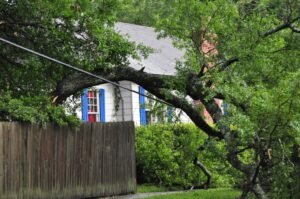
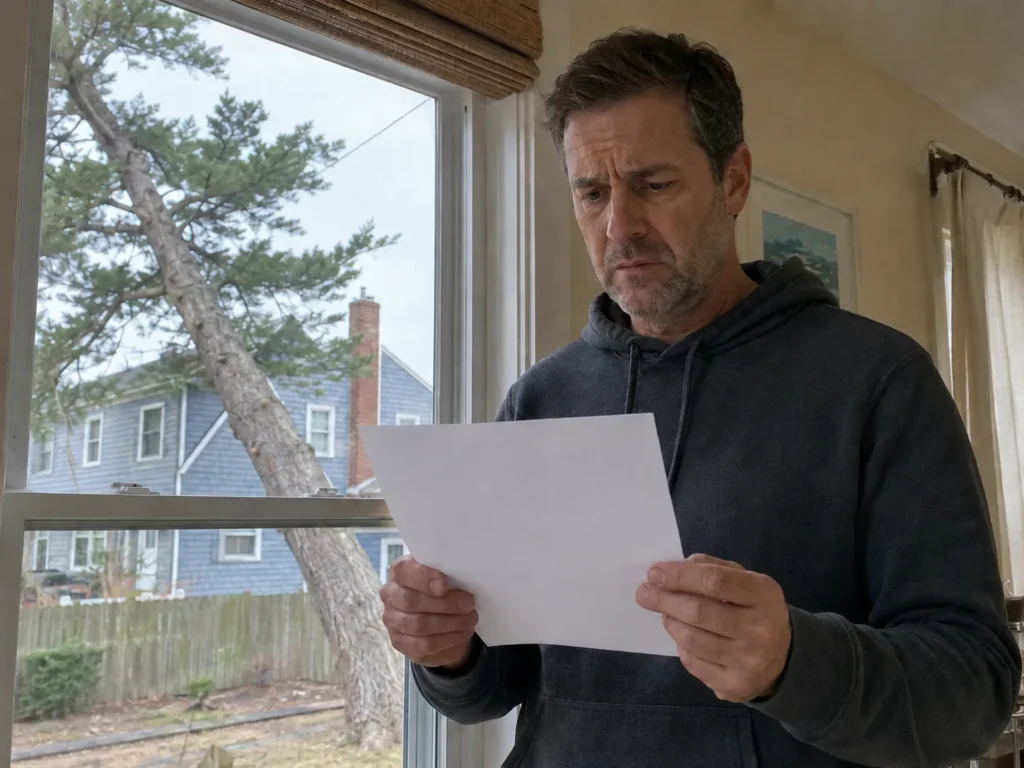
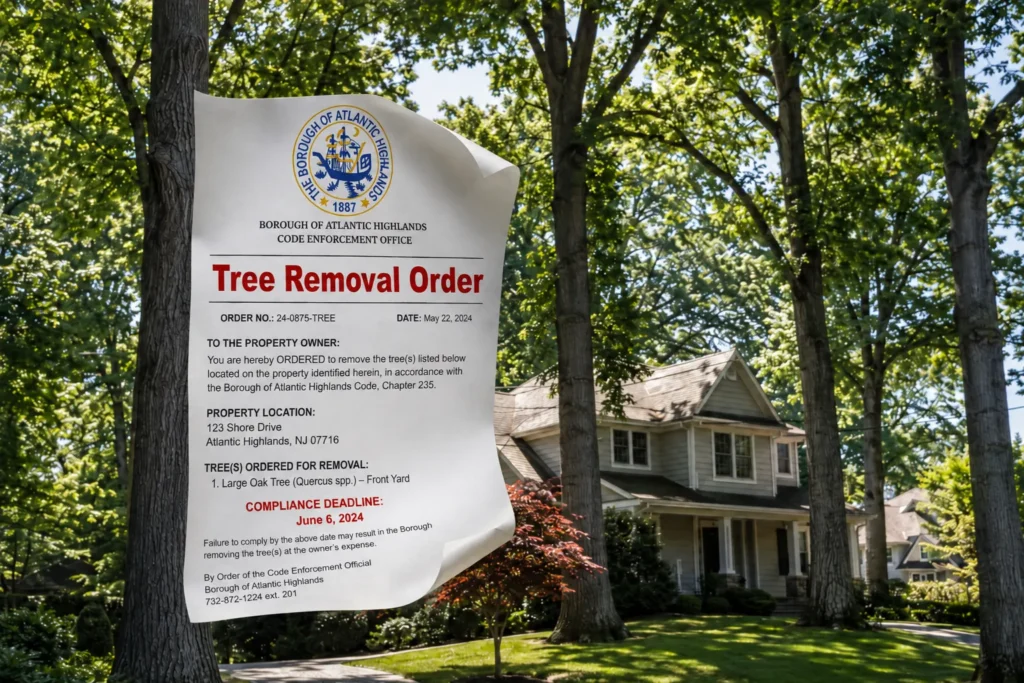
Atlantic Highlands homeowners are talking about tree violation notices right now. In August 2026, residents publicly reported Code Enforcement letters directing tree removal, including a roadside tree near a guardrail that one homeowner believed was harmless and expected would cost more than $1,500 to remove. In this heavily wooded Bayshore borough, mature trees often stand close to roads, homes, utilities, retaining walls, and property lines.

Tree Removal Notice

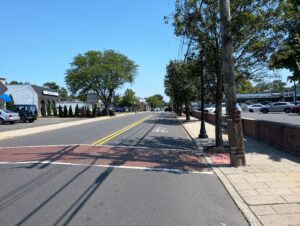
From First Avenue and Bay Avenue near the harbor to Ocean Boulevard, East Washington Avenue, Lenape Woods, and the slopes above the Atlantic Highlands Marina, trees can sit only feet from a public travel lane while appearing to be part of a private yard. Steep grades, vines, mature oaks and tulip trees, coastal wind, saturated soil, narrow access, and guardrails can turn one tree into a Code Enforcement, ownership, permit, and safety question.

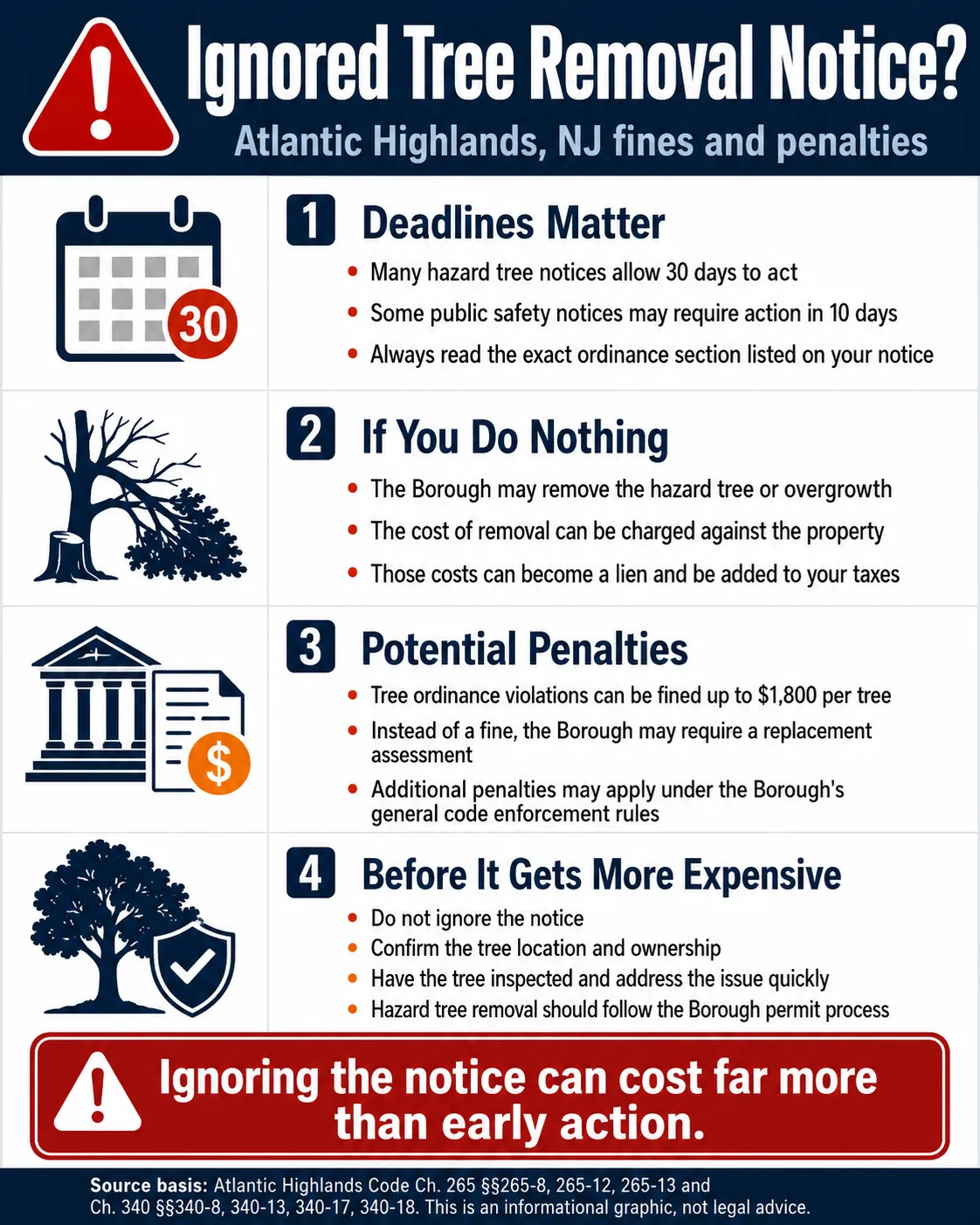
This is not merely an online rumor. The current Atlantic Highlands property maintenance code identifies hazard trees as a prohibited condition and says property owners must remove a cited hazard tree within 30 days after Code Enforcement notice. It also directs homeowners into the Chapter 340 tree removal process. The notices have a clear basis in Borough Code, although we found no recent Borough announcement describing a townwide crackdown or mass mailing campaign.

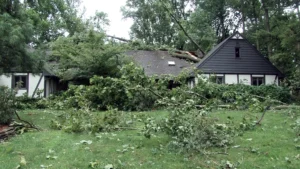
A notice also does not mean every tree with a bare limb, vine, lean, or roadside location automatically needs to be cut down. Atlantic Highlands defines a hazard tree by specific conditions, including dead or dying trees, infectious disease or infestation, interference with vehicles or pedestrians when pruning has not worked, obvious damage to structures, or a determination by a certified arborist or licensed tree expert that the tree threatens public health, safety, or welfare. That is why the tree itself still deserves a professional look.

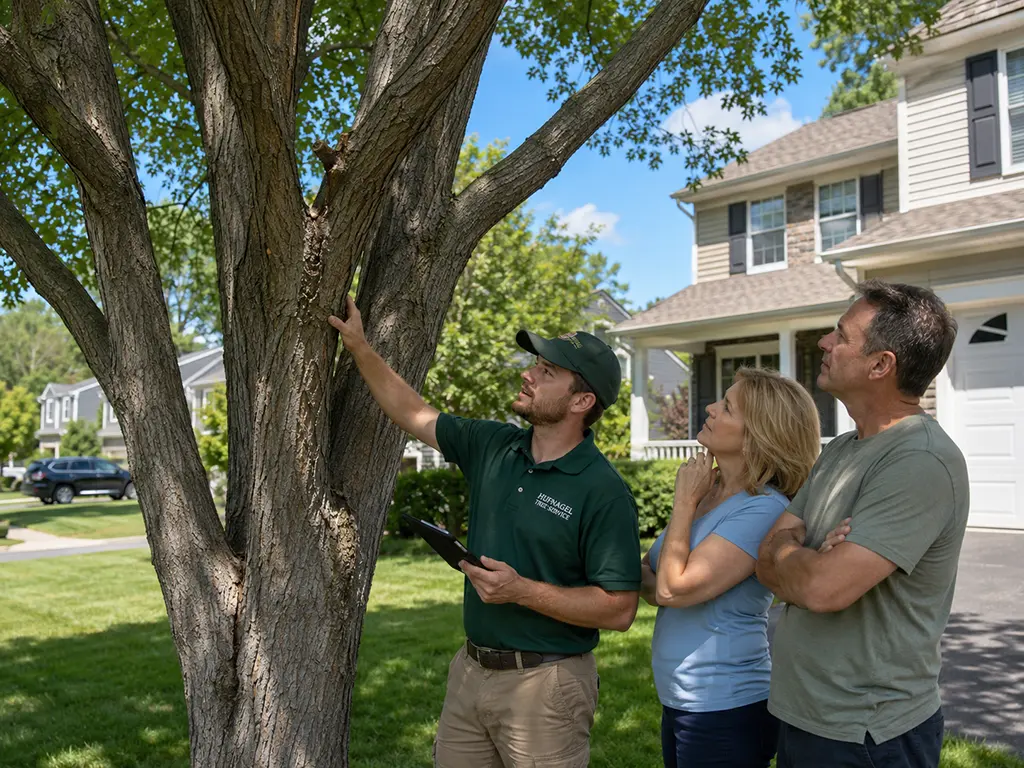
Michael Hufnagel says, “When a homeowner gets one of these letters, the first thing I want to see is the notice and the tree together. The deadline matters, but so does understanding why the tree was cited and what the Borough is actually asking you to correct.” With more than 25 years of local tree care experience, we help Atlantic Highlands homeowners turn a stressful letter into a practical tree care plan instead of guessing from a photograph or neighborhood comments.

What To Check First When an Atlantic Highlands Tree Notice Arrives

  • Read the cited ordinance section and the exact compliance deadline on the notice.
  • Confirm which tree is being cited and whether the issue is removal, pruning, clearance, decay, or another condition.
  • Check your property survey when a roadside tree, guardrail, right of way, or neighboring boundary creates ownership questions.
  • Photograph the tree, trunk, canopy, roots, nearby road, structures, and any visible defects before work begins.
  • Schedule a professional tree risk inspection early enough to leave time for permit review and scheduling.

Once those basics are clear, the next step is understanding why Atlantic Highlands has these rules and how the newer ordinances created the enforcement system homeowners are seeing today.

How Atlantic Highlands Tree Ordinances Reached This Point

Code Enforcement in Atlantic Highlands: Tree Removal

Atlantic Highlands has regulated trees for decades, but today’s framework is relatively new. The Borough rewrote Chapter 340, Trees in October 2024 through Ordinance 18 2024. It expanded older rules dating to 1995 and created a detailed system for removal permits, hazard trees, replacement trees, Borough inspections, licensed tree care businesses, and enforcement.

Then, in March 2025, the Borough adopted Ordinance 04 2025, replacing the former property maintenance chapter with the current Chapter 265, Landscape Areas and Sidewalk Maintenance. The revised chapter specifically added hazard trees to the conditions Code Enforcement can order a property owner to correct. It also established the 30 day compliance language now drawing attention from residents.

The two chapters work together. Chapter 265 is the property maintenance side of the issue. It gives Code Enforcement authority to send written notice about a hazard tree and requires correction within the stated period. Chapter 340 is the tree regulation side. It controls the tree removal permit process, identifies when Borough tree expert review is required, addresses replacement obligations, and sets standards for tree work performed in Atlantic Highlands.

There is an important deadline wrinkle homeowners should notice. Chapter 265 contains the 30 day hazard tree language, while Chapter 340 also says an owner must remove a dead, diseased, or dangerous tree, or broken and decayed limbs that constitute a menace to public safety, within 10 days after Code Enforcement notice. We recommend following the actual notice you received and the section it cites rather than assuming every Atlantic Highlands tree case has the same deadline.

These changes came while New Jersey municipalities were also updating tree removal and replacement rules. The New Jersey Department of Environmental Protection municipal stormwater program provides a model tree removal and replacement ordinance for regulated municipalities. Atlantic Highlands has its own code, but local tree regulation is now far more formal and permit driven than it was years ago.

The Local Ordinance Timeline Behind Today’s Tree Notices

  • 1995: Atlantic Highlands adopted the earlier version of its municipal tree chapter.
  • October 2024: Ordinance 18 2024 substantially rewrote Chapter 340 and its tree permit system.
  • March 2025: Ordinance 04 2025 replaced Chapter 265 and expressly included hazard trees in property maintenance enforcement.
  • August 2026: local homeowners are publicly reporting current Code Enforcement notices involving tree removal.

That history explains why a tree that may have stood untouched for decades can now trigger a formal notice, site review, permit question, and deadline.

How Atlantic Highlands Enforces Hazard Tree Rules

The Borough Code Enforcement Department enforces property maintenance requirements, and Chapter 340 also assigns tree ordinance enforcement to Code Enforcement. Under Chapter 265, notice goes to the property owner of record. If the condition is not corrected within 30 days, the Borough can remove the hazard and charge the cost against the property as a lien and tax assessment.

What are they looking for? The code gives several concrete triggers: a tree that is dead or dying, a tree with disease or insect infestation, a tree that obstructs pedestrian or vehicle passage where pruning has not solved the problem, a tree causing obvious structural damage, or a tree determined to threaten public safety. Chapter 340 separately requires approximately 14 feet of vertical road clearance and eight feet above sidewalks, so canopy clearance can matter even when the whole tree is not failing.

Atlantic Highlands also requires municipal review for many removals. Chapter 340 calls for an on site field check by the Borough tree expert or another designated official before a standard permit is issued. In 2025 Shade Tree Commission minutes, Code Enforcement described photographing trees and referring questionable hazard determinations to the arborist during early implementation of the revised ordinance.

Hazard status changes the normal permit path. The code says a confirmed hazard tree can be exempt from the ordinary permit application and tree replacement requirements, while still directing the homeowner to submit the permit form so the Borough tree expert can confirm hazard status. An imminent danger can be removed before the application is submitted. For ordinary removals, homeowners should use the Borough’s current Tree Removal Permit form and expect the tree to be identified and reviewed.

Atlantic Highlands terrain adds another layer. Chapter 340 specifically says the tree ordinance does not replace separate steep slope requirements. That matters on hillside properties where removal, grading, roots, erosion, and access can overlap. It is one reason a tree near Ocean Boulevard or on the wooded rise above the harbor may involve more planning than a similar tree on a flat inland lot.

What Code Enforcement and the Borough Tree Expert May Focus On

  • Dead canopy, major dieback, decay, cavities, fungal growth, or visible structural weakness.
  • Vines and invasive growth that can hide defects or contribute to an unmanaged condition.
  • Road, sidewalk, sign, driveway, and sightline clearance near public travel areas.
  • Roots or trunks causing obvious damage to sidewalks, retaining walls, foundations, or other structures.
  • Whether the tree is a confirmed hazard, an imminent danger, or a standard removal subject to the normal permit process.

A homeowner does not need to diagnose all of that alone. A certified arborist can document the tree condition, explain what is significant, and help separate a true hazard from a tree that simply looks rough from the street.

Tree Removal Permits and Notice Facilitation in Atlantic Highlands

Tree Removal Permit

This is where Hufnagel Tree Service becomes especially useful. We help homeowners read the tree related requirements in the notice, identify and inspect the cited tree, determine whether removal or corrective pruning makes sense, and organize the information needed for the Atlantic Highlands process. Our Atlantic Highlands tree care page explains why local slope, wind, soil, and mature canopy conditions require site specific judgment.

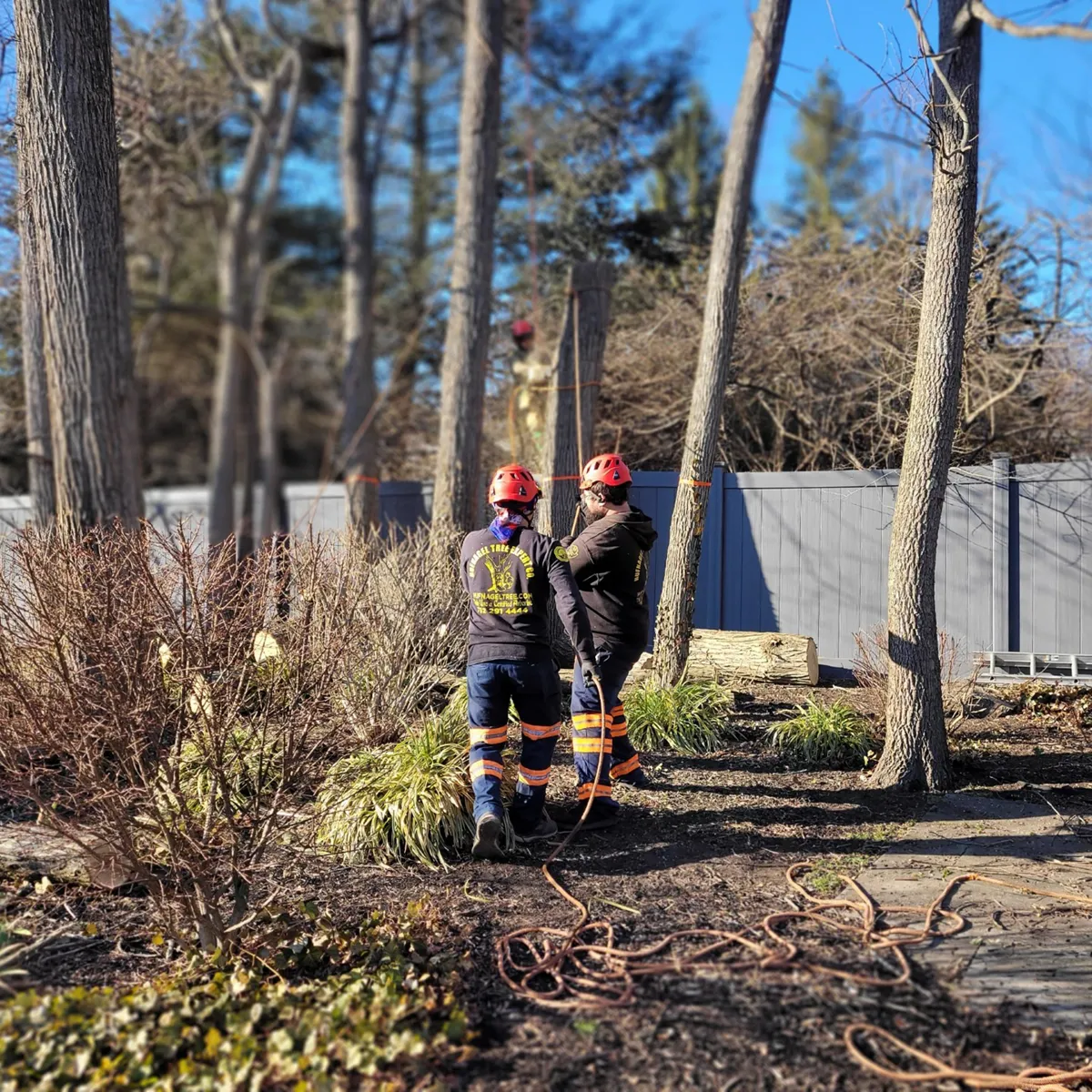
We also help with permit facilitation, including measurements, photographs, species and condition information, tree identification, marking for inspection, and explaining the next municipal step. Atlantic Highlands requires tree work by a properly licensed and registered tree care business. The New Jersey Board of Tree Experts explains the state licensing and registration standards for professional tree care.

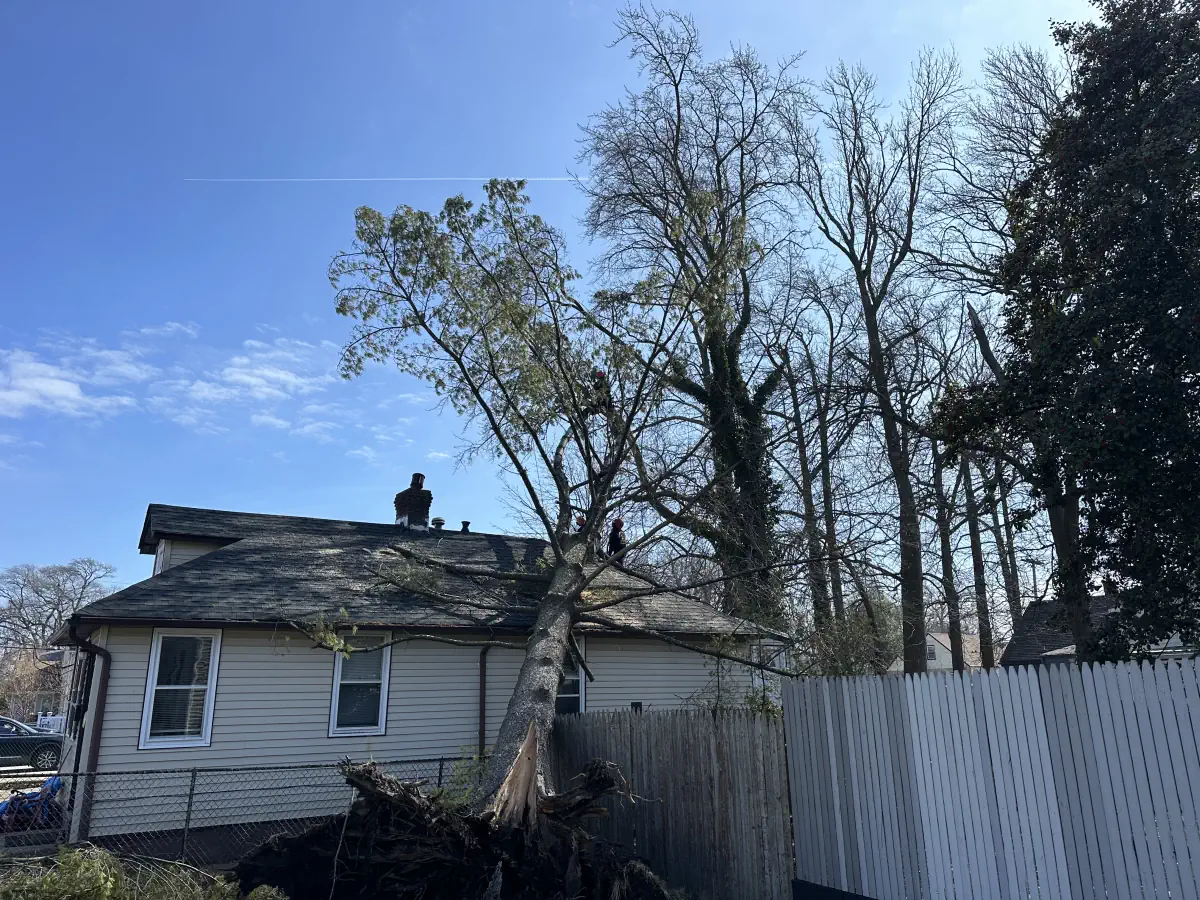
Our first recommendation is not automatically removal. Sparse canopy, root stress, vines, storm damage, and hidden decay all need context. Our guides on hidden tree rot and weak tree roots explain why defects may develop in the trunk or below the soil before the whole tree looks dangerous. If pruning or risk reduction can reasonably solve the cited condition, homeowners should understand that option.

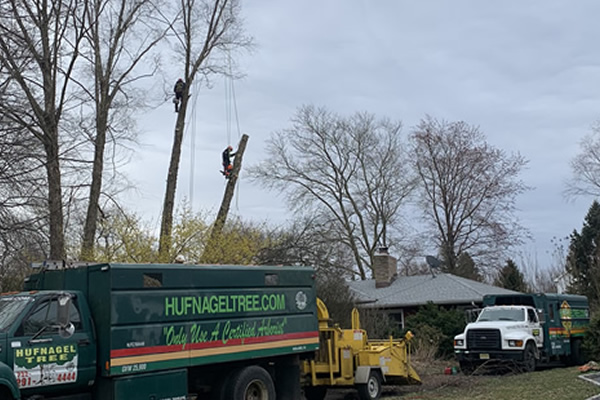
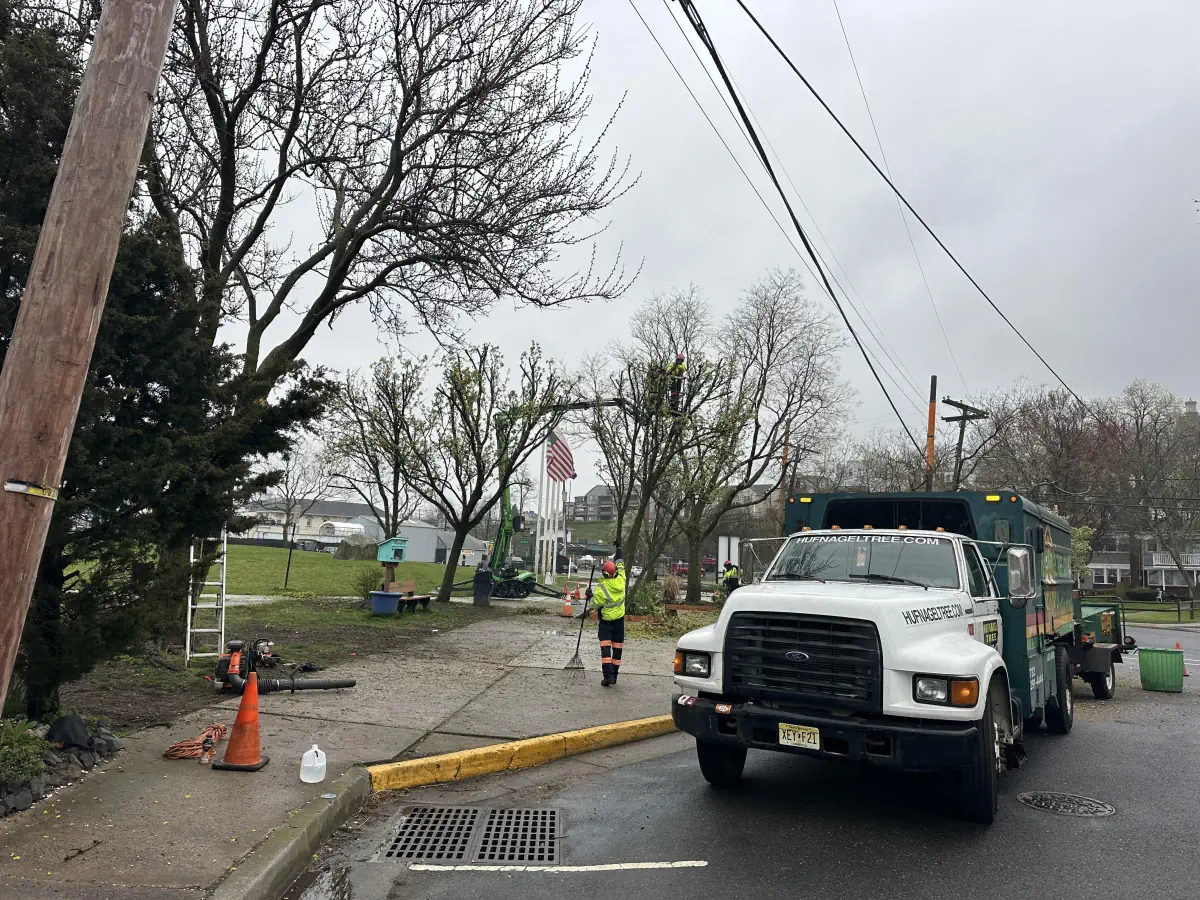
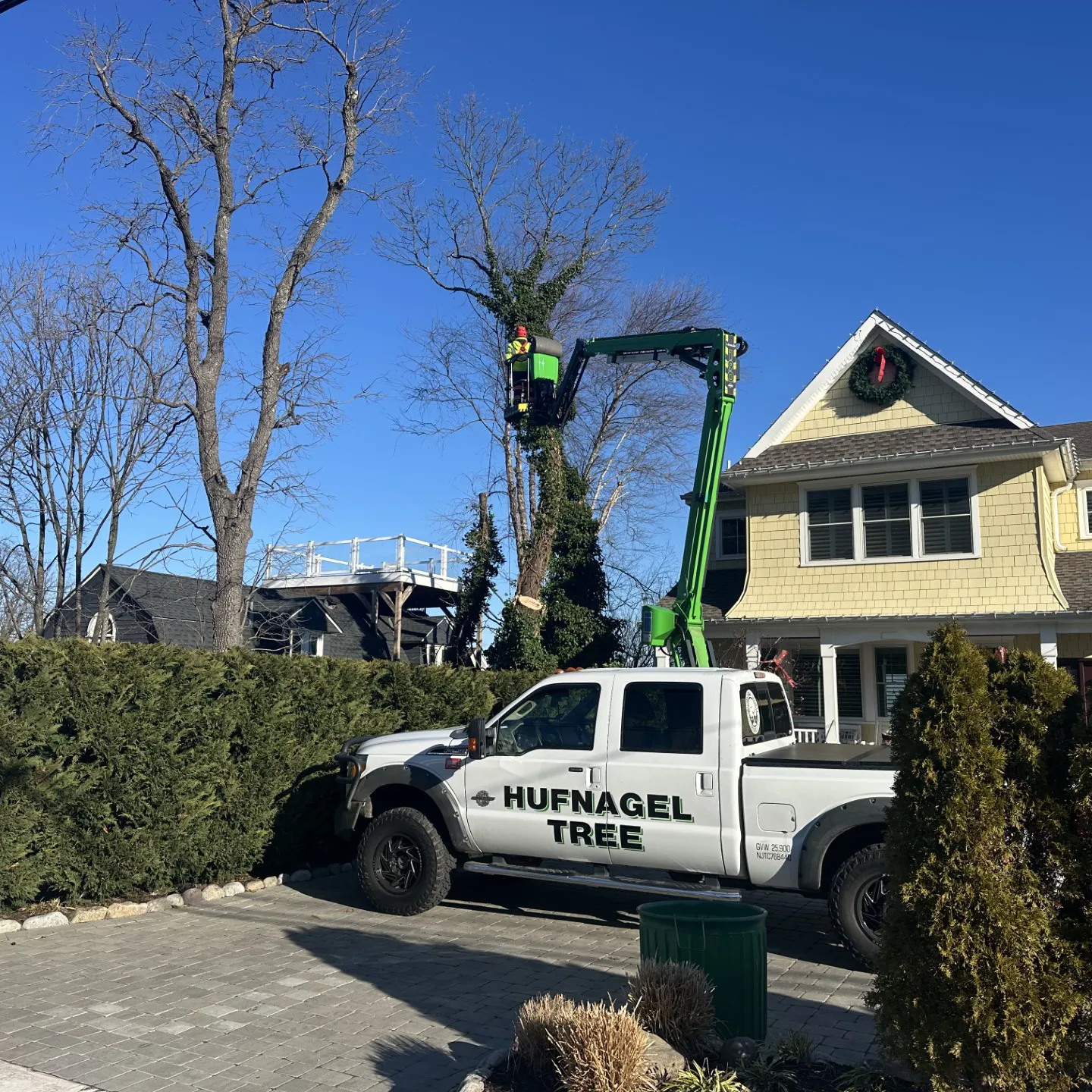
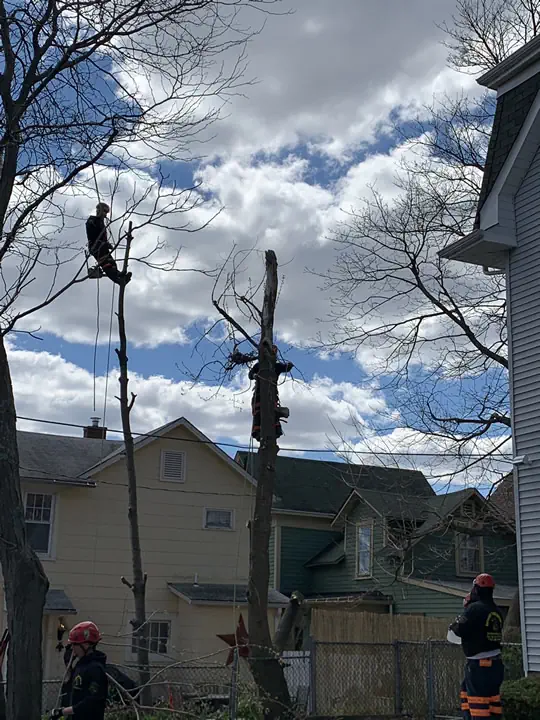
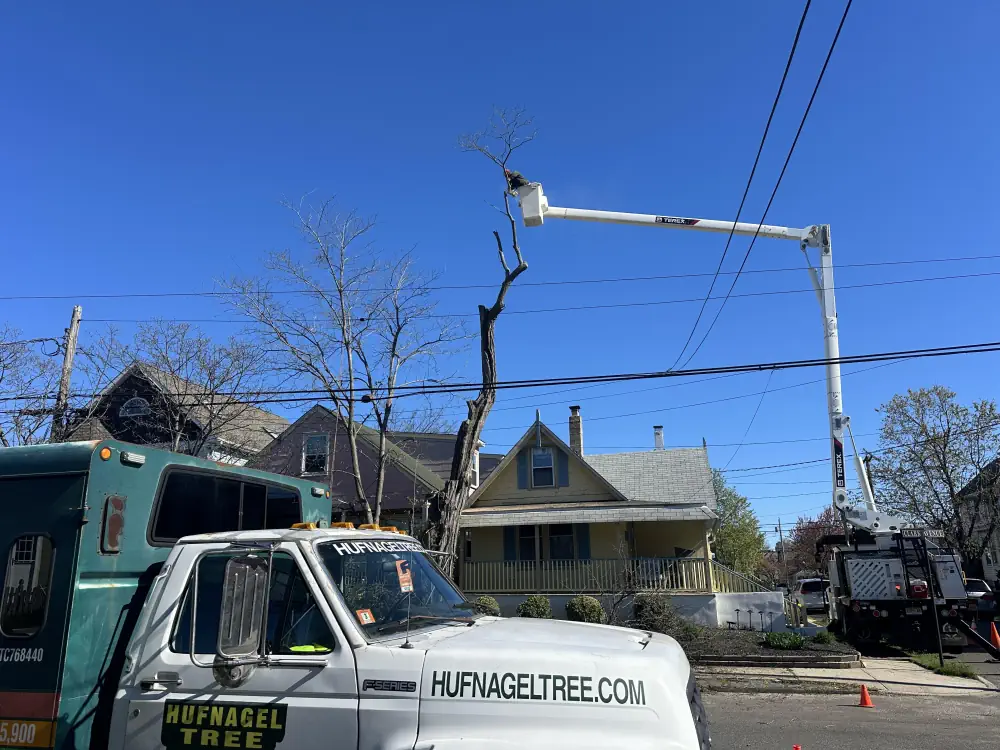
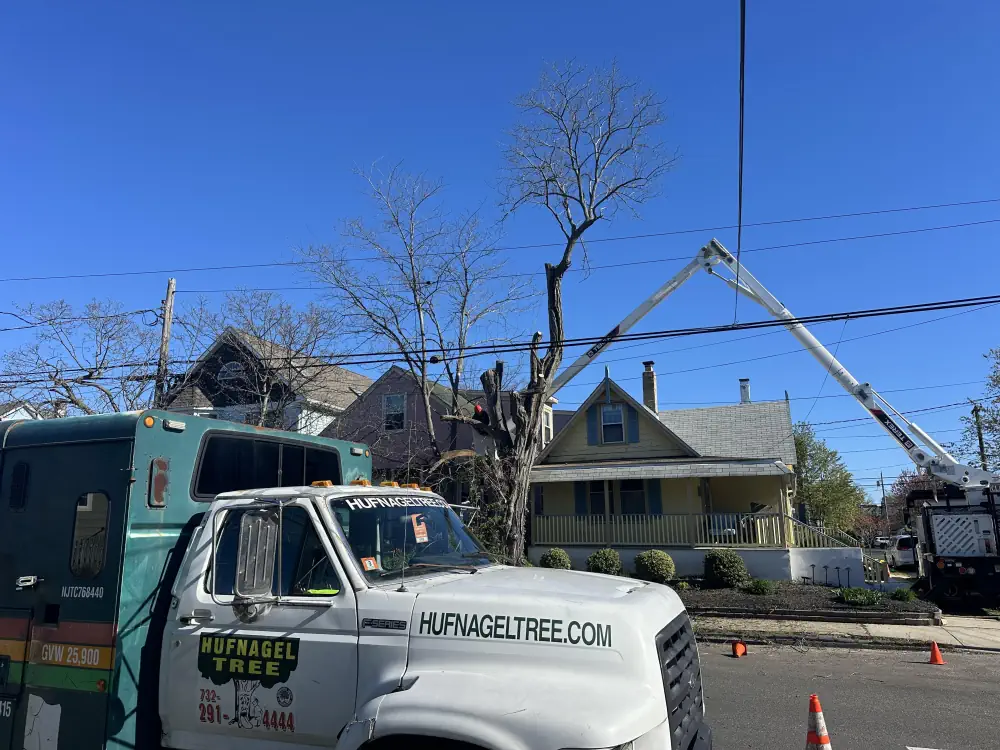
When removal is necessary, we provide professional tree removal with competitive pricing and a clear scope. Atlantic Highlands jobs often require careful rigging around pavement, guardrails, power service, neighboring structures, and steep ground. Our work throughout Atlantic Highlands, Highlands, Navesink, Leonardo, Locust, and Middletown gives us hands on familiarity with the Bayshore conditions that make these removals different from open lot work.

Michael Hufnagel says, “A violation letter can make people feel like they have no choices. Our job is to give the homeowner facts, a fair price, and a plan. We work for the homeowner. We want you to understand what is wrong with the tree, what the Borough is requiring, and what it should take to resolve it correctly.” We are not a law firm and do not replace a surveyor or municipal decision maker, but on the tree care side we can be one of a homeowner’s strongest allies when dealing with a government notice.

How Hufnagel Helps Turn a Tree Notice Into a Plan

  • Review the notice and explain the tree care issue being cited in plain language.
  • Inspect the tree using certified arborist experience and practical risk evaluation.
  • Help document tree condition, measurements, photographs, and permit information.
  • Recommend pruning, monitoring, risk reduction, or removal based on the actual tree and notice.
  • Provide competitive pricing, permit facilitation, professional removal, and a clear path toward compliance.

Our storm season tree risk assessment guide and specialty tree care guide for Highlands, Atlantic Highlands, and the Navesink River show the same approach we bring to violation work: inspect first, understand the target and local conditions, then recommend only the work the situation justifies.
Call Hufnagel Before the Notice Deadline Gets Close

Hufnagel Tree Service brings certified arborist expertise, more than 25 years of Monmouth County experience, competitive pricing, permit familiarity, and hundreds of five star Google reviews to Atlantic Highlands homeowners. We understand how local roads, slopes, mature trees, utilities, property boundaries, and municipal requirements can intersect on one job.

If you received an Atlantic Highlands tree violation notice, call (732) 291-4444 before the deadline gets close. We can inspect the tree, help you interpret the tree issues described in the notice, assist with permit facilitation, and provide the pruning or tree removal work needed to move the problem toward resolution. For another example of how we help homeowners respond to outside tree requirements, see our guide to handling an insurance company tree trimming notice.

Schedule Service Now!

From precision pruning and safe removals to health assessments and preventative care, Hufnagel Tree Service delivers expert solutions backed by decades of experience. We offer certified insight, fair pricing, and a commitment to doing what’s best for your landscape.

Where Do You Need Service?
Please Enter Your Contact Information
Are You A New or Existing Customer?
How Can We Help You?

Thank You!

Your Message Has Been Sent

We Will Contact You About Your Inquiry Shortly.

We Could Not Find A Direct Link To A Tree Removal Permit Application For The Town You Selected.

Please contact your local municipality to determine if a permit is required for your tree removal project. They will provide you with the most accurate and up-to-date information.