Contents
Fall Tree Preparation in Matawan Starts With the Summer You Just Had
Preparing trees for fall and winter in Matawan is not a generic checklist. The right work depends on what happened during spring and summer, where the tree is growing, and what surrounds it.
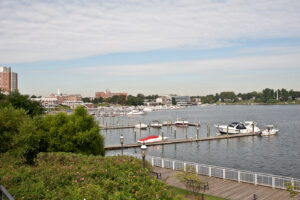
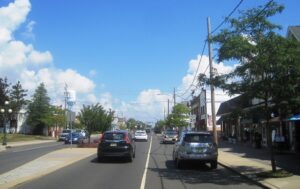
Properties near Lake Lefferts and Matawan Lake can hold moisture differently than lots along higher residential streets. Trees near Main Street, Broad Street, Route 79, and Route 34 may also have tighter root zones, pavement, utilities, traffic, and repeated pruning pressures. Our Matawan tree care experience helps us read those local differences before recommending work.
By September, trees have already carried a full season of leaf weight through heat, thunderstorms, and periods of heavy rain. That history matters. A limb that bent repeatedly in summer wind, a weak union that opened slightly, or roots that shifted in saturated soil can become more important once leaves fall and winter storms bring a different kind of loading. Fall preparation is therefore less about making trees look neat and more about understanding structure before the next season tests it.
New Jersey emergency officials advise homeowners to check their yards for dead or rotting trees and branches because severe weather can turn those defects into property and safety hazards. The state guidance on thunderstorm preparation is written for severe weather, but the same idea applies before winter. Known hazards are easier to address on a calm day than during a storm response.
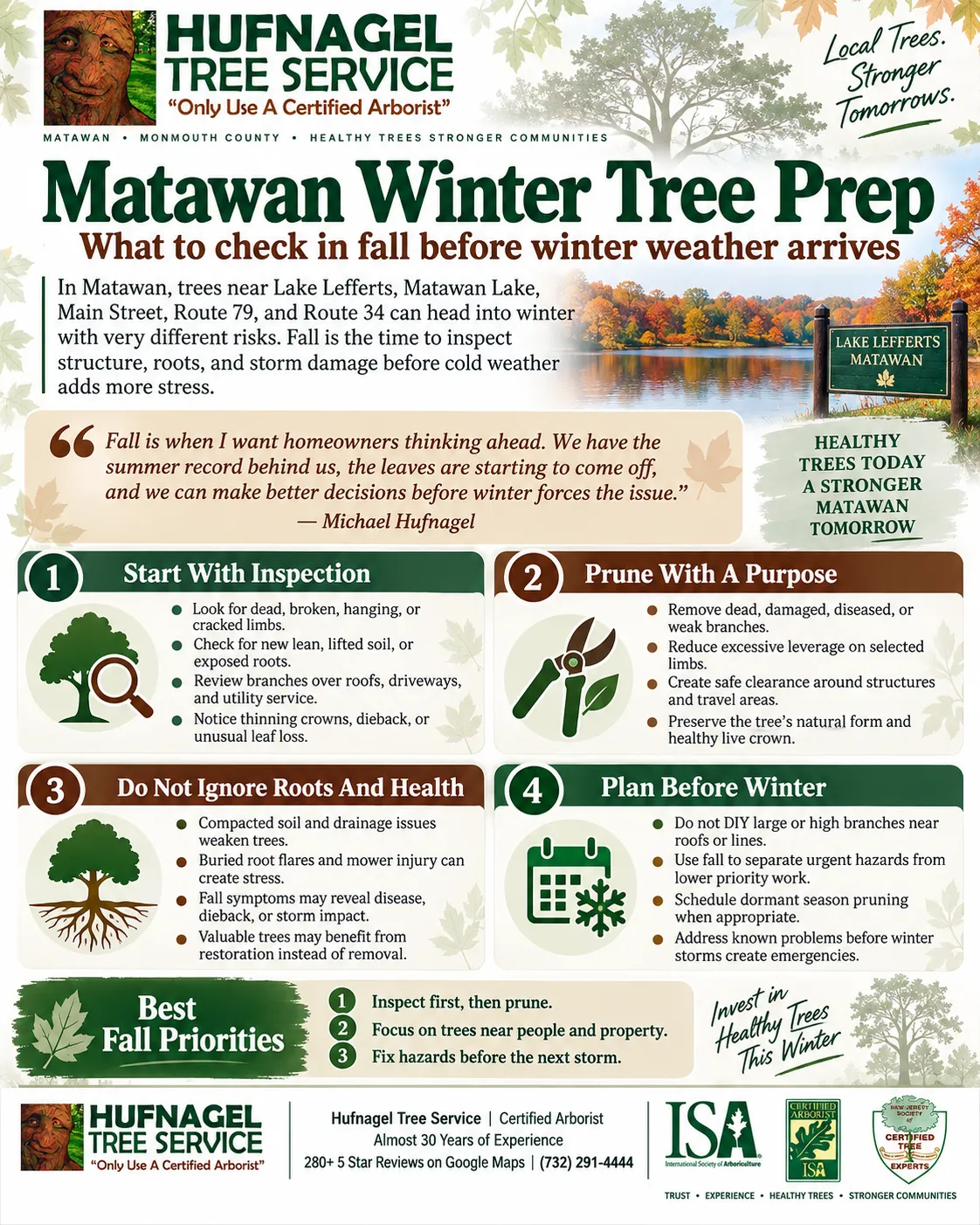
Michael Hufnagel puts it simply: “Fall is when I want homeowners thinking ahead. We have the summer record behind us, the leaves are starting to come off, and we can make better decisions before winter forces the issue.” The objective is not aggressive cutting. The objective is selective, informed care that protects both the property and the tree.
The first fall priorities around a Matawan home
- Identify dead, broken, hanging, or cracked branches near occupied areas.
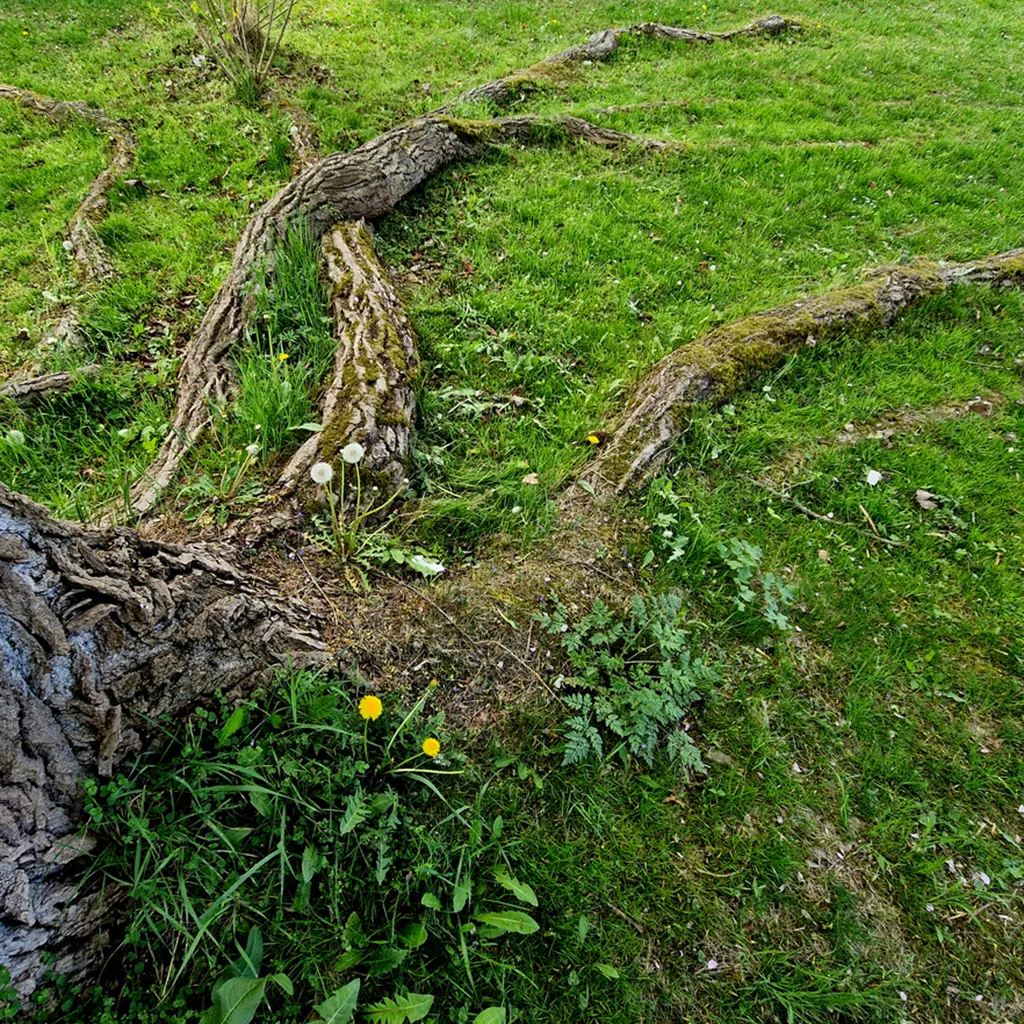
- Check large trees for new lean, soil movement, or root exposure after summer rain.
- Review branches growing toward roofs, service lines, garages, and neighboring property.
- Look for thinning crowns, unusual scorch, or dieback that may signal a health problem.
- Plan winter or dormant season pruning based on species, condition, and actual need.
Inspection Comes Before Pruning
One of the most common mistakes in seasonal tree care is deciding to prune before deciding why a cut is needed. Our tree risk evaluation begins with the whole tree. We look at root conditions, trunk defects, branch unions, canopy balance, deadwood, previous cuts, decay indicators, and targets below. Only after that assessment do we decide whether pruning, restoration, monitoring, or removal is appropriate.
Pruning can reduce certain risks when it removes dead, diseased, damaged, hanging, or poorly attached branches. It can also improve clearance and structure. Penn State Extension pruning guidance describes risk mitigation, clearance, health, structure, and restoration as distinct pruning objectives. That distinction matters because a mature Matawan oak should not be cut the same way as a young ornamental tree simply because both are due for “fall trimming.”
In fact, heavy pruning at the wrong time or for the wrong reason can create new stress. Rutgers notes that some late season pruning can stimulate tender growth in certain plants, while dead, diseased, or damaged material may need attention regardless of season. For larger trees, we plan professional tree trimming and pruning around species biology, risk, branch size, and the long term shape of the canopy rather than a calendar alone.
Matawan has many mature trees growing in relatively tight residential spaces. That makes canopy balance important. Removing too much from one side of a tree, opening large wounds, or stripping interior growth can change how wind moves through the crown and where load is carried. Proper pruning should leave a tree looking like a tree, not like a storm just passed through it.
Good seasonal pruning has a reason behind every cut
- Remove material that is dead, damaged, diseased, or structurally weak.
- Reduce excessive leverage on selected limbs without topping the canopy.
- Create safe clearance where branches conflict with structures or travel areas.
- Retain enough live crown to support health and normal energy production.
- Preserve natural form instead of forcing every tree into the same shape.
Prepare Roots and Tree Health for Cold Weather Too
Fall preparation should not stop at the canopy. Trees depend on healthy soil and roots to enter dormancy with stored energy and adequate water. Compacted soil, grade changes, buried root flares, repeated mower injury, and chronic wetness can all weaken a tree without producing dramatic symptoms. Our tree health management service looks at those below ground and whole tree factors, especially when a tree has shown thinning foliage, early color, dieback, or reduced growth.
The New Jersey Forest Service forest health program tracks insect and disease concerns across the state, including bacterial leaf scorch in oaks and other landscape species. Fall symptoms can sometimes be useful diagnostic clues because scorch patterns, dieback, and premature leaf loss may be easier to notice before the canopy goes bare. An inspection can help distinguish disease concerns from drought stress, storm damage, or normal seasonal change.
For valuable trees that have suffered prior storm damage, tree restoration may be more appropriate than removal. Restoration can involve staged pruning, weight reduction, structural correction, health support, and follow up monitoring. The goal is to retain a tree when its condition and risk can be managed responsibly. That approach is especially worthwhile for mature shade trees that define older Matawan lots.
If the tree is healthy enough to retain but exposed to weather, our tree storm proofing service focuses on practical risk reduction before storms arrive. The International Society of Arboriculture also provides tree owner resources on storm damage and risk that emphasize prevention, qualified assessment, and professional care rather than topping or panic pruning.
Fall preparation is strongest when the whole tree is considered
- Canopy structure and deadwood.
- Trunk cracks, cavities, old wounds, and weak unions.
- Root flare visibility, soil movement, compaction, and drainage.
- Leaf symptoms, dieback, pests, and disease indicators.
- Targets such as the home, driveway, sidewalk, utility service, and neighboring property.
Winter Readiness Also Means Knowing What Not to Touch
Some of the most important fall decisions are about work that should not be attempted by a homeowner. Large branches over roofs, branches near electrical service, suspended storm damage, and tall trees that require climbing or aerial equipment carry risks that are not obvious from the ground. The New Jersey Department of Health storm tree safety resources specifically warn that tree work becomes even more hazardous after storms and should be left to licensed professionals when large trees, overhead hazards, or utilities are involved.
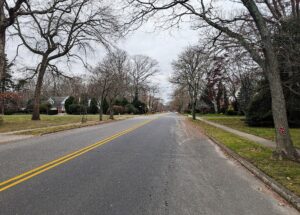
This matters in Matawan because mature trees often share limited space with houses, detached garages, narrow side yards, driveways, sidewalks, and utility lines. A small mistake can damage both the tree and the property. If a branch is high, heavy, cracked, or touching a line, the safest fall preparation step is often to leave it alone and schedule an evaluation. Good seasonal tree care includes knowing when professional equipment and training are necessary.
Homeowners can still help by keeping the base of important trees visible, avoiding new soil piled against trunks, preventing vehicles from repeatedly crossing root zones, and noting where water stands after rain. Those observations give us useful information when we arrive and help make the inspection more specific to the property.
Use Fall to Plan, Not React. Give Us A Call To Learn More.
The biggest benefit of fall tree care is time. When we identify a weak limb or structural problem now, the homeowner can make a deliberate decision. When the same limb fails during a winter storm, the decision becomes an emergency. Planning also lets us separate work that should happen promptly from pruning that may be better scheduled during dormancy.
That is particularly useful in a borough where mature trees share space with older homes, lakefront lots, sidewalks, driveways, and utility infrastructure. If you are not sure where to start, review our Matawan service area page and schedule an evaluation of the trees closest to the places people use every day.
Hufnagel Tree Service brings almost 30 years of local tree care experience, certified arborist oversight, and more than 280+ 5-Star Reviews on Google Maps. For Matawan fall tree care, winter preparation, pruning decisions, or a professional risk evaluation, call (732) 291-4444. We will focus on what your trees actually need before the next season arrives.
Schedule Service Now!
From precision pruning and safe removals to health assessments and preventative care, Hufnagel Tree Service delivers expert solutions backed by decades of experience. We offer certified insight, fair pricing, and a commitment to doing what’s best for your landscape.
Learn More About Our Services
Related Articles
Matawan Tree Storm Damage: What Summer Wind Leaves Behind
Insurance Company Tree Trimming Notice: Call Hufnagel
Aberdeen Fall Tree Inspection: Find Problems Before Winter
Brielle Tree Risk Assessment for Storm Damage and Hazardous Trees
Tree Health Inspection Services Near Fair Haven, NJ