Contents
Tree Health in Fair Haven Starts With a Compact Borough on the Navesink
Fair Haven was incorporated as a borough on March 28, 1912, out of Shrewsbury Township, and it still sits along the Navesink River on the Rumson peninsula, according to Wikipedia. The borough covers 2.11 square miles, nearly a quarter of it water, and counted 6,269 residents in 2020. County Route 10, known locally as River Road, is its main road, and homes, parks, and street trees all share very little room beside it.
That compact layout is why tree health in Fair Haven is a community subject and not just a yard by yard one. The borough’s community forestry plan reports residential tree canopy of 40.3 percent, which it says exceeds the Monmouth County average by 13 percent, and it builds on an inventory of 2,636 trees. What that inventory found about maples and oaks shapes how we read a property here. Our tree health management work starts with the tree and its root zone, then connects both to the house, the street, and the rules of the borough.
After almost 30 years working throughout Monmouth County, we have seen that late October is a good time for this kind of review. Many leaves are still on the trees, so the crown is easy to read, and the roots are still working before the ground cools. Winter has not yet added its load, and the borough’s fall cleanup is under way, which makes it a natural moment to look at the base of every mature tree.
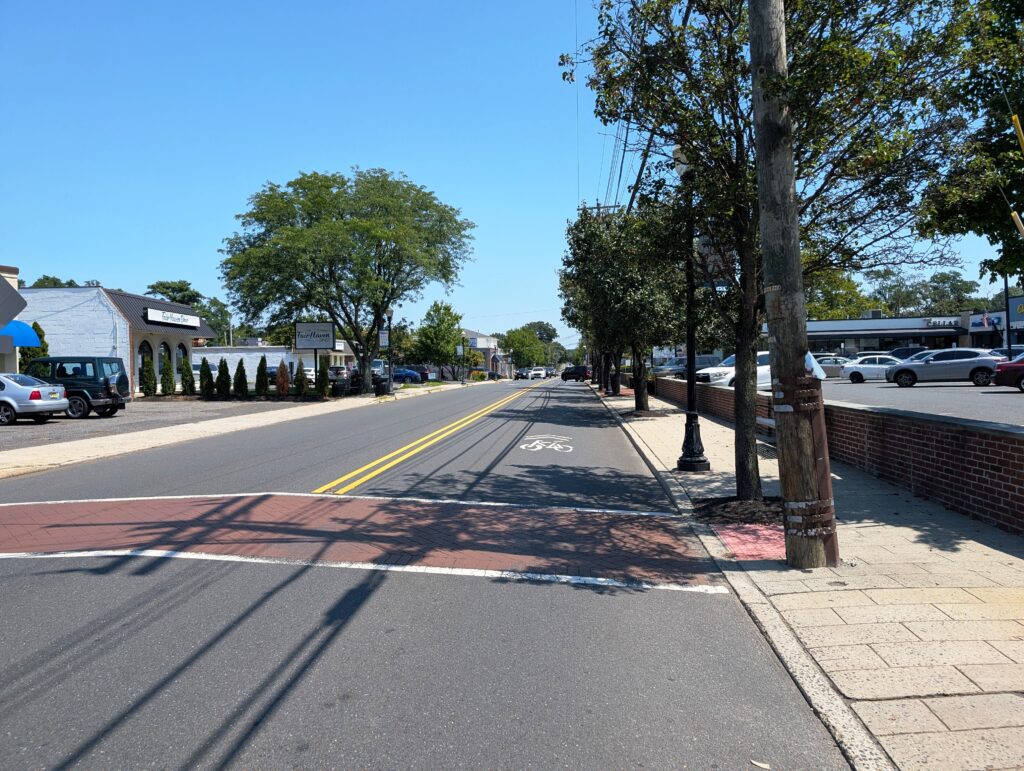
The photograph above shows street trees along County Route 10 in Fair Haven, planted close to the sidewalk, the curb, a utility pole, and the overhead wires. A street tree has very little ground to work with. Its roots share a narrow strip with paving, parked cars, and utility lines, and its crown reaches toward wires and storefronts. We keep that setting in mind whenever we look at a tree beside a public road, because the same defect can matter more over a sidewalk than it does in an open yard.
The borough keeps a Shade Tree Commission, and its page on the borough site describes a mission to preserve, protect, and expand the urban forest. The page also records the 2025 Arbor Day planting, when children from Sickles School and commission members planted two Salem white oaks at McCarter Park. The forestry plan adds that old oaks shade the playground there. Mature trees in a town this size are not scenery alone. They are shared property with a long history, and they deserve a plan that looks at what each one can still carry through another winter.
Fair Haven's Tree Inventory Points to Maples and Oaks Under Stress
The borough did something many towns have not done. Its plan says a firm named Arbor Pro began an inventory in June 2024 and delivered a final summary in October 2024, covering street trees and park trees near frequently used areas. A total of 2,636 trees were counted, rated for condition, and sorted into priority lists for pruning and removal tied to street addresses or GPS points. Budget limits kept Fair Haven Fields and the Harding Bird Sanctuary out of the count, so the numbers describe public trees near everyday use, not every tree in town. Our tree risk evaluation work follows the same logic of tying a tree to what it can reach.
The plan reports that Norway maple makes up 9 percent of the urban forest, and that 18.88 percent of the Norway maples in the inventory were rated poor, dead, or critical. It adds that this species historically begins to decline at about 60 years of age. That matches what we see on older streets. A maple that is thinning at the top, dropping small dead twigs, or showing cracks where large stems meet is telling its owner something, and the age of the tree matters as much as any single symptom. Some trees need only monitoring. Others need targeted pruning, restoration, support, or removal.
Oaks get their own warning in the same plan. It says the oak genus should be watched, especially the red oak group, because the inventory showed a higher share of poor health and found bacterial leaf scorch. The plan suggests replacing removed red oaks with white oak, swamp white oak, and bur oak, which it describes as more resistant. A Rutgers plant and pest advisory explains the key difference for homeowners. Scorch from the bacterial disease shows up randomly on individual leaves and across the canopy, while drought scorch is quite uniform on every leaf.
The same Rutgers advisory calls bacterial leaf scorch in oaks a chronic disease, with scorch covering more of the canopy each year until the tree is removed for looks or becomes a hazard. It also notes that testing needs plant material that shows symptoms, and that the season ends once fall color and leaf drop begin. We cannot diagnose that disease from a sidewalk, and we do not try. What we can do is walk the crown, note the pattern, and tell a homeowner when a sample is worth taking while leaves are still on.
The plan also flags green ash, saying its numbers suggest emerald ash borer is probably present, though only three ash trees appear in the count. It describes the top four weakest species as short lived pioneers, including Eastern red cedar, black locust, and black cherry. None of this is a reason to panic about a tree on a single lot. It is a reason to learn the age, species, and condition of each large tree near a house, and to write down what changes from one year to the next.
Mike Hufnagel puts the starting point this way: “A tree can look fine from the street while its base tells a different story. We pull the mulch back and look at where the trunk meets the ground, because that is where a tree shows what the last few years have done to it.” That is why a visit from us starts at the ground and works upward, and it is why two maples of the same size on the same block can lead to different recommendations.
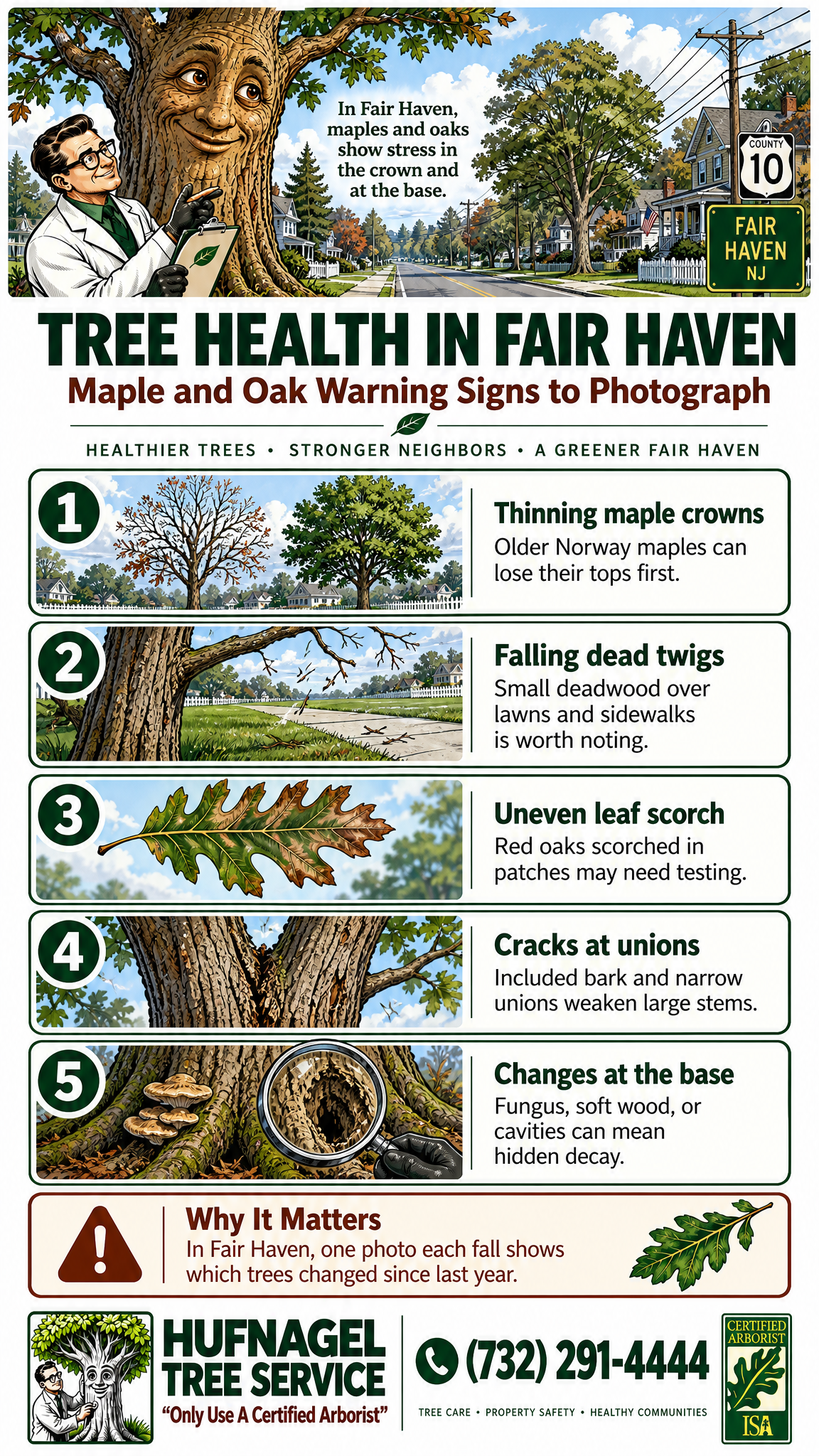
Maple and Oak Warning Signs to Photograph in Fair Haven
- Thinning crowns on older Norway maples, often a bare top above fuller lower limbs.
- Dead twigs and small dead branches that keep dropping onto lawns and sidewalks.
- Red oak leaves that scorch in an uneven pattern across the canopy.
- Cracks, included bark, or narrow unions where two large stems meet.
- Fungus, soft wood, or cavities at the base that were not there last year.
Nothing on that list asks a homeowner to climb or cut. Look from the ground, take a photograph, and compare it with the same view next fall. A tree with one warning sign may need only monitoring. A tree with several, over a roof or a busy walkway, deserves a professional look. With the crown understood, the next question is what is happening at the base of the trunk, where many of these problems start.
Fall Root Care in Fair Haven Starts With Mulch and the Root Flare

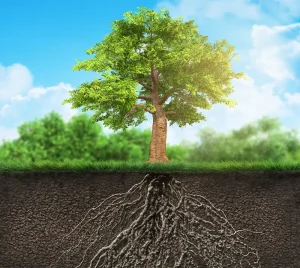
Roots do most of their work in the top foot or so of soil, and they need air as much as water. Rutgers explains in its fact sheet on over mulching trees and shrubs that when soil oxygen drops below 10 percent, root growth in most trees declines, and that this is especially common during wet spells in spring and fall. Fair Haven has water on its edge and a water table that rises after heavy rain, so soil in low areas can stay wet longer than a homeowner expects. Mulch piled on top of wet soil makes that problem worse, and it is one of the quieter threats to tree health in Fair Haven.
The same fact sheet gives numbers that are easy to follow. Total mulch depth should not exceed 3 inches, counting what is left from earlier years, and on compacted or poorly drained soil it should stay at 2 inches. Fine textured mulch should go on thinner than coarse mulch, and mulch should stay 8 to 12 inches away from mature tree trunks. Those figures are why we ask homeowners to dig down and measure before they spread another bag. Many yards carry five or six years of layered mulch that nobody has ever measured.
The damage at the trunk is different from the damage at the roots. Rutgers says inner bark at the root flare cannot survive a constantly moist environment, and that piling mulch against a trunk can kill that tissue over time. The root flare is the place where the trunk widens as it meets the roots, and a healthy tree shows it. The fact sheet says the same injury happens when a tree is planted too deep, which matters in a town that keeps planting oaks on public land. A new tree should show its flare from the first day.
Symptoms are slow, and that is the trouble. Rutgers notes that yellowing leaves, small leaves, poor twig growth, and dieback of older branches can take several years to appear, and that by the time they show, the tree may be in irreversible decline. A homeowner who sees those signs this fall may be looking at a problem that began three or four seasons ago. Our guide to weak tree roots shows what we look for when a tree leans, heaves the soil, or grows fungus near its base.
Compaction is the other quiet root problem on small lots. Foot traffic, parked vehicles, and heavy equipment squeeze the soil air out of the root zone, and a lawn that looks fine can sit on soil that roots can no longer use. We ask what has changed on a property, such as a new patio, a drive, a trench, or a regrade, because that history often explains a tree that is thinning without any visible injury. Where the base is already damaged, tree restoration can help a tree that still has sound structure.
Most of this care can be done from the ground. Pulling mulch back from a trunk, raking a crusted layer so water can soak through, and looking for the flare are all light hand jobs that do not involve a ladder or a saw. When the flare is buried, the bark is soft or cracked, or the soil around the base is heaved, that is the moment to call a professional and not to dig deeper alone. Our review will tell the homeowner what we found and which part can wait for spring.
Mulch and Root Flare Steps Fair Haven Homeowners Can Take From the Ground
- Dig through the mulch layer to learn its actual depth before adding any more.
- Pull mulch back 8 to 12 inches from the trunk of every mature tree.
- Keep total mulch at 3 inches or less, and 2 inches on poorly drained soil.
- Look for the root flare where the trunk widens, and photograph it each fall.
- Call for an inspection if the flare is buried, soft, cracked, or oozing.
Good root care is quiet work. It does not make a tree look different the next day, but it can change how the tree handles the next wet season and the next storm. A tree with a clear flare and a loose, oxygen rich root zone is easier to read and easier to protect. Once the base is in good order, the next steps are practical ones about cleanup, paperwork, and replacement, which the borough handles with its own rules.
Fall Cleanup, Permits, and Replacement Planning Follow Borough Rules
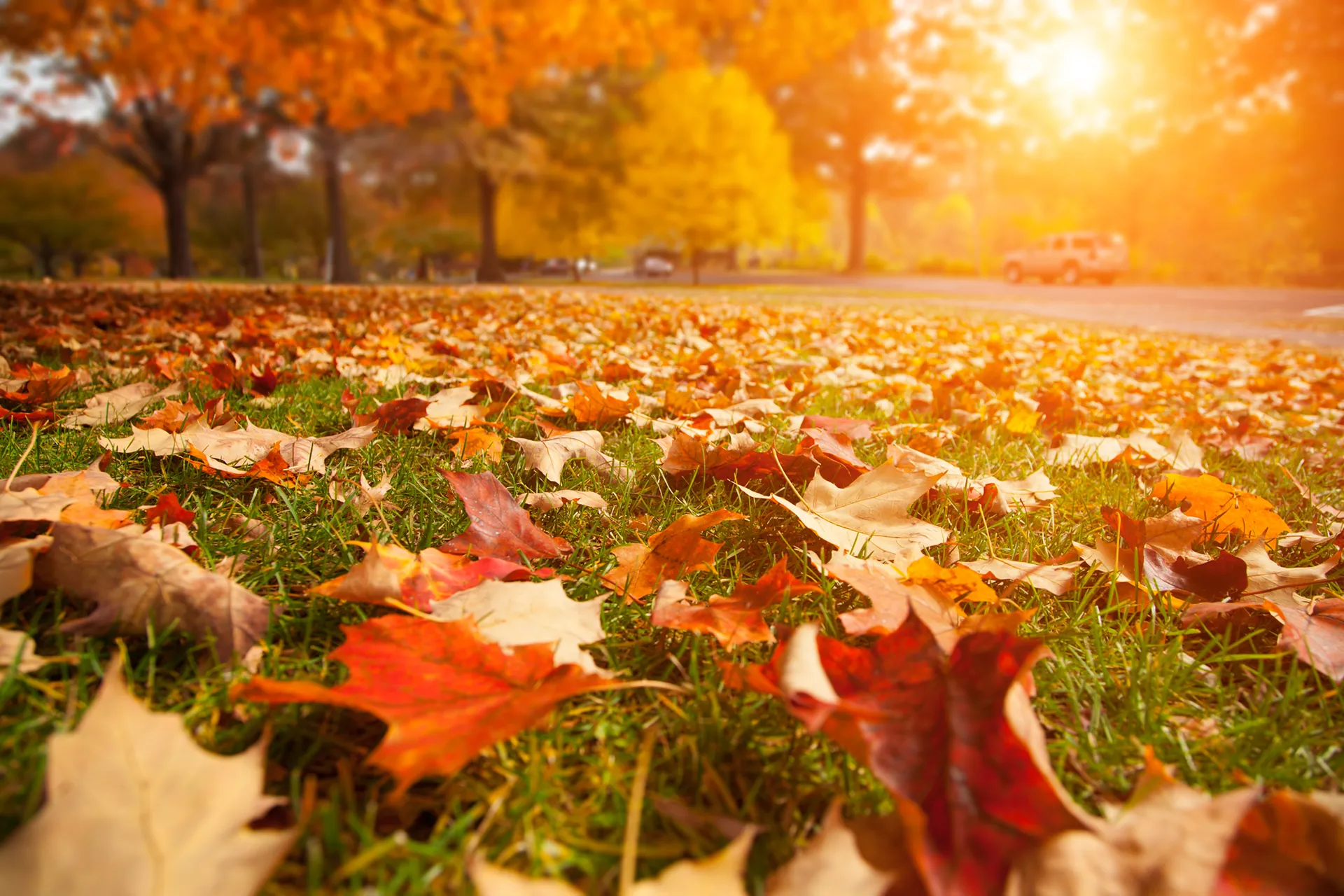
Fall cleanup is already on many Fair Haven calendars. The borough’s brush and leaf collection page says that during Fall Cleanup in October, brush may go at the curbline or in a gray or neutral can, unbundled. It defines brush as woody plants, limbs, branches, or twigs less than 3 inches in diameter and no longer than 4 feet. Leaves may not go in plastic bags, and a pile that mixes brush with leaves will not be picked up. Residents should check the municipal calendar for dates in each zone.
The page also explains why the rules are strict. Leaves collected by the borough are taken to a farm for mulching, so sticks, rocks, vines, and other foreign material do not belong in the pile. It asks residents to keep brush and leaves at least 10 feet from any storm drain, as the borough stormwater ordinance requires. Anything larger than the brush definition, such as a heavy dead limb, is not a curbside job. That is work for a trained crew with the right equipment and a plan for the wood.
Removal is a separate question with a written process. The borough’s tree removal application and ordinance says anyone who wants to remove a tree 6 inches or larger in diameter at breast height, or 2.5 inches for a street tree, must receive permission first. It says no tree may come down until officials review the application and issue an approved permit. The borough’s licensed tree expert reviews the tree, and Borough Hall contacts the applicant with a determination within 21 days. Applicants mark the tree with tape and add a property survey sketch.
Condition changes the answer, and the form says who decides. Hazard tree determinations are made solely by the borough’s designated licensed tree expert, and hazard trees may be removed with no replacement fee or replacement requirement. Other removals may require a replacement tree or a payment into the Shade Tree Trust Reserve Fund. We cannot declare a tree a hazard for the borough, but we can document the defect and the target with photographs and notes so the reviewer sees the reason. Our guide to tree removal permits covers the general process in plain terms.
Larger jobs carry extra steps. The application defines a large scale tree removal as more than five trees per lot or a canopy reduction of more than 20 percent, and it requires a report and a certified letter to abutting property owners. It also says all tree work must be done by registered tree care businesses in good standing with the state, with a current tree removal registration on file with the borough. A homeowner should ask any contractor about that paperwork before a date is set. Our tree removal work always begins with the tree, the target, and the borough’s rules.
Replacement planning belongs at the front of the process, not the end. The Shade Tree Commission keeps a recommended tree list for planting in Fair Haven, and the forestry plan favors native species and a mix that avoids relying on any single tree. When a maple or oak comes out, the question is where the next tree can grow without crowding the house, the wires, or the roots of its neighbors. Good pruning can also delay a removal by years when the structure is sound, and storm proofing can reduce load on a tree worth keeping.
Questions to Settle Before Any Fair Haven Tree Work Begins
- Measure the trunk at breast height, and remember that street trees have a lower limit.
- Mark the tree with tape and sketch its place on the property survey.
- Ask whether the job counts as large scale, with more than five trees or a 20 percent canopy cut.
- Photograph the defect and the target so the borough reviewer can see the reason for work.
- Choose the replacement species and its location before the old tree comes out.
Rules like these can feel like a hurdle, but they also support tree health in Fair Haven and protect the canopy that gives the borough its character. A tree that is documented, measured, and planned for is easier to approve and easier to replace. The goal is not to remove as much as possible or to save every tree. The goal is to give each tree the work it actually needs and to make sure the borough has what it asks for. With those pieces in place, the last step is to book the review.
Call Hufnagel Tree Service About Tree Health in Fair Haven Before Winter
If you have mature maples, oaks, or street trees near your Fair Haven home, driveway, river frontage, or property line, schedule an evaluation before winter weather arrives. We provide tree health management, tree risk evaluations, pruning, storm proofing, restoration, and tree removal when a tree cannot be managed safely.
Hufnagel Tree Service is led by a certified arborist with almost 30 years of local experience and more than 280 five star Google Maps reviews. We inspect first, explain what we found in plain terms, and recommend only the work that changes the outcome for your trees and your property.
Call or text (732) 291-4444 to schedule a tree health review in Fair Haven before the first hard freeze. More of our local work is collected in the Fair Haven location archive, including our earlier tree health inspection services page.
Schedule Service Now!
From precision pruning and safe removals to health assessments and preventative care, Hufnagel Tree Service delivers expert solutions backed by decades of experience. We offer certified insight, fair pricing, and a commitment to doing what’s best for your landscape.
Learn More About Our Services
Related Articles
Tree Risk Inspections in Sea Girt, Spring Lake & Little Silver
Matawan Fall Tree Care: Prepare Trees Before Winter
Fall Storm Proofing in Keansburg NJ: Prepare Trees Before Winter