Contents
Tree Risk Evaluation in Bradley Beach Starts With a Dense Town on a Low Shore
Bradley Beach is small, flat, and closely built. Wikipedia lists a total area of 0.63 square miles, an elevation of 16 feet, and a 2020 population of 4,282, and it shows the borough sharing borders with Avon-by-the-Sea, Neptune City, and Neptune Township. The borough’s own history page says about 4,400 people live here year round, that the number rises to roughly 30,000 in summer, and it describes an early landscape of pine trees and sand dunes beside the ocean.
That setting changes how we think about tree risk. A tree on a Bradley Beach lot rarely stands in open space. It stands a few feet from a porch, a driveway, a parked car, a sidewalk, and a utility wire, so a defect that would be a minor concern in a field becomes a real concern here. Our tree risk evaluation service is built around that idea, and tree risk evaluation in Bradley Beach starts with what a tree can reach before it asks how big the tree is.
After almost 30 years working throughout Monmouth County, we have seen how a quiet November exposes what summer leaves hide. With the canopies thinning and the first hard coastal storms still ahead, this is a practical time to look for weak unions, wet roots, and heavy limbs over roofs and cars before winter weather adds load.
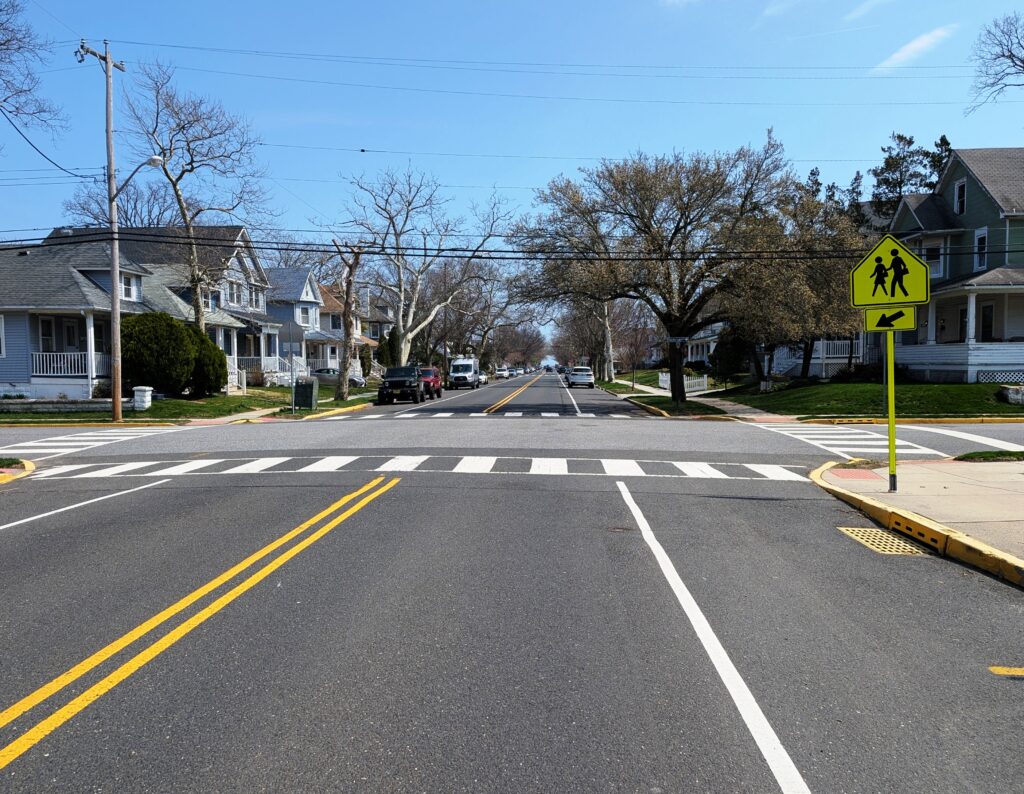
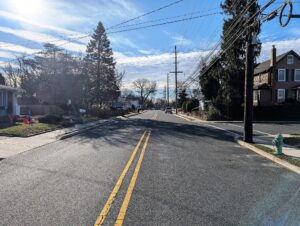
The photograph above shows Brinley Avenue in Bradley Beach in April 2026, looking east between Hammond Avenue and Fletcher Lake Avenue. Mature trees stand close to the road on both sides, with porches and fences behind them and utility wires crossing overhead. Wikipedia identifies Brinley Avenue as Monmouth County Route 2 and Main Street as Route 71, the borough’s main road. A tree in a setting like this has a short fall zone, and a limb that fails here lands on pavement, a car, or a front porch, not on open lawn.
Exposure is the second part of the setting. The National Weather Service says nor’easters are most frequent and most violent between September and April, with winds of gale force and the potential for disastrous coastal flooding. A Rutgers Cooperative Extension seashore gardening handout lists drying wind, drying sand, baking heat, and salt spray as the adverse conditions by the shore, and it calls salt spray the deal breaker. A tree that lives with that stress all year has less reserve when a storm adds load.
Condition, Target, and Exposure Decide Tree Risk on a Small Lot
The International Society of Arboriculture says in its storm related tree damage brochure that it is impossible to prevent all storm related damage to trees, but that an arborist can help identify areas of concern. The brochure lists identifying branch, trunk, and root defects that may weaken a tree, removing dead or defective branches, and correcting problems caused by improper practices such as topping. That list is close to how we build an evaluation, because each item answers a specific way a tree can fail.
Tree risk is condition plus target plus exposure. Condition is what is wrong with the tree, such as dead limbs, cracks, decay, or a shifted root plate. Target is what a failure would hit. Exposure is the weather the tree will face, including wind, wet soil, and salt. A tree with a serious defect over an empty lot is a low concern. The same defect over a bedroom roof or a shared driveway is not, and in Bradley Beach the second situation is far more common than the first.
We look at structure before we look at size. Large codominant stems can develop included bark and narrow unions that become more vulnerable as the stems grow, and our guide to codominant stems explains what we look for in a fork. A tree with sound structure can ride out a hard wind with some broken twigs. The same species with a split union may lose half its crown, and neither tree looks different from the sidewalk.
Roots matter just as much. The ISA brochure notes that strong winds can break branches and even uproot trees, particularly when soils have softened from heavy rain or snow. Our guide to weak tree roots describes the signs we watch for, including soil lifted on one side of the trunk, a lean that is new, and fungus growing at the base.
Wet ground is part of any honest evaluation. After a long rain, the soil around a root plate holds less, and a tree that stood through a dry summer can lean in a way it did not before. We ask when the lean started, whether the soil has cracked or heaved, and whether trenching, paving, or a change of grade has disturbed the roots nearby, because roots are rarely damaged all at once. Photographs taken today give us something to compare against after the next storm.
Decay hides in plain sight. Our guide to hidden tree rot explains why a green crown is not proof of sound wood. A tree can carry a hollow trunk or a decayed base and still leaf out every spring. That is why an evaluation covers the base, the root flare, the trunk, and the canopy, not just a walk past the tree.
Mike Hufnagel puts our approach simply: “A small lot does not make a tree safer. It only shortens the distance between a defect and the thing it can hit.” That is why we start with the target. The shorter that distance, the sooner a defect deserves attention, even when the tree looks healthy from the street.
What a Bradley Beach Tree Risk Evaluation Looks At
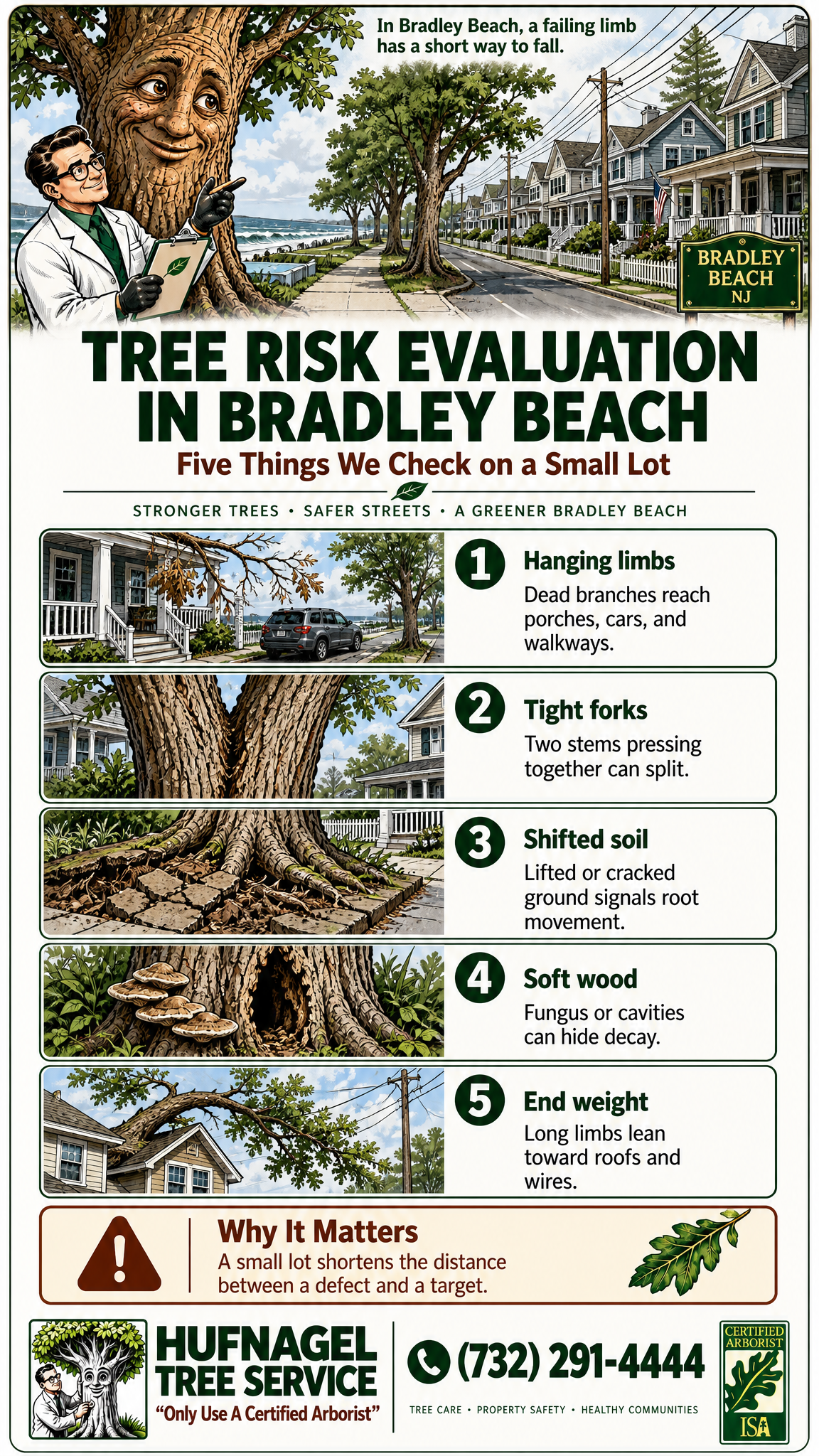
- Dead or hanging branches over porches, driveways, sidewalks, parked cars, and neighboring property.
- Cracks, included bark, and tight forks where two main stems press together.
- Soil that has lifted, cracked, or settled on one side of the trunk.
- Fungus, cavities, or soft wood at the base, the root flare, or old pruning wounds.
- Long limbs carrying end weight toward roofs, wires, and shared property lines.
Each finding points toward one of four outcomes: pruning, restoration, monitoring, or removal. Not every defect means removal. The goal is not to find a reason to cut. The goal is to match the work to the tree and the target. Once the structure is understood, the next question is how much room the neighbors, the wires, and the house leave around it.
Close Lots and Overhead Wires Leave Little Room for a Failing Limb
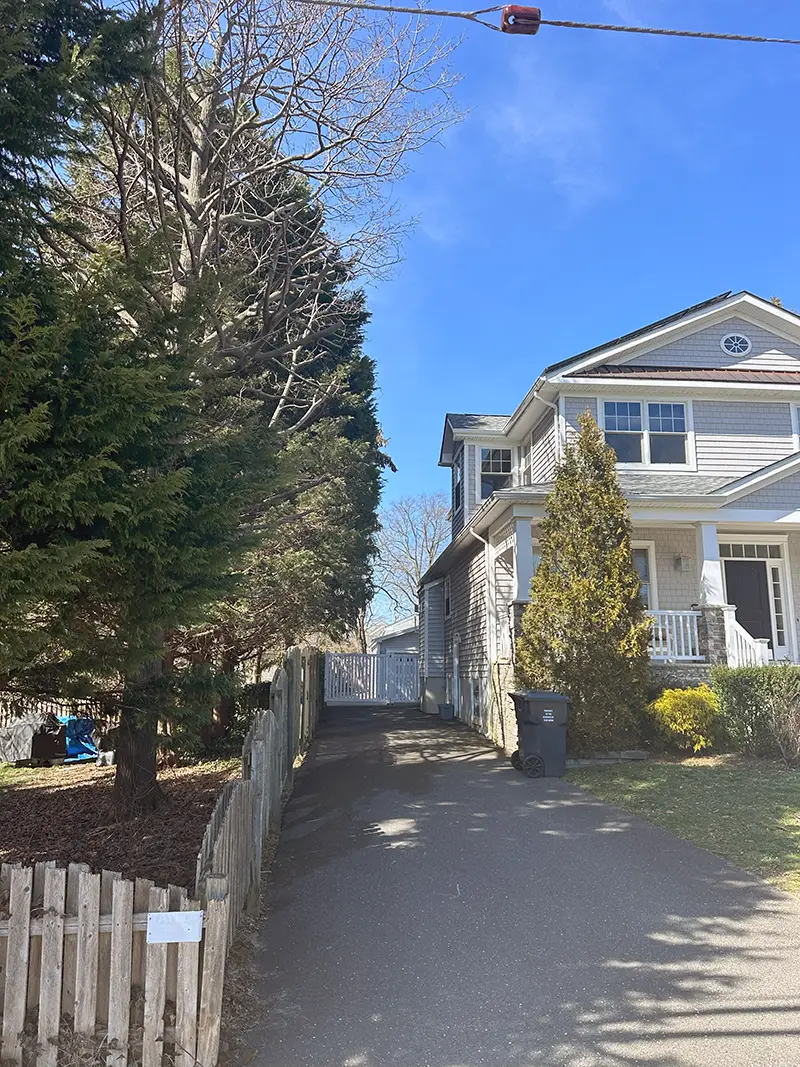
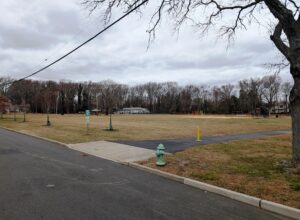
Closely built streets compress every tree decision. Lots in Bradley Beach are narrow, houses sit near property lines, and a canopy often reaches over two or three properties at once. The photograph above shows how little space that can leave. A tall bare tree and dense evergreens stand beside a narrow driveway and a house, with a utility wire crossing the top of the frame. A failure in a setting like that does not have far to go.
Wires change the job completely. The ISA brochure warns that damaged trees may be in contact directly or indirectly with electrical wires, which can cause injury or death from electrocution, and that removing trees or branches near electrical lines requires knowledge and experience. Its advice is to stay clear and call emergency services, the utility company, or an arborist. We agree, and we ask every homeowner to treat a limb near a service wire as a call, not a project.
Clearance work needs a reason behind every cut. Our tree trimming and pruning in tight settings is selective. We remove dead wood, reduce end weight on a specific limb, and keep growth away from roofs and wires. We do not top trees, and we do not try to “thin a tree out for wind” as a blanket prescription, because both leave weak regrowth and wounds that invite decay.
Use matters as much as distance. A tree over a shared driveway, a pool deck, or a front walk has more people beneath it for more hours than a tree at the back of a yard. We ask who parks where, where children play, and which paths are walked every day, because those answers set the priority. Two trees with the same defect can need very different timing, and a good evaluation says which one comes first and why.
Shared canopies add a human question. A limb that fails can land on the neighbor’s side of the fence, and the conversation is easier when both owners have the same written findings and photographs. Our guide to storm season tree risk assessment explains what a homeowner can safely note from the ground. That means looking, photographing, staying clear, and calling.
Salt and wind wear on trees close to the ocean. The Rutgers handout recommends fencing or a salt tolerant windbreak for shore plantings, and it advises rinsing salt and sand off foliage with overhead watering from time to time. For trees already in the ground, the useful question is whether thin canopy or dieback is stress that a tree can recover from, or a sign of a structural problem that needs correcting.
Dense evergreens deserve their own look. A heavy crown over a driveway or a garage is a target in its own right, and a crown that has grown toward the house adds leverage when the wind comes off the water. Our tree health management work covers the roots, soil, and mulch around trees like these, and it belongs in a risk plan as much as pruning does.
Close Lot Warning Signs Worth a Closer Look
- Limbs that reach over a roof, chimney, or porch within a few feet.
- Branches growing toward or touching service wires near the street.
- Trunks growing against fences, walls, or paving with little room for roots.
- Heavy evergreen crowns leaning toward a driveway, garage, or neighboring house.
- Street trees with old pruning wounds, cracked bark, or a dead top.
None of these signs is a reason to climb a ladder. Homeowners look, photograph, stay clear, and call, and we handle the cutting. A defect that is low concern over an open yard can matter much more over a roof or a walkway, and a close lot makes that second case common. With the risk understood, the plan has to fit the borough’s rules for trees on the property line and in the planting strip.
Borough Rules Shape What Happens After a Bradley Beach Evaluation

An evaluation often ends with a question about who is allowed to cut what. Bradley Beach regulates trees under Chapter 425 of its code through the Shade Tree Commission. The commission’s page on the borough site says it meets on the first Wednesday of each month at 7:00 pm at 701 Main Street, and it lists a permit application, an approved tree guide, and a tree owner’s manual for residents.
The strip between the curb and the sidewalk is part of the property. Ordinance 2025-33 says planting strips are part of the property that contains them and that owners are responsible for maintaining what is in them, including grass, trees, and mulch. It allows mulch in the strip only around the trees. For required street trees, it calls for nursery stock from the approved list with a minimum caliper of two and a half inches.
Removal has a process. As posted by the borough, Ordinance 2026-13 gives the commission or its licensed tree expert 25 business days from a completed application to inspect the site and grant or deny the permit. A permit expires 12 months after it is first granted. After approval, the applicant receives a Tree Removal Permit Card that must be displayed in a street facing window or another conspicuous place during the removal and replanting, and returned within 14 days of the replacement planting or a final inspection.
The same ordinance lists what the commission weighs, including whether removal would contribute to flooding, soil instability, or erosion, whether it would harm the contiguous canopy, whether the tree is a specimen or significant tree, and whether the replacement plan offsets the loss. That list fits our own preference for keeping a sound tree whenever the structure allows it. Our guide to tree removal permits covers the general steps, and the Code Official can confirm the current wording before any work starts.
Replacement planting deserves thought before any cutting starts. A tree planted in a narrow strip needs room for its roots and its mature crown, clearance from wires, and a species that suits wind and salt. The commission’s approved tree guide is the right starting point, and we are glad to talk through how a species will behave in a given spot before the borough’s review begins.
Emergencies come first. When a tree has already failed, the ISA brochure says to stay clear of damaged trees and to call emergency services, the utility company, or an arborist, because limbs and uprooted trees can keep moving and trees under tension can react unexpectedly when cut. It also says an assessment should include trees that seem undamaged, especially larger trees near people or property, for cracks in trunks or limbs, hanging branches, or soil heaving.
When removal is the right answer, our tree removal work begins with plain findings a homeowner can bring to the Code Official. When a tree can be kept, our tree restoration and corrective pruning come first. In both cases the borough decides the paperwork, and we decide only what the tree itself requires.
Steps to Take Before Any Bradley Beach Tree Work
- Photograph the tree, the damage, and the target from several angles before anything changes.
- Confirm whether the tree stands on private land, in the planting strip, or elsewhere.
- Contact the Code Official or the Shade Tree Commission before removing a protected tree.
- Plan the replacement tree and its location if the removal is approved.
- Display the permit card during the work and return it within the allowed time.
Rules decide the paperwork, not the risk. A permit process is a reason to start early, not a reason to wait on a tree that is already cracked, leaning, or hanging over a house. The earlier an evaluation happens, the more time there is to follow the borough’s steps and to choose the least drastic fix that works.
Call Hufnagel Tree Service About Tree Risk Evaluation in Bradley Beach
If you have mature trees near your Bradley Beach home, porch, driveway, or planting strip, schedule a tree risk evaluation in Bradley Beach before winter storms arrive. We provide tree risk evaluations, tree health management, pruning, restoration, and removal when a tree cannot be managed safely. You can also read more local articles in our Bradley Beach category.
Hufnagel Tree Service is led by a certified arborist with almost 30 years of local experience and more than 280 five star Google Maps reviews. We inspect first, explain what we found in plain terms, and recommend only the work that changes the outcome for your trees and your property.
Call or text (732) 291-4444 to schedule a tree risk evaluation in Bradley Beach before the next coastal storm arrives.
Schedule Service Now!
From precision pruning and safe removals to health assessments and preventative care, Hufnagel Tree Service delivers expert solutions backed by decades of experience. We offer certified insight, fair pricing, and a commitment to doing what’s best for your landscape.
Learn More About Our Services

Related Articles