Contents
Codominant Stems: When Multi Stem Trees Become Dangerous
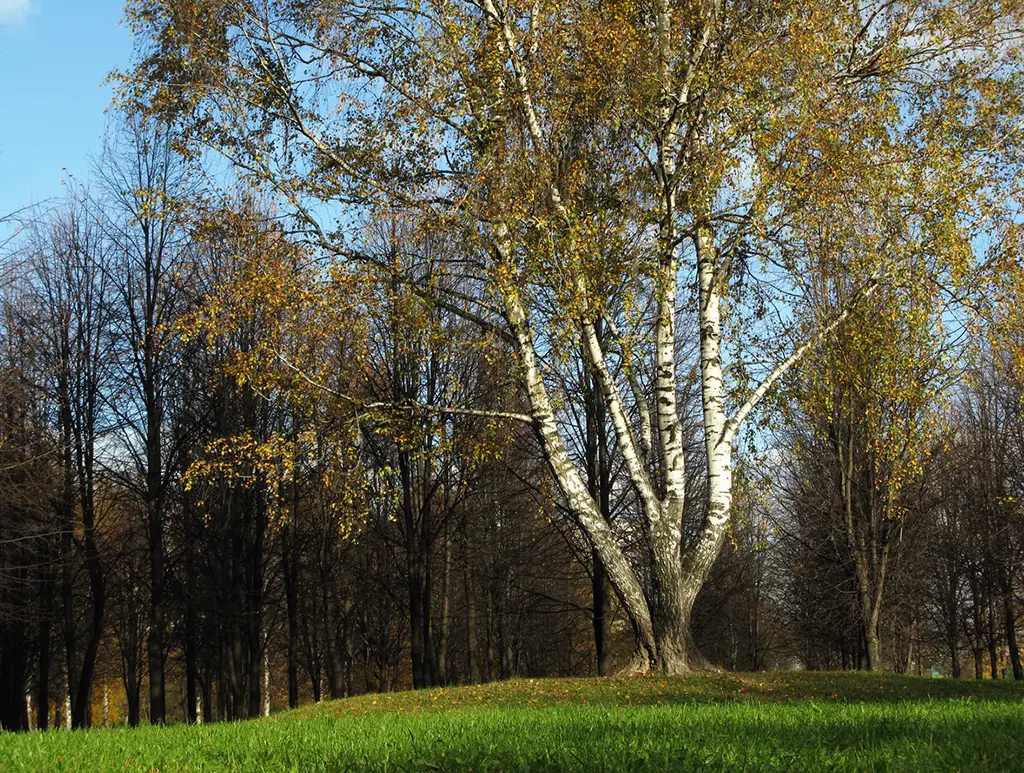
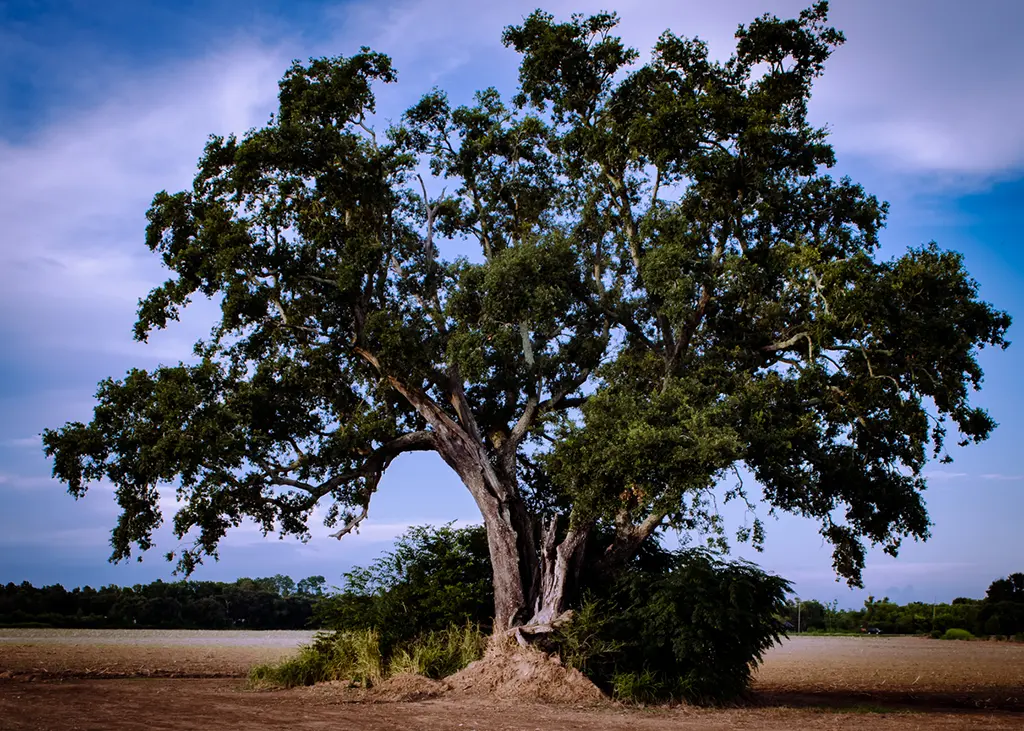
Across Middletown, Red Bank, Rumson, Fair Haven, Little Silver, and nearby Monmouth County communities, we regularly inspect mature trees with two or more large trunks rising from the same base. These trees can create beautiful, wide canopies beside older homes. Their size can also hide a structural weakness that developed when the tree was young.
Arborists call these competing trunks codominant stems, or multi stem growth. Two stems of similar size grow upward as leaders instead of one main trunk supporting smaller branches. Some unions develop broad, strong connections. Others meet in a tight V and trap bark between the stems, reducing the amount of sound wood holding the structure together.
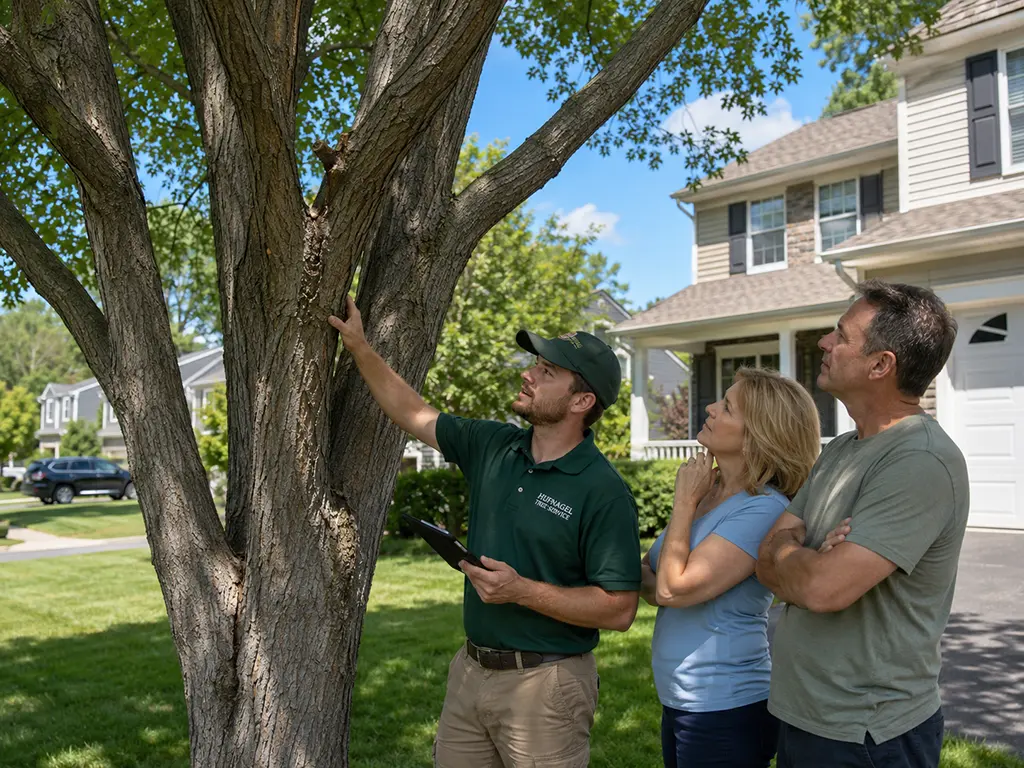
At Hufnagel Tree Service, we do not assume every multi stem tree is dangerous. We inspect the fork, canopy, trunk, roots, surrounding soil, and the area that could be struck. Some trees can be managed through pruning and monitoring. Others have cracks, decay, or movement that make removal the responsible recommendation.
Michael Hufnagel explains, “A codominant, or multi stem, tree is not automatically a bad tree. The question is whether those trunks formed enough sound wood to handle the weight and movement above them.” After more than 25 years in local tree care, we have seen weak unions separate during thunderstorms, coastal wind, heavy rain, and wet snow.
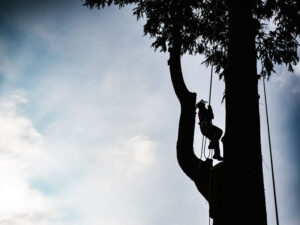
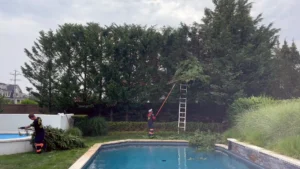
The video featured in this article shows why a large forked tree beside a house deserves attention. This is especially important on tight residential lots where one failed stem can cross the yard and reach a roof, driveway, or neighboring property. Here is what homeowners should understand about weak unions, warning signs, structural pruning, tree restoration, and removal before the next storm tests the tree.
Why Codominant Stems Can Become a Serious Failure Point
A well structured young shade tree usually develops one central leader. Codominant growth begins when two upright stems compete for that position. As the tree matures, each stem can support a major section of canopy. Wind and canopy weight are then transferred back to the same attachment point, which may be narrower and weaker than it appears from the ground.
The shape of the union is important. Strong attachments usually have room to build overlapping layers of supporting wood and often show a visible branch bark ridge. University of Minnesota Extension explains that bark inclusion is a common weak point because stems without a proper union are more likely to separate during storms.
Included bark forms when bark becomes trapped between two expanding trunks. Bark cannot connect the stems the way wood can. The trunks may press tightly against each other while the actual wood connection remains limited. Purdue Extension’s Tree Pruning Essentials notes that codominant leaders with included bark are more likely to split and may develop decay inside the union.
The mechanical load increases as the tree grows. A mature stem carries heavy wood, foliage, and water. Long limbs add leverage, and separate canopies may move in different directions during wind. A small defect in a young tree can become a major concern when the same fork is supporting two tall trunks over a three story home.
Maples, pears, elms, oaks, tulip poplars, and many other landscape trees can develop competing leaders. Open grown trees have room to spread and often build heavier lateral canopies. Early structural pruning can slow a competing stem and establish a stronger leader before the trunks become too large for simple correction.
These structural features deserve a closer look:
- Two or more upright stems are nearly equal in diameter.
- The trunks meet in a narrow V shaped fork.
- Bark looks folded, pinched, or trapped inside the union.
- Each stem supports a large and separate canopy.
- One stem extends toward a home, driveway, or occupied area.
Structure explains why the fork may be vulnerable. Visible changes help show whether the tree is already responding to movement, decay, or separation.
Warning Signs That a Multi Stem Tree May Be Starting to Fail
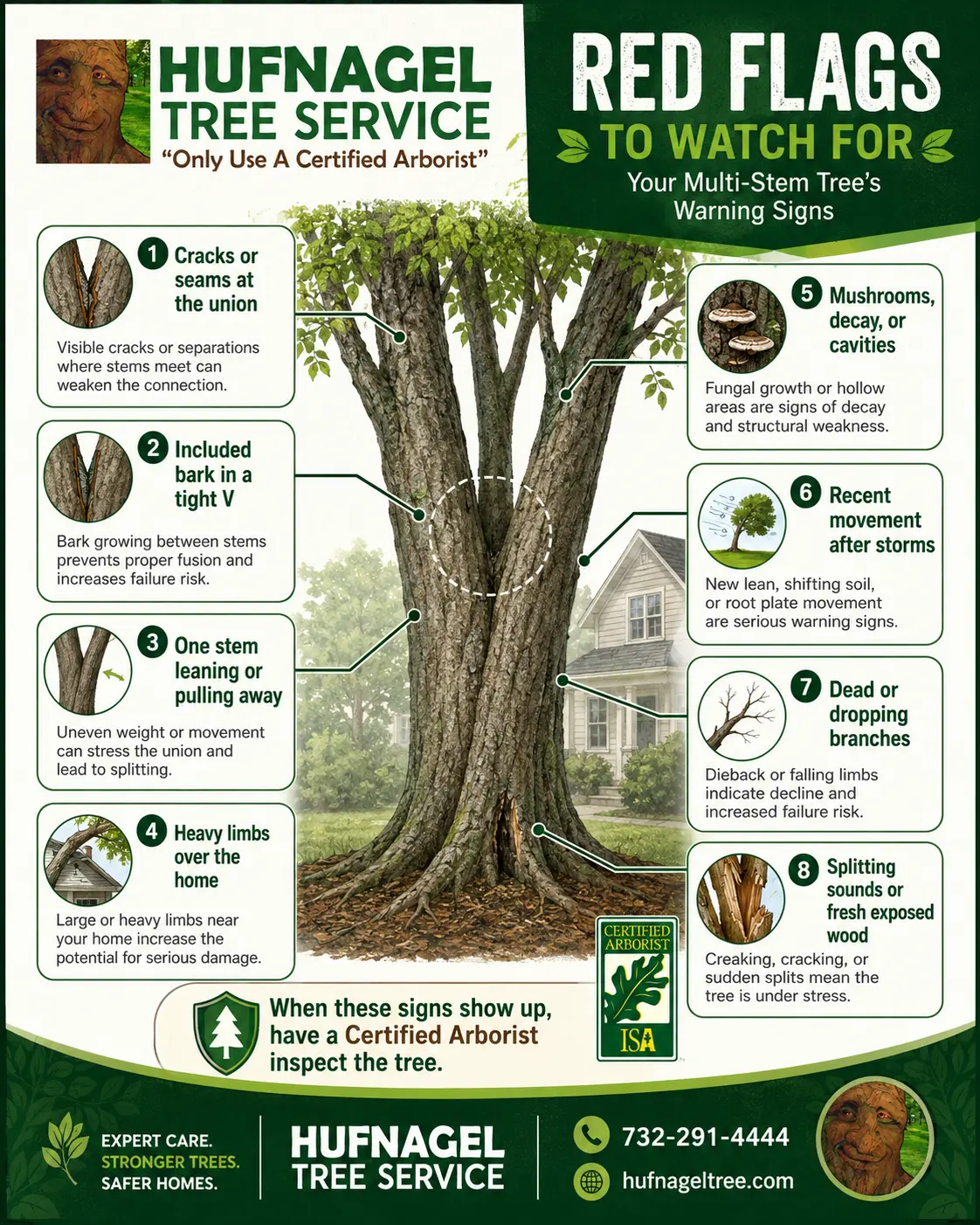
Begin with a ground based visual check, but do not stand beneath a questionable tree during wind. Look where the trunks divide. A natural bark seam may be harmless, but a fresh opening, widening gap, exposed light colored wood, or visible crack is different. The ISA guide to recognizing tree risk lists codominant stems, cracks, splits, cavities, and decay signs as defects that deserve professional attention.
Bulging or ribbed wood around the fork can also be meaningful. Trees add reaction wood where they experience repeated stress. Swelling may show that the tree has been trying to reinforce the union. It does not prove that failure is immediate, but it helps an arborist identify where movement has been concentrated and whether the form has changed.
Decay makes a weak attachment more concerning. Soft wood, loose bark, cavities, fungal growth, carpenter ants, or water collecting in the fork may indicate loss of supporting tissue. Purdue’s tree defect identification guide identifies codominant stems with included bark as a defect that can significantly increase failure likelihood, especially when decay or cracking is also present.
The canopy provides more clues. One stem may lean farther each season. A long limb may carry most of its weight near the end. Previous storm damage may shift the crown to one side. Topping can create fast growing sprouts with weak attachments and new canopy weight. Purdue’s trees and storms guidance warns that topping can increase future storm damage rather than prevent it.
Recent property changes also matter. Trenching, driveway work, grading, compacted soil, root cutting, drainage changes, or removal of a nearby sheltering tree can alter wind exposure and stability. Our tree risk assessment process evaluates the defect and the target area because a weak union above a bedroom presents a different consequence than the same tree at an unused wooded edge.
Report these changes when requesting an inspection:
- A crack, seam, or gap that looks new or wider than before.
- Fresh exposed wood, peeling bark, or movement at the fork.
- A cavity, fungal growth, moisture pocket, or soft wood.
- One stem leaning toward a structure or carrying uneven weight.
- Recent construction, root disturbance, or major storm damage.
Once we understand the union, remaining wood, canopy load, and fall area, we can decide whether preservation is realistic or the tree has become too compromised.
Choosing Structural Pruning, Tree Restoration, or Removal
The best time to correct codominant growth is while the tree is young. A trained arborist can choose the strongest stem as the primary leader and reduce the competing leader so it grows more slowly. The ISA guidance on pruning young trees emphasizes developing strong structure early, while cuts are small and the tree can adapt without losing a large portion of its canopy.
Penn State Extension also explains that narrow forks can enclose bark and become weak, which is why early correction is so valuable. Structural pruning is not simple cosmetic trimming. It is planned work that guides future growth, improves branch spacing, and reduces the chance that two equal trunks will become a major failure point over a home.
Mature trees require a more conservative plan. Removing an entire trunk from an old multi stem tree may create an enormous wound and leave the remaining canopy unbalanced. When preservation is reasonable, selective reduction pruning may shorten overextended limbs, reduce leverage, remove deadwood, and improve weight distribution. Our tree restoration service focuses on what the tree can realistically support.
Pruning cannot replace missing wood inside a decayed union or guarantee that a tree will never fail. It can sometimes reduce specific loads enough to make continued management reasonable. Michael Hufnagel says, “Good pruning is not about taking the most wood out. It is about taking the right wood out for a clear reason.” Excessive thinning can stress the tree and create more weak growth.
Removal becomes the responsible choice when the union is actively splitting, decay has removed too much supporting wood, or a large stem is positioned over an occupied structure. Keep people and vehicles away from a recent split. Do not pull trunks together with rope or begin cutting. Professional tree removal allows the tree to be dismantled in controlled sections while protecting roofs, utilities, landscaping, and neighboring property.
The final recommendation depends on these practical conditions:
- Young competing stems may be corrected through gradual structural pruning.
- Some mature trees can be reduced, restored, and monitored.
- Active splitting or major decay can make preservation unreasonable.
- A defect over a home carries greater consequences than one over an open area.
- No pruning plan should promise that a structurally defective tree cannot fail.
The safest decision is made during a planned certified arborist evaluation, not while the wind is rising and the trunks are already moving apart.
Schedule a Certified Arborist Evaluation Before the Next Storm
A codominant, or multi stem, tree is not automatically a removal. Some have broad unions, balanced canopies, and sound wood. Others have included bark, decay, cracking, or heavy trunks aimed directly at a home. The important step is identifying which condition exists before normal growth and storm loading turn a weakness into a failure.
Hufnagel Tree Service provides certified arborist tree risk evaluations, structural pruning, tree restoration, storm preparation, and safe removal throughout Monmouth County. Our locally owned team brings more than 25 years of experience and more than 200 five star Google reviews to each recommendation. Learn more about our background on the Hufnagel About page.
If you have a large V shaped tree, multiple trunks beside your home, a visible crack, a widening seam, or a stem that has begun leaning, call or text Hufnagel Tree Service at 732 291 4444. Schedule an inspection before the next storm puts the full canopy load against a questionable union.
Schedule Service Now!
From precision pruning and safe removals to health assessments and preventative care, Hufnagel Tree Service delivers expert solutions backed by decades of experience. We offer certified insight, fair pricing, and a commitment to doing what’s best for your landscape.