Contents
In Little Silver, Roots, Water, and Borough Rules Shape Every Tree
Little Silver was incorporated as a borough on March 19, 1923, from portions of Shrewsbury Township, according to Wikipedia. It covers 3.32 square miles, and 0.61 square miles of that is water, which helps explain why the Shrewsbury River shapes so much of daily life here. The borough borders Fair Haven, Monmouth Beach, Oceanport, Red Bank, Rumson, and Shrewsbury, and the 2020 census counted 6,131 residents.
Farms and nurseries once covered much of this ground, and housing replaced them as commuters settled near the Little Silver station on Sycamore Avenue. The trees that outlasted that change now stand on small lots and along Rumson Road and Prospect Avenue, in a borough where nearly a fifth of the total area is water. That history is the starting point for tree health in Little Silver, and it shapes how our tree health management work begins, with the roots and not the leaves.
After almost 30 years working throughout Monmouth County, we have seen that a tree rarely declines in one season. Slow changes below ground, such as compacted soil, a buried root flare, or roots sitting in wet ground, tend to show up in the crown a year or two later. Fall is a good time to look, because leaves still help us read the crown and winter weather has not yet added its load.
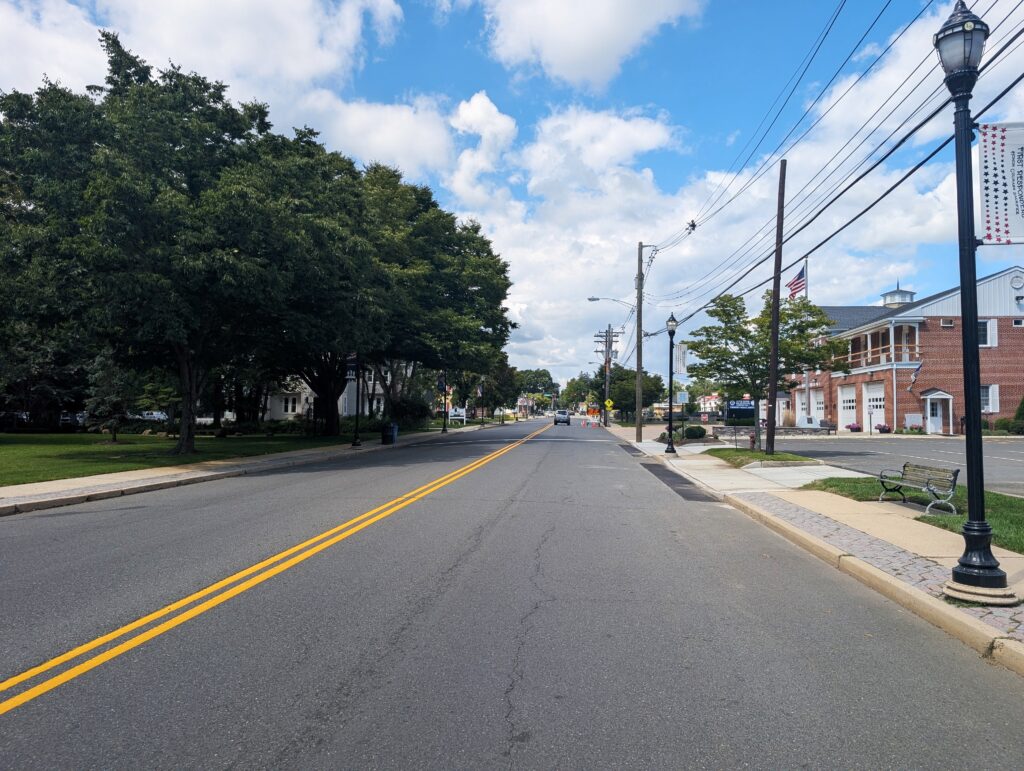
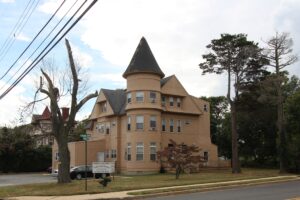
The photograph above shows Prospect Avenue, also County Route 13B, between Kings Road and Markham Place in the center of the borough. Mature shade trees arch over the road beside a brick building with a flag out front and a row of older buildings. Trees like these give the center of the borough its shade, and they are also the trees that carry the longest history of nearby digging, paving, and grade changes.
Little Silver treats that history seriously. Chapter 27 of the borough code, Tree Protection and Replacement, was added on April 8, 2024, and it protects any tree with a trunk diameter of eight inches or more, regardless of where it stands. It also protects trees of three inches or more in a wetland, a watercourse buffer, or on a steep slope. Caring for a tree in Little Silver is therefore a legal matter as well as a biological one, and a good plan starts with knowing which trees on a lot are protected.
Tree Health Begins in the Root Zone, Not in the Leaves
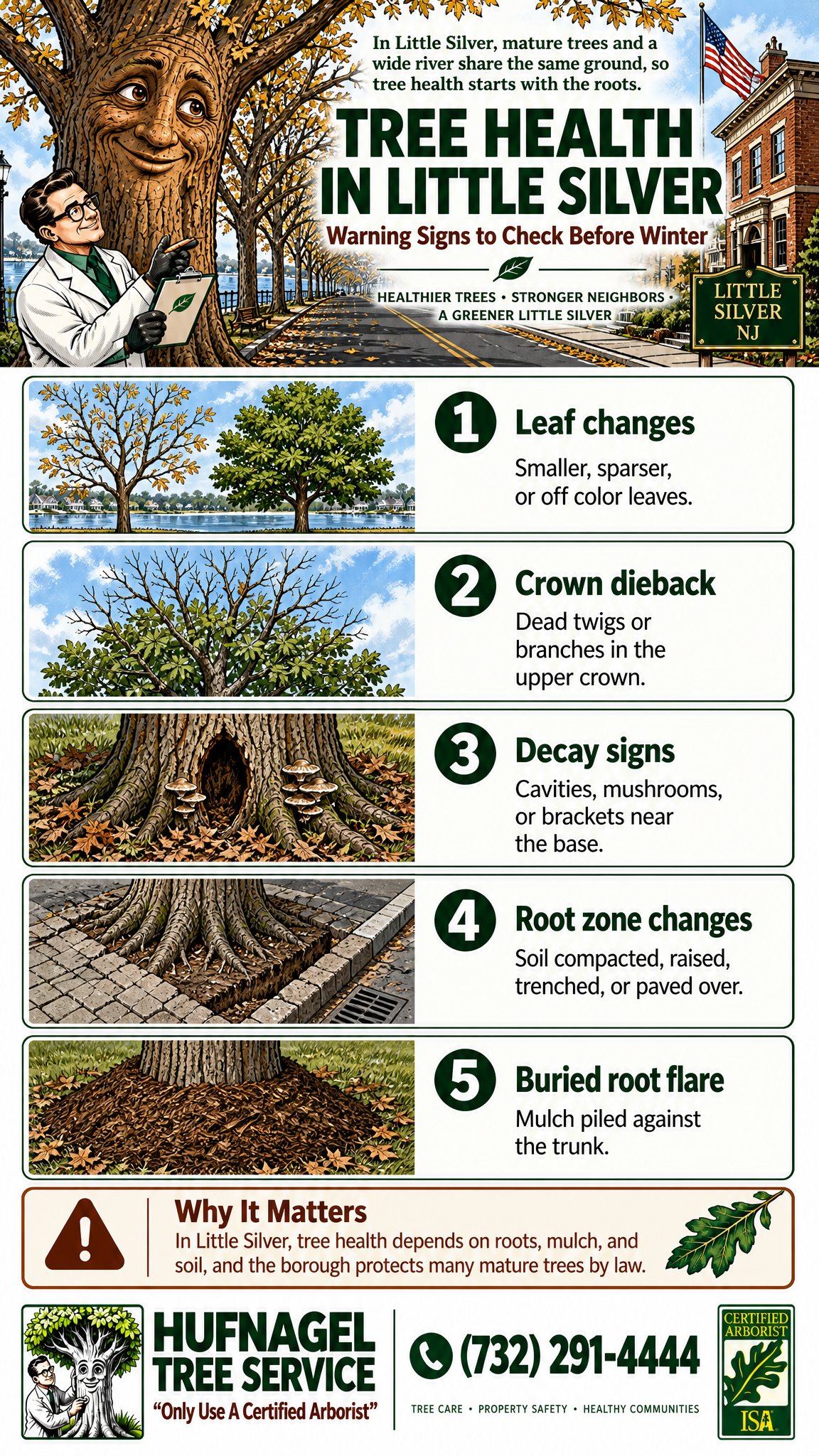
The International Society of Arboriculture says in its guide to mature tree care that mature trees should be inspected at least once a year for four signs of vitality: new leaf or bud formation, leaf size, twig growth, and the absence of crown dieback. It adds that growth reduction is a fairly reliable cue that a tree’s health has recently changed. We read a crown the same way, and we compare what we see with what the tree did in earlier seasons.
The same guide lists three signs of structural weakness: a cavity opening, extensive twig dieback, and fungal conks, which are mushrooms or brackets on the trunk. A tree can be healthy in its crown and still be weak at the base, and the reverse is also true. That is why a real inspection connects the crown, the trunk, the root flare, and the ground around them before anyone recommends a cut.
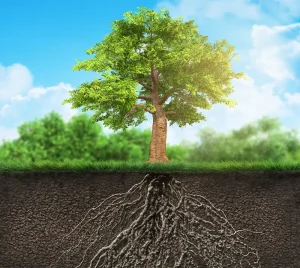
The borough code gives us a useful measuring stick for the ground. It defines the critical root zone as the area containing the roots a tree needs for health and stability, figured from the trunk diameter with a set formula, and it notes that this zone typically extends beyond the dripline. The dripline is the outer edge of the branches. In other words, the roots reach farther than most homeowners expect, and anything that happens beyond the shade of the crown can still reach them.
The code then lists what damages that zone. It prohibits compacting the critical root zone with construction vehicles, stockpiled materials, or parking, paving more than 25 percent of the root zone with impervious surfaces, and severing or trenching through more than 25 percent of it. It also prohibits changing the grade by more than three inches inside the zone, and girdling or significant bark damage. Those are the same injuries we find on declining trees, which is why the rules and the arboriculture agree.
Disturbance inside the root zone is easy to underestimate. A new patio, a utility trench, a driveway widened by a few feet, or a pile of fill left against the base can all start a decline that takes years to show. The ISA guide warns that trenching or earthmoving within a tree’s root zone may cause more harm than good. When we see thinning leaves on a mature tree, we ask what changed in the ground before we ask what to cut, and our tree risk evaluations include that question every time.
Roots are also where hidden decay and instability begin. Our guide to weak tree roots explains what we look for at the root flare, and our article on hidden tree rot shows how a trunk can lose its strength from the inside. Mike Hufnagel describes the order of work this way: “By the time the crown shows a problem, the roots have usually been telling us for a year or two. We try to listen to the ground first.”
Warning Signs for Tree Health in Little Silver
- Smaller, sparser, or off color leaves compared with the same tree in past seasons.
- Dead twigs or dieback in the upper crown, especially on one side of the tree.
- Cavity openings, mushrooms, or brackets on the trunk, root flare, or major roots.
- Soil that has been compacted, raised, trenched, or paved over inside the root zone.
- Mulch piled against the trunk, hiding the flare where the trunk meets the roots.
None of these signs means a tree is failing, and most of them can be managed once they are understood. Some trees need only monitoring. Others need targeted pruning, soil correction, restoration, or in the end removal. What matters is that the change is noticed early and tied to a cause. Once the roots are understood, the next question is what covers them, because mulch and wet ground decide how well a root zone can breathe.
Mulch and Wet Ground Decide How Well Roots Breathe

Mulch is helpful when it is placed well and harmful when it is piled high. The ISA guide says mulch reduces temperature and moisture extremes around the roots, keeps weeds and lawn equipment away from the base, and adds nutrients as it decomposes. It recommends a depth of two to four inches, placed near but not touching the trunk and extended toward the dripline. Those are the habits we hope to see in a Little Silver yard.
Rutgers is more cautious. Its fact sheet on problems with over mulching trees and shrubs says the total depth, including older mulch, should stay at or below three inches, and at two inches on compacted or poorly drained soils. It says mulch should stay eight to twelve inches from the trunk of a mature tree, and that soils that stay waterlogged may need no mulch at all. The two sources agree on the main points, which are to keep mulch off the trunk and to spread it outward and not upward.
The reason is the bark and the roots. Rutgers explains that piling mulch against the stem at or above the root flare can kill the inner bark, because the bark needs air to exchange gases. Once the inner bark dies, the roots lose water and nutrient uptake and the whole plant declines. The symptoms are yellowing foliage, abnormally small leaves, poor twig growth, and dieback of older branches, and the fact sheet warns that they can take several years to appear, by which time the decline is usually irreversible.
Roots need oxygen as much as they need water. Rutgers notes that when soil oxygen falls below about 10 percent, root growth in most trees declines, and thick saturated mulch fills the pore space with water. That matters in a borough with this much water around it. The ISA guide says drainage systems or grading can help correct saturated soil, and it also says that soil tests are generally required before fertilizing, because many urban soils lack the drainage or pore space a tree needs.
Wet ground also loosens a tree’s grip. Our article on hidden damage from seasonal storms explains how a tree can look unchanged after heavy rain and still have a root plate that moved. A tree growing in soil that stays soggy, under a thick layer of mulch, is carrying two stresses at once. We look at both when we are asked to review a declining tree, and we separate what can be corrected from what cannot.
Street trees follow their own rules. The borough’s shade tree chapter says an open space of not less than two feet must be kept around the base of trees on public streets, except where limited by curbs or sidewalks, and it bars placing salt, brine, oil, or other substances injurious to plant growth where they could harm those trees. The same chapter requires permission from the Shade Tree Commission before anyone cuts, prunes, or disturbs the roots of a tree on a public street. Homeowners should call the borough first and treat the trees by the curb as shared property.
Mulch and Soil Habits That Help Roots Breathe
- Pull mulch back until the root flare is visible and open to air.
- Keep total mulch depth at or below three inches, and two inches on wet soil.
- Spread mulch toward the dripline instead of piling it high against the trunk.
- Leave the grade alone inside the root zone, with no fill, trenching, or paving.
- Test the soil before fertilizing, and have an arborist help read the results.
These habits cost almost nothing, and they are the quiet work behind a healthy tree. They also give us something concrete to discuss during a visit. If a tree has been declining for years, we may recommend restoration steps such as correcting the grade and exposing the flare, and we say plainly when a problem is already beyond that. The next question is what the borough requires when a protected tree cannot be saved.
Borough Rules Decide What Can Happen to a Protected Tree

Under Chapter 27, the Tree Preservation Commission reviews applications to remove protected trees. It has at least five resident members appointed by the Borough Council for two year terms, and its duties include site visits, permit decisions, and educating residents about tree risk assessment and tree stewardship. A permit is not required to remove a downed tree, or for routine pruning or trimming to maintain health and natural habitat. That means much of the care described above can go forward without paperwork.
Removal is different. The code allows a permit when a protected tree is in severe decline, diseased, or damaged so that it cannot or should not be saved, and it asks for a written statement from a Licensed Tree Expert unless the Commission waives it. It also allows a permit when a tree presents an unacceptable risk and its defects cannot be remedied by reasonable pruning or cabling. Homeowners should confirm that whoever writes the report holds the license the code names.
The process has clear steps. The permit fee is $25, the Commission must decide within 45 days of receiving all required information, and an approved permit expires six months after approval. A sign must be posted at least three business days before removal begins, and the Commission requires replacement planting under a replanting agreement. Our guide to tree removal permits explains how permit rules work across Monmouth County.
The code also defines a hazardous tree, and the definition reads like an inspection checklist. It lists severe cracks in the main stem or branch unions, advanced decay with cavities or fungal growth at the root flare, a lean beyond 45 degrees with recent root exposure or soil movement, and a tree supported only by another tree or object. A true emergency has its own procedure, which includes a waiting period until the end of the next business day unless a Licensed Tree Expert determines that immediate removal is needed for safety.
Penalties apply to the people who do the work as well as the owner. The code says violations affecting a protected tree can bring fines of up to $500 per violation, and up to $1,000 within a wetland, watercourse, or buffer. It says the property owner, the general contractor, and the tree removal contractor may each be held in violation. We would much rather help an owner understand the rules before a saw is started than sort out a notice afterward.
Trees on public land are a separate category. The code calls a tree of eight inches or more on borough land or easements, or any tree planted in a tree well or curbside in the public right of way, a public protected tree, and it says only the borough or someone it authorizes may remove it. Climbing plants matter here too, because ivy and vines can hide bark, cavities, and conks. Our article on vines and tree health explains why we ask to see the bark before we judge a tree.
Questions to Settle Before Work on a Protected Tree
- Whether the trunk measures eight inches or more across at four and a half feet.
- Whether the tree stands in a wetland, a watercourse buffer, or on a steep slope.
- Whether the work is routine pruning, which needs no permit, or a removal.
- Whether a written Licensed Tree Expert report is needed to support the application.
- Whether the tree stands on borough land or curbside, where the borough decides.
Preservation comes first in our work, and tree removal is the last step and not the first. When a tree can be kept safely, we say what it needs. When it cannot, we document why in plain terms so the owner can take the facts to the borough. Careful tree trimming and pruning done for a clear reason also keeps a tree on the right side of the code and on the right side of winter.
Call Hufnagel Tree Service About Tree Health in Little Silver Before Winter
If you have mature trees near your Little Silver home, driveway, or yard, schedule an evaluation before winter weather arrives. We provide tree health management, tree risk evaluations, pruning, storm proofing, restoration, and tree removal when a tree cannot be managed safely.
Hufnagel Tree Service is led by a certified arborist with almost 30 years of local experience and more than 280 five star Google Maps reviews. We inspect first, explain what we found in plain terms, and recommend only the work that changes the outcome for your trees and your property.
Call or text (732) 291-4444 to schedule a review of tree health in Little Silver before the first hard freeze. More of our local work is collected in the Little Silver location archive.
Schedule Service Now!
From precision pruning and safe removals to health assessments and preventative care, Hufnagel Tree Service delivers expert solutions backed by decades of experience. We offer certified insight, fair pricing, and a commitment to doing what’s best for your landscape.
Learn More About Our Services
Related Articles
Tree Risk Evaluation in Colts Neck, NJ
Tree Trimming in Keansburg NJ: Clearance, Disposal Rules, and Timing
Tree Pruning in West Long Branch NJ: Cut for a Reason Before Winter