Contents
Summer Weather in Middletown Can Change a Tree Before It Looks Damaged
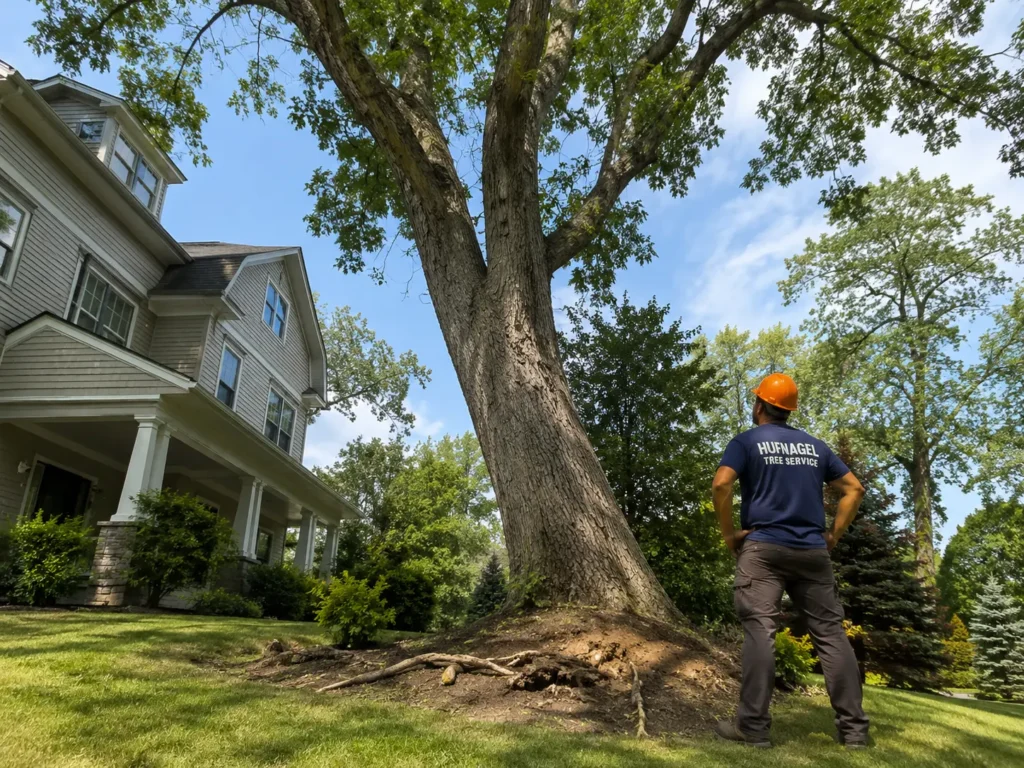
Across Middletown Township, from Lincroft and River Plaza to Navesink, Belford, Leonardo, and Port Monmouth, summer places mature trees under their heaviest seasonal load. At Hufnagel Tree Service, we use more than 25 years of Monmouth County experience to identify hidden weaknesses before weather turns them into emergencies.
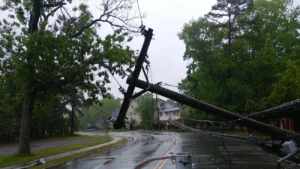
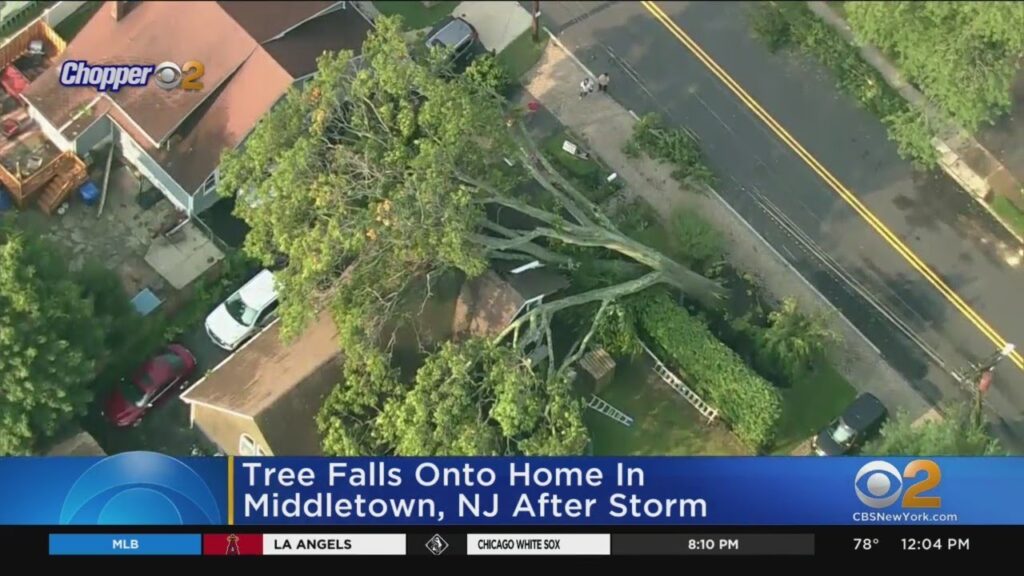
The Rutgers June 2026 climate recap recorded an unusually warm and dry month. Statewide rainfall was 2.48 inches, and the coastal division received only 1.63 inches. Early July then brought intense rain, flash flooding, falling limbs, power disruptions, and road closures across Monmouth County.
The official Monmouth County storm update included a Middletown closure on Navesink River Road, while local storm coverage documented fallen trees and limbs nearby. Lightning, flooding, and wind can test the same tree within minutes. We recommend seasonal observation and a professional inspection at least once every year.
Why Summer Storm Tree Inspection in Middletown NJ Matters
NOAA thunderstorm science explains that one storm can produce lightning, heavy rain, flash flooding, and strong straight line wind. A tree in full leaf catches that wind through its crown, transfers force through the trunk, and depends on its roots and soil for support.
A warm, dry period can reduce soil moisture and fine root function. Mature oaks, maples, tulip poplars, black locusts, and pines may still look green while operating with less reserve. Drought stress does not prove danger, but it can slow recovery from new injury.
A sudden downpour creates a different stress. Water fills soil spaces that normally hold oxygen, and softened ground may offer less resistance around the root plate. The shift from dry soil to saturation matters most where roots are restricted by pavement, foundations, walls, or utility trenches.
Port Monmouth, North Middletown, Belford, and Leonardo face bay wind, salt exposure, and drainage concerns. Navesink, Locust, and Chapel Hill include slopes and open exposure. Lincroft, Oak Hill, and New Monmouth contain many mature trees close to homes, roads, and established hardscape.
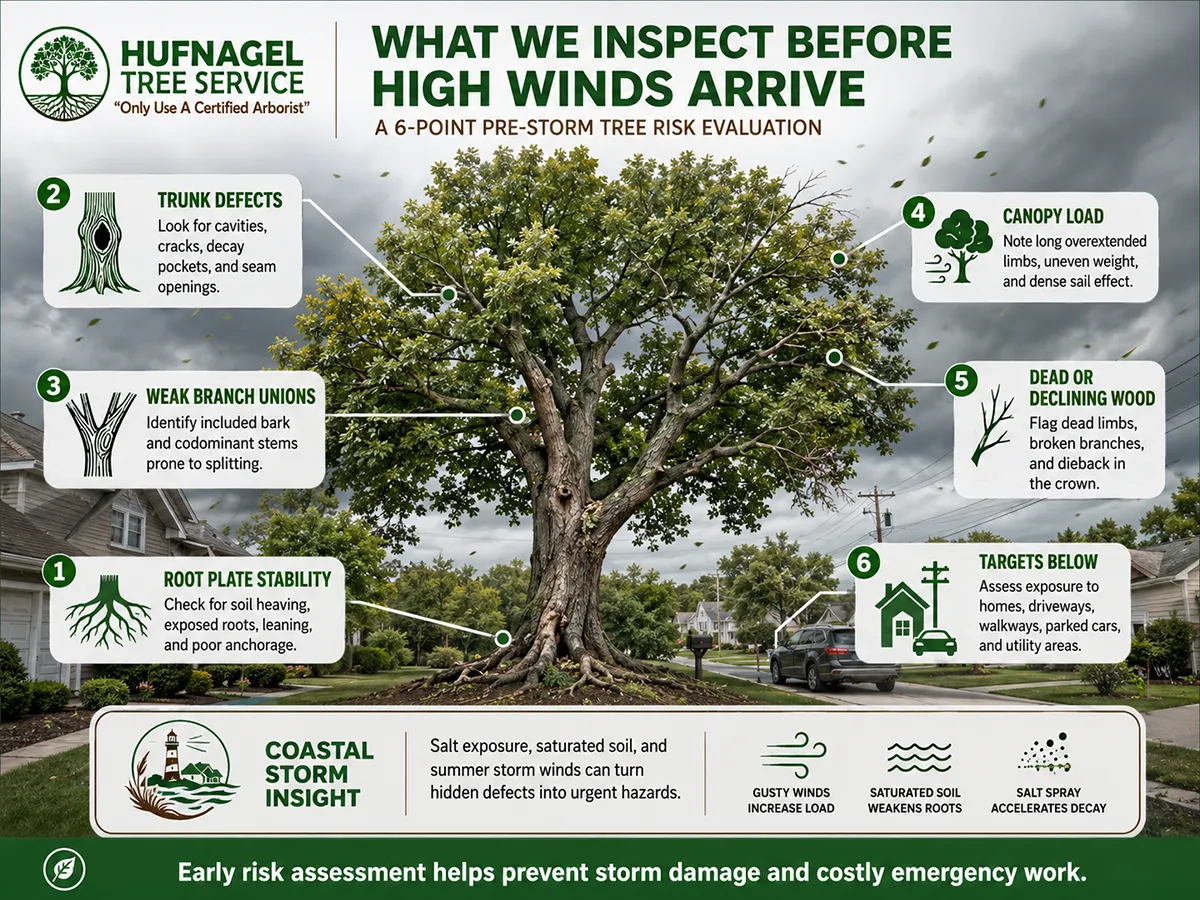
Our tree risk evaluation connects weather exposure with crown balance, branch unions, trunk condition, roots, drainage, and nearby targets. Our storm damage tree guide explains the warning signs, while preventive tree storm preparation addresses weaknesses before another storm arrives.
“A storm rarely creates every problem in a tree. More often, it reveals a weakness that has been developing for years.”
Michael Hufnagel, Certified Arborist
Storm Warning Signs That Justify a Certified Tree Inspection
- A new lean or fresh soil cracking near the trunk
- Dead branches, broken hangers, or a suddenly lower limb
- Split unions, included bark, or codominant stems
- Cavities, loose bark, mushrooms, or softened wood
- Large limbs over homes, vehicles, wires, or play areas
These signs do not prove that failure is certain. They show where a certified arborist should evaluate strength, exposure, and possible consequences. Early action may preserve pruning, restoration, soil care, or monitoring as options. Lightning requires special attention because its injury can extend far beyond the visible scar.
Lightning Damage Can Travel Through the Trunk and Roots
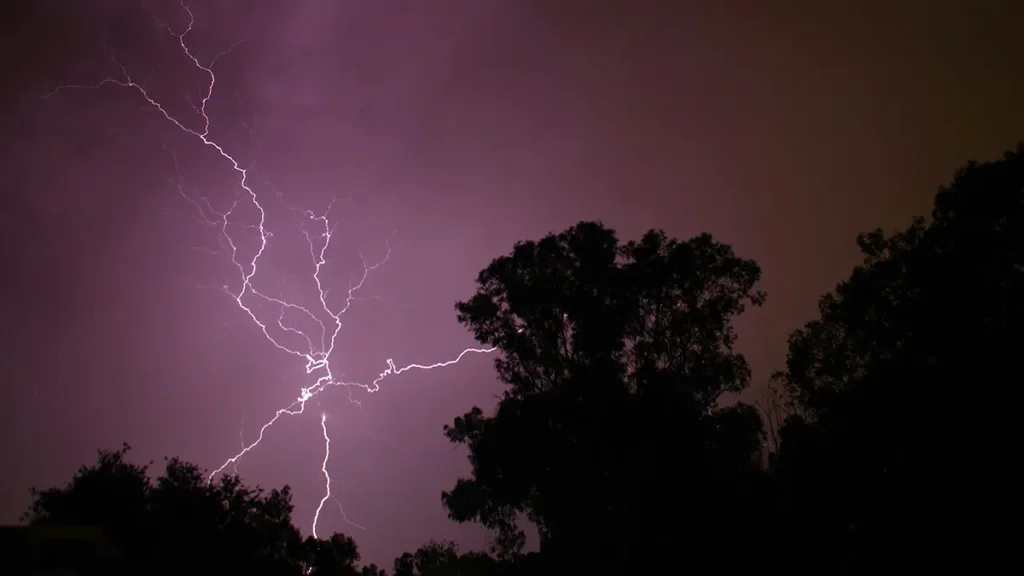
NOAA lightning research notes that tall objects such as trees are more likely to connect with a developing lightning channel. An oak or tulip poplar above an open lawn, ridge, waterfront lot, or roofline can become a prominent path during a Middletown thunderstorm.
Lightning injury is both electrical and thermal. Alabama Cooperative Extension explains that intense heat can boil water and sap, creating steam that separates bark, ruptures wood fibers, and opens cracks. Electrical current may also travel into branches or roots.
A dramatic strip of missing bark is obvious, but a small mark does not guarantee minor damage. Living tissue can be injured beneath intact bark, inner wood can split, and roots can lose function. Leaves may remain green briefly because they still contain moisture.
Our Middletown lightning damage guide describes delayed symptoms such as one sided wilt, branch tip death, loosening bark, resin flow, and new cracks. Never approach a tree touching a utility line or walk beneath suspended wood while storm hazards remain.
Inspection determines whether enough sound crown, trunk, and root tissue remains for safe recovery. A viable tree may benefit from tree restoration, selective pruning, water management, and monitoring. Severe stem separation, root injury, or target exposure may require professional tree removal.
“A lightning scar shows where the event touched the tree. It does not show, by itself, how far the injury traveled.”
Michael Hufnagel, Certified Arborist
Lightning Damage Symptoms Homeowners Should Report Promptly
- Fresh bark loss, scorching, or a vertical trunk crack
- A shattered leader, split stem, or suspended branch
- Sudden wilt, discoloration, or crown thinning
- Root flare damage, lifted soil, or a new lean
- A strike beside a home, driveway, pool, or utility line
Lightning does not automatically require removal. Prompt inspection protects the area and preserves recovery choices when healthy tissue remains. Continued monitoring matters because some symptoms develop after water movement resumes. Heavy rain can then increase concern by changing the soil and root support below.
Flooding and Saturated Soil Can Reduce Root Anchorage
NOAA flood guidance explains that flash flooding develops when rainfall exceeds the capacity of soil and drainage systems. During the July storms, News 12 New Jersey reported 4.7 inches of rain in less than one hour in parts of eastern Monmouth County.
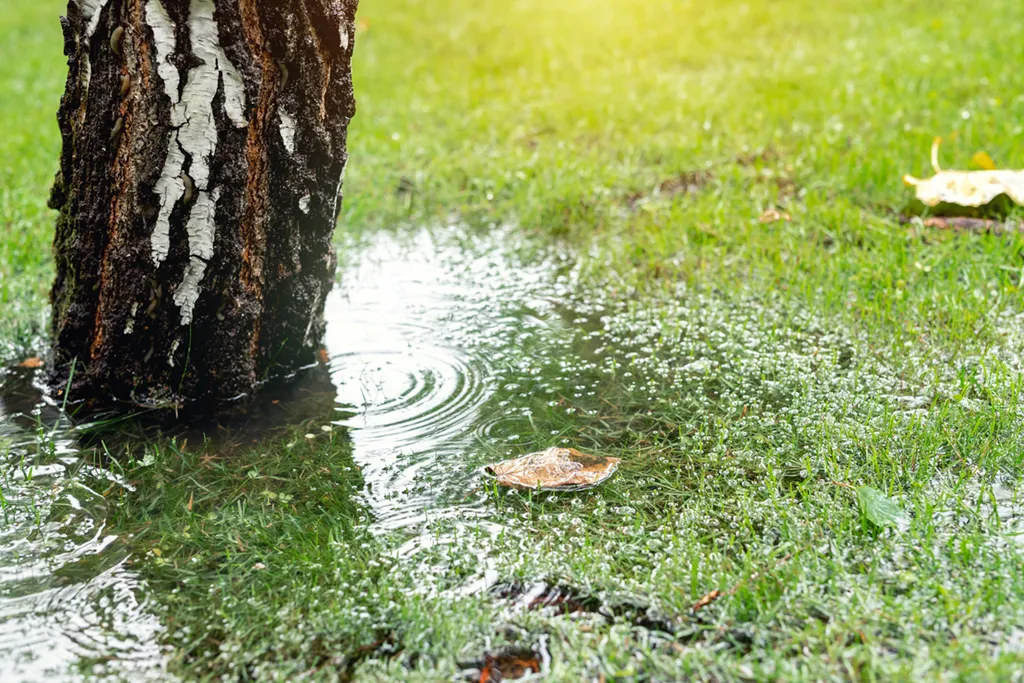
Tree roots need oxygen for respiration. University of Minnesota Extension explains that water covering soil reduces oxygen, while deposited sediment can restrict gas exchange further. Fine root injury can interfere with water uptake, nutrient movement, new growth, and recovery.
Flooding also changes stability. Structural roots spread through upper soil and work with that soil mass to resist overturning. When ground becomes saturated, wind may rotate the root plate, lift turf, crack soil, or tear roots while the full summer crown adds leverage.
Low areas near Port Monmouth, North Middletown, Belford, and Leonardo can remain wet after roads clear. River Plaza and Navesink properties may experience erosion or altered drainage. Compacted lawns and buried root flares elsewhere can also slow recovery after a cloudburst.
We inspect the root flare, visible roots, soil cracks, lifted turf, erosion, standing water, fungi, and recent site work before cleanup hides the evidence. Our guide to weak tree roots explains anchorage concerns, while tree health management may support recovery where sound roots remain.
“When a yard is soaked, we look at the root plate before assuming the upright trunk is stable.”
Michael Hufnagel, Certified Arborist
Flood Related Changes Around the Tree Root Zone
- Standing water around the trunk and major roots
- Lifted turf, mounded soil, or fresh cracks near the base
- Exposed, torn, cut, or decayed structural roots
- A new lean or movement at the root plate
- Delayed wilt, branch dieback, or fungal growth
Floodwater can disappear while root stress continues. Some trees recover as soil drains, while others lose anchorage or decline over several weeks. Avoid adding soil or driving equipment across a wet root zone before evaluation. After the roots are assessed, we can judge how much wind load the tree can reasonably carry.
Wind Exposes Weak Unions, Decay, and Unstable Roots
NOAA damaging wind guidance describes winds around 50 to 60 miles per hour as damaging and identifies thunderstorm downdraft outflow as a major source of ground damage. Wind pressure rises rapidly with gust speed, so a full summer canopy receives substantial force.
That force moves through the entire tree. Branches bend, unions resist separation, the trunk carries bending load, and roots oppose overturning. The USDA Forest Service review of wind risk lists broken branches, broken stems, and uprooting among common storm outcomes.
Codominant stems with included bark, long horizontal limbs, old topping cuts, cavities, and internal decay concentrate stress where sound wood may already be limited. Our article about hidden tree rot explains why a green crown cannot rule out internal structural loss.
Correct pruning can reduce selected loads without stripping the canopy. Iowa State Extension storm guidance warns that neglected structure and improper topping increase storm susceptibility. Our tree trimming and pruning targets deadwood, overextended limbs, poor balance, and clearance concerns according to tree biology.
Not every imperfect tree needs removal, and pruning cannot repair severe root decay or a failing trunk. Our storm preparation service focuses on practical risk reduction. When the likelihood and consequence of failure cannot be reduced reasonably, tree removal becomes the responsible recommendation.
“Our goal is to reduce predictable leverage and defects without creating unnecessary wounds or weak regrowth.”
Michael Hufnagel, Certified Arborist
Wind Risk Factors Evaluated During a Tree Inspection
- Codominant stems, included bark, and widening cracks
- Long limbs carrying heavy end weight over a target
- Cavities, decay indicators, and old storm wounds
- An uneven crown or recent loss of a major branch
- Root movement combined with saturated or eroded soil
Wind applies the test, but the defect often determines where failure begins. Inspection separates normal movement from a structural condition needing action. It also creates a record for comparison after the next storm or growing season. That record is why inspections should follow a schedule rather than depend on memory.
Seasonal Tree Inspection Builds a Safer Annual Routine
Tree condition changes with growth, weather, decay, construction, and previous damage. An International Society of Arboriculture sample risk report recommends annual tree inspections for health and structural changes, plus inspection after storms of unusual severity. That guidance matches our Middletown field experience.
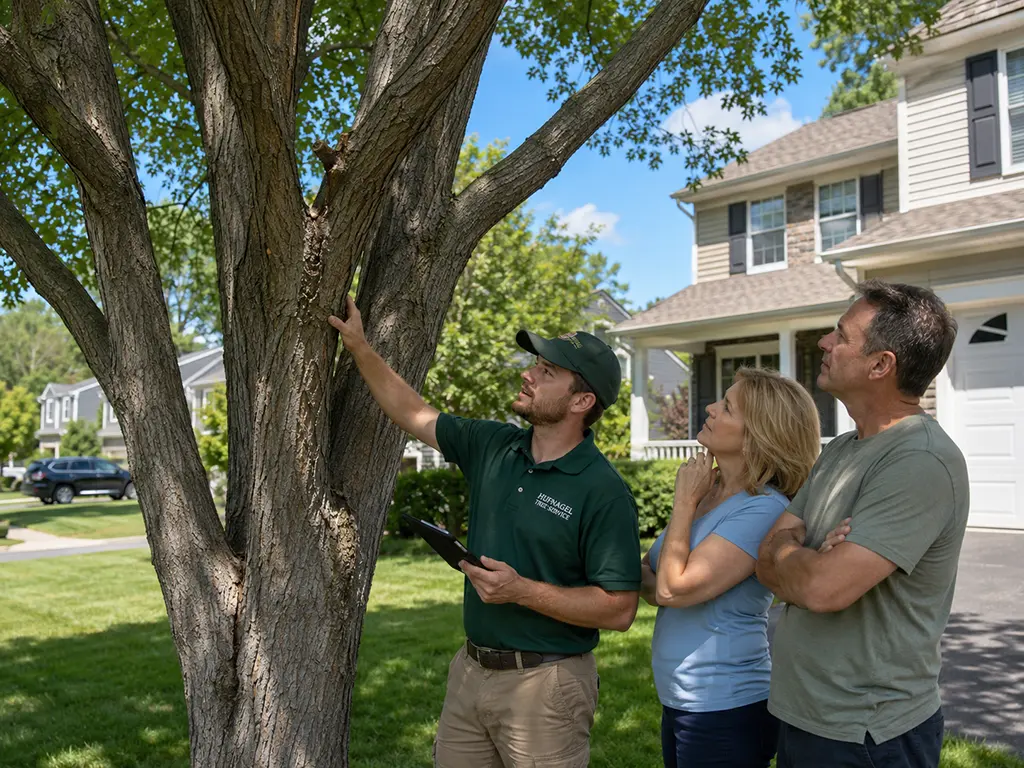
For mature trees near homes, roads, utilities, pools, or gathering areas, seasonal observation is stronger. Structure is easier to see before full leaf, crown density is clearer in summer, and storm damage should be checked when conditions are safe. At minimum, schedule one professional inspection every year.
A complete tree risk evaluation considers species, vigor, branch unions, trunk defects, roots, soil, drainage, exposure, weather history, and targets. We also ask what changed. A new driveway, trench, grade, nearby tree removal, flood, or lightning event can alter risk.
Homeowners can keep dated photographs and note when a lean, crack, fungus, dead branch, or drainage problem appeared. Our storm season tree risk assessment guide explains why calm weather provides more preservation and scheduling choices. Repeated inspections make subtle change easier to recognize.
No inspection predicts every failure or makes a tree immune to extreme force. ISA tree hazard guidance emphasizes routine care, professional assessment, and appropriate risk reduction. The purpose is to find foreseeable defects and choose reasonable action before the next storm applies another load.
“The most valuable inspection is usually the one completed before the emergency, while preservation choices remain.”
Michael Hufnagel, Certified Arborist
A Practical Tree Inspection Schedule for Middletown Homes
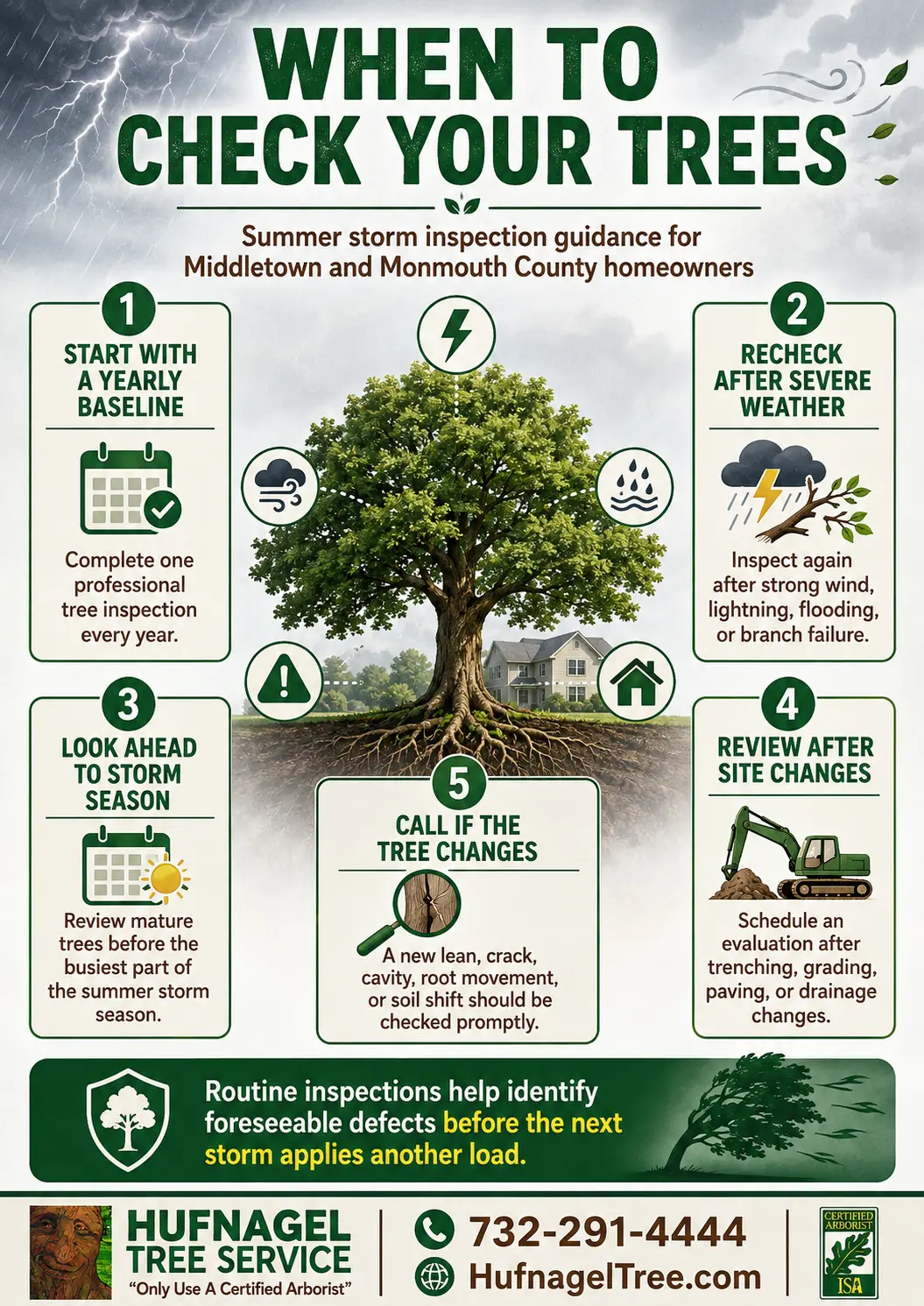
- Complete one professional baseline inspection every year
- Reinspect after severe wind, lightning, flooding, or branch failure
- Review mature trees before the busiest summer storm period
- Schedule evaluation after trenching, grading, paving, or drainage changes
- Call promptly when a new lean, crack, cavity, or root movement appears
A consistent schedule turns tree care into documented maintenance instead of emergency reaction. It gives healthy trees a better chance to be preserved. It also allows pruning, restoration, monitoring, or removal to be planned under safer conditions. The final step is choosing a certified local arborist who understands Middletown storm exposure.
Schedule a Certified Arborist Tree Inspection in Middletown NJ
Hufnagel Tree Service has served Middletown Township and Monmouth County for more than 25 years. Michael Hufnagel brings certified arborist judgment, local weather knowledge, and a preservation first approach to each inspection. More than 200 five star Google reviews reflect the communication, care, and trust our team has earned.
We inspect trees throughout Lincroft, Navesink, Locust, River Plaza, Oak Hill, Chapel Hill, New Monmouth, Belford, Leonardo, Port Monmouth, and North Middletown. Learn more about our certified local team, then call Hufnagel Tree Service at (732) 291 4444 for a location specific inspection before the next summer storm.
Schedule Service Now!
From precision pruning and safe removals to health assessments and preventative care, Hufnagel Tree Service delivers expert solutions backed by decades of experience. We offer certified insight, fair pricing, and a commitment to doing what’s best for your landscape.
Learn More About Our Services
Related Articles
Vines and Tree Health: Hidden Risks to Mature Trees
Exotic Hedge and Vine Maintenance in Navesink, NJ