Contents
Tree Risk Evaluation in Wall Starts With a Township Too Large for One Rule
Wall Township was formally incorporated by the New Jersey Legislature on March 7, 1851, and according to Wikipedia it covers 31.69 square miles, which makes it one of the larger municipalities in Monmouth County. The 2020 census counted 26,525 residents, spread across communities such as Allenwood, West Belmar, Glendola, and Lake Como, with borders that touch Belmar, Spring Lake, Spring Lake Heights, Sea Girt, and Manasquan.
That size matters to anyone planning tree risk evaluation in Wall. The township includes parts of Allaire State Park, which covers 3,205 acres along the Manasquan River, and it also holds busy roads such as Route 34, Route 35, and Route 138, a Garden State Parkway interchange, and Monmouth Executive Airport. A tree on a wooded lot near the park faces different conditions than a tree beside a main road, so our tree risk evaluation work starts with the site and then reads the tree.
After almost 30 years working throughout Monmouth County, we have seen that late October is a good time to look. Leaves still help us read the crown, and winter weather has not yet added its load. The township also runs curbside brush pickup in September and October, so there is a short window to clear what an inspection turns up.
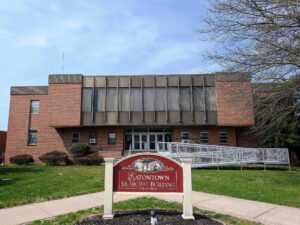
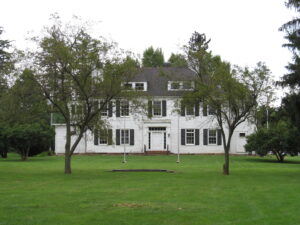
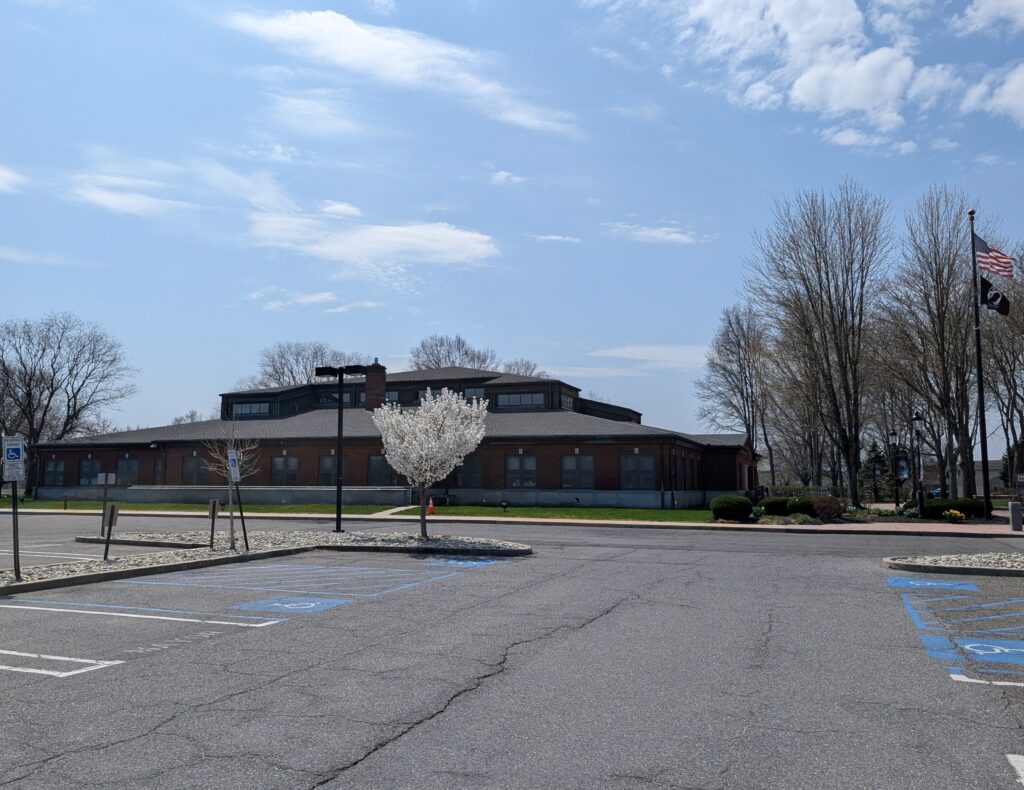
The photograph above shows the Wall Township Municipal Building, taken from its parking lot in April, with bare crowns beside the flagpole and a flowering tree in front of the building. Bare crowns show the branch structure we read first. The scene is also common across Wall: mature trees close to a building, a parking lot, and a road, with very little room to spare when something fails.
Wall is not one kind of place. Wreck Pond, a tidal pond, is surrounded by the township and the boroughs of Spring Lake, Spring Lake Heights, and Sea Girt, while the Brick Township Reservoir, which holds up to a billion gallons, lies partly in Wall. Trees near open water deal with exposure and wet ground, and trees on inland lots deal with tall neighbors, cleared edges, and soil that has been driven over. Wind does not cause decay, but it tests whatever decay or weak union is already there. We want to find those weak points before the first hard Nor’easter does it for us.
Condition, Target, and Distance Decide Which Wall Trees Need Work
Our approach to tree risk evaluation in Wall follows the same three questions on every property: what condition is the tree in, what could it hit, and what weather will test it. The International Society of Arboriculture says in its Recognizing Tree Risk brochure that there is no such thing as a completely safe tree, and that the severity of a warning sign is best judged by a professional arborist. We agree with both points. The goal is not to find a reason to cut. The goal is to understand which trees carry real consequences and which ones simply need to be left alone.
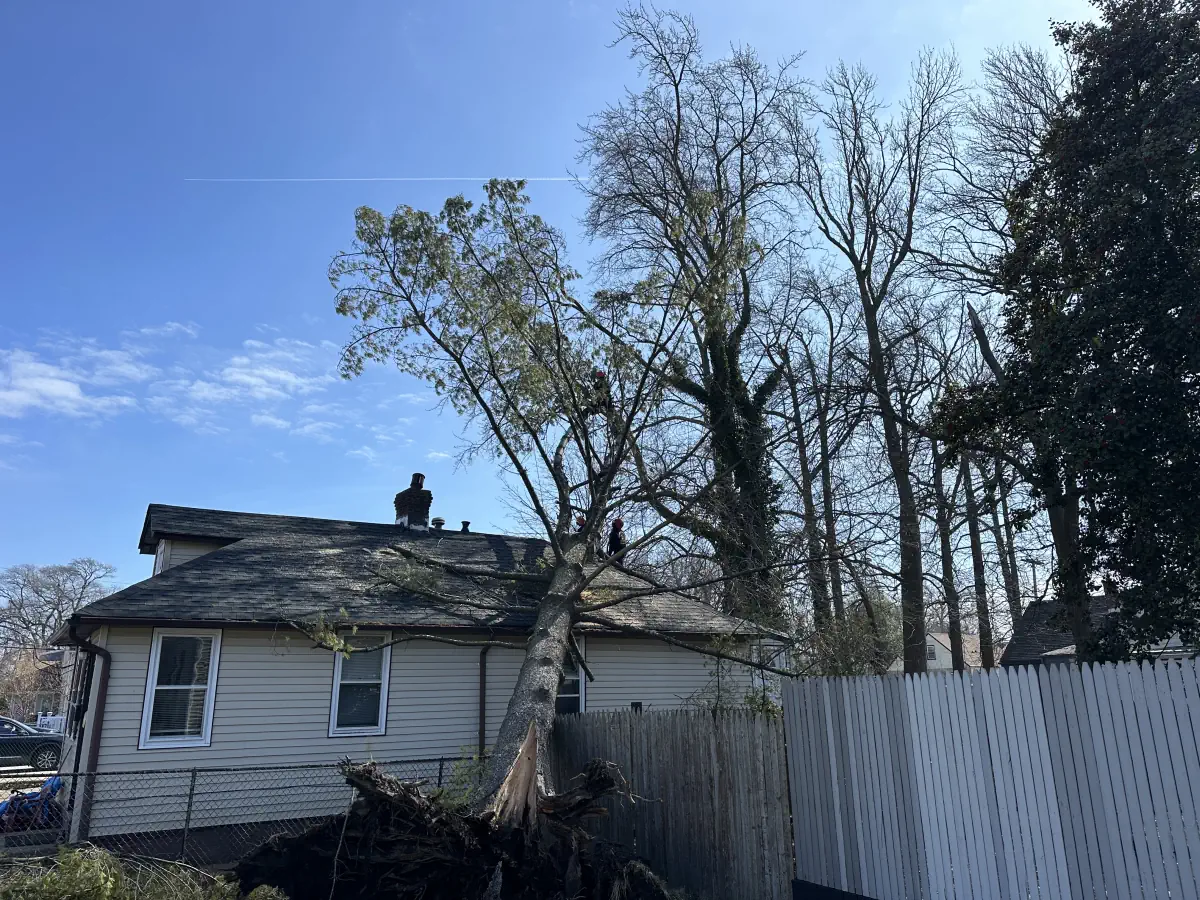
Distance is where large lots mislead people. A tree at the back of a Wall property can look far from anything that matters, yet a long limb or a failing trunk reaches farther than most owners expect. We measure from the tree to the house, the driveway, the pool or patio, the fence line, the road, and the neighbor’s yard, and we think about wires and the path a failure would take. The same defect can be a low concern over an open field and a serious one over a roof. That is also why we photograph the tree and the target together, so the homeowner can see the same relationship we see when we write up the findings.
The brochure lists mushrooms at the base and cavities among the signs worth a closer look, and we treat them that way. A mushroom or a cavity is a clue, not a verdict. Our guide to hidden tree rot explains how a hardwood can lose its strength from the inside, and our guide to codominant stems explains how two trunks that share one union can split under load. Neither problem shows from the street in every case, which is why we walk the whole tree and look at the base, the unions, and the ground around it.
Pruning belongs in this conversation because poor pruning creates risk. The USDA Forest Service guide How to Recognize Hazardous Defects in Trees says that topping and tipping lead to decay in the remaining stub, which then makes a very poor support for the branches that regrow. We do not top trees, and we choose every cut for a reason. Good pruning removes deadwood and reduces end weight where it matters, and it leaves healthy structure alone. For trees that need more than pruning, our storm proofing work looks at support, load, and what the next storm will ask of the tree.
Mike Hufnagel puts the working rule this way: “On a big lot, I do not measure from the street. I measure from the tree to whatever it can reach, because a limb does not care how far the house looks from the road.” That rule is why an evaluation in Wall begins with the target and not with the leaf color, and it is why two similar trees on the same street can get different recommendations.
What We Check During Tree Risk Evaluation in Wall Before Winter
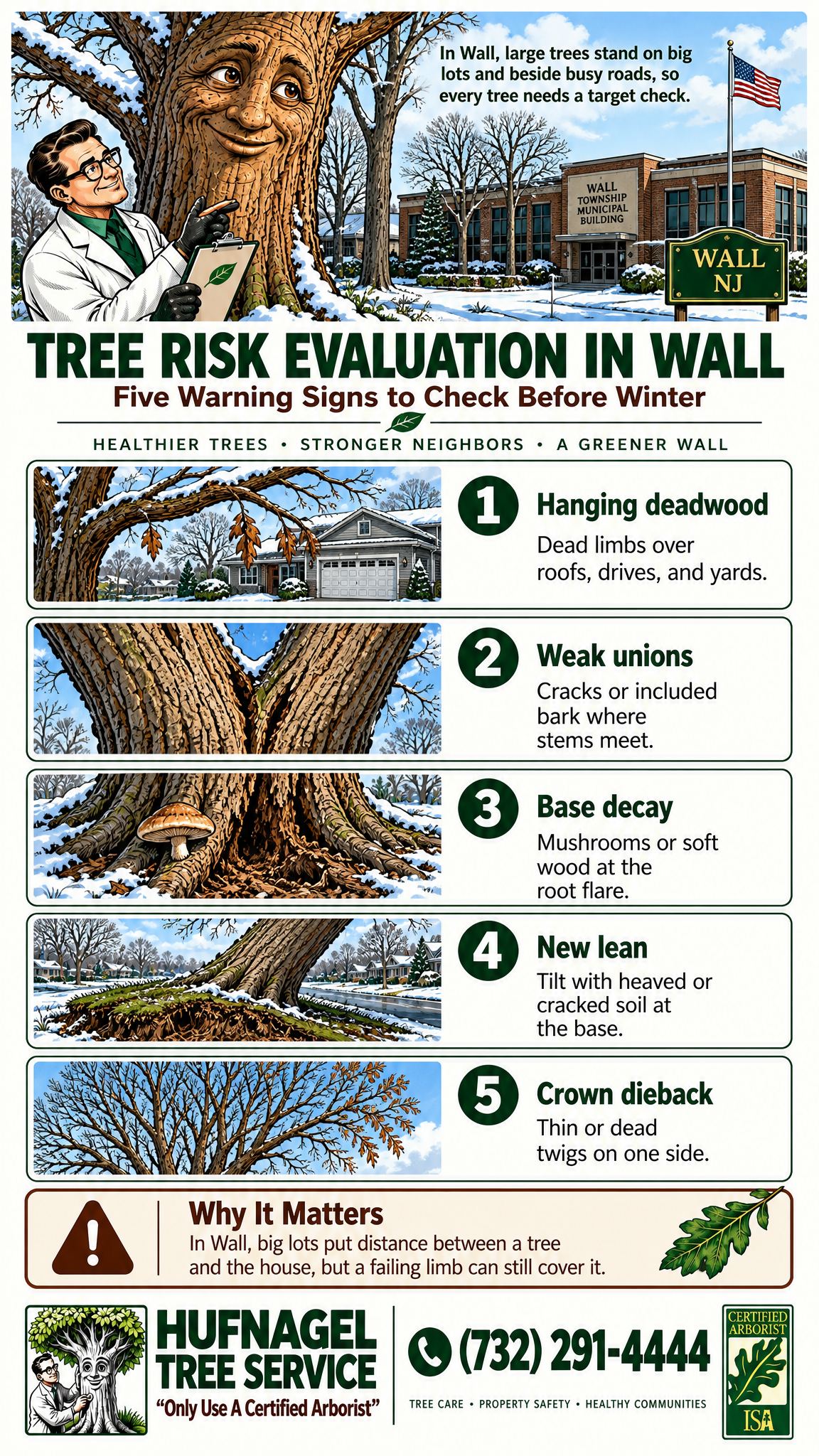
- Dead or hanging branches over roofs, driveways, sidewalks, and neighboring yards.
- Cracks, included bark, or tight unions where two stems share one trunk.
- Mushrooms, cavities, or soft wood at the trunk base and the root flare.
- A lean that is new or changing, with heaved or cracked soil at the base.
- Crown thinning or dieback on one side compared with last season.
None of these signs proves a tree is failing, and none of them calls for a homeowner to climb a ladder or pick up a saw. Look from the ground, photograph what you see, and compare the tree with itself next season. Some trees need only monitoring. Others need targeted pruning, restoration, support, or removal. Once we know what is wrong with the structure, the next question is what is happening below the surface, because roots decide how a tree holds up when the wind arrives. Our look at hidden damage from seasonal storms shows how damage can stay hidden until a later storm.
Compacted Soil and Mulch Change How Wall Trees Hold Up in Wind
Roots are out of sight, so they are easy to ignore, but in Wall they deserve a close look. Rutgers Cooperative Extension explains in its fact sheet on soil compaction in your yard that compaction can occur during construction when heavy machinery runs repeatedly over soil, especially when the soil is wet, and that repeated wheel or foot traffic can do the same thing. Roots may be unable to push through dense soil, and little root growth occurs unless there are cracks or fissures to follow. Any lot that has seen construction, driveway work, a pool installation, or years of heavy mowing equipment can carry a tight layer under the grass.
The same fact sheet says compacted soil can leave roots near the surface, and that when roots cannot spread out or down, they can circle the tree. These girdling roots can strangle a tree and lead to its death over the long term. The sheet also notes that some trees, including beech, maple, and ash, naturally have shallow root systems, so a surface root alone does not prove a problem. That is the kind of distinction an evaluation sorts out. We compare the species, the soil, and the shape of the base before we say anything is wrong.
Water is part of the picture in Wall, from Wreck Pond to the Brick Township Reservoir to the Manasquan River, which flows through Allaire State Park. Wherever the ground stays wet for long stretches, the soil holds less air, and roots need air. Rutgers says in its guide to over mulching trees and shrubs that when oxygen in the soil drops below 10 percent, root growth in most trees declines, and that symptoms can take several years to appear. By the time leaves turn yellow or small, the guide says, it is generally too late to correct the problem.
Mulch is the most common way homeowners cause this problem without meaning to. The same Rutgers sheet says total mulch depth should not exceed 3 inches, and no more than 2 inches on compacted or poorly drained soils. It says to keep mulch 8 to 12 inches away from mature tree trunks, and it warns that mulch piled against a trunk can kill the inner bark at the root flare. Pulling mulch back is a simple fix, and it is a good example of work that helps a tree without a saw. Our guide to weak tree roots shows what we look for at the root flare, and our tree health management work covers what a stressed tree needs once the cause is found.
Older woodland is part of the Wall area too. The park’s soils are described as fairly acidic, and trees in a crowded stand can grow tall trunks with high crowns. When a neighbor clears the trees beside them, they can meet wind they never carried before. We look at what changed around a tree as carefully as we look at the tree. A new driveway, a pool, a removed neighbor, or a regraded yard can each change the load on roots and crown, and the owner may not connect the change to the tree for years. Asking what changed on the property is often the fastest way to find the real cause of a problem.
Root Zone Warning Signs Wall Homeowners Can Spot From the Ground
- Mulch piled against the trunk instead of pulled back from the root flare.
- Surface roots, ruts, or bare soil where equipment or foot traffic compacts the ground.
- Water that ponds on the lawn near a tree after ordinary rain.
- Girdling roots that circle the base of the trunk instead of spreading outward.
- Yellow leaves, small leaves, or dieback that developed slowly over several seasons.
A slow decline in the root zone is easy to miss, because the crown may look fine for several seasons. That is why we start at the ground. When the roots are sound and the base is clear, a tree can often keep its structure with light work. When they are not, the fix may be as plain as moving mulch or keeping equipment off the roots. The last part of planning any job in Wall is practical, because every tree that comes down or gets pruned leaves wood behind, and the township has rules for how that wood leaves the curb.
Wall Brush Pickup Rules Shape How Tree Work Is Planned and Hauled
The Wall Township page on brush and leaves sets out how curbside collection works, and it shapes how we plan work in the township. Brush pickup runs in May, June, September, and October, and only on your scheduled day. Leaf collection runs in April, November, and December. Because October is the last brush month of the year, an inspection now can still lead to deadwood removal that fits the schedule if your bulk week has not passed. If it has, the next brush months are May and June, and the work can be planned for then.
The page limits each pile to 4 feet by 3 feet by 8 feet, neatly stacked, with brush cut to 4 foot lengths. It asks residents to keep piles at least 3 feet from any obstruction such as a utility pole, mailbox, or basketball hoop, and to set brush out the weekend before the scheduled bulk week. It accepts tree parts, ornamental trees, shrubs, trimmings, pine cones, and vines, and it accepts stumps that weigh 50 pounds or less. It does not accept leaves, pine needles, lumber products, or dirt in brush pickup.
Leaves follow a separate rule. The page says to place leaves neatly at the edge of the road, not mixed with brush, and not in plastic bags, because bagged leaves will not be picked up. Pine needles, gum tree balls, and seed pods go with the leaves. The page also says homeowners are responsible for telling their landscaper the scheduled brush or leaf dates, and it does not set out separate rules for contractors or tree services. We do not guess at what the township would allow in that gap. We ask the homeowner for the schedule and plan around it.
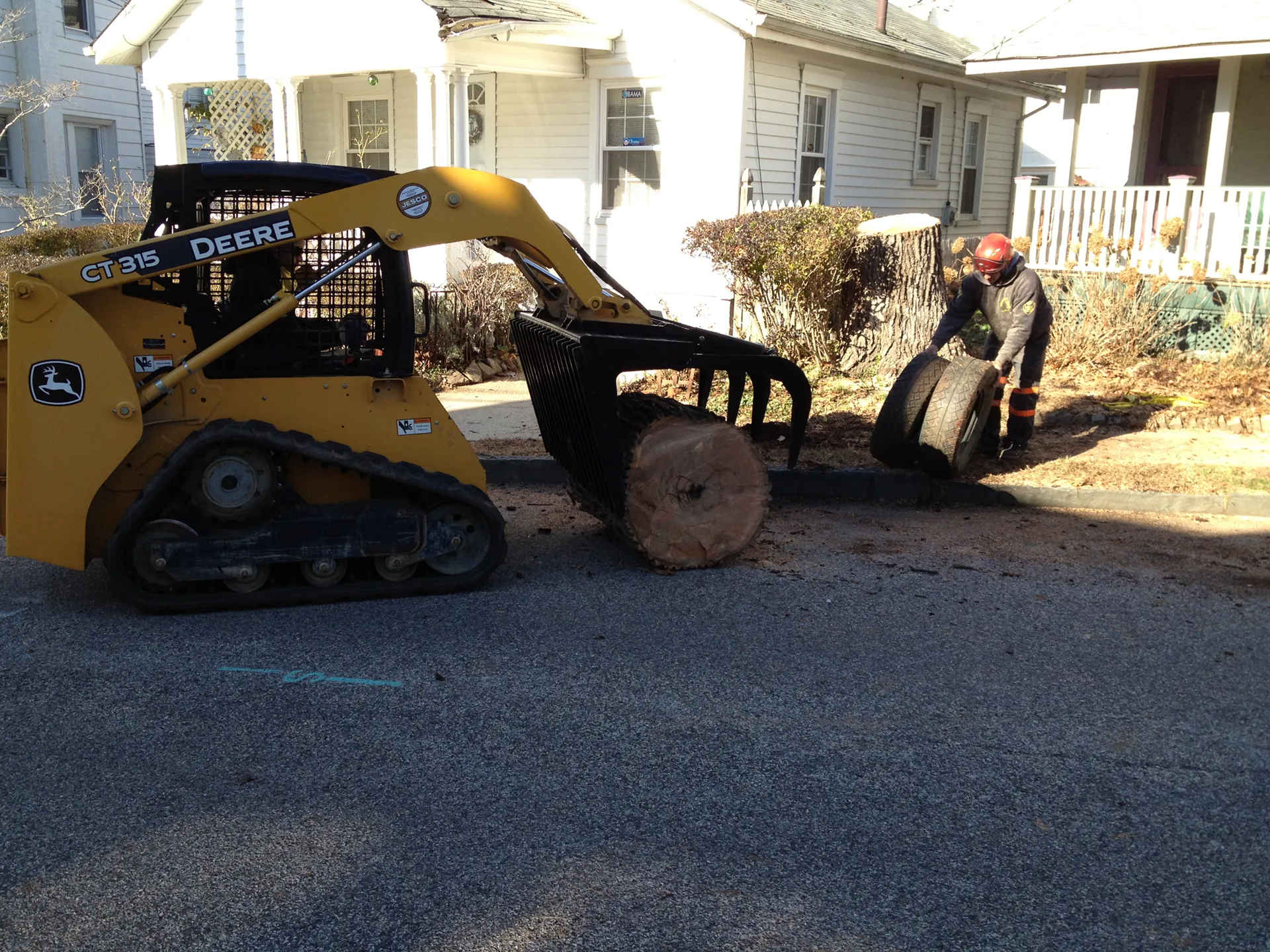
A single curbside pile is small compared with a removal or a large pruning job, so we settle where the wood goes before any cut is made. A few dead limbs from a maple can fit inside the township limits when they are cut to length and stacked. A whole trunk, a large crown, or a heavy stump will not, and that wood needs another route out of the yard. We go over hauling with the homeowner before work begins, so nobody is surprised by a pile that cannot be collected.
Debris is only one part of the planning. Rules about permits vary from town to town, and we do not assume one applies or does not apply to a given tree. Call the township about any specific tree before a removal, and ask for the answer in writing if the situation is unclear. Our guide to tree removal permits explains how the process usually works, and our tree removal work includes help with the paperwork when it is needed.
What to Settle Before Any Tree Work in Wall
- Your street’s scheduled bulk week, because brush pickup runs only on that day.
- Brush cut to four foot lengths and stacked within the size limit.
- Leaves kept loose and separate from brush, never placed in plastic bags.
- Three feet of clearance around poles, mailboxes, and other obstructions at the curb.
- A plan with your contractor for wood that exceeds a single curbside pile.
Planning the haul is not glamorous, but it separates a clean job from a pile at the curb that nobody can move. The goal is not to follow every rule perfectly from memory. The goal is to know the schedule, keep the wood in the right place, and ask the township when something is unclear. With the schedule settled and the trees understood, the remaining step is to book the review itself.
Call Hufnagel Tree Service About Tree Risk Evaluation in Wall Before Winter
If you have mature trees near your Wall home, driveway, wooded lot edge, or property line, schedule an evaluation before winter weather arrives. We provide tree health management, tree risk evaluations, pruning, storm proofing, restoration, and tree removal when a tree cannot be managed safely.
Hufnagel Tree Service is led by a certified arborist with almost 30 years of local experience and more than 280 five star Google Maps reviews. We inspect first, explain what we found in plain terms, and recommend only the work that changes the outcome for your trees and your property.
Call or text (732) 291-4444 to schedule tree risk evaluation in Wall before the first hard freeze. More of our local work is collected in the Wall Township location archive.
Schedule Service Now!
From precision pruning and safe removals to health assessments and preventative care, Hufnagel Tree Service delivers expert solutions backed by decades of experience. We offer certified insight, fair pricing, and a commitment to doing what’s best for your landscape.
Learn More About Our Services
Related Articles
Monmouth Beach Tree Risk Evaluation After Summer Storms
Insurance Company Tree Trimming Notice: Call Hufnagel