Storm Proofing in Little Silver NJ: River Wind, Wet Soil, and Borough Rules

In Little Silver, wet ground along the Shrewsbury River and a borough tree ordinance shape every winter storm decision. Learn what to check on your trees before the next nor’easter.
Share This Article

Contents

Storm Proofing in Little Silver Begins With the Shrewsbury River

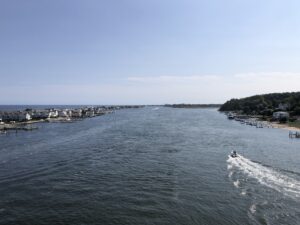
Little Silver became a borough on March 19, 1923, carved from Shrewsbury Township, and it covers 3.32 square miles, of which 0.61 square miles is water, according to Wikipedia. The borough sits about 16 feet above sea level on the Shrewsbury River, and the same page reports that roughly 8 percent of homes are directly on the river while another third sit on streams that connect to it. Storm proofing in Little Silver therefore starts with water, because wet ground shapes how every tree here holds on.

Former farms and nurseries have largely given way to houses, and many of the trees left behind are mature specimens standing close to roofs, drives, and Rumson Road. Our tree storm proofing work and our tree risk evaluation service both begin with that setting. A defect that is minor over an open lawn can matter a great deal over a bedroom, a porch, or a walkway.

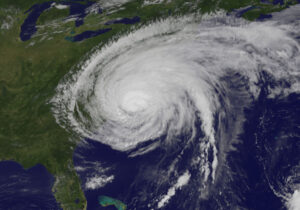
After almost 30 years working throughout Monmouth County, we have seen that November is when the river side of the county starts to feel winter wind. The National Weather Service says nor’easters are most frequent and most violent between September and April, and it names gale force winds, coastal flooding, and power outages among their effects. A tree that moved a little this summer has only a few weeks left to be checked.

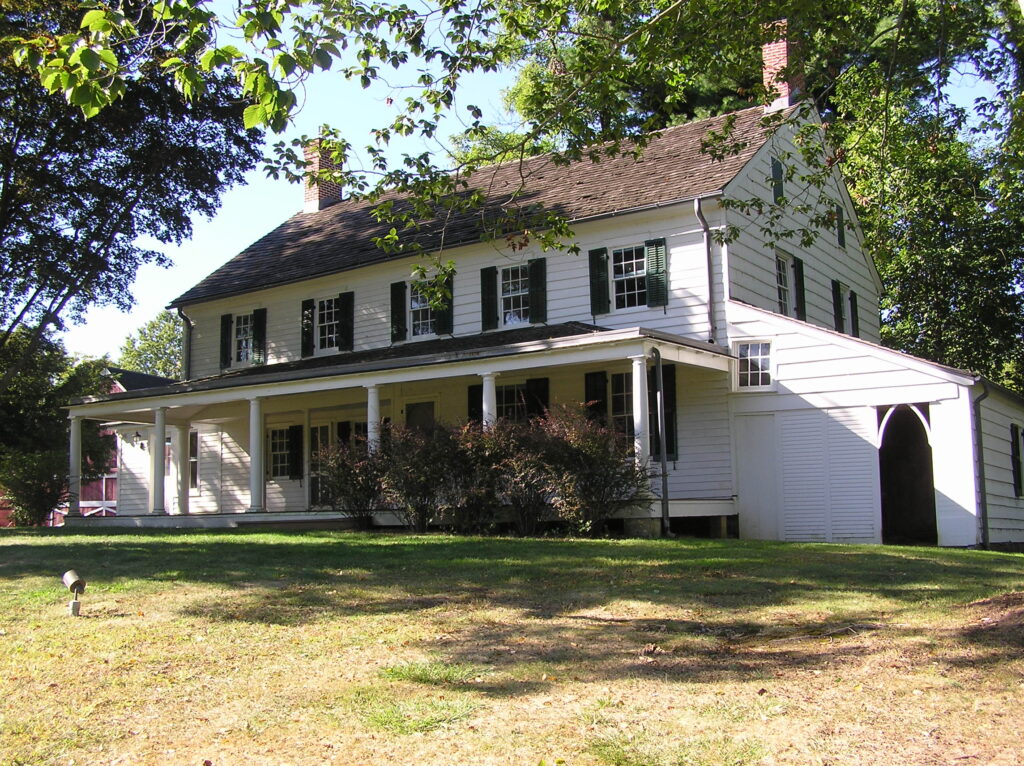
A white frame house with a long columned porch and dark shutters in Little Silver NJ, shaded by tall trees with a lawn in front
The Parker Homestead on Rumson Road in Little Silver, shaded by mature trees. Photo: Apc106, CC BY-SA 3.0, via Wikimedia Commons.

The photograph above shows the Parker Homestead at 235 Rumson Road, a white frame house with a long porch and dark shutters, shaded by tall trees. Wikipedia says the homestead is believed to date to 1725 and is one of the oldest houses in the state. A house that has stood for roughly three centuries shows how long a lot can carry trees, and how much those trees change in that time. Large trees beside old houses are assets, but a limb over a roofline or a root under a porch footing changes the question.

Wikipedia names Little Silver Creek and Parker’s Creek as the northern and southern boundaries of the original Parker holdings, and the public boat ramp at Santelle Park off Riverview Avenue is another reminder of how close the water is. Low ground near water holds moisture, and saturated soil gives roots less to grip when wind arrives. Our guide to weak tree roots explains the warning signs at the base, and our guide to hidden tree rot explains why a healthy looking crown can sit on a trunk that is not.

Wet Ground and Wind Test Roots Before They Test Branches

Rutgers Cooperative Extension explains in its fact sheet on over mulching that waterlogged soil is low in oxygen, and that root growth in most trees declines when soil oxygen drops below 10 percent. In a borough where so many properties sit on or near the river, that is a practical point. A tree standing in wet ground all fall is already working harder, and a winter storm arrives on top of that stress. We start every inspection at the ground for that reason.

The same fact sheet gives mulch limits that we repeat to owners. Total depth should not exceed three inches, or two inches on compacted or poorly drained soil, and mulch should sit eight to twelve inches away from a mature trunk. Mulch piled against the bark hides the root flare we most want to see, and it can hold moisture where the trunk meets the soil. Pulling it back takes a few minutes, and it is the first thing we ask an owner to do.

Roots also lose ground to people. Trenching for utilities, new fill, patios, and driveway widening all cut or bury roots, and the borough ordinance defines a critical root zone as a circle with a diameter equal to the trunk diameter multiplied by 1.5 and then doubled, which the ordinance says typically extends beyond the dripline. That is a larger area than most owners picture. Our tree health management service looks at the whole zone, not just the edge of the lawn.

A tree whose roots have moved does not always lean. Soil can heave on the side the wind pushes from, a gap can open between the trunk and the ground, and the tree can sit a little higher or lower than it did in summer. Photographs taken from the same spot each season make small changes easy to see, and small changes are the ones we can still act on. Our earlier article on tree health in Little Silver covers the root zone in more detail.

Winter adds a second test. Hardwoods stand bare and catch less wind, but wet soil and gale force gusts can still move a tree whose roots are already stressed. Evergreens keep their needles all winter, so they keep catching wind and holding snow, and a white pine with a heavy one sided crown is a common example. We look at each species with that difference in mind, and we look at the ground before the crown.

Mike Hufnagel puts the working rule this way: “A tree near the river is always dealing with water. Our job is to find out whether the roots are still holding the tree the way they did last year, and the ground usually tells us before the crown does.” That rule keeps the inspection honest. It sends us to the base of the trunk first, and it gives an owner something to check with a phone camera before we arrive.

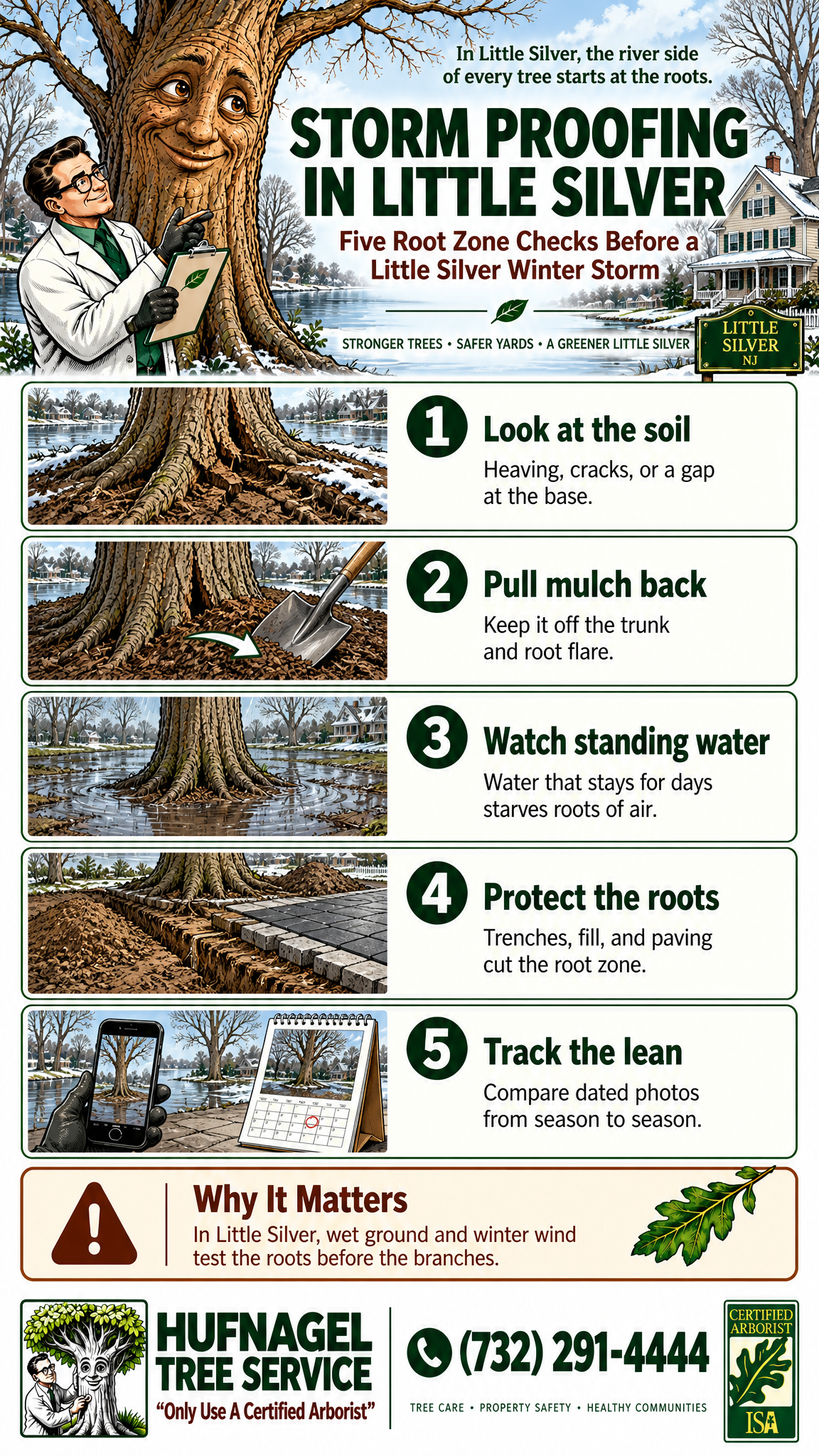
Five Root Zone Checks Before a Little Silver Winter Storm

  • Soil heaving, cracks, or a new gap at the base of the trunk.
  • Mulch piled against the trunk instead of pulled back from the root flare.
  • Water standing around the roots for days after a heavy rain.
  • Roots cut, trenched, or buried under new fill, patios, or driveways.
  • A lean that looks stronger than it did last season.

These five checks cost an owner a few minutes and a phone. If the soil, the mulch, and the water all look normal, the tree is probably in a good position to face winter. If any of them look wrong, the next question is what the tree is holding over, because the same root problem matters far more over a house than over an open lawn. That question leads straight to the borough rules, which treat a damaged tree differently from routine work.

Chapter 27 Treats Storm Damage Differently From Routine Work

Little Silver regulates tree removal through Chapter 27 of its Revised General Ordinances, Tree Protection and Replacement, adopted as Ordinance 879-24. A protected tree is any tree with a trunk diameter of eight inches or more, measured four and a half feet above the ground. A tree of three inches or more also counts as protected inside a wetland, watercourse buffer, or watershed buffer, or on a steep slope, and in a borough with this much water the buffer rule can reach a smaller tree than an owner expects.

Some work needs no permit. The chapter says a permit is not required to remove a downed tree, meaning one that has fallen or broken and lies on the ground or a structure, or for routine pruning or trimming to maintain health and natural habitat. It also says the chapter does not apply to shade trees as defined by Chapter 15 of the borough code. Which rule applies to a given tree is a question for the Borough Clerk, and we tell owners to ask before any work starts.

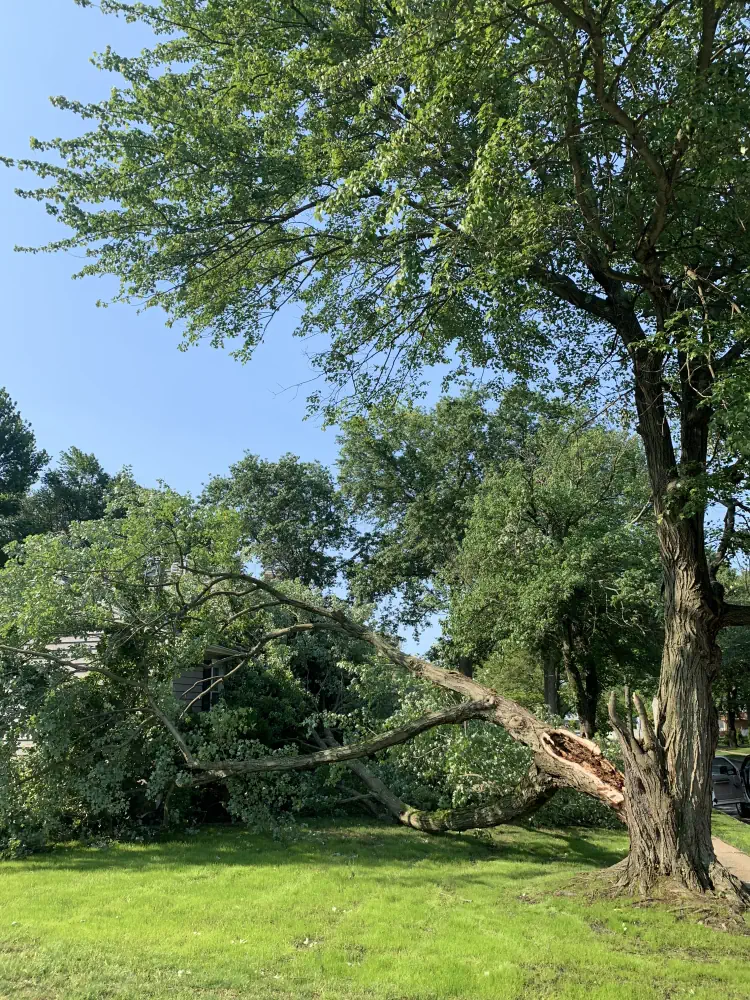
The ordinance defines a hazardous tree as one with serious defects that show it is failing and that presents an imminent threat to people, property, power lines, or places where people gather. Its examples include excessive damage from a windstorm, lightning strike, or flooding, with major broken branches, split trunks, or large cracks that pruning cannot correct. They also include deep cracks in the main stem or branch unions, advanced decay with fungal growth, a lean beyond 45 degrees with recent root exposure, and a tree supported only by another tree. That list reads very much like our inspection notes.

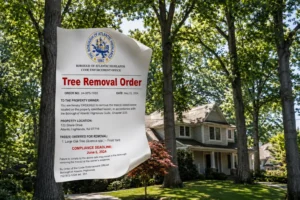
An ordinary removal goes through a volunteer Tree Preservation Commission. The commission has 45 days to decide once it has everything it requires, an approved permit expires after six months, and a sign must be posted visibly from the street at least three business days before removal begins. When the removal is based on the health or condition of a tree, a written statement from a Licensed Tree Expert is required unless the commission waives it. Our guide to tree removal permits explains how borough rules like this usually work.

The ordinance also has an emergency procedure for a hazardous tree. An application marked as an emergency goes to the Borough Clerk, and removal waits until the end of the next business day so commission members can look at the tree. If a Licensed Tree Expert decides the tree must come out immediately for safety, the wait can be waived, but the clerk must be notified in writing within five business days, with a statement and photographs from before and after. The chapter adds that unreasonable reliance on the procedure is a violation.

That is where our records help an owner. We photograph the defect, note the target beneath it, and describe what we see in plain terms, and we leave the decision about what the chapter allows to the borough. We do not tell an owner that a tree qualifies for any exception, because that finding belongs to the commission. What we can do is make storm proofing in Little Silver a conversation about evidence rather than opinion, and our tree risk evaluation reports are written for exactly that purpose.

Storm Damage Signs Little Silver Owners Should Photograph

  • Large cracks or splits in the main stem or where branches join.
  • Mushrooms, conks, or brackets growing on the trunk, root flare, or limbs.
  • A new lean with soil mounded or cracked on one side of the base.
  • Broken limbs hanging in the crown over roofs, drives, and walks.
  • Bark stripped or scarred by lightning, with dieback in the crown above.

Photographs with dates give the commission and us the same starting point. Stay clear of anything cracked or hung up, never climb or cut it yourself, and keep away from any tree that touches a service wire. The ordinance and good practice agree that a damaged tree is not a weekend project. Once a tree is documented, the next question is what to do about the weight it carries through winter, which brings us to snow, ice, and hangers.
Snow Load and Hangers Are the Winter Risks After a Nor’easter

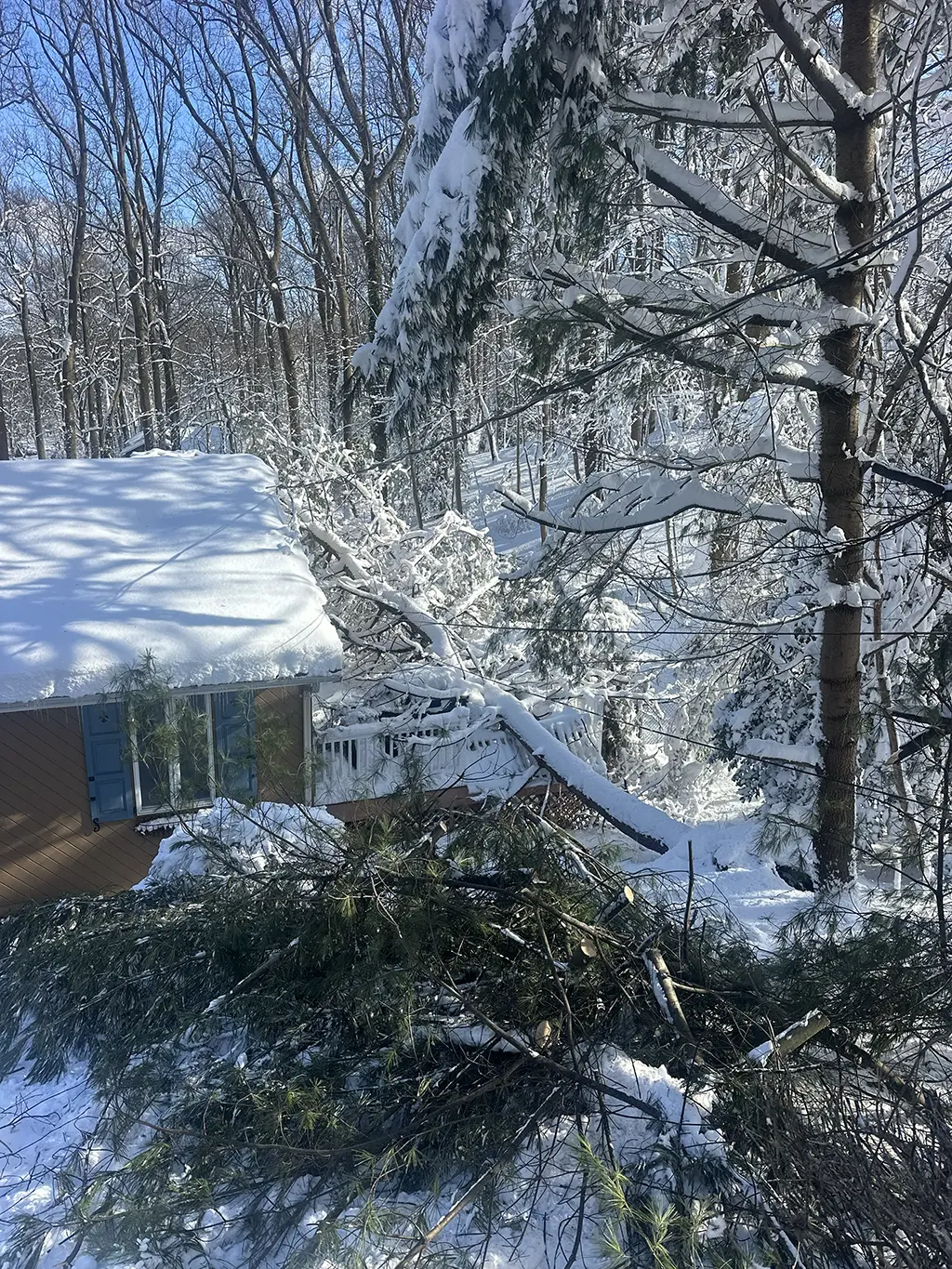
The National Weather Service describes nor’easters as storms with gale force winds that can bring coastal flooding and cut power. For a tree that means two loads at once, wind pushing on the crown and wet soil loosening the anchor, and in winter a third load of snow or ice can be added. A tree that handled each of those separately may not handle them together. That is why we talk about storm proofing as a plan for combinations, not a single event.

Penn State Extension warns in its page on helping trees recover after storms that broken limbs hanging in a tree can be under extreme tension, so disturbing them can drop them on an untrained person. It also says to avoid power lines even when the power is off and to call the utility about any tree touching a line. We repeat both points to every owner. A hanger over a driveway or a roofline is a reason to call, not a reason to reach for a saw.

The same page says topping, rounding over, and heading back cause internal decay and weaken structure, and that people often top trees to make them safer when it increases future storm damage. We never top a tree, and we do not try to “thin a tree out for wind” as a blanket prescription. The goal is not to make a tree smaller. The goal is to remove the specific weight and defect that a storm would find first.

Selective pruning works when it has a reason. Dead limbs over a roof, a long limb with heavy weight at its tip reaching over a drive, or a union where two stems press together with bark between them can each be addressed with a targeted cut or support. Our tree trimming and pruning service starts with the finding and works back to the cut. Dormant weather is a practical time for this work because the structure of a hardwood is easy to read with the leaves down.

Some trees cannot be managed with pruning. When decay has consumed the wood at the base, when roots have moved, or when a trunk has split through a union, removal can be the responsible answer, and it should follow the borough steps described above. Not every defect means removal. Many trees need only monitoring, and others need restoration after a storm has already taken a limb. We say which is which, and we give the reason.

Evergreens deserve a separate look. They hold snow and catch wind long after hardwoods have dropped their leaves, and a tree that has done well for decades can still carry a weakness that only a particular load will test. Our codominant stems guide covers one of the most common structural findings, and our article on storm season risk assessment explains how we rank what to look at first.

Practical Storm Proofing Options for Little Silver Properties

  • Targeted pruning to remove deadwood and weight over roofs, drives, and walks.
  • Cabling or bracing where a sound tree has a weak union worth keeping.
  • Mulch and root zone care that keeps the soil open and the flare visible.
  • Monitoring with dated photographs for trees that need watching rather than work.
  • Removal when decay, roots, or a split union leave no responsible alternative.

No tree service can honestly guarantee that a tree will never fail in severe weather. What a good plan can do is reduce the predictable risks, document the tree, and leave healthy structure alone. In Little Silver that also means respecting the borough process, which exists to keep trees on the lot when they can be kept. Once the plan is clear, the only decision left is timing, and the cold months are a sensible time to act.

Call Hufnagel Tree Service for Storm Proofing in Little Silver Before Winter Wind

If you have mature trees near your Little Silver home, driveway, garage, or river facing lot, schedule an evaluation before winter storms arrive. We provide storm proofing, tree risk evaluation, tree trimming and pruning, restoration, and removal when a tree cannot be managed safely.

Hufnagel Tree Service is led by a certified arborist with almost 30 years of local experience and more than 280 five star Google Maps reviews. We inspect first, explain what we found in plain terms, and recommend only the work that changes the outcome for your trees and your property.

Call or text (732) 291-4444 to schedule a tree inspection and a plan for storm proofing in Little Silver before the next nor’easter arrives. Our Little Silver tree articles list more local guidance.

Schedule Service Now!

From precision pruning and safe removals to health assessments and preventative care, Hufnagel Tree Service delivers expert solutions backed by decades of experience. We offer certified insight, fair pricing, and a commitment to doing what’s best for your landscape.

Where Do You Need Service?
Please Enter Your Contact Information
Are You A New or Existing Customer?
How Can We Help You?

Thank You!

Your Message Has Been Sent

We Will Contact You About Your Inquiry Shortly.

We Could Not Find A Direct Link To A Tree Removal Permit Application For The Town You Selected.

Please contact your local municipality to determine if a permit is required for your tree removal project. They will provide you with the most accurate and up-to-date information.