Contents
Winter Tree Preparation in Interlaken Begins Between Two Lakes
Interlaken is a small residential borough with a lake on both sides of it. According to Wikipedia, Dr. Francis Weld named his farm after the Swiss town of Interlaken because it seemed to sit between two sections of Deal Lake, and the 1890 development plan then named the avenues after English lakes. The borough covers only 0.33 square miles of land, counted 828 residents in 2020, and stands at an elevation of just 16 feet.
That small footprint and low ground change how we think about winter. Winter tree preparation in Interlaken is not about big woodlots or open fields. It is about mature trees standing close to roofs, driveways, wires, and neighboring yards, with wet soil beneath them and a salted county road beside many of them. Our tree storm proofing service is built around finding the weak point in each of those trees before winter weather finds it.
After almost 30 years working throughout Monmouth County, we have seen that late fall is the right time to do that work. The leaves are coming down, the structure of each tree becomes easy to read, and the ground has not yet frozen or filled with snow. A tree that is judged now can be corrected on a calm day, and a tree that cannot be saved can be handled before a storm forces the decision.
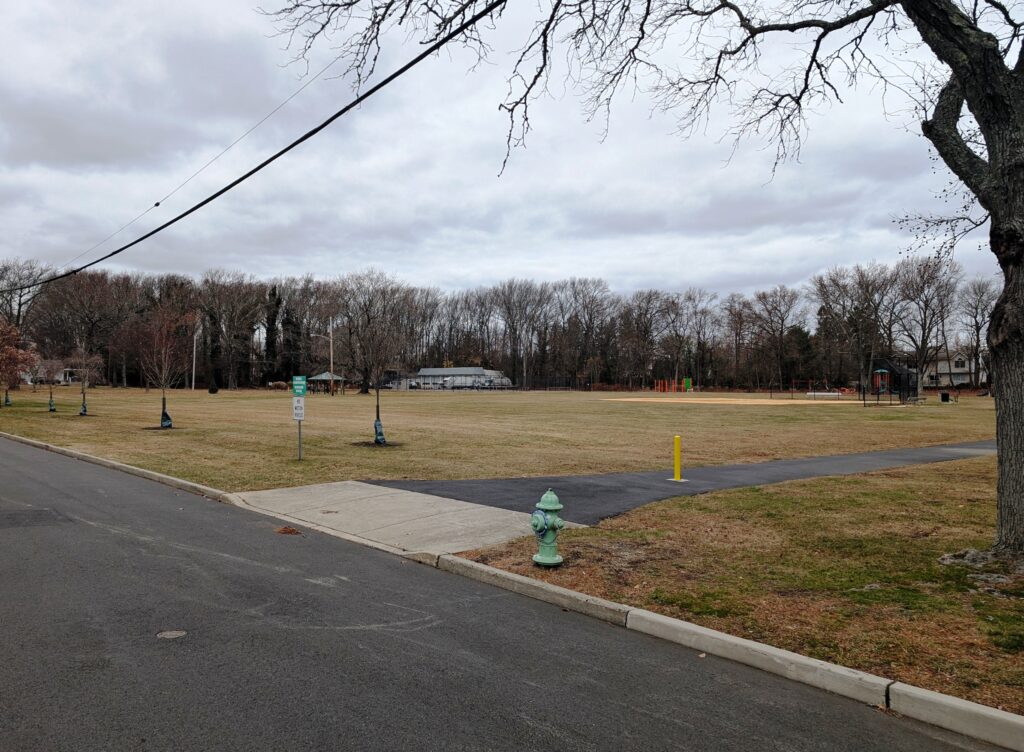
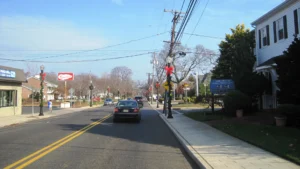
The photograph above shows Interlaken Park from Bridlemere Avenue in winter. The crowns of the older hardwoods are bare, a utility wire crosses the frame, and the young trees along the lawn wear guards at the base. Every one of those details matters to us in winter. Bare crowns show us the defects, the wire shows us where a failing limb could cause an outage, and the young trees show us where the next generation of the canopy is being protected.
The water matters just as much. The Deal Lake Commission describes a lake of about 158 acres with 12.5 miles of shoreline, and it notes that the lower main section sits only 3.2 feet above mean high tide. The same page says the commission works to control lake levels during heavy storms with limited ocean tide controls. Soil that stays wet is soil that holds a tree less firmly, and we weigh that whenever a storm and a saturated yard arrive together.
Winter Tree Preparation Starts With Structure, Not the Forecast
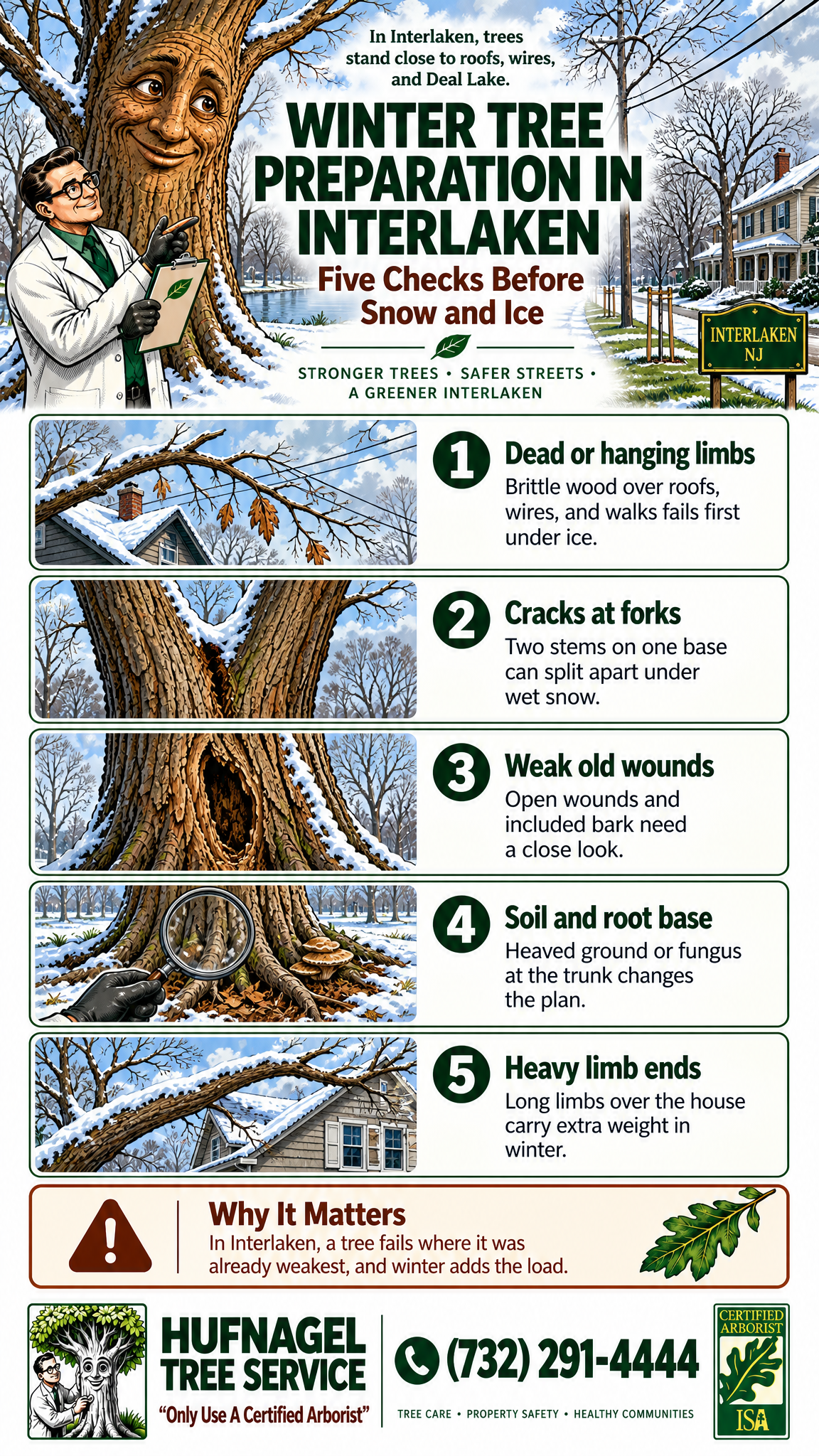
The International Society of Arboriculture explains how storms damage trees in a short list, and two items on it belong to winter. Heavy snow or ice loads can break branches under the added weight, and strong wind can uproot trees when rain or snow has softened the soil, according to its brochure on storm related tree damage. Both come back to one idea. A tree fails where it was already weakest, and winter simply supplies the load.
That is why winter tree preparation in Interlaken starts with structure instead of the forecast. We cannot control how much snow falls or how fast it freezes. We can find the cracked union, the dead limb, or the heaved root plate that would fail first, and we can decide what to do about it while the weather is calm. A forecast tells us when to worry, but only an inspection tells us which tree to worry about.
We read each tree from the ground up. We begin at the root flare and the soil around it, looking for cracks, raised ground, fungus, or fresh movement. We follow the trunk to old wounds and cavities, then to every point where large stems meet, and only then do we study the crown. Bare branches make this far easier, because unions, deadwood, and old pruning wounds that summer leaves hide are plain to see once the leaves are down.
Targets decide how urgent a defect really is. In a borough this compact, a long limb over a roof, a driveway, or a neighbor’s fence has very little room to fall without hitting something. A defect that is minor over an open lawn can be serious over a bedroom. Our tree risk evaluation measures what each defect could reach, because the target decides how much work a tree actually needs.
Weak unions deserve special attention before snow arrives. Two or more main stems growing from one base can look sturdy for decades, yet the narrow fork between them often holds bark instead of wood. Wet snow settles into that fork and pulls the stems apart. We explain how that happens in our guide to codominant stems, and it is one of the most common findings on older shade trees in this part of Monmouth County.
Deadwood is the other early failure. Dead branches are brittle and do not bend with a load the way living wood does, so they snap first under ice. Limbs that are already broken but still hanging in the canopy are even more urgent, because wind can finish the job at any hour. If you spot one over your home, photograph it from a safe distance, stay clear, and call a professional rather than reaching for a ladder.
Mike Hufnagel puts it simply: “Winter does not create most of the problems we find. It finds the ones that were already there, so the best time to look is before the first heavy snow, while we can still choose the cut.” That choice is the real benefit of early inspection. It keeps us from rushing a removal in a storm, and it keeps us from leaving a known defect in a tree that cannot afford it.
What We Check on Interlaken Trees Before Snow and Ice
- Dead or hanging branches over roofs, driveways, walkways, wires, and neighboring property.
- Cracks or tight forks where two main stems share a single base.
- Included bark, narrow unions, and old wounds that have never fully closed.
- Heaved soil, a raised root plate, or fungus at the base of the trunk.
- Heavy end weight on long limbs that reach over the house.
No single item on that list decides a tree’s future, and most trees show none of them. When we do find one, the answer is usually some mix of pruning, restoration, monitoring, or removal, and it depends on the tree and what sits beneath it. Once the structure is understood, the next part of winter preparation happens at ground level, where road salt, wet soil, and mulch decide what the roots will face until spring.
Road Salt, Wet Soil, and Mulch Decide What Roots Face

Roots do not show winter damage right away, which is why salt and soil problems are easy to miss. The Rutgers Cooperative Extension advisory on road salt and adjacent vegetation, written by Ann Gould in March 2013, explains that dissolved salt in runoff and road spray can injure both roots and foliage. Trees within about 15 feet of traffic sit in the spray zone and face the highest risk. County Route 15 runs through Interlaken, so any tree close to it, or to a driveway that is heavily salted, belongs in that conversation.
Rutgers describes the mechanism in plain terms. Salt holds water tightly, so roots struggle to take it up, and the tree experiences something close to drought even when the ground is wet. Salt can also degrade soil structure and reduce drainage and aeration, and chloride can build to toxic levels inside growing tissue over time. Plants cannot excrete salt, so conifers that keep their needles for years are more vulnerable than deciduous trees that drop their leaves each fall.
The symptoms are easy to recognize once we know to look for them. The advisory lists leaf scorch, early leaf drop, stunted growth and smaller leaves, and twig and branch dieback, with severe cases ending in the death of the whole plant. Injury is usually worst on the side of the tree that faces the road. Rutgers adds that salt applied in late winter or early spring does more harm than salt applied earlier, because less time remains for rain and snowmelt to flush it from the root zone.
That timing is the reason we talk about salt in fall instead of March. A tree that enters winter with healthy roots handles a salt season far better than one already stressed by drought, compaction, or decay. Stressed trees are also more attractive to insects and disease, as the same advisory notes. A fall inspection of the root zone, followed by a few small habits through the winter, protects the tree long before any symptom would have appeared. Our tree health management work covers exactly this kind of slow, quiet stress.
Homeowners can do a good deal from the ground. Rutgers recommends clearing snow first and then applying only a minimal amount of deicer, using chloride free products such as urea where they are suitable, and leaching salty soil with fresh water as soon as possible. It also suggests rinsing salt from foliage and screening exposed evergreens during the winter. We would add one practical rule: never pile salty plowed snow against the trunk or over the root zone of a tree you want to keep.
Mulch is the other ground level decision, and it is often done wrong. The Rutgers fact sheet on mulching trees and shrubs says total mulch depth should not exceed 3 inches, and no more than 2 inches on compacted or poorly drained soils. It warns that when soil oxygen falls below 10 percent, root growth in most trees declines, and it recommends keeping mulch 8 to 12 inches away from mature trunks. In a low borough where the lake keeps soil damp, a thick mulch volcano is the last thing a tree needs going into winter.
Wet soil also changes how we judge leaning trees. A new lean after a rain, a crack opening in the lawn beside a trunk, or soil lifting on one side are signs that the root plate may be moving. We explain what those signals mean in our guide to weak tree roots, and they are among the findings we take most seriously before winter wind arrives. A tree can look healthy above ground and still have lost much of its anchorage below it.
Ground Level Steps That Protect Roots Through Winter
- Pile shoveled snow and plowed salt away from the trunk and root zone.
- Choose deicers with less chloride near trees and apply only what is needed.
- Keep mulch about 2 to 3 inches deep and well clear of the trunk.
- Rinse salt from evergreen foliage and soak the soil during a thaw.
- Photograph new soil cracks, heaving, or a changing lean and call us.
These steps cost very little, and they protect the part of the tree no one sees. Roots that stay healthy through winter give the tree the strength to recover from whatever the crown suffers above. The other half of the plan concerns the crown itself, and in Interlaken that plan has to account for the lake, the borough’s own tree program, and the timing of every cut.
Deal Lake and Dormant Season Timing Shape the Work

Deal Lake shapes the way we schedule work in Interlaken. The Deal Lake Commission states that strict compliance with NJDEP regulations applies to any land within 50 feet of the lake shoreline, and within 50 feet of any stream that drains into it. It advises property owners to contact the NJDEP before starting maintenance or construction along the shore. We would rather a homeowner hear that before the first cut, because working without the right permits can bring fines and delays.
For that reason, a lakeside tree gets a different first question from us. Before we talk about pruning or removal, we ask how close the tree stands to the water and whether the work touches that regulated strip. We are not lawyers, and we do not give legal advice. We point homeowners to the commission and the state, and we plan the work around what they require. If a tree must come down, our Interlaken tree removal guide explains the borough’s notice rules in more detail.
The dormant season is a practical window for most pruning, and winter tree preparation in Interlaken is a good example of why. With the leaves down, we can see the whole structure we are cutting, including branch collars, crossing limbs, and the weight at the ends of long branches. A cut made for a clear reason on a calm day costs a tree far less than a limb that tears away in a storm. Our tree trimming and pruning follows that principle, and every cut has to have a purpose.
The ISA lists what preventive care looks like, and it matches our approach closely. It includes training trees to improve their form, identifying defects in branches, trunks, and roots, removing dead or defective branches, and correcting problems from past practices such as topping. We do not top trees, and we do not try to thin a tree out for wind as a blanket prescription. We remove what is dead, broken, or clearly unsafe, and we leave healthy structure alone.
Interlaken also has an unusual tree history, and it affects how we talk with neighbors. The borough Shade Tree Commission says its first commission planted 291 trees in 1927, that Interlaken has been a Tree City USA since 1988, and that it created the Interlaken Arboretum in 1992 just inside the borough’s easterly entrance gates. Trees there carry QR codes with species and history. People who live here tend to care about their trees, and we respect that by preserving whatever can safely be kept.
The same page describes an Honor Me Tree Program, in which residents buy a tree to honor a neighbor or mark a milestone, and the Commission cares for it as part of the borough’s long term plan. If a tree is in the arboretum or was planted through that program, it is not ours to prune, and the Commission is the right call. We would rather say so than touch a tree that belongs to the whole borough. For trees on private property, the plan is ours to build with the owner.
Winter can also expose damage from the seasons before it. We covered the lightning side of that problem in our article on lightning damage in Interlaken, and decay can sit quietly inside a tree for years, as our guide to hidden tree rot explains. Bare crowns in winter make both easier to find. The earlier a hidden problem is found, the more choices remain, and preservation is far more likely when the work is planned instead of rushed.
Questions We Answer Before Any Winter Cut
- Is there a clear reason for the cut, such as deadwood or a defect.
- Does the tree stand within 50 feet of the Deal Lake shoreline.
- Could removing weight in one place shift the load onto a weaker part.
- Will each wound be small enough for the tree to close in time.
- Does the tree belong to the borough or sit near a utility line.
Those five questions keep the work honest. They slow us down just enough to avoid a wrong cut, and they make sure the homeowner understands why each one is made. A good winter plan for an Interlaken property is short, specific, and tied to what the trees actually need. It rarely involves removing a healthy tree, and it almost always involves leaving something alone. When the plan is ready, the last step is simply getting it scheduled.
Call Hufnagel Tree Service About Winter Tree Preparation in Interlaken
If you have mature trees near your Interlaken home, driveway, County Route 15 frontage, or Deal Lake shoreline, schedule an evaluation before winter weather adds load. We provide tree storm proofing, tree risk evaluations, pruning, restoration, and removal when a tree cannot be managed safely.
Hufnagel Tree Service is led by a certified arborist with almost 30 years of local experience and more than 280 five star Google Maps reviews. We inspect first, explain what we found in plain terms, and recommend only the work that changes the outcome for your trees and your property.
Call or text (732) 291-4444 to schedule winter tree preparation in Interlaken before the first coastal storm arrives.
Schedule Service Now!
From precision pruning and safe removals to health assessments and preventative care, Hufnagel Tree Service delivers expert solutions backed by decades of experience. We offer certified insight, fair pricing, and a commitment to doing what’s best for your landscape.
Learn More About Our Services



Related Articles

Aberdeen Fall Tree Inspection: Find Problems Before Winter
Codominant Stems in Tinton Falls NJ: Check Weak Unions Before Winter
Tree Health Inspection Services Near Fair Haven, NJ