Contents
Storm Proofing in Shrewsbury Starts With Old Street Trees and Busy Wires
Shrewsbury covers 2.19 square miles of Monmouth County and counted 4,184 residents in the 2020 census, according to Wikipedia. It borders Eatontown, Little Silver, Oceanport, Red Bank, Shrewsbury Township, and Tinton Falls, and it was formed as a borough in 1926 from portions of Shrewsbury Township after a May 11 referendum. That history of old roads and settled lots is the starting point for storm proofing in Shrewsbury.
Route 35, also known as Broad Street, meets County Route 13A, Sycamore Avenue, at the Shrewsbury Historic District. The district covers 85 acres, was added to the National Register of Historic Places on July 17, 1978, and counts 47 contributing buildings, including three churches, the Allen House, and the Wardell House. Old buildings, close setbacks, and mature trees share the same ground, and our tree storm proofing work starts from that fact, because a tree matters to storm season only when something stands beneath it.
After almost 30 years working throughout Monmouth County, we have seen that storm damage rarely arrives as a surprise. It comes from a defect that was already in the tree, a limb already over a roof or a wire, or a root zone already under stress, and then a nor’easter or a heavy wet snow supplies the load. Fall is the right time to look, while leaves still help us read the crown and before winter weather adds weight.
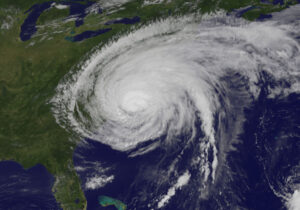
Shrewsbury sits inland from the ocean, but its trees still take the weather that comes up the coast. The National Weather Service explains that a nor’easter can occur at any time of year but is most frequent and most violent between September and April, and that these storms nearly always bring heavy rain or snow along with winds of gale force. Wind from the northeast leans on one side of a crown, and the rain that comes with it softens the soil around the roots at the same moment.
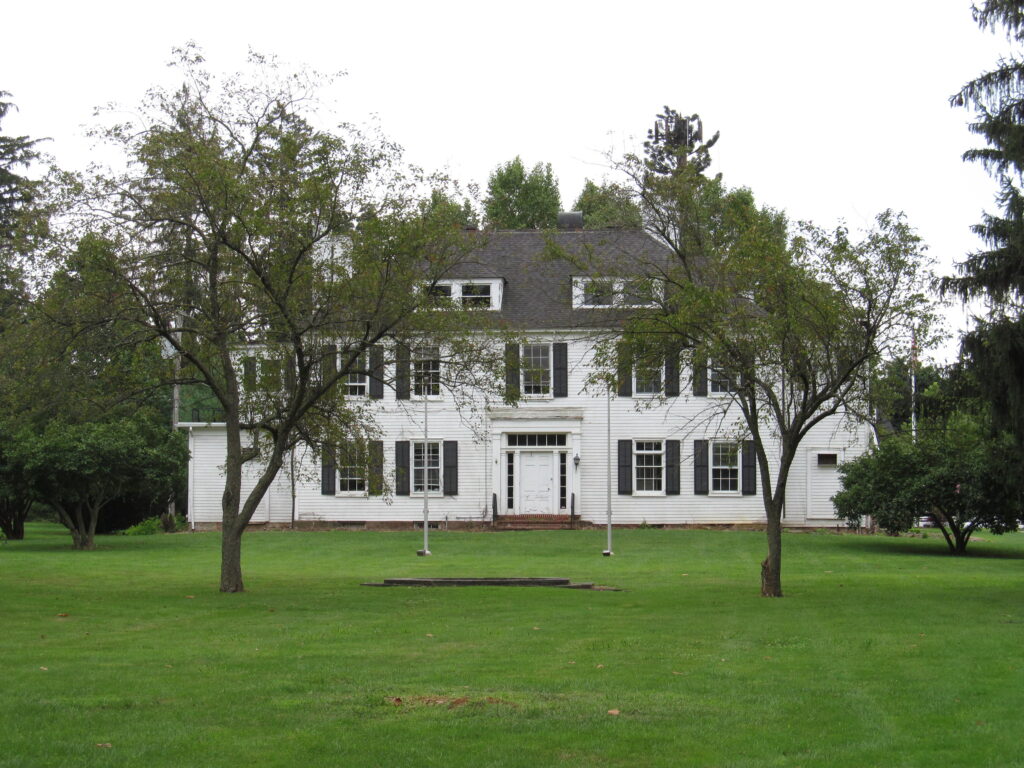
The photograph above shows two mature trees on the lawn of a white colonial house in Shrewsbury. We cannot judge the structure of a tree from a single frame, and we do not guess from the street. What we can say is that large trees on open ground give wind a clear path to the crown, and that the first job of any visit is to read each crown, each union, and the ground beneath it.
Storm Proofing Begins With What Holds Each Tree Up, Not the Forecast
The International Society of Arboriculture notes in its brochure on recognizing tree risk that every tree has some potential to fall, but only a small number ever hit anything or anyone. The same brochure says there is no such thing as a completely safe tree. We agree with both statements, and they explain why storm proofing is the work of finding the few trees that matter and not a blanket treatment for every tree on a lot.
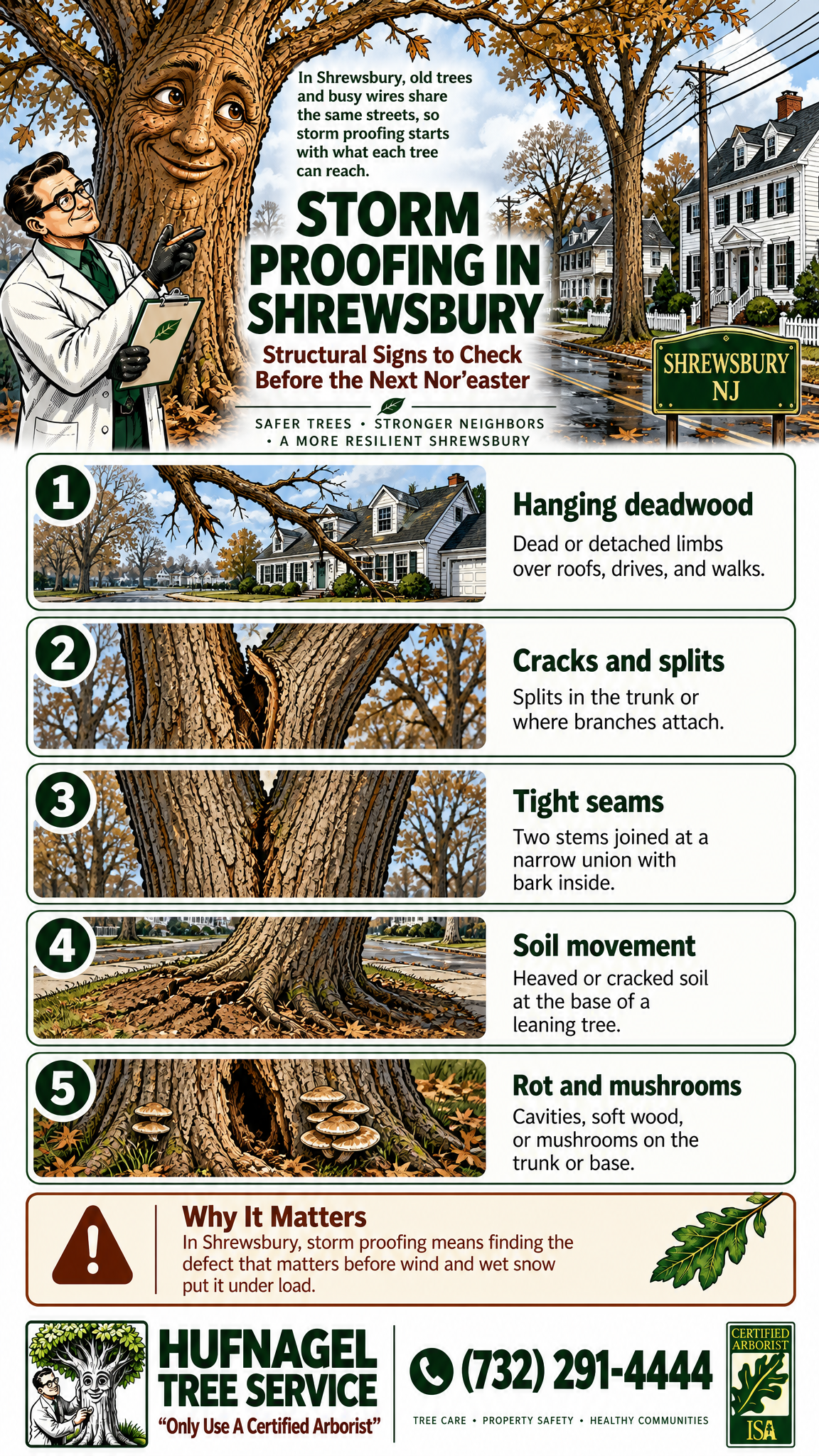
The brochure offers a short checklist, and we use it as a starting point on every visit. It asks about large dead branches, detached or hanging branches, loose bark, cracks or splits in the trunk or at branch attachments, cavities and rotten wood, mushrooms at the base, recent changes to the soil around the tree, and whether the tree has been topped or heavily pruned. A yes to any of those questions is a reason for a closer look by a trained arborist, and not a reason to start cutting.
Unions deserve particular attention in older neighborhoods. Two stems that grow side by side from one point can look sturdy from the street and still be weak where they meet, and the brochure lists codominant stems among the common failure points. Our guide to codominant stems and multi stem trees explains why a tight seam with bark pressed inside it is a different matter from a strong union. Storm proofing often comes down to deciding what to do about that one union.
The base of a tree tells the other half of the story. The brochure describes cracks or separations in the soil as a possible sign of soil heaving from excessive root movement, and a warning sign especially when the tree leans. Our guide to weak tree roots covers what we look for at the root flare. A tree that has shifted in the ground after a wet storm has changed, even if it still looks normal from the driveway, which is why we check roots as carefully as limbs.
Construction and grade changes matter as well. The brochure lists wounds, root loss, and decay among the defects that can follow construction, soil compaction, changes in soil level, or poor pruning. In an established borough, with additions, driveways, and patios built over many decades, many trees carry some history of that kind. We ask what has changed around a tree before we ask what to cut from it.
Hidden damage is the reason we like to inspect before a storm and again after one. Our article on hidden damage from seasonal storms explains how a tree can look unchanged and still carry a crack or a moved root plate. Mike Hufnagel puts the working rule this way: “A storm does not create most of the problems it finds. It finds the ones we could have found first, so the job is to get there ahead of it.” That rule keeps our attention on the structure of the tree and not on the forecast.
Structural Signs That Shape Storm Proofing in Shrewsbury
- Dead or hanging branches over roofs, driveways, sidewalks, and neighboring property.
- Cracks or splits in the trunk or where branches attach to it.
- Two stems joined at a narrow seam with bark pressed inside the union.
- Cracked or heaved soil near the base, especially on a tree that leans.
- Cavities, soft wood, or mushrooms on the trunk, major limbs, or base.
None of these signs means a tree must come down. Some trees need only monitoring. Others need targeted pruning, restoration, support, or removal. What matters is that the sign is found, matched to a real target such as a roof, a wire, or a walkway, and handled with the smallest correction that works. Once the structure is understood, the next question is what sits above and around the tree, which in Shrewsbury means wires, sidewalks, and borough rules about who controls what.
Wires, Sidewalks, and the Shade Tree Commission Shape Every Storm Plan
Shrewsbury has a Shade Tree Commission, created by ordinance in 1973 and now made up of seven resident members appointed by the Mayor, according to Article II of the borough code. Its duties include advising the Mayor and Council on the planting, care, protection, and removal of shade and ornamental trees along public streets, parks, and public places. For a homeowner, that means some of the trees nearest the road may not be entirely the owner’s to decide about.
Chapter 246 of the code, Trees, Shrubbery and Landscaping, gives the Commission full and exclusive control over the removal, planting, trimming, spraying, and care of trees in public rights of way, parks, and utility rights of way. It also makes it unlawful to plant, take down, or remove a shade tree under the Commission’s jurisdiction without a written permit. Anyone planning work near the street should check with the borough before a saw comes out, and our guide to tree removal permits explains how permit rules work across Monmouth County.
Utility wires get their own attention in the code. The chapter says anyone who owns wires or cables over streets and parks must guard the trees near them from injury, and that a utility may not prune trees for line clearance without the prior written approval of the Commission except during emergencies. That is a useful reminder that a tree under a wire is a shared problem, and that who may cut what depends on where the tree stands and who owns the line.
Private owners have a duty too. The code says owners must prune trees so that branches hang at least eight feet over sidewalks and walkways and 13 feet over roadways. Those clearances are not a storm proofing plan by themselves, but a crown kept clear of walkways and streets is easier to inspect and less likely to drop a heavy limb on someone passing beneath it. Our tree trimming and pruning work respects those numbers.
The Commission can also act when a tree is dangerous. The code lets it remove, or require the removal of, a tree that is diseased or dangerous to public safety, at the expense of the tree’s owner after reasonable notice unless public safety requires immediate removal, and the cost can become a lien on the property. We would much rather a homeowner learn about a defect from a certified arborist in October than from a borough notice in January.
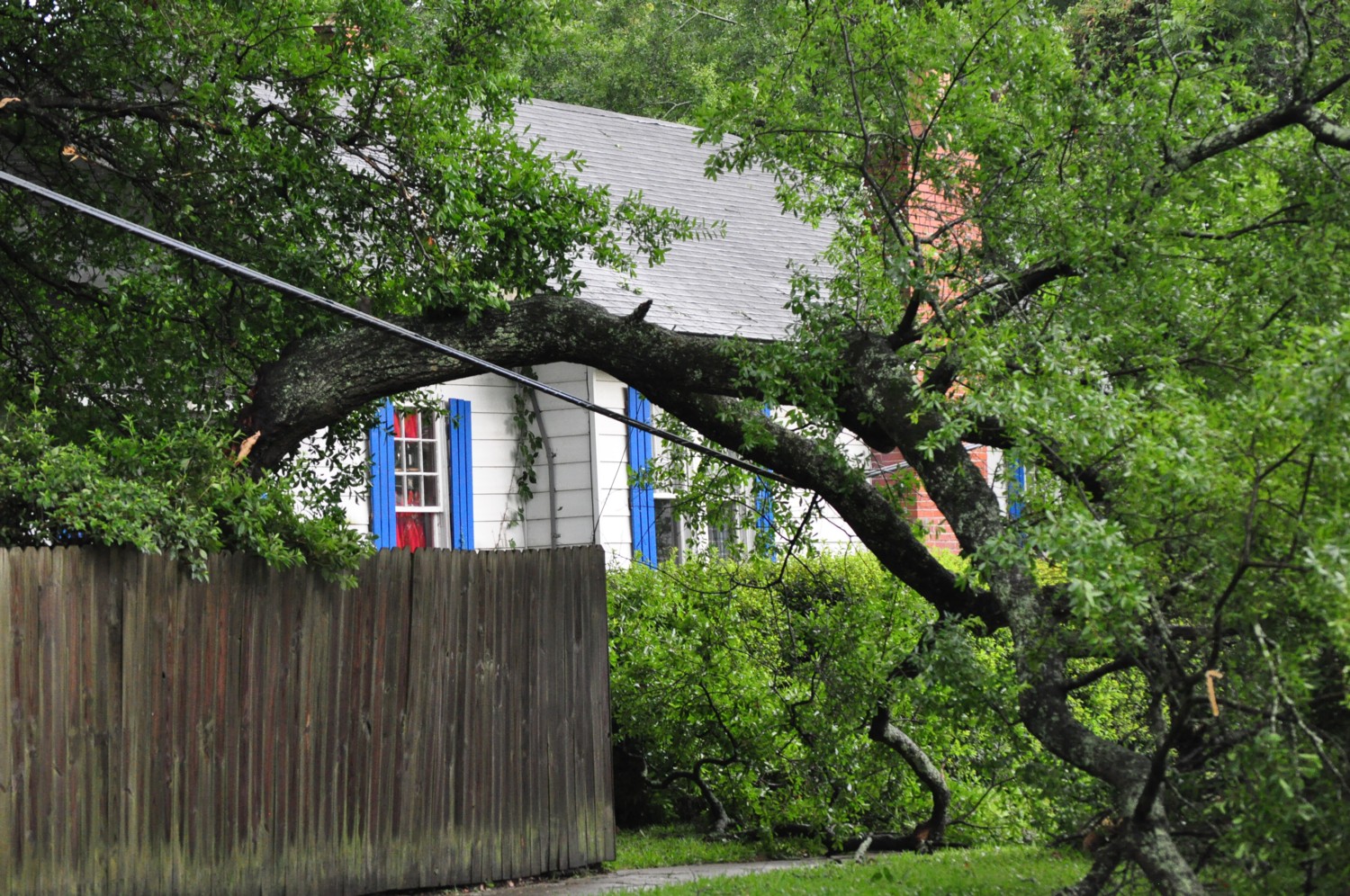
Never go near a tree that touches a power line. The ISA brochure says never to attempt to remove branches or other tree parts from or near power lines, never to go near downed lines because they may still be carrying electricity, and to call the local electricity provider when tree parts contact utility lines. We follow the same rule. Homeowners look, photograph from a safe distance, stay clear, and call, and our tree risk evaluations begin once the lines are safe.
Wire and Clearance Checks Worth Making Before Winter
- Branches hanging lower than eight feet over a sidewalk or 13 feet over a road.
- Limbs that touch, rub, or lean on service wires or a roofline.
- Street side trees where Commission control or ownership is unclear.
- Mulch against the bark, or building materials stacked within six feet of a trunk.
- Torn limbs or fresh cracks left behind by the last windy day.
These checks take a few minutes from the ground and cost nothing. They also give us something concrete to talk about when we visit, because a photograph of a limb against a wire is clearer than a description. Once the wires, the clearances, and the borough rules are understood, the remaining question is how the weather itself loads a tree, and that depends on rain and snow as much as wind.
Nor'easters and Wet Snow Test the Ground as Much as the Crown
Wind gets most of the attention, but a nor’easter is a rain event as much as a wind event. The National Weather Service says these storms nearly always bring heavy rain or snow, and that forecasters may issue winter storm, high wind, and coastal flood watches when conditions are favorable. A saturated lawn gives a root plate less to hold on to, and a tree that stood through a dry gale can lean in a wet one.
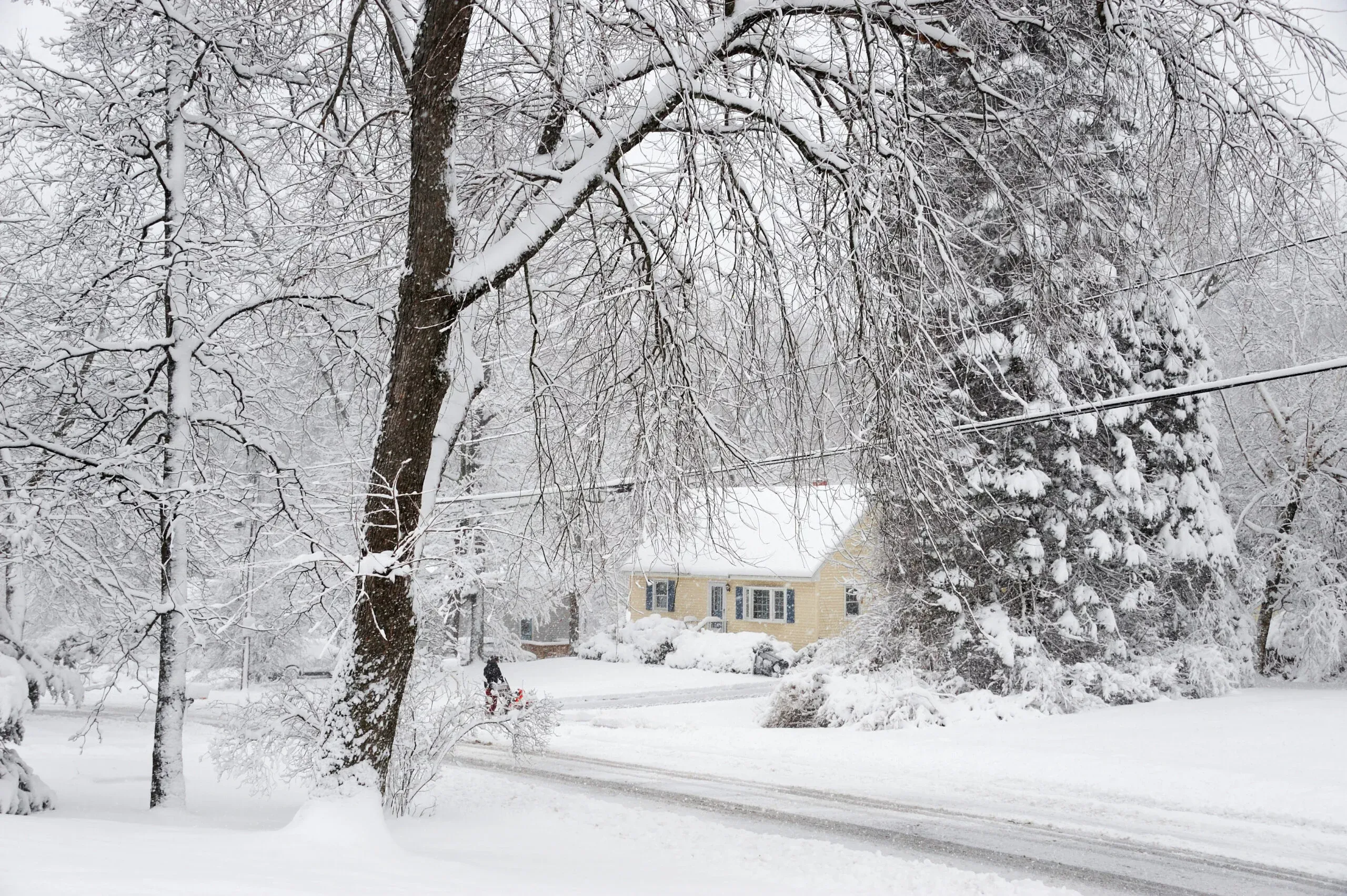
Wet snow adds a different load. Snow and ice collect on the ends of limbs, where a long branch has the most leverage, and a limb that carried leaves all summer may be asked to carry far more weight in winter. The ISA risk brochure lists poor taper, meaning weight concentrated near the end of a branch or stem, as a defect that makes failure more likely. We look for end weight on long horizontal limbs and for unions that were already marginal, because those are the places a storm tends to find.
The ISA brochure on mature tree care recommends that mature trees be inspected at least once a year for four signs of vitality: new leaf or bud formation, leaf size, twig growth, and the absence of crown dieback. It also lists cavity openings, extensive twig dieback, and fungal conks on the trunk as signs of structural weakness. Those are the clues a bare canopy shows best, which is why late fall and winter are good times to inspect, and our tree health management visits follow the same list.
Soil and mulch complete the picture. The same brochure recommends mulch two to four inches deep, placed near but not touching the trunk and extended toward the dripline, and it notes that drainage work or grading can help with saturated soil. The borough code adds that mulch must not be placed against the bark of trees under the Commission’s control. A pile of mulch against a trunk hides the root flare, which is the first place we look for trouble.
Planting belongs in the plan as well. The borough code says deciduous trees under the Commission’s jurisdiction may not be planted between May 15 and November 1 without specific authorization, which opens a planting window in November, and it bars planting anything on the New Jersey Invasive Species List. The ISA brochure on tree risk also says that when a tree with unacceptable risk is removed, an appropriate replacement should be planted if possible.
Support systems are a tool and not a promise. The ISA brochure says cabling and bracing can provide physical support for weak branches and stems, and it also says such supports are not guarantees against failure. We use the same honest framing. No tree service can honestly guarantee that a tree will never fail in severe weather, and a plan that claims otherwise is not worth trusting.
Fall Storm Proofing Choices That Help a Mature Tree
- Two to four inches of mulch near, but never touching, the trunk.
- Removal of dead, hanging, and clearly unsafe limbs before the first storm.
- Selective cuts that take weight off long limbs instead of topping the tree.
- Cables or bracing only where a weak union can be supported.
- A second look after each major storm, because damage can stay hidden.
The goal is not to make every tree smaller. The goal is to take load off the right places, remove what is clearly unsafe, and leave healthy structure alone. A tree that has been topped or heavily pruned is a warning sign in the ISA checklist, so we never use those methods. When a tree cannot be kept safely, we say so plainly, and tree removal is the last step and not the first.
Call Hufnagel Tree Service About Storm Proofing in Shrewsbury Before Winter
If you have mature trees near your Shrewsbury home, driveway, sidewalk, or service wires, schedule an evaluation before winter storms arrive. We provide tree storm proofing, tree risk evaluations, pruning, tree health management, restoration, and tree removal when a tree cannot be managed safely.
Hufnagel Tree Service is led by a certified arborist with almost 30 years of local experience and more than 280 five star Google Maps reviews. We inspect first, explain what we found in plain terms, and recommend only the work that changes the outcome for your trees and your property.
Call or text (732) 291-4444 to schedule storm proofing in Shrewsbury before the next nor’easter arrives. More of our local work is collected in the Shrewsbury location archive.
Schedule Service Now!
From precision pruning and safe removals to health assessments and preventative care, Hufnagel Tree Service delivers expert solutions backed by decades of experience. We offer certified insight, fair pricing, and a commitment to doing what’s best for your landscape.
Learn More About Our Services
Related Articles
Matawan Fall Tree Care: Prepare Trees Before Winter
Lightning Strike Tree Damage in Interlaken NJ
Tree Pruning in West Long Branch NJ: Cut for a Reason Before Winter