Contents
Long Branch and West Long Branch Trees Can Get Heavy Fast After a Wet Spring
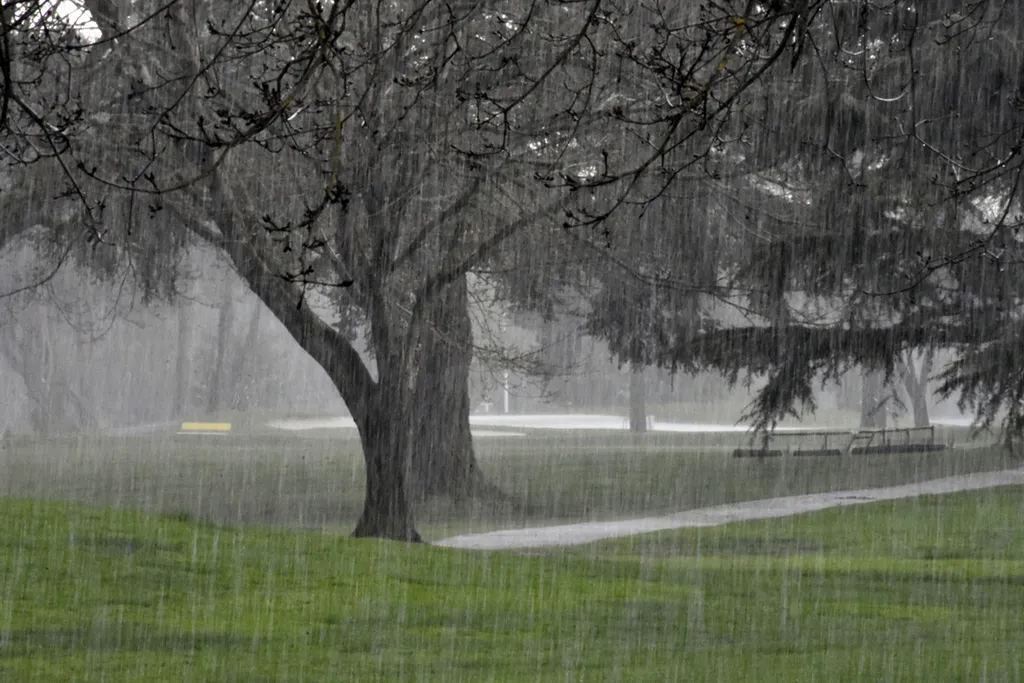
In Long Branch and West Long Branch, spring rain does more than green up the landscape. It can push trees into a sudden burst of growth that looks good at first but becomes a safety concern by early summer. Branches stretch longer. Leaves fill in quickly. Dense canopies hold moisture and catch wind. By June and July, we start seeing calls for broken limbs, sagging branches, and trees that suddenly look too heavy over homes, sidewalks, driveways, patios, and parking areas.
This is a common pattern along the Long Branch shoreline, from North Long Branch and Seven Presidents Oceanfront Park down toward Pier Village, West End, Elberon, and the residential streets near Ocean Avenue. Trees in these areas deal with a mix of shore wind, salt exposure, sandy or compacted soils, older properties, and changing drainage patterns. A rainy spring can make trees grow aggressively, but that does not always mean the structure underneath that new growth is strong enough to carry the extra load.
West Long Branch has its own version of the problem. Around Monmouth University, Cedar Avenue, Norwood Avenue, Wall Street, and the established residential neighborhoods off Route 36, many properties have mature shade trees that have been part of the landscape for decades. Oaks, maples, sycamores, sweetgums, ornamental pears, cherries, hollies, and privacy plantings can all put on fast spring growth. When those trees are near roofs, gutters, walkways, fences, or outdoor living areas, extra limb weight becomes more than a cosmetic issue.
The concern is not simply that a tree is growing. Growth is healthy. The concern is where the growth is happening, how much weight is collecting at the ends of limbs, and whether the tree has old defects hidden under the foliage. A limb with a weak union may hold through May, then fail after a heavy rain or windy summer afternoon. A crowded canopy may look lush, but it can trap wind and moisture. A long branch reaching over a driveway may become overloaded before a homeowner notices anything is wrong.
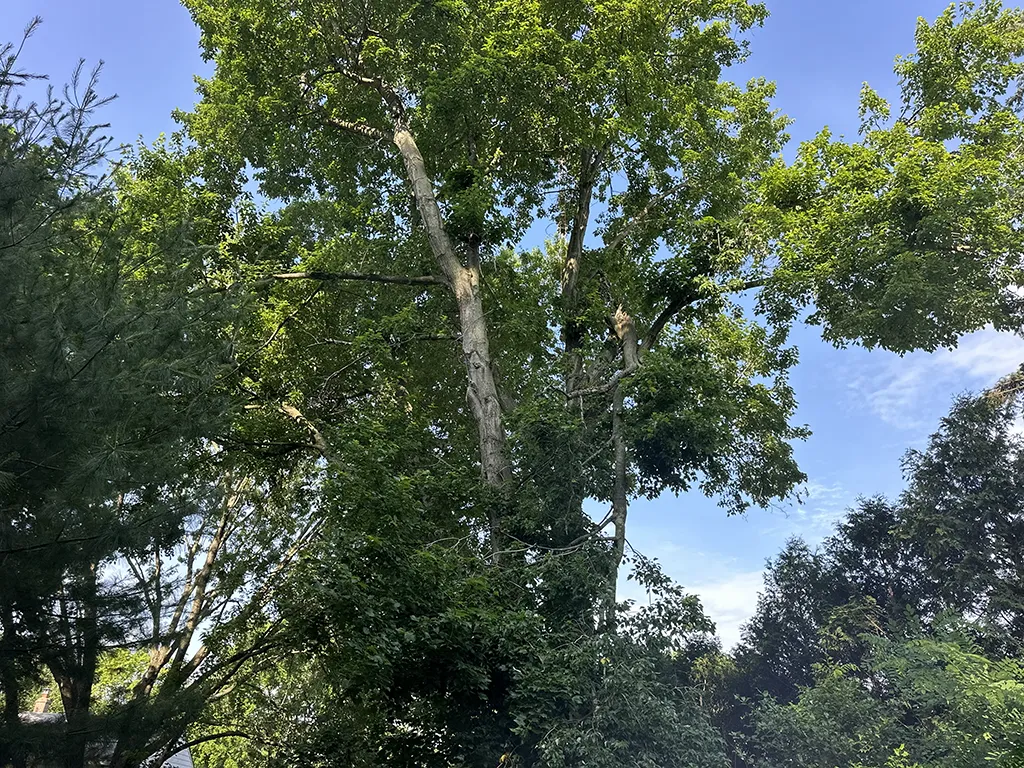
Michael Hufnagel says, “After a wet spring, we are not just looking at how full the tree looks. We are looking at how the weight is being carried. A healthy-looking canopy can still be putting too much stress on the limbs.”
That is why Hufnagel Tree Service offers free ground inspections and tree risk assessments for homeowners in Long Branch and West Long Branch. We look at the tree from a safety and structure standpoint, then recommend trimming, pruning, canopy thinning, or safe limb removal when needed. The goal is simple: reduce early summer branch failure before the next thunderstorm, shore gust, or heavy rain event turns a manageable issue into an emergency call.
Why Shore Weather Makes Fast Tree Growth More Complicated
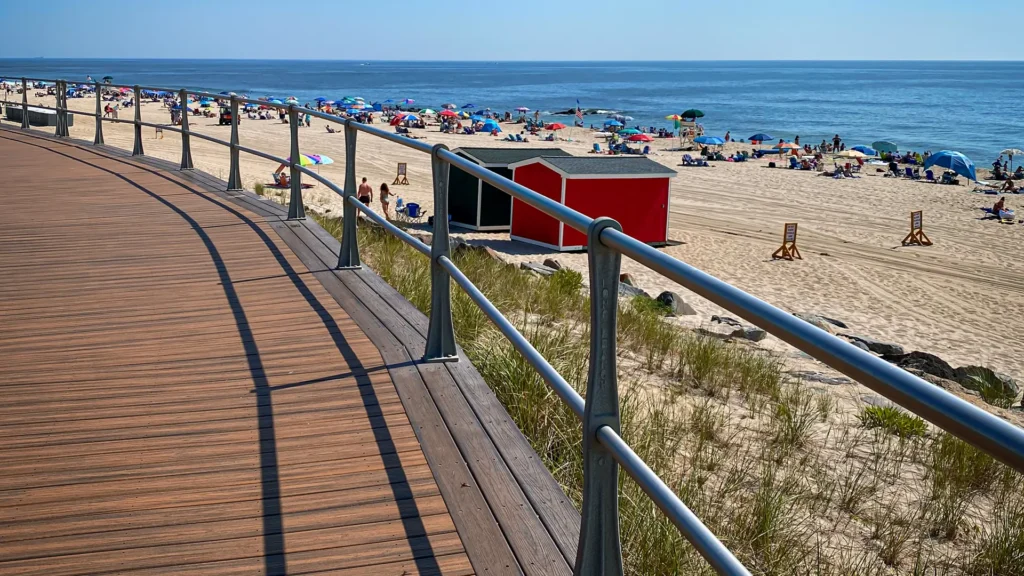
Long Branch is not an inland tree environment. Trees close to the ocean face wind patterns, salt air, shifting moisture, sandy soils, and exposure that can make growth uneven. A tree on a protected side street in West End may grow differently than a tree closer to Ocean Avenue. A mature shade tree in Elberon may have large limbs reaching away from the wind. A smaller ornamental tree near a driveway may become one-sided after years of pruning around structures, wires, or walkways.
Wet spring weather adds another layer. When rain is frequent, trees can produce quick, soft, leafy growth. That new growth adds surface area. More leaves mean more weight. More leaves also mean more wind resistance. When summer storms move across Monmouth County or push in from the coast, a dense canopy can act like a sail. The wind does not have enough open space to pass through the tree, so the branches absorb more force.
We often see this with large maples and oaks that have not been pruned in several seasons. Their canopies become thick, dark, and crowded inside. Deadwood may be hidden under the leaf cover. Limbs may be rubbing against each other. Some branches may be stretching too far over roofs or driveways. From the ground, the tree may look like it is thriving. From an arborist’s perspective, it may be carrying too much load in the wrong places.
West Long Branch properties often present a different concern. Many homes sit on well-established lots with older trees close to structures. Around Monmouth University and the residential blocks near Cedar Avenue and Norwood Avenue, mature trees often provide important shade and curb appeal. These are not trees homeowners want to remove unless removal is truly necessary. That makes proper pruning and canopy management especially valuable.
A certified arborist understands how to reduce risk without taking away the tree’s value. The right cuts can reduce end weight, improve branch spacing, remove deadwood, and help the tree handle wind more safely. The wrong cuts can weaken the tree, create decay points, or trigger poor regrowth that causes future problems.
Michael Hufnagel explains, “The shore adds pressure to trees. Wind, salt, rain, and heavy seasonal growth all matter. Our job is to make the tree safer without cutting away what makes it worth keeping.”
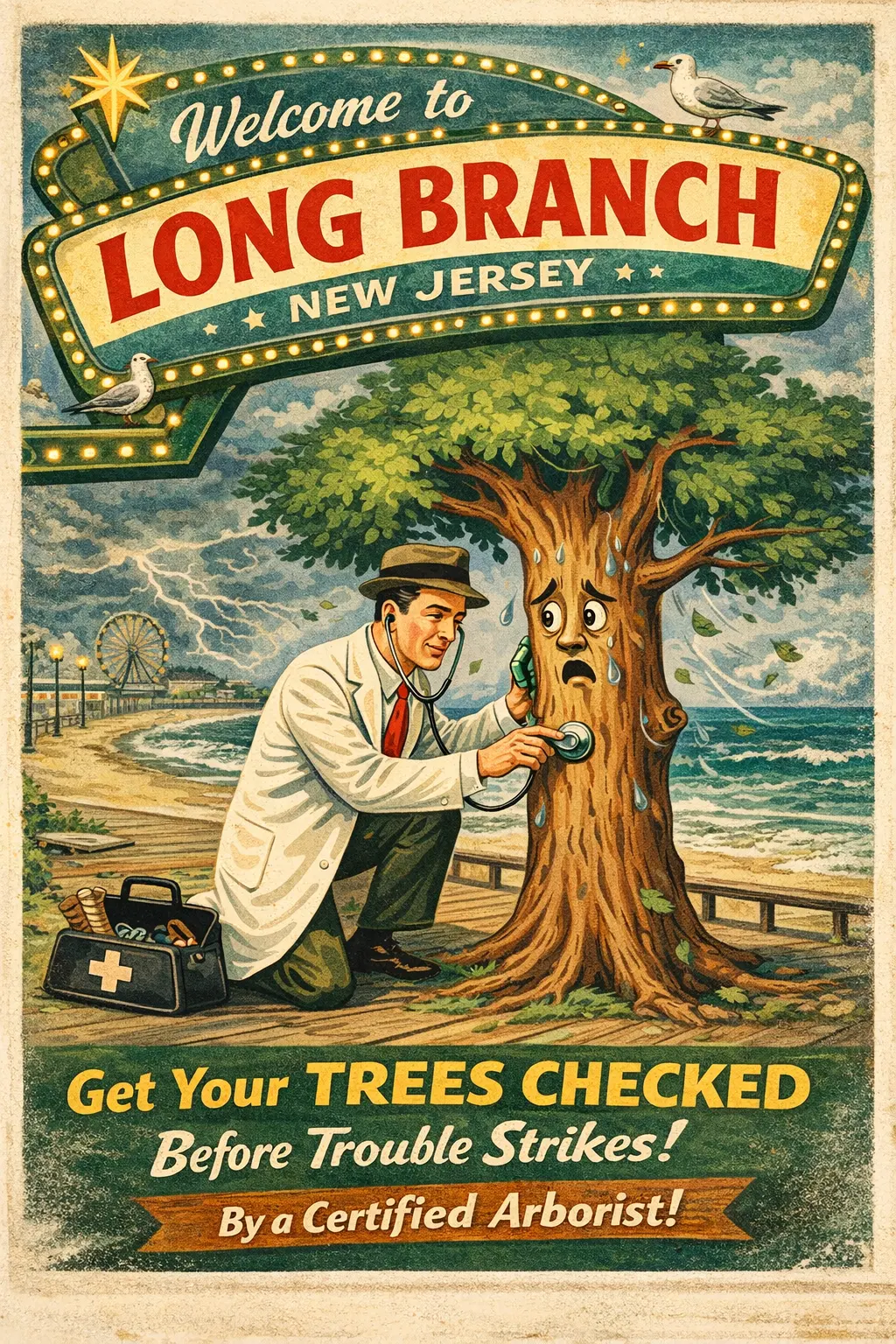
Shore-Area Growth Problems We Watch Closely
In Long Branch and West Long Branch, the warning signs after a wet spring are not always dramatic. Most start small, then show up during early summer storms.
- Long limbs stretching over roofs, porches, driveways, and sidewalks
- Heavy leaf growth at the outer ends of branches
- Dense canopies that block airflow
- Deadwood hidden inside the tree
- Branches rubbing or crossing each other
- Cracks, splits, cavities, or peeling bark on major limbs
- Trees leaning toward homes, patios, fences, or parked cars
- Limbs that sag lower after rain
- Fast growth near old pruning wounds
- Storm-damaged branches that were never corrected
These signs do not automatically mean a tree needs to be removed. In many cases, a careful pruning plan can reduce the hazard and preserve the tree. Once the shore-specific stress is understood, the next step is deciding whether trimming, pruning, canopy thinning, or limb removal is the best way to reduce the risk.
Tree Trimming and Pruning for Long Branch Homes
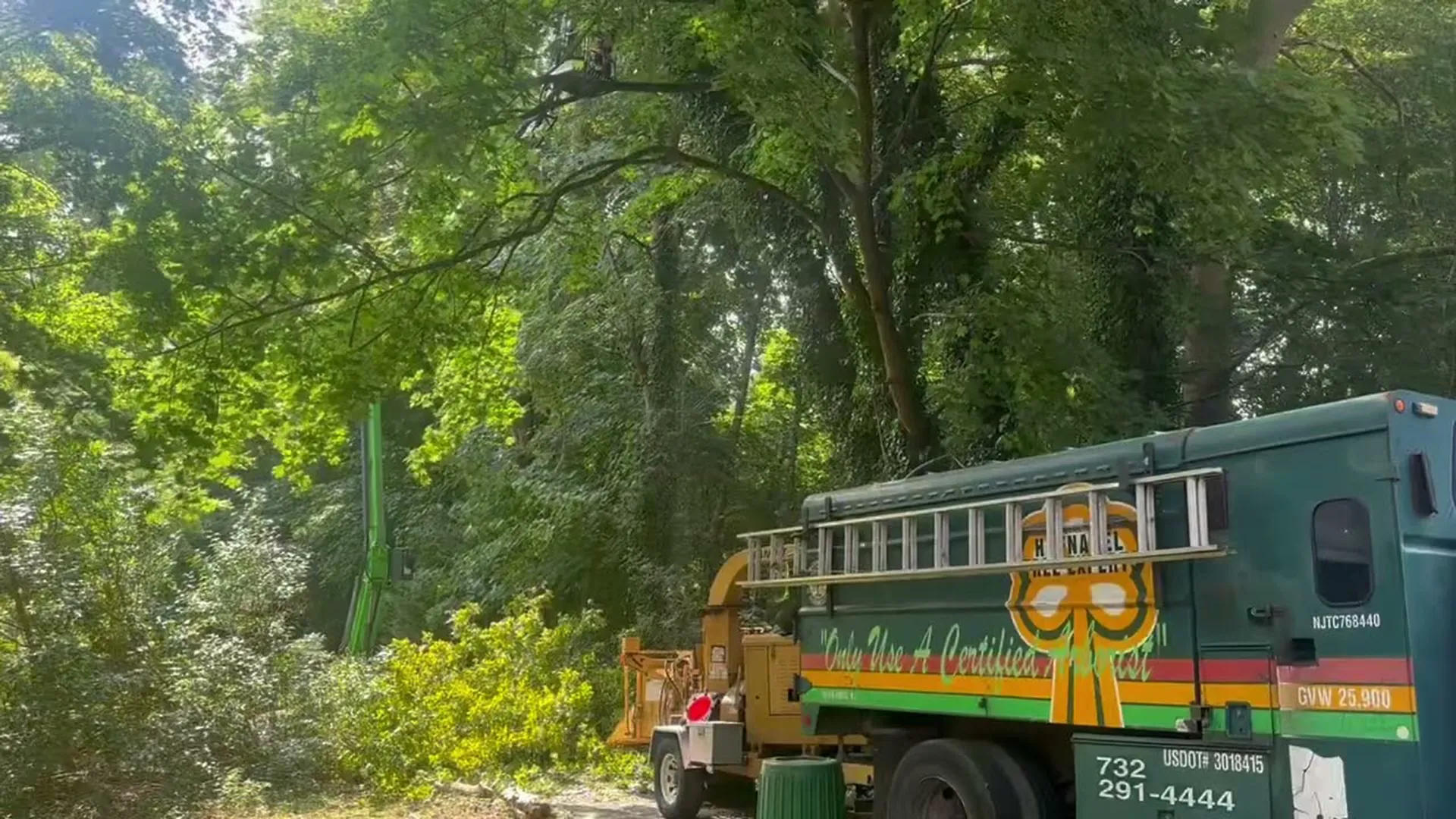
Tree trimming in Long Branch often starts with clearance and safety. Branches may be touching roofs, brushing siding, crowding gutters, blocking walkways, or hanging low over driveways. After a wet spring, those branches can drop lower because the foliage is heavier. What was barely noticeable in April may become a problem by June.
Proper trimming removes unsafe, dead, damaged, or interfering growth. This helps protect the home and gives the tree a cleaner structure. On properties near Ocean Avenue, Broadway, West End, Elberon, and North Long Branch, trimming is often needed where mature trees grow close to houses, fences, and tight residential spaces. It is also important around rental properties, sidewalks, parking areas, and outdoor seating spaces where falling branches can create liability and safety concerns.
Pruning goes a step deeper than trimming. Pruning focuses on the long-term structure of the tree. We look at which limbs are competing, which ones are too heavy, which unions are weak, and which branches are likely to become future hazards. When we prune, we are not just cleaning up the tree. We are guiding its structure so it can handle weight, wind, and seasonal growth more safely.
This matters in Long Branch because summer weather can shift quickly. A calm morning can turn into a windy afternoon. A thick canopy that looks beautiful in still weather may react poorly when gusts move through. If the tree is already overloaded from spring growth, the failure point may be a limb union, a cracked branch, or a heavy outer section that has too much leverage.
We also pay attention to species. Ornamental pears can have weak branch angles and split under weight. Maples can develop heavy, crowded branch systems. Oaks usually need conservative, well-planned pruning. Sycamores can grow large and shed limbs if structural issues are ignored. Hollies and privacy plantings can become dense and heavy when rain pushes strong seasonal growth.
Michael Hufnagel says, “Good trimming should solve a real problem. We do not cut just to cut. We remove risk, improve structure, and leave the tree looking like it belongs on the property.”
Where Long Branch Pruning Makes the Biggest Difference
The most useful pruning is targeted. It corrects the parts of the tree that are creating risk without stripping the canopy or weakening the tree.
- Branches over rooflines, gutters, porches, and balconies
- Heavy limbs above driveways, parked cars, and sidewalks
- Dead branches hidden by spring leaf growth
- Crowded canopies that catch shore wind
- Weak branch unions on older shade trees
- Low limbs blocking access, visibility, or outdoor space
- Overgrown ornamental trees near homes and fences
- Storm-weakened limbs that need corrective pruning
Once trimming and pruning address the obvious issues, canopy thinning may be the next step. This is especially important when the problem is not one single limb, but an entire canopy that has become too dense after spring rain.
Canopy Thinning for West Long Branch Shade Trees
West Long Branch has many mature trees that are worth preserving. Around Monmouth University, the surrounding residential neighborhoods, and the quieter streets off Cedar Avenue, Norwood Avenue, Wall Street, and Locust Avenue, shade trees are part of the character of the area. They cool homes, frame yards, soften streetscapes, and add privacy. But when spring rain pushes heavy growth into an already dense canopy, those same trees may need professional thinning.
Canopy thinning is a selective process. It is not topping. It is not cutting the tree into an unnatural shape. It is not removing large amounts of foliage without purpose. Proper canopy thinning removes selected interior branches, crowded growth, weak limbs, and excess density so air and light can move through the canopy more effectively.
The benefit is practical. A dense canopy catches wind. A thinned canopy allows some wind to pass through. That can reduce the sail effect during summer storms. Thinning can also reduce unnecessary weight, improve visibility inside the tree, reveal hidden deadwood, and help the remaining branch structure carry itself better.
In West Long Branch, canopy thinning is often useful for trees that have not been professionally maintained for several years. The tree may have strong main limbs, but too much interior growth. It may have branches crossing through each other. It may have a heavy outer canopy with weak interior spacing. Homeowners often notice this when the tree becomes darker underneath, drops small branches, or begins shading out turf and plantings more than it used to.
The key is moderation. Over-thinning can stress a tree and make it more vulnerable to sunscald, wind damage, and poor regrowth. A certified arborist thins with purpose. We preserve the tree’s natural form while improving how the canopy handles weight and wind.
Michael Hufnagel says, “Canopy thinning should not make a tree look butchered. Done properly, it looks natural. The difference is that the tree can breathe and move better in the wind.”
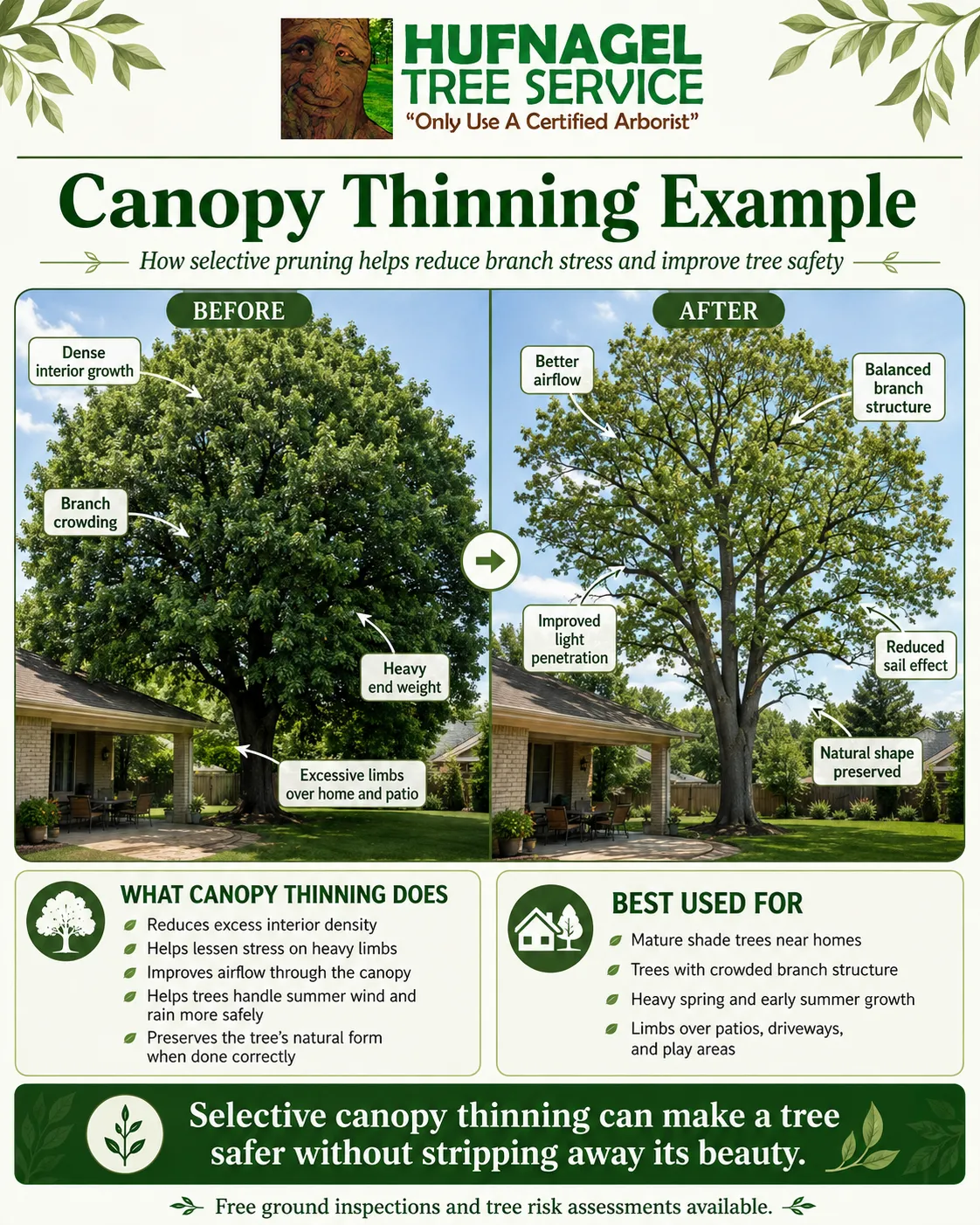
A More Open Canopy Can Still Look Full and Healthy
Homeowners sometimes worry that thinning will make the tree look bare. When canopy thinning is performed correctly, the tree should still look like itself. It should simply look cleaner, lighter, and better balanced.
- Improves airflow through dense canopies
- Reduces unnecessary interior crowding
- Helps lower wind resistance during storms
- Removes selected weak, rubbing, or competing branches
- Allows more light through to lawns and plantings
- Helps reduce stress on heavy limbs
- Preserves shade while improving structure
Canopy thinning is one of the best examples of how arborist care can reduce risk without removing a tree. But thinning is only one option. Some trees need individual limbs removed, especially when a branch is already cracked, decayed, too heavy, or positioned over a high-use area.
Safe Limb Removal Near Homes, Driveways, and Outdoor Spaces
A single unsafe limb can create a major problem. In Long Branch and West Long Branch, we often see large branches extending over driveways, patios, garages, decks, play areas, and neighboring properties. After a wet spring, those limbs may carry more foliage and moisture than they did only a few weeks earlier. If the limb has a weak attachment, old storm wound, crack, or decay, extra weight can push it closer to failure.
Safe limb removal requires more than a chainsaw. The size of the limb, the weight distribution, the angle of the branch, the tree species, and the landing area all matter. A large branch over a roof or patio cannot be dropped carelessly. It must be cut in controlled sections, often with rigging, so the property is protected.
We also think about the tree after the limb is removed. Removing a major branch changes weight distribution. If the cut is made poorly, it can damage the trunk or leave a wound that does not close properly. If too much is removed from one side, the tree may become unbalanced. This is why certified arborist oversight matters.
Sometimes limb removal is the right choice because reduction cuts will not solve the risk. A cracked limb over a driveway, a dead branch above a walkway, or a decayed branch near a roof may need to come off completely. Other times, the limb can be reduced, thinned, or supported through better structural pruning. The inspection determines the safest recommendation.
This is especially important around Long Branch properties with limited space. Many shore-area lots have homes, driveways, fences, and neighboring structures close together. West Long Branch lots may have larger trees with broad canopies that extend over multiple use areas. In either case, the work needs to be planned carefully.
Michael Hufnagel says, “A dangerous limb should be handled before it fails. Once it is on the roof or across the driveway, the homeowner has fewer options and a bigger problem.”
When One Limb Becomes the Main Concern
The whole tree may not be hazardous. Sometimes the issue is one overloaded, damaged, or poorly attached branch.
- A large limb is hanging over a roof, garage, or driveway
- A branch has a visible crack or split
- Bark is peeling or separating around a major limb
- Deadwood is positioned above a walkway or patio
- A limb drops lower after rain
- A branch has grown too long and heavy at the end
- A previous storm damaged the limb but did not break it fully
- Fungus, cavities, or decay are visible near the branch union
Removing one unsafe limb can reduce risk while preserving the rest of the tree. After that, a seasonal inspection schedule helps keep the same problem from returning as new growth develops year after year.
The Early Summer Tree Safety Checklist for Local Homeowners
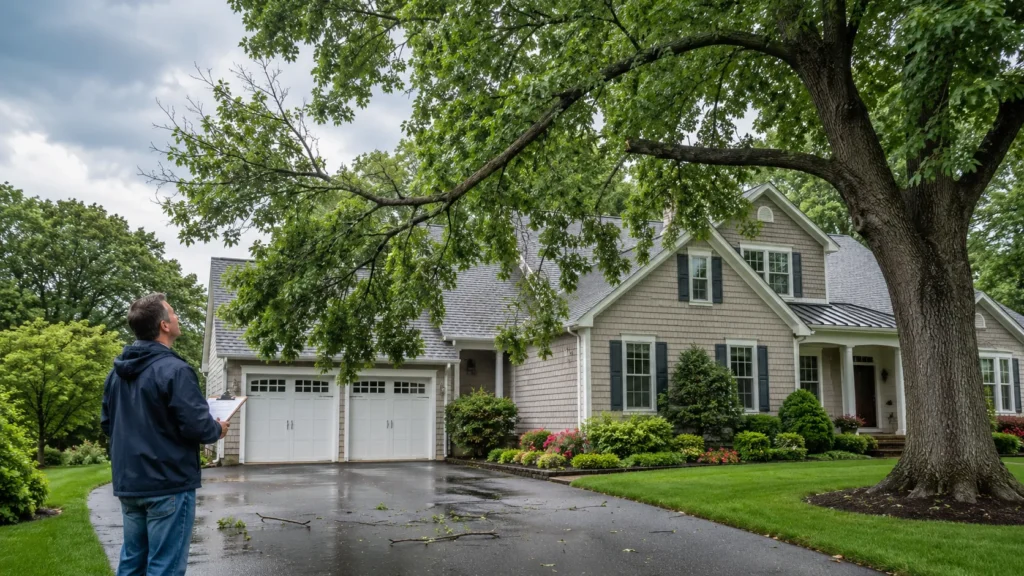
Before summer storms become frequent, Long Branch and West Long Branch homeowners should take a slow walk around the property and look up.
- Are any branches sagging lower after rain?
- Are limbs extending over the roof, garage, driveway, patio, or sidewalk?
- Does the canopy look extremely dense or dark inside?
- Are there dead branches caught in the tree?
- Are branches rubbing or crossing?
- Do you see cracks, splits, cavities, or peeling bark?
- Has the tree started leaning more than before?
- Is one side much heavier than the other?
- Did the tree suffer past storm damage that was never corrected?
- Are children, guests, vehicles, or outdoor seating areas under heavy limbs?
If the answer to any of these is yes, a free ground inspection is worth scheduling. The earlier the issue is evaluated, the more options there usually are.
Call Hufnagel Tree Service for Tree Service in Long Branch and West Long Branch
Wet spring weather can make trees look full, green, and healthy, but it can also create long, heavy limbs that fail in early summer. In Long Branch and West Long Branch, shore wind, mature neighborhoods, dense canopies, and fast seasonal growth make professional tree care especially important.
Hufnagel Tree Service provides certified arborist tree trimming, pruning, canopy thinning, safe limb removal, free ground inspections, and tree risk assessments throughout Long Branch and West Long Branch. If your trees look heavy after spring rain, or if limbs are hanging over your home, driveway, patio, sidewalk, or play area, contact Hufnagel Tree Service to schedule an inspection and reduce the risk before the next storm. Call (732) 291-4444 to schedule service now!
Schedule Service Now!
From precision pruning and safe removals to health assessments and preventative care, Hufnagel Tree Service delivers expert solutions backed by decades of experience. We offer certified insight, fair pricing, and a commitment to doing what’s best for your landscape.
Learn More About Our Services

Related Articles
Tree Damage From Lightening Strikes

Schedule A Tree Inspection Near Manalapan NJ
Tree Risk Inspections in Deal, NJ
Tree Risk Inspections in Sea Girt, Spring Lake & Little Silver
Old Bridge Fall Tree Inspection: Catch Hidden Hazards Early