Contents
Why Ocean Township Trees Need Attention After a Wet Spring
In Ocean Township, NJ, the transition from spring into early summer can be rough on trees. Homeowners in Wanamassa, Oakhurst, Wayside, and the neighborhoods near Deal Lake often notice a sudden push of long, leafy branch growth after weeks of spring rain. That growth may look healthy from the ground, but it can create a hidden problem. Branches stretch farther, leaves add weight, and older limbs can become overloaded before summer storms even arrive.
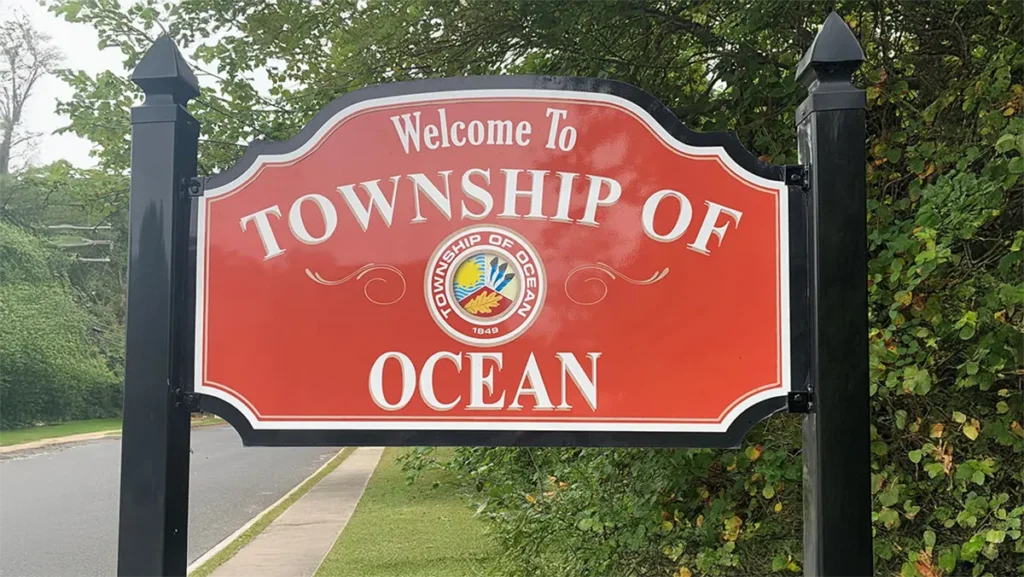
We see this pattern often across Ocean Township because the area has a mix of mature shade trees, ornamental trees, coastal air, older residential lots, and changing soil conditions. Properties near Deal Lake and the Wanamassa section can hold moisture differently than higher, drier areas around Oakhurst and Wayside. In some yards, trees respond to that moisture with aggressive seasonal growth. In others, shallow roots, compacted soil, or old storm damage make that same growth more dangerous.
Early summer branch failure is one of the most common calls we receive after a wet spring. A tree may look full and green in May, then drop a heavy limb in June after a thunderstorm, humid stretch, or windy afternoon. These failures are not always caused by one major storm. Sometimes the tree was already carrying too much weight, and the weather simply exposed the weakness.
That is why Hufnagel Tree Service focuses on trimming, pruning, canopy thinning, and tree risk assessments before the problem becomes an emergency. We are not trying to strip trees down or make unnecessary cuts. We are looking for weight, structure, branch attachment, decay, rubbing limbs, deadwood, storm cracks, and areas where the canopy has become too dense for the tree to handle safely.
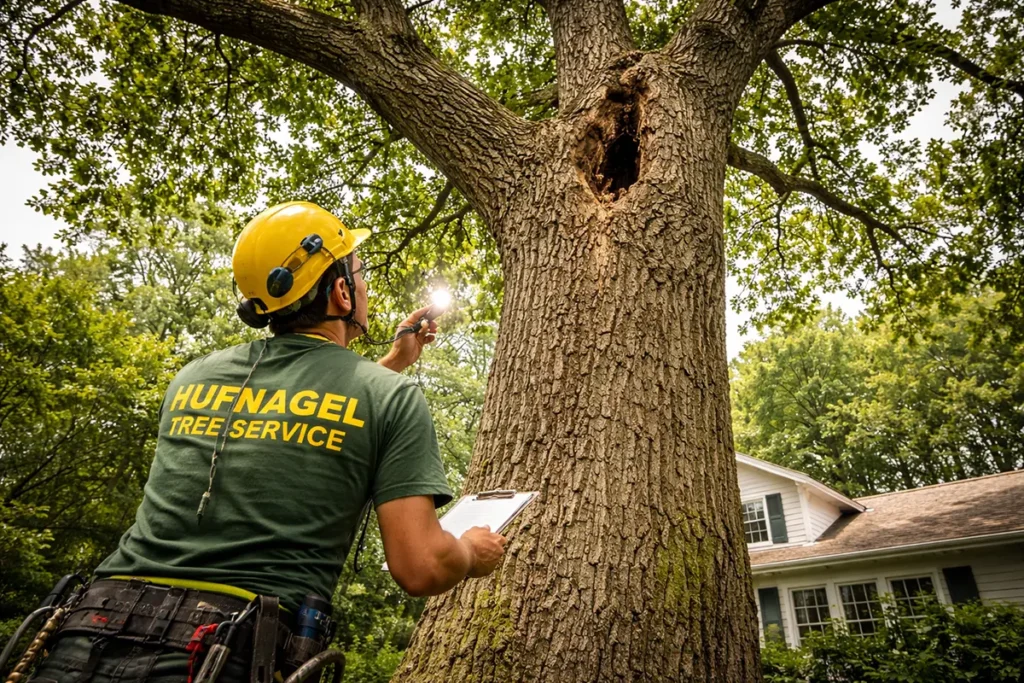
Michael Hufnagel explains it simply: “A tree can look beautiful and still be overloaded. After a wet spring, the safest approach is to look at how the branches are carrying weight, not just how green the tree looks.”
For homeowners in Ocean Township, Oakhurst, and Wanamassa, this is the right time to take tree safety seriously. Summer storms, shore wind, heavy humidity, and fast growth can all combine quickly. A free ground inspection and tree risk assessment gives you a clear look at what is happening before a limb lands on a driveway, roof, fence, shed, pool area, or walkway.
Tree Service Ocean Township NJ for Spring Growth and Heavy Branches
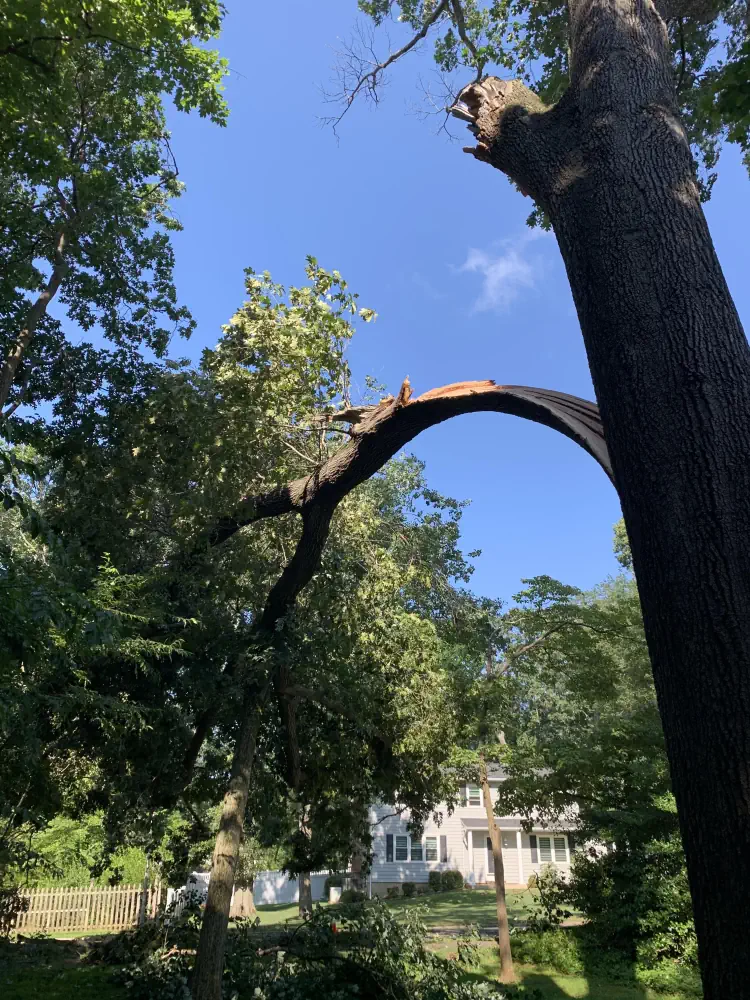
Spring rain gives trees the water they need to leaf out, extend shoots, and rebuild energy after winter. That is normal and healthy. The problem starts when that new growth adds too much length and weight to limbs that already had weak structure. In Ocean Township, many yards have mature oaks, maples, sycamores, cherries, sweetgums, ornamental pears, hollies, and older shade trees that respond strongly to wet spring weather.
A long branch acts like a lever. The farther it reaches away from the trunk, the more stress it puts on the connection point. When that branch fills with leaves after a rainy spring, the weight increases. When rainwater sits on the leaves, the weight increases again. Add a gust coming off the shore or a quick summer thunderstorm moving through Monmouth County, and that overloaded branch may fail.
We often see this in Oakhurst neighborhoods where older trees were planted decades ago and now spread over driveways, roofs, sidewalks, and backyards. We also see it in Wanamassa near wetter ground, older residential blocks, and properties influenced by Deal Lake drainage. Some trees grow heavily on one side because they are reaching for light. Others have been topped or poorly cut in the past, which can create weak regrowth that becomes a problem years later.
Proper pruning corrects the issue without damaging the tree. We remove dead, cracked, rubbing, or poorly attached limbs. We reduce unnecessary end weight where branches are too long and heavy. We shape the canopy so the tree carries itself better. In certain cases, we thin selected areas of the canopy to improve airflow and reduce sail effect during storms.
Michael Hufnagel says, “Good pruning is not about cutting everything back. It is about understanding what the tree is trying to support and making the right cuts in the right places.”
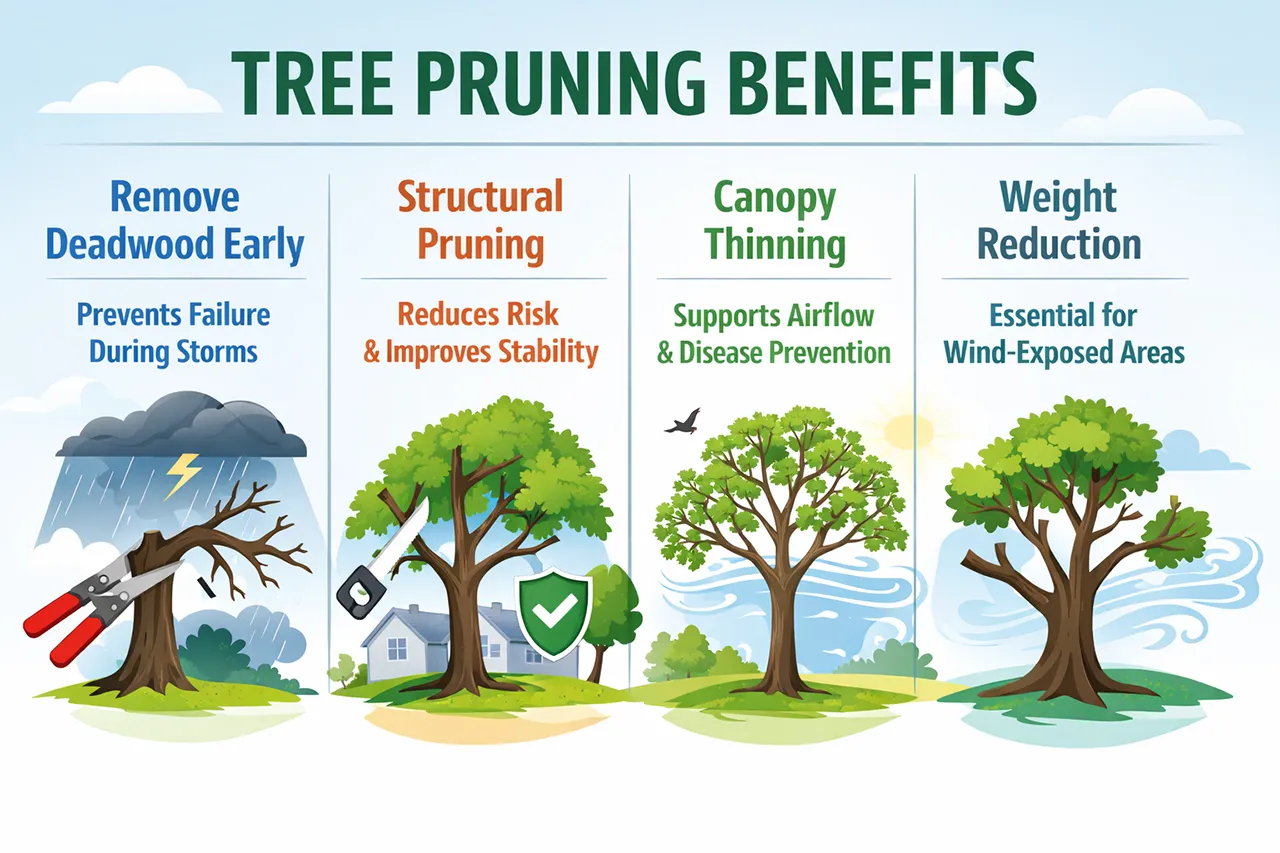
What We Look For Before Branches Start Failing
A wet spring does not make every tree unsafe, but it does make existing problems easier to miss. During our free ground inspection, we look for visible signs that a tree may need pruning, thinning, or a more detailed risk assessment.
- Long branches extending over roofs, patios, driveways, pools, and play areas
- Heavy leaf growth concentrated at the ends of limbs
- Deadwood hidden inside a dense canopy
- Cracks, splits, cavities, or old storm wounds
- Branches rubbing together or crossing through the canopy
- Limbs attached with tight angles or included bark
- Trees leaning toward structures, wires, fences, or high-use areas
- Excessive canopy density that catches wind like a sail
- Previous topping cuts or poor pruning wounds
- Large limbs with decay, fungus, or bark separation
These warning signs do not always mean a tree needs removal. Many trees can be made safer with thoughtful trimming, structural pruning, and selective canopy thinning. Once we understand where the risk is coming from, the next step is correcting the growth before early summer weather turns it into a branch failure call.
Tree Trimming and Pruning in Oakhurst After Rain-Driven Growth
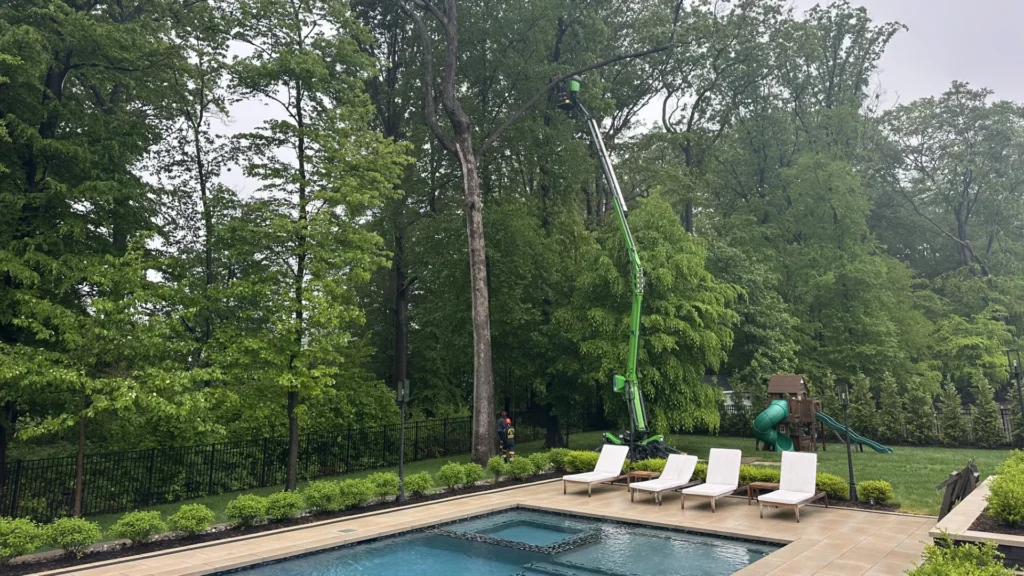
Oakhurst has many established residential properties with trees that provide shade, privacy, and curb appeal. Those same trees can become a concern when spring rain pushes fast growth into already crowded canopies. A maple shading the driveway, an oak spreading over the roofline, or an ornamental pear leaning toward the sidewalk may all need attention before the weight becomes too much.
Tree trimming is often the first step. We remove dead, damaged, low, or interfering branches that create clear safety issues. This helps open the tree, reduce obvious hazards, and improve clearance around the home. Trimming can also protect siding, gutters, vehicles, fences, and outdoor living spaces from limbs that have grown too close after a strong spring flush.
Tree pruning is more specific. Pruning looks at the tree’s long-term structure. It considers how limbs attach, where weight is concentrated, which branches are competing, and how the canopy will respond after cuts are made. A certified arborist does not just cut what is hanging low. We make choices that help the tree remain stable, balanced, and healthy.
In Oakhurst, this matters because many trees are close to homes, streets, and neighboring properties. A branch failure is not only a tree issue. It can become a roofing issue, an insurance issue, a driveway issue, or a safety issue. Seasonal pruning helps reduce those risks while keeping the tree attractive and functional.
We also pay attention to species. Oaks often need careful, conservative pruning. Maples can develop crowded branch structure. Ornamental pears are known for weak branch unions. Cherries and dogwoods may need lighter shaping. Hollies and privacy plantings can become thick and top-heavy after wet spring weather. Each tree needs a different approach.
Michael Hufnagel puts it this way: “The wrong cut can create more problems than it solves. The right cut can take pressure off the tree and still preserve the shade and shape the homeowner wants.”
Why Oakhurst Homeowners Call Before Summer Storms
Many early summer tree calls start with the same story. The tree looked fine, then a limb came down. Preventive pruning is meant to catch the problem before that happens.
- Spring rain creates longer, heavier branch growth
- Early summer storms test weak limbs and crowded canopies
- Proper pruning reduces end weight without overcutting
- Certified arborist inspections help identify risk before failure
- Regular seasonal care can prevent repeated emergency calls
After trimming and pruning correct the obvious weight and structure issues, the next concern is canopy density. Some trees do not just have heavy limbs. They have a thick canopy that traps wind and moisture, which can make branch failure more likely during Ocean Township’s summer weather pattern.
Canopy Thinning for Wanamassa Trees Near Wet Ground and Shore Influence
Wanamassa has a different tree care profile than some other parts of Ocean Township. Properties near Deal Lake, Whale Pond Brook, and lower-lying residential pockets can experience moisture-heavy soil, dense vegetation, and strong seasonal growth. When spring rain is consistent, trees and large shrubs can fill in quickly. By early summer, the canopy may be too dense for wind, light, and airflow to move through properly.
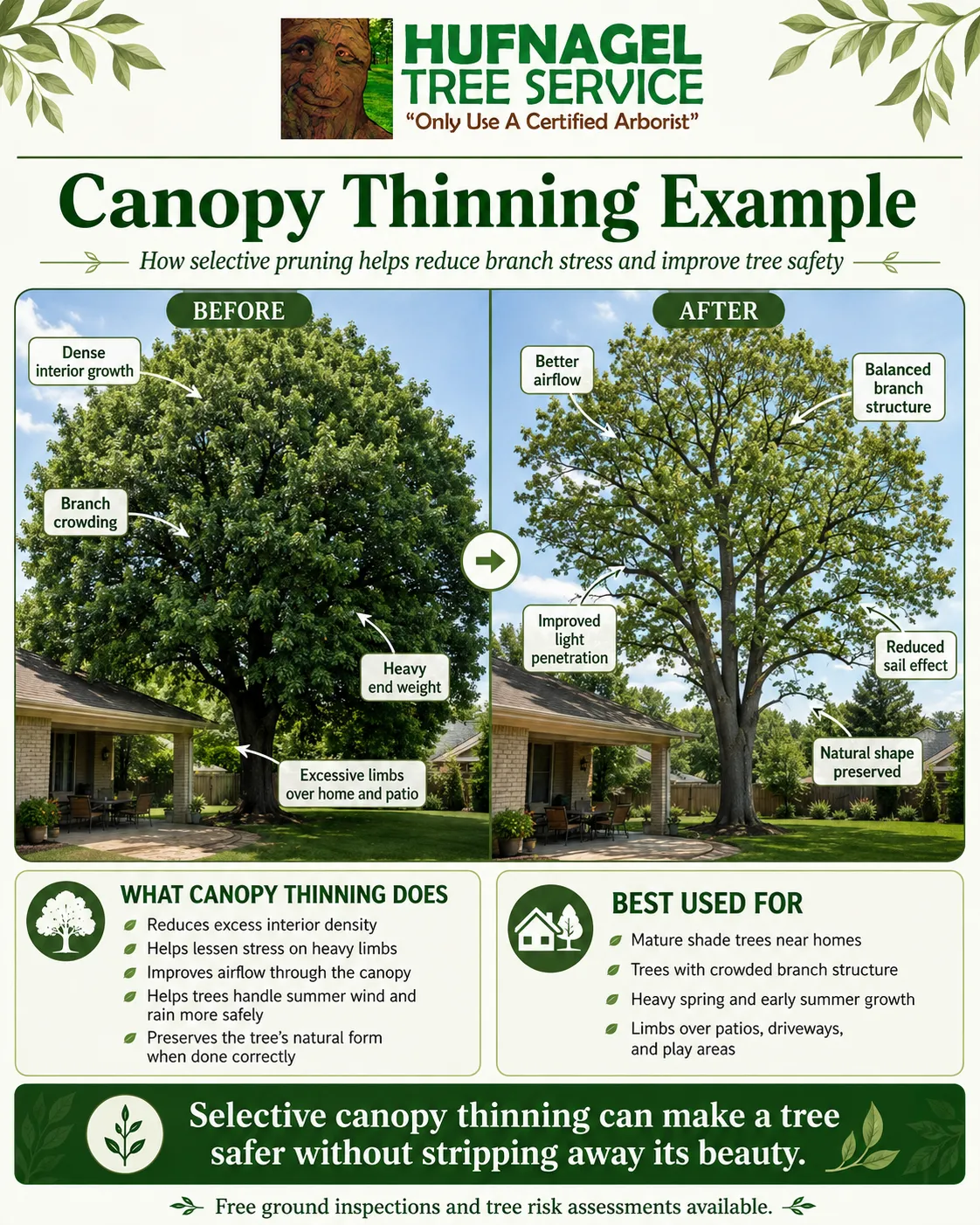
Canopy thinning is not the same as cutting a tree back hard. It is selective. We remove certain interior branches, crowded limbs, weak growth, and problem areas so the tree can breathe and carry wind more safely. The goal is to reduce unnecessary density while preserving the tree’s natural form. Done correctly, canopy thinning can make a tree safer without making it look stripped or unnatural.
This is especially useful when a tree has become heavy on one side, when branches are crowded together, or when the canopy catches too much wind. In Wanamassa, summer storms can move fast. A dense canopy can act like a wall. When wind pushes against that wall, weak branches and poor unions are more likely to fail.
Thinning can also help reduce moisture problems inside the canopy. Thick growth holds humidity. That can contribute to fungal issues, dead interior twigs, and declining branch health. Better airflow does not fix every tree health issue, but it often helps the tree maintain a cleaner, stronger structure through the growing season.
We also use canopy thinning to improve clearance and visibility without removing the tree’s character. Around homes near Deal Lake, backyard patios, fences, and narrow driveways, a balanced canopy can make a property feel cleaner and safer. The tree still provides shade, but it is not pressing against the house or carrying unnecessary weight over important areas.
Michael Hufnagel says, “Canopy thinning should be subtle. When it is done right, the tree looks natural, but it handles wind and weight better.”
Where Canopy Thinning Makes the Biggest Difference
Not every tree needs canopy thinning, but in Wanamassa and nearby Ocean Township neighborhoods, it can be one of the best tools for reducing seasonal risk after heavy spring growth.
- Dense canopies that trap wind during thunderstorms
- Large limbs carrying too much leaf weight at the ends
- Trees with crowded interior growth and deadwood
- Branches rubbing, crossing, or competing for the same space
- Trees growing close to roofs, gutters, decks, fences, and sheds
- Mature trees that need safety improvement without removal
- Shore-influenced properties where wind exposure changes quickly
Canopy thinning is one part of risk reduction. The next step is looking at the entire tree and the surrounding property. That is where seasonal inspections and tree risk assessments become important, especially before the most active summer storm weeks.
Free Ground Inspections and Tree Risk Assessments in Ocean Township
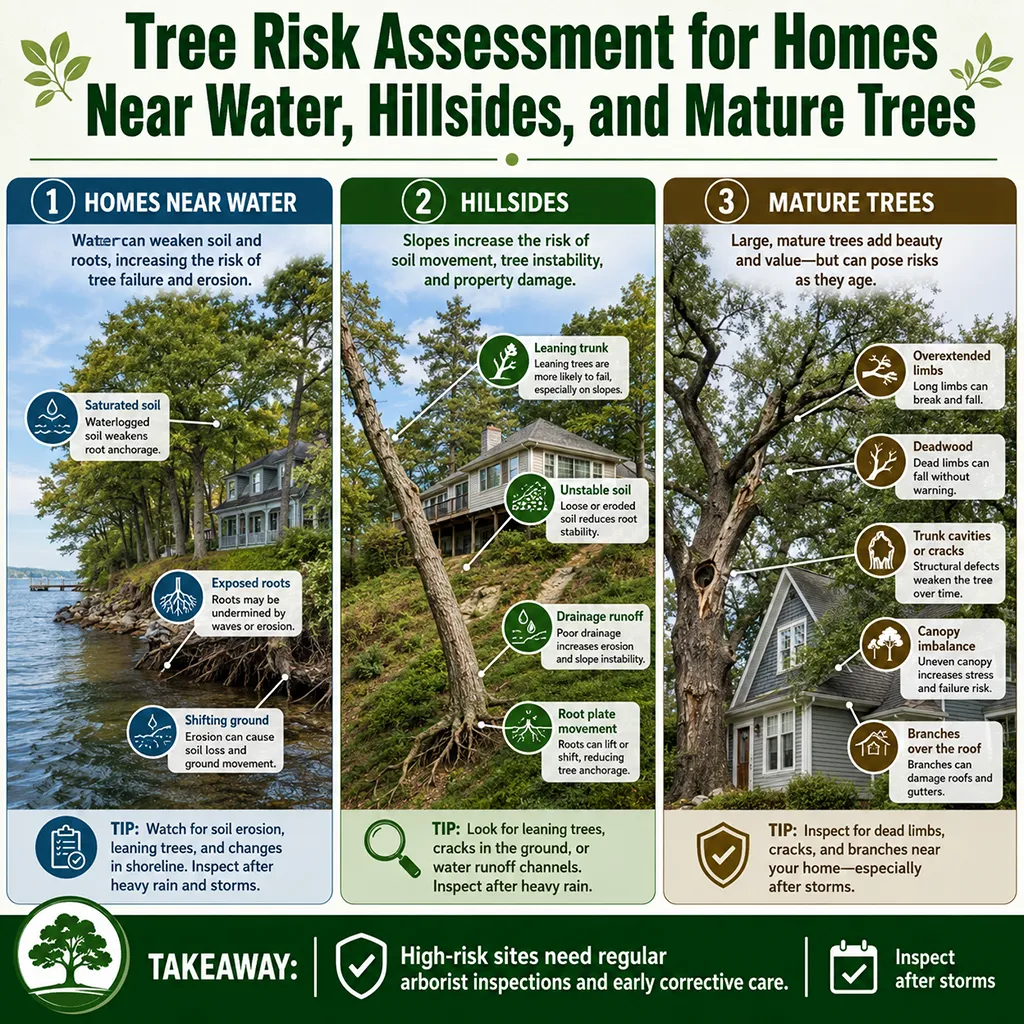
Hufnagel Tree Service offers free ground inspections and tree risk assessments because most homeowners do not know what they are looking at from the yard. A tree can be green, full, and still have structural problems. Another tree can look rough but be manageable with pruning. The purpose of the inspection is to give the homeowner a clear, honest evaluation before work begins.
A ground inspection starts with visible conditions. We look at the trunk, root flare, major limbs, canopy, branch unions, deadwood, lean, cracks, decay, and site conditions. We also look at what the tree could hit if a limb or section failed. A branch over open lawn is different from a branch over a bedroom, driveway, pool, patio, or sidewalk.
Tree risk is about both the tree and the target. In Oakhurst, a large limb over a roof or driveway may need attention because people and property are directly below it. In Wanamassa, a tree near a wet area or older drainage pattern may need a closer look at root stability and canopy load. Around Ocean Township homes, the safest plan is usually based on the specific tree, the specific property, and how that space is used.
Regular seasonal inspections help reduce risk because trees change throughout the year. Spring rains push growth. Summer storms test structure. Fall leaf drop reveals hidden defects. Winter wind exposes deadwood and weak limbs. A tree that seemed fine last year may need attention this year because weather, growth, pests, decay, or previous damage have changed the situation.
We also believe inspections help homeowners avoid unnecessary removal. Not every risky-looking tree needs to come down. Sometimes the answer is trimming. Sometimes it is selective pruning. Sometimes it is canopy thinning. Sometimes a hazardous limb can be safely removed while preserving the rest of the tree. When removal is necessary, we explain why.
Michael Hufnagel says, “A good tree risk assessment should give the homeowner options. Our job is to tell you what is safe, what can be corrected, and what should not be ignored.”
What a Seasonal Tree Risk Check Can Prevent
Seasonal inspections are most valuable when they happen before the emergency. After a wet spring, Ocean Township homeowners should pay attention to fast growth, heavy limbs, and dense canopies before early summer storms begin testing the trees.
- Branch failures over roofs, driveways, patios, and walkways
- Repeated limb drop from the same tree
- Storm damage from overloaded canopies
- Damage to gutters, fences, sheds, and vehicles
- Safety risks near children’s play areas and outdoor seating
- Emergency removals that could have been avoided with earlier pruning
- Long-term decline caused by poor branch structure or decay
A free ground inspection gives you a practical starting point. Once the risk is identified, we can recommend trimming, pruning, canopy thinning, limb removal, or continued monitoring. The final goal is simple: reduce the chance of branch failure while protecting the health and appearance of the tree.
Safe Limb and Branch Removal Without Damaging the Tree
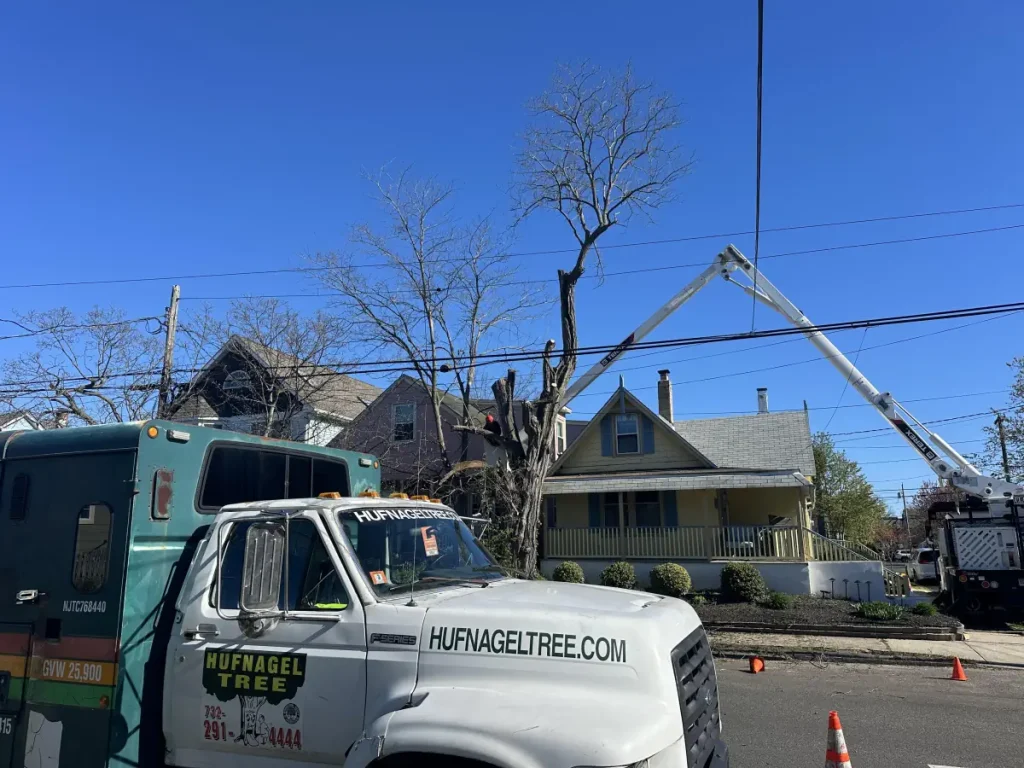
When a limb is already too heavy, cracked, decayed, or poorly attached, it may need to be removed. Safe limb removal is not just about cutting the branch off. The location of the cut, the weight of the limb, the angle of the branch, and the space below all matter. A bad cut can tear bark, damage the trunk, or create a wound that leads to future decay.
In Ocean Township, we often remove limbs that have grown too long over homes, garages, fences, vehicles, and neighboring properties. After a wet spring, these limbs may be carrying more weight than the homeowner realizes. The branch may not fail on a calm day, but it may fail when rain, wind, and summer heat stress the tree.
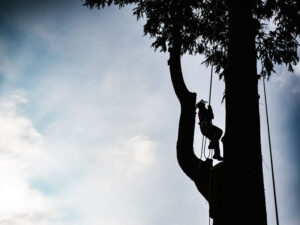
Our crews use proper rigging, careful cutting methods, and arborist-led judgment to remove limbs safely. We do not drop large branches blindly into tight residential yards. We plan the work so nearby structures, landscapes, and hardscapes are protected. This is especially important in Oakhurst and Wanamassa, where many properties have mature trees close to homes and outdoor living spaces.
Sometimes limb removal is part of a larger pruning plan. Other times, one hazardous branch is the main concern. We evaluate the tree before cutting so we do not remove a major limb in a way that leaves the tree unbalanced. The goal is to correct the hazard without creating a new structural problem.
Safe limb removal can also buy time for valuable trees. A mature oak, maple, or sycamore may still be worth preserving even if one limb has become unsafe. Removing the right limb, reducing end weight, and improving canopy balance can help that tree remain part of the property for years.
Michael Hufnagel says, “We always look at what happens after the cut. A branch may need to come off, but the remaining tree still has to be safe, balanced, and healthy.”
When Limb Removal Is the Better Choice
Some branches can be reduced or thinned. Others need to be removed completely. The difference depends on safety, structure, location, and tree health.
- Cracked limbs that could split during wind or rain
- Dead branches above driveways, roofs, patios, or sidewalks
- Limbs with decay, cavities, or bark separation
- Branches pressing into roofs, siding, or gutters
- Heavy limbs with weak attachment points
- Storm-damaged branches that did not fully break
- Overextended limbs that cannot be safely reduced enough
Once unsafe limbs are removed and the canopy is corrected, the tree has a better chance of handling the rest of the growing season. That leads back to the most important point for Ocean Township homeowners: early action is safer and usually less expensive than waiting for a branch to fail.
Call Hufnagel Tree Service for Ocean Township Tree Trimming, Pruning, and Risk Assessment
Spring rains can make trees grow fast, but fast growth is not always safe growth. In Ocean Township, Oakhurst, and Wanamassa, heavy branches, dense canopies, and overloaded limbs can lead to early summer branch failure if they are ignored.
Hufnagel Tree Service offers certified arborist tree trimming, pruning, canopy thinning, safe limb removal, free ground inspections, and tree risk assessments for local homeowners. If your trees look heavy after spring rain or you are concerned about limbs over your home, driveway, patio, fence, or yard, contact Hufnagel Tree Service to schedule service before the next storm exposes the problem. Call (732) 291-4444 to schedule service now!
Schedule Service Now!
From precision pruning and safe removals to health assessments and preventative care, Hufnagel Tree Service delivers expert solutions backed by decades of experience. We offer certified insight, fair pricing, and a commitment to doing what’s best for your landscape.
Learn More About Our Services

Related Articles
Fall Storm Proofing in Keansburg NJ: Prepare Trees Before Winter

Matawan Tree Storm Damage: What Summer Wind Leaves Behind
Tree Risk Evaluation Services Near Marlboro NJ