Contents
Pruning That Solves the Problems Homeowners Actually See
Professional tree pruning in Monmouth County is not just about making a tree look cleaner from the curb. It is about correcting weight, improving structure, reducing storm exposure, protecting rooflines, and helping the tree keep growing without creating avoidable risk. At Hufnagel Tree Service, we approach pruning as certified arborists who understand how local trees respond to salt air, fast spring growth, summer humidity, clay pockets, sandy shore soil, and the wind patterns that move across the Two Rivers area and the Raritan Bay corridor.
We are seeing more homeowners ask for service-first tree care instead of waiting until one town-specific problem becomes urgent. That makes sense. The same heavy maple limb over a driveway in Middletown, the same overextended oak branch near a roof in Rumson, and the same crowded cherry tree in Fair Haven all need a pruning plan rooted in tree biology, not a quick haircut. The town changes, but the question stays the same: what should be removed, what should stay, and how do we protect the tree while improving safety?
Michael Hufnagel puts it simply: “A good pruning cut should have a reason. If the only reason is that a branch is there, that is not arborist work.” That is the difference between proper pruning and stripping a tree until it looks thin, stressed, or unnatural. We prune to guide growth, reduce defects, restore balance, open selective airflow, and protect the surrounding property without robbing the tree of the canopy it needs to feed itself.
This week’s article focuses on professional tree pruning as the service, then brings in the towns we serve where the work commonly applies. From Red Bank and Shrewsbury to Little Silver, Oceanport, Long Branch, West Long Branch, Sea Bright, Holmdel, Colts Neck, and Tinton Falls, Monmouth County properties carry a wide mix of mature shade trees, ornamentals, privacy screens, evergreens, and shore-influenced landscapes. The right pruning plan is often the difference between a tree that adapts and a tree that declines after one bad cut.
We also look closely at how people use the property. A front-yard maple that shades a sidewalk, a backyard oak over a grill area, and a row of hollies screening a pool each call for a different pruning decision. Good tree care protects the tree, but it also respects the home, the family, the view, and the daily traffic patterns underneath the canopy.
Tree Pruning for Heavy Summer Growth, Roof Clearance, and Safer Structure
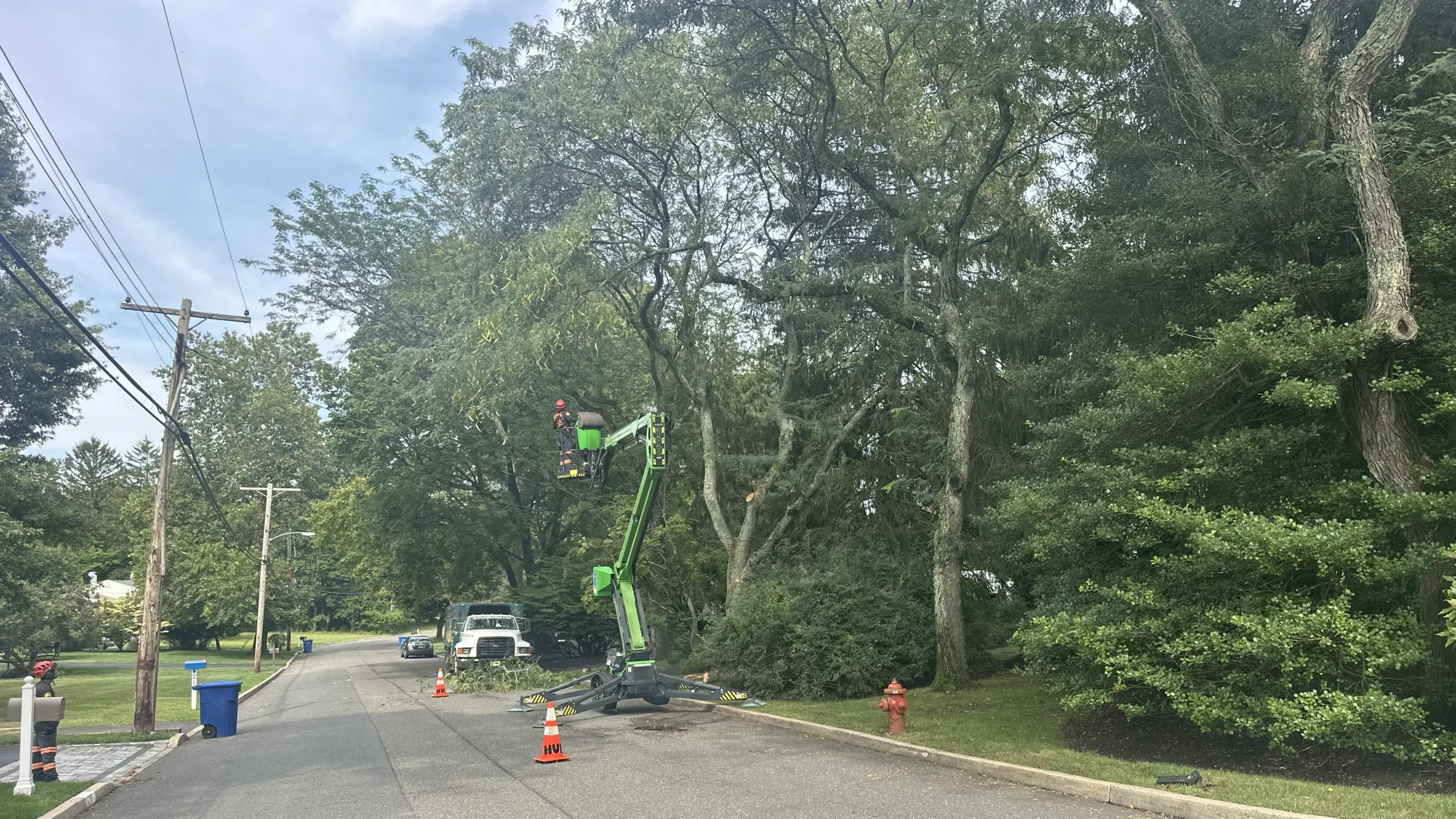
Summer growth makes tree problems more visible. Branches that looked acceptable in early spring can become heavy once leaves expand, rain loads the canopy, and new shoots stretch toward sunlight. In Middletown neighborhoods near Chapel Hill, Lincroft, New Monmouth, Belford, and Navesink, we often see oaks, maples, tulip poplars, sycamores, and ornamental pears carrying more end weight than homeowners realize. A branch does not have to be dead to be a concern. Sometimes the bigger issue is length, leverage, included bark, poor attachment, or repeated rubbing where two limbs have grown into each other.
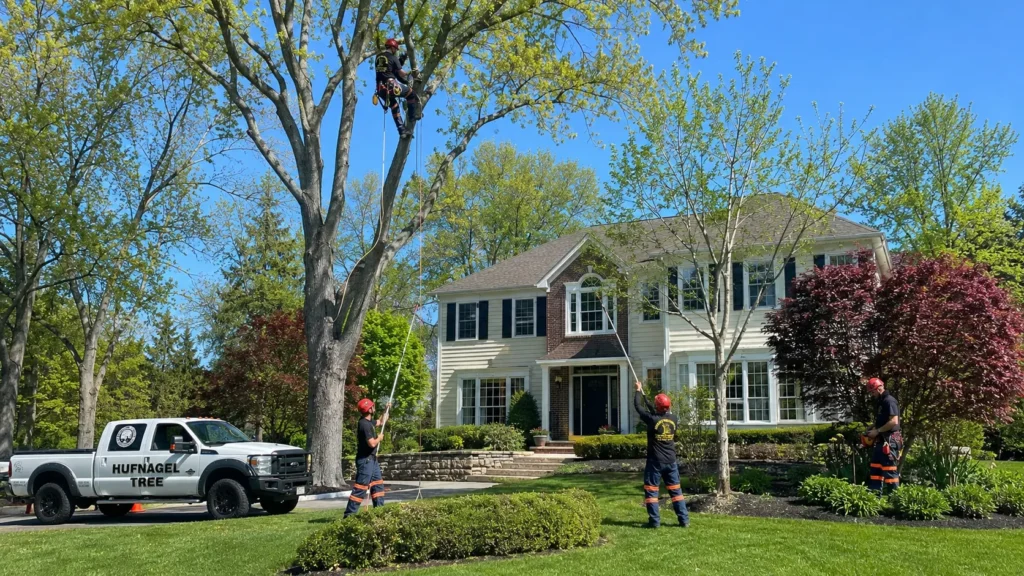
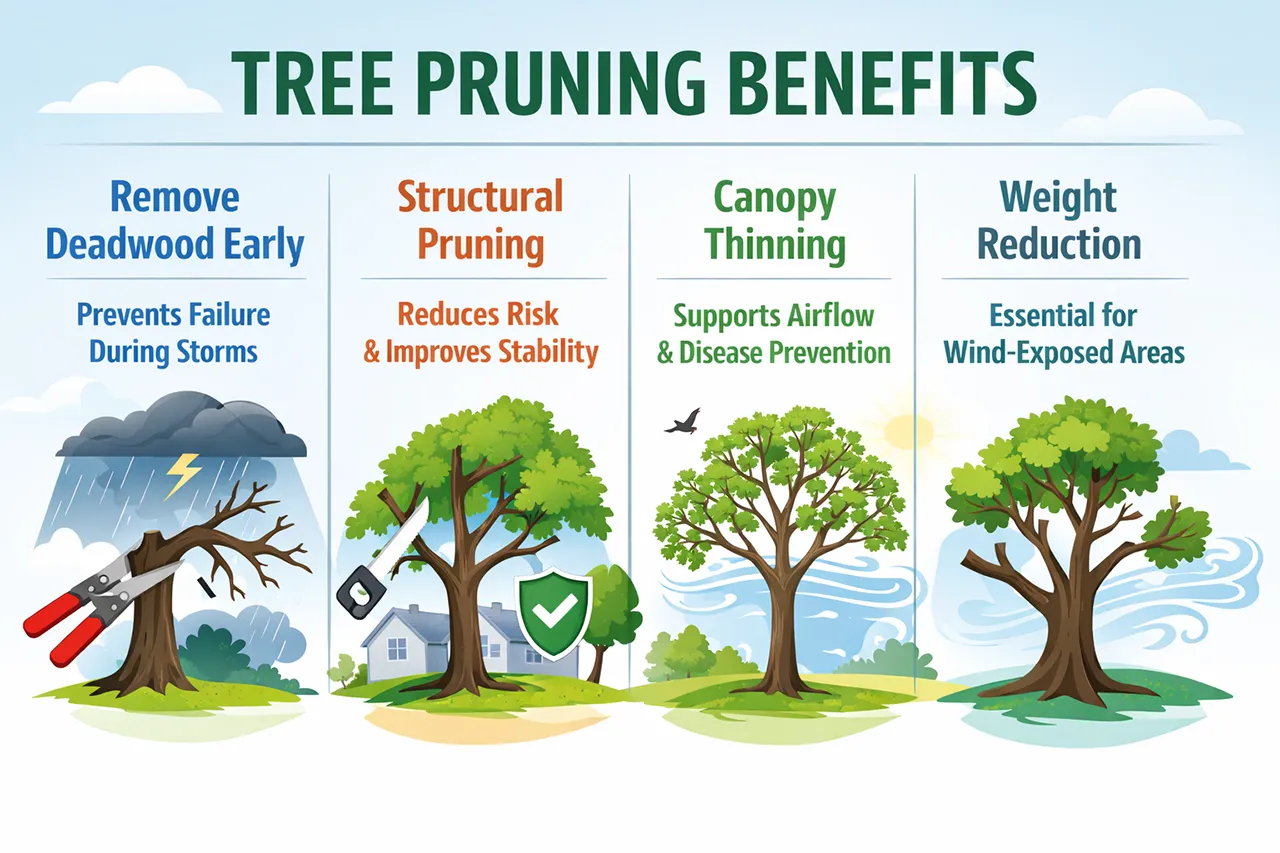
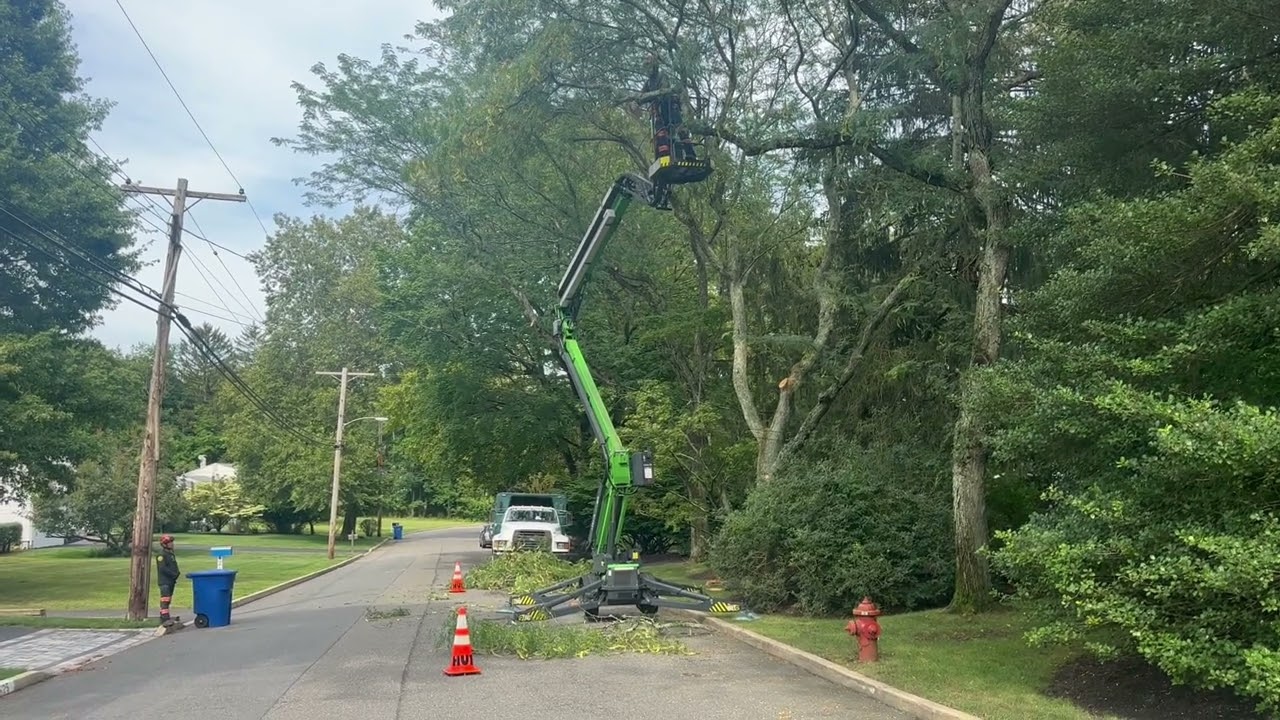
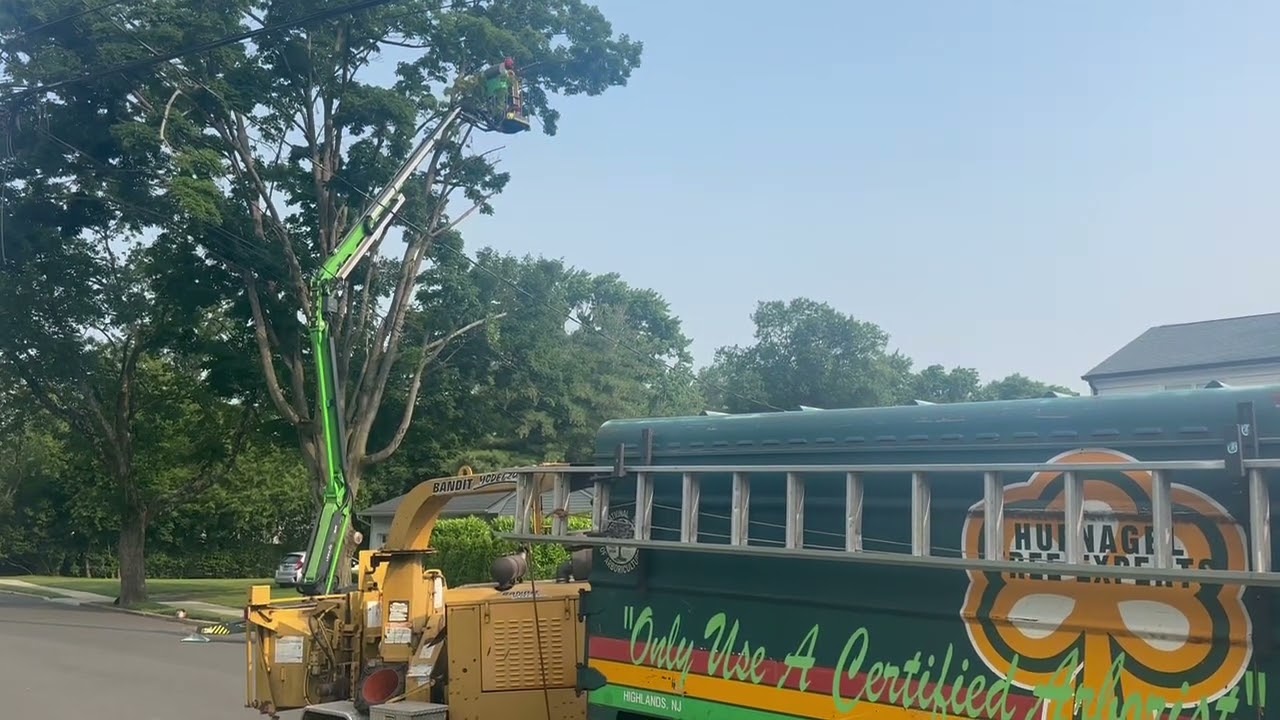
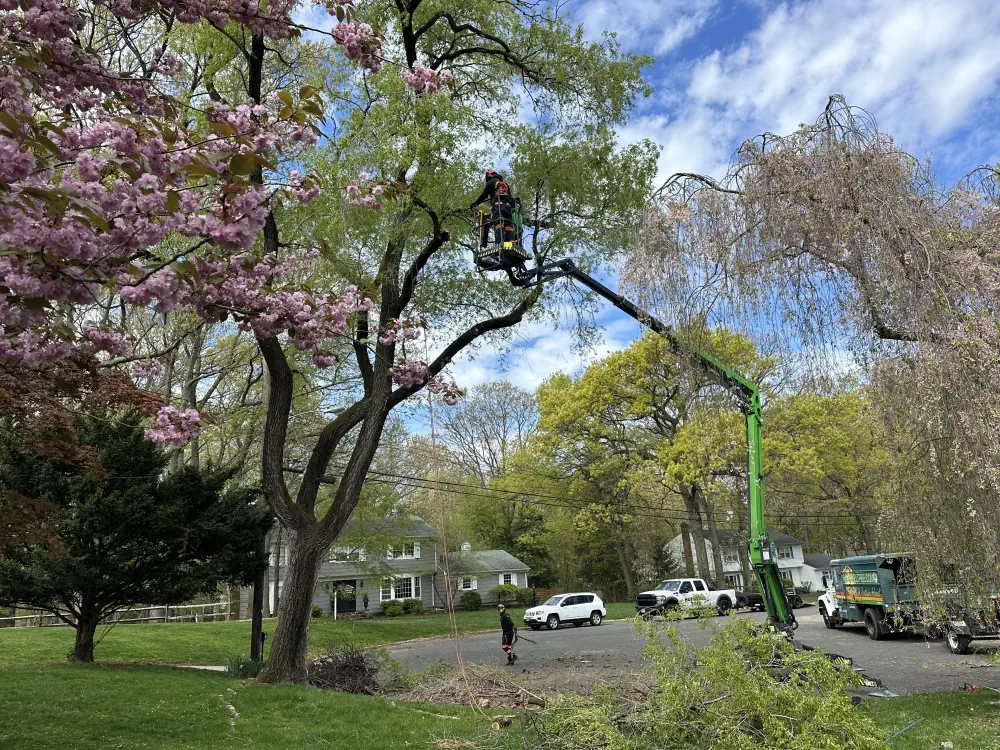
Proper pruning reduces that load with selected cuts. We are not trying to hollow out the tree or remove every branch that moves in the wind. Movement is normal, and a healthy canopy needs leaves. Our goal is to reduce unnecessary weight, improve branch spacing, raise low limbs where appropriate, and create clearance around roofs, gutters, siding, fences, patios, driveways, pools, and play areas. When pruning is done correctly, the tree still looks natural when we leave, but the structure is cleaner and less crowded.
This matters across inland and coastal areas for different reasons. In Colts Neck and Holmdel, large residential properties often have mature shade trees with long lateral limbs reaching over lawns, garages, or guest parking areas. In Rumson, Fair Haven, and Little Silver, older trees may be growing close to historic homes, narrow driveways, carriage houses, and established garden beds. In Long Branch, West Long Branch, Monmouth Beach, and Sea Bright, shore winds and salt exposure can make unbalanced canopies more vulnerable during summer storms. The same pruning service must be adjusted to the site.
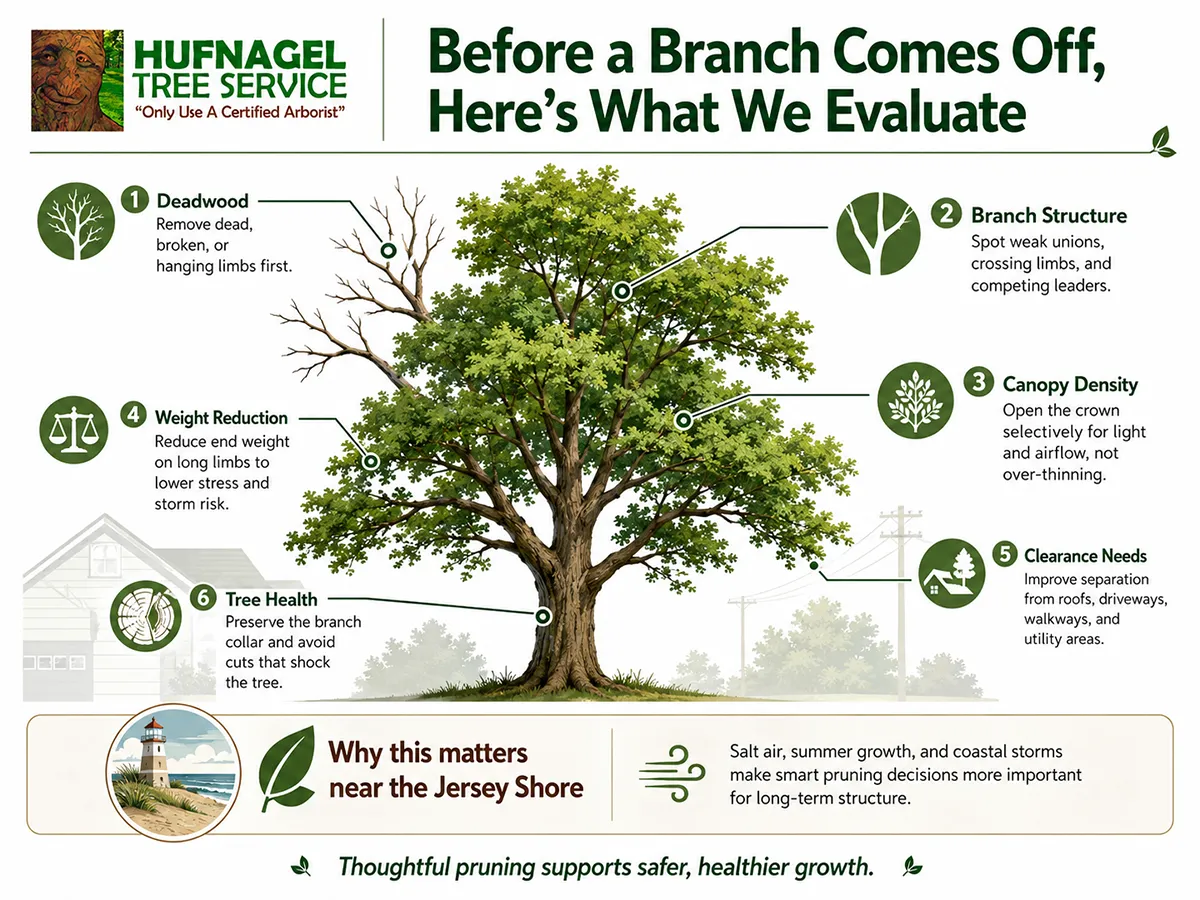
One mistake we correct often is over-thinning. A tree with too much interior growth removed can look “clean” for a few weeks, but it may become weaker, more exposed to sunscald, and more likely to push excessive sprout growth. That sprout growth then becomes a new maintenance problem. A certified arborist looks at the branch collar, canopy density, species response, wound size, season, and long-term structure before making cuts. That is why professional pruning takes judgment, not just equipment.
For homeowners comparing contractors, we recommend reading about what to know before hiring a tree service company before approving major pruning work. The lowest price is not always the safest choice when someone is working over a home, near utility lines, or inside a mature tree that took decades to form. Once structural pruning is handled correctly, the next layer is ornamental and curb-facing tree care, where restraint matters just as much as removal.
What Proper Summer Pruning Should Improve Before Storms Test the Tree
- Lower branch weight without stripping the canopy.
- Improve roof, driveway, walkway, and yard clearance where growth has become intrusive.
- Reduce rubbing limbs, weak attachments, and crowded structure that can worsen over time.
- Preserve a natural shape so the tree does not look scalped or shocked.
- Match pruning intensity to the species, age, site, and season.
When structural pruning is done well, the tree should look healthier, safer, and more balanced, not butchered. That same discipline is especially important for the ornamental trees that define many Monmouth County landscapes.
See Us In Action!
Playlist
Ornamental Tree Pruning for Cherries, Dogwoods, Magnolias, Hollies, and Japanese Maples
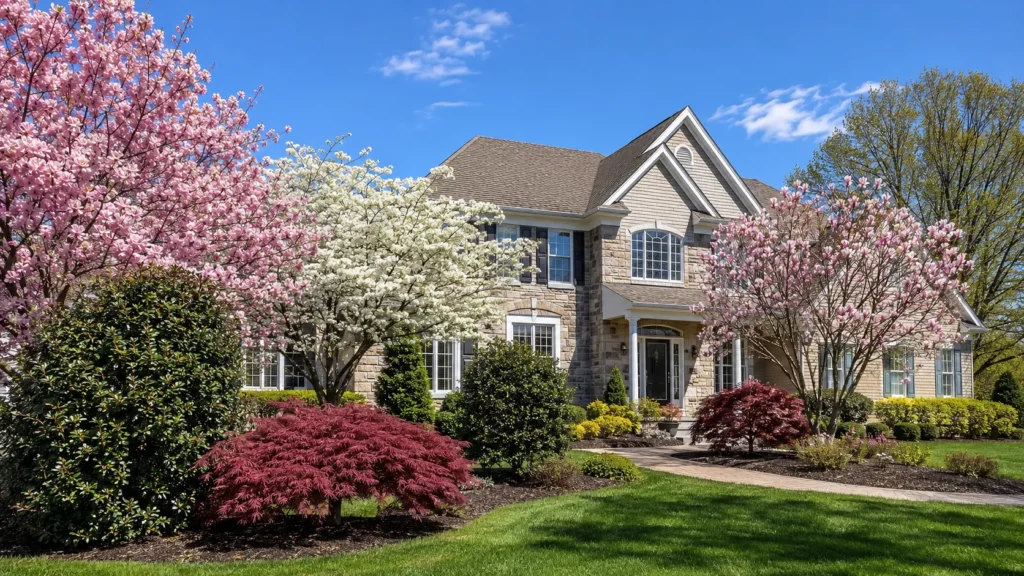
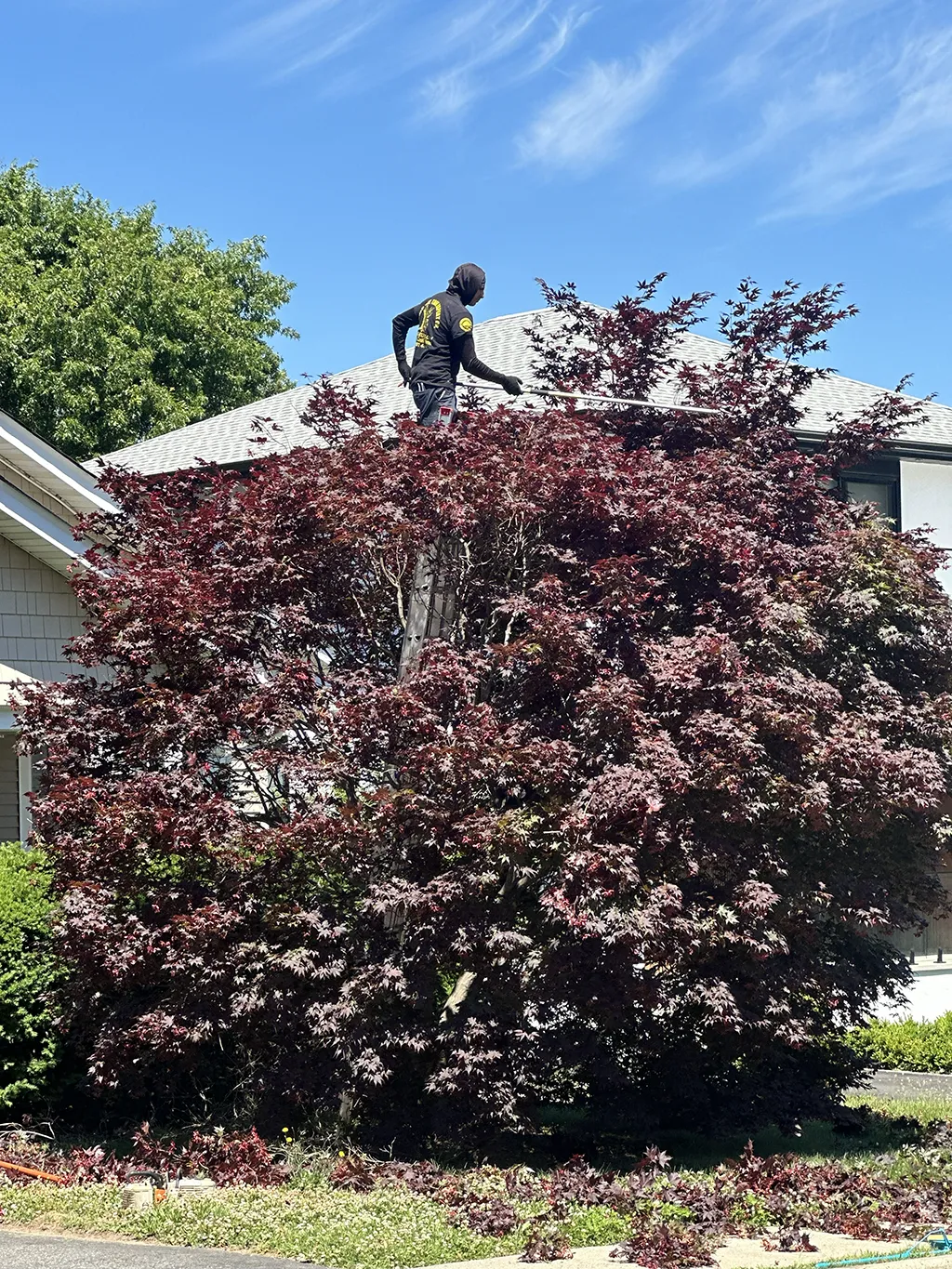
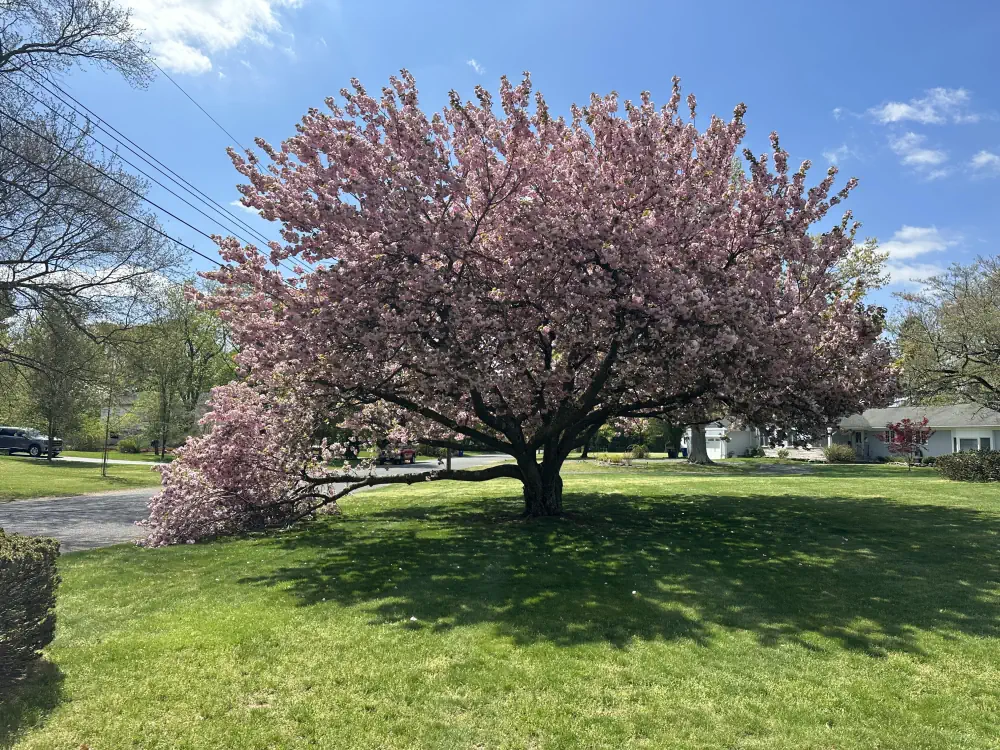
Ornamental pruning is where many properties either gain polish or lose character. Flowering cherries in Fair Haven, dogwoods in Little Silver, magnolias in Rumson, hollies in Shrewsbury, Japanese maples in Red Bank, and privacy plantings near Oceanport all need a lighter touch than large shade trees. These trees are often placed near front walks, foundation beds, patios, pool fencing, and entryways, so every cut changes the way the property feels. Heavy, careless trimming can remove flower buds, expose interior wood, or turn a graceful ornamental into a stiff ball.
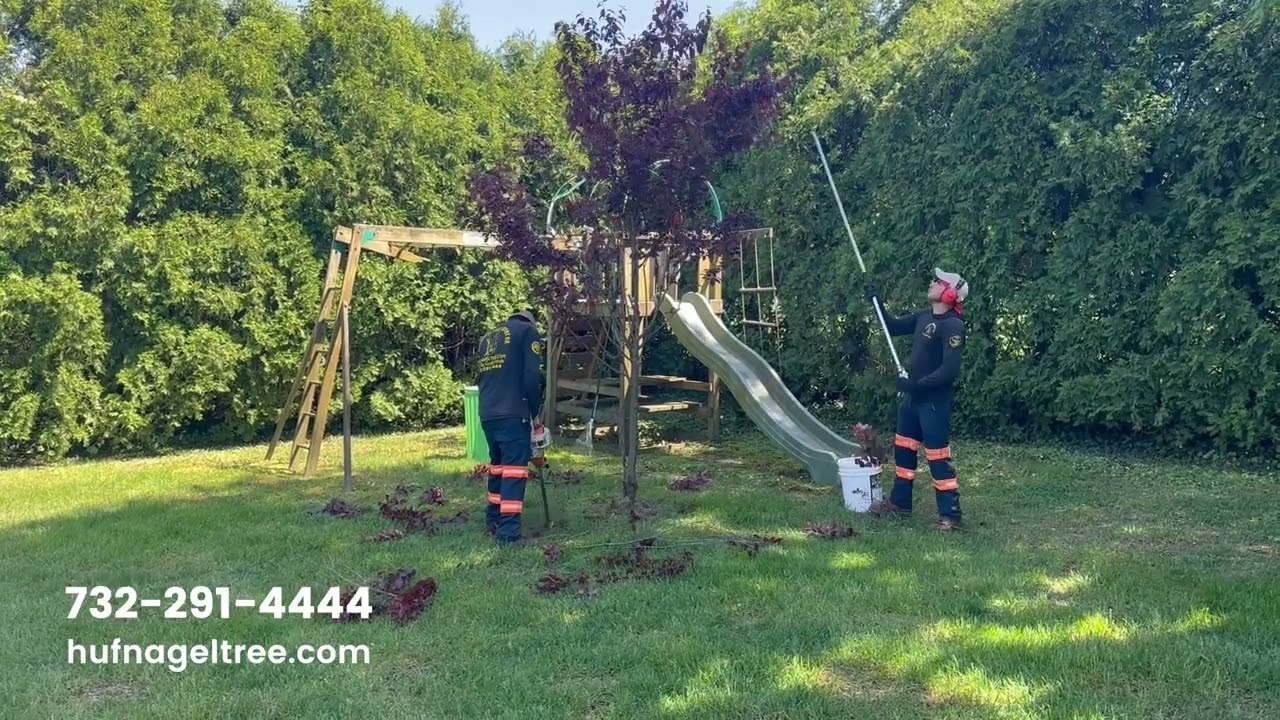
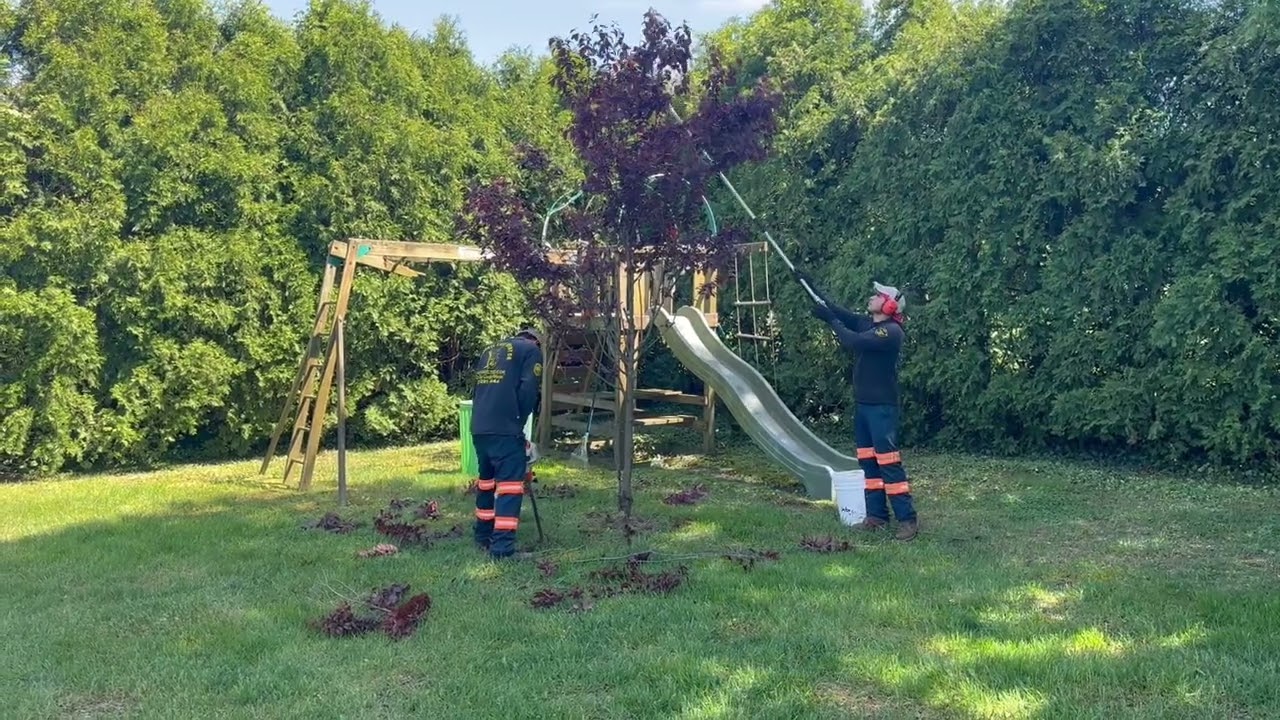
Our approach is to respect the tree’s natural habit. A cherry should not be forced to look like a hedge. A Japanese maple should not be rounded with shears until its layered structure disappears. A dogwood should not be opened so aggressively that sun and heat stress the remaining canopy. We prune ornamentals to remove crossing branches, improve air movement, correct rubbing, reduce selective weight, guide shape, and keep clearance where branches interfere with walkways, roofs, windows, lights, and neighboring plantings.
Local conditions matter here too. Near the shore, salt and wind can already stress foliage, especially on exposed properties in Sea Bright, Monmouth Beach, Long Branch, and Atlantic Highlands. Inland, heavier soil and competition from lawns, irrigation, and nearby shrubs can influence growth and root health. Around older neighborhoods in Red Bank, Fair Haven, and Rumson, ornamental trees are often part of mature layered landscapes where one bad pruning decision can affect shade, privacy, and curb appeal all at once.
Michael often reminds homeowners that “small trees are not simple trees.” A smaller ornamental can be more sensitive to poor cuts than a large oak because every limb is visible and every wound has a bigger impact on the final shape. We also pay attention to timing. Some flowering trees are best pruned after bloom, while others may need corrective work when defects become obvious. The best plan depends on the tree, not the calendar alone.
Hufnagel Tree Service also provides tree health management and restoration-minded care for trees that are still valuable but have been neglected, storm-damaged, or previously cut the wrong way. In many cases, the right pruning plan can buy time, restore form, and prevent a homeowner from removing a tree that still has years of useful life. From ornamental pruning, the conversation naturally moves into long-term service, because the best tree care is rarely a one-time cut and disappear job.
How We Keep Ornamental Pruning Clean, Natural, and Useful
- Prune for structure first, not just a round or flat surface.
- Protect flower production by avoiding unnecessary removal of bud-bearing growth.
- Open crowded areas selectively so air can move without exposing the tree too harshly.
- Respect the natural shape of cherries, dogwoods, magnolias, hollies, and Japanese maples.
- Use pruning as part of long-term preservation when a tree still has value.
Ornamental pruning should make a property look cared for without making the tree look forced. When we combine structural pruning, ornamental pruning, and careful seasonal planning, homeowners get trees that look better and handle Monmouth County weather with more resilience.
Call Hufnagel Tree Service for Professional Tree Pruning
If your trees are hanging over the roof, crowding the driveway, blocking walkways, pressing into the house, or growing too heavy after spring rain, call Hufnagel Tree Service at (732) 291-4444. Our certified team of arborists serves Middletown, Red Bank, Rumson, Fair Haven, Little Silver, Shrewsbury, Oceanport, Long Branch, West Long Branch, Sea Bright, Holmdel, Colts Neck, Tinton Falls, and nearby Monmouth County towns.
We bring more than two decades of local tree care experience, hundreds of strong customer reviews, and a service-first approach that puts tree health and property safety ahead of shortcuts. For professional tree pruning, tree trimming, ornamental shaping, canopy thinning, and seasonal risk reduction, call Hufnagel Tree Service and schedule a pruning consultation before the next round of heavy growth or summer storms makes the decision for you.
Schedule Service Now!
From precision pruning and safe removals to health assessments and preventative care, Hufnagel Tree Service delivers expert solutions backed by decades of experience. We offer certified insight, fair pricing, and a commitment to doing what’s best for your landscape.
Learn More About Our Services
Related Articles
Exotic Hedge and Vine Maintenance in Navesink, NJ