Contents
Manasquan Trees After the Thanksgiving Storm and Tidal Flooding
Manasquan is a low shore borough where the ocean, the Manasquan River, and a string of smaller waterways sit close to homes. The borough was incorporated on December 30, 1887, and counted 5,938 residents in 2020, according to Wikipedia. The same source lists an elevation of about 3 feet and shows that a large share of the borough area is water. Anyone planning a tree risk evaluation in Manasquan has to start with that setting, because wind and water arrive here together.
Thanksgiving put both to work. CBS New York reported that a massive tree came crashing down in Manasquan as some residents sat down for dinner, and a police officer said no one was injured. ABC7 New York reported flooding and rough surf in the borough as strong winds battered the shoreline. Our tree risk evaluation service is built to find what a storm like this leaves behind in the trees that are still standing.
After almost 30 years working throughout Monmouth County, we have seen that the tree on the ground gets the attention while the damaged tree beside it gets none. This article covers what happened, what to check from a safe distance, how borough rules apply, and when to call.
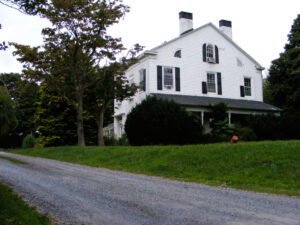
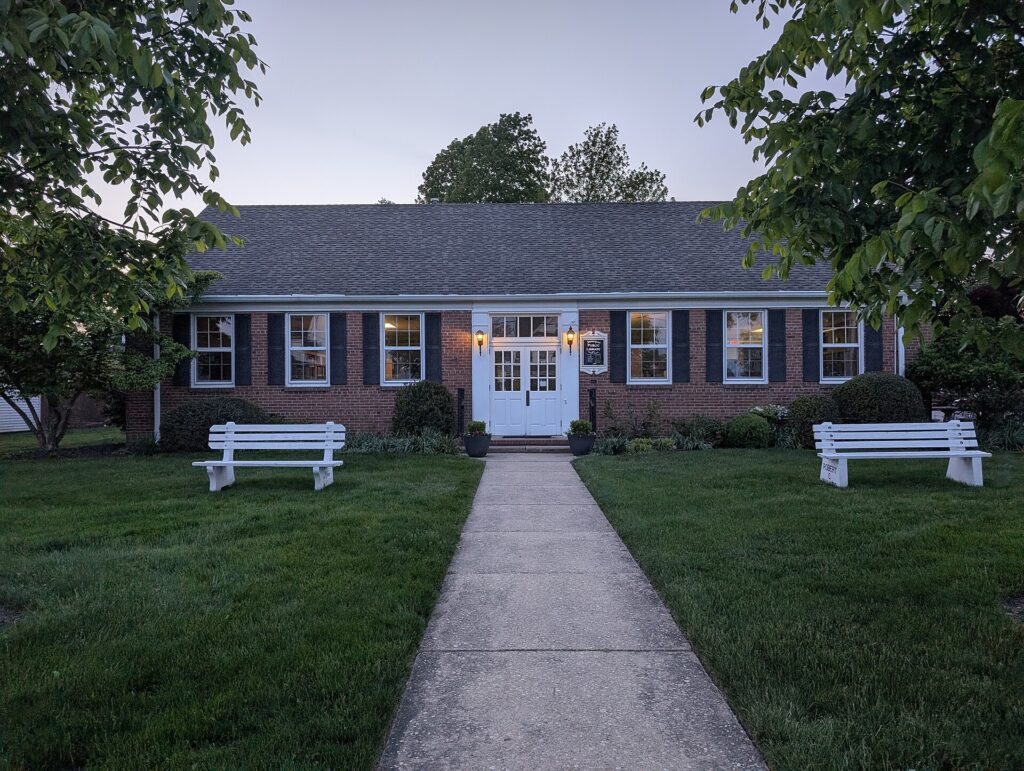
The photograph above shows the Manasquan Public Library with leafy branches framing the lawn in May 2026. It is not a picture of this storm. It shows the kind of mature shade that sits near walkways and buildings in town. The Asbury Park Press live updates described video of flooding on East Main Street and Stockton Lake on Thursday morning, with choppy water on the Glimmer Glass harbor. The same coverage counted 73,248 JCP&L customers without power across Monmouth County at 8:47 that night. The National Weather Service in Mount Holly posted a Coastal Flood Advisory for minor flooding through 3 PM Friday, and its Friday forecast calls for southwest gusts as high as 35 mph. Check the latest statement, because advisories and forecasts change.
What a Tree Risk Evaluation in Manasquan Looks for After Wind
A tree risk evaluation in Manasquan after a coastal storm asks a different question than a routine visit. We are not only asking whether a tree is healthy. We are asking what changed between Wednesday and Friday. A trunk may have shifted, a fork may have opened, or a broken limb may be resting high in the crown where nobody has looked. The tree can seem ordinary from the porch while carrying less margin than it had last week.
Timing matters. Gusty southwest and west wind is still forecast through Saturday, and a limb that cracked on Thursday can finish breaking in a much lighter gust. Walk the yard only when it feels safe, stay out from under damaged crowns, and keep children and pets well away from them. The borough flood safety guidance tells residents to stay away from downed power lines and to report them to the power company. Treat every wire as live, including one that looks dead or lies in standing water.
Begin with the whole tree rather than the nearest broken branch. Compare the trunk with a fence post, a house corner, or an older photograph. A new lean is one of the most important changes we look for. The ISA guide to recognizing tree risk notes that cracks or separations in the soil may point to excessive root movement, which can be a warning sign of failure, especially when the tree leans. Soil that rose on one side of the base deserves the same attention.
Next, look up. Detached branches caught in the canopy are easy to miss against a gray sky, and they may not need much of a push to fall. Large dead limbs may have loosened. Fresh pale wood usually marks a new break, while a dark seam with weathered edges may be an older defect that the storm tested again. Where two similar stems rise from one point, check the seam between them. Our guide to codominant stems shows why that union can become the weak place.
Targets change the urgency. The same crack is a smaller concern over an open marsh edge than over a bedroom, a driveway, a sidewalk, or a neighboring garage. Note what sits beneath each damaged area and how often people pass there. That list helps us decide what needs attention first, and it helps a property owner explain the situation to family members, tenants, or an insurer without guessing.
Photographs make the record. Take one wide picture of each tree, one of every visible break, and one of the base from two sides. Save the date. Return to the same spots after the next rain and compare. Movement that the eye forgets is often plain in two images taken a few days apart. Do not climb, pull on a hanging limb, or start a saw under loaded wood in order to get a better look. The picture from the ground is enough to start the conversation.
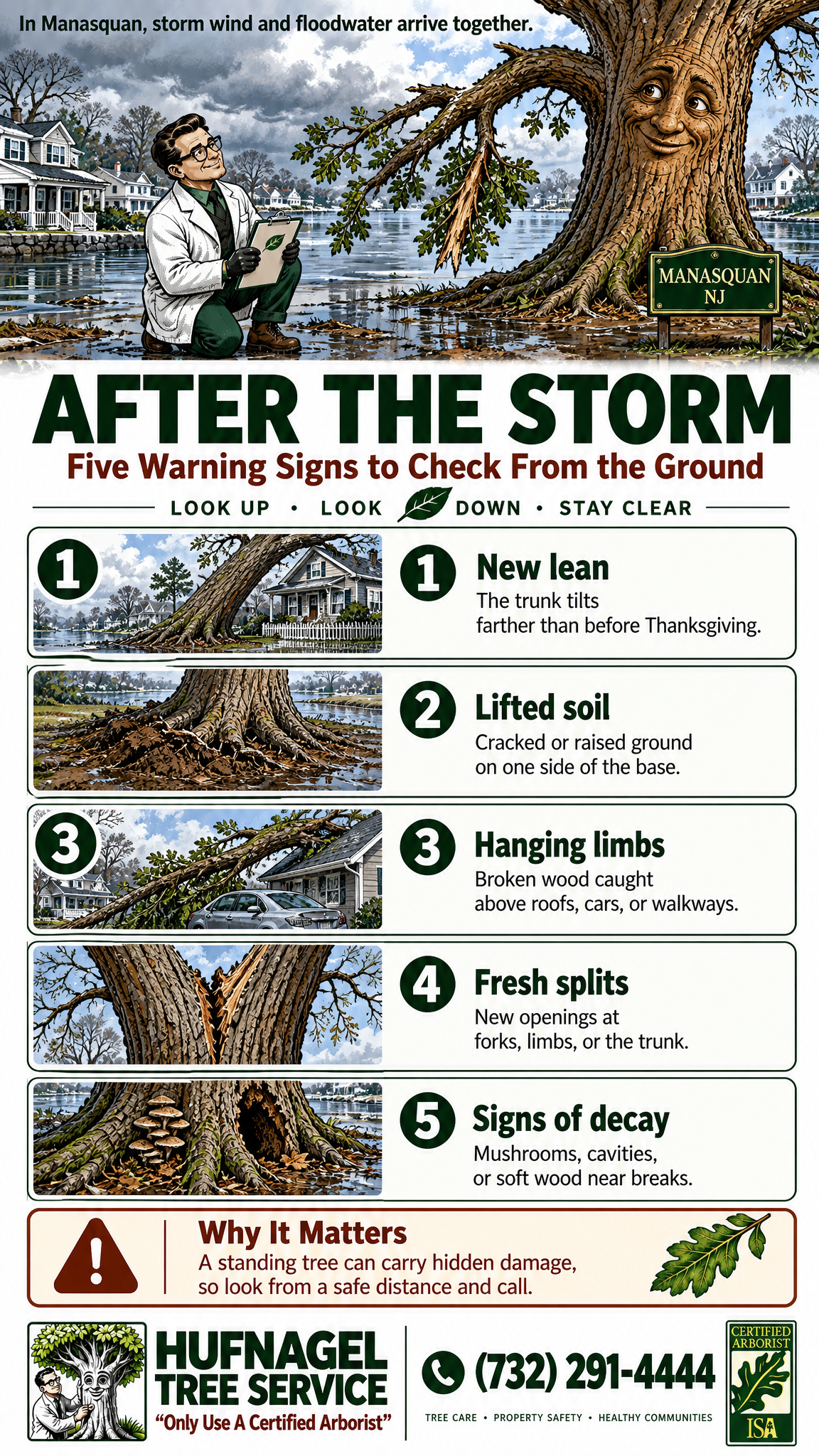
Five Warning Signs to Check From the Ground in Manasquan
- A trunk that leans farther than it did before Thanksgiving.
- Soil that cracked, lifted, or opened around one side of the base.
- Broken limbs hanging in the crown above roofs, cars, or walkways.
- Fresh splits at a fork, along a limb, or down the trunk.
- Mushrooms, cavities, or soft wood showing near the base or breaks.
Any one of these is a reason to keep people and vehicles away from that side of the tree until it has been examined. None of them proves that removal is required. Some trees need only watching, while others need pruning, restoration, support, or removal. Mike Hufnagel describes the first walk this way: “The tree that came down already answered its own question. After a storm we spend our time on the trees still standing, because those are the ones that can still surprise somebody.” That is why the next step looks below the surface.
Floodwater and Soft Ground Change What Roots Can Hold
Water shapes tree risk here as much as wind does. The borough says on its flood hazard page that low lying geography and nearness to the coast leave Manasquan extremely susceptible to coastal flooding. It names the Atlantic Ocean, the Manasquan River, Watson’s Creek, Glimmer Glass Harbor, Stockton Lake, and several brooks and creeks as places where water rises. The flood safety page adds that more than 90 percent of the borough lies in some type of flood inundation area.
The borough also lists streets that flood as water rises at the Watson’s Creek gauge. Its emergency preparedness page names Main Street, Perrine Boulevard, Stockton Lake Boulevard, and Brielle Road as places where flooding begins, with many more streets at higher water levels. Yards near flooded streets may have held water or soaked soil on Thursday. That does not mean the roots failed. It means the ground around those trees should be examined before they are trusted in the next strong wind.
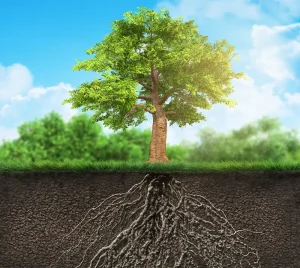
Roots anchor a tree through their grip on soil. When soil stays saturated, that grip can weaken, and wind in the crown works like a long lever on the base. The trouble is that most of the structure is hidden. We look for a flare that disappears into raised or sunken ground, roots that snapped at the surface, a gap between trunk and soil, and water that still pools on one side. Our guide to weak tree roots explains why an upright tree can still be a compromised one.
Salt is a slower concern. Floodwater from tidal creeks and the ocean can leave salt in the soil, and wind off the water can coat needles and buds. The effects may not appear until spring, when one side of a crown leafs out thinly or an evergreen browns on the exposed face. Write down which trees stood in water and how long it lasted. That note is useful months later, when the cause of a weak crown is harder to trace. We would rather watch a good tree with a clear history than judge it on one bad week.
Old decay changes the picture again. A break that exposes crumbling or discolored wood suggests that the tree was already weaker at that spot. Fungus at the base can point to damage in the roots or lower trunk. Our article on hidden tree rot describes the signs that matter. An evaluation connects those clues with the lean, the soil, and the target, because a defect rarely acts alone.
Protect the root area while the ground is still soft. Parked trucks, stacked brush, piled sand, and cleanup equipment can compact wet soil over living roots. Move debris to pavement where that is possible without blocking the street, and keep flood mud and fill from burying the base of the trunk. Do not cut exposed roots to tidy the lawn. Ask an arborist to look first, since a root that appears to be a nuisance may be part of what holds the tree upright.
Root Zone Checks After Manasquan Floodwater Falls
- Note which trunks stood in water and roughly how long it stayed.
- Look for gaps, mounds, or fresh cracks where trunk meets soil.
- Photograph pooled water that remains on only one side of a tree.
- Keep trucks, brush piles, and sand off the soft root area.
- Watch exposed evergreen foliage for browning as the season moves ahead.
These checks cost nothing and create a record that a later visit can build on. They also help separate a cosmetic mess from a structural change. A lawn covered in leaves and small twigs can look alarming while the trees remain sound. A tidy yard can hide one lifted root plate. Our tree health management work follows the slower effects through the growing season. Before any larger work begins, borough rules about trees also belong in the plan.
Borough Tree Rules Shape the Cleanup and the Next Steps
Manasquan places trees along its public ways under a Shade Tree Commission. Chapter 23 of the borough code requires a written permit from the commission to cut, break, climb, or injure a tree growing in a public highway, and it allows a person to apply to cut, prune, or trim one. A separate provision makes it unlawful to kill or remove a tree from the borough right of way without permission. A storm damaged street tree is therefore not automatically yours to cut, even when it shades your own front walk.
Private property follows different rules. The code states that its private removal section applies to vacant lots, to new construction after a principal structure is demolished, and to lots where a foundation grows by more than 500 square feet. It also says that nothing in that section is intended to restrict an owner from removing trees where no permit for a new or replacement principal structure is sought. Trees removed within six months before such an application are still covered. Anyone planning to build should check that timing before clearing storm damaged trees.
Replacement can apply to building projects as well. Ordinance 2414-24, approved in February 2024, calls for two shade trees, or a payment of 250 dollars per tree to the Municipal Tree Escrow Fund, for a new home or an addition of 500 square feet or greater. The same section requires guards that protect nearby street trees during construction. The borough has amended the chapter since then, so confirm the current wording with the borough. We are not the borough, and our guide to tree removal permits is only a general starting point.
Once ownership is clear, the work should match the defect. A single torn limb may call for a proper cut back to sound wood. A damaged crown with firm roots may be a candidate for tree restoration over more than one season. Weight at the end of a long limb can be reduced with selective pruning. We do not top trees, and we do not thin a crown just to make it look lighter against the wind. Every cut needs a reason that the owner can understand.
Some findings leave fewer choices. A trunk split through, a rolled root plate, or deep decay at the base can make tree removal the responsible answer, particularly over a home or a busy walkway. Where wires are involved, the utility comes first. The ISA guide warns against removing any part of a tree from or near power lines and against going near downed lines. Homeowners should look, photograph, stay clear, and call.
Winter is the next test. Bare crowns make forks, cavities, and deadwood easier to read, and the weeks ahead may bring more northeast wind. A follow up visit lets us confirm that a repaired tree is responding and that nothing was missed under the first pile of debris. Our tree storm proofing page and our article on storm season risk assessment describe how preparation lowers risk without promising that any tree will never fail.
Questions to Settle Before Storm Cleanup Cuts Begin
- Does the tree stand on private land or in the public right of way.
- Is any limb or trunk touching, resting on, or near a utility line.
- Is a permit for new construction or a large addition part of the plan.
- Have dated photographs captured the damage before anything is cut or moved.
- Which damaged trees could still strike a home, vehicle, or walkway.
Answering these in order prevents common cleanup problems, such as cutting a tree that belongs to the public, losing the record an insurer wants, or removing a tree that could have been kept. It also keeps attention on the trees that carry real consequences. A clear plan names what is urgent, what can wait for calm weather, and what only needs watching. That plan is the purpose of the visit, and it is a better guide than the size of the debris pile.
Call Hufnagel Tree Service for a Manasquan Tree Evaluation
If you have mature trees near your Manasquan home, driveway, waterfront, or street frontage, schedule an evaluation before the next round of wind and rain. We provide tree risk evaluations, pruning, restoration, storm proofing, health management, and removal when a tree cannot be managed safely.
Hufnagel Tree Service is led by a certified arborist with almost 30 years of local experience and more than 280 five star Google Maps reviews. We look at the tree, the roots, the water, and the target, then explain what we found in plain terms.
Call or text (732) 291-4444 to schedule a tree risk evaluation in Manasquan after the Thanksgiving storm. Our Manasquan tree articles offer more local guidance.
Schedule Service Now!
From precision pruning and safe removals to health assessments and preventative care, Hufnagel Tree Service delivers expert solutions backed by decades of experience. We offer certified insight, fair pricing, and a commitment to doing what’s best for your landscape.
Learn More About Our Services
Related Articles
West Long Branch Tree Preservation: Replacement Rules and Hazard Trees
Tree Health in Sea Bright NJ: Salt, Sand, and Flooded Roots