Contents
Tree Risk Evaluation in Interlaken Starts With a Borough Planted Between Two Lakes
Interlaken is a small borough with a large tree record. Wikipedia lists its area at 0.39 square miles, with 0.06 of that water, and a 2020 population of 828. Dr. Francis Weld, a Boston physician, bought a 364 acre tract and named it Interlaken Farm for the Swiss town that sits between two lakes, and his Interlaken Land Company laid out avenues named for English lakes with cross streets named for Hebrides islands. Tree risk evaluation in Interlaken starts with that tight, planned layout, because almost every tree stands close to a house, a street, or a neighbor.
The borough’s own Shade Tree Commission page says the first commission planted 291 trees in 1927 and that Interlaken has been a Tree City USA since 1988. A century of planting means many of those trees are now large, mature, and sharing space with roofs and wires. Our tree risk evaluation work and our tree health management service both begin by asking what each tree can reach if part of it fails.
After almost 30 years working throughout Monmouth County, we have seen that late fall is the cleanest time to answer that question. The leaves are down, the structure is visible, and the summer record is still fresh on the bark and in the canopy. A defect that a full crown hid in July is easy to read now, and it is far better to read it before winter weather adds load.
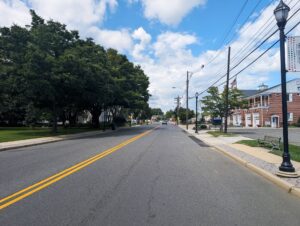
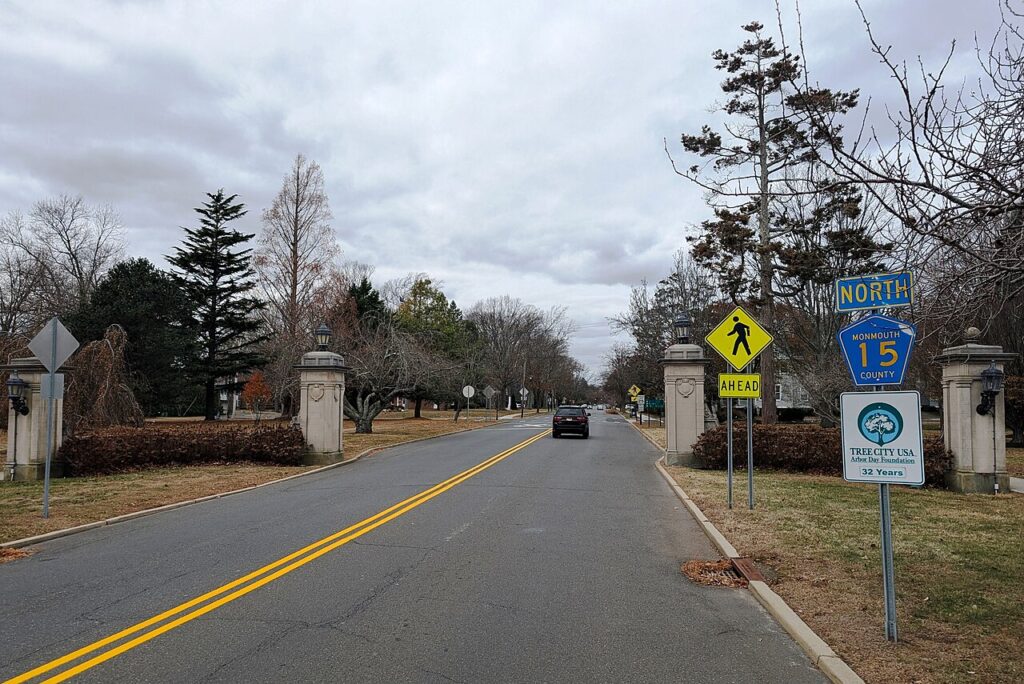
The photograph above shows the stone gate pillars on County Route 15 at the entrance to the borough, with bare hardwoods and evergreens lining both sides of the road. That single view explains the work. These trees frame a public road, stand beside the approach to a railroad crossing, and shade the front lawns of homes. When a limb comes down in a place like this, the consequences are not abstract, and the target under the tree matters as much as the tree itself.
Wikipedia reports 6.77 miles of roadway in the borough, 5.84 of them maintained by the municipality, with County Route 15 as the only county road passing through. That is a lot of curb line for a place under half a square mile, and much of it is edged by trees. The Deal Lake Commission adds that the lake and its tributaries are regulated by federal and state agencies, with strict NJDEP rules on land within 50 feet of the shoreline, so any work near the water starts with a call to the state. Our guide to weak tree roots covers the ground level signs that matter most on soil that stays wet near the lake.
Interlaken Tree Risk Is Condition Plus Target Plus Winter Load
A tree risk evaluation is not a verdict on whether a tree is good or bad. The ISA brochure on recognizing tree risk says plainly that there is no such thing as a completely safe tree, that all trees can fall, and that only a small number ever hit something or someone. Tree risk evaluation in Interlaken is built on that idea. We measure three things together, which are the condition of the tree, what is underneath it, and the weather it is likely to face this winter.
The same brochure offers a checklist that any owner can use from the ground. It asks about large dead branches, detached or hanging limbs, loose bark, cracks or splits, cavities and rotten wood, mushrooms at the base, and recent changes to the soil level or paving around the tree. It also asks whether leaves look unusually yellow or small and whether the tree has been topped or heavily pruned. A yes to any of these is a reason to call, not a reason to climb a ladder.
The brochure also lists defects that matter in urban trees, including poor taper, root failure with cracks in the soil, codominant stems, cankers and wounds, longitudinal cracks, signs of decay, dead branches, and damage caused by construction or poor pruning. We see all of these in Interlaken yards. Our guide to codominant stems explains why two stems of equal size can press against each other and leave included bark at the union, which is a common point of failure under load.
Target is what turns a defect into a priority. A dead limb over an open lawn is a maintenance item. The same limb over a bedroom roof, a driveway, or the sidewalk on a street named for an English lake is a different problem. Because Interlaken lots are compact, we map the fall zone of each large tree before we rank anything, and we write down what stands inside it.
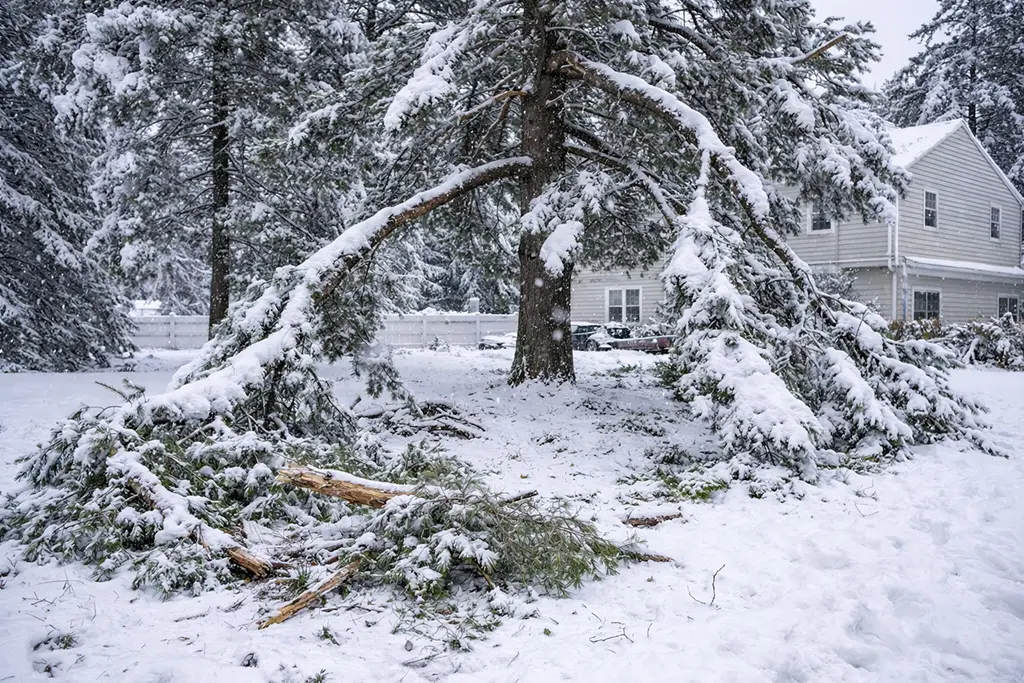
Weather is the tester. Wind loads the crown, saturated soil weakens anchorage, and wet snow or ice adds weight to limbs that were already carrying a defect. A tree that has been sound for years can fail in the first strong Nor’easter if a union has cracked or a root has lifted. That is why we prefer to look now, with the canopy bare and the soil still workable, rather than after a storm has done the inspecting for us.
Mike Hufnagel puts the working rule this way: “In a borough this tight, we start with what the tree could hit, then we ask what has changed in the tree. A good evaluation connects those two answers and tells the owner what can wait and what cannot.” That keeps the visit focused on evidence rather than on size or age alone. A large tree with a sound structure may need nothing, while a smaller one with a cracked union over a driveway may need attention first.
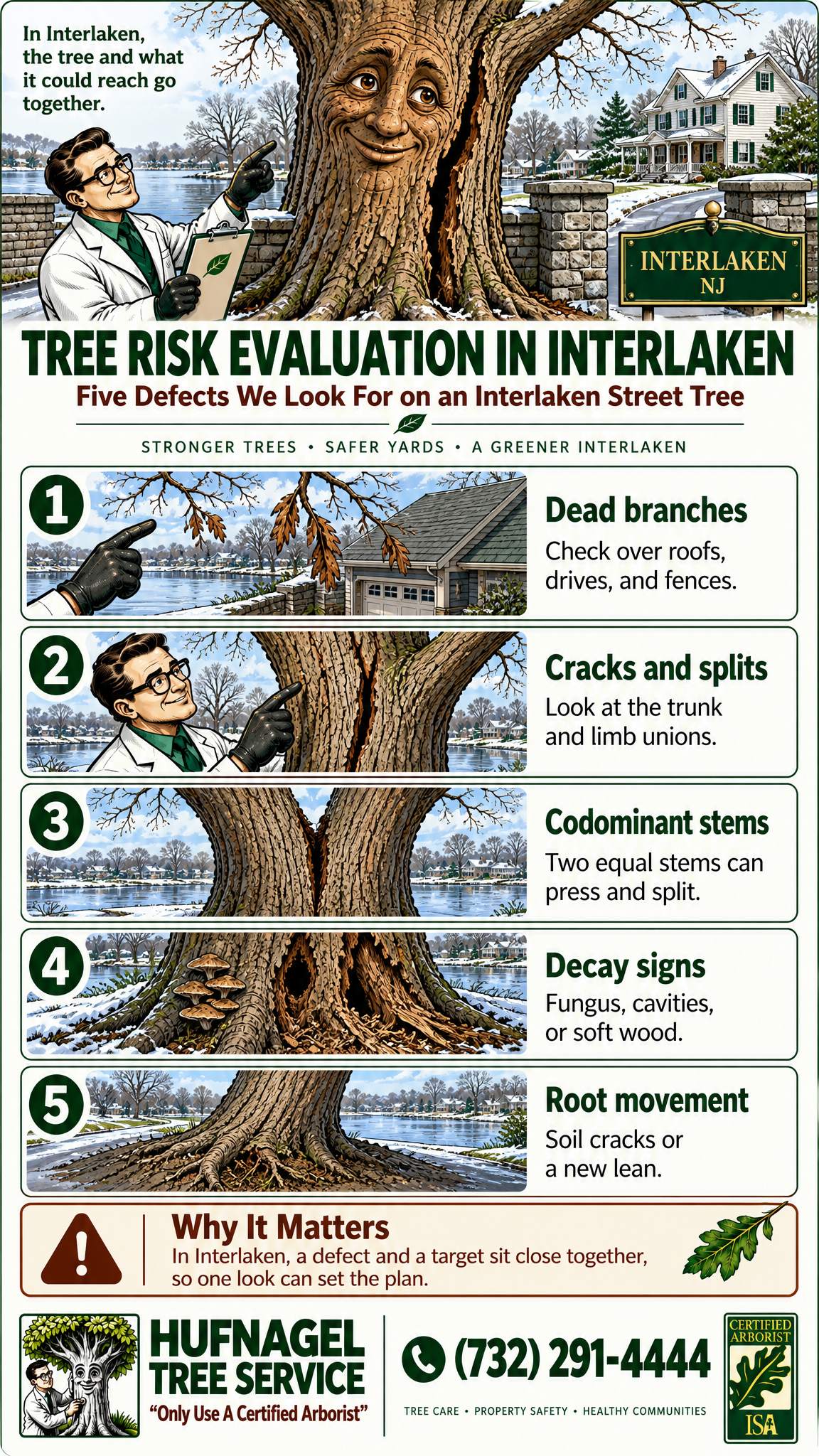
Five Defects We Look For on an Interlaken Street Tree
- Dead or hanging branches over roofs, driveways, sidewalks, and neighboring fences.
- Cracks or splits in the trunk or at the unions where large limbs attach.
- Codominant stems with included bark pressing together near the top of the trunk.
- Fungal growth, cavities, or soft wood at the base or along main limbs.
- Soil cracks, heaving, or a new lean that suggests the roots have moved.
None of these findings means a tree has to come down. Each one tells us where to look more closely and which of the four outcomes is likely to fit, which are pruning, restoration, monitoring, or removal. Once the structure is understood, the next question is who owns the tree and what the borough expects when work is planned.
Interlaken Notice Rules and Shade Tree Records Shape What Follows an Evaluation
Interlaken treats its trees as a shared asset, and the rules reflect that. The borough’s tree removal notice says a permit is required to remove four or more trees of nine inches or greater caliper. For fewer than four such trees no application or permit is needed, but the owner must first notify the borough and pay a ten dollar fee for up to four trees, and the page states a fine of up to $200 per tree for not following these provisions.
The borough explains the reason in the same notice. The ordinance exists because the community values every tree within the borough for its shade, cleaner air, better drainage, and the character it gives Interlaken. That is a useful frame for an evaluation. A removal is never the first recommendation here, and when it is the right one, the paperwork should be handled before a crew arrives rather than after. Our guide to tree removal permits walks through the general process.
Public and private trees also need to be told apart. The Shade Tree Commission page says the commission cares for trees planted through its Honor Me Tree Program and created the Interlaken Arboretum in 1992 just inside the easterly entrance gates, where visitors can scan QR codes to learn about each identified tree. A tree in that arboretum or on a borough strip is not ours to prune, and a call to the borough comes first. A tree on a private lot is the owner’s responsibility, and the ISA brochure says it is the owner’s responsibility to ensure the safety of others around trees on the property.
Credentials matter in New Jersey, and the state spells out why. The Board of Tree Experts licensing page says Licensed Tree Experts can perform tree assessment and risk management, along with diagnosis, cabling and bracing, and consulting, while Licensed Tree Care Operators perform pruning, removal, and stump grinding. It also says no one may use the title of licensed tree expert or licensed tree care operator without a license. Owners can use that page to check anyone who offers to evaluate a tree.
An evaluation also produces paper. We describe each tree we looked at, the defects we saw, what stands beneath it, and what we recommend and in what order. That written record is useful to the owner, to a neighbor who shares a fence line, and to an insurer or borough office if a question comes up later. A tree that was documented as sound and later fails in an extreme storm is a very different situation from one that was never looked at.
Records also protect good trees. When the file shows a mature oak with a sound structure and a clear target map, the owner can say no to unnecessary work with confidence. When the file shows a cracked union over a roof, the owner has what is needed to act before winter. Either way, the decision rests on facts that can be shown, not on a feeling about how the tree looks from the street.
Five Records Worth Keeping After an Interlaken Tree Evaluation
- Dated photographs of the crown, trunk, and base taken in the same positions each year.
- A short written list of defects found and the order we recommend addressing them.
- A sketch noting which roofs, drives, and fences sit inside each tree’s fall zone.
- Copies of any borough notice, fee receipt, or permit tied to trees on the property.
- The date of the next scheduled look, including after any major storm.
Good records make the next visit faster and the next decision simpler. They also set up the work that follows an evaluation, which is easiest to plan in the dormant season.
Bare Canopies Make Late Fall the Time to Turn Findings Into a Plan
A bare canopy tells an arborist a great deal. With the leaves down, we can follow each limb back to its union, see where two stems press together, and spot dead wood that summer foliage hid. Late fall and winter are also when trees are dormant, which is a sensible time for corrective pruning that removes defective branches without asking the tree to leaf out while it recovers.
The ISA brochure lists four ways an arborist may manage risk after an assessment. They are to prune the tree and remove defective branches, to cable and brace weak branches and stems, to provide routine care such as water, mulch, and pruning, and to remove the tree when the risk is unacceptable and, if possible, plant a replacement. The brochure adds that supports are not guarantees against failure, and we say the same. No tree service can honestly promise that a tree will never fail in severe weather.
Pruning in this setting is about reducing load and clearing targets, not making a tree smaller for its own sake. We remove dead wood, reduce end weight on a limb that is overextended, and clear branches that hang over a roof or wire. We name topping only to reject it, since cutting large limbs back to stubs creates weak regrowth and open wounds. Each cut has a reason that we can explain to the owner in plain terms.
Restoration comes next for trees that have been damaged or poorly pruned in the past. A tree with torn branch unions, old topping cuts, or lightning damage may be worth keeping if the structure still gives us a safe path forward. Our tree restoration work focuses on that kind of tree, and our tree storm proofing approach reduces the leverage a storm can use against a sound but exposed tree.
Monitoring is a real outcome, not a way of putting off a decision. Some trees need only a dated photo and a second look after the next big storm. An owner who has kept records can compare what changed from one season to the next, and a small change in lean, a new crack, or fresh deadwood is a reason to call earlier than planned. Our guide to storm season tree risk assessment explains how to use that record.
Removal is the last answer. When the remaining sound wood cannot support a tree over a house, or when roots have moved and the base is decayed, keeping the tree because it is mature is not a safe plan. Interlaken’s notice rules apply first, and so does any shoreline rule if the tree stands within 50 feet of Deal Lake or a feeder stream. Our tree removal work starts only after the evaluation shows the tree cannot be managed safely.
Ground conditions belong in the plan as well. Interlaken sits between two sections of Deal Lake, and yards near the water tend to hold moisture longer after heavy rain than yards on higher ground. Soft, saturated soil gives roots less grip when wind pushes on the crown, so we pay attention to soil cracks, mounding, and a changed lean after wet weather. Any trench, grade change, or paving near a mature tree can also cut roots, which the ISA checklist names as a reason to have a tree examined.
Five Questions We Answer Before Recommending Any Tree Work
- What part of the tree is most likely to fail, and what would it hit?
- Has the tree changed since the last inspection, photo, or storm?
- Can pruning or support reduce the risk and still keep a healthy tree?
- Does the borough or the state require notice, a permit, or an agency call?
- When should we look at this tree again, and what would move that date up?
Answers to these questions turn an evaluation into a plan with an order of work and a schedule. They also keep the owner in control, because every recommendation comes with the reason behind it.
Call Hufnagel Tree Service for Tree Risk Evaluation in Interlaken Before Winter Weather
If you have mature trees near your Interlaken home, driveway, or Deal Lake shoreline, schedule an evaluation before winter storms arrive. We provide tree risk evaluation, tree health management, tree trimming and pruning, restoration, and removal when a tree cannot be managed safely.
Hufnagel Tree Service is led by a certified arborist with almost 30 years of local experience and more than 280 five star Google Maps reviews. We inspect first, explain what we found in plain terms, and recommend only the work that changes the outcome for your trees and your property.
Call or text (732) 291-4444 to schedule a tree risk evaluation in Interlaken before the next Nor’easter arrives. Our Interlaken tree articles list more local guidance.
Schedule Service Now!
From precision pruning and safe removals to health assessments and preventative care, Hufnagel Tree Service delivers expert solutions backed by decades of experience. We offer certified insight, fair pricing, and a commitment to doing what’s best for your landscape.
Learn More About Our Services
Related Articles