Contents
In Keansburg, Every Tree Has a Close Target
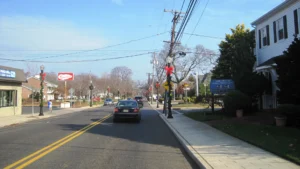
Keansburg covers about one square mile along Raritan Bay. The borough was incorporated in 1917 after growing from a fishing hamlet into a resort that steamboats served three times a day from New York City, and the amusement park on Beachway Avenue is older than the borough itself. That history left a compact town of small lots, short setbacks, and streets like Carr Avenue, Main Street, and Church Street where houses, garages, fences, and parked cars sit close together.
That layout changes how we think about tree storm proofing, and it is why fall storm proofing in Keansburg starts with what a tree can reach rather than how big it is. A mature oak or maple in Keansburg rarely has open ground to fall into. Whatever is under the canopy is usually a roof, a driveway, a sidewalk, utility lines, or a neighbor’s property. The tree does not have to be unusually large or unusually weak to matter. It only has to reach something.
After almost 30 years working throughout Monmouth County and the Bayshore, we have seen that the Keansburg trees that cause trouble in winter usually gave notice in the fall. A branch that hung lower after a summer storm, a lean that was not there in June, or a patch of soil that lifted on the bay side of a trunk are the kinds of changes a fall tree risk evaluation is designed to catch while there is still time to act.
Keansburg also carries a flood history that shapes its trees. The borough sits behind a beach berm, levees, a floodwall, a pump station, and a storm closure gate that the Army Corps of Engineers completed in 1968 and restored after Hurricane Sandy damaged them in 2012. Those structures protect streets and homes, but the soil behind them still takes on water during heavy coastal rain and high tides, especially along Waackaack Creek and the low ground near Creek Road. Trees growing in that soil anchor differently than trees on a dry upland lot, and that difference becomes important when a nor’easter arrives with wind and rain together. The borough’s flood information page covers the property side of the problem. This article covers the tree side.
Storm Proofing Starts With Structure, Not With Cutting
Storm proofing is not a product we apply or a single trim that makes a tree safe. It is a sequence: inspect, identify the defects that matter for this tree and this target, and then do the smallest amount of work that reduces the risk. On a compact lot, that sequence is what storm proofing in Keansburg actually means, because the margin for error is small.
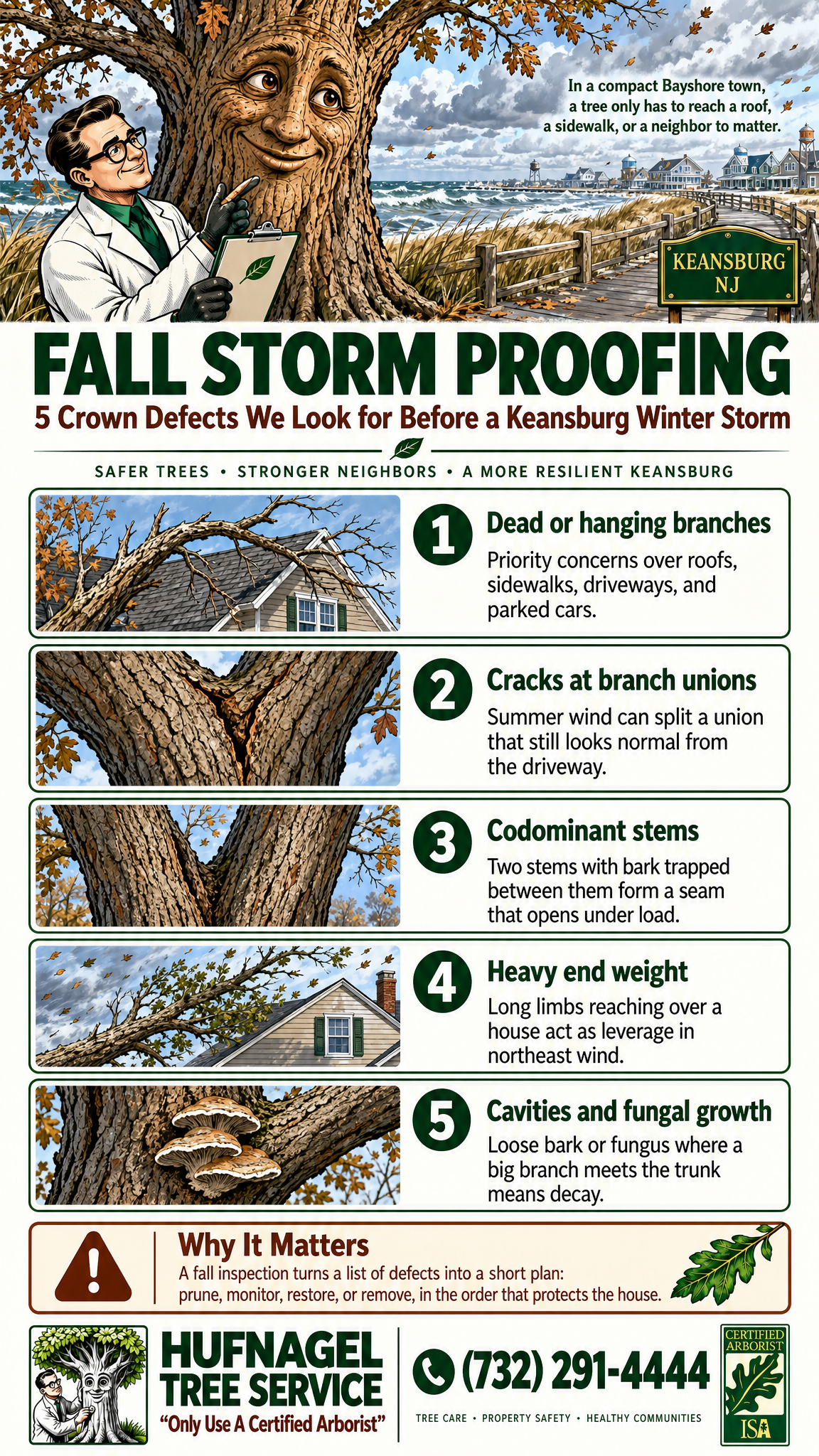
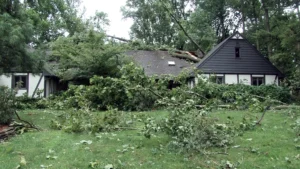
We begin in the crown. Deadwood over a roof or a sidewalk is the simplest problem to solve and the one most likely to come down in the first strong northeast wind. Branches that cracked or partially split in a summer storm often stay in the tree and look normal from the driveway until ice or wet snow adds weight.
Branch unions come next. Two stems of similar size growing from the same point can trap bark between them as they grow. That union never knits together properly, and the seam opens under load. Our article on codominant stems explains why these unions fail. Long, heavy limbs that extend well past the rest of the canopy carry end weight that acts as leverage in wind.
Then we look at what the crown can reach. The International Society of Arboriculture notes that one way to manage risk is to move the target when the tree cannot be moved. In Keansburg that sometimes means a car that should not be parked under a particular limb during a storm, or a shed that has crept under a canopy over the years. Much more often it means the roof is the target, the roof is not moving, and the tree has to be the thing that changes.
Mike Hufnagel puts it this way: “In a town like Keansburg, I am not asking whether the tree is big. I am asking what it would hit, and whether the part of the tree over that target is sound.” That question keeps the work honest. It directs pruning toward the defect over the house rather than toward a general reduction that wounds the tree and solves nothing.
Crown Defects We Look for Before a Keansburg Winter Storm
- Dead, broken, or hanging branches over roofs, sidewalks, driveways, and parked cars.
- Cracks or splits at branch unions left behind by summer wind.
- Codominant stems with bark trapped in the seam between them.
- Long limbs with heavy end weight extending over a house or a neighbor’s yard.
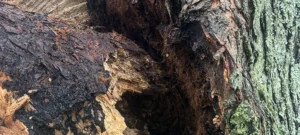
- Cavities, loose bark, or fungal growth where a large branch meets the trunk.
Finding these defects is the point of the inspection. Fixing them is usually straightforward: selective pruning that removes the deadwood, shortens the overextended limb, or reduces the weight on a weak union. What we do not do is thin a tree out “for wind” as a blanket prescription or top it to make it shorter. Both practices weaken the tree and produce the dense regrowth that fails in the next storm. Once the structure above ground is addressed, the next question in Keansburg is what the ground itself is doing.
Wet Bayshore Soil Changes How a Tree Holds On
A tree stands because its roots hold the soil and the soil holds the tree. In Keansburg, that second half of the equation is not always dependable. Much of the borough is low, the water table sits close to the surface in places, and coastal rain can leave the ground saturated for days. Saturated soil loses much of its grip on a root plate, and wind that a tree handled easily in a dry September can tip it in a wet November.
That is why we look at the root zone as carefully as the crown. A fresh lean, a crack in the soil on the side opposite the lean, or a slight mound of lifted turf at the base of the trunk tells us the root plate has moved. A tree that has moved once has less anchorage than it had before, even if it looks upright again after the ground dries. Our guide to weak tree roots covers what we check and why.
Salt is the other Bayshore factor. Trees close to the beach and along the lower streets near the amusement park take salt spray during storms, and in winter they take road salt from plowing and deicing. Salt dries out roots and burns foliage on evergreens, and a tree weakened by salt has fewer resources to close wounds or recover from pruning.
Construction and utility work add to it. Keansburg has seen steady rebuilding and infrastructure work since Sandy, and trenching for a sewer line, a new foundation, or a driveway can sever a meaningful share of a mature tree’s roots on one side. The tree does not show the loss right away. It shows it a few years later, in the fall, when a storm pushes from the direction the roots used to hold.
Rutgers Cooperative Extension notes that soils which are frequently waterlogged may not need mulch at all, and that repeated mulching in wet ground can push roots further into oxygen starved conditions. We see mulch piled against the trunk on many Keansburg lots, and in low ground it does the opposite of what the homeowner intended.
Root Zone Warning Signs After Coastal Rain or Flooding
- A new lean, or an old lean that has become more pronounced since summer.
- Lifted or cracked soil on the side of the trunk away from the lean.
- Mushrooms or shelf fungi growing at the base of the trunk or on surface roots.
- Roots cut or exposed by recent trenching, paving, or foundation work.
- Mulch piled against the trunk in ground that stays wet after rain.
None of these signs means a tree is coming down tomorrow. Each one means the tree’s margin has changed and deserves a closer look before the ground is saturated and the wind is up at the same time. Where the roots are sound, pruning to reduce the sail of the crown can lower the load the roots have to resist. Where the roots are not sound, no amount of pruning fixes the problem, and we say so. The last piece of the plan is deciding what to do with the findings.
A Plan for Storm Proofing in Keansburg Is Built From Findings
The inspection produces a short list, not a long invoice. For each tree we note the defect, the target, and the recommended action, and we put the items in order. The limb over the bedroom comes before the deadwood over the back fence. Work that reduces a real hazard comes before work that only tidies a canopy.
Most Keansburg trees we evaluate end up in one of four outcomes: monitoring, pruning, restoration, or removal. Monitoring is a legitimate result. A tree with a minor defect and no meaningful target can wait and be checked again in spring. Pruning handles most of the rest, and it is done selectively, with a reason behind every cut.
Restoration applies to trees that were damaged in a past storm or cut badly by someone else. Many Bayshore trees were cut hard in the years after Sandy, and the regrowth from those cuts is often weakly attached. Restoration pruning works that regrowth back toward sound structure over more than one season.
Removal is the outcome we reach when the structure or the roots no longer give us a dependable way to manage the risk over a house, a driveway, or a neighbor’s property. We do not recommend it because a tree is large or because winter is coming. We recommend it when the alternatives do not reduce the risk to a reasonable level. No tree service can honestly guarantee that a tree will never fail in severe weather. What we can do is make sure the predictable failures are handled before the weather tests them.
Timing matters on the Bayshore. The National Weather Service describes nor’easters as the coastal storms that bring strong northeast winds, heavy precipitation, and coastal flooding between September and April. Fall is the window to do the work: the summer record is visible, leaves are coming off and exposing the structure, and the ground has not yet frozen. Rutgers also cautions homeowners to be wary of crews that show up unannounced after a damaging storm, which is one more reason to have a plan in place before the storm rather than after it.
What a Keansburg Homeowner Should Have Ready Before Winter
- A fall evaluation of any mature tree within reach of the house, garage, or driveway.
- Deadwood and cracked branches removed from above roofs, walks, and parking areas.
- Overextended limbs shortened to reduce end weight over targets.
- A record, with photographs, of leans, cracks, or soil movement to compare after each storm.
- A decision on any tree whose roots or trunk can no longer be managed safely.
A plan built this way is specific to the property. It is not a list of every service we offer. It is the handful of actions that change the outcome for this house when the next coastal storm arrives, in the order that matters. When the work is done, the homeowner knows what was found, what was fixed, what is being watched, and why.
Schedule Fall Storm Proofing in Keansburg Before the First Nor'easter
If you have mature trees near your Keansburg home, driveway, sidewalk, garage, or along the low ground near Waackaack Creek, schedule an evaluation before the fall storm season settles in. We provide tree storm proofing, tree risk evaluations, pruning, restoration, and removal when a tree cannot be managed safely.
Hufnagel Tree Service is led by a certified arborist with almost 30 years of local experience and more than 280 five star Google Maps reviews. We inspect first, explain what we found in plain terms, and recommend only the work that changes the outcome for your trees and your property.
Call or text (732) 291-4444 to schedule fall storm proofing in Keansburg before the next coastal storm arrives.
Schedule Service Now!
From precision pruning and safe removals to health assessments and preventative care, Hufnagel Tree Service delivers expert solutions backed by decades of experience. We offer certified insight, fair pricing, and a commitment to doing what’s best for your landscape.
Learn More About Our Services
Related Articles
Storm Damaged Trees in Aberdeen: We Can Help