Contents
In Loch Arbour, Tree Risk Is About What a Tree Can Reach
Loch Arbour is small, coastal, and closely built. The village sits along the Atlantic in eastern Monmouth County, with Loch Arbour Beach at Ocean Place and Euclid Avenue and Deal Lake immediately tied to the local landscape. On a compact property, a mature tree can influence several spaces at once: the home, a neighbor’s yard, a sidewalk, a driveway, or the street.
That is why winter tree risk inspections are important here. Risk is not determined by size alone. We look at the condition of the tree, the likelihood that a part could fail, and what would be affected if it did. A defect that is low concern over an open field can be much more important over a roof or a frequently used walkway. Our tree risk evaluation service is built around that relationship between the tree and its targets.
After almost 30 years working throughout Monmouth County, we have seen how fall and winter expose problems that were easy to overlook in summer. Leaves drop, branch architecture becomes visible, old cracks are easier to trace, and winter wind begins testing weak wood. A well timed inspection gives Loch Arbour property owners a chance to understand those problems before a Nor’easter, ice event, or wet snow creates an emergency.
Winter Tree Risk Inspections Find Defects Before Weather Applies the Load
A tree inspection starts with observation, not assumptions. We look at species, size, age class, vigor, crown condition, trunk structure, visible roots, soil conditions, and previous pruning. We also ask what has changed. Recent construction, a neighboring tree removal, a flooded root zone, storm damage, or a new lean can all alter how we interpret the tree. The inspection is a snapshot of the tree in its current setting.
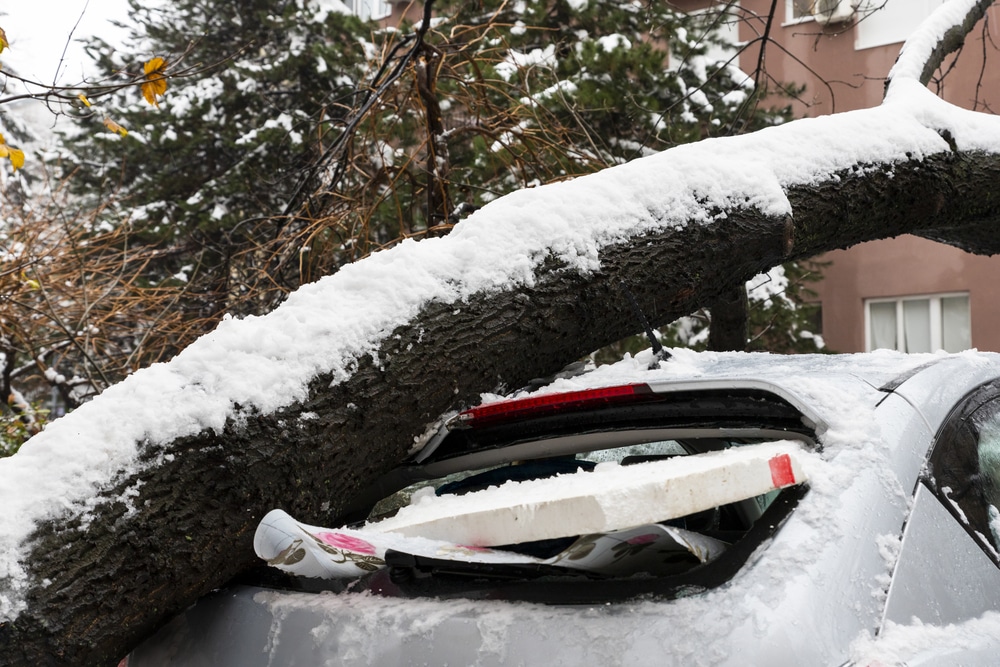
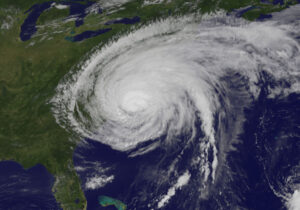
Winter weather matters because wind, snow, and ice add mechanical load. The National Weather Service explains that Nor’easters are most frequent and violent from September through April and can bring strong wind, heavy precipitation, and coastal flooding. NWS information about Nor’easters provides useful context for why a coastal community should identify structural defects before those events are underway.
We look carefully at branches that are dead, cracked, hanging, or poorly attached. Large codominant stems can develop included bark and narrow unions that become more vulnerable as the stems grow. Our guide to codominant stems explains why a multistem tree can remain standing for years while pressure builds inside a weak union. Winter loading can expose that weakness quickly.
Trunk defects get the same attention. Cavities, seams, old lightning scars, fungal growth, open wounds, and decay can all affect how much sound wood remains. The outside of a trunk does not always reveal the condition inside, which is why our article on hidden tree rot emphasizes professional inspection when symptoms or history suggest a deeper problem. We do not label every cavity dangerous, but we do not ignore one under a major target.
Mike Hufnagel describes the purpose of the inspection this way: “We are trying to find the defect before the weather finds it for us.” That means separating normal tree features from defects that change risk. Some trees need only monitoring. Others need targeted pruning, restoration, support, or removal. The next advantage of winter inspection is visibility, because a bare crown reveals structure that summer foliage can hide.
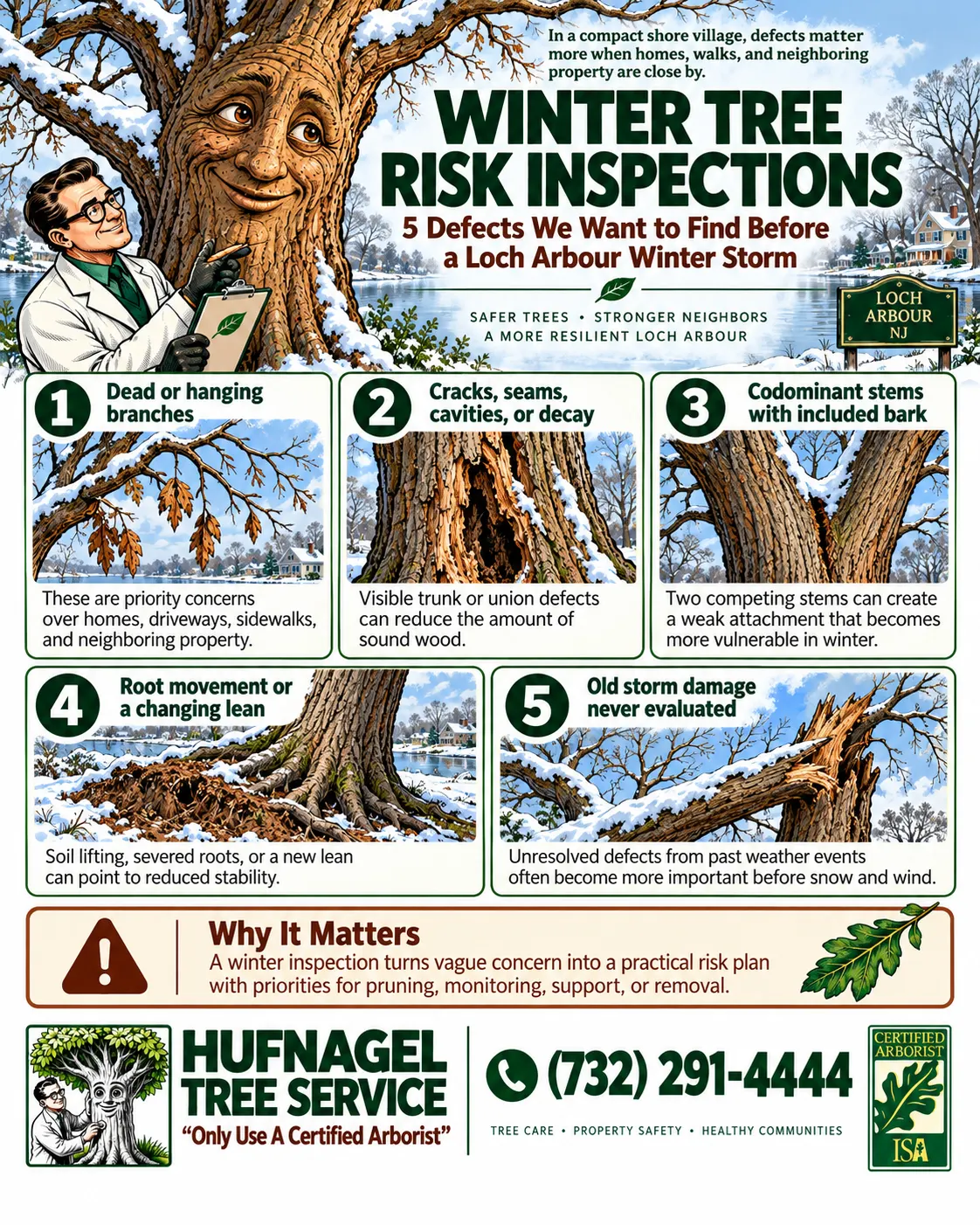
Defects We Want to Find Before a Loch Arbour Winter Storm
- Dead or hanging branches over homes, sidewalks, drives, and neighboring property.
- Cracks, seams, cavities, or decay in trunks and major branch unions.
- Codominant stems with narrow attachments or included bark.
- Root zone movement, severed roots, or a lean that has recently changed.
- Old storm damage that was never professionally evaluated after the event.
A winter risk inspection is valuable because it gives defects context before the tree is under maximum seasonal load. We are not looking for perfection, since mature trees naturally contain old wounds and minor irregularities. We are looking for defects that meaningfully change the chance or consequence of failure. In a compact village like Loch Arbour, the target side of that equation deserves close attention because homes and occupied spaces are rarely far away. With the major defects identified, the leafless season gives us another advantage: a clearer view of the crown’s actual architecture.

Bare Canopies Make Structural Problems Easier to Read
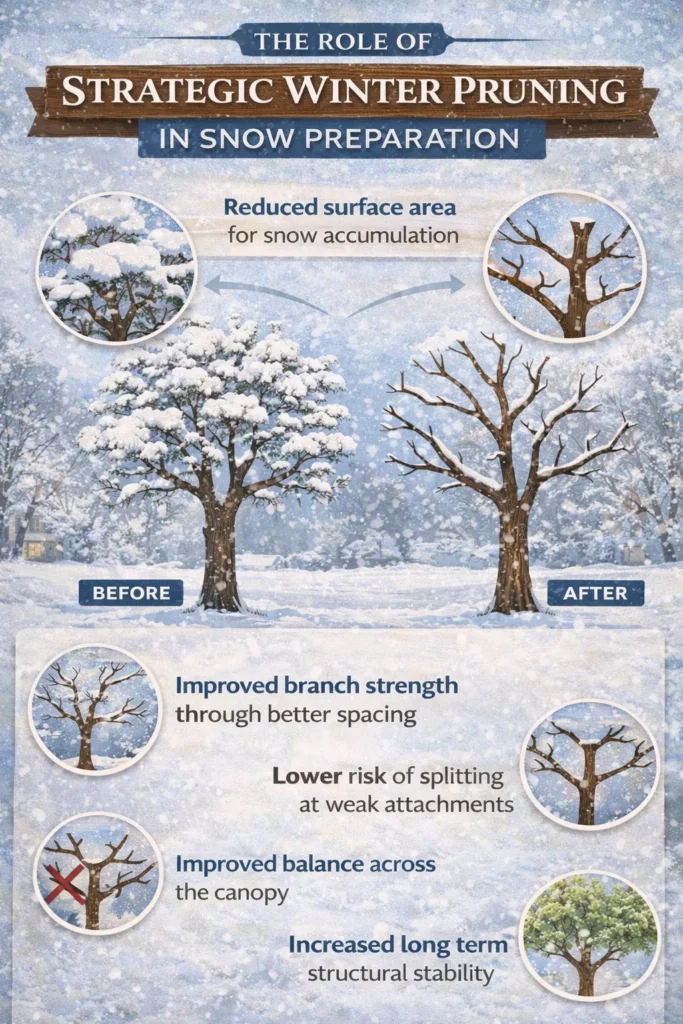
Deciduous trees can be difficult to read in full summer foliage. Leaves obscure branch unions, dead interior wood, crossing limbs, and previous pruning cuts. Once the canopy opens, we can trace major branches from the trunk toward the tips and see where weight is concentrated. Rutgers notes that winter can be a useful pruning season for many landscape trees because leafless structure is easier to see. Rutgers winter pruning guidance also highlights broken, diseased, dangling, crossing, and tightly joined branches as issues to inspect.
Visibility is especially helpful when evaluating a mature tree near a house. We can see whether a large limb changes direction abruptly, whether two limbs are rubbing, or whether a former pruning cut has developed decay. We can also compare the two sides of the crown. An imbalanced crown may reflect storm loss, past construction, competition, or pruning history. The imbalance itself is not a diagnosis, but it tells us where to look more closely.
Winter also makes deadwood easier to identify in some trees. A branch without buds, fine twigs, or normal bark texture may already be dead, while a living branch nearby has a healthy bud pattern. Deadwood over a quiet corner of the yard may be a maintenance issue. The same deadwood over an entrance or sidewalk is a risk management priority. That is why we map defects to targets instead of simply counting them.
Pruning decisions benefit from that clearer view. We can use tree trimming and pruning to remove dangerous deadwood or shorten a defective branch while preserving healthy structure. A good winter inspection can also prevent unnecessary work. If a mature tree has sound branch unions, good attachment, no meaningful decay, and an appropriate crown, the recommendation may be to leave it alone and continue routine monitoring.
The leafless season is not a universal pruning command. Species, flowering cycle, disease concerns, and the purpose of the cut still matter. We inspect first and schedule work appropriately. That distinction separates professional tree care from the idea that every branch should be cut just because it is winter. The inspection tells us what is necessary, while arboricultural knowledge tells us when and how to do it.
What a Leafless Winter Crown Can Reveal
- Crossing branches and rubbing points hidden by summer leaves.
- Tight unions, competing leaders, and branch attachments with included bark.
- Dead interior branches that hang over active areas.
- Past pruning wounds, broken stubs, and areas of uneven regrowth.
- Crown imbalance that may be connected to earlier storm damage or site changes.
Winter visibility turns the crown into a readable structure instead of a wall of foliage. That makes inspection more precise and can make pruning recommendations more conservative, because we can see exactly which branches are creating the concern. It also helps us distinguish a tree that needs action from one that simply looks large. Size alone is not risk. The next step is to combine tree condition with the targets below and the coastal weather that Loch Arbour experiences.
Tree Risk Is Condition + Target + Winter Exposure
A tree can be defective without creating high risk if there is nothing meaningful for it to hit. The opposite is also true: a modest defect can matter more when it hangs directly over a bedroom, front walk, driveway, or neighbor’s property. ISA’s tree risk management guidance explains that risk reduction can include pruning, moving targets, cabling and bracing, routine care, or removal. The correct option depends on both the defect and the consequences around it.
Loch Arbour’s compact layout makes target assessment especially important. The village is bordered by other established shore communities and tied closely to Deal Lake, whose history includes Loch Arbour among the communities around the lake. Deal Lake Commission history provides useful local context. On small properties, a mature canopy can cross lot lines, extend over public space, or reach structures from more than one direction.
Root conditions can also change the risk picture. A tree near pavement, walls, utilities, or a narrow planting strip may have a restricted root area. Flooding, excavation, compaction, or root cutting can reduce support. We inspect the root flare and surrounding soil for movement, exposed roots, decay, and construction impacts. Our guide to weak tree roots explains why root problems deserve the same attention as defects in the crown.
Once a defect is identified, we choose the response that fits. A broken branch may need removal. A long weak limb may need selective reduction. A valuable tree with a specific weak union may be evaluated for support. A tree with extensive decay, major root failure, and a high value target may need removal. We do not choose the most aggressive option by default. We choose the option that brings the risk to a reasonable level while preserving the tree when that is practical.
The value of inspection is the plan that follows. Homeowners should know which tree needs immediate work, which tree can wait for dormant season pruning, and which tree simply needs monitoring after storms. Rutgers recommends using qualified tree care professionals for dangerous work and notes that licensed tree experts in New Jersey provide tree assessment and risk management. Rutgers guidance on hiring tree care professionals is a helpful reference when checking credentials.
How We Turn a Winter Inspection Into a Practical Risk Plan
- Identify the defect and determine whether it affects the tree’s structure or health.
- Map the defect to real targets such as homes, roads, vehicles, sidewalks, and neighboring property.
- Consider winter wind, snow, ice, and wet soil as additional loading factors.
- Use pruning, support, target management, restoration, monitoring, or removal according to the finding.
- Reinspect important mature trees after major storms or significant site changes.
Tree risk management is not a prediction that a tree will fail on a particular day. It is a way to identify conditions that make failure more concerning and then reduce those conditions when possible. In Loch Arbour, close targets and coastal exposure make that process particularly useful before winter. A professional inspection gives property owners a prioritized plan instead of a vague warning that a tree “looks dangerous.” It also gives healthy mature trees a better chance of being retained because decisions are based on specific defects rather than size alone. That is the kind of clear information we want every client to have before winter weather arrives.
Schedule a Winter Tree Risk Inspection in Loch Arbour
If you have mature trees near your Loch Arbour home, driveway, sidewalk, beach route, lake side landscape, or neighboring property, schedule a risk inspection before winter weather adds load. We can provide tree risk evaluation, tree pruning, storm proofing, restoration, health management, and removal when a tree cannot be retained safely.
Hufnagel Tree Service is led by a certified arborist with almost 30 years of local experience and more than 280 five star Google Maps reviews. Our recommendations are built around the actual tree, actual targets, and actual conditions on the property, not a one size checklist.
Call or text (732) 291-4444 to schedule a winter tree risk inspection in Loch Arbour before the next coastal storm arrives.
Schedule Service Now!
From precision pruning and safe removals to health assessments and preventative care, Hufnagel Tree Service delivers expert solutions backed by decades of experience. We offer certified insight, fair pricing, and a commitment to doing what’s best for your landscape.
Learn More About Our Services
Related Articles
Matawan Fall Tree Care: Prepare Trees Before Winter
Old Bridge Fall Tree Inspection: Catch Hidden Hazards Early
Tree Health Inspections in Middletown: Hidden Rot
Aberdeen Fall Tree Inspection: Find Problems Before Winter
Tree of Heaven Removal Near Manasquan River in NJ