Contents
Manalapan Trees Have Been Through Two Months of Storm Stress
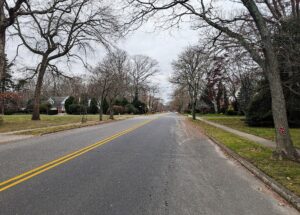
Manalapan is a town where mature trees and active residential properties overlap everywhere. Large oaks, maples, tulip poplars, pines, cherries, and ornamentals line properties off Route 522, Gordons Corner Road, Taylors Mills Road, Union Hill Road, and the neighborhoods surrounding the Manalapan Recreation Center. The township also maintains large open spaces such as Thompson Grove and the recreation complex, which helps illustrate how quickly a tree can move from a protected residential setting to an exposed edge where wind loads the canopy differently.
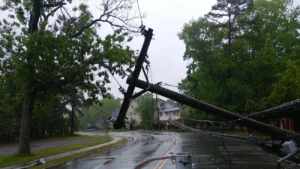
The summer of 2026 gave Manalapan more than one reason to inspect mature trees before fall. On July 18, the National Weather Service issued a severe thunderstorm warning for southeastern Monmouth County with possible 60 mph wind gusts and specifically listed Manalapan among the affected locations. On August 7, another NWS severe weather statement described a line of severe thunderstorms extending through Manalapan with radar indicated 60 mph gusts and possible damage to trees and power lines.
Late summer is when those changes often become easier to recognize. A limb injured in July may start to discolor in August. A crack between two leaders may widen after repeated wind loading. Saturated soil may allow subtle root plate movement that leaves a raised ridge or fresh soil crack near the base. A branch that once sat high over a driveway may now hang lower. That is why we recommend an end of summer tree inspection when a mature tree looks different, has a history of storm damage, or stands over a high consequence area.
Manalapan properties also tend to give large trees room to become truly large. The township’s parks and recreation inventory includes extensive open acreage and wooded areas, while private neighborhoods often combine broad lawns, long driveways, pools, sheds, fences, additions, and side yards with mature shade trees. A sixty or eighty foot tree can still reach a roof, parking area, playset, pool deck, neighboring property, or service line.
Michael Hufnagel says, “After a summer like this, I am less interested in whether the tree stayed standing and more interested in what changed. A tree can survive two storms and still come out of them with less margin than it had before.” With more than 25 years of hands on experience, our Manalapan tree service work focuses on finding those changes while there is still time to choose between remediation, monitoring, and removal.
What a Certified Tree Inspection Finds That a Yard Walk Can Miss
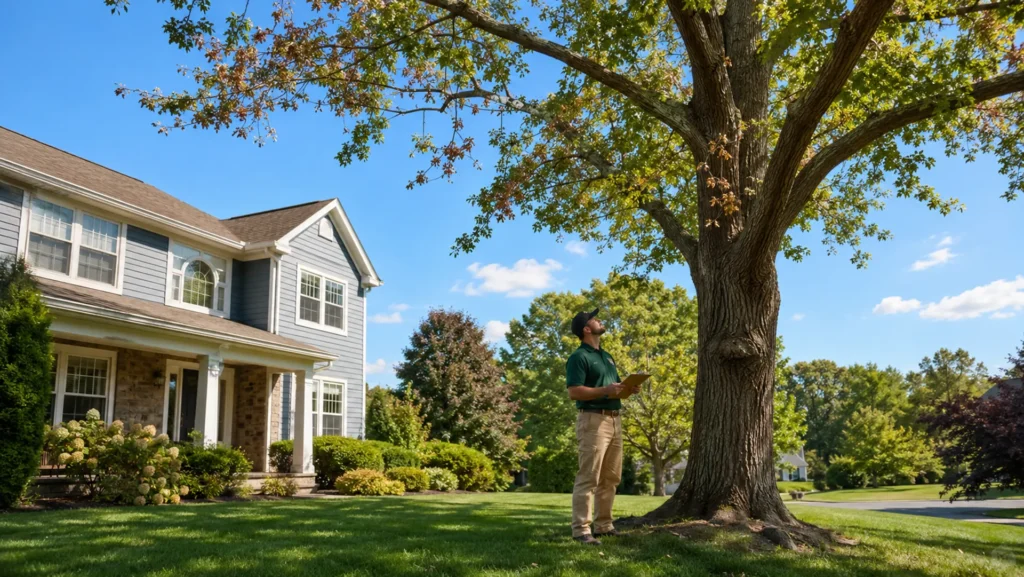
A professional inspection is not a quick look at the leaves. We start with the site and root zone, then examine the trunk, major unions, branch architecture, deadwood, canopy balance, old wounds, recent storm damage, and what is located beneath the tree. Our tree risk evaluation service is built around the practical relationship between defect and target.
Roots are one of the first places summer rain can expose an old weakness. A tree may have roots compromised years earlier by driveway expansion, trenching, grading, construction, compaction, drainage changes, or confinement. When wet soil reduces resistance and a full canopy catches strong wind, the root plate can begin to rotate. Our article on weak tree roots explains why warning signs such as fresh soil cracking, lifting, mounding, exposed roots, basal decay, or a new lean deserve prompt evaluation even when the crown remains green.
Internal rot is another reason homeowners should not judge safety by foliage alone. Mature hardwoods can continue producing leaves around cavities, old pruning wounds, decayed branch unions, or butt rot at the base. The hidden tree rot guide explains how mushrooms, hollow sections, loose bark, open seams, soft wood, and old tear outs can point toward structural loss inside the tree.
Multi stem trees deserve close attention after repeated summer wind. Two leaders of similar size can develop included bark between them, which prevents a strong wood connection from forming. Over time the union may crack, collect moisture, or decay. If one stem carries heavy end weight toward a home or driveway, the consequences increase. The U.S. Forest Service hazard tree guidance identifies weak forks, cracks, decay, and deadwood as conditions that should be evaluated in relation to nearby targets.
We also look for less dramatic health changes. One sided discoloration, premature fall color, thinning leaves, dead tips, sudden sprouting along the trunk, bark separation, or a crown that appears uneven after a storm can point toward root stress, lightning injury, branch damage, or disease. When the problem is high in the canopy, our aerial inspection service can provide a closer view of upper branch attachments, old wounds, hangers, and cracks that are difficult to judge accurately from the ground.
Tree Conditions We Prioritize on Manalapan Properties
- Fresh lean, root plate movement, cracked soil, exposed roots, or evidence of recent anchorage change
- Large deadwood, broken hangers, storm torn limbs, or branches that have shifted lower
- Codominant stems, included bark, open seams, trunk cracks, and splitting branch unions
- Cavities, mushrooms, decay at the root flare, loose bark, hollow areas, and old wounds
- Unusual discoloration, thinning foliage, lightning symptoms, or rapid decline on one side of the crown
The inspection is the decision point. Finding a defect gives us information, but the next step depends on severity, location, the tree’s remaining strength, and what could be struck if failure occurs.
Tree Risk Mitigation Gives Manalapan Homeowners More Options
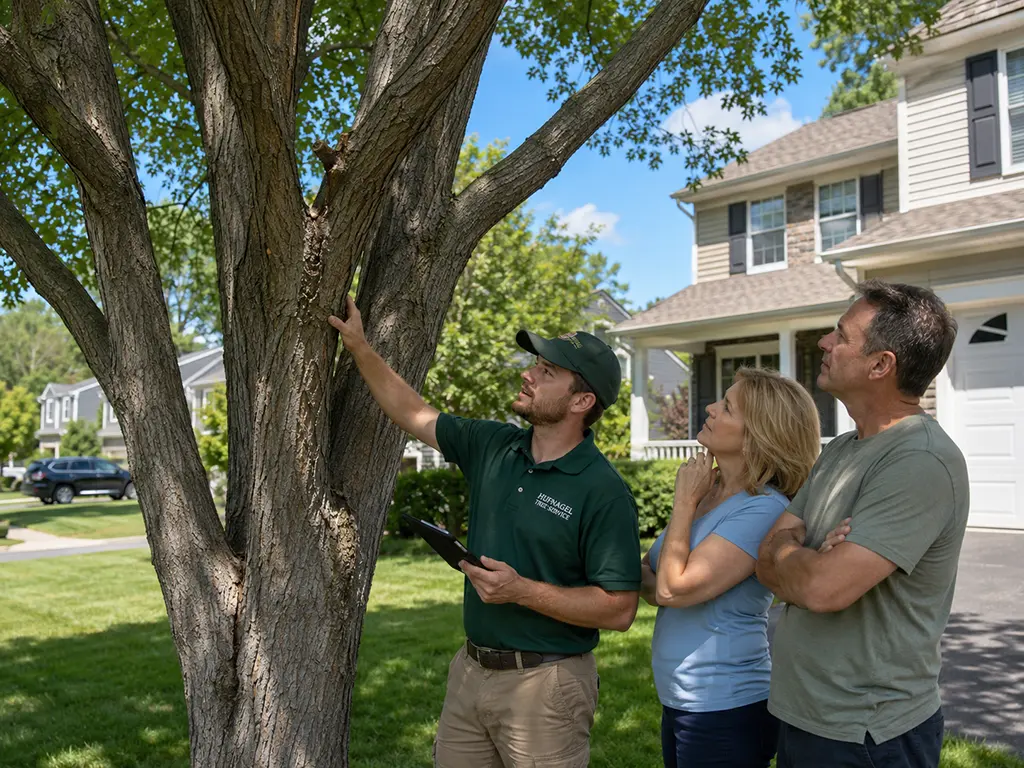
Many concerning trees do not need immediate removal. Targeted pruning can remove deadwood, shorten an overextended limb, reduce weight at a weak attachment, or restore a storm damaged crown while preserving the healthy trunk and roots. Our professional tree pruning article explains why proper reduction and structural pruning are different from topping or indiscriminate thinning. Every cut should have a structural or health reason behind it.
That matters on Manalapan’s larger lots because the temptation is often to “thin the whole tree out” after a storm. Excessive interior thinning can create long, exposed branches with foliage concentrated at the ends. It can also trigger weak sprouts and reduce the tree’s energy reserves. A better approach is to identify the branch or defect that is actually creating the risk and make the smallest effective change.
Some trees benefit from staged restoration. If an oak has several years of neglected deadwood and one damaged leader, we may address the highest priority conditions first and retain enough live canopy for recovery. If a maple has stable old decay but no active movement, documented monitoring may be appropriate. Our storm season risk assessment guide emphasizes that risk reduction can include pruning, restoration, site changes, and follow up inspection, not just removal.
Risk mitigation can also involve the target area. A questionable branch over a parking spot, seating area, play zone, or equipment storage area may justify temporarily moving that use until corrective work is completed. Tree risk is partly about the likelihood of failure and partly about the consequence of impact. Reducing occupancy beneath a known defect can lower exposure while the permanent work is being scheduled.
Mike Hufnagel explains it this way: “A good inspection should give the homeowner choices whenever the tree still gives us choices. We preserve what is sound, correct what we reasonably can, and remove only when the structure or roots no longer give us a dependable way to manage the risk.” That preservation first judgment is especially valuable with mature trees that contribute significant shade, privacy, and property character.
Ways We Can Reduce Risk Without Losing a Good Tree
- Remove dead or broken branches that can fall into occupied areas
- Reduce excessive end weight on long limbs over roofs, driveways, pools, or patios
- Restore storm damaged crowns in stages while preserving healthy foliage
- Protect root zones and monitor trees after construction, flooding, or drainage changes
- Reinspect stable defects after major storms to document whether they are changing
If the defect cannot be reduced to a practical level, the conversation moves from mitigation to controlled removal, and Manalapan has a specific permit process homeowners need to understand.
Manalapan Tree Removal Permits Start With the Condition of the Tree
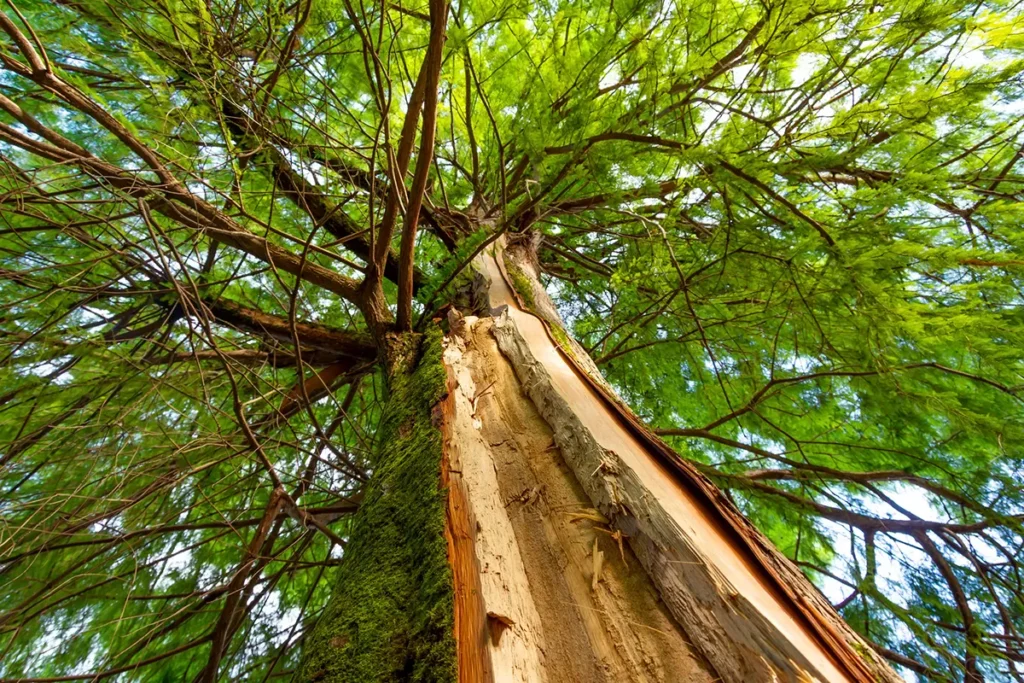
A severely compromised tree may need to come down. Active root plate movement, extensive structural root decay, a new dangerous lean, catastrophic trunk splitting, severe lightning damage, major crown death, or a failing union over a high value target can all move the recommendation toward removal. Our tree removal service is planned around access, rigging, nearby structures, fencing, pools, utilities, lawn protection, debris removal, and thorough cleanup.
Manalapan updated its tree rules in 2025. Under the township’s current Chapter 222 Trees and Shrubs ordinance, a person seeking to destroy, cut, or remove a tree over four inches DBH generally must apply for a tree removal permit unless an exemption applies. The ordinance requires the applicant to identify the trees by location, species, and size, and the township may require a site plan or survey. It also calls for trees proposed for removal to be physically marked before submission.
The township’s own Shade Tree office instructions tell applicants to submit the permit application with a property survey and identify the trees both on the survey and in the field. The current ordinance also provides for an on site field check by the Township Forester before permit issuance. Importantly for risk work, the removal criteria include trees that are dead, diseased, injured, in danger of falling, too close to structures, interfering with utilities, or creating unsafe visibility.
This is where permit facilitation becomes useful. We can help a homeowner understand what condition the tree is actually in, identify the defects that support a removal recommendation, and organize the tree specific information that may be needed for the application. Our permit guide for tree removal explains the broader reason to verify local rules before scheduling work. We do not replace the township’s decision, but we can keep the homeowner from trying to describe technical defects with no arborist context.
Homeowners should also verify professional credentials. The New Jersey Board of Tree Experts regulates professional tree care in the state, and Rutgers NJAES recommends qualified professionals for large pruning and removal because of the hazards involved. Hufnagel combines certified arborist oversight, competitive pricing, and hands on experience throughout Manalapan, Marlboro, Freehold, Colts Neck, Millstone, Englishtown, and surrounding areas.
What to Have Ready When a Manalapan Tree May Need Removal
- A clear description of the defect, such as decay, root instability, cracking, storm damage, or decline
- The tree location on the property and the structures, roads, utilities, or occupied areas nearby
- A property survey when required by the township permit process
- Visible field marking of the trees proposed for removal before municipal review
- A professional removal plan from a registered tree care company if the permit is approved
Starting with a certified inspection makes the rest of the process easier because the homeowner knows whether the goal is preservation, mitigation, or removal before permit paperwork and scheduling begin.
Manalapan Homeowners: Schedule a Tree Inspection Before Fall Storms Roll In!
If a tree on your Manalapan property changed after the July or August storms, do not wait for another warning to decide whether it matters. A new lean, dead branch, widening crack, unusual discoloration, root movement, cavity, mushroom, lightning scar, or split multi stem union is enough reason to schedule a professional inspection and get an answer while conditions are calm.
Hufnagel Tree Service brings more than 25 years of local tree care experience, hundreds of five star Google reviews, competitive prices, certified arborist judgment, and crews that protect the property and clean up thoroughly. We work throughout Manalapan and nearby Marlboro, Freehold, Colts Neck, Millstone, Englishtown, and western Monmouth County, and we can carry a project from inspection through pruning, restoration, permit guidance, or safe removal.
Call (732) 291-4444 to schedule a Manalapan tree inspection and find out what this summer’s storms may have changed before fall weather tests the tree again.
Schedule Service Now!
From precision pruning and safe removals to health assessments and preventative care, Hufnagel Tree Service delivers expert solutions backed by decades of experience. We offer certified insight, fair pricing, and a commitment to doing what’s best for your landscape.
Learn More About Our Services


Related Articles
Schedule Your End-of-Summer Tree Inspection
Tree Health Inspection Services Near Fair Haven, NJ

Winter Storm Proofing Trees in Sea Bright NJ: Get Prepared