Fall is the right time to identify weak limbs, storm damage, root stress, and structural problems before winter weather reaches Matawan. Learn how certified arborist care can prepare mature trees around local homes, lakes, streets, and utility corridors for the colder months ahead.
Share This Article
Contents
Summer Wind Does Not Affect Every Aberdeen Neighborhood the Same Way
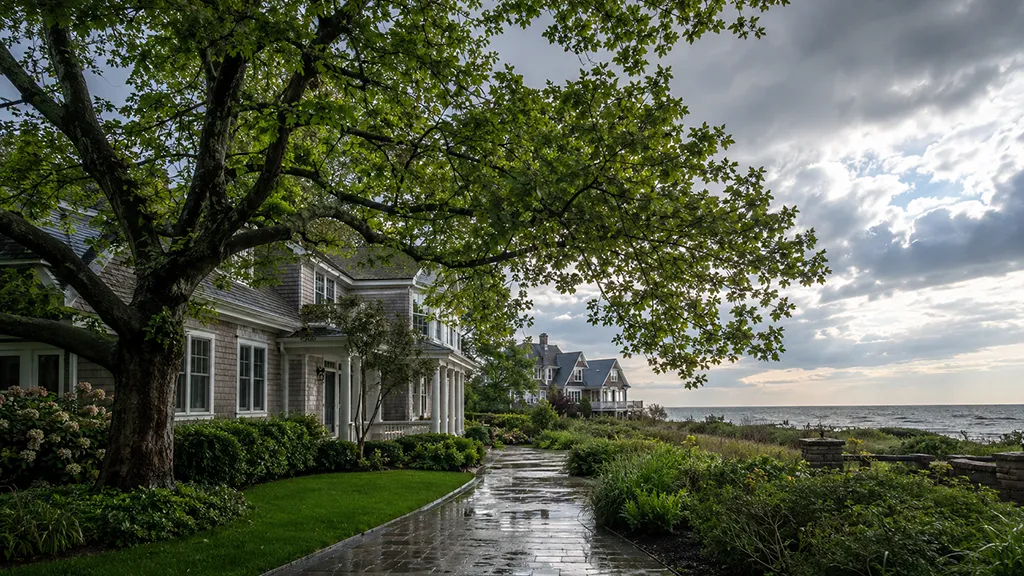
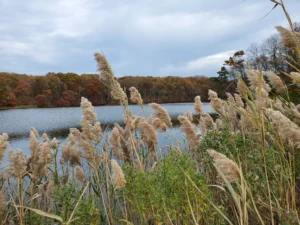
Aberdeen stretches from bay exposed Cliffwood Beach to more sheltered residential sections such as Strathmore, Freneau, Oakshades, River Gardens, and Woodfield. The township’s official community overview reflects that mix, and it matters for trees. A tree near the Raritan Bay can grow for years under persistent wind and salt influence, while a mature oak deeper inland may be protected until a thunderstorm sends a sudden gust through a dense suburban canopy.
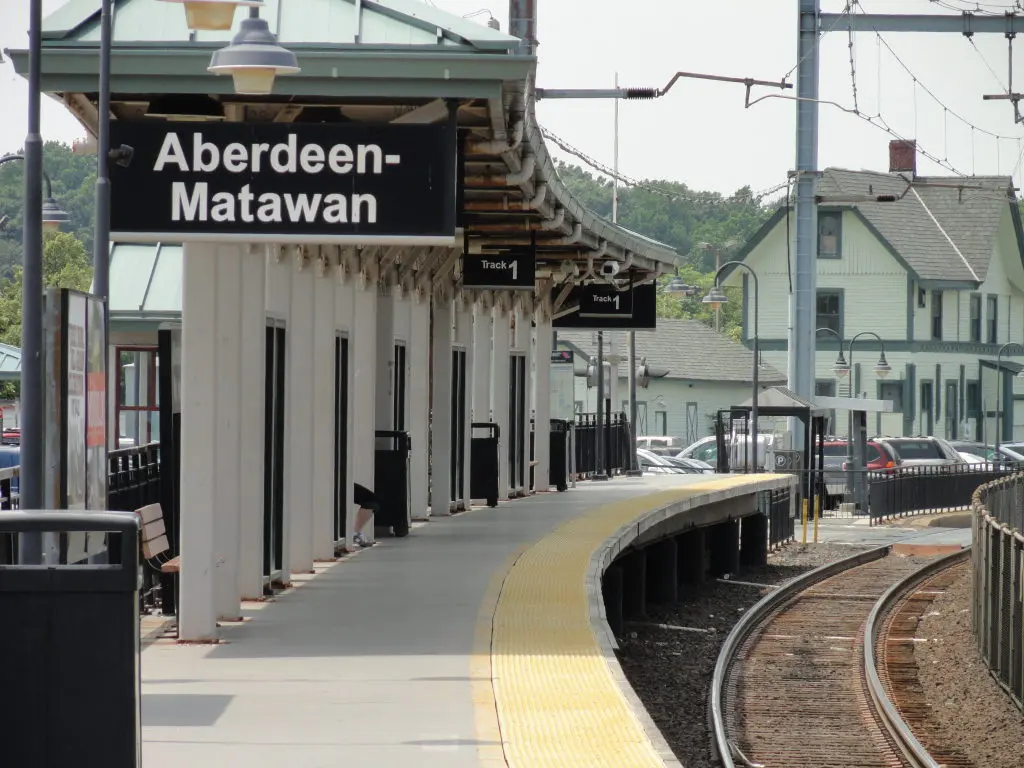
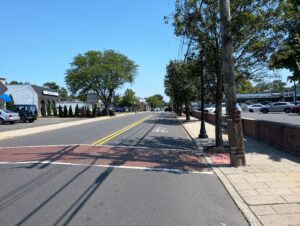
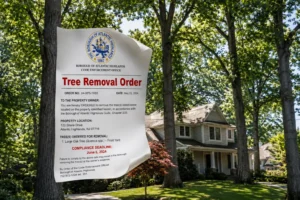
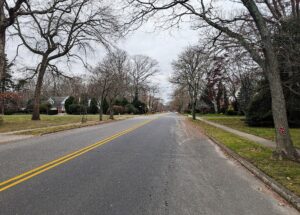
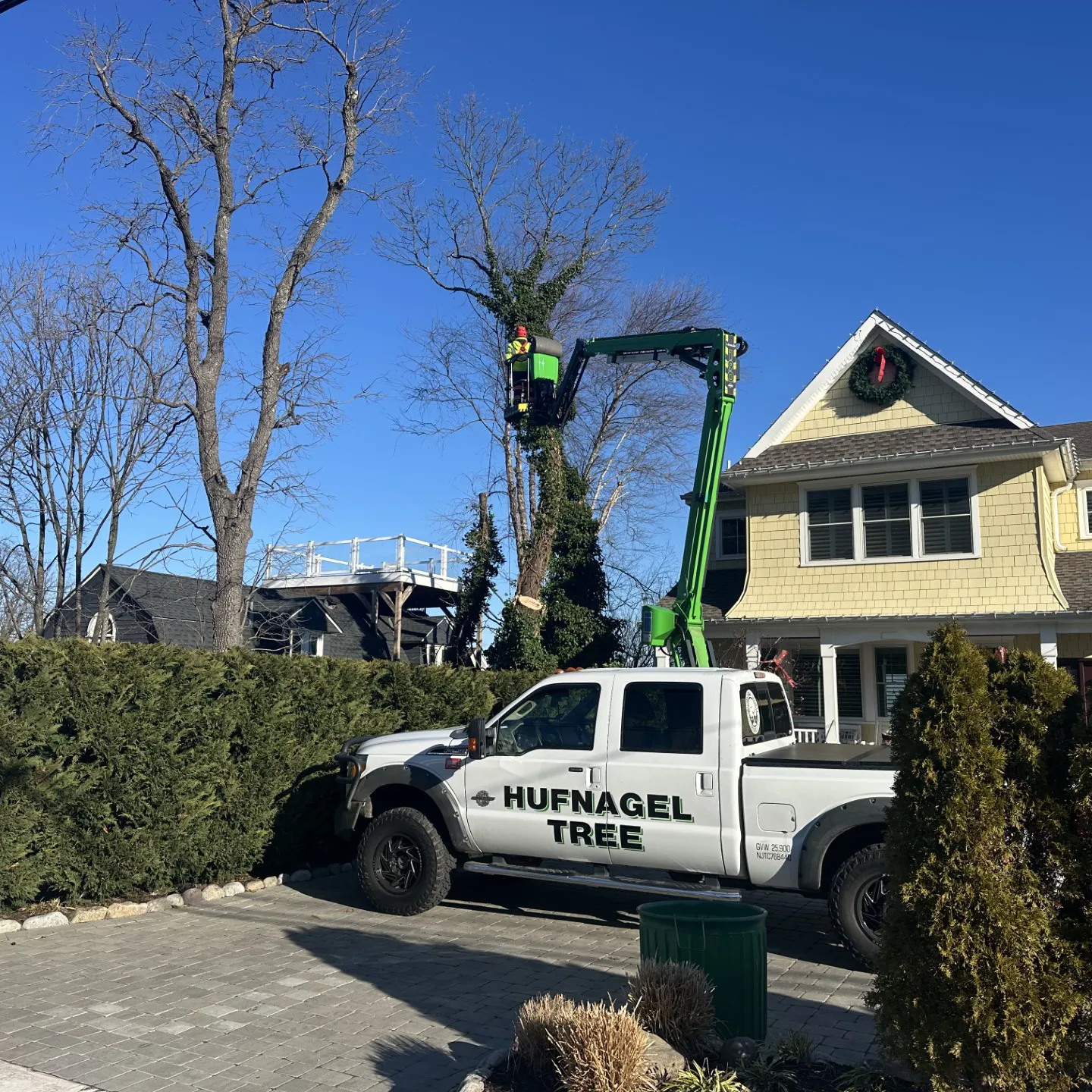
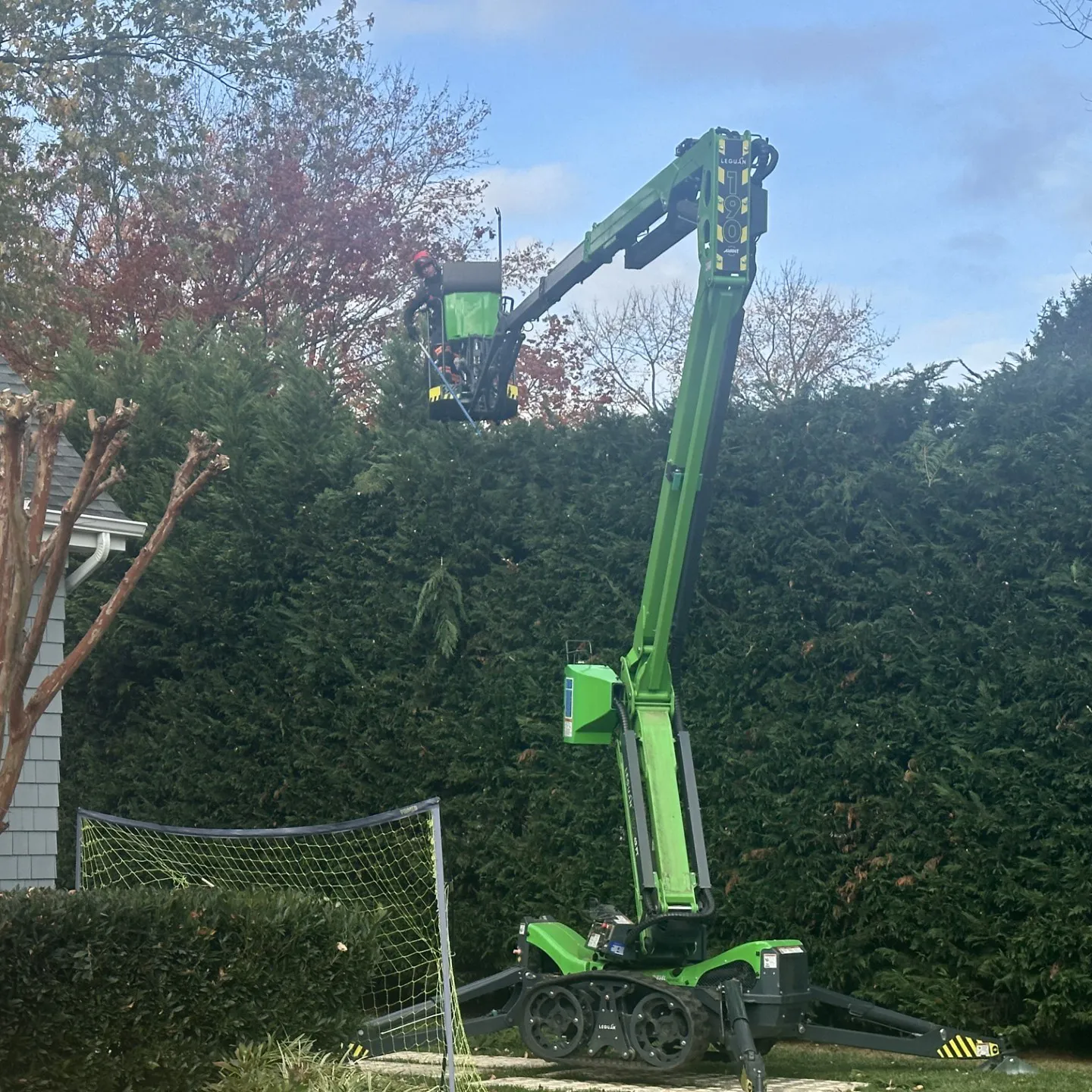
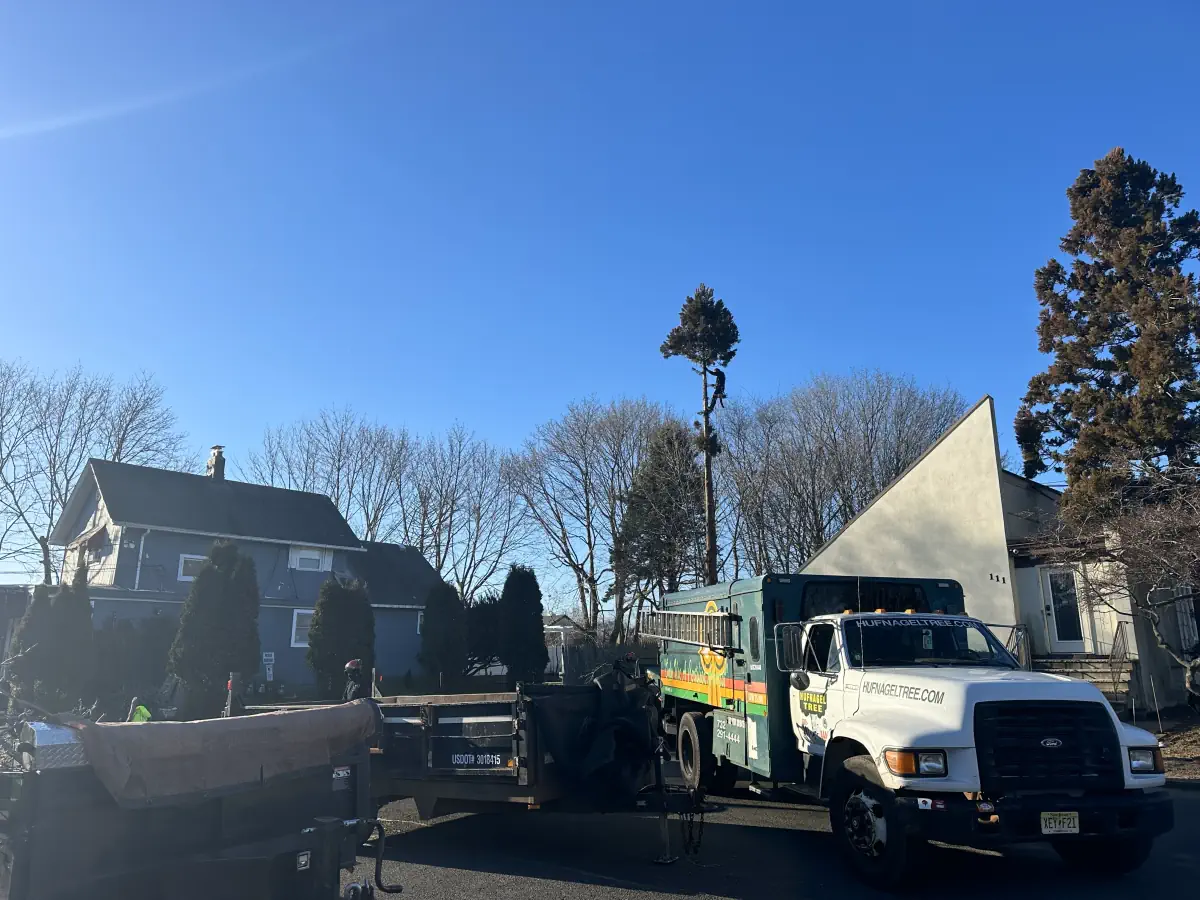
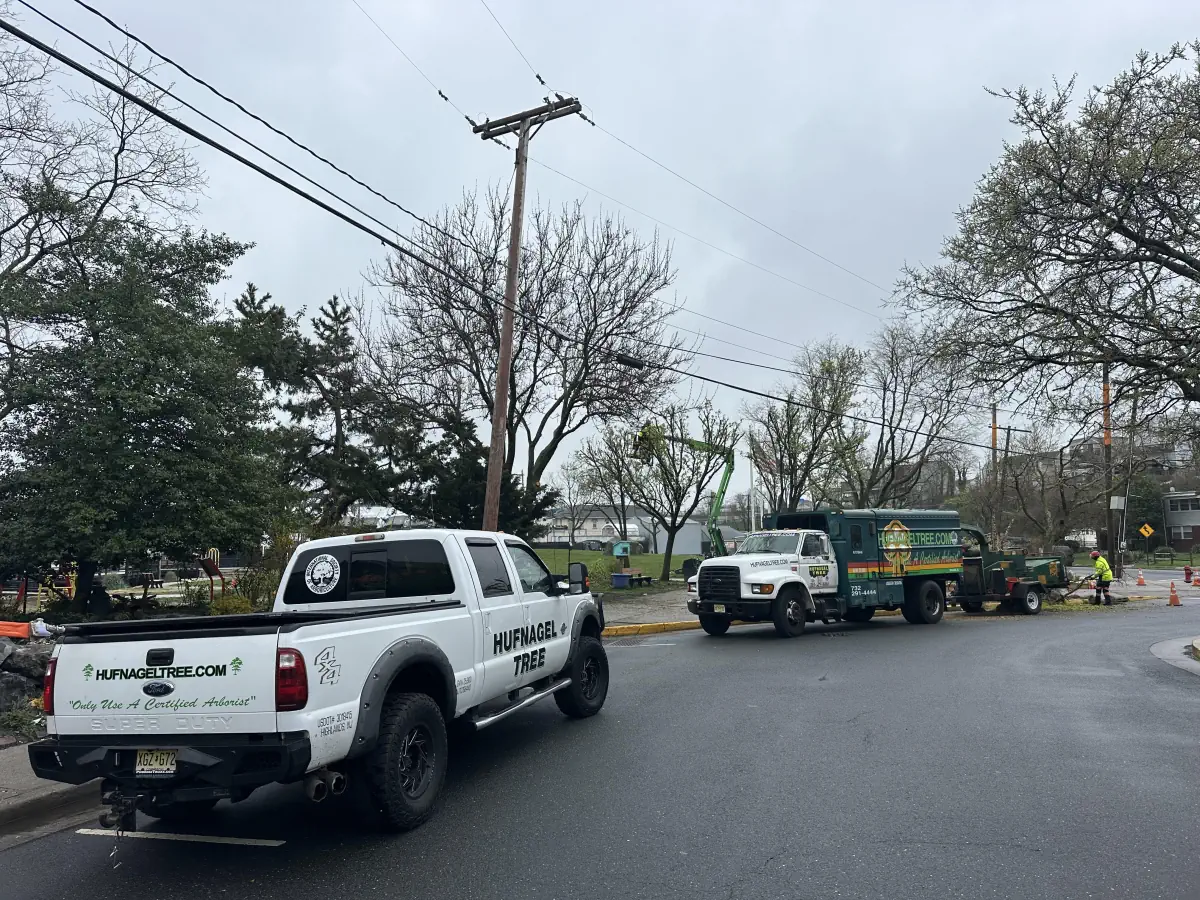
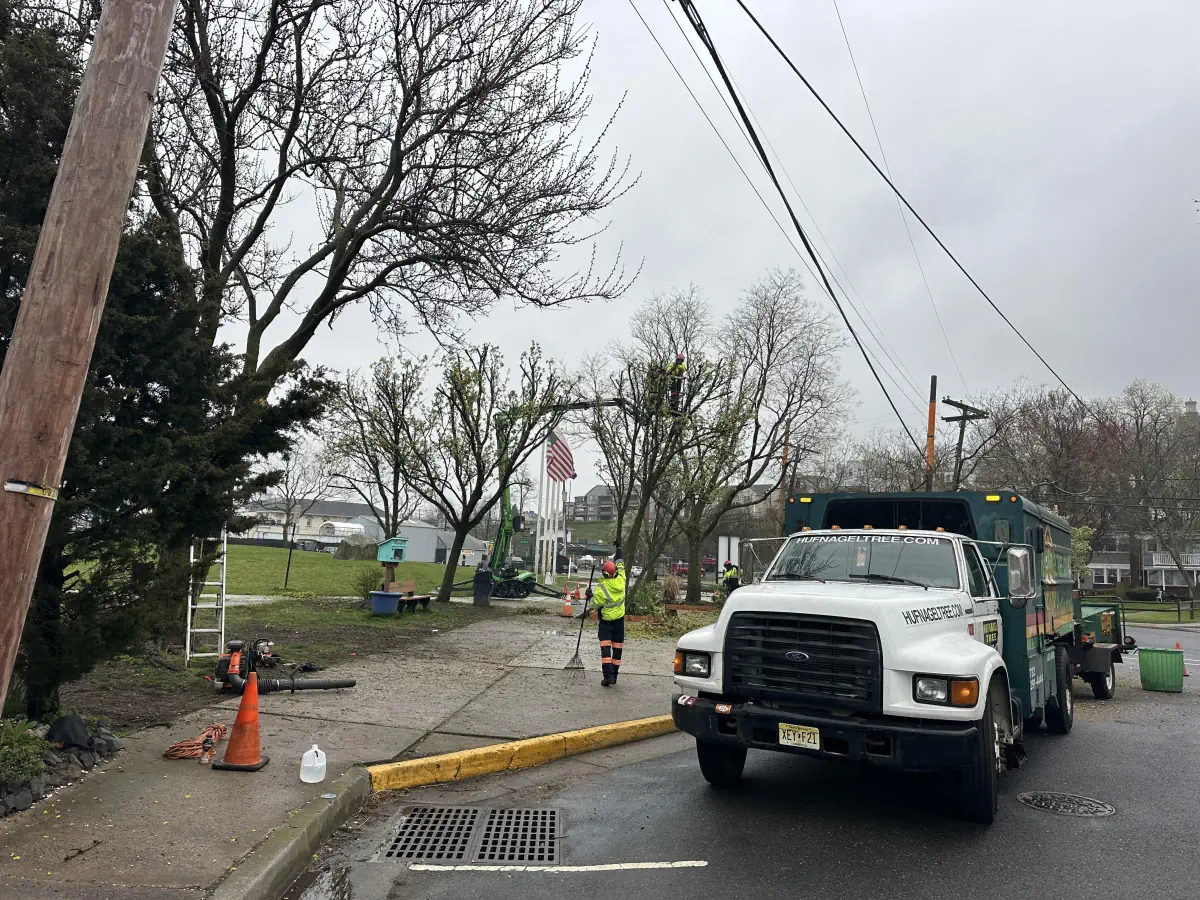
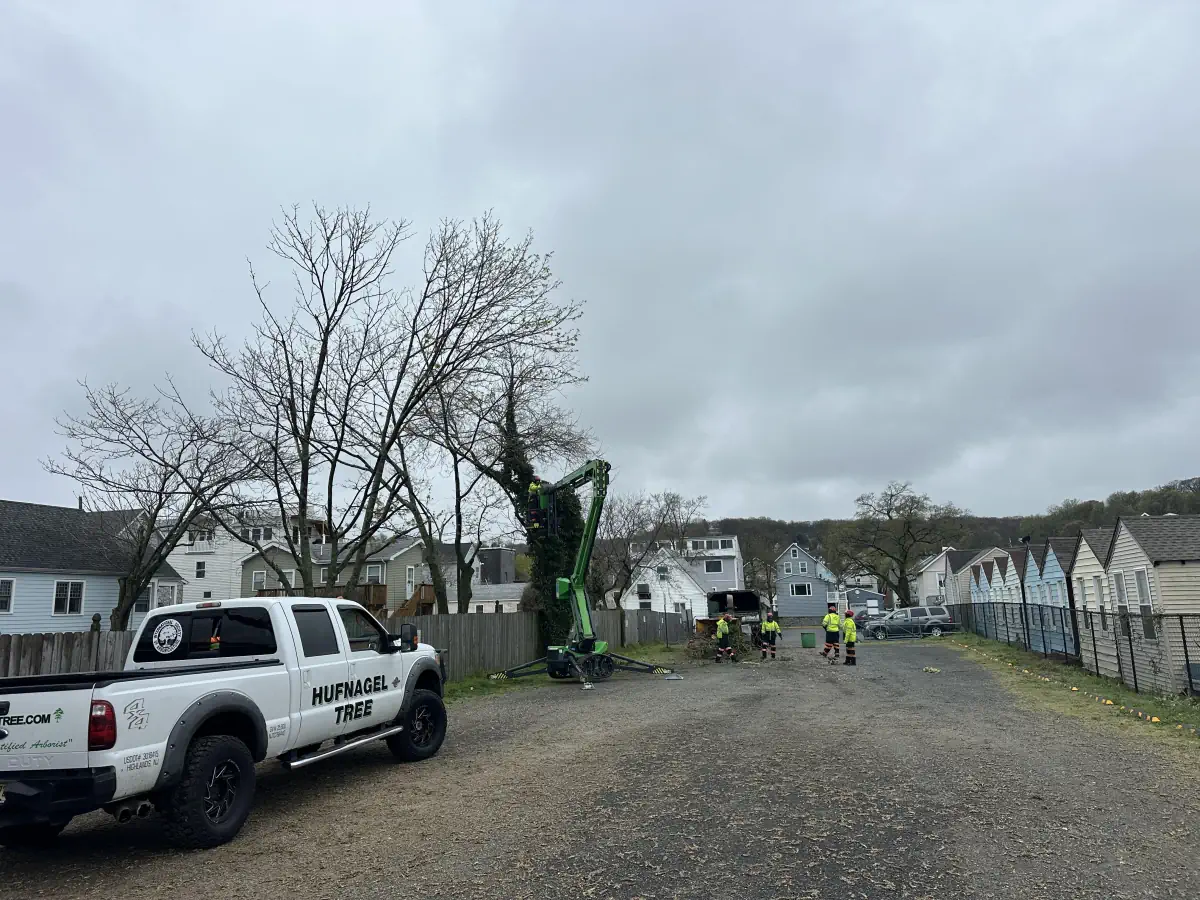
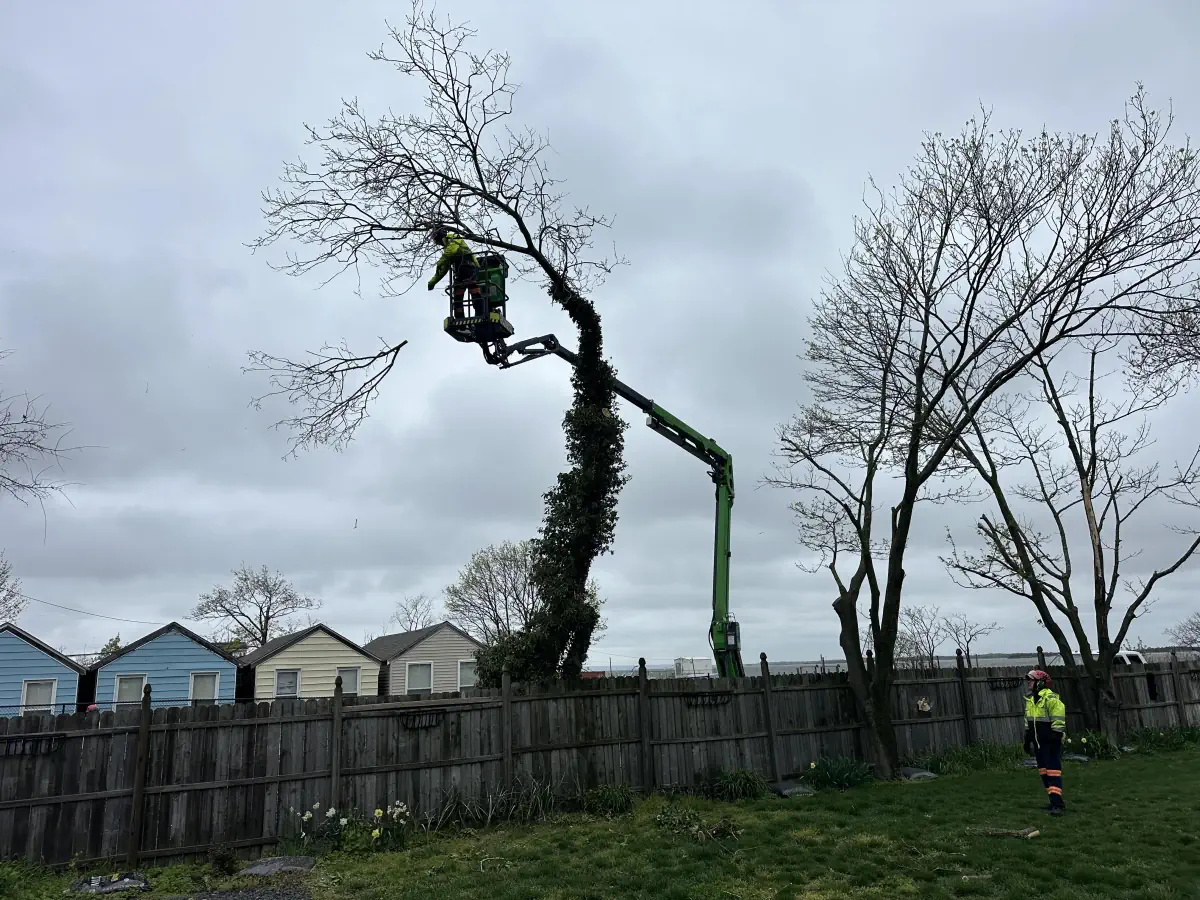
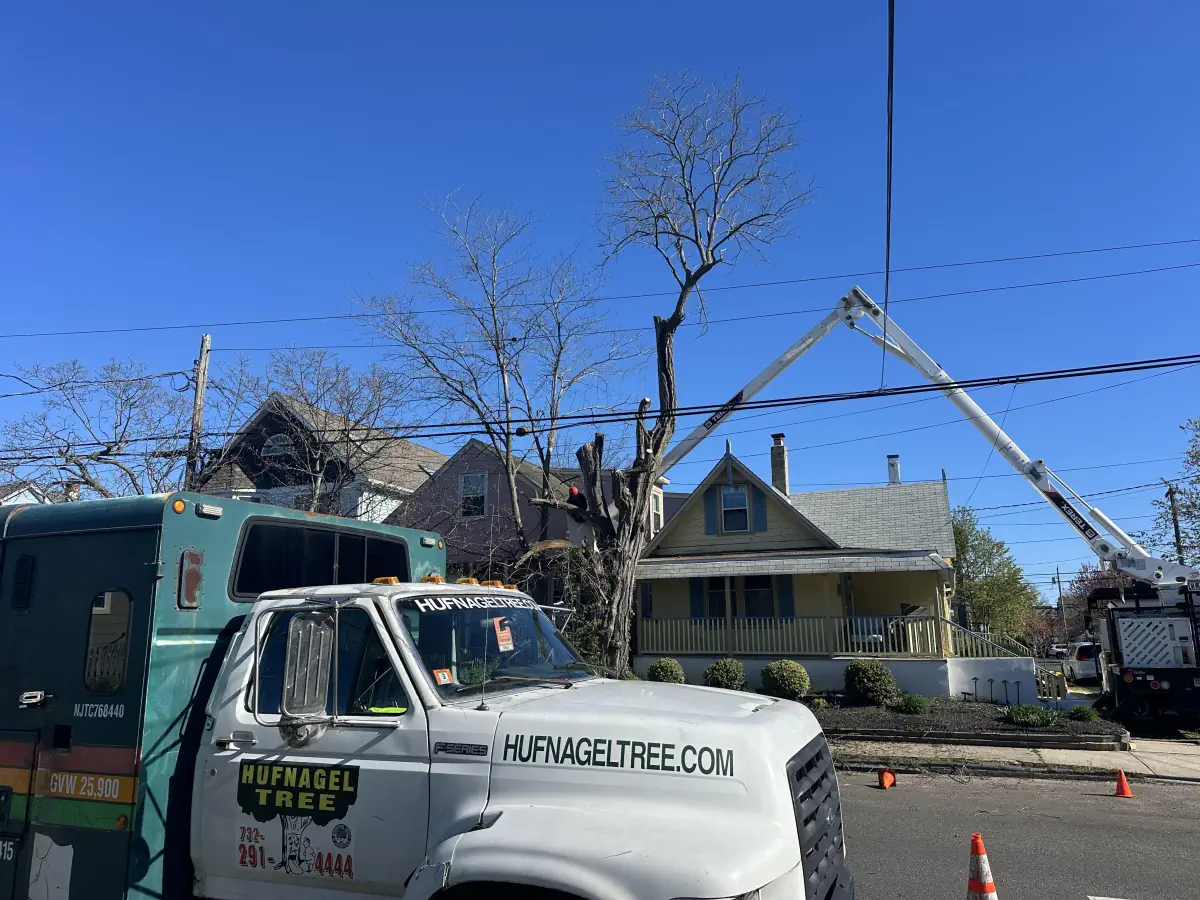
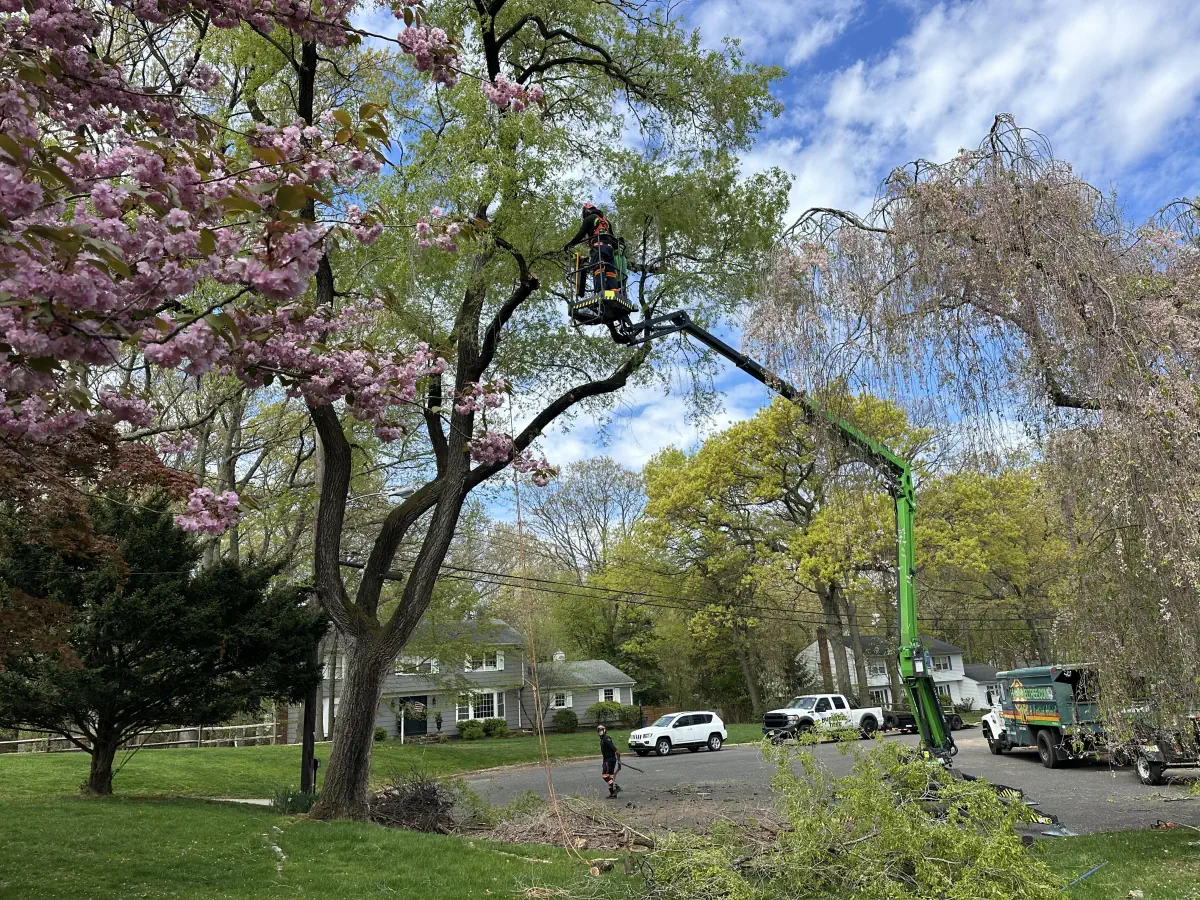
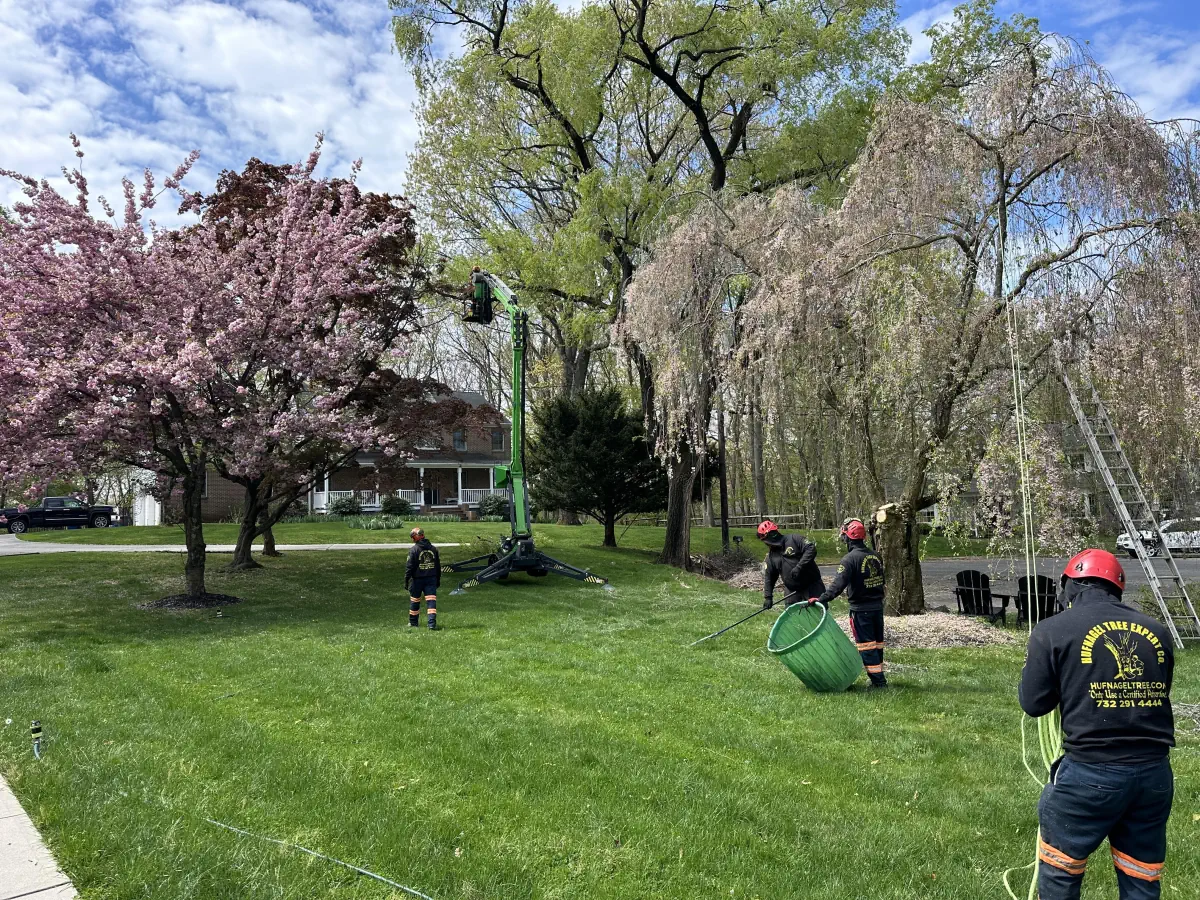
Photos from Article By Steve Sears, Patch News Website
Our Raritan Bay coastal tree care article discusses how local wind, salt, and soil conditions shape tree growth over time. Summer storms add short bursts of extreme loading to that long term stress. Limbs bend farther than normal. Crowns twist. Soil softens under heavy rain. Trees can survive the event while still sustaining defects that matter later.
The International Society of Arboriculture explains in its storm and tree risk guidance that tearing winds and saturated soils can break branches and overturn trees. The important point is that not every failure happens during the storm. Damage can remain suspended or partially supported, waiting for another wind event, a period of heavy rain, or simply gravity to finish the process.
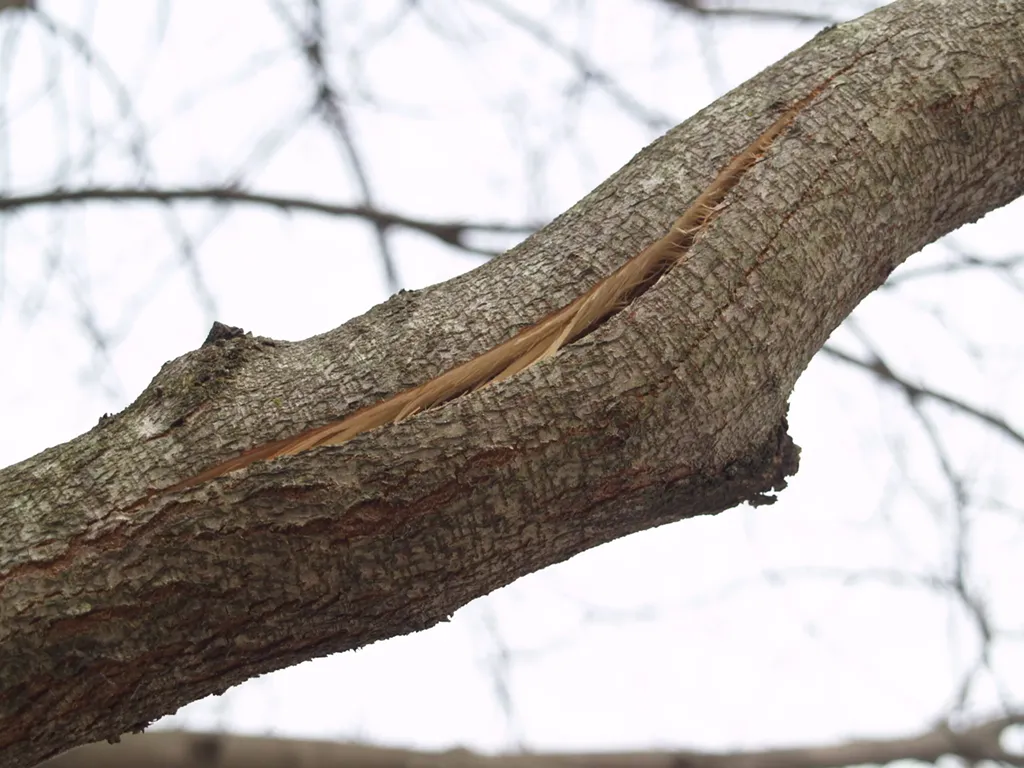
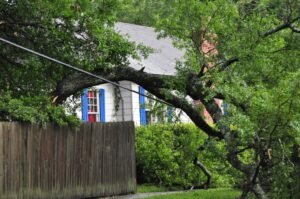
Michael Hufnagel often tells clients, “A summer storm can change a tree without taking it down. If you know where to look, the evidence is usually there.” In Aberdeen, that evidence may appear as a new canopy gap, a cracked union, a branch resting against another limb, fresh soil lifting near the roots, or a trunk that seems only slightly different from where it stood in spring.
Hidden storm damage often leaves small clues first
Fresh wood showing inside a branch union or trunk crack.
One scaffold limb sitting lower than the matching limb on the opposite side.
Bark wrinkling or separation where a branch bent under load.
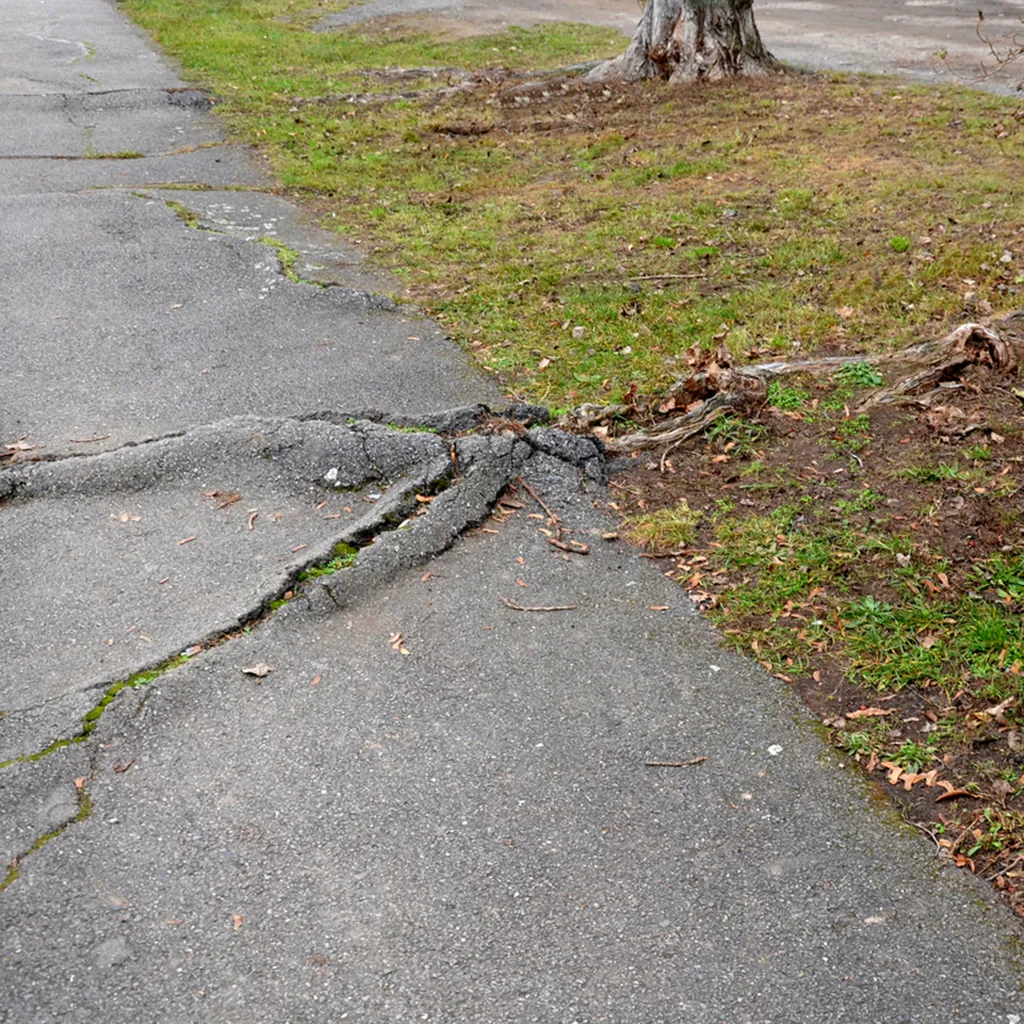
Raised soil or a crescent shaped crack around the root plate.
Broken limbs caught in the canopy instead of reaching the ground.
Why Root Movement Can Be More Important Than Broken Branches
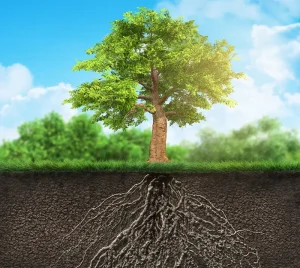
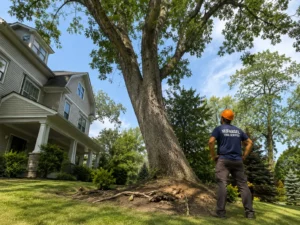
Homeowners naturally look up after a storm, but some of the most important changes happen at ground level. When rain saturates soil, roots may lose some resistance to movement. A large tree can rock under wind load and partially shift its root plate without uprooting. Our tree risk evaluation process includes the trunk base, root flare, surrounding soil, and visible structural roots because canopy damage is only part of the picture.
Coastal sections of Aberdeen can also experience different drainage and exposure than inland subdivisions. A tree that has adapted to repeated bay wind may develop an asymmetric crown. If roots are restricted on the opposite side by pavement, utilities, old construction, or compacted soil, the whole system may have less reserve when a summer storm arrives.
If a root system has shifted, pruning alone may not solve the problem. Sometimes reducing selected canopy weight can lower load. Sometimes monitoring is appropriate. In other cases, the tree may have lost enough anchorage that retention is not reasonable. The goal of a certified arborist assessment is to decide which situation you actually have. The Rutgers guidance on hiring tree professionals identifies tree assessment and risk management as specialized services in New Jersey.
Post storm work also requires restraint. Penn State Extension storm recovery guidance warns against topping and other poor pruning practices after storms because they can create decay and future weakness. If corrective pruning is appropriate, our tree trimming and pruning service uses targeted cuts intended to improve structure, clearance, and safety while preserving the tree’s natural form.
Ground level signs that deserve a closer look
Fresh soil cracks radiating from or curving around the trunk.
Roots that were previously buried becoming newly exposed.
A widening gap between the root flare and surrounding soil.
A new lean that appears after a specific wind event.
Water collecting around a root zone that previously drained more quickly.
Fall Is When Delayed Storm Damage Starts to Matter
A tree may carry damaged wood for weeks after a storm. As leaves mature, rain adds weight and wind keeps working the weakened area. By September, a cracked branch can be much closer to failure than it was the morning after the original storm. That delayed timeline is one reason we encourage fall evaluations after an active summer weather season.
The New Jersey Department of Health post storm tree hazard resources emphasize that storm damaged tree work is hazardous and that homeowners should leave large tree work to licensed professionals. Broken limbs can be under tension, utilities may be involved, and a tree that has shifted can behave unpredictably once branches are cut.
Where the tree remains viable, tree restoration may preserve a valuable canopy tree through selective reduction, deadwood removal, structural correction, and future monitoring. Where health stress is contributing to the problem, our tree health management service can help determine whether foliage decline, disease, or root problems are reducing the tree’s ability to recover.
The New Jersey Forest Service maintains state forest health information on insects and diseases affecting landscape and forest trees. That context matters because a storm may expose a preexisting weakness rather than create the entire problem. A tree with decay, vascular disease, or chronic root stress will not respond to wind the same way as a healthy tree with sound structure.
What a certified arborist can help you decide before winter
Whether the tree was structurally changed by summer wind.
Whether the defect can be reduced through pruning or restoration.
Whether root movement requires monitoring or removal.
Whether health decline is contributing to structural weakness.
Whether the tree needs prompt attention or can be scheduled for routine seasonal care.
Coastal Wind Can Create Long Term Imbalance Even Without a Single Big Storm
In Cliffwood Beach and other exposed parts of Aberdeen, hidden wind damage is not always the result of one dramatic thunderstorm. Repeated wind from the same direction can shape the crown over years, encourage asymmetric growth, and place more leverage on certain unions. A strong summer storm can then exploit that existing imbalance. What looks like sudden damage may actually be the final stage of a structural problem that developed gradually.
That is why tree storm proofing and structural pruning are most effective before a defect becomes urgent. Selective reduction can sometimes lower leverage on overextended limbs while preserving the live crown. The objective is not to thin a tree until wind passes through it freely. Over thinning can move foliage to branch ends and increase leverage. The objective is balanced structure, sound attachments, and appropriate clearance for the site.
In more sheltered sections such as Strathmore and Freneau, the pattern can be different. Dense surrounding trees may protect a canopy from normal wind until a neighboring tree is removed or a storm opens a gap. The remaining tree can suddenly experience wind from a direction it has not adapted to. Changes around a tree can matter almost as much as changes in the tree itself, so we ask about recent removals, construction, grading, and storm events during an evaluation.
Do Not Let a Summer Problem Become a Winter Emergency
The best time to address hidden storm damage is before the next storm supplies the final load. Our tree storm proofing service uses what we learn from summer damage to reduce avoidable risk going into fall and winter. No tree can be guaranteed against severe weather, but defects can be identified and sensible corrective work can be completed before conditions deteriorate.
For homeowners throughout Cliffwood, Cliffwood Beach, Freneau, Oakshades, Strathmore, River Gardens, and Woodfield, our Aberdeen service area page is the local starting point for certified arborist care.
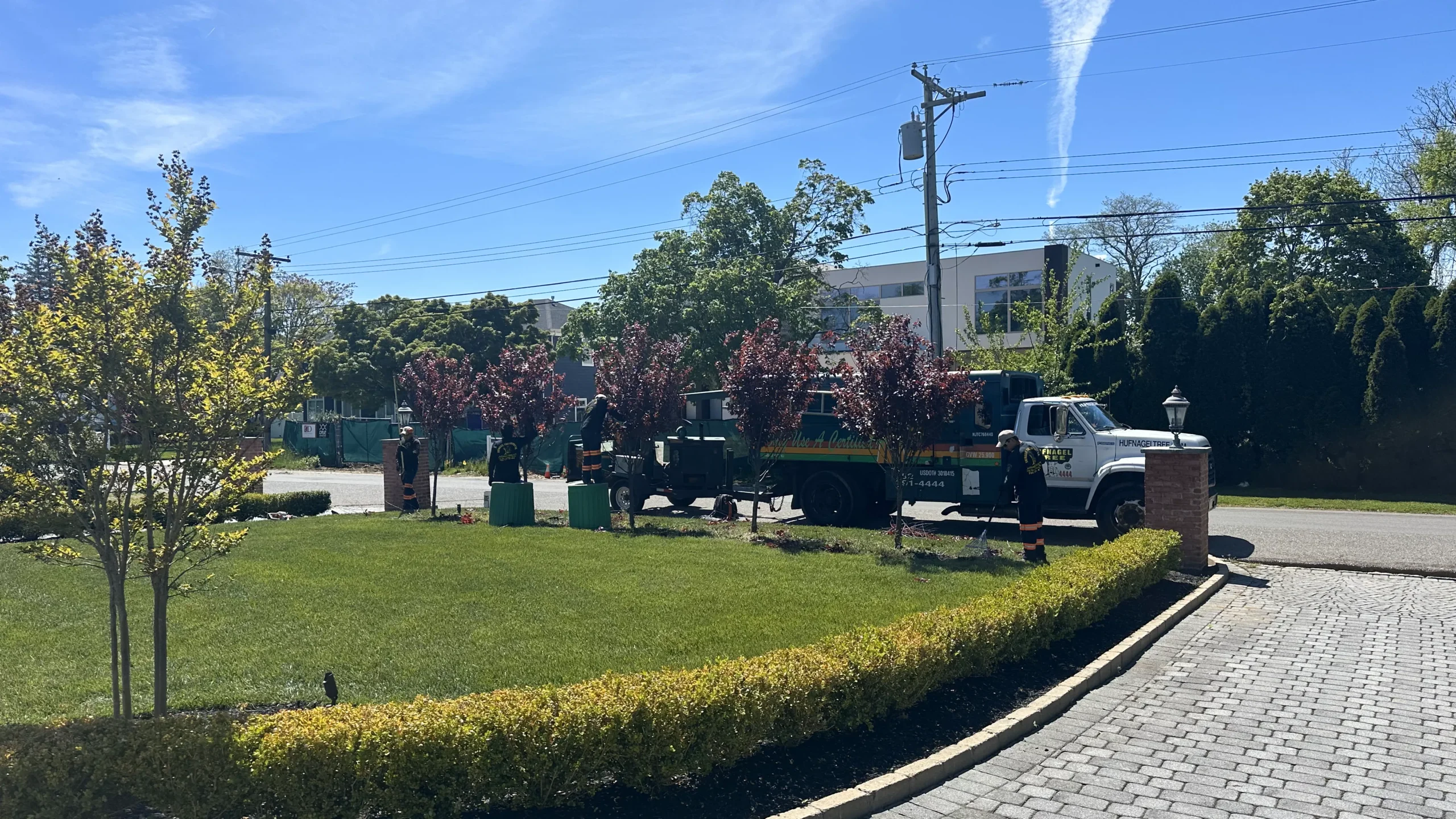
Hufnagel Tree Service brings almost 30 years of experience, certified arborist oversight, and more than 280+ 5-Star Reviews on Google Maps. If summer storms moved, cracked, or damaged trees on your Aberdeen property, call (732) 291-4444 for a fall evaluation before winter weather makes the problem harder to manage.
Schedule Service Now!
From precision pruning and safe removals to health assessments and preventative care, Hufnagel Tree Service delivers expert solutions backed by decades of experience. We offer certified insight, fair pricing, and a commitment to doing what’s best for your landscape.
We Could Not Find A Direct Link To A Tree Removal Permit Application For The Town You Selected.
Please contact your local municipality to determine if a permit is required for your tree removal project. They will provide you with the most accurate and up-to-date information.