Contents
Labor Day weekend feels like the finish line of summer in Monmouth County
Pools are still open, patios are busy, and neighborhoods from Middletown and Lincroft to Rumson, Red Bank, Sea Bright, and the Bayshore are still under a full canopy. For us at Hufnagel Tree Service, it is also a practical time to check what summer growth, heat, thunderstorms, and wind may have changed around your property.
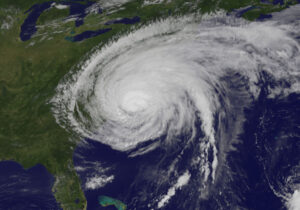
The timing matters. NOAA tropical cyclone climatology places the historical peak of Atlantic hurricane season around September 10, with most activity occurring from mid August through mid October. Labor Day lands almost directly in front of that window. Trees that handled June and July still deserve another look before stronger coastal systems, saturated soil, and fall wind put them under a different type of load.
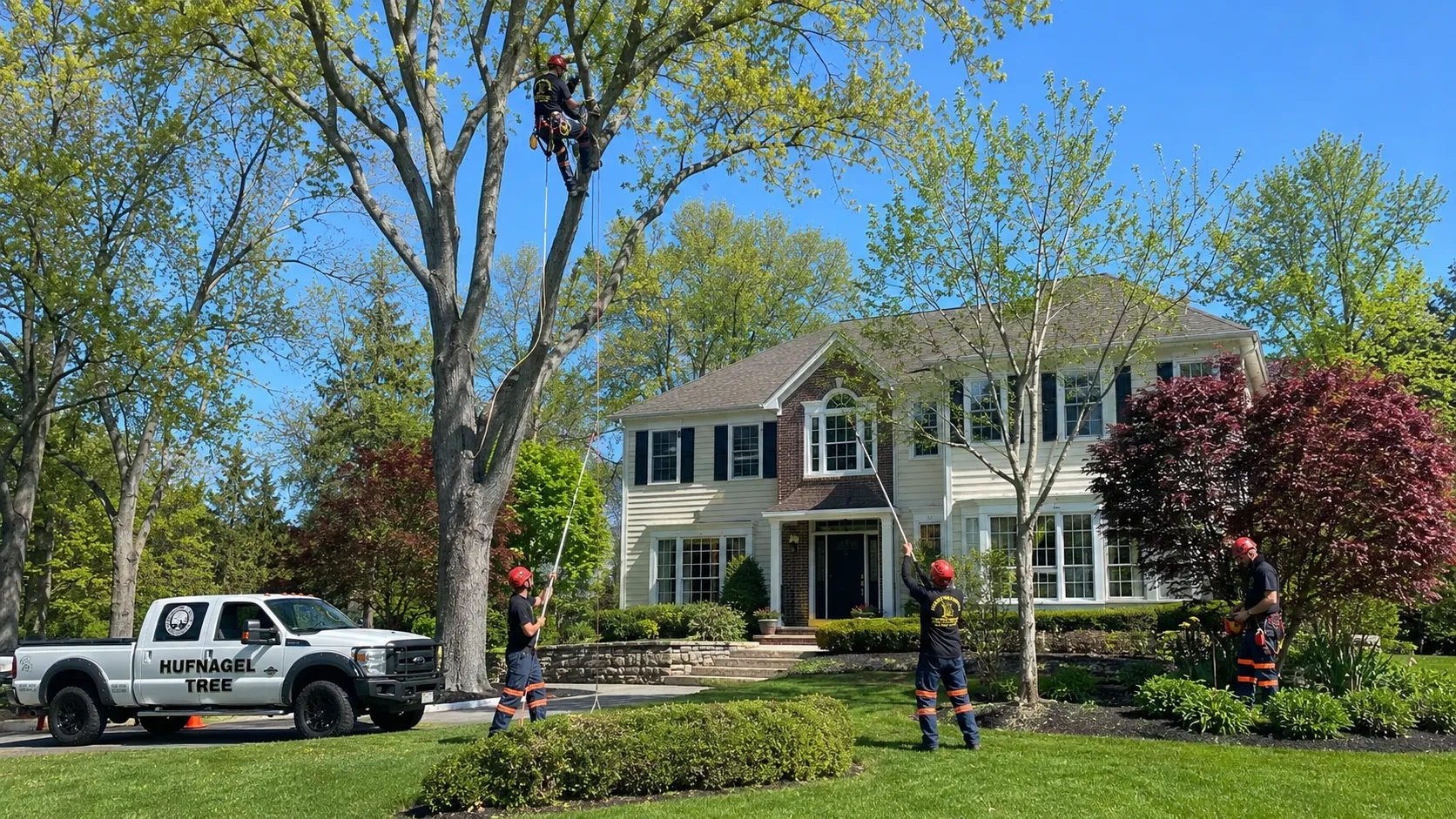
Michael Hufnagel puts it this way: “Labor Day is when I want homeowners to look up before the next storm gives them a reason to. If a limb changed over the summer, if a tree is leaning differently, or if deadwood is hanging over the house, driveway, pool, or patio, this is a good time to have us take a look.” With more than 25 years in Monmouth County, we inspect first and recommend only the tree trimming and pruning the tree actually needs.
Why Labor Day Is the Right Time for a Tree Safety Inspection
By late August, trees are carrying a full season of foliage. Leaves add weight and catch wind, while summer growth can extend limbs farther over roofs, driveways, pools, decks, sidewalks, and neighboring property. A mature oak or tulip poplar that had comfortable clearance in spring may look different by Labor Day. Our tree risk evaluation service considers the tree, the site, and the targets below it.
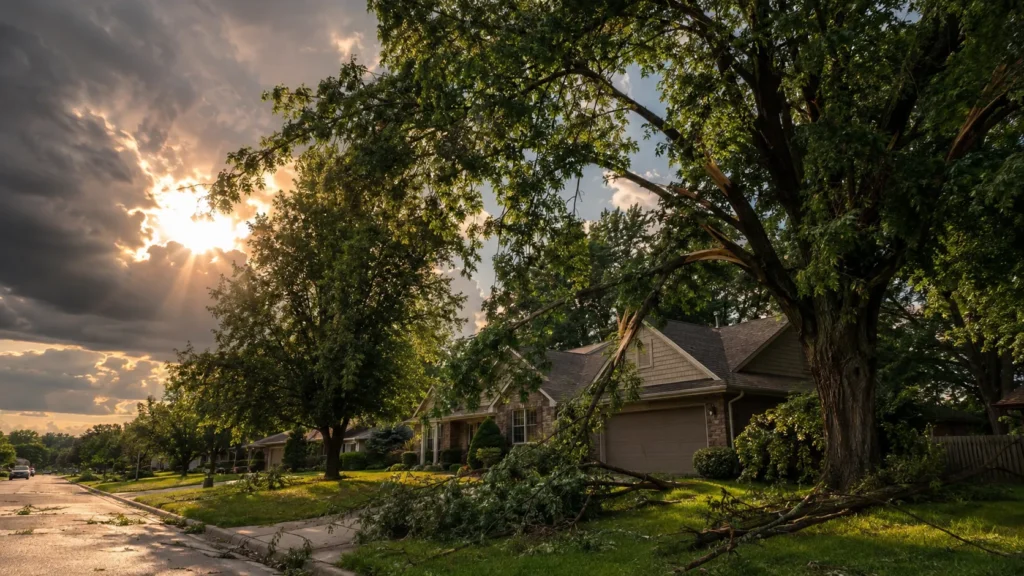
Labor Day is also late enough for earlier storm damage to show itself. A thunderstorm can crack a limb without dropping it. A branch can break and remain suspended in the crown. Saturated soil can allow slight root movement that is easy to miss later. Penn State Extension storm recovery guidance warns about broken limbs hanging in trees and recommends trained arborist maintenance for weak or dead branches.
Local exposure changes from town to town. Bayshore communities can receive open wind from the Raritan Bay, while Sea Bright, Monmouth Beach, Long Branch, and Ocean Township face stronger coastal exposure. Inland properties in Holmdel, Colts Neck, and Middletown often have older shade trees with large crowns over homes and yards.
An inspection does not mean every mature tree needs work. Many do not. We may find a healthy crown, stable roots, good branch attachments, and no meaningful conflict with the property below. The goal is to know the condition before weather becomes more demanding. The International Society of Arboriculture tree risk guidance explains that professional assessment can begin visually and become more detailed when decay or structural concerns are suspected.
Michael often tells homeowners, “A tree does not become dangerous because the calendar says September. Labor Day is useful because it reminds us to check it at the right point in the season.” We use the holiday as a maintenance marker, not a scare tactic. If the tree is sound, that is useful information. If something changed, there is still time to address it before the next severe weather event.
Why Labor Day Works as a Tree Care Checkpoint
- Full foliage makes branch loading and clearance easier to judge.
- Summer storm damage has had time to become visible.
- The holiday comes immediately before the historical hurricane season peak.
- Pools, patios, driveways, and yards are still heavily used.
- There is time to correct manageable defects before emergency cleanup is needed.
A late summer inspection gives us a current picture of the tree and what summer may have changed since spring.
What Summer Heat, Thunderstorms, and Growth May Have Changed
Summer stress does not always look dramatic. A tree can remain green while a structural problem develops. Heat and dry soil can reduce vigor, then heavy thunderstorms can saturate the root zone. Wind can repeatedly load the same weak union. Vines can add weight and hide bark defects. By Labor Day, these small changes may have accumulated into something worth a professional look.
We focus on large branch unions, codominant stems, old pruning wounds, cavities, deadwood, and limbs carrying excessive end weight. Risk depends on how the branch is attached, the condition of the wood, and what sits below it. Our article on hidden tree rot and inspection explains why deterioration can progress even while a tree still has a leafy canopy.
The root zone matters just as much. Heavy rain can saturate compacted or poorly drained soil. We look for fresh soil cracks, mounding, exposed roots, changes in lean, and movement around the root plate. A leaning tree is not automatically unsafe, but a new lean or root movement needs professional evaluation.
Storm history matters too. A tree that lost a large limb in June may have redistributed weight into the remaining crown. Another tree may suddenly be exposed after a neighbor removes a windbreak. The first storm does not always cause the final failure. Our storm damage tree service guide explains how wind, rain, flooding, and saturated soil can work together across eastern Monmouth County.
Experience helps us judge those changes in context. Mature oaks, maples, tulip poplars, sycamores, pines, spruce, arborvitae, and ornamentals do not respond to wind, drought, salt, saturated soil, or pruning the same way. We decide whether the right response is monitoring, selective pruning, restoration, or, when a defect cannot be managed reasonably, professional tree removal.
Late Summer Warning Signs Worth a Closer Look
- Fresh cracks, splits, torn bark, or separation at major limb unions.
- Dead branches, broken hangers, or limbs resting unnaturally in the crown.
- A new lean, lifting soil, exposed roots, or root plate movement.
- Large limbs extending over roofs, pools, patios, driveways, or play areas.
- Cavities, mushrooms, loose bark, declining foliage, or worsening old wounds.
Not every warning sign means removal. Early detection often gives us more preservation options.

Tree Pruning Before Fall Storms Should Be Targeted, Not Aggressive
When we find a concern, the answer is often selective pruning rather than a major reduction of the whole canopy. Mature trees need foliage to produce energy. Removing too much live growth can create stress and poorly attached sprouts. Proper professional tree pruning starts with a clear objective, such as deadwood removal, clearance, end weight reduction, storm damage correction, or improvement of a weak structural relationship.
That distinction is important around Labor Day. This is not the time to assume every tree should be “thinned out for hurricanes.” Random interior stripping and topping can create worse problems. Penn State guidance on pruning landscape trees notes that mature trees should be pruned for specific reasons such as risk management, infrastructure clearance, or storm restoration. That matches how we approach established trees throughout Monmouth County.
A long branch over a roof may benefit from reduction instead of removal back to the trunk. Deadwood can be removed without changing the entire crown, while a damaged leader may need structural correction. Ornamentals and tall shade trees often need different treatment. The pruning prescription should fit the species, defect, season, and location.
For neglected or repeatedly damaged trees, we may recommend staged restoration. Our tree preservation and restoration work is designed to improve structure over time without one severe cutback. That can be especially valuable in Rumson, Fair Haven, Navesink, Locust, Holmdel, and other neighborhoods where mature canopy contributes heavily to shade, privacy, appearance, and property character.
Michael’s rule is straightforward: “We prune for a reason. If I cannot explain what a cut is accomplishing for safety, structure, clearance, or tree health, we should not be making that cut.” That is why inspection comes first. A Labor Day service call is not automatically a pruning appointment. It is a chance to identify what needs attention now, what can wait, and what should simply be watched.
When Late Summer Pruning Makes Practical Sense
- Removing dead, broken, or suspended branches over occupied areas.
- Reducing selected overextended limbs when leverage creates concern.
- Restoring branches damaged by summer thunderstorms.
- Creating needed clearance from roofs, structures, driveways, and walkways.
- Correcting a specific structural problem when tree condition supports pruning now.
Good storm preparation means making the right cuts for a clear reason.
Protect the Places Your Family Uses Most Around the Property
Labor Day adds another reason to think about tree targets: people are outside. Families are grilling, children are in the yard, guests are parking nearby, and patio furniture may be directly under mature shade trees. A defect matters more when the area below is used every day. Before the holiday weekend, look at the trees over the places where family and guests will actually spend time.
Start with the house and roofline. Check limbs that have grown closer to shingles, gutters, chimneys, or siding. Then look over driveways, guest parking, pools, decks, and patios. Our storm season tree risk assessment guidance explains why the target below a tree is a major part of deciding which conditions need priority and which can be monitored.
Along the Bayshore and shore communities, exposure deserves extra attention. Coastal wind, salt stress, shallow rooting conditions, and saturated ground can affect tree response. Farther inland, size may be the bigger issue, with mature tulip poplars and oaks carrying large limbs over bedrooms, patios, and neighboring lots.
Do not pull down hanging branches, climb a questionable tree, or cut large overhead limbs yourself. Keep people away from the drop zone and call a qualified tree care company. New Jersey requires tree care businesses for hire to be registered and appropriately licensed. The New Jersey Board of Tree Experts explains those requirements and identifies tree assessment and risk management as professional tree expert services.
This is also a useful weekend to create a baseline. Take clear photos of major trees and note any low limb, lean, cavity, recent break, or storm event. Those photos can help if something changes later. Schedule a professional inspection when the tree is large, the defect is difficult to judge, or the target below makes guessing a poor option.
Tree Areas to Check Before the Labor Day Weekend
- Large limbs over the house, garage, pool, deck, patio, or play area.
- Branches over driveways, parking spaces, sidewalks, and entrances.
- Trees near utility lines or branches that shifted after storms.
- Older trees with cavities, deadwood, or a history of limb loss.
- Trees in wet, disturbed, newly exposed, or coastal locations.
Labor Day is a useful reminder because the property is active and fall weather is approaching. A check now creates a clearer plan.
Schedule Your Labor Day Tree Inspection With Hufnagel Tree Service
If you have mature trees around your home, pool, driveway, patio, or neighboring property, call Hufnagel Tree Service before fall storm season gets deeper. We serve Middletown, Lincroft, Navesink, Belford, Leonardo, Port Monmouth, Atlantic Highlands, Highlands, Rumson, Fair Haven, Red Bank, Holmdel, Colts Neck, Ocean Township, Long Branch, Monmouth Beach, and surrounding Monmouth County communities. Start with a certified arborist tree risk evaluation and let the tree determine the next step.
Michael Hufnagel brings more than 25 years of local tree care experience to every recommendation, backed by deep Monmouth County roots and more than 200 five star Google reviews. Whether the answer is careful tree trimming, pruning, monitoring, restoration, or safe removal, our goal is to give you a practical plan before the next storm makes the decision for you. Call (732) 291-4444 or visit hufnageltree.com to schedule your Labor Day tree safety inspection.
Schedule Service Now!
From precision pruning and safe removals to health assessments and preventative care, Hufnagel Tree Service delivers expert solutions backed by decades of experience. We offer certified insight, fair pricing, and a commitment to doing what’s best for your landscape.
Learn More About Our Services
Related Articles
Insurance Company Tree Trimming Notice: Call Hufnagel
Storm Season Tree Risk Assessment for Homeowners