Contents
Storm Proofing in Brielle Begins Where the Tidal River Meets Old Trees
Brielle became a borough on April 10, 1919, when the New Jersey Legislature set it apart from Wall Township, and the name comes from Brielle in the Netherlands, according to Wikipedia. The borough covers 2.37 square miles, about 26 percent of it water, and counted 4,982 residents in 2020. Its elevation is only 7 feet, and it has about 4 miles of tidal waterfront along the Manasquan River, the Glimmerglass, and Debbie’s Creek. That is the setting for every conversation about storm proofing in Brielle.
Water changes how we think about a storm. In a town this low and this wet, a tree meets a nor’easter with its roots in soil that may already be soft and its crown facing wind that has crossed open water. Our tree storm proofing service is built around that pairing. We look for the specific defect the next storm is most likely to find, and we correct it with the smallest cut that works, rather than making a tree smaller for its own sake.
After almost 30 years working throughout Monmouth County, we have seen that November is the right time to judge a tree. Leaves are down, so unions, cracks, and dead limbs show clearly. The National Weather Service says nor’easters are most common and most severe from September through April, so most of the season is still ahead of us. A tree judged now can be corrected on a calm day, before the weather sets the schedule.
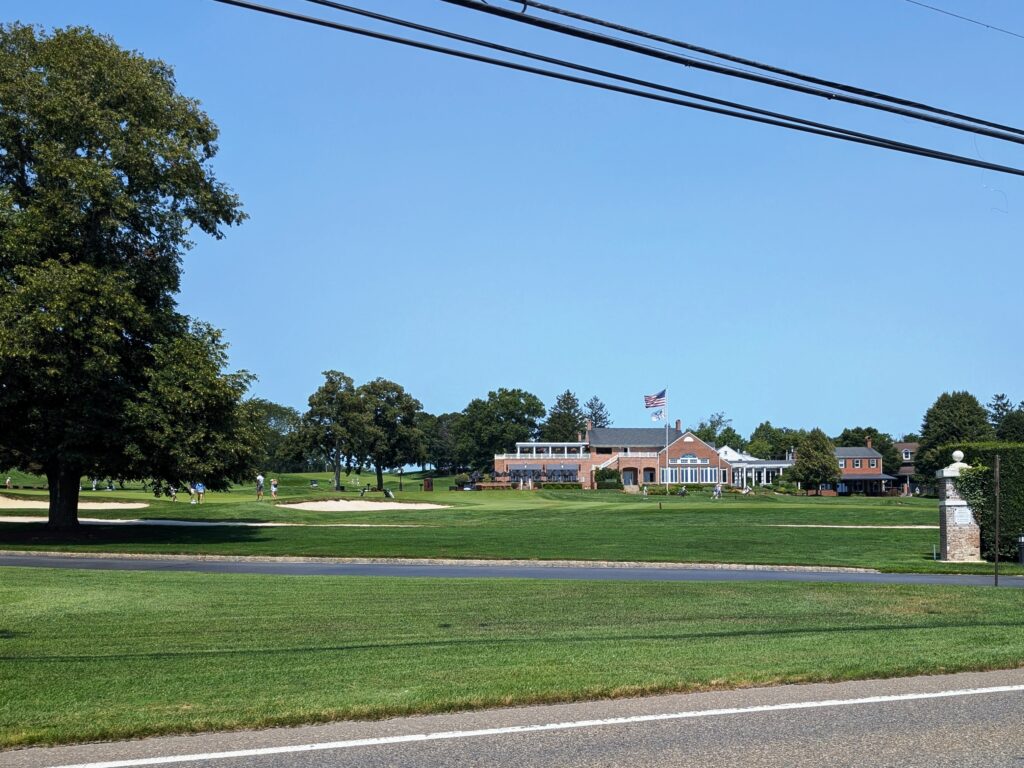
The photograph above shows the Manasquan River Golf Club, which the Wikipedia article describes as a 140 acre course within the borough. It was taken from Riverview Drive, also County Route 48, looking north northwest. A broad crowned tree stands at the left edge of the frame beside the road, and utility wires cross the top of the picture. We see that combination often on shore roads. Large trees grow close to wires, and a limb that fails in wind can land on a line before it ever reaches the ground.
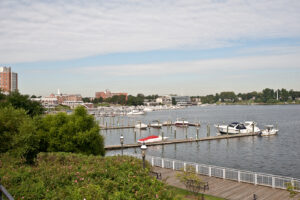
The other edge of the borough is wet in a different way. The Manasquan River runs 26.5 miles from Freehold Township to the Atlantic and widens near the Manasquan Inlet, along Brielle’s southern side. Wikipedia lists three drawbridges on the navigable river and its tributaries, including the Brielle Road Glimmer Glass Bridge, plus the fixed Route 70 September 11 Memorial Bridge. Trees beside those crossings and along the shore take wind with a long, open run across the water, and in our experience that is where we see leaning, root movement, and torn limbs most often.
Storm Proofing in Brielle Begins With the Structure a Nor'easter Will Test
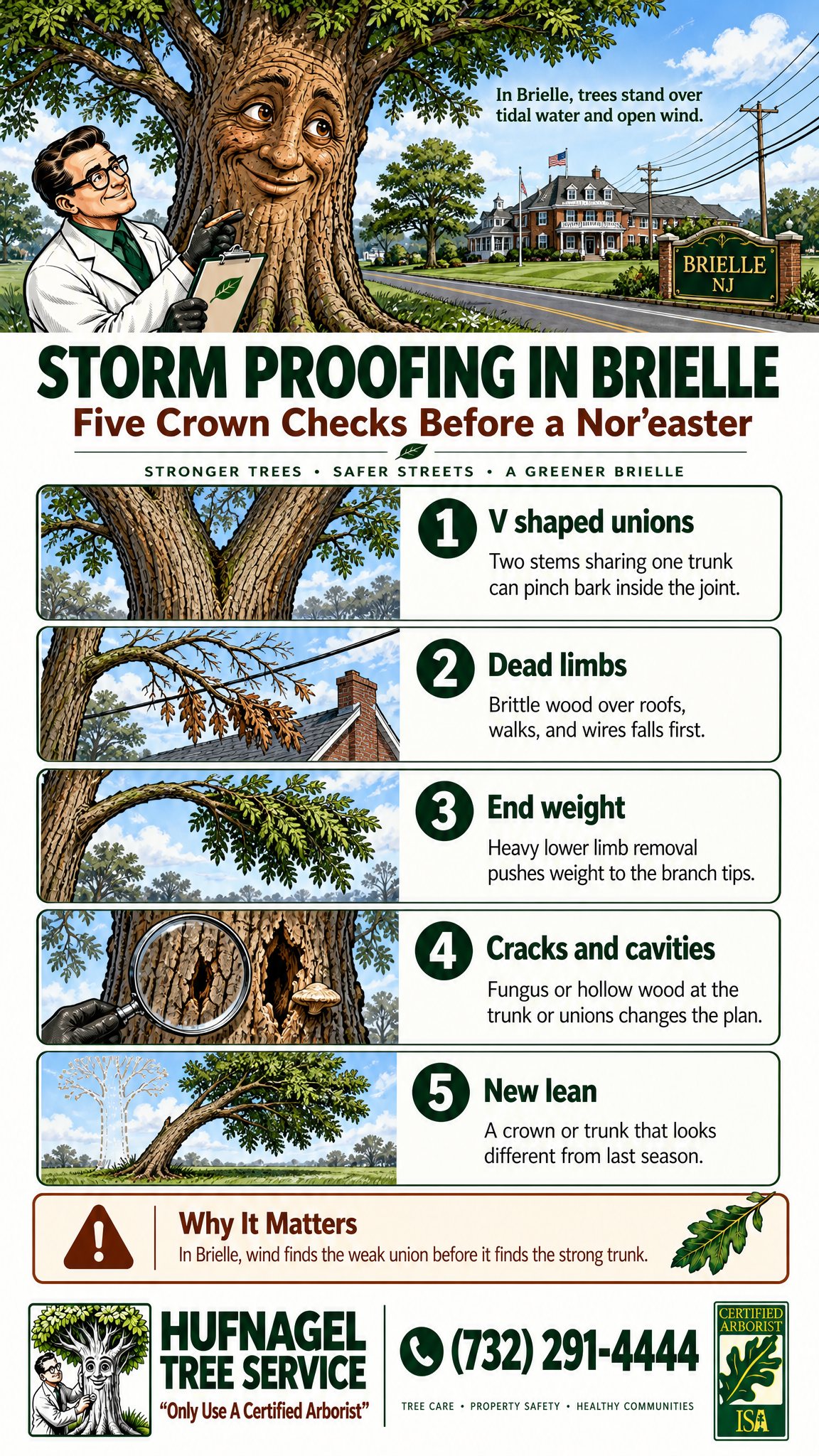
A nor’easter is a long event. The National Weather Service describes gale force wind, heavy rain or snow, and coastal flooding that is sometimes disastrous, and it warns that the storm could cut power. A tree does not get one gust. It gets hours of repeated loading, which is why storm proofing in Brielle begins with structure. We start at the unions where stems meet, move out along the main limbs, and finish at the branch ends, where weight does the most work.
University of Florida extension agent Larry Figart, writing in May 2026, makes the central point plainly: branch failure is the easiest kind of failure to prevent. His article explains that V shaped attachments are weaker than U shaped ones because bark becomes embedded in the joint, and that trees with several trunks are especially prone to splitting. Those are the unions we look at first. They are the subject of our guide to codominant stems, and they are where a long storm usually finds the weakness.
Deadwood over a target comes next. The same article says to remove large deadwood over structures immediately, and we agree with the order of that advice. Brittle limbs are the first to fall in wind, and in Brielle they hang over roofs, driveways, and service lines more often than over open lawn. A limb that touches or leans on a wire is not a do it yourself project. Stay back, photograph it, and call the utility.
We are careful about what storm proofing means. The Florida article warns that taking off large lower limbs and interior branches, called over lifting or lion tailing, shifts weight to the branch ends and increases wind damage. It also reports that reduction cuts and structural pruning produced trees with less wind damage. That matches our experience, and it is why we do not try to “thin a tree out for wind” as a blanket prescription. UConn Extension adds that trees should never be topped, and topping is the one cut we name only to reject.
Some defects hide. The UConn page on managing tree risk lists fungal growth on the trunk, hollow sounds when tapped, cavities, and sudden changes in lean as signs of internal problems. It adds that trees often fail at the roots, not the trunk, and that cracks extending through the trunk deserve a professional evaluation. We use the same list when we climb, and we pair it with the history of the tree, because a crack that appeared after the last storm matters more than one that has been closed over for years. Our guide to hidden tree rot covers the decay side of that question.
Targets finish the reading. A defect over an empty lawn is a small concern, and the same defect over a bedroom, a driveway, or a neighbor’s fence is a large one. Our tree risk evaluation connects each defect to what it could hit, and that decides what we do first. Mike Hufnagel puts it simply: “In Brielle, I look at the water first and the tree second. A tree standing in soil that stays wet is carrying its weight on a soft foundation, and the wind only has to find one weak union to finish the job.” That order keeps the work honest. It keeps us from removing a tree with a dependable structure, and it keeps us from calling a tree safe because it has survived before.
What We Check in the Crown Before a Brielle Nor’easter
- Narrow V shaped unions where two stems share one trunk and bark is pinched.
- Large dead or brittle limbs over roofs, driveways, walks, and service lines.
- Weight pushed to branch ends after heavy removal of lower limbs.
- Cracks, cavities, or fungus on the trunk, at the base, or at unions.
- A new lean, or a crown that looks different from last season.
Those signs rarely appear alone, so we weigh them together. The answer is usually some mix of pruning, restoration, monitoring, or removal, and a tree with a narrow union and a sound base is a very different case from one with a narrow union and decay at the root. Once the structure is addressed, the next part of storm proofing happens at ground level, where the soil decides how long a tree can hold on. That is where a low, wet town asks the most of its trees.
Tidal Water and Saturated Soil Change How Brielle Roots Hold

Brielle has about 4 miles of tidal waterfront and an elevation of only 7 feet, so the ground under many trees is never far from water. After a nor’easter pushes rain and tide into low yards, the soil can stay soft for days. We treat wet ground as part of the storm, since the roots are what hold a tree up and the crown is only what the wind pushes on.
UConn Extension explains that saturation destabilizes the root and soil plate and reduces oxygen availability to the roots. In plain words, wet soil lets go of a tree at the moment the wind pulls hardest, and a tree that stood through ten dry storms can lean in the eleventh. The same page says to watch for heaving soil or a new lean after a flood, and to have lean and root stability evaluated once the ground is saturated.
The photograph above shows what it looks like when a root plate lets go. A large tree lies across a lawn with its root ball torn up, and a crew with a stump grinder and a chipper is working beside it. When this kind of failure happens it can look sudden, though the warning is often at the base for weeks in the form of cracked soil, a raised edge, or a lean that was not there last season. That is why we look at the base of every tree before we look at its top.
Mulch and grade are the part of the root zone an owner controls. The Florida article warns against mulch volcanoes, which form when mulch is piled over the root flare and against the trunk. It says piled mulch buries roots, promotes disease, and makes the root flare hard to inspect, so the flare should be uncovered. We would add that fresh fill from a regrade or a new patio does the same job as piled mulch, and we find it more often than owners expect.
Evergreens deserve a separate look in our experience. A pine or spruce carries its full load of needles through winter, so wind and wet snow have more to push on than they do on a bare oak. We do not claim that evergreens fail more often, only that their winter weight changes what we check. The soil and root questions in our tree health management service apply to every tree on the lot, and they matter most for the ones that keep their foliage.
Roots also depend on a zone that is easy to damage and impossible to see. Brielle’s tree ordinance, posted on eCode360 as Ordinance No. 1135, defines the critical root radius as the trunk diameter at breast height multiplied by 1.5 feet, so a tree with a 6 inch trunk has a zone of 9 feet. It counts improper grading and soil compaction inside that radius as tree removal when they lead to decline. We use the same idea on site. Parked trucks, trenching, and piled soil inside that circle hurt a tree long before any limb falls, and our guide to weak tree roots explains the signs.
Root Zone Checks Worth Making After Heavy Rain or Tide
- Cracked, raised, or heaved soil on one side of the trunk.
- Mulch or fill piled against the trunk and covering the root flare.
- Evergreens that lean or shift after rain, tidal flooding, or a wet week.
- Compacted, regraded, or trenched soil inside the root zone.
- Fungus, soft wood, or a sudden change in lean near the base.
Those five checks give an owner something specific to do before a call, and they give us a clear starting point when we arrive. Some trees need only monitoring. Others need targeted pruning, restoration, support, or removal. Our guide to storm season risk assessment walks through the same ground level look at greater length. With the crown and the roots understood, the last part of the plan is the borough’s rules and the wires, because both change how and when the work can be done.
Borough Rules, Hazard Trees, and Wires Shape the Storm Proofing Plan
Storm proofing in Brielle also has to fit the borough code. Ordinance No. 1135 replaced Chapter 17, Protection of Natural Features, and its stated purpose is to reduce soil erosion and pollutant runoff, help rainwater soak into the ground, and protect public health, safety, and welfare. We do not give legal advice, but the chapter shapes how we plan work, and we encourage owners to read it on eCode360 before any tree comes down.
The ordinance asks anyone planning to remove a street tree with a trunk diameter of 2.5 inches or more, or any other tree with a diameter of 6 inches or more, to submit a Tree Removal Application to the Code Enforcement Officer. It says no tree is to be removed until municipal officials have reviewed and approved the removal. Diameter is measured at breast height, 4.5 feet above the ground, so a mature oak or maple is well past either threshold. Owners should confirm the current process with the borough before acting.
The ordinance also defines a hazard tree. The criteria include a tree that is dead or dying, one with an infectious disease or insect infestation, one causing obvious damage to structures such as foundations or sidewalks, and one determined to be a threat to public health, safety, or welfare by a certified arborist or Licensed Tree Expert. It says hazard trees may be removed with no fee or replacement requirement. That is why we document what we see with photographs and notes, so the owner and the borough both have the facts in front of them.
When a tree does come down, the ordinance calls for replacement trees to be planted within 12 months, monitored for two years, and not planted in temporary pots or containers. It lists acceptable species in an appendix and notes that the Brielle Shade Tree Commission provides planting information. For storm proofing this matters, because a replacement planted well today is a tree we will not have to storm proof as a problem in a few decades. Planting location matters as much as species, and it is part of our tree restoration work.
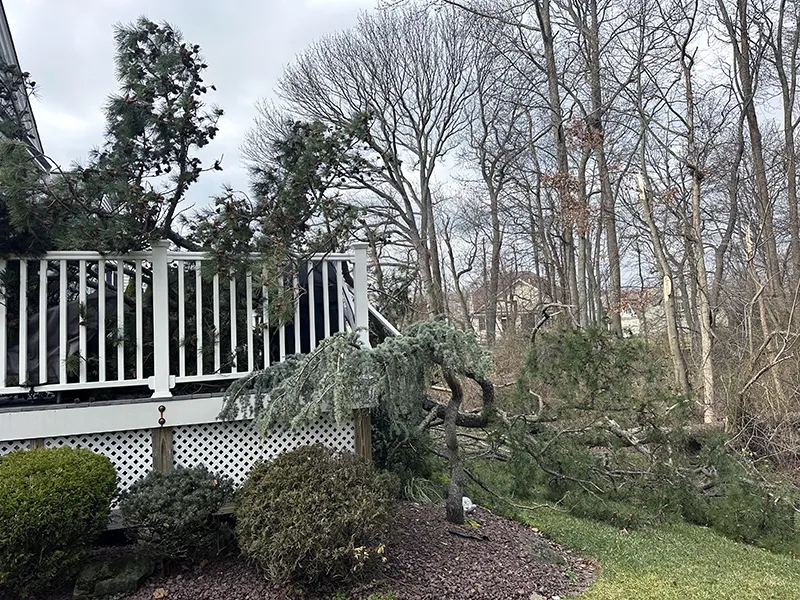
The photograph above shows a weeping evergreen lying over a mulched bed beside a white railed deck, with bare woodland behind it. Trees at the edge of a yard, close to a deck or a house, are the ones where a failure turns into a property problem, and they are the ones we measure against targets first. A tree can be sound in a forest and a concern here, because the same limb that falls harmlessly in woods has something to land on beside a house.
Planning in order keeps a visit focused. Hazards come first, structure second, and shape last. Wires and dead limbs over targets are handled before anything cosmetic, and limbs over the street or a neighbor’s fence are lowered in sections, not dropped. Where a tree cannot be managed safely because the base is decayed or the roots are moving, removal is risk reduction and not a failure of care. Our tree removal service sits at the end of that list, never the beginning, and our earlier piece on Brielle tree risk assessment covers the summer side of the same question.
Questions a Brielle Storm Proofing Plan Should Answer
- Which limbs sit over roofs, decks, driveways, and service lines.
- Which dead or brittle limbs should come out first this winter.
- Whether any soil, mulch, or grade problem sits inside the root zone.
- Whether any part of the plan counts as removal under the borough code.
- Which trees need a second look after the first heavy nor’easter.
Those five answers turn a general worry into a short list that an owner can follow. When the list is clear, the work can be scheduled before the weather decides the order, and the owner knows why each step comes when it does. Our notes on riverfront tree pruning in Brielle and tree service along the Manasquan River add local background, and more is collected on our Brielle page.
Call Hufnagel Tree Service About Storm Proofing in Brielle Before Winter
If you have mature trees near your Brielle home, driveway, dock, or property line, schedule an evaluation before winter storms arrive. We provide tree storm proofing, tree risk evaluations, tree trimming and pruning, restoration, and removal when a tree cannot be managed safely.
Hufnagel Tree Service is led by a certified arborist with almost 30 years of local experience and more than 280 five star Google Maps reviews. We inspect first, explain what we found in plain terms, and recommend only the work that changes the outcome for your trees and your property.
Call or text (732) 291-4444 to schedule storm proofing in Brielle before the next nor’easter arrives.
Schedule Service Now!
From precision pruning and safe removals to health assessments and preventative care, Hufnagel Tree Service delivers expert solutions backed by decades of experience. We offer certified insight, fair pricing, and a commitment to doing what’s best for your landscape.
Learn More About Our Services


Related Articles
Tree Risk Mitigation Services Near Monmouth Beach NJ
Monmouth Beach Tree Risk Evaluation After Summer Storms