Contents
Spring Lake Heights Trees Meet a Thanksgiving Wind Near Wreck Pond
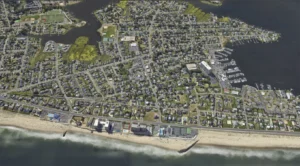
Spring Lake Heights is a small borough just back from the shore, formed on March 19, 1927 from portions of Wall Township, according to Wikipedia. The borough counted 4,890 residents in 2020, sits about 23 feet above sea level, and borders Lake Como, Sea Girt, Spring Lake, and Wall Township. Route 71 runs along Seventh Avenue, and Allaire Road crosses toward it from Wall. Spring Lake Heights tree restoration is the question many yards will face once this Thanksgiving storm moves out.
The National Weather Service in Mount Holly posted a High Wind Warning for Eastern Monmouth County that lasts until 1 AM Friday, November 27. It calls for east winds of 35 to 45 mph with gusts up to 70 mph, localized gusts above that, and damaging winds that will blow down trees and power lines. CBS New York reported a state of emergency starting at 6 PM Wednesday. Our tree restoration work begins where a storm like this leaves an injured tree that may still have a future.
After almost 30 years working throughout Monmouth County, we have seen that the first look after a storm often misses the damage that matters. A limb on the lawn is easy to find. A cracked union, a lifted root plate, or a branch hung high in the crown can wait quietly for the next windy day. This article explains what to look for, what can be repaired, and when to call.
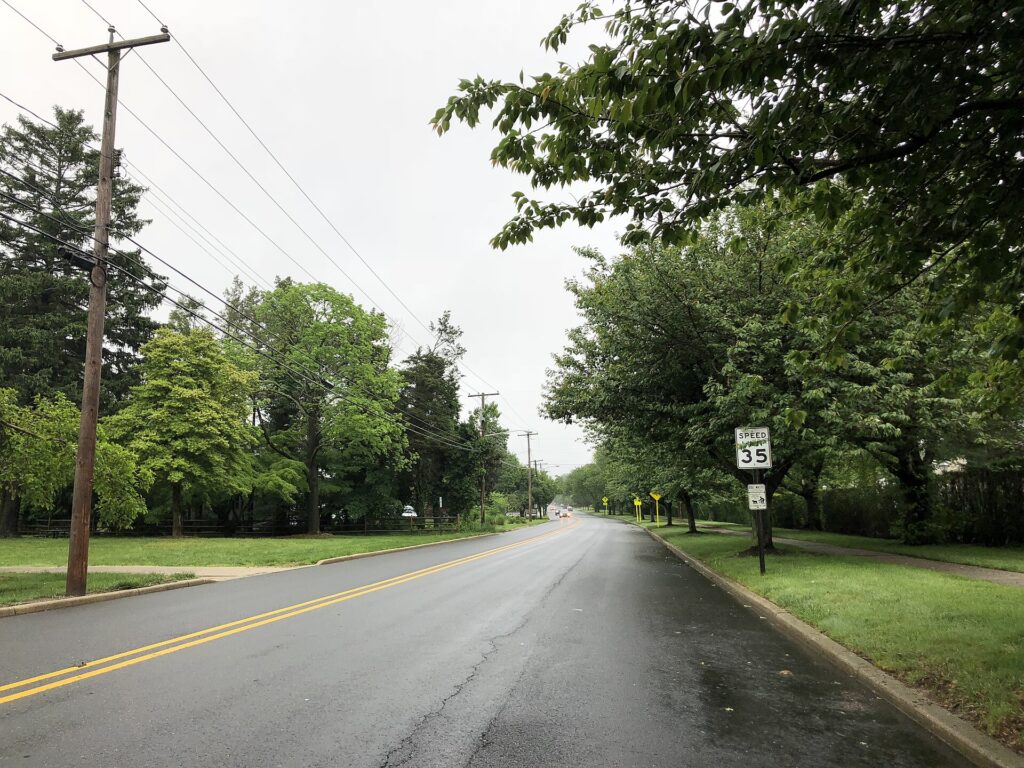
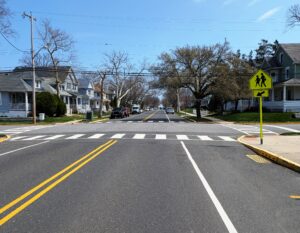
The photograph above shows Allaire Road at Colony Court in Spring Lake Heights on a wet spring day, with leafy branches reaching toward the pavement and utility lines running beside the shade trees. It is not a picture of this storm. It shows how closely trees, wires, and traffic share space here, which is why one broken limb can matter to more than one household. We have not read any report of tree damage in the borough from this storm as we write on Thanksgiving morning.
Water is the other half of the picture. Wreck Pond is a tidal pond on the Atlantic coast, surrounded by Wall Township and the boroughs of Spring Lake, Spring Lake Heights, and Sea Girt. A Coastal Flood Warning that includes Eastern Monmouth runs from 6 AM Thursday to 3 AM Friday, and heavy rain is in the forecast. Wet ground gives roots less to hold, so a tree that stood firm in October may behave differently under load this week. Check the latest statement, because forecasts and warnings change.
Spring Lake Heights Tree Restoration Starts With What the Wind Changed
Spring Lake Heights tree restoration starts with a simple question. What did the wind actually change? Restoration is not a cleanup, and it is not a routine trim. It is a plan for a tree that has been injured but still has enough sound structure to keep. Before anyone cuts, we want to know which parts failed, which parts now carry more load, and whether the roots still hold the trunk the way they did last week. Those answers decide the work.
Safety comes ahead of every other step. Wait until the wind has dropped before walking under any crown, and treat every wire as live. The borough emergency management page tells residents to report downed wires right away to JCP&L at 1-888-544-4877 or to the local police department, and to stay away from them even when they seem dead. In an emergency, call 911. A tree touching a line belongs to the utility first, and no homeowner should pull, cut, or lift a limb that rests on a wire.
Storm damage comes in a few recognizable forms. Purdue Extension describes wind throw, where the whole tree goes over, stem failure, where the trunk snaps or buckles, crown twist, where an uneven canopy splits under load, root failure, and branch failure. Branch failure is the most common and is usually the easiest to repair. Trunk failure usually cannot be repaired. Naming the type of damage early keeps a homeowner from spending hope on a tree that cannot recover, or giving up on one that can.
Some of the damage will not show from the porch. Twisted limbs can open fine cracks that need a close look, and old wounds are common places for a break to start. The UMass Amherst fact sheet on storm damaged trees advises inspecting the crown, stem, and roots from every side, and it flags cracks that run through a trunk, cracks on two sides, and decay beside a crack as the most dangerous conditions. Those findings call for a professional, and often for equipment that keeps a climber off the damaged wood.
The base of the tree deserves its own visit. Soil that mounds or cracks on one side of a trunk, exposed roots, and a lean that appeared overnight all suggest that the root plate moved. The UConn tree risk guide notes that saturated ground destabilizes the root and soil plate and that trees often fail at the roots rather than the trunk. Our guide to weak tree roots explains what we check there, and why an upright tree can still be a compromised one.
Photographs help more than memory. Take pictures of the whole tree, the break, the base, and whatever the tree could reach, such as a roof, a driveway, a fence, or a neighboring yard. Take them from the same spots a week later if the tree is still standing. A comparison shows movement that the eye forgets, and it gives an insurer or the borough a clear record. Our tree risk evaluation uses those details to rank which defects matter first.
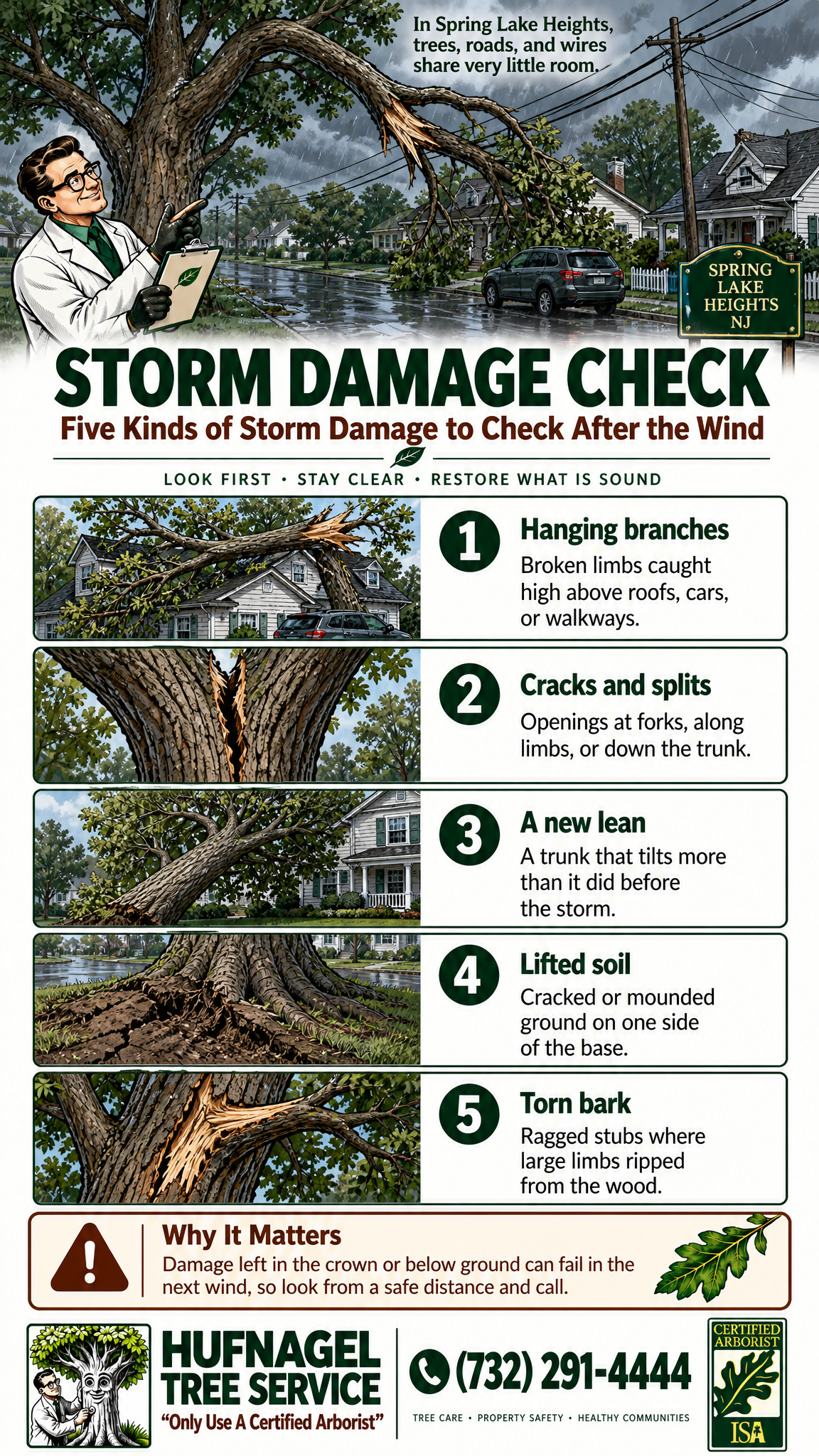
Five Kinds of Storm Damage to Check After the Wind
- Broken branches still attached or hung high in the crown above targets.
- Cracks or splits at forks, along limbs, or down the main trunk.
- A trunk that leans more than it did before the storm began.
- Soil lifted, cracked, or mounded around the base on one side.
- Torn bark and ragged stubs where large limbs ripped away from wood.
A homeowner can look for all five from a safe distance, without a ladder or a saw. Anything on the list is a reason to keep people and cars away from that side of the tree until someone has examined it. Mike Hufnagel describes the first visit this way: “After a storm we read the whole tree before we touch it. The limb on the ground tells us what happened, but the wood still up there tells us what can happen next.” That reading leads straight to the harder question of what to keep.
Restoration Keeps Sound Structure and Removes What Cannot Hold
Restoration only makes sense when the remaining tree can be made dependable. Purdue guidance says trees with minor branch damage or healthy young roots have the best chance of recovery, while uprooted trees and trees with major trunk failure are generally not saveable. The UMass sheet makes a similar split. A tree that lost several branches or a leader can usually be saved, while one that is badly disfigured or missing much of its crown is a candidate for removal. We weigh that against what the tree could hit if it failed.
Young trees get a separate look. A small tree that tipped in soft soil but kept healthy roots may be righted and staked, which is a very different case from a large tree that has pulled its roots out of the ground. The same extension guidance suggests that when more than about 30 percent of the roots are exposed, removal may be the better choice. A homeowner should not try to winch a tree upright alone. A trunk under tension can release suddenly, and the roots may be damaged further by the attempt.
When a tree can be kept, the cuts are deliberate. Broken branches are taken back to sound wood outside the branch collar so the tree can close the wound. Heavy limbs come off in stages, with a first cut underneath, so that falling weight does not strip bark down the trunk, and ropes lower pieces that hang over a roof. The ISA brochure on pruning mature trees advises against flush cuts and wound dressings, and our tree trimming and pruning follows the same practice.
Restraint is part of the repair. A storm has already removed wood that the tree depends on, and taking more than necessary slows the recovery. The ISA brochure advises removing no more than 25 percent of the crown at once, and Purdue sets its ceiling at 30 percent. We never top a tree to make it look even. Topping produces weakly attached sprouts, invites decay, and adds weight that makes the next break more likely. A lopsided crown can often be balanced slowly over more than one season.
Forks need special attention after wind. Two similar stems that meet at a narrow angle can trap bark between them, and a gust may open a seam that was never visible before. Our guide to codominant stems shows what that structure looks like. Old decay matters too, because a storm often breaks a limb where rot had already softened the wood. When a break shows crumbly or discolored wood, our guide to hidden tree rot explains why the rest of the tree needs checking.
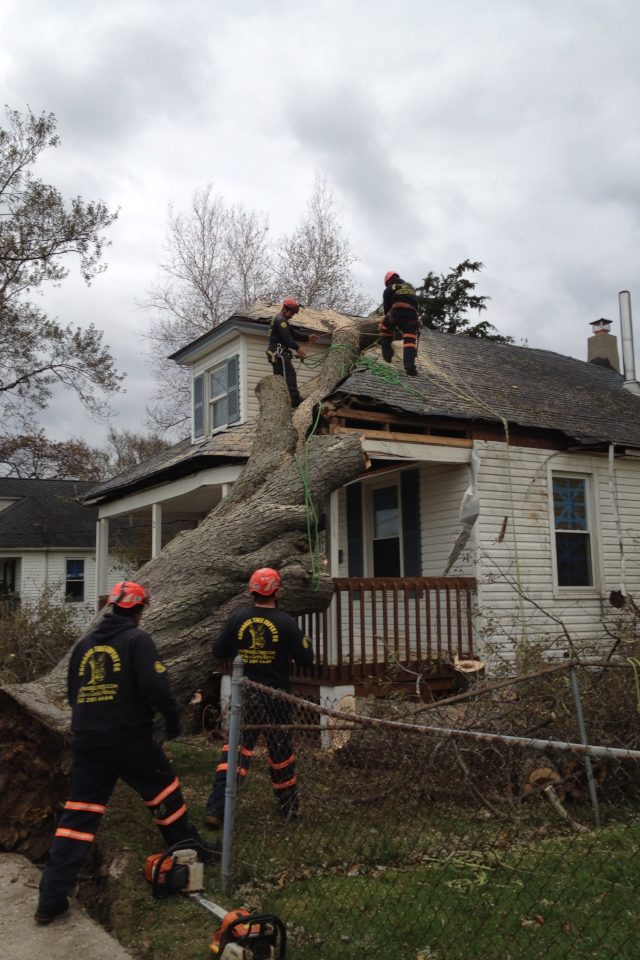
Some trees cannot be made safe, and we say so plainly. A split trunk over a bedroom, a root plate that has rolled, or decay that occupies the base leaves little to build on. In those cases tree removal is the responsible answer, planned and rigged so that nothing else is damaged. The photograph in this section shows a crew working on a large tree that came down across a porch roof on an earlier job. It is controlled work for trained people, with each section secured before it is cut.
What Decides Whether a Damaged Tree Can Be Kept
- How much of the live crown remains attached to sound structural wood.
- Whether the trunk is cracked, split, or twisted below the main limbs.
- Whether the roots and soil show movement since the wind began.
- Whether old decay sits at the break, the fork, or the base.
- What the tree could strike if the remaining structure failed again.
No single item settles the question. A tree with one torn limb, firm roots, and sound wood is often a good restoration candidate, even if it looks rough for a while. A tree that looks tidy but has moved at the base may be the greater concern. We would rather explain the trade honestly than promise that a repair will hold in every storm, because no tree service can guarantee that. Once the choice is made, the borough rules and the ground beneath the tree come into view.
Borough Rules, Root Zones, and Follow Up Shape the Recovery
Spring Lake Heights adopted a tree removal and replacement rule, Ordinance 2024-05, to reduce soil erosion and pollutant runoff and to protect public health and safety. Its replacement requirements reach street trees with a trunk diameter of two and a half inches or more at breast height and other trees of six inches or more, counted per acre. Removal is defined broadly. It includes excessive pruning, improper mulching, grading, and soil compaction that leads to decline, while responsible pruning and maintenance are expressly left out.
Hazard trees have their own path. The ordinance lists a tree that is dead or dying, diseased or infested, causing obvious damage to structures, obstructing traffic signs or passage where pruning has not worked, or judged a threat by a certified arborist or a Licensed Tree Expert. Hazard trees may be removed with no fee or replacement requirement, but the exemption calls for proper written justification to the borough from a New Jersey licensed tree expert or an arborist. Photographs taken before any cutting support that record.
Planned removals that are not exempt can carry replacement duties. Replacement trees are due within twelve months, are monitored for two years, and follow the species list in the ordinance, and a violation can bring a fine of not less than 500 dollars for each tree improperly removed. Please confirm current wording and process with the borough before relying on any summary, including ours. We are not the borough. Our guide to tree removal permits describes the general process.
The root zone often decides whether a repaired tree thrives. The ordinance describes a critical root radius of one and a half feet for every inch of trunk diameter, so a six inch tree has a root circle nine feet in radius. A storm cleanup can crush that circle without anyone noticing. Trucks parked on soft ground, stacked brush, and fill pushed against the trunk all compact soil or bury the root flare. Keep heavy equipment and debris piles away from the base while the ground is still wet.
Aftercare begins once the cuts are made. A tree that lost part of its canopy may send out new shoots, some of which are weakly attached and need thinning in later seasons. Wounds should be watched for decay, and the base should be checked after the next heavy rain. The UMass sheet expects repeated pruning and continued risk inspections for a damaged tree that is kept. Our tree health management visits give a place to follow those changes before they become a second emergency.
Preparation for the next storm belongs in the same plan. Late fall and winter can bring more strong northeast wind, and a freshly repaired tree should be reviewed before it is tested again. Light structural pruning, deadwood removal, and attention to weak forks can lower the load without stripping the crown. Our tree storm proofing page describes that approach, and our article on storm season risk assessment gives homeowners a practical way to prepare. Preparation reduces risk. It does not remove it.
How We Plan Follow Up After Restoration Cuts
- Photograph each wound and the base so later change is easy to compare.
- Recheck the crown for hanging limbs once loose debris has cleared.
- Watch for new lean or lifted soil after the next soaking rain.
- Keep mulch off the trunk and heavy equipment off the root zone.
- Schedule a return visit before winter wind and snow load the tree.
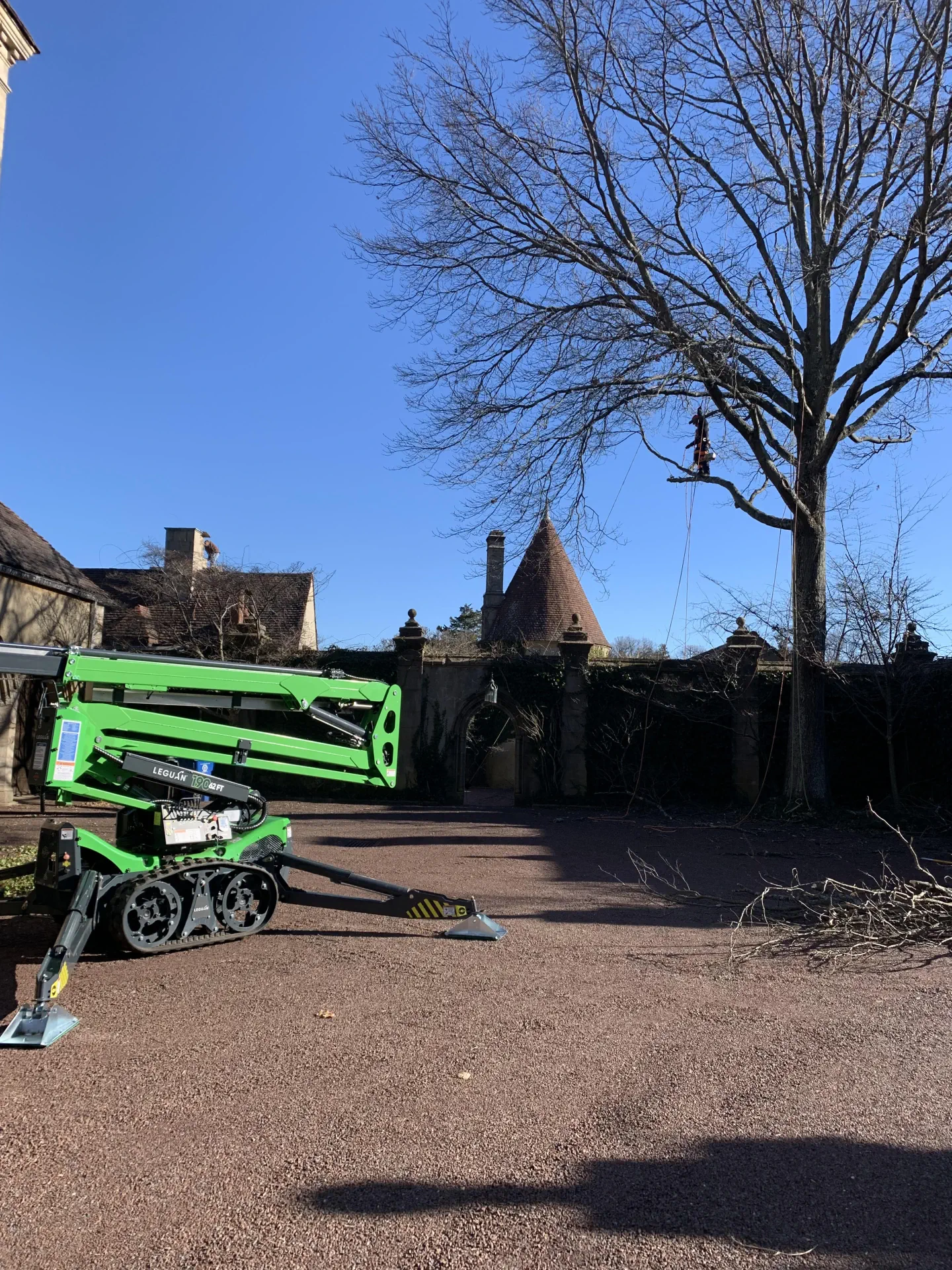
The photograph in this section shows a tracked lift in a gravel courtyard with a climber on ropes in a tall bare tree. It is an earlier job on a different property, and it shows one way to work a high crown while the heavy machine stays on a firm surface. The same thinking applies in Spring Lake Heights. The right access protects the tree, the lawn, and the people working, and a repair that respects all three has the best chance to hold. Good follow up turns one storm visit into a plan.
Call Hufnagel Tree Service About Storm Damage in Spring Lake Heights
If you have a damaged or newly leaning tree near your Spring Lake Heights home, driveway, wires, or a neighboring property, schedule an evaluation as soon as the wind has passed. We provide tree restoration, tree risk evaluation, pruning, storm proofing, health management, and removal when a tree cannot be managed safely.
Hufnagel Tree Service is led by a certified arborist with almost 30 years of local experience and more than 280 five star Google Maps reviews. We inspect first, explain what we found in plain terms, and recommend only the work that serves the tree and the property.
Call or text (732) 291-4444 to schedule a Spring Lake Heights tree restoration review after the Thanksgiving storm. Our Spring Lake Heights tree articles offer more local guidance.
Schedule Service Now!
From precision pruning and safe removals to health assessments and preventative care, Hufnagel Tree Service delivers expert solutions backed by decades of experience. We offer certified insight, fair pricing, and a commitment to doing what’s best for your landscape.
Learn More About Our Services
Related Articles