Winter Tree Preparation in Spring Lake Heights NJ: A Certified Arborist Fall Checklist

Winter tree preparation in Spring Lake Heights starts before the first freeze. We explain what to inspect, what to prune, and how to protect roots and evergreens before winter storms arrive.
Share This Article

Contents

From Villa Park to Como, Fall Is the Time to Prepare Trees for Winter

Spring Lake Heights is not simply a strip of homes between the inland roads and the shore. The borough’s own history of Spring Lake Heights describes Villa Park and Como as the two communities that make up the modern borough, with a landscape that once included farms, homes, and woodlands. Today, mature shade trees, ornamentals, evergreens, and established residential plantings still give many local properties their character.

Spring Lake Heights NJ

Winter preparation here is about more than waiting for snow. Coastal wind, rapidly changing temperatures, wet soil, road salt, ice, and occasional heavy snow can all stress trees in different ways. We approach winter tree preparation as a sequence of decisions: inspect structure, correct manageable defects, protect the root zone, and make sure the tree enters dormancy without preventable problems.

With almost 30 years caring for Monmouth County trees, we have learned that fall is when small maintenance choices can prevent large winter problems. A mature oak near a driveway, a maple beside a home, or an evergreen screen along a property line all have different needs. The goal is not to perform every possible service. The goal is to give each tree the work it actually needs before winter weather puts its structure and health under pressure.

Winter Tree Preparation Starts With Structure, Not the Snow Forecast

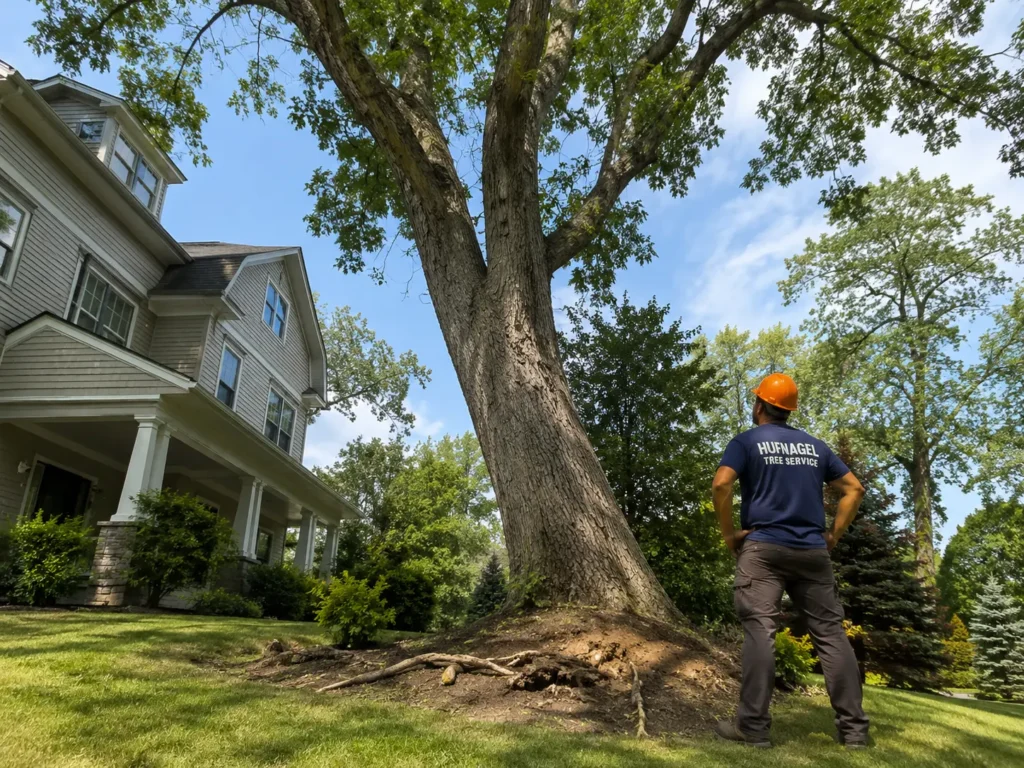
The first step is a structural review. We look for dead branches, cracked limbs, weak unions, crossing branches, old storm injuries, and weight concentrated too far out on long limbs. A tree does not need to look unhealthy to have a structural problem. In fact, some of the most important defects are easier to see as leaves begin to drop. Our tree risk evaluation service gives us a way to connect those defects to the parts of the property they could reach.

In Spring Lake Heights, that target area may include a roof, attached garage, driveway, sidewalk, patio, fence, or neighboring yard. Lots vary from older residential streets in Villa Park and Como to properties closer to busy Route 71. A branch that would be harmless over open lawn can be much more important when it extends over a parked vehicle or a frequently used walkway. We prepare the tree for winter by addressing the defect in the context of the property.

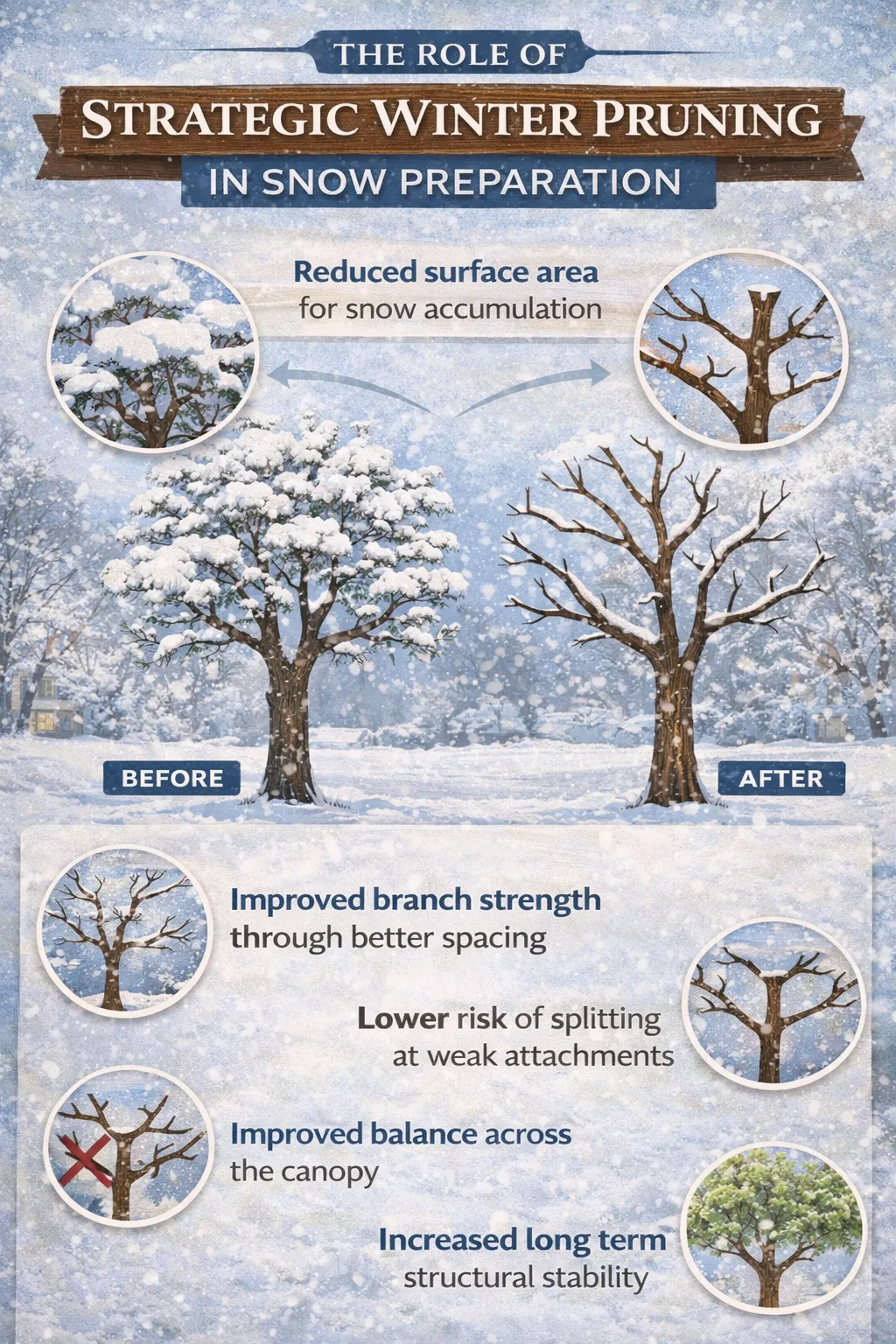
Pruning is often part of the plan, but winter preparation does not mean indiscriminate thinning. We use professional tree trimming and pruning to remove dead, broken, or poorly attached wood and to reduce specific loads when needed. Every cut changes the way a tree distributes weight and responds to wind. Removing too much live canopy can create stress and poor regrowth, so the objective should be defined before the first saw cut.

Fall is also a useful time to revisit damage from summer thunderstorms. A limb may have twisted without falling. A crack can open at a branch union and then appear to close when the crown settles. The trunk may have a fresh wound from impact or lightning. Our guide to summer storm effects on trees explains why wind, flooding, and lightning can leave damage that remains relevant long after the weather clears.

Mike Hufnagel’s rule is straightforward: “Winter preparation starts by finding what winter is most likely to expose.” That is why we prefer a purposeful inspection over a generic checklist. If the structure is sound, the tree may need little more than routine care. If a defect is present, fall gives us time to deal with it before ice, snow, and strong coastal wind make the consequences harder to control.

Structural Checks for Spring Lake Heights Trees Before Winter

  • Dead, broken, or hanging branches over homes, driveways, sidewalks, and parking areas.
  • Cracks at major branch unions or trunks with two competing stems.
  • Long end weighted limbs that move excessively during strong wind.
  • Old storm wounds, cavities, or decay that may have progressed during the growing season.
  • Root zone movement, a new lean, or soil changes around the base of a mature tree.

Good winter preparation begins with the parts of a tree that carry load. A healthy looking crown can still contain weak wood, and a beautiful mature tree can still need selective correction. We do not reduce a tree simply because winter is coming. We identify defects, consider what is below them, and choose the least amount of work that meaningfully improves the situation. Once the structure is addressed, the next part of winter preparation happens at ground level where roots, moisture, mulch, and evergreen exposure become the focus.

Prepare Roots and Evergreens for Cold, Wind, and Salt

Tree Root Inspection

Roots are active well beyond the point when a deciduous tree drops its leaves, and they need a stable soil environment going into winter. A dry autumn can leave a tree entering cold weather with less available moisture, while a very wet fall can create the opposite problem. We evaluate actual site conditions rather than assuming every tree needs the same treatment. Our tree health management service can help when a tree is showing stress that goes beyond pruning alone.

Mulch is useful when it is applied correctly. It moderates soil temperature, reduces moisture loss, and protects the root zone from some surface disturbance. It should not be piled against the trunk. Rutgers explains that over mulching can bury the root flare and create health problems. We prefer a broad mulch ring with visible trunk flare and a reasonable depth, not a cone of material wrapped around the bark.

Evergreens need special attention because they continue losing moisture through foliage during winter. Wind can accelerate drying, especially on exposed sides of a property. In a shore influenced community like Spring Lake Heights, salt carried from roads or coastal air can add another stress. We look for browned tips, previous winter burn, thin root zones, and hedges that have become so dense or top heavy that snow can spread or split them.

Newer trees and recently transplanted ornamentals deserve a different conversation from mature established specimens. Their root systems occupy a smaller soil volume, so moisture swings and wind exposure can affect them more quickly. Staking may be appropriate in limited cases, but it should not become a permanent crutch. The purpose is to support establishment while still allowing the trunk to develop normal movement and taper.

The borough maintains an active Environmental Commission, a useful reminder that residential tree care is part of a larger local landscape. Healthy roots help trees retain soil, manage rainfall, and remain stable through changing seasons. Winter preparation at the root zone is less visible than pruning, but it can make the difference between a tree that enters spring ready to grow and one that spends the next season trying to recover from avoidable stress.

Root and Evergreen Winter Preparation That Actually Helps

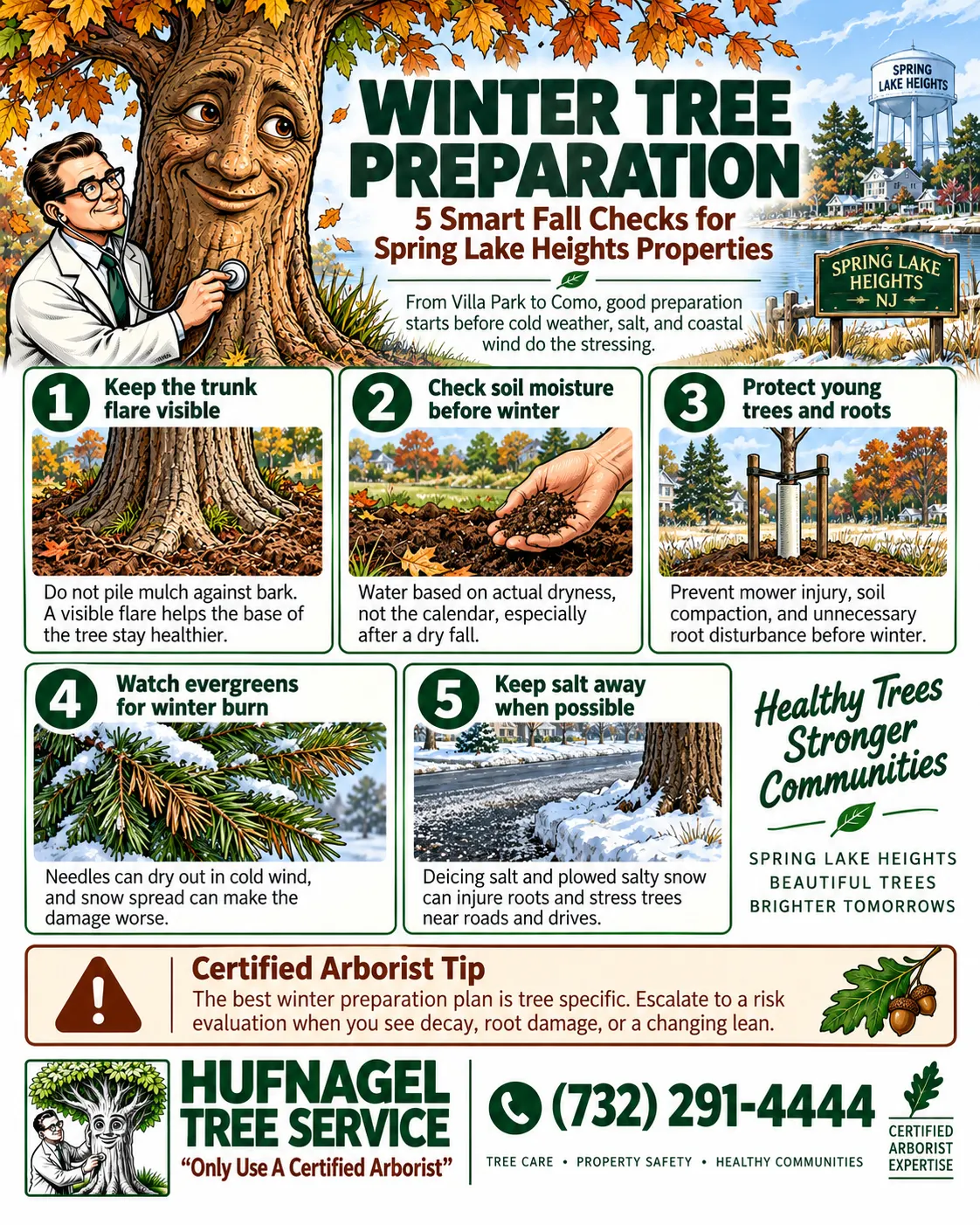
  • Keep the trunk flare visible and avoid piling mulch against bark.
  • Check soil moisture before winter rather than watering by calendar alone.
  • Protect young trees from mower damage, compaction, and unnecessary root disturbance.
  • Watch exposed evergreens for recurring winter burn and snow spread problems.
  • Keep deicing salt and salty plowed snow away from root zones whenever practical.

Winter tree care is not only about branches overhead. The root system and evergreen foliage continue responding to moisture, temperature, and wind while the landscape appears quiet. A good plan protects the root flare, avoids excess mulch, and recognizes when salt or exposure is adding stress. That is particularly important on maintained residential properties where lawns, driveways, sidewalks, and planting beds compete for the same soil space. With the root zone prepared, we can move to pruning timing and the tree health work that makes sense before storms arrive.

Winter Pruning and Tree Health Work That Makes Sense Before Storms

Pruning timing depends on the tree, the objective, and the problem being corrected. Dead and dangerous branches can be addressed when needed, while other pruning may be better during dormancy or after a particular tree flowers. Rutgers notes in its winter pruning guidance that leafless trees can make structural issues easier to see and that dead, broken, or dangling branches should be removed. That visibility is one reason late fall and winter can be useful for many landscape trees.

We also use the dormant view to find crossed branches, tight unions, competing leaders, and old wounds hidden by summer foliage. Our article on codominant stems and multistem trees explains why narrow unions can become significant as stems gain diameter and push against one another. Winter preparation may involve reducing stress on a union, removing a defective branch, or creating a longer term pruning plan rather than trying to solve everything in one visit.

For mature trees, the objective is usually preservation and risk reduction, not forcing a young tree shape onto an old specimen. We may clean deadwood, shorten selected branches, or perform a carefully planned crown reduction where leverage has become excessive. We do not top trees. Rutgers guidance for hiring tree care professionals warns homeowners about topping and explains why qualified tree work matters. Rutgers tree care professional guidance is worth reviewing before hiring anyone for substantial winter work.

We also look for health concerns that may change the winter plan. Extensive decay, root damage, fungal fruiting bodies, severe dieback, or a rapidly changing lean may turn a routine pruning visit into a more detailed risk evaluation. Our information on hidden tree rot and weak tree roots shows why a tree can look normal from one side while a serious defect develops elsewhere.

The final winter prep plan should be specific enough that you know what is being done and why. That may be one pruning cut over a roof, deadwood removal in a mature oak, root zone correction around an ornamental, or simply a recommendation to monitor a healthy tree. Preparing early also gives homeowners time to schedule work before the National Weather Service begins issuing winter watches and warnings. NWS winter weather information for the region is useful for understanding the mix of snow, ice, and wind that can arrive during the season.

The Best Winter Preparation Plan Is Tree Specific

  • Prune for a defined structural or safety objective rather than removing live canopy without a reason.
  • Use dormant season visibility to identify crossed branches, weak unions, and hidden deadwood.
  • Consider species and flowering timing before scheduling nonemergency pruning.
  • Escalate to a risk evaluation when decay, root damage, or a changing lean is present.
  • Finish needed work before winter warnings turn a preventable issue into an emergency call.

There is no single date when every Spring Lake Heights tree should be pruned. The right timing depends on species, condition, and the reason for the work. Winter preparation works best when structural pruning, health care, and root zone management are coordinated rather than treated as separate chores. That approach protects mature trees while reducing the chance that weak wood will become the first failure point in a storm. With a clear plan in place, homeowners can enter winter knowing which trees were corrected, which are being monitored, and which need further action.

Schedule Winter Tree Preparation in Spring Lake Heights

If you want your trees ready before winter weather reaches Spring Lake Heights, we can start with a property specific review and build the work around what we find. Our services include tree risk evaluation, tree pruning, storm proofing, health management, restoration, and removal when a tree cannot be retained safely.

Hufnagel Tree Service is led by a certified arborist with almost 30 years of local experience and more than 280 five star Google Maps reviews. We know the difference between routine fall cleanup and real arboricultural preparation, and we bring that experience to homes throughout the Spring Lake Heights area.

Call or text (732) 291-4444 to schedule a winter tree preparation consultation in Spring Lake Heights before the first serious coastal storm tests your trees.

Schedule Service Now!

From precision pruning and safe removals to health assessments and preventative care, Hufnagel Tree Service delivers expert solutions backed by decades of experience. We offer certified insight, fair pricing, and a commitment to doing what’s best for your landscape.

Where Do You Need Service?
Please Enter Your Contact Information
Are You A New or Existing Customer?
How Can We Help You?

Thank You!

Your Message Has Been Sent

We Will Contact You About Your Inquiry Shortly.

We Could Not Find A Direct Link To A Tree Removal Permit Application For The Town You Selected.

Please contact your local municipality to determine if a permit is required for your tree removal project. They will provide you with the most accurate and up-to-date information.