Tree Risk Inspection and Health Assessment By Certified Pros

Mature trees can hide storm damage high in the canopy. Learn why Hufnagel recommends annual aerial tree inspections, with extra checks after severe seasons.
Share This Article

Contents

Mature Monmouth County Trees Change Above the Roofline

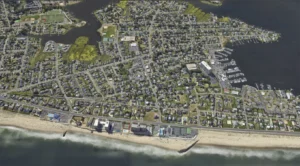
Across Monmouth County, important tree defects can develop where homeowners cannot see them from the lawn. Mature oaks in Lincroft, tulip poplars in Navesink, maples around River Plaza, and tall pines near Belford or Port Monmouth can carry problems high above roofs, driveways, pools, and streets.

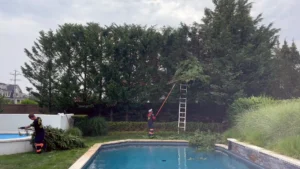
A ground inspection is still the starting point. During a tree risk evaluation, we check the roots, trunk, visible unions, canopy balance, site history, and nearby targets. An aerial tree inspection takes the next step when needed, putting a qualified arborist close enough to the upper crown to inspect important limbs and attachments directly with professional access.

Michael Hufnagel recommends treating aerial inspection as scheduled maintenance for large mature trees around occupied areas. His working rule is simple: inspect at least annually, and consider a second inspection in the same year when storm seasons have been unusually severe. That approach is especially useful along the Raritan Bayshore and in exposed parts of Middletown, where one rough summer can be followed by autumn coastal wind, a winter nor’easter, or heavy wet snow.

Why Aerial Tree Inspection in Monmouth County NJ Matters

Tree defects do not develop only where we can see them. A cracked scaffold limb may sit high above the ground, deadwood can remain lodged in surrounding growth, and old pruning wounds may decay behind bark. The International Society of Arboriculture tree risk guidance emphasizes inspection and assessment because risk depends on defects and what could be struck.

Height changes perspective. From the lawn, a dark line in a branch union may look ordinary. At close range, it may be a crack, included bark, old storm damage, decay, or nothing serious. Aerial inspection replaces homeowner guesswork with a direct professional look where closer access is justified.

This matters around Monmouth County homes where mature trees share space with roofs, patios, pools, cars, neighboring properties, and utilities. A limb over open lawn does not carry the same consequence as one over a bedroom or driveway. Our storm proofing service considers both the tree and the targets below it.

New Jersey also regulates professional tree care. The New Jersey Board of Tree Experts states that businesses providing tree care for hire must be registered and have the required licensed tree professional in their employ. The state’s tree expert licensing information specifically includes tree assessment and risk management among professional tree expert services. That matters when the inspection involves climbing, aerial access, diagnosis, and decisions about valuable mature trees.

An aerial inspection is not a promise that a tree can never fail. No inspection can remove all uncertainty from living structures exposed to extreme weather. What it can do is identify visible and reasonably discoverable conditions, compare them with the tree’s history, and give the homeowner a practical maintenance plan before a small defect becomes a storm emergency.

“Aerial inspections should be done annually, or twice in the same year when storm seasons have been especially severe.”

Michael Hufnagel, Certified Arborist


What a Close Canopy Inspection Can Reveal

  • Cracks or separation at major branch attachments that are difficult to judge from the ground
  • Dead or broken branches that remain suspended inside the canopy
  • Old pruning wounds, cavities, loose bark, and localized decay in upper limbs
  • Storm damage that changed branch position, crown balance, or loading
  • Vines, rubbing limbs, weak unions, or defects hidden by a dense summer crown

The value is not simply getting higher into the tree. The value is knowing when to look again. That is why inspection frequency should follow the tree and the weather, not a calendar alone.

Annual or Twice Yearly: Let Storm Severity Set the Schedule

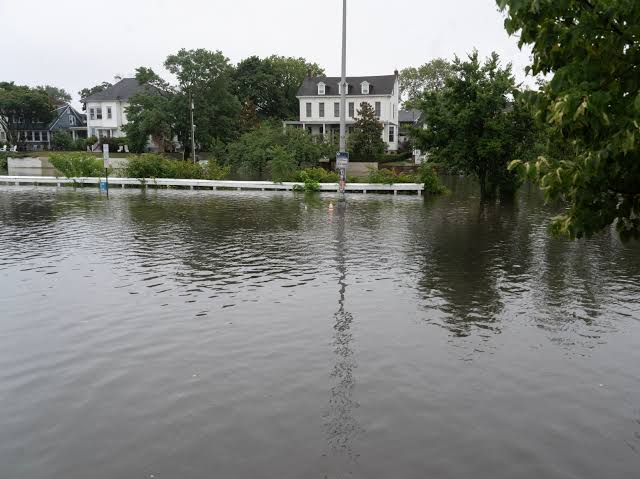
asbury park press photo flooding july 2026

For mature trees around homes and occupied areas, an annual aerial inspection provides a useful baseline. New growth, decay, branch loading, drought, storms, and root zone changes can alter what we saw previously. Repeated inspections also create a record of change instead of relying on memory from last season.

Severe weather can shorten that interval. The ISA storm damage guidance advises that after severe storms, larger trees near people or property should be checked even when they appear undamaged from the ground. Penn State’s tree risk guidance for storm inspections likewise notes that inspections after major summer storms or winter ice can find broken hangers that may remain aloft after the weather passes.

Monmouth County has several storm patterns to consider. NOAA identifies the Atlantic hurricane season as June 1 through November 30, but our local exposure is broader than tropical systems. Thunderstorms, straight line wind, coastal storms, nor’easters, wet snow, ice, and saturated ground can all affect branches or root support. A quiet season may justify one scheduled aerial review. A rough season can justify another look before waiting a full year.

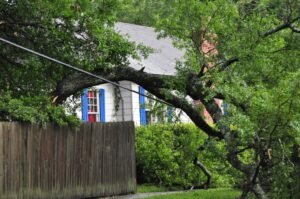
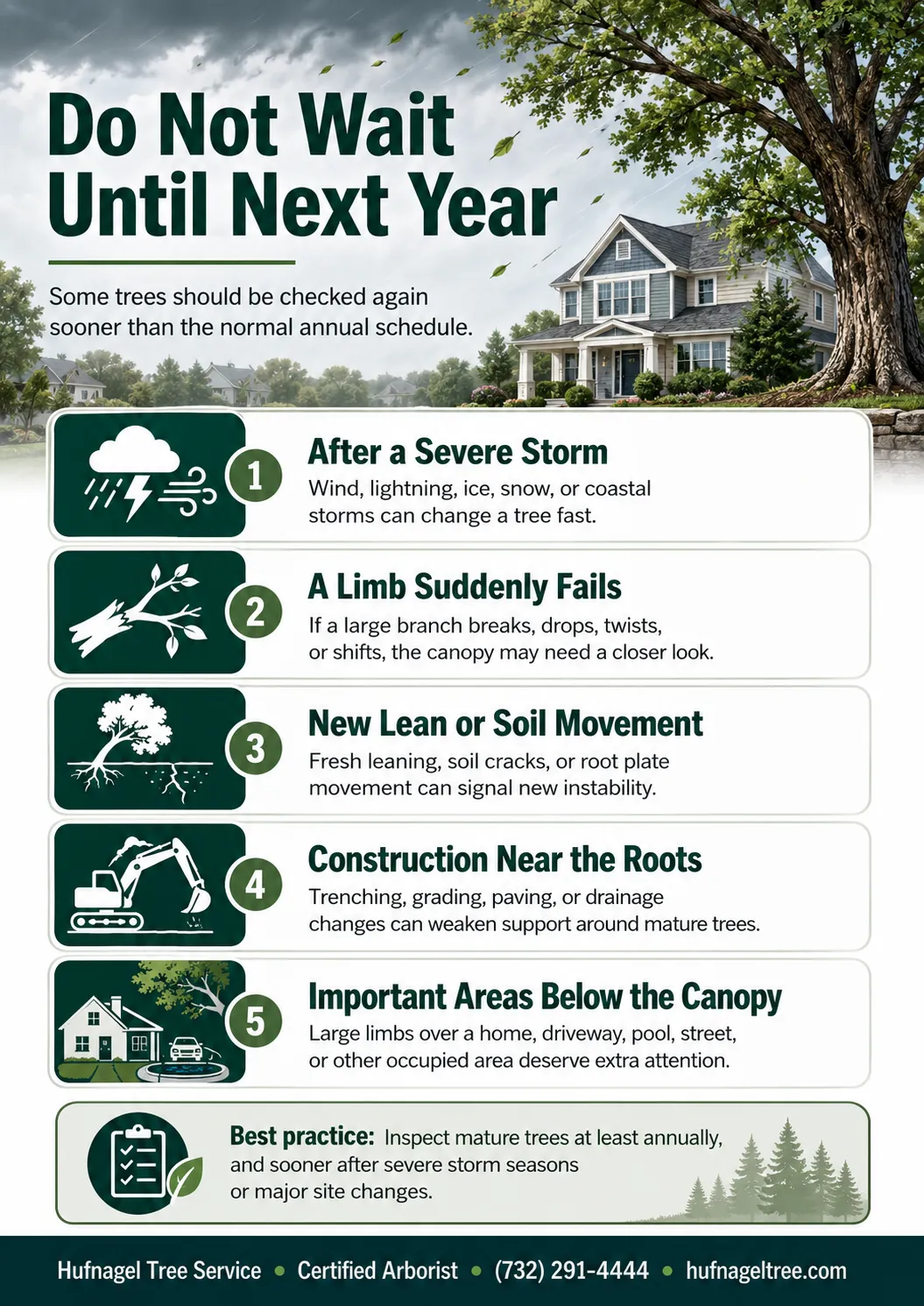
We also move an inspection forward when something changes on the property. A neighboring tree is removed and suddenly exposes a crown to more wind. A driveway or patio project changes the root zone. A large branch fails, even if it misses the house. Lightning strikes nearby. The tree begins dropping unusual deadwood. These events can matter more than the month printed on last year’s invoice.

Homeowners should still watch trees between professional visits. Dated photos after major storms and notes about new leans, hanging branches, cracks, fungal growth, or canopy changes can help. Our summer storm tree inspection guide explains why weather history belongs in the evaluation.

“A storm rarely creates every problem in a tree. More often, it reveals a weakness that has been developing for years.”

Michael Hufnagel, Certified Arborist


When We Move the Next Aerial Inspection Forward

  • A severe wind, lightning, ice, snow, or coastal storm affects the property
  • A large limb breaks, drops, twists, or changes position after weather
  • A new lean, fresh soil crack, or root plate movement appears near the base
  • Construction, trenching, paving, grading, or drainage changes occur near mature roots
  • The tree carries large limbs over a home, driveway, pool, street, or other frequently occupied area

Storm history tells us when to inspect. The next step is knowing exactly what we are looking for once we can see the crown at close range.

What We Inspect Once We Are in the Upper Canopy

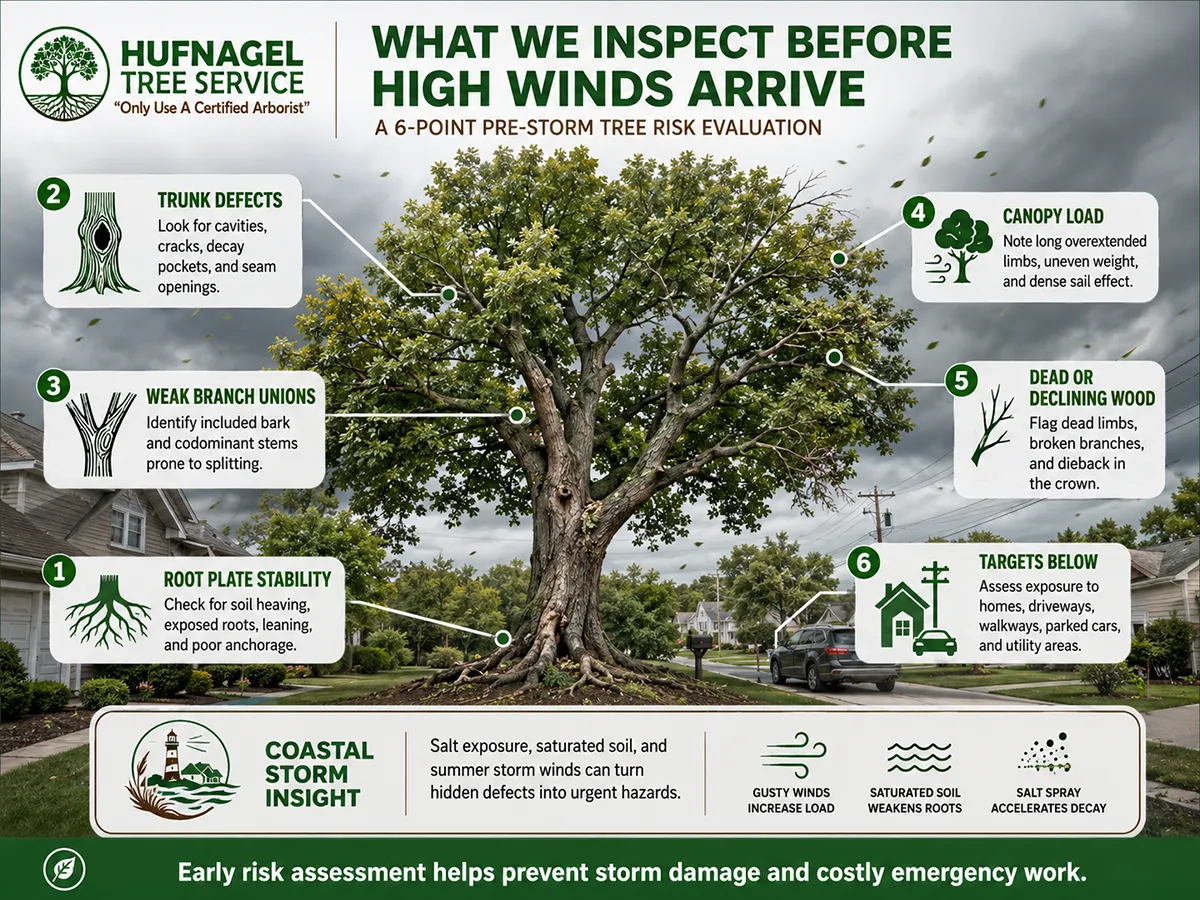
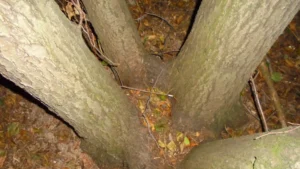
Our aerial inspection begins with structure. We examine major branch unions, codominant stems, old tears, cracks, and areas carrying unusual leverage. A narrow union can hide included bark and limited connective wood. Our guide to codominant stems explains why multi stem trees deserve special attention.

We inspect deadwood and storm hangers next. A branch does not need to fall immediately after a storm to become dangerous. It can break, settle into neighboring limbs, and stay there until the next gust or until its support dries and shifts. The University of Minnesota’s storm damage guidance for landscape trees recommends professional help when tree damage creates work that is too large or hazardous for a homeowner.

Decay deserves a close look because foliage can hide structural loss. We check old wounds, cavities, loose bark, fungal indicators, softened wood, and branch stubs. Our article on hidden tree rot explains why a green crown does not prove the wood inside is sound. The Rutgers Plant Diagnostic Laboratory is also a useful New Jersey resource for disease or pest diagnosis.

We compare the crown with the base of the tree because upper defects cannot be judged apart from roots, soil, trunk condition, and balance. A heavy limb becomes more concerning when root movement or trunk decay is also present. Our guide to weak tree roots explains why anchorage problems can develop before uprooting.

Finally, we look at the tree as a living system. Species, age, vigor, previous pruning, exposure, crown density, and recovery growth all affect the recommendation. The ISA guidance on hiring an arborist explains the value of professional tree care. Judgment is what separates an inspection from a list of defects.

“A dangerous tree usually gives signs before it fails. The problem is that most homeowners do not know which signs matter and which ones are normal.”

Michael Hufnagel, Certified Arborist


Upper Canopy Conditions We Document

  • Opening cracks, weak unions, included bark, and old storm tears
  • Deadwood, broken hangers, split leaders, and branches resting in the crown
  • Cavities, decay indicators, loose bark, and old pruning wounds
  • Unbalanced growth, heavy end weight, rubbing limbs, and excess leverage
  • How upper defects relate to trunk condition, root stability, and targets below

Finding a defect is only the diagnosis stage. The homeowner still needs to know whether the right answer is pruning, restoration, monitoring, or removal.
From Aerial Findings to a Clear Tree Care Plan

Arborist Consulting

Many aerial findings can be managed without removing the tree. Selective tree trimming and pruning can remove deadwood, shorten an overextended limb, reduce selected end weight, improve clearance, or correct a structural problem. The objective is precise risk reduction, not stripping or topping the canopy.

Other trees need a longer recovery plan. Our tree restoration and rejuvenation service can combine staged pruning with site recommendations when sound structure supports preservation. Tree health management may also help when stress, pests, disease, soil, or water issues contribute to decline.

Sometimes a defect cannot be reduced to a reasonable level. Severe decay, trunk failure, a dangerous split, or root instability beside a high value target can make professional tree removal the responsible recommendation. We do not start with removal because a tree is large. We start with its condition and what is exposed below it.

Some trees need no immediate cutting. Monitoring may be right when a condition is stable or best compared over time. That is another reason annual inspection matters. Photos and notes create a reference point for the next visit. If the defect changes after a severe storm season, we can respond to evidence rather than assumption.

Hufnagel has built its local reputation on preservation first judgment. Our interview with Certified Arborist Michael Hufnagel explains the difference between cutting wood and caring for a tree around a home. More than 200 five star Google reviews reflect the trust our customers place in that approach. The goal is a clear answer before the next storm forces the decision.

“Anyone can cut wood. A certified arborist protects your home.”

Michael Hufnagel, Certified Arborist


How Inspection Findings Turn Into a Plan

  • Prune dead, damaged, overextended, or poorly attached limbs when targeted work can reduce risk
  • Use staged restoration when a valuable tree can be preserved without excessive canopy loss
  • Address health, soil, water, pest, or disease concerns when structure remains serviceable
  • Monitor stable conditions and compare them during the next scheduled aerial inspection
  • Recommend removal when structural or root defects cannot be reduced to an acceptable practical level

Aerial inspection is most useful before the emergency. It gives us time to preserve sound trees, plan work carefully, and make decisions under normal conditions instead of during cleanup.

Schedule Your Aerial Tree Inspection With Hufnagel Tree Service

If you have a large mature tree near your home, driveway, pool, street, or neighboring property, call Hufnagel Tree Service to discuss whether it is time for an aerial canopy inspection. We serve Middletown, Lincroft, Navesink, Locust, River Plaza, Oak Hill, Chapel Hill, New Monmouth, Belford, Leonardo, Port Monmouth, North Middletown, Red Bank, Rumson, Fair Haven, Little Silver, Atlantic Highlands, Highlands, Holmdel, and surrounding Monmouth County communities.

Michael Hufnagel brings certified arborist expertise, more than 25 years of Monmouth County experience, and deep local roots to every recommendation. Start with our tree risk evaluation service and let us determine whether closer upper canopy access is appropriate for the tree. Call or text (732) 291-4444 to schedule a location specific inspection before the next severe storm season.

Schedule Service Now!

From precision pruning and safe removals to health assessments and preventative care, Hufnagel Tree Service delivers expert solutions backed by decades of experience. We offer certified insight, fair pricing, and a commitment to doing what’s best for your landscape.

Where Do You Need Service?
Please Enter Your Contact Information
Are You A New or Existing Customer?
How Can We Help You?

Thank You!

Your Message Has Been Sent

We Will Contact You About Your Inquiry Shortly.

We Could Not Find A Direct Link To A Tree Removal Permit Application For The Town You Selected.

Please contact your local municipality to determine if a permit is required for your tree removal project. They will provide you with the most accurate and up-to-date information.