Contents
Tree Removal Manasquan River NJ: Tree of Heaven
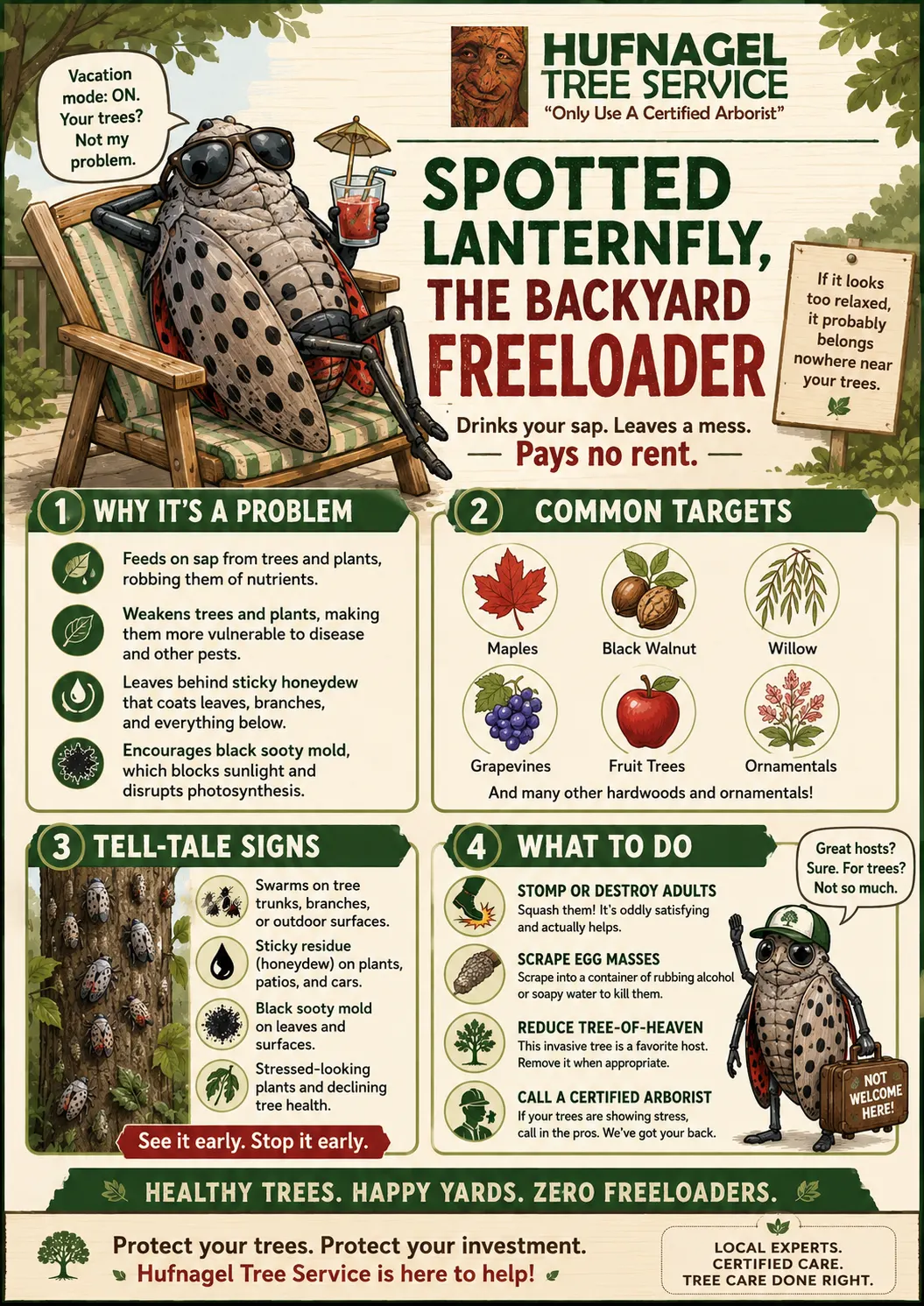
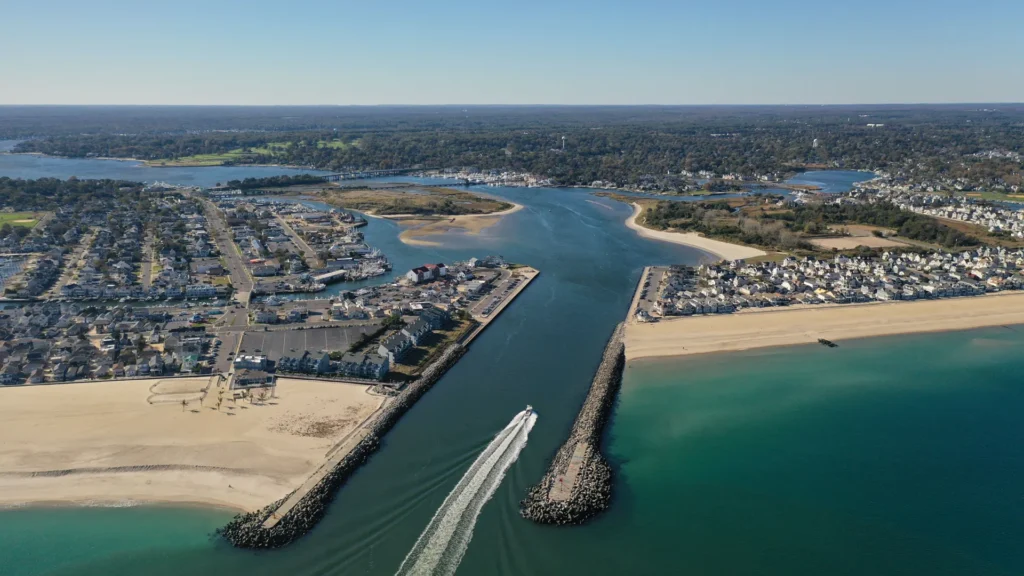
The Manasquan River area has the exact mix of conditions that makes spotted lanternfly problems frustrating for homeowners: mature shade trees, ornamental landscapes, wooded edges, marinas, decks, patios, and pockets of invasive growth that often go unnoticed. From Manasquan and Brielle to Wall Township, Allenwood, Sea Girt, Spring Lake Heights, and properties near Glimmer Glass, we are hearing the same question: is this just a nuisance, or is it a sign that something on the property needs real tree work?
At Hufnagel Tree Service, we look at spotted lanternflies through the lens of certified arborist care, not pest control. We evaluate the trees, identify host plants, look for stress, and determine whether Tree Removal, tree pruning, Tree Health Management, or a Tree Risk Evaluation is the smarter long-term answer.
That distinction matters along the Manasquan River because this area is not one uniform landscape. A property near a Brielle marina has different exposure than a wooded Wall Township lot near Allenwood. A downtown Manasquan backyard has different tree pressure than a larger river-adjacent property where invasive Tree of Heaven may be mixed into a fence line, road edge, or unmanaged corner.
The NJ Department of Agriculture explains that spotted lanternflies feed on more than 70 host plant species and that Tree of Heaven is the preferred, possibly required, host. That does not mean every maple, birch, or ornamental should be removed. It means homeowners need a trained eye to separate nuisance activity from a deeper property issue. In many cases, the real conversation is about the trees attracting it, supporting it, or already declining under other stress.
“When I see spotted lanternflies gathered, I do not jump straight to removal,” says Michael Hufnagel. “I first want to know what they are feeding on, whether Tree of Heaven is present, and whether any valuable trees are already stressed. That is where an arborist can help a homeowner make a better decision.”
Why Tree of Heaven Matters Along the Manasquan River
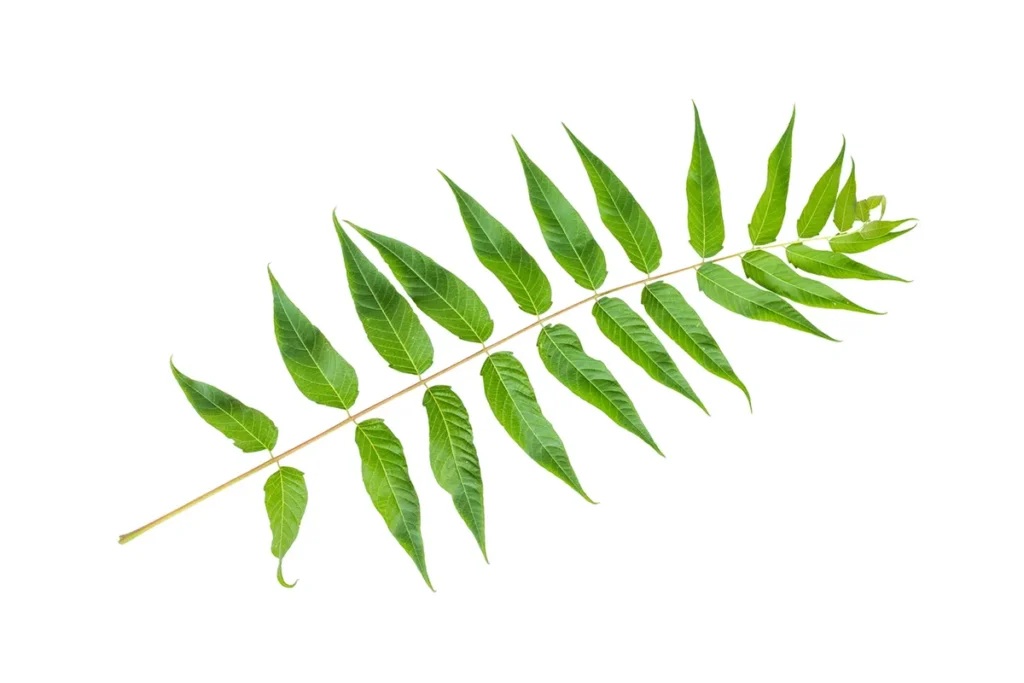
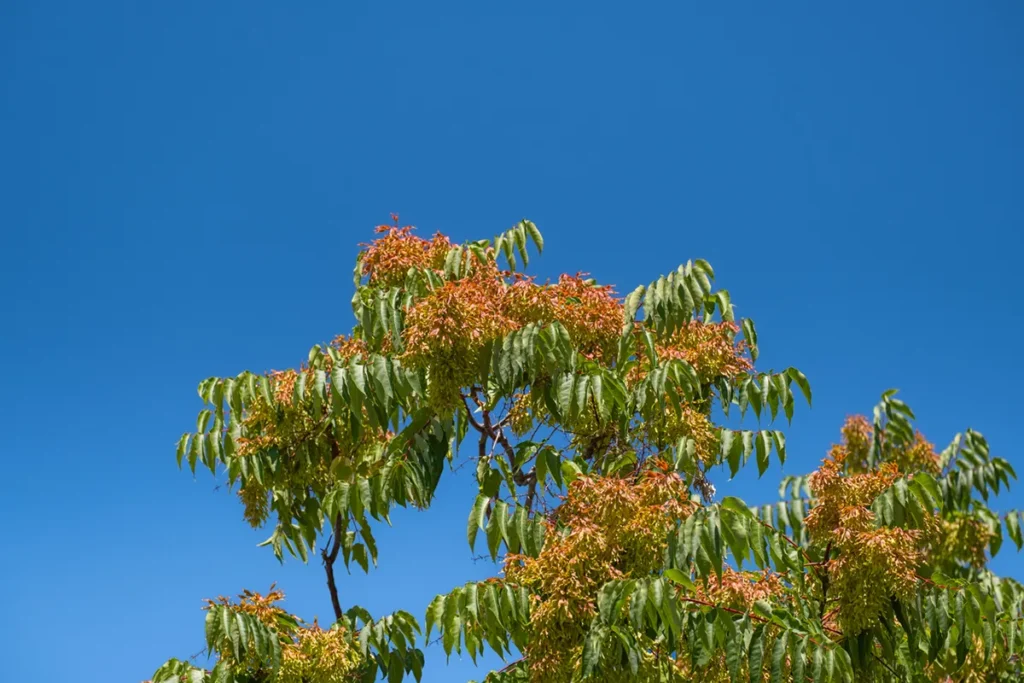
Tree of Heaven, also known as Ailanthus altissima, is one of the most important plants to understand when talking about spotted lanternflies. It grows aggressively, spreads by seed and root suckers, and often establishes itself where homeowners are not actively managing the landscape, including fence lines, roadside edges, disturbed soil, and corners where volunteer growth has taken over.
Along the Manasquan River corridor, those conditions are common. A clean front yard can still have invasive growth pressing in from a rear property line, rail corridor, drainage edge, or neighboring wooded strip. Older lots and tight boundaries often place desirable trees and problem trees close together.
The Penn State Extension guidance on controlling Tree of Heaven is useful because it reinforces a key point: managing this invasive tree is part of the broader spotted lanternfly conversation. Tree of Heaven is not just another weed tree. It can become a magnet for lanternfly activity, and once it is established, simply cutting the trunk without understanding the root system may lead to heavy resprouting. That can make the problem look better for a few weeks while making it worse over time.
For homeowners, the benefit of identifying Tree of Heaven early is control. If it is small and properly managed, it may be possible to prevent a larger removal project. If it is mature, leaning, close to structures, or mixed into better trees, the work becomes more technical, especially near sheds, garages, fences, utility lines, outdoor kitchens, and riverfront hardscapes.
“Tree of Heaven is one of those trees homeowners often do not realize they have,” says Michael Hufnagel. “By the time they notice the lanternflies, the host tree may be established. Our job is to identify it correctly and recommend a plan that does not create more suckering, more risk, or more damage to the surrounding landscape.”
What the Host Tree Tells Us Before the Lanternflies Take Over
Before a Manasquan River homeowner assumes the entire yard needs treatment, we look for the conditions that explain why the insects are collecting there in the first place.
- Tree of Heaven is a preferred host, so its presence changes the long-term strategy.
- Invasive trees along edges and unmanaged areas can support repeated lanternfly activity.
- Cutting Tree of Heaven incorrectly can trigger aggressive regrowth from the root system.
- A certified arborist inspection helps separate host-tree management from unnecessary removal.
- The right plan protects desirable trees while reducing habitat that supports the pest.
Once the host tree is identified, the next question is whether removal is appropriate, and that decision should be based on tree condition, location, size, safety, and the surrounding landscape.
When Tree Removal Is the Right Long-Term Solution
Tree removal is not the answer to every spotted lanternfly sighting. A few nymphs on a deck, a maple, or outdoor furniture does not automatically mean a tree should come down. What matters is the species, condition, infestation level, and whether the tree is contributing to a recurring problem.
If a Tree of Heaven is growing near a Manasquan River home, especially near a patio, pool, garage, driveway, or fence line, removal may be the most practical long-term option. The tree itself is invasive, and if it supports lanternfly activity, keeping it may invite the same seasonal issue year after year. In tight neighborhoods near Manasquan, Brielle, and Sea Girt, one unmanaged host tree can affect several outdoor living areas.
Proper removal requires planning. Tree of Heaven can resprout aggressively when handled incorrectly, so homeowners should avoid casual cutting if the tree is established. A professional tree removal plan considers access, rigging needs, stump and root behavior, surrounding trees, and whether follow-up control may be needed. The NJDA homeowner resources include host-tree removal as one management step, but execution is where professional judgment matters.
This is where local experience matters. River-area properties may have narrow driveways, older fences, overhead service lines, pavers, docks, irrigation, ornamental beds, and mature trees that should not be damaged while removing an invasive one. Our crews plan the work so the target tree is removed safely and cleanly.
“A removal recommendation should have a reason,” says Michael Hufnagel. “If the tree is invasive, poorly located, structurally questionable, and contributing to a lanternfly problem, removal can make sense. If it is a healthy shade tree with a few insects on it, we look at preservation, monitoring, and proper care instead.”
Removal Decisions That Separate Arborist Work From Guesswork
The best tree removal decisions are not reactions to insects. They are site-specific decisions based on risk, tree biology, and long-term property care.
- Remove Tree of Heaven when it is invasive, poorly located, mature, hazardous, or supporting recurring lanternfly pressure.
- Do not remove valuable shade trees simply because lanternflies are present on the bark.
- Use professional planning when removal is near homes, docks, patios, utilities, or neighboring structures.
- Consider stump behavior, root suckering, and follow-up growth before cutting Tree of Heaven.
- Pair removal with tree health monitoring for maples, birches, ornamentals, and other valuable trees.
After the invasive host issue is addressed, the next priority is protecting the trees worth keeping, especially the maples, birches, ornamentals, and mature shade trees that define so many Manasquan River properties.
Protecting Maples, Birches, and Ornamental Trees From Added Stress
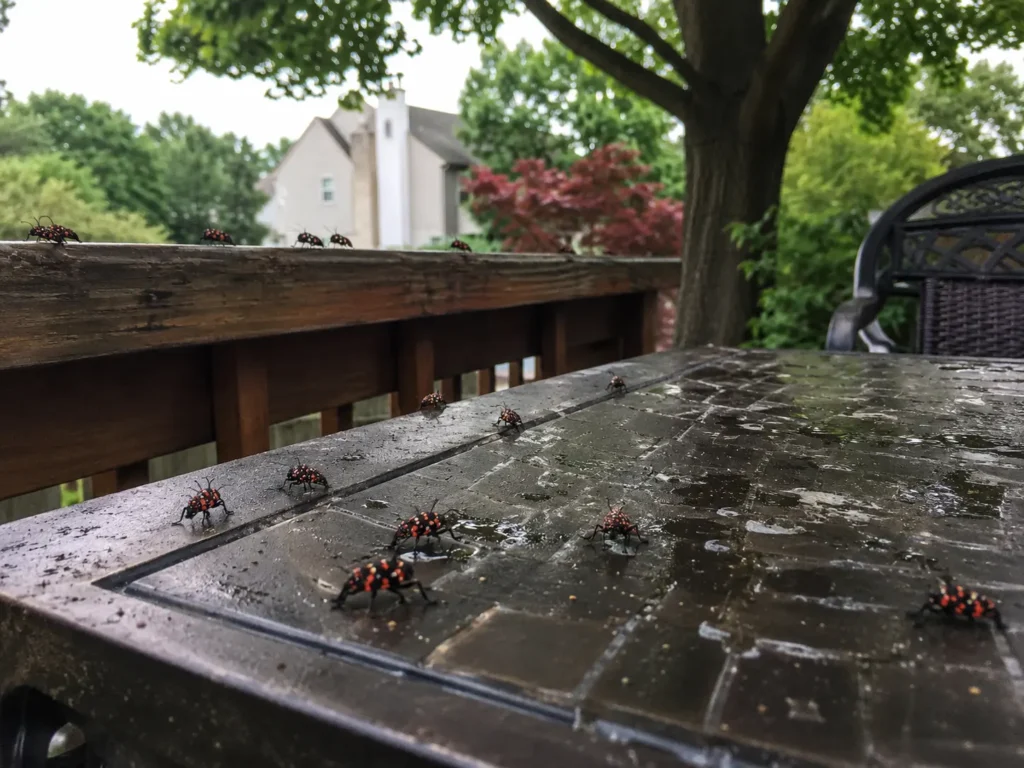
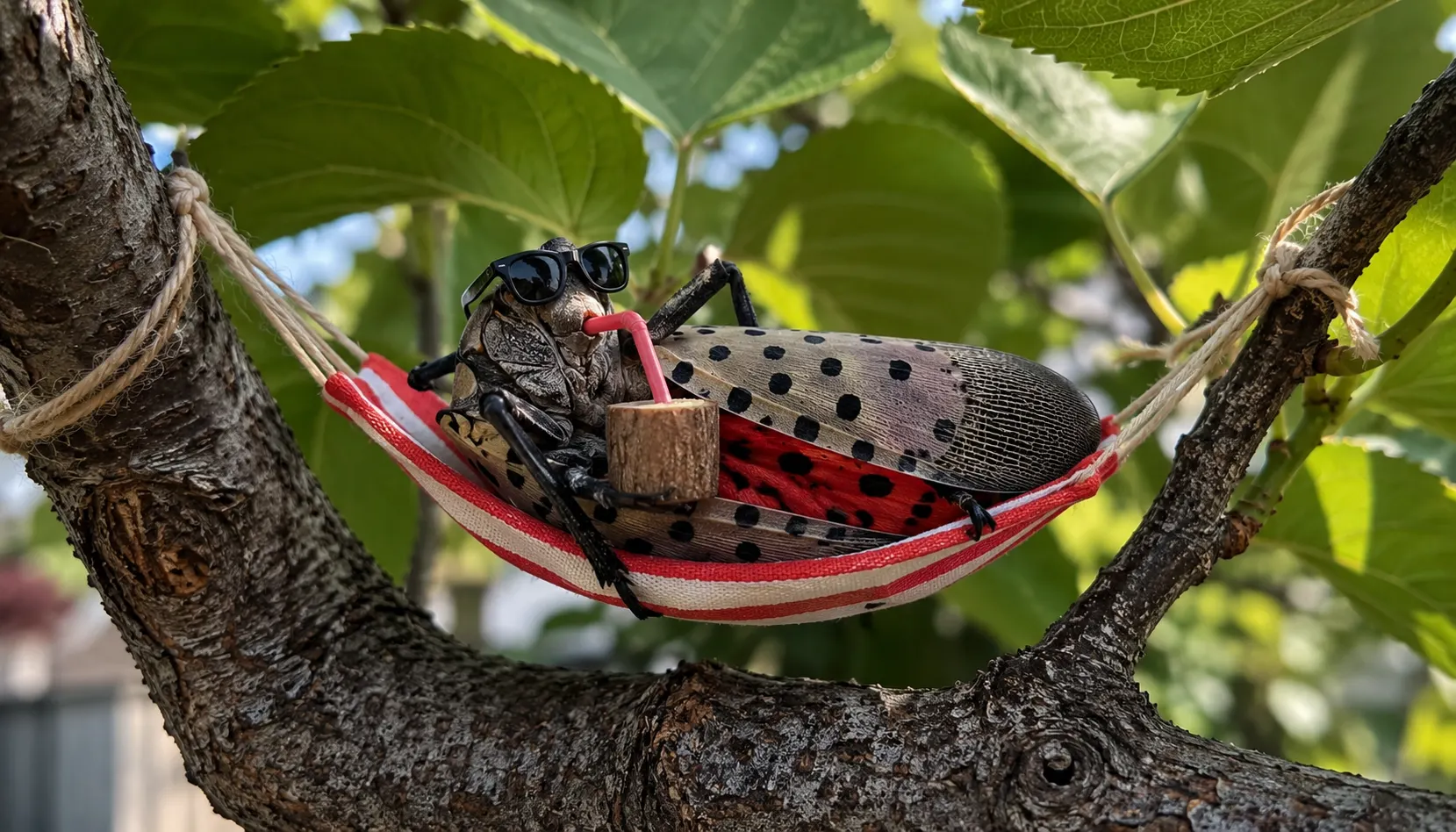
Spotted lanternflies do not feed like caterpillars that chew leaves. They use piercing mouthparts to feed on sap, which can weaken already stressed trees. The USDA APHIS spotted lanternfly page notes that the insect feeds on many plants and excretes sticky honeydew that can contribute to sooty mold. For homeowners, that often appears on decks, patio furniture, vehicles, railings, and plant material below feeding sites.
In the Manasquan River area, this is more than a cosmetic complaint. Outdoor living is part of the property value here. Patios, porches, river views, pool areas, and marina-adjacent yards are used heavily in warm weather. When nymphs are crawling across furniture or sticky honeydew is falling from trees, homeowners understandably want action. The important part is choosing action that helps the landscape rather than harming it.
Maples and birches deserve careful attention because they are common landscape trees and can already be under pressure from compacted soil, reflected heat, salt exposure, drought swings, root disturbance, and storm damage. Lanternflies may not be the only problem, but they can add stress to a tree that is already struggling. That is why a certified arborist looks at canopy density, leaf color, deadwood, wounds, root flare condition, drainage, and invasive growth.
Tree pruning can help when a valuable tree has deadwood, broken limbs, rubbing branches, poor clearance, or storm-damaged growth. The goal is not to prune because lanternflies are present. The goal is to improve structure, reduce stress, and remove weak material that the tree no longer needs to support. On a mature maple near a house in Brielle or a birch near a Manasquan patio, thoughtful pruning can improve safety while preserving the tree.
“Spotted lanternflies get people to look up,” says Michael Hufnagel. “That is useful because they may finally notice dead limbs, bark damage, decay, or a tree that has been declining for years. The insect may be the reason they call, but the arborist inspection often reveals the larger tree-health picture.”
The Signs Homeowners Usually Notice First
Most calls do not begin with a formal tree diagnosis. They begin with something annoying, sticky, crowded, or visibly different around the home.
- Sticky honeydew on decks, patio furniture, railings, vehicles, or outdoor kitchens.
- Black sooty mold developing on surfaces below feeding activity.
- Clusters of nymphs or adults on trunks, vines, ornamentals, or invasive Tree of Heaven.
- Maples, birches, cherries, or ornamentals showing stress, thinning, deadwood, or reduced vigor.
- Insects returning to the same area of the yard even after homeowners crush or remove them.
Those warning signs are reason to inspect, not panic. The next step is a practical plan that combines homeowner observation, reliable source guidance, and professional tree care when larger trees or property risk are involved.
What Manasquan River Homeowners Should Do Now
The first step is to look carefully at where the activity is coming from. Check Tree of Heaven, maples, birches, grapevines, wooded edges, fence lines, landscape beds, and branches over patios or decks. Rutgers Cooperative Extension provides identification guidance, and the Rutgers spotted lanternfly FAQ explains that nymphs hatch from egg masses in spring and may appear in large numbers on a single plant.
Homeowners can take simple steps without turning the yard into a chemical experiment. Photograph the insects, note which trees they are using, scrape egg masses when you can safely reach them, and follow official NJDA homeowner resources. Avoid moving firewood, brush, outdoor items, or debris that may carry egg masses.
Large trees are different. If activity is high in the canopy, if the suspected host tree is mature, or if the tree is near a structure, do not guess from the ground and do not attempt unsafe cutting. A certified arborist can identify the tree, evaluate whether it is invasive Tree of Heaven, determine whether it is safe to remove, and recommend whether tree pruning, tree restoration, tree health management, or removal is the better path.
This matters even more as summer weather builds. River-area trees already deal with wind exposure, saturated soil after heavy rain, humid disease pressure, and sudden coastal storms. A stressed tree carrying deadwood over a driveway in Wall Township or a patio in Brielle is not only a lanternfly concern. It is a safety and property concern.
“The best time to deal with a problem tree is before it becomes urgent,” says Michael Hufnagel. “If Tree of Heaven is feeding the lanternfly issue, we can talk removal. If a good tree is under stress, we can talk pruning or health management. The right answer depends on the property.”
A Practical Plan Before the Infestation Becomes a Tree Problem
For homeowners in Manasquan, Brielle, Wall, Allenwood, Sea Girt, Spring Lake Heights, and nearby river neighborhoods, the most effective plan is simple, seasonal, and grounded in arborist judgment.
- Identify whether Tree of Heaven is present before assuming spraying is the only option.
- Use official resources from NJDA, Rutgers, Penn State, and USDA APHIS for identification and homeowner guidance.
- Call a certified arborist when the host tree is large, close to structures, or difficult to identify.
- Preserve valuable trees with proper pruning, health assessment, and monitoring instead of unnecessary removal.
- Schedule service before storm season exposes weak limbs, decay, or poor structure.
Hufnagel Tree Service helps Manasquan River area homeowners make clear tree-care decisions when spotted lanternflies reveal a larger issue.
We bring certified arborist experience, local knowledge, careful removal practices, and practical recommendations for the trees worth saving.
If you are seeing lanternfly nymphs, sticky honeydew, Tree of Heaven, deadwood, or declining trees call Hufnagel Tree Service at (732) 291-4444 or schedule service through our website. We have served Monmouth County homeowners for more than 25 years, backed by 200+ five-star Google reviews, and we will help you decide whether removal, pruning, health management, or tree risk evaluation is the right next step.
Schedule Service Now!
From precision pruning and safe removals to health assessments and preventative care, Hufnagel Tree Service delivers expert solutions backed by decades of experience. We offer certified insight, fair pricing, and a commitment to doing what’s best for your landscape.
Learn More About Our Services
Related Articles