Contents
Tree Pruning Along the Manasquan River Corridor
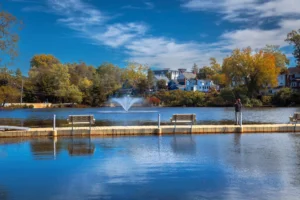
Manasquan River area tree service in Brielle, Manasquan, and Brick Township, NJ demands certified arborist care shaped by riverfront exposure, inlet winds, marina activity, mature residential trees, coastal soils, and heavy seasonal weather. This corridor includes Brielle’s waterfront near Ashley Avenue and the River Queen, Manasquan properties near the inlet and Fisherman’s Cove, and the Brick Township side near riverfront marinas and the lower Manasquan River. Hufnagel Tree Service works in these coastal and river adjacent landscapes with a careful, skilled approach. We prune for structure, evaluate risk, restore valuable trees, manage storm exposure, and remove hazardous trees when preservation is no longer reasonable. Our goal is to protect homes, views, shade, safety, and the mature landscape character that makes the Manasquan River area distinctive.
Tree pruning along the Manasquan River Corridor is not ordinary yard maintenance. Riverfront and near river properties in Brielle, Manasquan, and Brick Township often have trees growing near bulkheads, driveways, decks, pools, marinas, neighboring homes, and tight access points. Many trees lean toward sunlight and open water. Others have been shaped by years of salt air, wind exposure, storm movement, and human pruning.
Our tree trimming and pruning work starts with structure. We look for deadwood, cracked limbs, crossing branches, end heavy growth, weak unions, canopy imbalance, and clearance conflicts. We prune to improve the tree, not just to make it smaller. That means making fewer, smarter cuts that reduce risk while respecting the tree’s natural form.
For homeowners, proper pruning improves safety and property usability. It can lift branches away from roofs, gutters, boats, sheds, docks, walkways, and outdoor seating areas. It can reduce branch drop over driveways and yards. It can open selective views without stripping the tree. It can also help young trees develop better architecture before they become expensive problems.
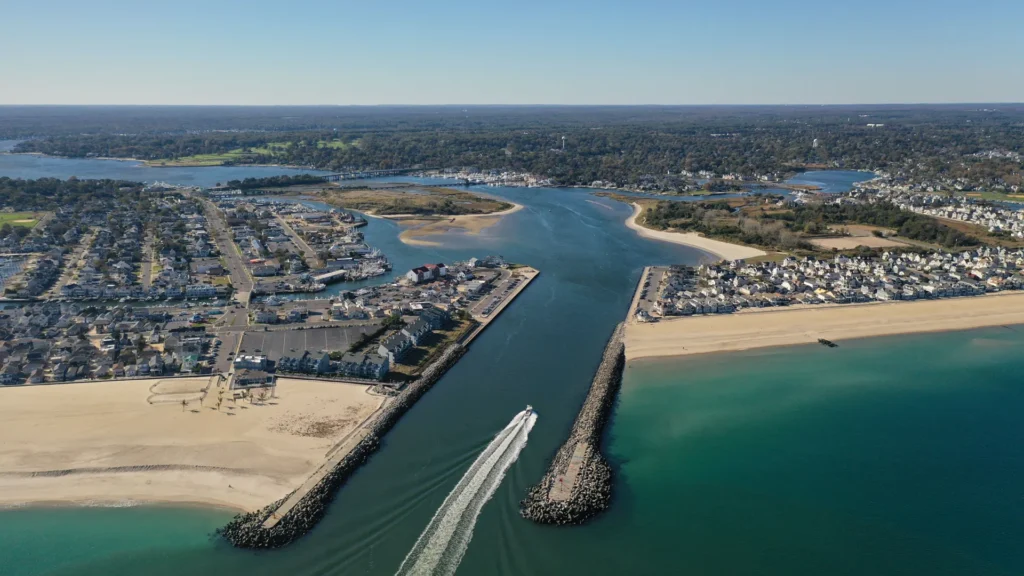
The local environment makes this work more technical. The Manasquan Inlet connects the Atlantic Ocean with the Manasquan River, and the lower river corridor receives wind, salt influence, and weather shifts that can stress trees. Brielle’s marina area properties may face reflected heat and compacted soils. Manasquan’s inlet side trees may deal with wind and sandy conditions. Brick Township riverfront trees may face both river exposure and dense residential development. Michael says, “A tree near the river has to be pruned with wind in mind. You want balance, not over thinning, because the tree still needs strength after the saw leaves.”
We adjust each pruning plan to the tree species and site. Oak, maple, holly, red cedar, sycamore, sweetgum, pine, dogwood, cherry, magnolia, and ornamental pear all respond differently. A mature shade tree may need reduction and deadwood removal. A flowering ornamental may need light shaping. A waterfront privacy screen may need careful trimming to preserve density. After pruning, we often recommend risk evaluation for trees with visible defects or high value targets below.
Pruning Goals for Riverfront and Near River Properties
- Reduce deadwood and overloaded limbs before storm season.
- Improve clearance over roofs, docks, driveways, patios, and walkways.
- Maintain natural tree shape while reducing wind related stress points.
- Protect views without stripping the canopy or weakening the tree.
- Match pruning intensity to species, location, and long term health.
Thoughtful pruning keeps Manasquan River area properties safer, cleaner, and more enjoyable. Because this corridor has wind, water, and tight targets, pruning should be supported by professional risk evaluation and storm preparation.
Tree Risk Evaluation and Storm Protection Near the Inlet, Marinas, and Riverfront Homes
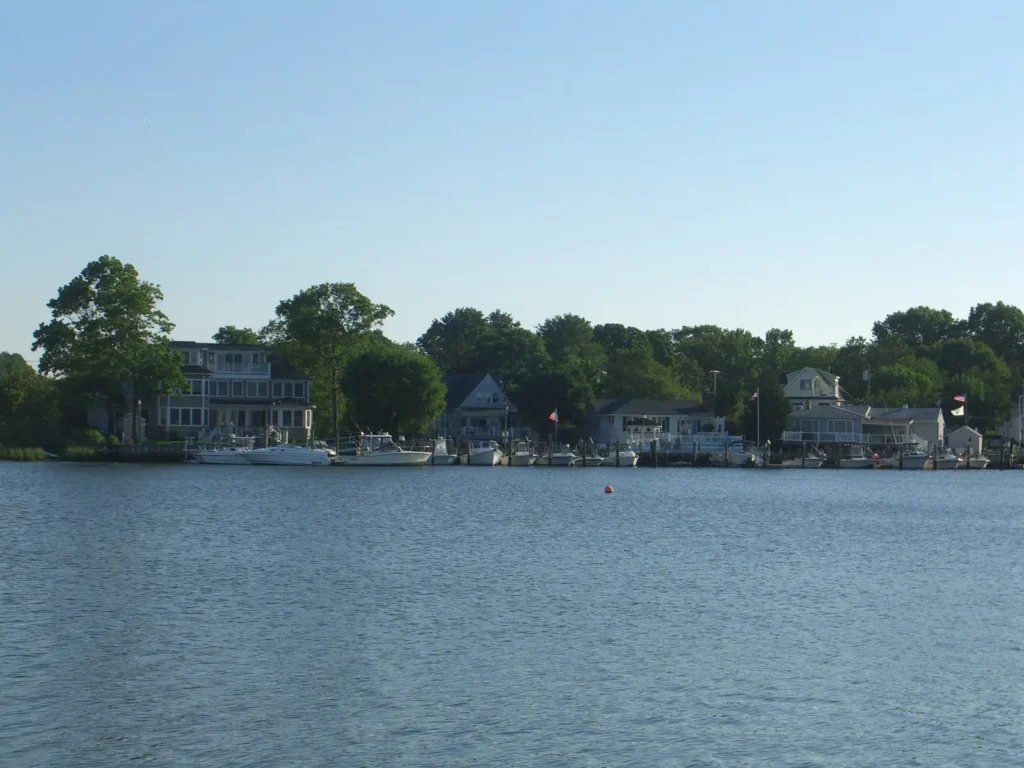
Tree risk evaluation is essential for properties near the Manasquan River, the inlet, marinas, and wooded edges. A tree does not need to be dead to be risky. It may have hidden decay, root damage, included bark, storm cracks, old topping wounds, heavy lateral limbs, or a lean that has worsened after saturated soil and wind. Our job is to identify those concerns before they become emergencies.
Our tree risk evaluation includes a careful review of the tree and its surroundings. We assess the trunk, canopy, root flare, soil conditions, previous cuts, decay indicators, limb attachments, and likely targets. On Manasquan River properties, the targets can be significant: homes, boats, docks, garages, vehicles, fences, pools, outdoor kitchens, neighboring structures, and utility lines.
For homeowners, a risk evaluation creates clarity. It tells you which trees are stable, which need pruning, which need monitoring, and which may require removal. It also helps prioritize work. A dead branch over a driveway may be urgent. A declining tree away from structures may be monitored. A large tree over a house may need immediate reduction, restoration, or removal depending on the defect.
Storm exposure is a defining issue in this zone. The federal Manasquan River navigation project runs from the Atlantic Ocean into the river, which reflects how active and exposed this waterway is. Around a busy coastal corridor, wind and water are always part of the property picture. Michael’s advice is blunt: “Do not judge a riverfront tree from the leaves alone. Look at the root flare, the trunk, the union angles, and what is underneath it if it fails.”
When risk can be reduced, we may recommend tree storm proofing, structural pruning, deadwood removal, crown reduction, or clearance pruning. When a tree cannot be made reasonably safe, our tree removal planning focuses on controlled rigging, property protection, and complete cleanup. This same careful thinking applies to trees that are stressed but still candidates for restoration.
River Corridor Risk Factors Worth Inspecting
- Large limbs extending over homes, docks, boats, driveways, or patios.
- Cracks, cavities, decay, mushrooms, or soft wood near the trunk.
- Leaning trees with soil movement or exposed roots.
- Old topping cuts, storm wounds, or heavy regrowth from poor pruning.
- Canopy dieback, sudden thinning, or repeated limb failure.
Risk evaluation gives homeowners a practical plan instead of guesswork. After hazards are identified, many Manasquan River area trees can still be preserved with restoration and health management.
Tree Restoration and Health Management in Brielle, Manasquan, and Brick Township
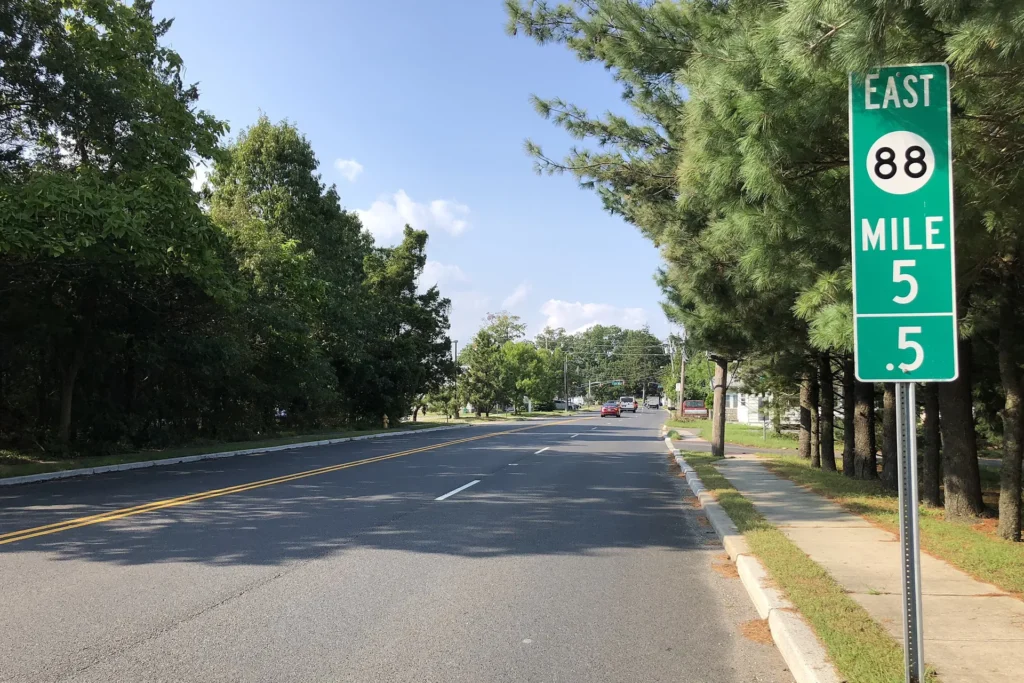
Tree restoration is the right service when a valuable tree has problems but still has a reasonable path forward. Throughout Brielle, Manasquan, and Brick Township, many properties have mature shade trees that help define the yard, frame water views, shade outdoor living areas, and give older neighborhoods their established feel. These trees are often worth saving when the structure allows it.
Our tree restoration work focuses on reducing stress and improving structure over time. We may remove deadwood, reduce overloaded limbs, correct crossing branches, improve clearance, manage competing growth, and recommend root zone improvements. Restoration is often phased because older trees respond better to measured care than drastic cuts.
The benefits are significant. A restored tree can continue providing shade, privacy, cooling, beauty, and habitat while reducing the likelihood of limb failure. Preservation also protects the property from the sudden heat and exposure that can follow unnecessary removal. In coastal communities, mature trees are valuable because they soften wind, frame homes, and help landscapes feel settled.
Local conditions shape the restoration plan. Brielle properties near the river and Glimmer Glass often have mature ornamental and shade trees mixed with hedges and waterfront plantings. Manasquan properties near Fisherman’s Cove and the inlet may face salt, sand, and exposure. Brick Township riverfront yards may combine larger lots, marinas, and compact residential areas. Michael often reminds clients, “A good restoration plan respects what the tree has already survived. We reduce stress, improve structure, and give it the best chance to keep contributing.”
We are honest about limits. If a tree is too compromised, restoration is not the responsible recommendation. If the tree has strong potential, our tree health management approach can help guide ongoing care. That may include pruning cycles, monitoring, soil protection, vine control, and practical recommendations for irrigation, mulch, and root zone protection.
When Restoration May Be the Better Choice
- The tree has strong roots and trunk structure but needs canopy correction.
- Storm damage is limited and can be pruned without destroying the tree’s form.
- The tree provides valuable shade, privacy, or waterfront screening.
- Decline appears related to stress, crowding, or poor past pruning.
- The homeowner wants preservation but needs an honest safety assessment.
Restoration helps preserve the established beauty of the Manasquan River Corridor while reducing avoidable risk. Around homes with hedges, ornamentals, and tight waterfront landscapes, that preservation mindset should extend to the entire property.
Ornamental Trees, Hedges, Privacy Screens, and Careful Waterfront Work
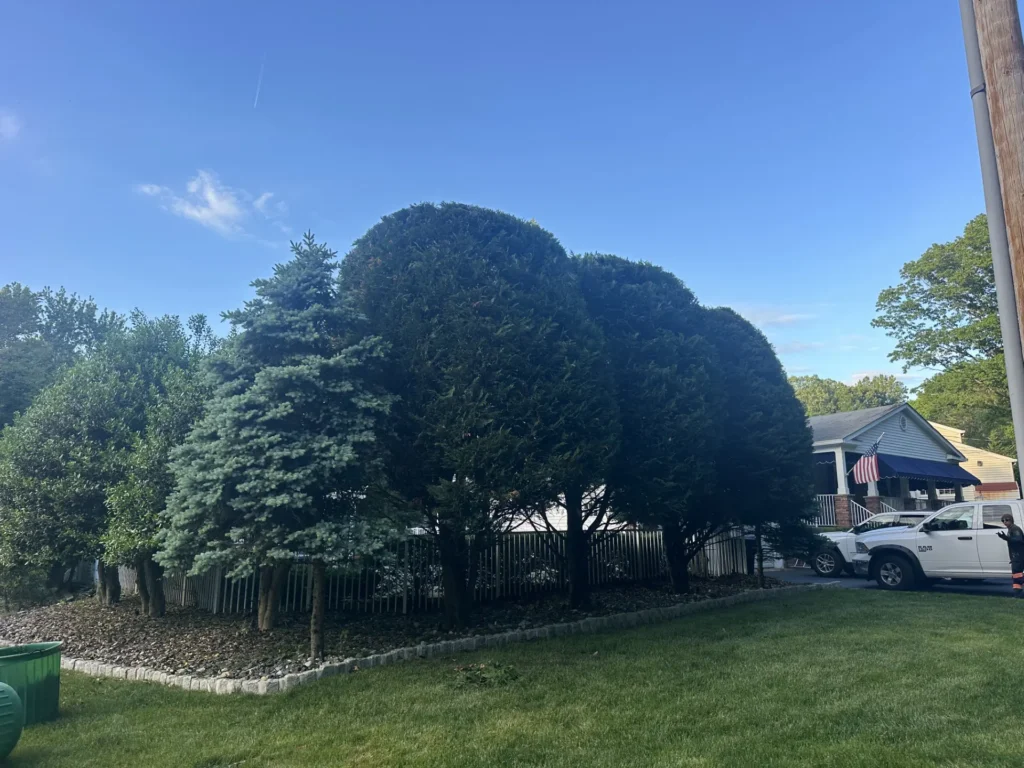
Many Manasquan River area properties rely on ornamental trees, hedges, and privacy screens as much as large shade trees. Around Brielle, Manasquan, and Brick Township, we often see holly, cherry, dogwood, magnolia, Japanese maple, arborvitae, yew, privet, laurel, boxwood, and mixed coastal plantings used to frame patios, screen neighbors, soften bulkheads, and guide views toward the water.
These plants need careful maintenance. Heavy shearing can create bare interiors and weak outer growth. Poor ornamental pruning can remove flower buds, create awkward regrowth, or invite disease. Overgrown screens can block air, trap moisture, and crowd structures. Our hedgerow trimming and ornamental pruning work is designed to preserve form while improving plant health.
For homeowners, this level of detail matters because riverfront properties are highly visible and heavily used. A hedge may screen a patio from the street. A Japanese maple may anchor an entry garden. A row of hollies may block wind. An ornamental cherry may be the focal point from a deck. Cutting these plants incorrectly can take years to repair.
Waterfront work also requires property protection. We plan around docks, boats, pavers, fences, pools, outdoor furniture, narrow access routes, gardens, and neighboring properties. We use controlled methods and clean staging so the job does not damage the landscape we are there to improve. Hufnagel Tree Service is known for careful cleanup because a finished property should look better, not battered.
Ornamental care completes the tree service plan. Large trees provide structure and shade. Hedges provide privacy. Ornamentals provide detail and beauty. When each layer is maintained properly, the whole property becomes easier to manage and better prepared for coastal weather.
What Careful Waterfront Landscape Work Includes
- Species specific pruning for ornamental trees and flowering plants.
- Measured hedge trimming that protects density and long term shape.
- Protection for docks, patios, pools, pavers, gardens, and fencing.
- Cleanup that leaves the property ready to use immediately.
- Certified arborist oversight for trees and plantings in high exposure locations.
When the ornamental layer is maintained correctly, riverfront and near river properties look polished without losing their natural coastal character. If removal becomes necessary, the same care and planning should guide the job from start to finish.
Safe Tree Removal and Stump Solutions When Preservation Is Not Enough
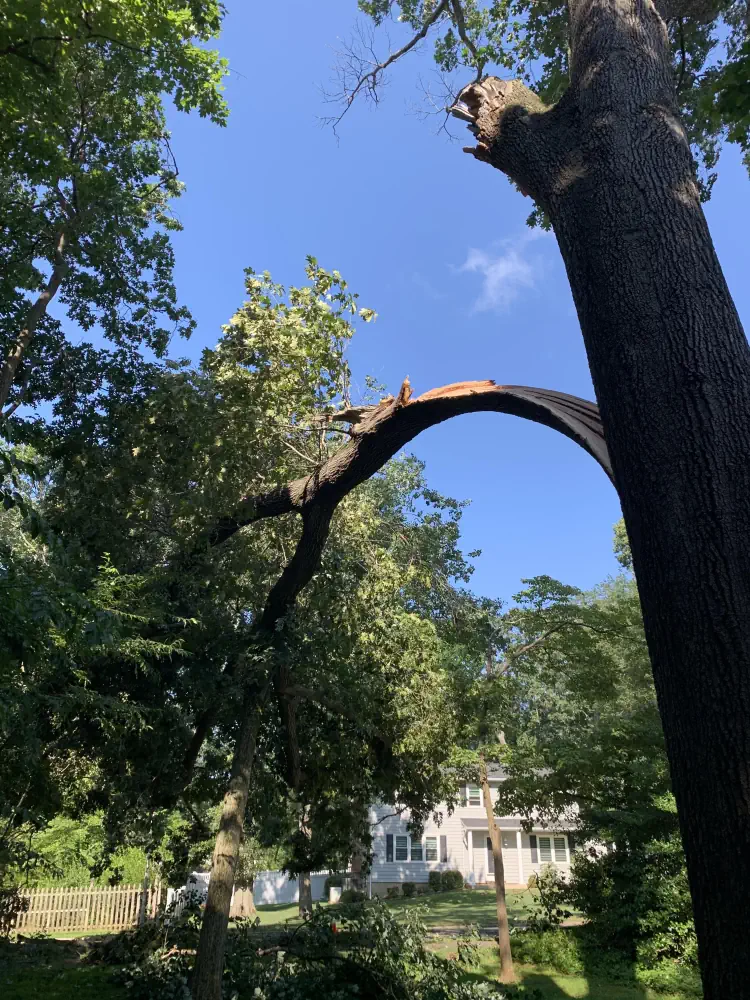
We prefer preservation when it is responsible, but some trees cannot be saved. Severe decay, major storm damage, root failure, advanced decline, structural cracks, or poor location may make removal the safest choice. In the Manasquan River area, removal often requires extra planning because homes, boats, docks, fences, neighboring properties, and narrow access points can be close to the work zone.
Our tree removal work is controlled and property focused. We assess the drop zone, access, rigging needs, equipment options, overhead hazards, and cleanup plan before cutting begins. The goal is not only to remove the tree. The goal is to remove it safely while protecting the surrounding property.
For homeowners, professional removal reduces risk during a stressful decision. A hazardous tree near a house, marina, driveway, or deck should not be handled casually. Proper rigging, experienced crew coordination, and certified arborist oversight can make the difference between a clean removal and costly damage.
After removal, the stump and root area should be considered. A stump in a lawn, planting bed, walkway area, or waterfront view corridor may create a trip hazard, attract pests, interfere with replanting, or simply leave the job unfinished. Our tree stump removal service helps prepare the area for grass, new plantings, hardscape repairs, or a redesigned landscape.
Removal should always lead to a better plan. In some cases, that means replanting with a more appropriate tree for wind, salt, soil, and available space. In other cases, it means opening sunlight for existing trees or reducing competition around valuable ornamentals. A safe removal is not just an ending. It is a chance to reset the property intelligently.
When Removal Becomes the Responsible Recommendation
- The tree has advanced decay, root failure, or major structural cracking.
- Storm damage has made the remaining canopy unstable.
- The tree threatens a home, dock, driveway, utility line, or neighboring property.
- Restoration would not make the tree reasonably safe.
- The stump or remaining root zone needs to be cleared for safe future use.
Safe removal protects people, structures, and the surrounding landscape. For homeowners along the Manasquan River Corridor, the best results come from a tree service that understands both technical arboriculture and the realities of coastal property care.
Schedule Manasquan River Area Tree Service
Hufnagel Tree Service provides certified arborist tree care for Brielle, Manasquan, Brick Township, and the Manasquan River Corridor. We bring advanced pruning skill, risk evaluation, storm preparation, restoration first thinking, safe removals, and careful cleanup to properties where quality matters.
For Manasquan River area tree service in Brielle, Manasquan, or Brick Township, NJ, fill out our contact form or call (732) 291-4444. We will inspect your trees, explain the safest options, and help you protect your property before the next storm, season, or major landscape decision.
Schedule Service Now!
From precision pruning and safe removals to health assessments and preventative care, Hufnagel Tree Service delivers expert solutions backed by decades of experience. We offer certified insight, fair pricing, and a commitment to doing what’s best for your landscape.
Learn More About Our Services

Related Articles
Aberdeen Fall Tree Inspection: Find Problems Before Winter
Tree Health Inspections in Middletown: Hidden Rot
Tree Risk Mitigation in Rumson, NJ
Storm Damaged Trees in Aberdeen: We Can Help