Contents
In Avon-by-the-Sea, Tree Risk Evaluation Starts With How Close Everything Is
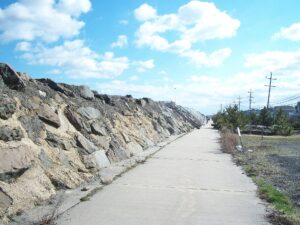
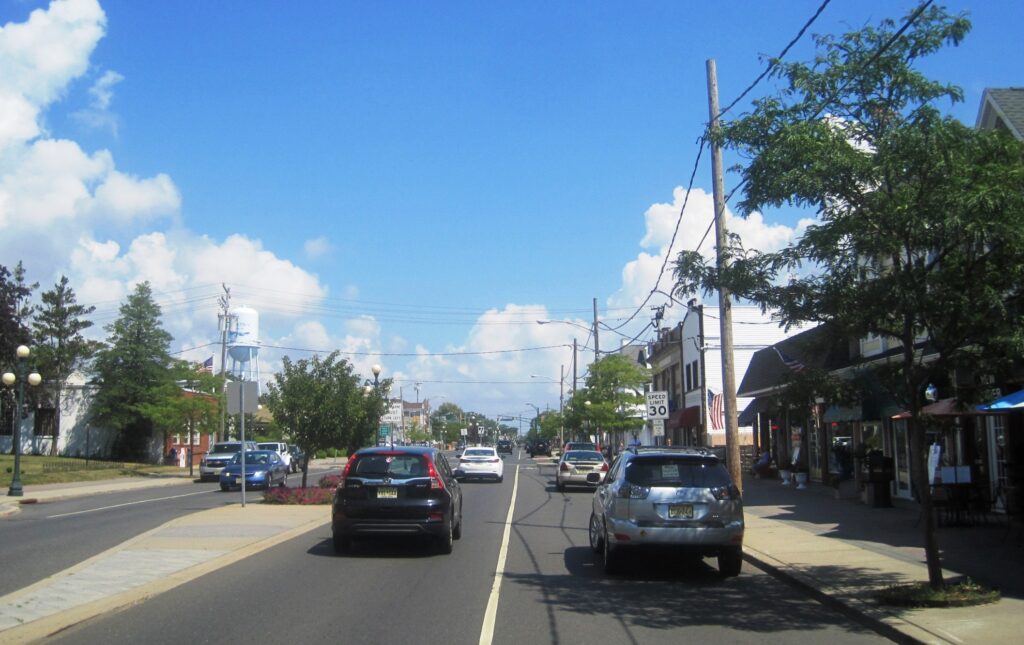
Avon-by-the-Sea has a short, well documented history. The Coaster history of the borough records that the New Jersey Legislature incorporated Avon on March 23, 1900, that its first election followed on April 19, and that the census counted 426 residents by 1910. Today the borough sits between the Atlantic Ocean, Sylvan Lake, and the Shark River, and it covers a little over half a square mile according to its reference entry. The borough offices on Main Street serve a town where houses, shops, and street trees share very little room.
That layout changes how we think about our tree risk evaluation service, and it is why tree risk evaluation in Avon-by-the-Sea starts with what a tree can reach rather than how large it is. With so little distance between a trunk and a roof, a parked car, a sidewalk, or a neighbor’s porch, a defect does not have to be dramatic to matter. It only has to be near something.
After almost 30 years working throughout Monmouth County and along the shore, we have seen how fall exposes problems that were easy to overlook in summer. Leaves thin, branch unions and deadwood come into view, and the next nor’easter is no longer a distant idea. Fall is a good time to look at what the season changed, while there is still room to choose between pruning, restoration, monitoring, or removal.
Exposure adds to the closeness. The National Weather Service explains that nor’easters can happen at any time of year but are most common and most severe from September through April, and that they typically bring gale force winds and can cause coastal flooding. Avon has the ocean on one side and the river on another, and Sylvan Lake, which the borough describes on its website as a community resource for stormwater management and flood mitigation, on the third. Wind and wet soil reach a lot of trees here, and neither forgives a defect that has been quietly growing.
A Risk Evaluation Connects Each Defect to What It Could Reach
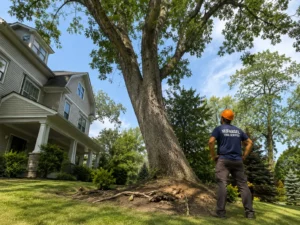
A tree risk evaluation in Avon-by-the-Sea is not a quick walk past the front yard. We look at the whole tree, from the root flare at the soil line through the trunk, the branch unions, and the outer crown, and we record what we find. Then we ask the question that decides everything else: if this part failed, what would it reach? In Avon, the answer is rarely an open lawn. It is usually a roof, a driveway, a sidewalk, or the house next door.
Condition and target are separate questions. A tree with a dead limb over an empty corner of a yard is a different situation from the same limb over a bedroom, a parked car, or the sidewalk along Main Street. The defect is identical, but the consequence is not. That is why we do not rank trees by size or age, and why a modest tree beside a driveway can deserve more attention than a large one at the back of a lot.
The International Society of Arboriculture’s mature tree care guidance says mature trees should be inspected at least once a year. It names cavity openings, extensive twig dieback, and fungal conks, meaning mushrooms or brackets on the trunk, as characteristics that can point to structural weakness. We take those signs seriously, and we connect each one to what we see in the rest of the tree before we recommend anything.
Branch unions get the same attention. Where two stems of similar size grow from one point, bark can become trapped between them and the union can narrow as the stems thicken. Our guide to codominant stems explains why these unions are among the first places a tree splits. Hidden decay is the other quiet problem, and our article on hidden tree rot covers how a trunk can look sound while the wood holding it up has been consumed from the inside.
A Rutgers Office of Continuing Professional Education article on hazardous trees quotes a third generation arborist who teaches there. He says most trees do not fail because of one problem, but because several factors combine, and that most of the trees that came down in the October 2011 storm could have been flagged by a qualified arborist beforehand. That is why we look at roots, trunk, unions, and crown together rather than one at a time. Our guide to weak tree roots covers the part of the tree that nobody sees.
Mike Hufnagel describes the working rule this way: “On a lot this small, the tree and the house are practically neighbors. I want to know what each defect could reach before we decide whether it needs a cut, a closer look next season, or something more.” That is the distinction that turns a list of defects into a plan. A defect that reaches nothing may only need monitoring, while one that reaches a roof or a walkway has to be dealt with.
Defects We Look For in Avon Trees Before Winter
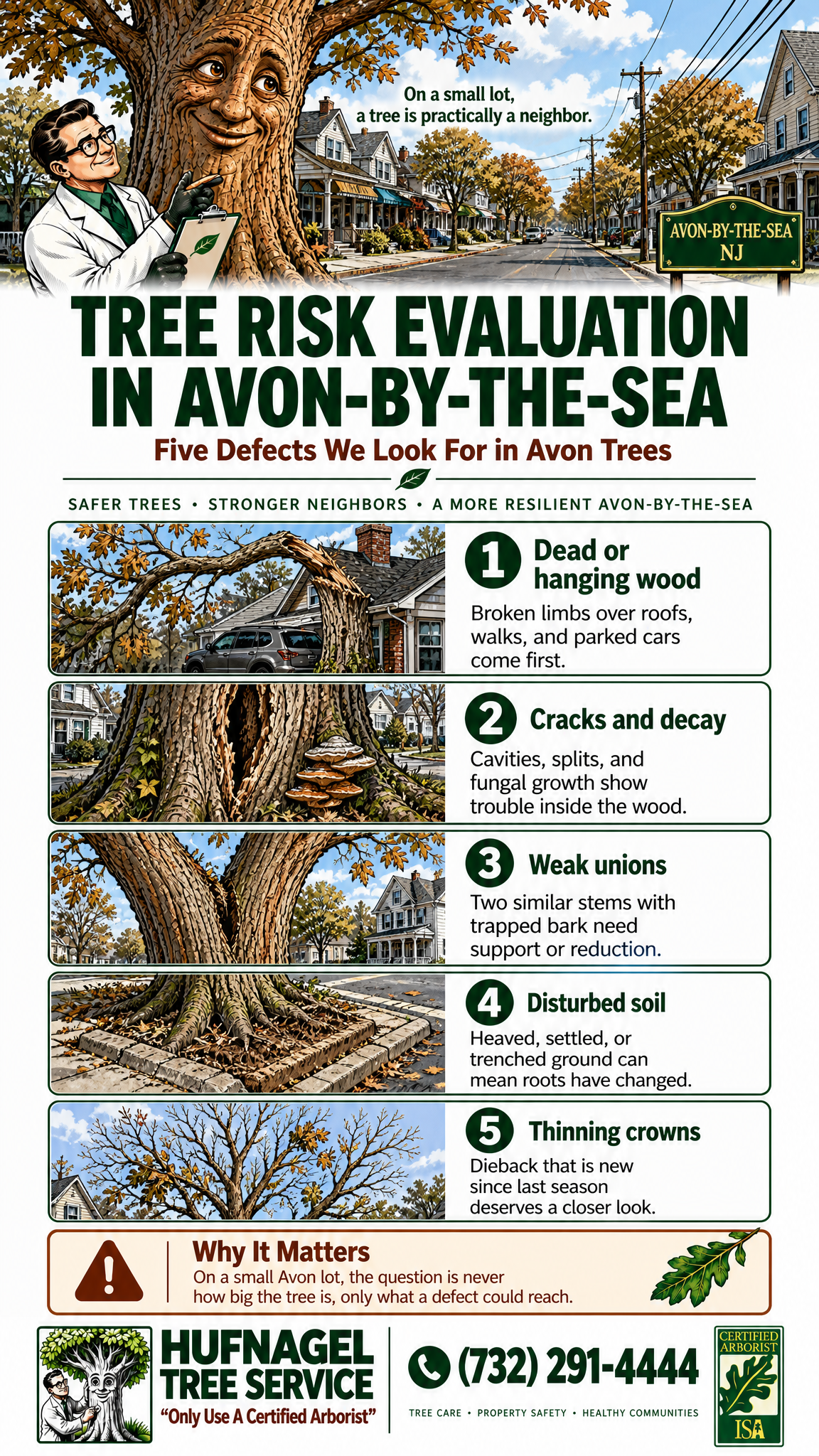
- Dead or hanging branches over roofs, sidewalks, driveways, and parked cars.
- Cracks, cavities, or fungal growth on the trunk and near the base.
- Narrow unions where two stems of similar size grow together.
- Soil that has heaved, settled, or been cut by trenching near the roots.
- Thinning upper crowns or dieback that has changed since last season.
Each of these findings goes into a plain plan that names the tree, the defect, the target, and the recommended response. Some trees need only monitoring. Others need targeted pruning, restoration, support, or removal. The goal is not to find work for every tree. The goal is to match each tree with the work it actually needs. Once the defects and targets are mapped, the next part of the plan is timing, and in Avon the borough calendar has something to say about that.
Leaf Season and the Borough Shade Tree List Shape Fall Work in Avon
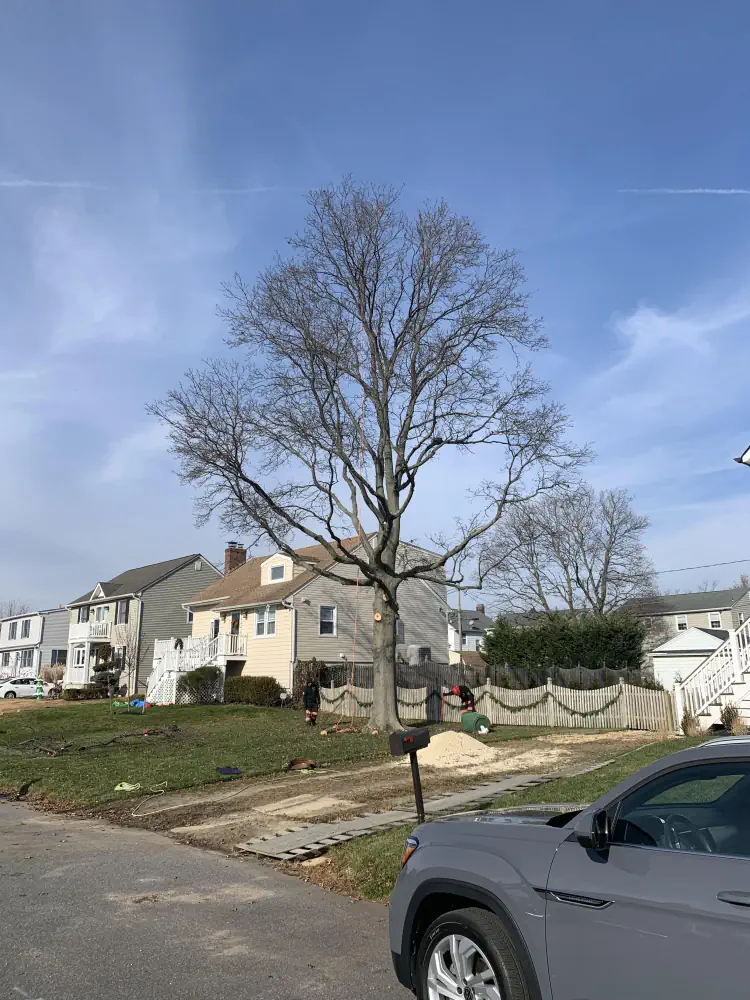
Avon’s public works page says loose leaves are collected from the street only from October through early December. They must be free of grass and other yard debris, and piles are to stay four feet from the curb. Fall cleanup and tree inspection tend to happen in the same weeks, which is a good reason to look up while looking down. A leaf season is also the moment when branches that were hidden all summer begin to show.
The same page asks residents to cut limbs to four foot lengths, tie them in bundles, and call ahead if the material would exceed half of a standard pickup truck load. That is a sensible rule for twigs and small branches. It is not a plan for a large limb over a roof. Anything heavy enough to need a ladder, a saw held above shoulder height, or a rope belongs to a professional crew, and homeowners should look, photograph, stay clear, and call.
The borough also states that landscapers must remove grass, brush, limbs, and spring or fall cleanup debris, and that loose leaves may go in the street only between October 1 and December 1. That is a useful reminder that debris is expected to leave with the contractor. We plan the haul away as part of every job, so that a trimmed limb or a removed section does not turn into a curbside problem for the homeowner.
The borough’s Shade Tree Committee, which is part of the Environmental Commission, publishes a list of trees approved for planting in the public right of way. Full sized shade trees of 40 to 60 feet include black gum, honey locust, northern catalpa, and several oaks. Smaller trees of 20 to 35 feet are approved for planting under utility lines, among them eastern redbud, serviceberry, and Japanese tree lilac. Columnar trees such as Armstrong maple and Green Pillar oak are listed for narrower strips. The Environmental Commission itself was created by ordinance in December 1992.
The list tells a story about space. The borough steers smaller trees toward overhead wires and columnar trees toward narrow rights of way because a tree planted in the wrong place becomes a problem later. The Rutgers article on hazardous trees makes the same point, noting that species planted too close to roads, power lines, or buildings are at higher risk. When we evaluate an older tree beside a wire or a wall, we are often looking at a planting decision made decades ago, and our tree trimming and pruning work is often how we keep that tree in place safely.
Not every tree we see is on the borough list, and not every tree is the borough’s to manage. A street tree in the right of way and a tree on a private lot can stand a few feet apart, and ownership affects who decides what happens to each. Where a removal is under discussion, we point homeowners to our guide to tree removal permits so that the rules are checked before any work is scheduled. We also keep a record of what each tree looked like, which helps everyone later.
Fall Checks for Avon Properties Before Leaf Season Ends
- Look up from the sidewalk for dead branches over the street and neighboring yards.
- Photograph any limb that touches a roof, gutter, wire, or the side of a house.
- Keep leaf piles clear of trunk bases so that soil and bark stay visible.
- Note any new lean, heaved soil, or cracked pavement near a trunk.
- Schedule heavy limb work with a professional instead of using a ladder.
None of these checks requires climbing or cutting. They require a slow look, a few photographs, and a willingness to compare what is there now with what was there in June. When something has changed, that change is the thing to bring to us, because it tells us where to start. Once the crown and the calendar are understood, the part of the tree that matters most in a storm is the part under the ground, and that is where wet soil and close neighbors come in.
Wind, Wet Soil, and Close Neighbors Decide How Much Margin a Tree Has
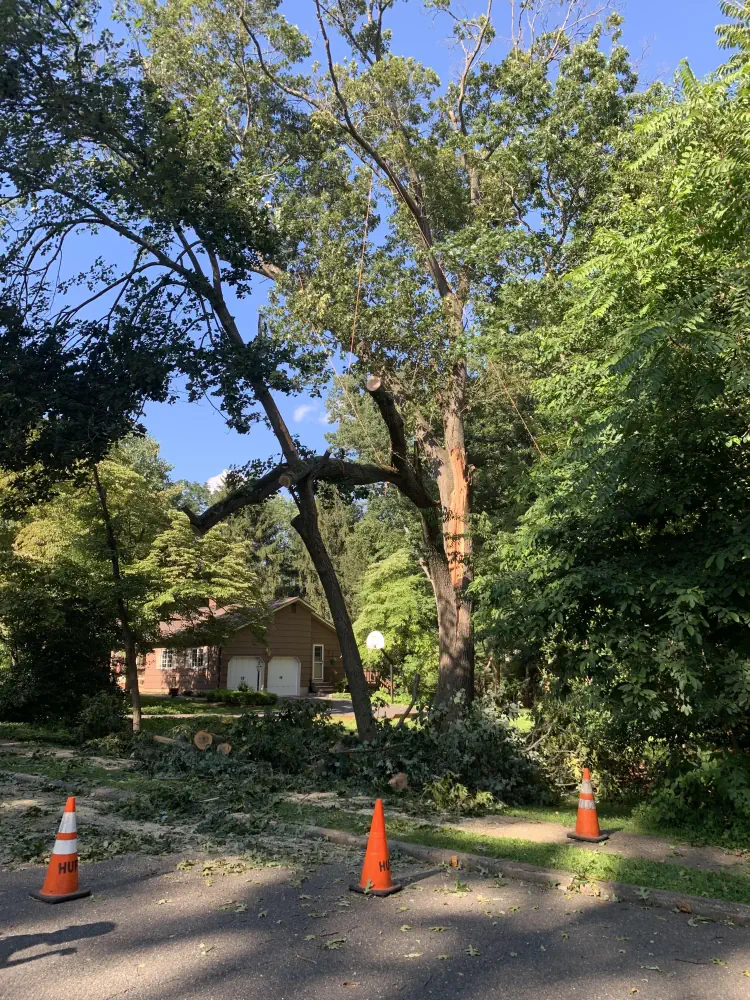
Margin is the word we use for how much stress a tree can absorb before a defect becomes a failure. A sound tree carries a lot of it. A tree with a cracked union, a decayed base, or damaged roots carries much less, and that margin shrinks as wind, rain, and the weight of leaves or snow add load. Our guide to storm season risk assessment explains how we think about that load before a forecast arrives.
Wet ground changes the picture below the surface. The same Rutgers article describes a client near Allentown who lost seven large oaks after a lake overflowed, with an arborist explaining that the saturated ground acted like a lubricant that let the wind topple the trees. We do not claim that Avon will see anything like that. The point is narrower and more useful. When soil is soaked, the root plate is what holds a tree upright, and we look at it before we trust the trunk above it.
Any property close to the ocean, the river, the lake, or a low street may hold water longer after heavy rain than one on higher ground. We check for soil that has softened, heaved, or pulled away from one side of a trunk, and for roots that have been exposed or buried. These signs are easy to miss from a driveway. They are often the first visible hint that the anchorage of a tree has changed, which is why we ask homeowners to photograph the base of a tree after a major storm.
Root disturbance is the other quiet source of trouble on small lots. The ISA guidance cautions that trenching or earthmoving within a tree’s root zone may cause more harm than good. A trench for a utility line, a drain, or a new patio can cut roots on one side of a tree and leave it less secure in the next wind. Compacted soil from parked vehicles does something similar over a longer period. Neither problem looks like much at the surface, and both are worth mentioning to us before the work starts.
Mulch is one of the few ways a homeowner can help roots without any risk. The same ISA guidance recommends two to four inches of mulch, placed near but not touching the trunk and extended toward the dripline where the space allows. It buffers temperature and moisture swings and keeps lawn equipment away from the bark. Our tree health management work builds on that foundation when a tree shows signs of stress that mulch alone cannot correct.
No tree risk evaluation in Avon-by-the-Sea can honestly guarantee that a tree will never fail in severe weather. What it can do is find the defects that matter, match them to real targets, and give the homeowner choices while choices remain. We prefer tree restoration and targeted pruning when the structure allows them, and we recommend tree removal only when the wood or the roots no longer give us a dependable way to manage the risk. Not every defect means removal, and not every leaning tree is unsafe.
Root and Storm Warning Signs Worth a Call
- Soil heaved or cracked on one side of the trunk after wind or heavy rain.
- A trunk that leans differently than it did last season.
- Mushrooms or brackets growing at the base or on the trunk.
- Roots cut, buried, or driven over by trenching, paving, or vehicles.
- Splits, cracks, or hanging limbs that appeared after a storm.
These signs do not mean a tree must come down. They mean a tree has changed, and a change is worth understanding before winter weather adds load. Photograph what you see, stay clear of anything leaning or hanging, and call us. We would rather look at a tree that turns out to be fine than hear about one after the fact. That is the same approach we take in Bradley Beach and the other shore towns beside Avon, where a compact layout means every tree has a close neighbor.
Call Hufnagel Tree Service for Tree Risk Evaluation in Avon-by-the-Sea
If you have mature trees near your Avon-by-the-Sea home, garage, driveway, or the sidewalk along Main Street, schedule an evaluation before winter storms arrive. We provide tree risk evaluations, tree trimming and pruning, storm proofing, restoration, and removal when a tree cannot be managed safely.
Hufnagel Tree Service is led by a certified arborist with almost 30 years of local experience and more than 280 five star Google Maps reviews. We inspect first, connect every defect to what it could reach, and recommend only the work that changes the outcome for your trees and your property.
Call or text (732) 291-4444 to schedule a tree risk evaluation in Avon-by-the-Sea before the next coastal storm arrives. You can also read our other work in the Avon-by-the-Sea location archive.
Schedule Service Now!
From precision pruning and safe removals to health assessments and preventative care, Hufnagel Tree Service delivers expert solutions backed by decades of experience. We offer certified insight, fair pricing, and a commitment to doing what’s best for your landscape.
Learn More About Our Services

Related Articles
Vines and Tree Health: Hidden Risks to Mature Trees
Tree Risk Inspections in Deal, NJ
Monmouth Beach Tree Risk Evaluation After Summer Storms
Schedule Your End-of-Summer Tree Inspection
Aberdeen Fall Tree Inspection: Find Problems Before Winter