Contents
In Red Bank, the First Risk Question Is Who Owns the Tree
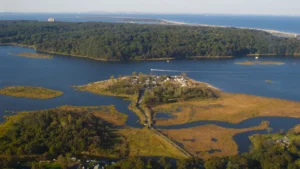
Red Bank sits on the southern bank of the Navesink River. It was formed as a town in 1870 from parts of Shrewsbury Township and became a borough in 1908, and according to Wikipedia’s entry on Red Bank the name comes from the red soil along the river. About 12,936 residents share 1.75 square miles of land, which made Red Bank the fourth most densely populated municipality in Monmouth County in the 2020 census. Marine Park and Riverside Gardens Park open onto the water, and Broad Street carries the downtown.
That density shapes how we approach tree risk evaluation in Red Bank. In a town this compact, a tree can stand within a few feet of a sidewalk, a storefront, a driveway, or a neighbor’s fence, so soundness is only half of the question. The other half is who owns the tree and what stands beneath it. The borough’s tree questions page explains that a borough tree is one planted on the right of way, which includes the planting strip between the curb and the sidewalk and often extends a few feet into a front lawn. That is why our tree risk evaluation service starts with ownership as well as condition.
After almost 30 years working throughout Monmouth County, we have seen that the trees that cause trouble are not always the largest ones. They are the ones with a defect over a target, and the ground under them matters as much as the crown. A fall tree risk evaluation in Red Bank can still find the crack, the lean, or the wet root zone while there are choices about what to do, before winter weather adds load.
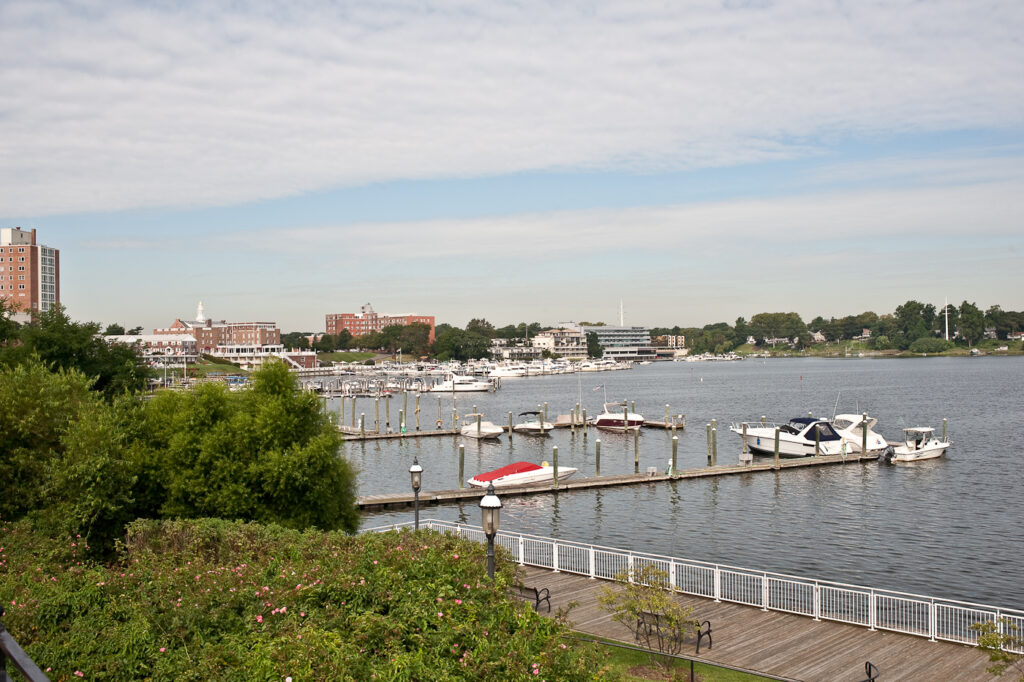
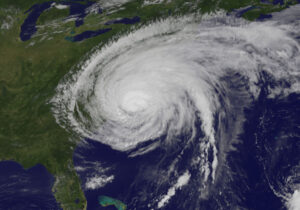
Red Bank has about four miles of waterfront, and the Navesink sets how wet some of its ground gets. On September 26, as a nor’easter crossed the county, Red Bank Green reported minor flooding in spots at the morning high tide, with the ground saturated from heavy rain and the trees still full of leaves. The Governor’s office ended the state of emergency for Monmouth County and seven other counties on September 29. That storm has passed, and this article is not about it. It is about the wet ground that trees stand in and what tree risk evaluation in Red Bank should look at before winter.
Tree Risk Evaluation in Red Bank Starts With the Target
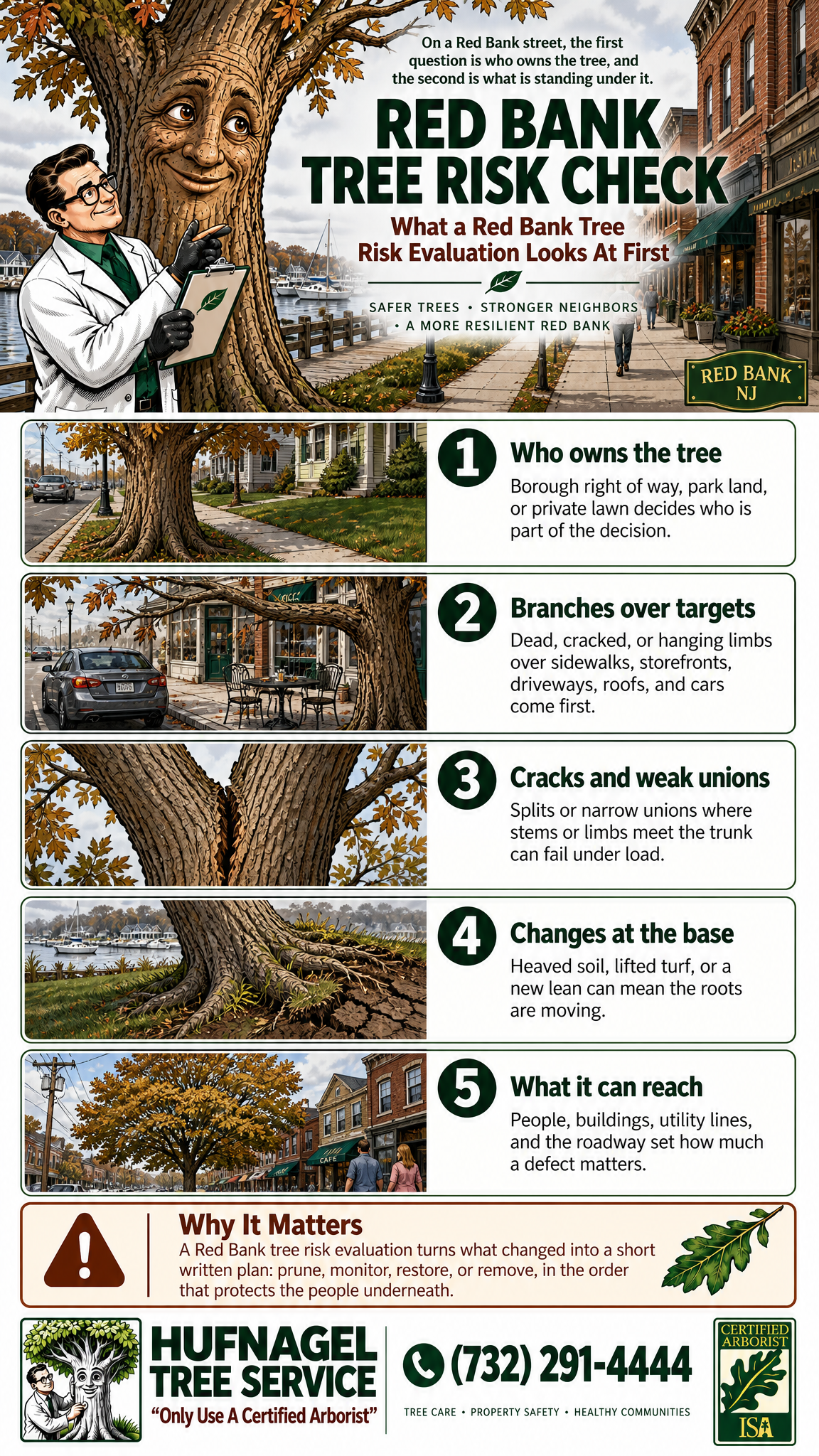
A tree risk evaluation in Red Bank starts with the target because the same defect means different things in different places. The recognizing tree risk brochure from the International Society of Arboriculture says no tree is completely safe, and that only a small number of the trees that could fall ever strike anything. Risk combines two questions, how likely a part of the tree is to fail and what it would reach if it did.
Downtown shows how much the second question matters. In 2026, Broadwalk closed Broad Street between Front Street and White Street to vehicles from May 15 through September 30, and the Two River Times reported that the plaza drew about 40,000 visitors a month the year before, with outdoor dining on the street and sidewalk. A dead limb over an empty lot is a small problem. The same limb over a block where thousands of people walk and eat is a different one, and any tree that reaches over that block or its sidewalks has to be read with that in mind.
Other targets are quieter. Marine Park and Riverside Gardens Park, which Wikipedia lists along the Navesink, have lawns, benches, picnic tables, and a boardwalk. On residential streets the targets are porches, parked cars, driveways, utility lines, and the next house over. The tree does not have to be unusually large or unusually weak to matter. It only has to reach something.
Ownership then decides the process. Chapter 665 of the borough code, as replaced by Ordinance 2024-14, prohibits removing a deciduous tree with a trunk diameter of six inches or more at breast height, or a coniferous tree 10 feet tall or taller, without a permit or another exception the ordinance lists. It also says that no one may remove, trim, or cause harm to a tree growing on or over a public right of way or public land without complying with the chapter. That makes a written evaluation useful even when no work is planned, because it records what the tree is doing before anyone has to ask for a permit.
The ordinance also defines a hazard tree as one that is dead or dying, has an infectious disease or insect infestation, is causing obvious damage to structures, or is determined to be a threat to public health, safety, or welfare by a certified arborist or licensed tree expert. The definition says a licensed tree expert makes the determination at the applicant’s expense, and it says hazard trees may be removed with no fee or replacement requirement. Permit applications go to the Planning and Zoning Department. We do not decide what the ordinance requires, and an owner should confirm the process with the borough. What we can do is document what a tree is doing, with photographs and notes, so that an owner or property manager has a clear record to bring.
Mike Hufnagel puts it this way: “A street tree does not know who owns the sidewalk. If a limb is cracked over people, the first job is to understand what the tree is doing, and the second is to find out who needs to hear about it.” That second step matters in Red Bank, where the borough’s tree questions page asks residents to report tree problems to the Department of Public Utilities. A homeowner who is not sure whether a tree is a borough tree can ask the Shade Tree Committee, which that page names as the contact.
What a Red Bank Tree Risk Evaluation Looks At First
- Ownership of the tree, whether borough right of way, park land, or private lawn.
- Dead, cracked, or hanging branches over sidewalks, storefronts, driveways, roofs, and parked cars.
- Cracks, splits, and narrow unions where stems or limbs meet the trunk.
- Soil heaving, lifted turf, or a new lean at the base of the trunk.
- Targets under the crown, including people, buildings, utility lines, and the roadway.
Those five checks come before any pruning plan. Ownership tells us who has to be part of the decision, the target tells us how much a defect matters, and the crown, trunk, and base tell us what the tree is actually doing. Most of what we find has a reasonable answer short of removal, such as selective pruning to reduce end weight, restoration where old cuts have left weak regrowth, or monitoring with dated photographs. No tree service can honestly guarantee that a tree will never fail in severe weather. A careful look can separate the trees that need work from the trees that only need watching, and the next part of the evaluation happens at ground level.
Wet Ground Can Hide Root and Trunk Damage in a Red Bank Tree
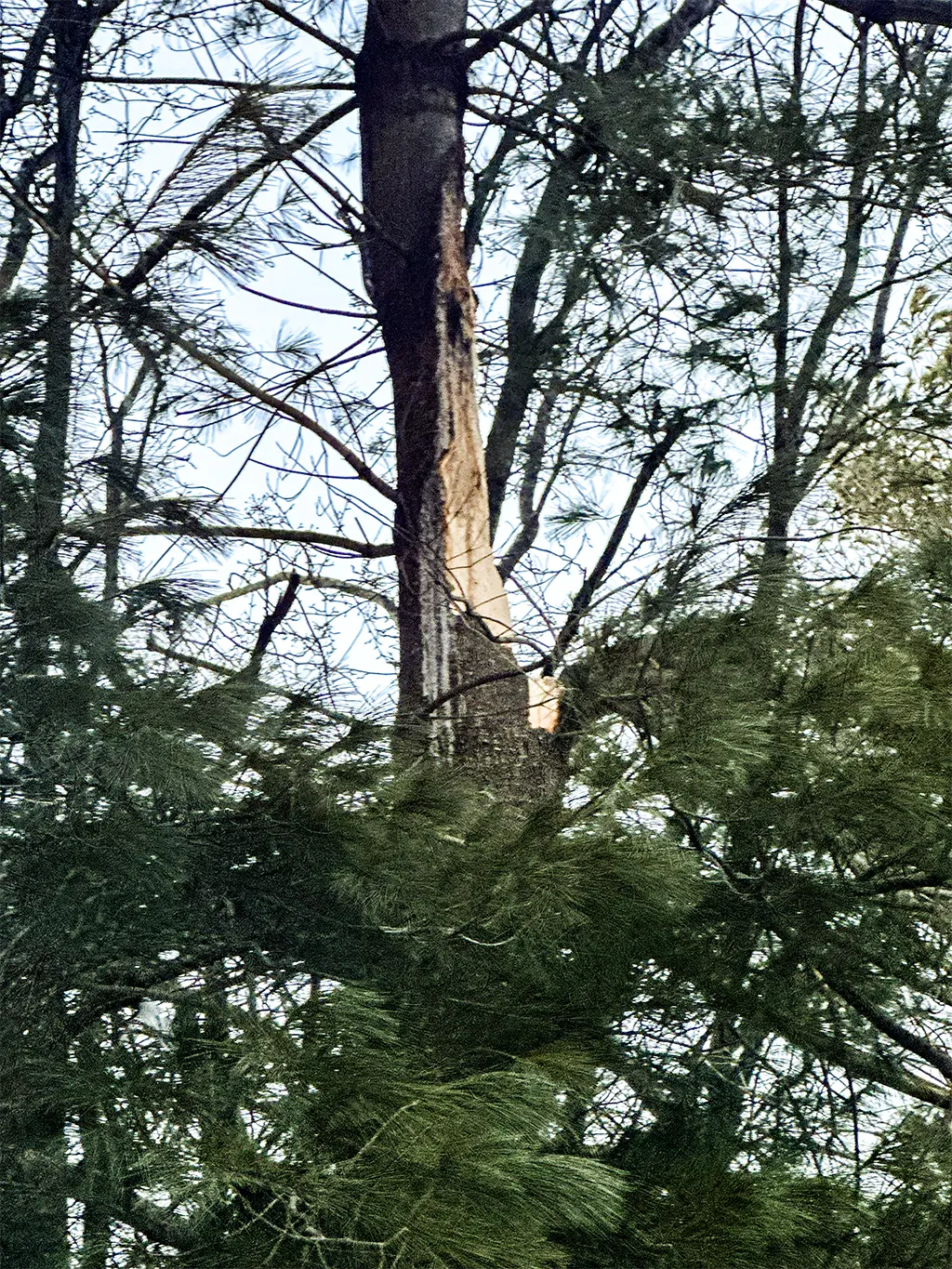
A tree stands on what its roots can hold. The International Society of Arboriculture explains in its storm related tree damage brochure that strong wind can break branches and even uproot trees, particularly when it combines with soil softened by heavy rain. In a borough where the Navesink brought minor flooding in spots at the morning high tide during the September 26 storm, as Red Bank Green described, wet ground is part of the setting. Soaked soil holds roots less firmly, and that is the part the wind finds.
Wet ground also works on roots from the other side. The Rutgers fact sheet on over mulching notes that when oxygen in the soil drops below 10 percent, root growth in most trees declines, and it ties the problem to waterlogged mulch and soil, especially during wet periods in spring and fall when roots are actively growing. Rutgers adds that symptoms may take several years to appear, which is why a crown that looks fine in October can still carry a root problem. Our guide to weak tree roots explains what we look for at the base of the trunk.
Mulch is the part an owner controls. Rutgers recommends keeping total mulch depth to no more than three inches, and no more than two inches on compacted and poorly drained soils. The borough’s tree questions page describes a mulch volcano, mulch piled into a cone around the trunk, as something that kills trees by encouraging decay fungi, killing the inner bark, and sheltering animals that gnaw on the bark. We see mulch piled against trunks on many properties, usually applied with good intentions, and in wet ground it holds even more water against the base of the tree.
Red Bank’s tree ordinance takes the root zone seriously. Its definition of tree removal covers more than cutting. It includes excessive pruning, over mulching, and improper grading or soil compaction within the critical root radius when that leads to the decline or death of a tree. The ordinance calculates that radius as 1.5 feet for every inch of trunk diameter, so a tree 12 inches across has a critical root radius of 18 feet. Grading, paving, or heavy equipment inside that circle can be a decision about the tree, not only about the yard.
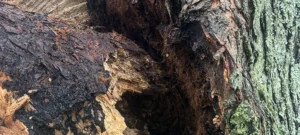
Storms also leave damage that does not show from the street. The International Society of Arboriculture advises that after severe weather, assessments should include trees that seem undamaged, especially larger trees near people or property, and that a certified arborist check them for cracks in trunks or limbs, hanging branches, and soil heaving. A long vertical crack with torn bark and pale wood showing, like the one pictured here, is the kind of damage that can sit in a trunk through a quiet week and open further under the next load. Our article on hidden damage from seasonal storms covers the crown side of that problem.
Decay and vines hide the same evidence from a different direction. Cracks or separations in the soil can mean the roots are moving, and the International Society of Arboriculture lists that as a warning sign for failure, especially if the tree is leaning. Fungal growth at the base and ivy up the trunk both make a tree harder to read. Our guide to hidden tree rot shows how long decay can sit inside a tree that still holds a full set of leaves, and our article on vines and tree health covers what a trunk covered in ivy conceals.
Ground and Trunk Warning Signs After Heavy Rain
- Cracks or separations in the soil on one side of the trunk.
- Mulch piled against the trunk or deeper than three inches over wet soil.
- Compacted, bare soil under the crown where cars park or people walk.
- Long vertical cracks in the trunk, or bark peeling away in strips.
- Hanging or broken limbs that stayed in the crown after the weather cleared.
None of these signs means a tree is about to come down. Each one means something changed, and a change is the reason to look. A tree that shows two or three of them, especially over a sidewalk, a driveway, or a roof, goes to the front of the line. We do not answer with blanket thinning or a quick topping. We find the specific defect, reduce it when we can, and photograph the rest so the next look has something to compare against. The last step is turning those findings into a plan that fits the property and the borough rules.
A Red Bank Tree Plan Follows the Findings and the Borough Rules
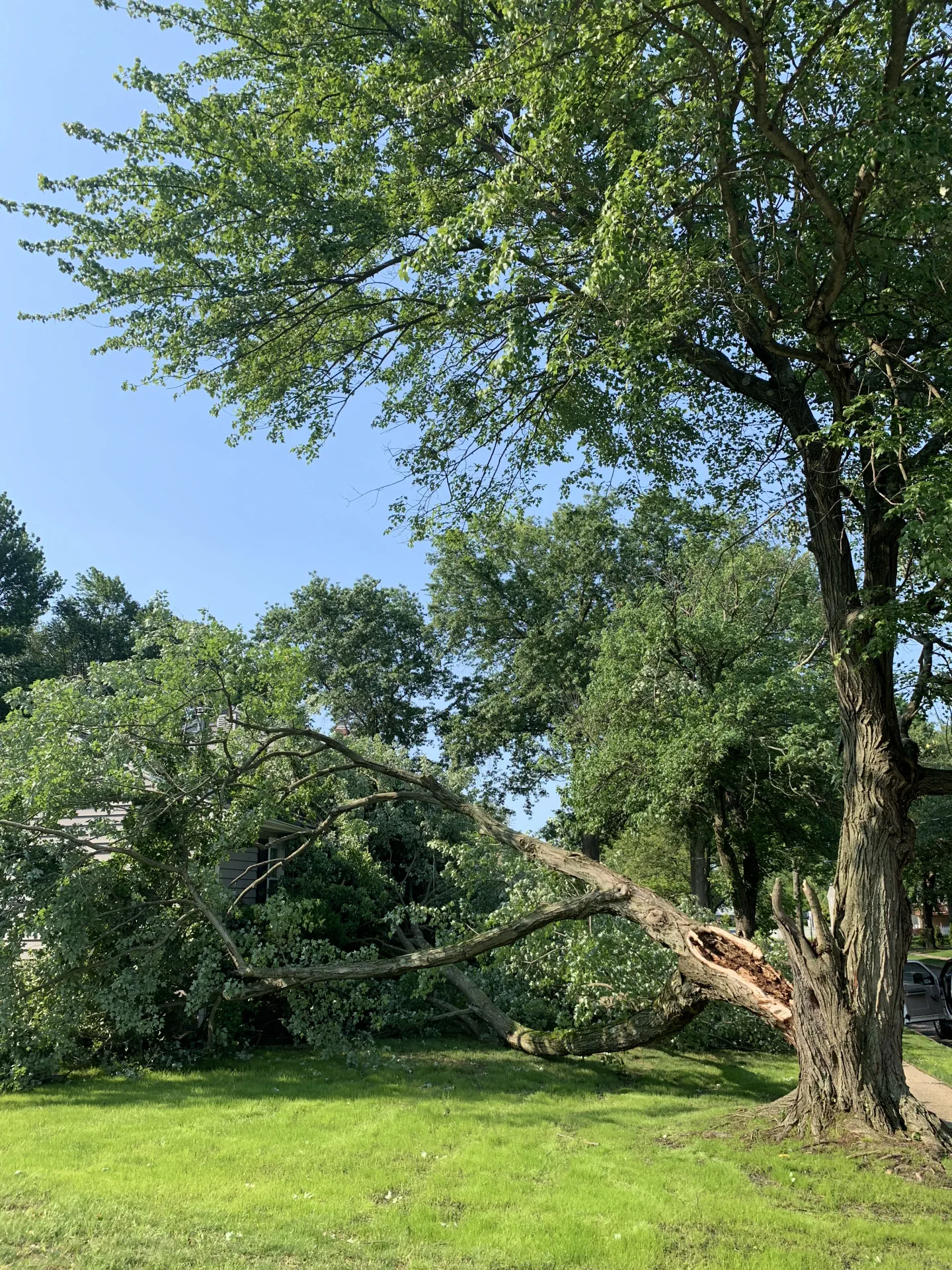
A written plan is the useful result of a tree risk evaluation. For each tree we record the condition, the target, and the recommended action, and we put the items in order. The cracked union over the driveway comes before the dead twigs at the back of the yard. We have seen what a hidden crack becomes once the load arrives, a limb split from the fork of a leafy tree and lying across a lawn toward a house. The purpose of the plan is to find that crack while the limb is still in the tree.
Most trees end up in one of four outcomes: pruning, restoration, monitoring, or removal. Monitoring is a legitimate result for a tree with a change we cannot yet explain, and it works best with dated photographs taken from the same spot. The International Society of Arboriculture lists pruning, routine care, and removal among the ways to manage a tree with a defect, and it says plainly that inappropriate pruning may weaken the tree. We prune for a reason, and a reason has to be one we can write down.
Removal is the outcome we reach when the trunk or the roots no longer give us a dependable way to manage the risk. In Red Bank that decision has a paper trail. A tree that is dead, diseased, injured, or in danger of falling meets one of the criteria the ordinance lists for a removal permit, and a tree that qualifies as a hazard tree may be removed with no fee or replacement requirement. A tree that does not qualify may carry a replacement requirement. That is why we document the finding before anyone schedules work, and why our guide to tree removal permits is a good first read.
Replacement planting has its own rules. The borough’s tree questions page says a tree planted on the right of way should be 3 to 3.5 inches in caliper, staked, guaranteed by the nursery for two years, and planted in spring or fall depending on the species, after the Shade Tree Committee inspects the location. A removal that is followed by a good planting leaves the street with a tree again. Fall is a workable planting window, which makes the autumn plan worth finishing before winter.
For property managers and owners of buildings downtown, the plan has a second job. It records which trees belong to the borough and which belong to the property, so a report to the Department of Public Utilities describes the right tree at the right address. Trees on a right of way look alike from the street, and a planting strip does not announce where private ground begins. A dated photograph, a note on the target, and an exact location make a report easier to act on. Earlier articles filed under Red Bank cover the town in other seasons.
October is a good month for the plan. Enough leaves are still on the trees to show how the crown held up, the borough’s planting window is open, and winter work can be scheduled rather than rushed. Our guide to storm season tree risk assessment explains how the same findings carry forward into the storm months, and our tree storm proofing service is how we act on them when a tree needs more than monitoring.
What a Written Red Bank Tree Plan Should Include
- The condition of each tree, written down and dated, with a photograph.
- The target under each tree and who owns the ground it stands on.
- A recommended action for each tree, from pruning and restoration to monitoring or removal.
- Which trees fall under the borough tree ordinance and which belong to the borough.
- A date to look again, with replacement planting timed for spring or fall.
A plan built this way is specific to the property and to the people who use it. It is not a list of every service we offer. It is the handful of actions that change the outcome when the next storm arrives, in the order that matters. When the work is done, the owner knows what was found, what was fixed, what is being watched, and which questions belong to the borough. That is the difference between a tree that was looked at and a tree that was managed.
Schedule a Tree Risk Evaluation in Red Bank Before Winter Weather
If you own or manage property in Red Bank, along Broad Street or Front Street, near Marine Park or Riverside Gardens Park, or on a residential street with mature trees, schedule a tree risk evaluation in Red Bank before winter weather arrives. We provide tree risk evaluations, tree health management, pruning, restoration, storm proofing, and removal when a tree cannot be managed safely.
Hufnagel Tree Service is led by a certified arborist with almost 30 years of local experience and more than 280 five star Google Maps reviews. We inspect first, explain what we found in plain terms, and recommend only the work that changes the outcome for your trees and your property.
Call or text (732) 291-4444 to schedule a tree risk evaluation in Red Bank before the next storm arrives.
Schedule Service Now!
From precision pruning and safe removals to health assessments and preventative care, Hufnagel Tree Service delivers expert solutions backed by decades of experience. We offer certified insight, fair pricing, and a commitment to doing what’s best for your landscape.
Learn More About Our Services

Related Articles
Tree Risk Inspections in Sea Girt, Spring Lake & Little Silver
Vines and Tree Health: Hidden Risks to Mature Trees
Tree Risk Mitigation in Rumson, NJ