Contents
In Allenhurst, Every Tree Lives Between the Ocean and Deal Lake
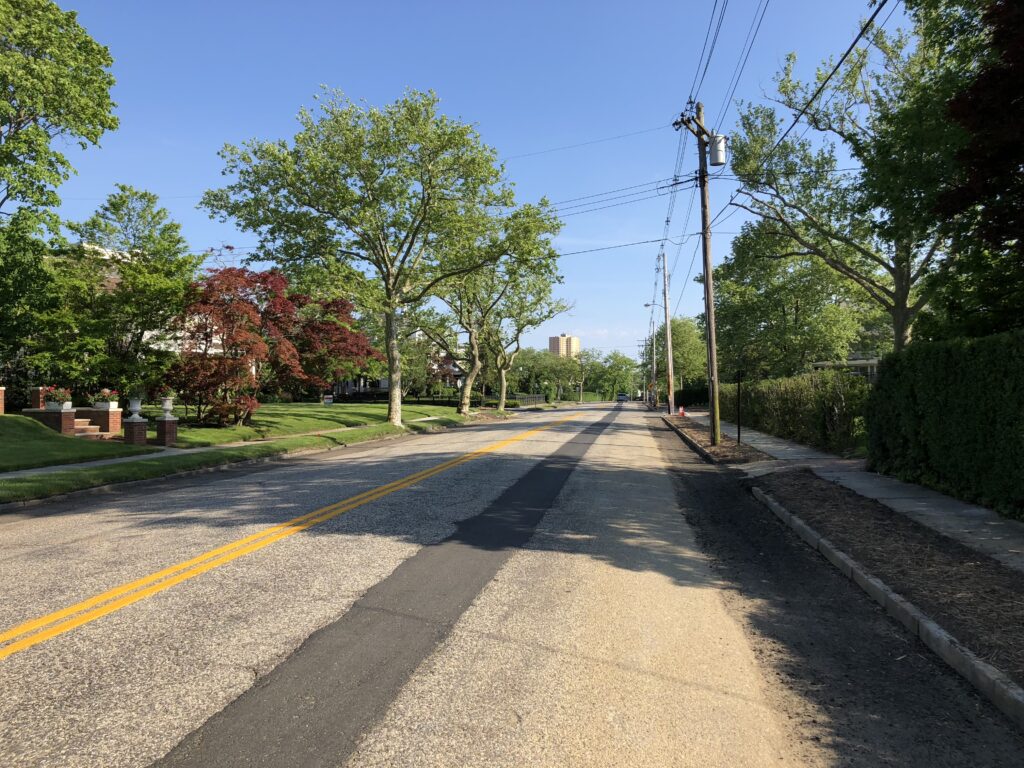
Allenhurst grew out of the 120 acre farm of Abner Allen and was incorporated as a borough on April 26, 1897. The railroad made it a resort for New York families at the turn of the century, and the large shingled and stuccoed houses they built along Norwood Avenue, Corlies Avenue, Spier Avenue, Cedar Avenue, Elberon Avenue, and Allen Avenue are still here. In 2010 the Allenhurst Residential Historic District was listed in the National Register of Historic Places. The street trees and lawn trees that frame those houses are, in many cases, as old as the houses themselves.
That is the starting point for fall tree care in Allenhurst. A plane tree or oak planted along Norwood Avenue a century ago is now a mature tree standing a short walk from the Atlantic Ocean on one side and Deal Lake on the other, with a roof, a hedge, a sidewalk, and parked cars inside its reach. Our tree health management work in a town like this is less about making trees look tidy and more about keeping old trees sound through the season that tests them hardest.
After almost 30 years working along the Monmouth County shore, we have learned that the ocean side of an Allenhurst tree usually shows the first sign of trouble. Scorched leaves, thin growth, and early leaf drop on the side that faces the beach are the record of a summer of salt and wind. A fall tree risk evaluation reads that record while it is still visible and before a nor’easter adds the next load.
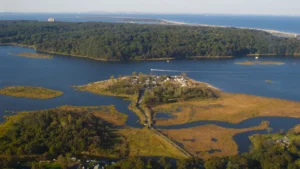
Water shapes the borough from both directions. The ocean front is held by groins and the beach club, whose salt water pool is filled from the ocean every night in summer, and the western end of Corlies and Spier Avenues drops to the lakefront park on Deal Lake. The Deal Lake Commission, chartered in 1974 by the seven shoreline towns, manages the lake level through the flume to the ocean, and it is candid that its tide controls are limited during heavy storms. Ground near the lake stays wet longer after coastal rain, and ground near the beach takes salt spray whenever the wind comes off the water. The National Weather Service describes nor’easters as the storms that bring gale force northeast wind, heavy rain or snow, rough seas, and coastal flooding between September and April. Both ends of Allenhurst feel those storms, and the trees in between carry the results.
Fall Tree Care in Allenhurst Starts With What the Summer Left Behind
Fall tree care in Allenhurst begins with the summer that just ended, not with the winter forecast. By late September the damage from a season of onshore wind, salt spray, and summer thunderstorms is already in the tree. Leaves are starting to thin, and the structure underneath them is becoming visible. That is the window when a careful look from the ground, and a closer look in the crown, tells us what changed since spring.
Salt scorch is the most visible change on the ocean side of the borough. Leaves on the side of a tree that faces the beach brown along their edges, drop early, or stay small, while the sheltered side looks normal. On its own, scorch is a stress sign rather than a structural defect. What matters is whether the stressed side also carries deadwood, a cracked limb, or a union that is beginning to open, because a tree that has spent its reserves on salt has less in hand to close wounds.
Structural defects are the second category, and they are easier to read as the canopy opens. Two stems of similar size rising from one point can trap bark in the seam between them, and that seam opens a little further with each storm. Our article on codominant stems explains why those unions fail. Long limbs reaching over a roof or a sidewalk carry end weight that acts as leverage in northeast wind, and a limb that cracked in a July storm often stays in the tree, looking normal from the driveway, until wet snow finds it.
Decay is the third category, and it is the one a homeowner is least likely to see. Loose bark, a cavity, or a shelf fungus where a large branch meets the trunk means the wood inside has been consumed. Many Allenhurst trees are old enough to carry old pruning wounds and storm wounds that have been closing over decay for years. Our guide to hidden tree rot shows what that looks like from the outside and why a sounding and a close inspection matter more than the color of the leaves.
Then there is the target. The lots in the historic district are generous by shore standards, but the trees are large, and the houses, garages, hedges, fences, sidewalks, and cars along Norwood Avenue and Corlies Avenue are all within reach of a mature canopy. A defect that would be low concern over an open lawn is a different matter over a slate roof or the sidewalk that children use to walk to the beach. The inspection connects each defect to what it could hit.
Mike Hufnagel puts it this way: “On a street this close to the ocean, I want to know which side of the tree has been taking the weather before I decide anything. The ocean side usually tells the story first, and the fall is when it finally shows it.” That rule keeps the work focused. It sends us to the exposed side of the crown and the exposed side of the root plate first, and it keeps a general trim from being mistaken for a plan.
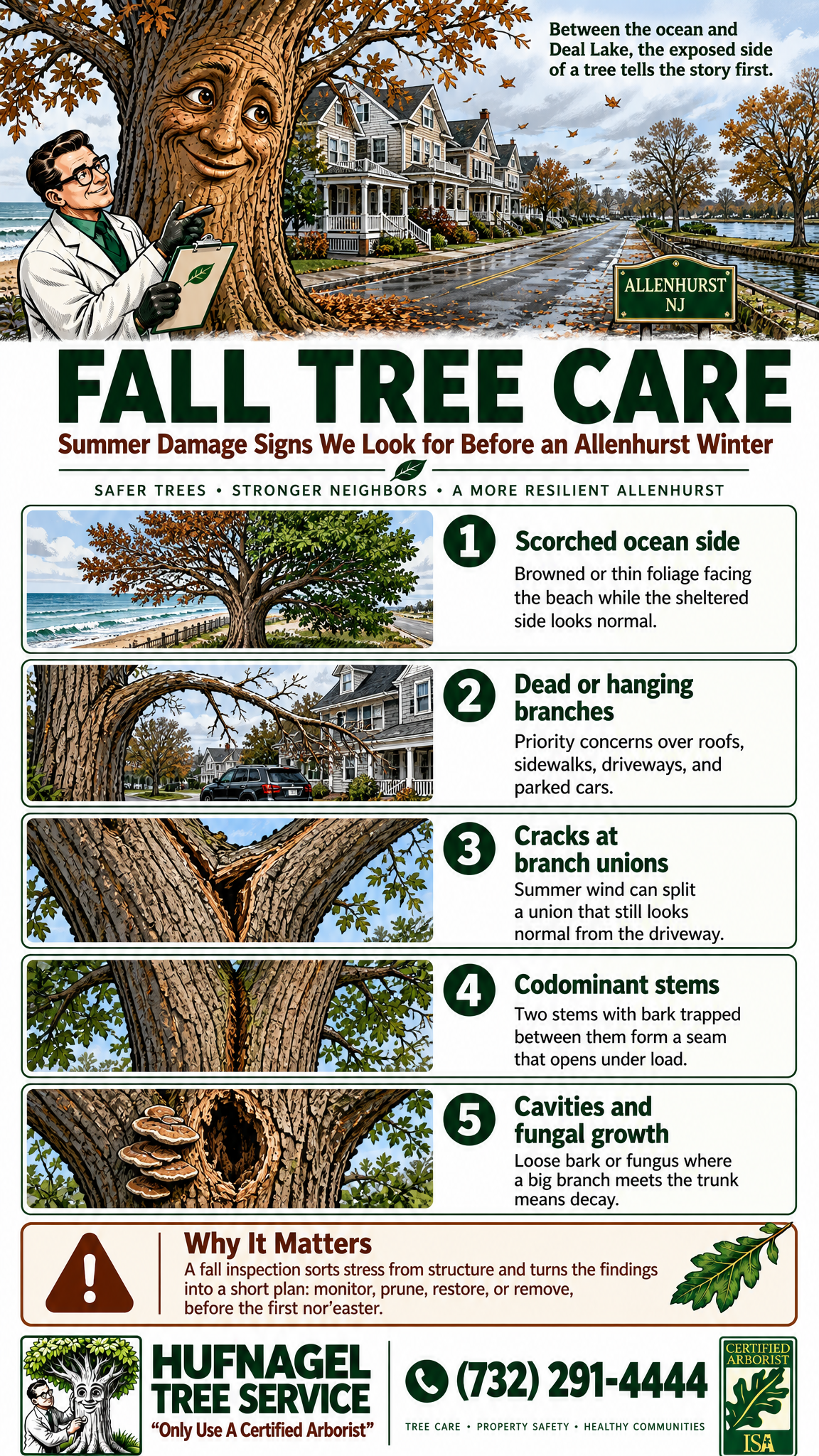
Summer Damage Signs We Look for Before an Allenhurst Winter
- Browned or thin foliage on the ocean side of the crown while the sheltered side looks normal.
- Dead, broken, or hanging branches over roofs, sidewalks, driveways, and parked cars.
- Cracks or splits at branch unions left behind by summer wind.
- Codominant stems with bark trapped in the seam between them.
- Loose bark, cavities, or fungal growth where a large branch meets the trunk.
None of these signs decides the outcome by itself. A scorched crown with sound structure needs recovery and monitoring, not cutting. A cracked union over a bedroom needs attention before the first nor’easter whatever the leaves look like. The point of a fall inspection is to sort the two, so the work that follows addresses a defect rather than a general sense that the tree looks tired. Once the crown has been read, the next question in Allenhurst is what salt and water have been doing below ground.
Salt Reaches Allenhurst Trees From the Ocean and From the Road
Allenhurst trees take salt from two directions. Onshore wind carries ocean spray across the beach and the first few blocks of the borough, and it reaches furthest during the nor’easters that arrive from fall through early spring. Then winter plowing adds road salt along Norwood Avenue, which carries Route 71 through the borough, and along the side streets the borough clears. The same tree can be hit from above by spray and from below by salt washing into the soil.
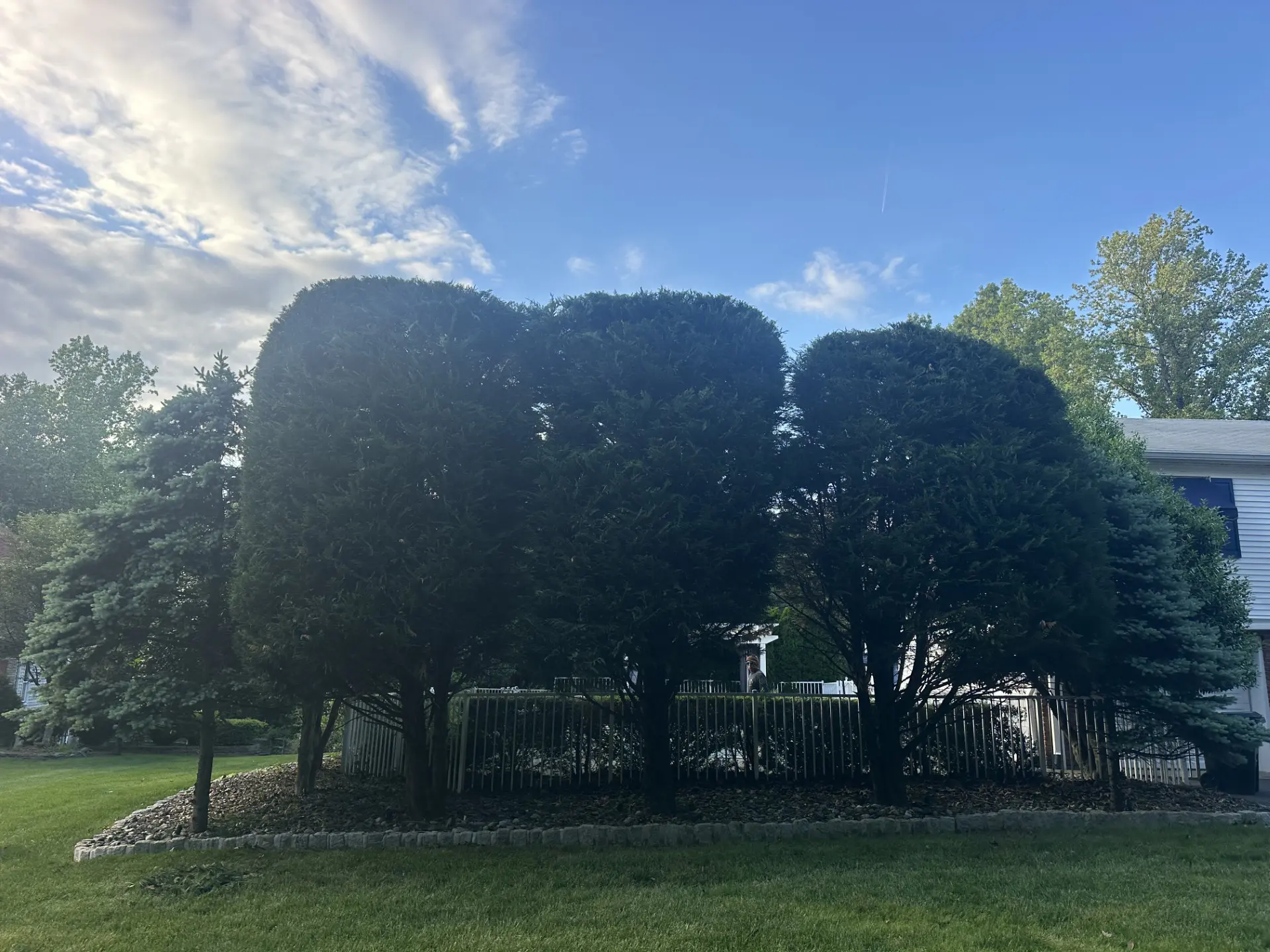
Rutgers Cooperative Extension describes how the damage works. Salted water sprayed up from pavement scorches foliage within roughly fifteen feet of a road, and salt that percolates into the soil binds water so roots cannot take it up, displaces the nutrients roots need, and builds up to toxic levels in the tissue. Rutgers also notes that conifers suffer more readily than deciduous trees because they cannot shed a year of accumulated salt with their leaves. The hollies, pines, and cedars that screen Allenhurst yards are on the wrong side of that comparison.
The root zone is where the two kinds of salt meet the water problem. Ground near Deal Lake and along the lower ends of Corlies and Spier Avenues stays saturated for days after a coastal storm, and saturated soil holds a root plate with much less grip than dry soil. A tree that leaned slightly in a wet November and then stood upright again after the ground dried has less anchorage than it had before. Our guide to weak tree roots covers the signs we check for at the base.
Mulch is the part of the root zone the homeowner controls, and in wet ground it is easy to get wrong. Rutgers warns that mulch deeper than three inches, and two on poorly drained soil, leaves little air in the upper soil, and that mulch should be kept eight to twelve inches away from a mature trunk. We see mulch piled against trunks on many shore properties. In ground that already stays wet, it starves the roots of oxygen and hides the root flare where decay and girdling roots begin.
The borough treats the root zone as part of the tree. Its tree removal and replacement chapter defines a critical root radius around every regulated tree and counts over mulching, improper grading, and soil compaction within that radius as removal when they lead to the decline of the tree. That is a sensible reading of how old trees actually die. A driveway widened over the roots, a trench for a new drain line, or a pile of mulch left for a decade does more damage over time than most storms.
Planning for salt is therefore mostly planning for the root zone. We look at where plowed snow is pushed and where meltwater runs, because that is where salt concentrates. We look at which trees sit inside the spray line from the beach. Where a valuable tree is exposed, flushing the soil with fresh water after a salt event, keeping deicing salt off the root zone, and correcting the mulch are modest steps that change the outcome. Where an evergreen screen has already browned on the ocean side, the practical question is whether it recovers or whether it is time to plan a replacement.
Root Zone and Salt Planning Steps for Allenhurst Properties
- Keep deicing salt and salty plowed snow away from root zones whenever practical.
- Flush exposed root zones with fresh water after a salt spray event or a salted plow pass.
- Pull mulch back from trunks and keep it under three inches in wet ground.
- Photograph any new lean, lifted turf, or soil crack at the base after a coastal storm.
- Plan trenching, paving, and grading outside the critical root radius of mature trees.
None of this is dramatic work, and that is the point. Salt and water weaken an Allenhurst tree slowly, and the correction is usually a change in habit rather than a crew with a chipper. Where the roots are sound, lowering the sail of the crown through selective pruning reduces the load the roots have to resist in a wet nor’easter. Where the roots are not sound, no amount of pruning fixes the problem, and we say so plainly. With the crown read and the ground understood, the last step is turning the findings into decisions.
A Fall Plan in Allenhurst Respects the Historic District and the Ordinance
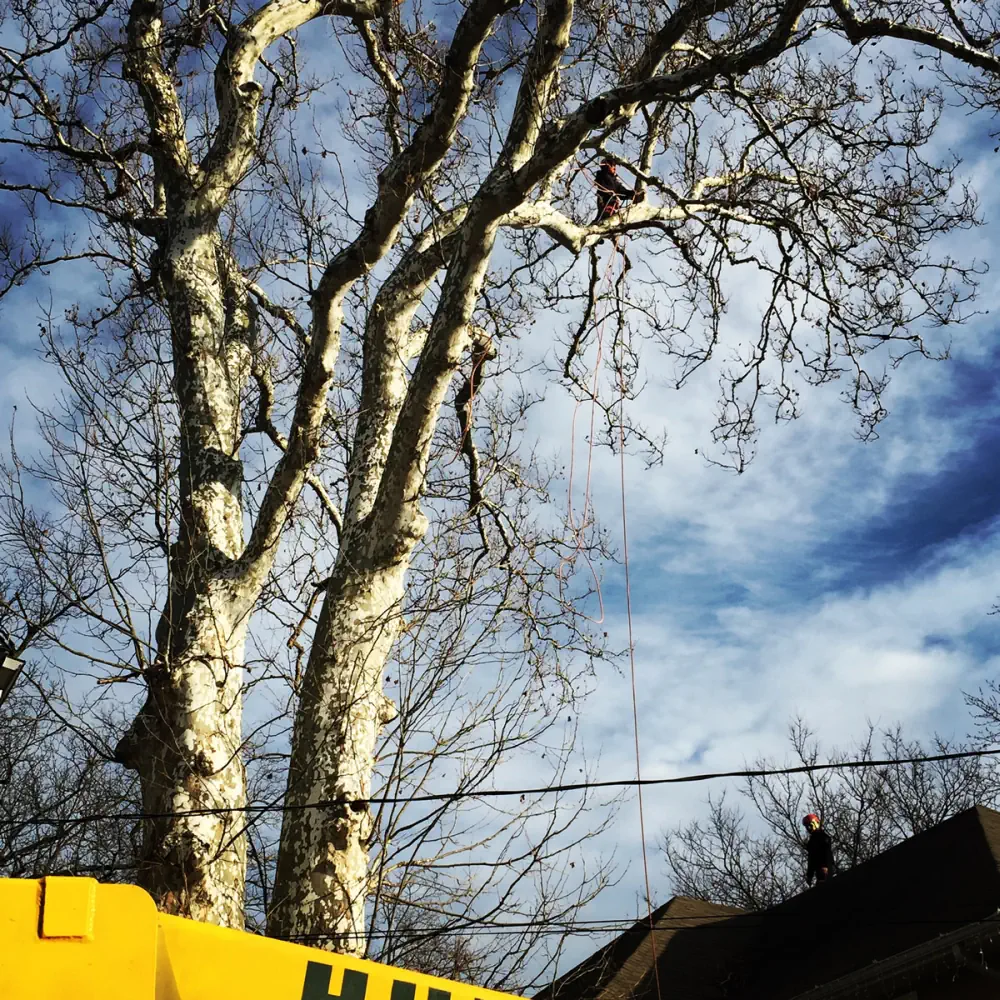
The inspection produces a short list, not a long invoice. For each tree we record the defect, the target, and the recommended action, and we put the items in order. The cracked limb over the bedroom comes before the deadwood over the back hedge, and work that reduces a real hazard comes before work that only tidies a canopy. Most Allenhurst trees we evaluate end up in one of four outcomes: monitoring, pruning, restoration, or removal.
Monitoring is a legitimate result. A plane tree with a scorched ocean side and sound structure needs to be watched and given a chance to recover, and a minor defect with no meaningful target can wait for a spring check. Pruning handles most of the rest, and it is done selectively, with a reason behind every cut. The International Society of Arboriculture notes that wound closure is best when pruning happens before the spring growth flush, which makes late fall and the dormant months a good time for structural work on a mature tree. We do not top a tree to make it shorter, and we do not thin a crown out “for wind” as a blanket prescription. The ISA calls topping perhaps the most harmful pruning practice known, and the dense regrowth it produces is what fails in the next storm.
Restoration applies to trees that were topped or cut hard by someone else, or that lost a major limb in a storm. Many old shore trees carry that history. Restoration pruning works the regrowth back toward sound structure over more than one season, and in a historic district it is usually the better answer than losing a tree that the street was designed around. Removal is the outcome we reach when the structure or the roots no longer give us a dependable way to manage the risk over a house, a sidewalk, or a neighbor. We do not recommend it because a tree is large or because winter is coming.
Allenhurst has rules about that last outcome, and a fall plan should account for them. The borough adopted a tree removal and replacement chapter in August 2024. Removing a street tree of two and a half inches in diameter or more, or any other tree of six inches or more, requires a tree removal application to the Conservation Officer before the work, and replacement trees or a fee follow for trees that are not exempt. Hazard trees, meaning trees that are dead or dying, diseased, damaging structures, or a threat to public safety, can be removed with no fee or replacement requirement, but the exemption has to be justified in writing with photographs or a statement from a licensed tree expert or arborist. Our evaluation produces exactly that record.
Street trees have a second layer. The borough’s Shade Tree Commission has control over the planting, care, and removal of trees in the public streets and parks, and it can require the removal of any tree dangerous to public safety. A plane tree in the strip between the sidewalk and Norwood Avenue is not the homeowner’s to prune or remove without that review. We tell owners which trees on a property fall under the commission and which do not before any plan is written, because the answer changes what can be done and how quickly.
Timing closes the plan. Fall is the window in Allenhurst for the same reasons it is the window in neighboring Loch Arbour: the summer record is visible, the leaves are coming off and exposing the structure, the ground has not yet frozen, and the nor’easter season is just beginning rather than half over. Our tree storm proofing work is the practical form of that timing. No tree service can honestly guarantee that a tree will never fail in severe weather. What a fall plan does is make sure the predictable failures are handled before the weather tests them.
Fall Decisions That Carry Allenhurst Trees Through Winter
- A fall evaluation of every mature tree within reach of the house, garage, sidewalk, or street.
- Deadwood and cracked branches removed from above roofs, walks, hedges, and parking areas.
- Overextended limbs shortened to reduce end weight over targets before northeast wind returns.
- Permit and Shade Tree Commission questions answered before any removal is scheduled.
- A written record of findings, photographs, and recommendations to compare after each storm.
A plan built this way is specific to the property and to the borough. It is not a list of every service we offer. It is the handful of actions that change the outcome for this house when the next coastal storm arrives, in the order that matters, with the paperwork the borough expects already in hand. When the work is done, the homeowner knows what was found, what was fixed, what is being watched, and which trees the town has a say in.
Schedule Fall Tree Care in Allenhurst Before the First Winter Nor'easter
If you have mature trees near your Allenhurst home, driveway, sidewalk, or hedge line, or on the low ground toward Deal Lake, schedule an evaluation before the first winter nor’easter. We provide tree health management, tree risk evaluations, pruning, storm proofing, restoration, and removal when a tree cannot be managed safely, and you can see our other work in the borough on our Allenhurst page.
Hufnagel Tree Service is led by a certified arborist with almost 30 years of local experience and more than 280 five star Google Maps reviews. We inspect first, explain what we found in plain terms, and recommend only the work that changes the outcome for your trees and your property.
Call or text (732) 291-4444 to schedule fall tree care in Allenhurst before the next coastal storm arrives.
Schedule Service Now!
From precision pruning and safe removals to health assessments and preventative care, Hufnagel Tree Service delivers expert solutions backed by decades of experience. We offer certified insight, fair pricing, and a commitment to doing what’s best for your landscape.
Learn More About Our Services
Related Articles
Brielle Tree Risk Assessment for Storm Damage and Hazardous Trees
Winter Tree Prep in Old Bridge: Schedule An Inspection

Winter Storm Proofing Trees in Sea Bright NJ: Get Prepared
Old Bridge Fall Tree Inspection: Catch Hidden Hazards Early