Contents
Monmouth Beach Trees Take Weather From Two Directions
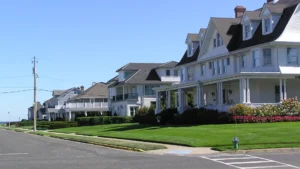
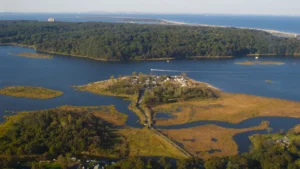
Monmouth Beach occupies a narrow coastal setting where properties are influenced by both the Atlantic Ocean and the Shrewsbury River. Homes around Ocean Avenue, Beach Road, Willow Avenue, and the river side neighborhoods can experience wind, salt, heavy rain, and fast changing storm conditions that are different from those on a more protected inland lot. Those conditions do not make every tree unsafe, but they do make post summer evaluation especially useful for mature trees close to valuable structures.
The borough itself recognizes the importance of natural features. Its land use code calls for preservation of areas containing significant numbers of specimen trees where feasible, alongside floodways, wetlands, and marshes. That Monmouth Beach natural feature preservation language reflects the reality of coastal property ownership: mature trees are part of the landscape value, but they exist within a sensitive environment that can put unusual stress on roots and canopies.
A tree risk evaluation after summer storms is our opportunity to separate normal coastal wear from a developing structural problem. We inspect the trunk, branch unions, crown, deadwood, root flare, soil, lean, wounds, cavities, and previous pruning. Then we consider exposure. A branch over a roof, pool, driveway, neighboring house, outdoor kitchen, or frequently used walkway creates a different decision than the same branch over an unused planting bed.
Our tree risk inspection and health assessment service is designed around those combinations. We want to know what can fail, how likely that appears based on visible evidence, and what would be affected. The inspection does not begin with removal. It begins with understanding the tree well enough to preserve what is sound and correct what is not.
Hufnagel Tree Service has worked in Monmouth County for almost 30 years. In shore communities, one lesson repeats: the storm that causes a tree to fail is not always the storm that created the problem. Summer can weaken roots, crack limbs, alter canopy balance, or damage tissue, and the failure may not happen until weeks or months later.
Why Coastal Trees Deserve a Post Summer Look
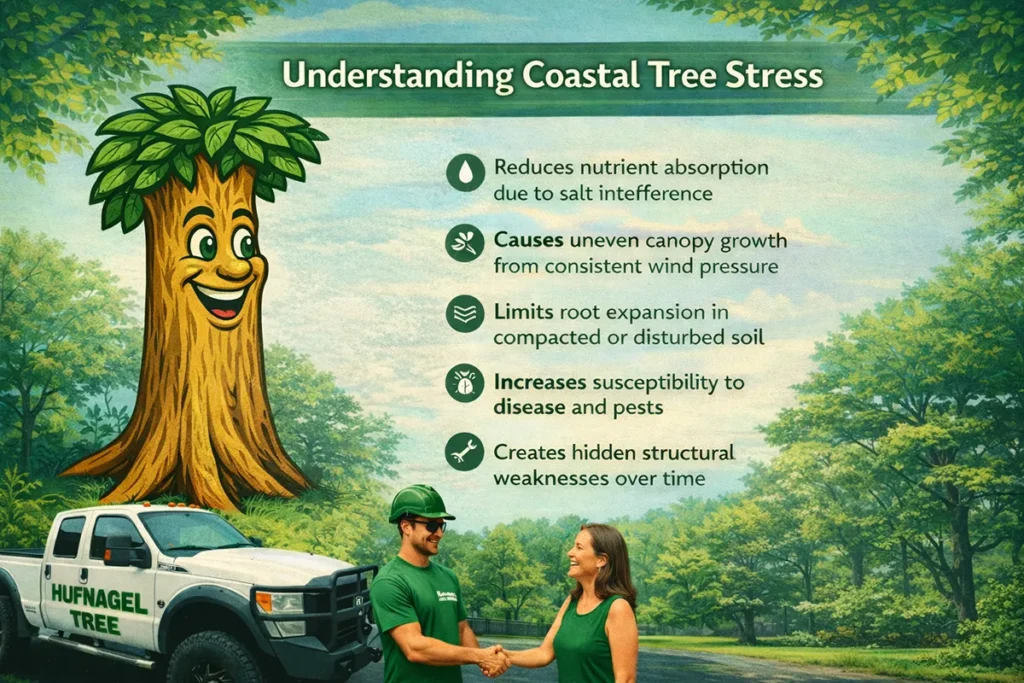
- Ocean and river winds repeatedly load the canopy from changing directions
- Salt exposure can stress foliage and smaller branches without producing immediate structural failure
- Heavy rain can soften root zones and expose stability problems around confined or disturbed roots
- Summer thunderstorms can crack limbs or unions that remain attached after the weather clears
- High value homes and tight property layouts increase the consequences of even a partial tree failure
Those factors make a careful September evaluation a practical form of property maintenance, not an overreaction to living near the shore.
Coastal Stress and Structural Damage Are Not the Same Thing
One of the most important parts of evaluating a Monmouth Beach tree is deciding whether we are looking at stress, damage, or both. Salt browned leaves on the exposed side of a tree may look alarming but may not indicate an immediate structural problem. A green full canopy can look reassuring while a major union is cracking underneath it. Good arborist work depends on knowing the difference.
We examine branch attachments for separation, included bark, old tear outs, and recent movement. We look for cavities or decay where a limb joins the trunk. We check whether deadwood is scattered normally through an older canopy or concentrated in a way that suggests a larger issue. On multi stem trees, we pay particular attention to the point where stems join because wind load can repeatedly work those unions over time.
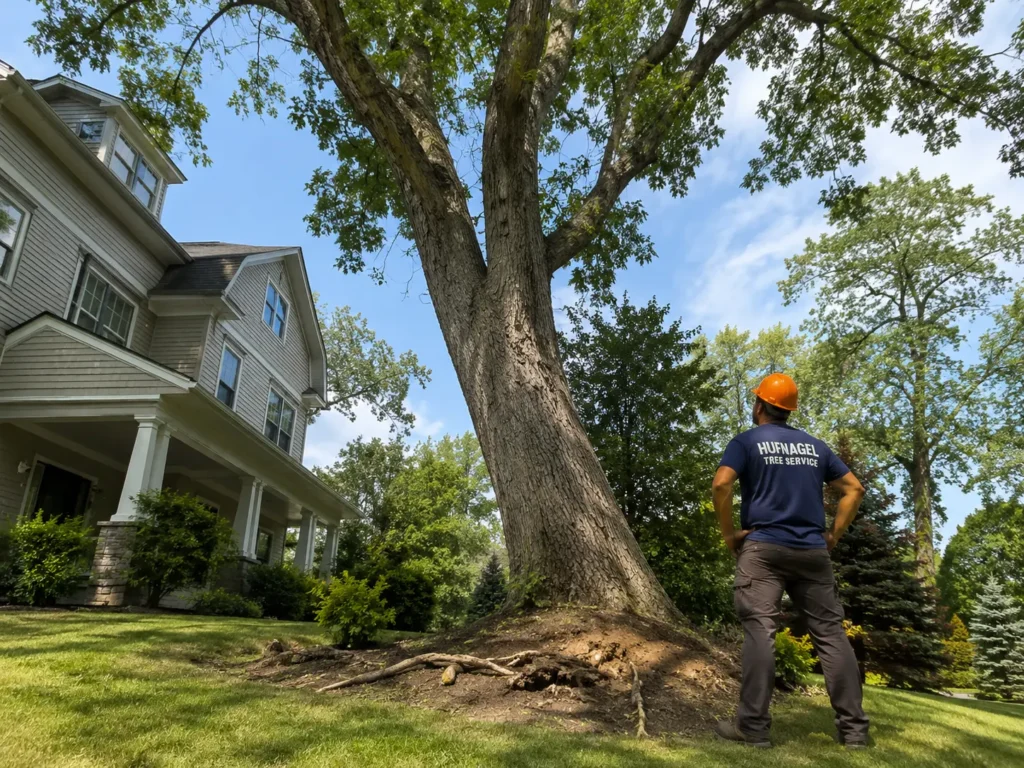
Roots can be even harder for a homeowner to judge. Coastal lots often have hardscape, drainage work, irrigation, utility trenches, landscape renovations, or grade changes near mature trees. Those changes can reduce available rooting area. After heavy rain, we look for fresh soil cracks, lifting, exposed roots, or a tree that appears to have shifted. Root problems are serious because pruning the canopy does not automatically fix a compromised anchoring system.
New Jersey emergency officials note that dead or rotting trees and branches can fall during severe thunderstorms, and the state’s post storm tree hazard resources emphasize that storm damaged tree work can be especially dangerous. That is why we discourage homeowners from climbing, cutting tensioned limbs, or attempting large corrective cuts after wind damage. Inspection should come before action when the failure pattern is uncertain.
Mike Hufnagel puts the coastal problem in plain language: “At the shore, I want to know what the wind has been working on all summer. A tree can look fine from the street and still have a union, root area, or upper limb that changed during the season.” That is the kind of hidden change we are looking for.
Stress Signs Versus Structural Warning Signs
- Leaf browning or thinning may indicate environmental stress and should be evaluated in context
- Fresh cracks, opening unions, hanging limbs, or torn wood are direct structural concerns
- New lean or movement at the root plate deserves prompt attention after saturated conditions
- Localized dead canopy can point to root, vascular, pest, disease, or storm injury depending on the pattern
- A sound trunk does not rule out a hazardous upper canopy limb that cannot be seen clearly from the ground
The value of an evaluation is that we can decide which signs need treatment, which need structural work, and which simply need observation.
Tight Coastal Properties Make Target Assessment Essential
Monmouth Beach properties often place homes, pools, patios, driveways, fences, utility lines, neighboring structures, and landscape features within a relatively compact footprint. That means a mature tree does not need to fail completely to cause expensive damage. One large leader can reach a roof or second story window. A heavy lateral limb can cross a property line. A root plate failure can affect a driveway, retaining feature, or adjacent structure.
For that reason, we evaluate how the property is actually used. Where do cars sit overnight? Which path do family members and guests use? Is the pool deck occupied every afternoon? Is a bedroom beneath the canopy? Does a landscaper or property manager need access beneath the tree? Risk changes with occupancy. A defect above a frequently used area usually deserves a different response from the same defect above a low use corner.
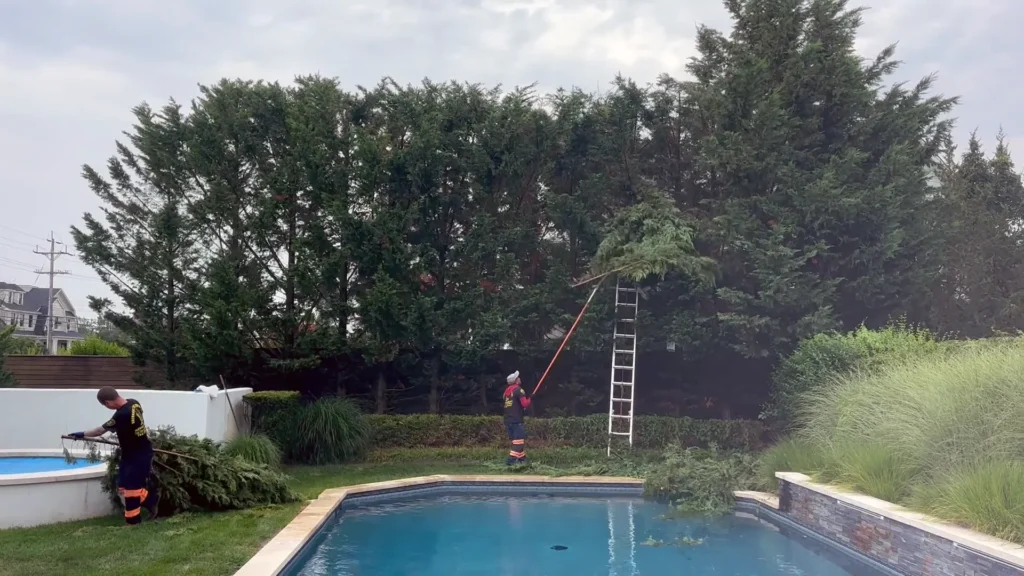
Preservation is still a major goal. Our previous work on proper pruning and risk reduction in Monmouth Beach focuses on keeping mature coastal trees useful and attractive without leaving unnecessary sail, damaged limbs, or poor structure. Proper tree trimming and pruning can remove specific hazards, improve clearance, and reduce excessive leverage while maintaining enough healthy canopy to support the tree.
Some trees need health management rather than structural reduction. Salt, drought, root disturbance, insects, disease, and soil conditions can all influence leaf density and vigor. Our tree health management service helps separate those concerns from immediate failure risk. It is entirely possible for a tree to need health care but not removal, just as it is possible for a green tree to contain a structural defect that deserves prompt action.
When the defect is beyond reasonable mitigation, removal becomes the responsible recommendation. We use planned tree removal when major decay, root failure, severe cracking, or another uncorrectable condition makes continued retention unsafe for the setting. On a tight shore lot, planning and control are essential because there is very little room for mistakes.
What Changes the Recommendation on a Coastal Lot
- How severe the defect is and whether it is progressing
- How much wind load the affected part carries
- Whether roots have adequate space and show evidence of stability
- How frequently the area beneath the tree is occupied
- Whether selective pruning, restoration, or monitoring can reduce the risk without sacrificing the tree
That property specific approach keeps us from overreacting to coastal stress while still taking genuine structural problems seriously.
September Is the Time to Make Calm Decisions Before Fall Weather
A post summer inspection gives Monmouth Beach homeowners a useful planning window. The tree is still in leaf, so canopy density and dieback patterns are visible. Recent storm damage has not been hidden by another season of growth. Soil movement from summer rain may still be apparent. If work is needed, there is time to schedule it under normal conditions instead of waiting for a late fall storm to create an emergency.
The recommendation might be very small. We may remove one damaged limb, reduce a heavy lateral, or clean out deadwood over a target. It might be a staged restoration plan for a valuable older tree. It might be health management and observation. It may simply be photographs and a note to compare the tree after winter. Inspection has value even when the answer is to leave the tree alone.
We also encourage owners of second homes and managed properties to include the people who regularly see the landscape. Property managers, estate managers, landscape companies, and caretakers often know whether a branch dropped after a storm, whether a tree has started leaning, or whether soil work recently occurred near the root zone. Those details can make an inspection more accurate and help us identify changes that would otherwise look like normal long term conditions.
For any work that follows, use qualified professionals. The New Jersey Board of Tree Experts advises consumers to verify registration and insurance, while Rutgers NJAES recommends trained tree care professionals for large pruning and removal because of the hazards involved. Coastal storm damage adds even more complexity when wood is cracked, loaded, or close to electrical service.
Mike’s rule is simple: “We do not remove a good coastal tree because it had a hard summer. We identify the real defect, reduce it when we can, and remove the tree only when the structure leaves us no responsible alternative.” That preservation first thinking is central to our work.
A Useful Fall Risk Plan Can Include
- Immediate correction of hanging, cracked, or badly damaged limbs over important targets
- Selective pruning to reduce specific leverage or clearance problems
- Health management when salt, root stress, pests, disease, or soil conditions are driving decline
- Monitoring when a condition is stable and comparison over time is appropriate
- Removal when severe structural or root defects cannot be managed to a reasonable level
Making that plan now protects both the property and the mature trees that give Monmouth Beach landscapes their privacy and character.
Schedule a Monmouth Beach Tree Risk Evaluation With Hufnagel Tree Service
Hufnagel Tree Service provides certified arborist tree risk evaluations for Monmouth Beach homes, second homes, managed properties, and high value coastal landscapes. We bring almost 30 years of local experience, careful preservation focused recommendations, and 280+ 5-Star Reviews on Google Maps.
If a tree looks different after this summer, has taken repeated wind, is leaning, dropping branches, showing cracks or decay, or stands over an important part of your property, call (732) 291-4444 to schedule a Monmouth Beach tree risk evaluation before the next round of fall weather.
Schedule Service Now!
From precision pruning and safe removals to health assessments and preventative care, Hufnagel Tree Service delivers expert solutions backed by decades of experience. We offer certified insight, fair pricing, and a commitment to doing what’s best for your landscape.
Learn More About Our Services
Related Articles
Vines and Tree Health: Hidden Risks to Mature Trees
Tree Service Shark River NJ: Lanternfly Nymphs
Tree Risk Inspections in Sea Girt, Spring Lake & Little Silver
Tree Risk Mitigation in Rumson, NJ