Contents
On a Colts Neck Estate, Tree Risk Is a Property Wide Management Issue
Colts Neck is different from a compact suburban neighborhood because one property may contain an entire inventory of mature trees. Oaks along a long entrance drive, maples around the residence, pines and spruces near open fields, trees beside barns or paddocks, and wooded boundaries can all experience different wind and soil conditions during the same storm.
On a large Colts Neck property, tree risk is rarely limited to the tree closest to the front door. The property itself may include long driveways, private access roads, service lanes, detached garages, barns, equestrian areas, pool zones, utility routes, gates, fencing, guest structures, and acres of landscaped or wooded ground. Each of those areas creates a different type of exposure. A tree that appears isolated from the main residence may still be positioned over a frequently used driveway, beside a stable, near a utility line, or along a route used every day by staff, contractors, guests, and family members.
That is why larger properties require a broader approach to tree risk assessment. We are not simply looking at individual trees. We are looking at how those trees interact with the way the property is actually used. A mature oak beside a service road may create a very different risk than the same tree standing deep within an unused wooded section. A declining limb above a pool deck, riding area, parking space, or gated entrance deserves attention because of what is located beneath it and how frequently that area is occupied.
This can be especially important on professionally managed properties. House managers, property managers, grounds crews, landscapers, equestrian staff, and maintenance contractors may spend more time moving through the property than the owner does. They are often the first people to notice a new lean, broken branch, lifting root plate, thinning canopy, fungal growth, storm damaged limb, or a tree that simply looks different than it did earlier in the season. Those observations can be valuable when they are followed by an evaluation from a certified arborist who understands structural tree risk.
Access is another major consideration. A fallen tree across a long driveway or private road can do more than damage landscaping. It can prevent residents, employees, deliveries, emergency services, or maintenance crews from entering or leaving the property. Trees near gates and utility corridors can also affect power, communications, fencing, irrigation, and other systems that keep a large property operating normally. For a property manager, preventing that type of disruption is often just as important as protecting the residence itself.
The same principle applies around barns, garages, pool houses, paddocks, and other secondary structures. These areas may receive less attention than the main home even though people, animals, vehicles, and valuable equipment may be present every day. Mature trees growing near these areas should be evaluated based on their condition, size, lean, root stability, branch structure, and the consequences if part or all of the tree were to fail.
Mike Hufnagel often tells clients, “A big property can make a bad tree look far away until you realize it is over the driveway, next to a barn, or where people walk every day. The size of the property does not reduce risk if the target is still there.”
That is the key difference when evaluating tree risk on a Colts Neck estate or larger residential property. Distance alone does not determine whether a tree matters. We consider what is within the potential fall zone, how the surrounding area is used, how often people or vehicles pass through it, and whether the tree shows signs of structural weakness or declining health. A seasonal tree risk inspection helps homeowners and property managers identify those problems before they become emergency removals, blocked access routes, damaged structures, or unnecessary safety hazards.
Open Acres Change How Wind and Rain Affect Colts Neck Trees
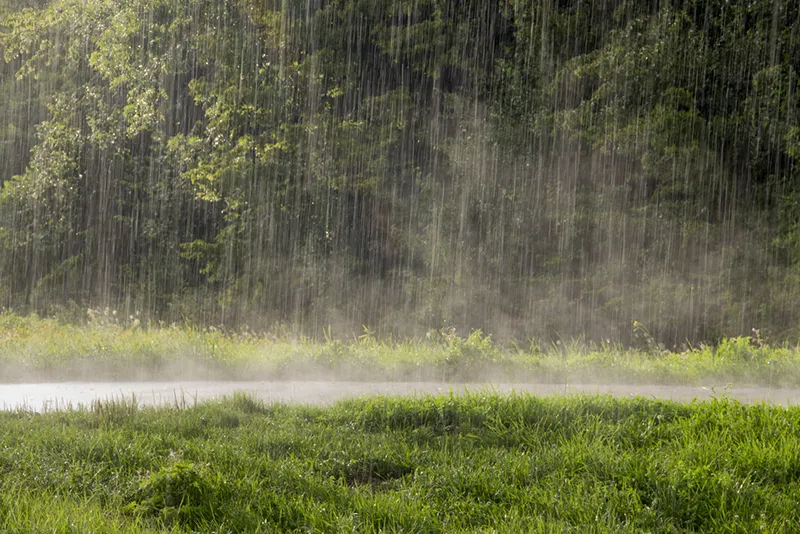
Trees along open fields and estate edges experience wind differently from trees protected inside a continuous woodland. A mature canopy that rises above a lawn, pasture, or driveway can take direct wind loading from summer thunderstorms.
Rain adds another part of the equation. Saturated soils can reduce root holding strength at the same time that a fully leafed canopy is catching wind.
Large properties also accumulate history. A tree line may have been altered when a field was cleared, a driveway widened, a barn built, a pool installed, or underground utilities added.
For owners, the visual question is usually whether a tree still looks healthy. For managers, we also need to ask whether it is still functioning safely within the property plan.
Late summer is useful because the canopy is still fully expressed. Differences in vigor, leaf density, dead tips, and branch dieback are easier to compare before leaf drop. We can use those observations to direct a more detailed tree health assessment where needed.
Where We Focus First on Large Properties
- Trees along long driveways, entrance lanes, and gated access points
- Mature trees beside barns, paddocks, garages, and equipment areas
- Exposed trees along field edges and newly opened sections of the property
- Low or wet areas where soil saturation may affect root stability
- Large trees near the residence, pool, patios, guest spaces, and utility infrastructure
A Colts Neck risk inspection works best when it treats the property as a system rather than a collection of isolated trees. Open exposure, drainage, historic site work, and daily use all influence priorities. Once those areas are identified, we look more closely for damage that may have occurred during summer storms without creating an obvious failure. That hidden damage is often what makes a seasonal follow up worthwhile.
Summer Storm Damage May Stay Hidden for Weeks
A storm does not need to leave a trunk on the ground to create a structural problem. Wind can partially split a union, twist a heavy limb, break roots below grade, or enlarge an old crack.
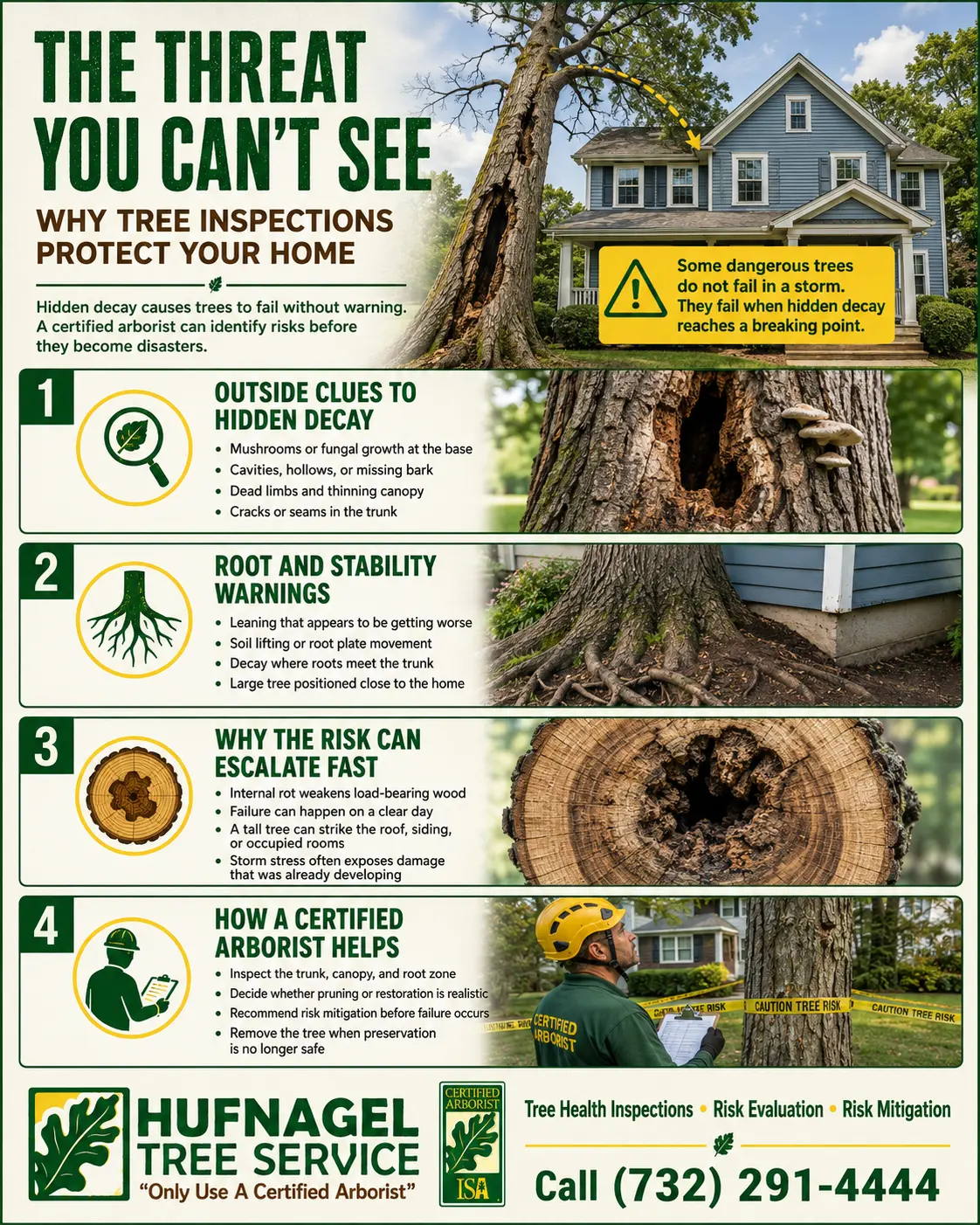
Internal decay is another reason visual appearance can be misleading. Trees can maintain green leaves while structural wood inside the trunk or base continues to deteriorate.
Root condition deserves equal attention. Trees beside drive lanes and parking areas may have compacted soils. Trees near construction may have lost roots. Trees receiving heavy irrigation may remain wet for long periods. Each situation changes the way the tree anchors itself. The risk may become visible only after summer wind and rain have added stress.
This is also where a manager benefits from a written or clearly prioritized field plan. If fifteen trees need ordinary deadwood pruning and one tree shows root movement toward the main house, those should not enter the same scheduling queue.
Some mature trees require an upper canopy view that cannot be obtained from the ground. Our recent aerial tree inspection guidance explains why large trees near important targets may warrant closer canopy access after a severe season.
Changes That Deserve a Closer Arborist Look
- Fresh cracks at major branch unions or between co dominant stems
- New soil mounding, root plate lifting, or exposed structural roots
- Repeated limb loss from the same mature tree
- Fungal growth, cavities, seams, or soft wood at the trunk base
- A section of canopy that has thinned or died back noticeably since spring
The difficulty with hidden damage is that the tree may continue standing normally after the storm. That can create false reassurance, especially on acreage where a problem tree is not seen up close every day. An inspection converts those subtle clues into a manageable priority list. The next step is deciding which trees present the greatest consequence because of where they stand and what they can strike.
Distance Does Not Eliminate Life Safety Risk on an Estate
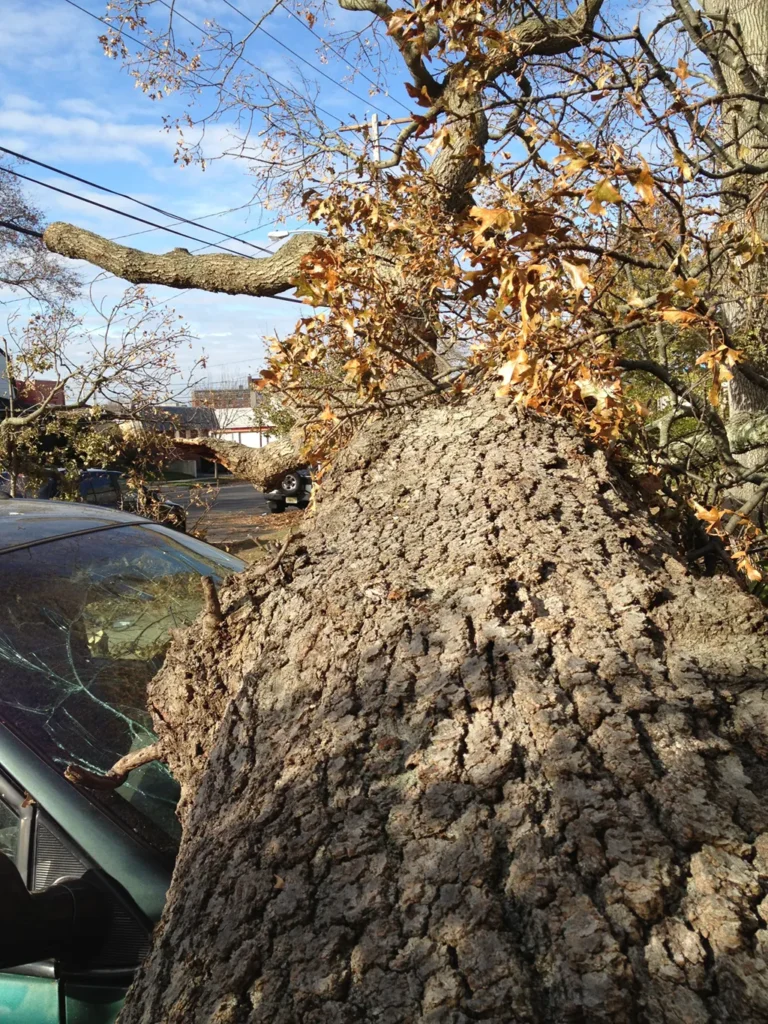
Large lots create space, but they also create more places where people and valuable assets move beneath trees. A mature tree beside a barn, riding area, staff parking zone, pool, guest cottage, or equipment building can have as much consequence as one beside the main residence.
Long driveways deserve special attention. A fallen tree can trap vehicles inside, block emergency access, prevent service crews from entering, or damage gates and lighting. Where one road serves as both the residential entrance and service route, maintaining clearance and monitoring large roadside trees is an operational issue as well as a landscape issue.
Leaning trees are another common concern. Some trees naturally grow at an angle and remain stable for decades. A lean becomes more concerning when it is new, increasing, accompanied by soil movement, paired with decay, or directed toward a high consequence target. We use tree risk evaluation to distinguish visible form from evidence of declining structural stability.
Dead and dying trees often deserve faster decisions because they no longer have the same capacity to compartmentalize damage or maintain flexible living wood. Where a tree has reached an unacceptable risk level, our tree removal service is planned around access, rigging, surrounding landscaping, buildings, fencing, and cleanup.
No inspection can guarantee that a tree will never fail. The practical goal is to find recognizable defects, evaluate consequences, and reduce avoidable risk. That is a much more useful standard for a homeowner or estate manager than waiting for certainty that only arrives after something breaks.
High Consequence Areas We Do Not Ignore
- Main residences, guest houses, barns, garages, and occupied outbuildings
- Driveways, gates, service roads, and emergency access routes
- Paddocks, riding areas, pool decks, patios, and regular gathering spaces
- Utility equipment, generators, wells, fencing, and landscape structures
- Staff parking, contractor staging areas, and frequently used work zones
On acreage, the highest risk tree is not always the largest tree or the one closest to the house. It is often the tree with a meaningful defect positioned over a place that must remain safe and accessible. Once those priorities are understood, routine late summer maintenance becomes easier to organize. We can address immediate hazards now and place the rest of the property on an appropriate seasonal schedule.
End of Summer Is a Good Time to Reset the Grounds
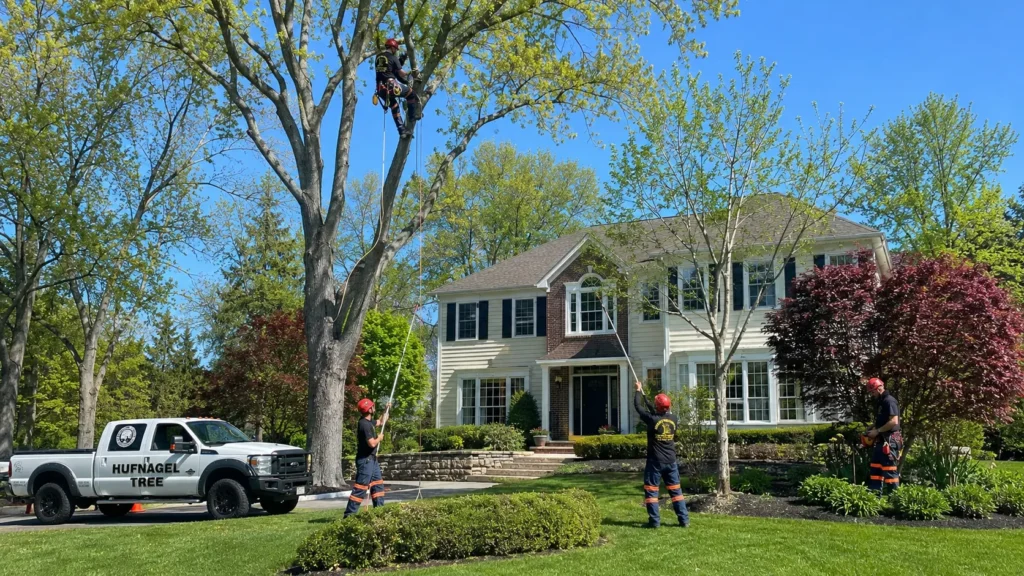
After months of growth, Colts Neck properties can look heavier by late August. Low limbs may encroach on drives, ornamental trees can lose their intended form, evergreens may crowd sight lines, and hedgerows can expand into fences or service areas.
Routine pruning and risk pruning are also different jobs. Removing deadwood over a driveway addresses an immediate concern. Reducing a damaged limb may address structural loading. Fine shaping an ornamental tree is an aesthetic service. A good property plan distinguishes those goals so the most important work is not buried inside a long cosmetic list.
Oaks are a useful timing example. Rutgers advises that New Jersey oaks should not be pruned during the growing season for disease prevention and identifies December through February as the safest period. An August inspection can still document the issue, define the work, and reserve the job for dormancy. That is more responsible than forcing every pruning request into one visit.
Hedgerows and privacy screens deserve similar planning. Long runs of arborvitae, holly, yew, spruce, and mixed plantings can affect property lines, visibility, road clearance, and the appearance of formal areas. Our hedgerow trimming service can be integrated with tree work so the property manager is not coordinating multiple crews for related canopy and screening issues.
Removals and replacement planning can also start now. A dead or structurally unsound tree may need to come out, while the next planting can be selected for better placement, species suitability, and long term management. On a large estate, this creates continuity instead of leaving random gaps after emergency work.
A Practical Late Summer Grounds List
- Remove storm broken branches and deadwood where species timing allows
- Restore safe clearance along entrances, service lanes, and occupied areas
- Shape appropriate ornamentals and hedgerows without aggressive overpruning
- Schedule oak and other species specific work for the proper dormant period
- Identify removals and replacement opportunities before fall and winter projects begin
Late summer maintenance should leave the property safer and more organized, not simply shorter. The inspection identifies risk, the maintenance plan restores function, and species timing protects long term health. This approach is particularly valuable when the owner delegates grounds care to staff or a management company. The final quality control is making sure the person directing the tree work understands arboriculture, not just cutting.
Certified Arborist Judgment Protects the Entire Tree Inventory
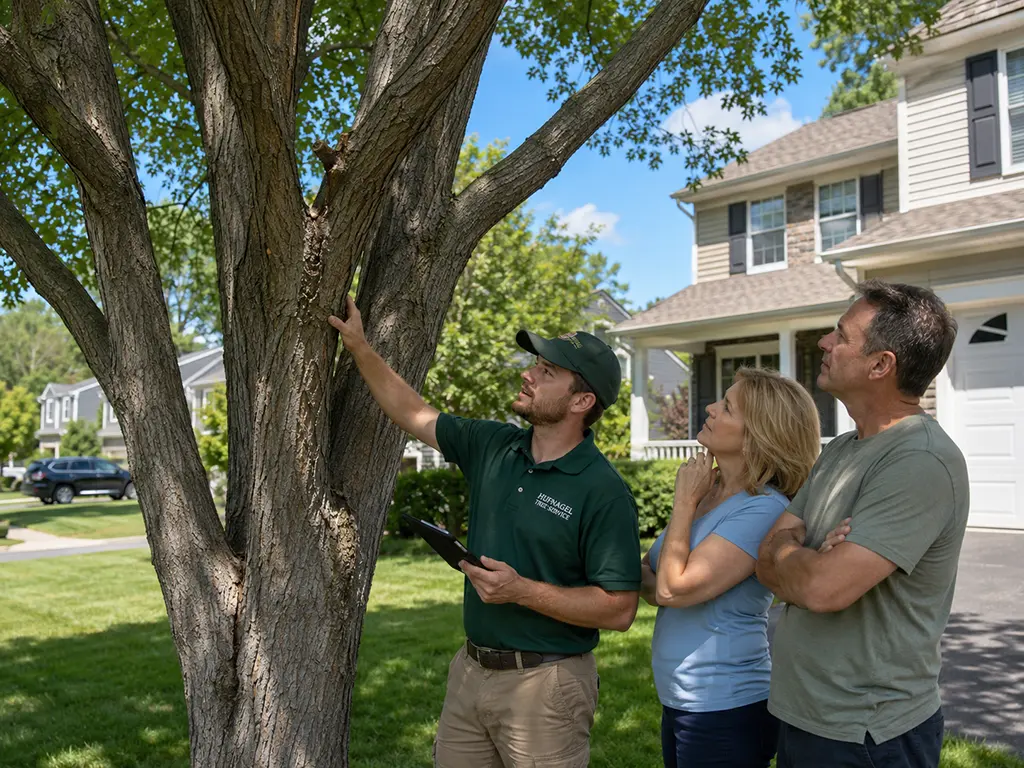
On a Colts Neck property, one poor tree decision can have long consequences. Overpruning can damage a mature specimen that took decades to develop. Ignoring a root defect can leave a preventable hazard in place. Removing a valuable tree unnecessarily can change screening, shade, views, and the entire landscape composition. That is why the diagnostic side of tree work matters so much.
Rutgers recommends hiring trained and qualified tree care professionals and cautions property owners about improper practices such as topping. A certified arborist is trained to evaluate tree biology, structure, health, pruning standards, and safety. That knowledge helps us decide what should be corrected, what should be monitored, and what should simply be left alone.
For estate and property managers, certification also improves communication. You may need to explain a recommendation to an owner who is not on site, coordinate with a landscape architect, schedule around events or horses, or provide access instructions to staff. Our managed and commercial property service is designed for situations where tree work must fit into a larger property operation.
Mike describes it this way: “On a big property, the best tree plan is not the one with the most work on it. It is the one that tells you what matters first, what can wait, and how to preserve the good trees while removing the real problems.”
That is the standard we bring to Colts Neck tree care. Our reputation includes more than 275 five star reviews, but we do not need to repeat a sales pitch on every visit. The practical value is that owners and managers get direct access to arborist judgment and a crew capable of carrying out the plan cleanly and safely.
What a Certified Arborist Adds to Estate Management
- A property wide view of risk rather than isolated trimming requests
- Species and season specific pruning decisions
- Clear separation between urgent hazards and optional appearance work
- Preservation strategies for valuable mature trees when feasible
- A coordinated plan for owners, managers, grounds staff, and other contractors
An estate tree program should reduce surprises. Certification helps turn scattered concerns into a prioritized plan tied to tree condition and property use. That lets owners preserve the trees worth keeping while acting promptly on problems that should not be carried into another storm season. Late summer is an excellent time to establish that plan while the season’s growth and storm effects are still visible.
Schedule a Colts Neck Tree Risk Inspection Before Fall
If you own or manage a Colts Neck estate, farm, or large residential property, call Hufnagel Tree Service at (732) 291-4444 for a tree risk evaluation. We can inspect mature trees and privacy plantings, identify storm related or structural concerns, and coordinate the appropriate mix of tree health care, selective pruning, hedgerow maintenance, storm preparation, or removal.
Schedule Service Now!
From precision pruning and safe removals to health assessments and preventative care, Hufnagel Tree Service delivers expert solutions backed by decades of experience. We offer certified insight, fair pricing, and a commitment to doing what’s best for your landscape.
Learn More About Our Services

Related Articles
Tree Pruning in West Long Branch NJ: Cut for a Reason Before Winter
Summer Ornamental Tree Pruning in Middletown, NJ

Winter Storm Proofing Trees in Sea Bright NJ: Get Prepared
Winter Tree Prep in Old Bridge: Schedule An Inspection