
Contents
Deal Properties Need a Late Summer Risk Check That Accounts for the Coast
A tree in Deal does not experience summer the same way as a tree several miles inland. Ocean wind, salt carried in the air, intense sun, thunderstorms, heavy rain, and saturated soils can all act on a landscape that is often expected to remain highly manicured at the same time.
Many Deal properties are not maintained directly by the owner every day. On larger homes, seasonal residences, and professionally managed properties, the people who notice a developing tree problem first may be a house manager, property management company, landscape contractor, caretaker, or other member of the property staff. That makes clear communication and routine observation especially important. A new lean, a large dead limb, declining foliage, damaged hedgerow, soft soil, or water collecting near the root zone may seem minor at first, but each can be an early sign that a tree needs a closer look.
For property managers, the concern is not only tree health. It is also risk, liability, access, scheduling, and protecting the rest of the property. A mature tree near the main house, guest house, pool, driveway, parking area, or outdoor entertaining space can affect far more than the landscape if it fails. The same applies to large limbs extending over roofs, vehicles, walkways, play areas, or areas regularly used by staff and guests. Catching a problem early gives the property manager time to arrange an inspection and make a measured decision instead of reacting after a limb drops or a tree shifts unexpectedly.
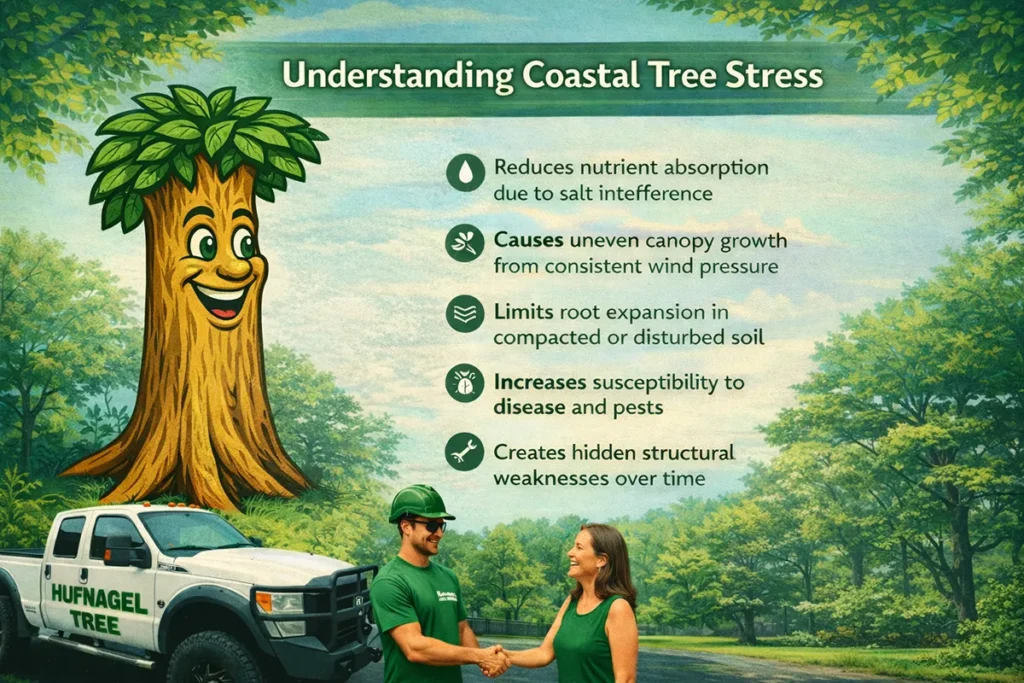
Coastal properties require another layer of attention. Wind exposure can be different from one side of a property to the other, especially on lots closer to the ocean or open water. Salt can stress foliage and affect certain species over time. Heavy rain can leave root zones saturated, while drainage patterns around driveways, patios, grading, and landscape beds can change how well a tree remains anchored. Even a tree that still looks full and green may have hidden structural or root problems that are not obvious during routine landscaping visits.
Mike Hufnagel’s rule is simple: “On a coastal property, I never look at the tree without looking at the exposure. Wind direction, salt, wet soil, and what is underneath the canopy all matter.”
That broader view is important for both homeowners and the professionals responsible for maintaining their properties. A certified arborist is not only looking for dead branches. We are evaluating how the tree is growing, how it has responded to storms, whether the soil has shifted, whether the root area has changed, what structures or occupied areas are within striking distance, and whether the surrounding landscape is increasing or reducing the risk. For managed properties in Deal, seasonal tree inspections can become part of the same preventive maintenance schedule as roofing, drainage, irrigation, landscaping, and exterior building care.
Ocean Weather Works on Deal Trees Even Between Major Storms
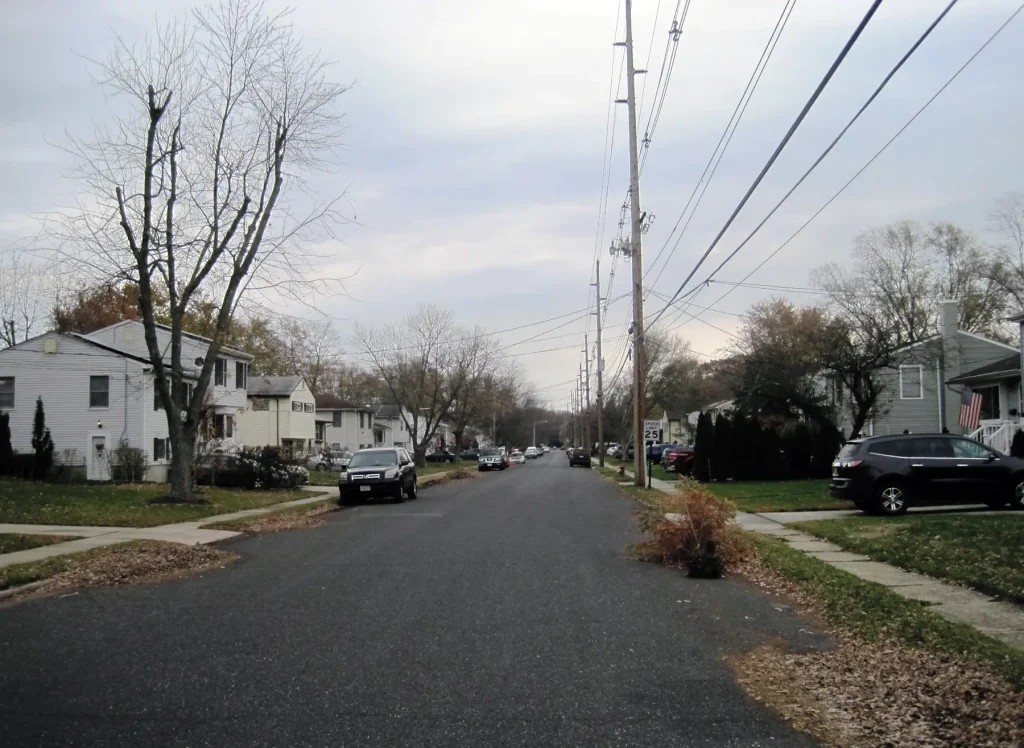
Coastal wind does not need hurricane force to influence tree structure. Repeated gusts can load the same side of a canopy, dry foliage, and expose branches that are overextended or poorly attached.
Salt exposure adds chronic stress. Rutgers describes seashore gardening conditions as a combination of drying wind, heat, sand, and salt spray, with salt spray being particularly important for plant selection and care.
Heavy rain can create the opposite problem by keeping soil wet. Roots need oxygen as well as water, and poor drainage around an established tree can contribute to decline.
On luxury residential properties, the management concern is often cumulative. One tree may need structural evaluation, another may be blocking cameras or lighting, and a privacy hedge may have been opened by wind. We look at these conditions together rather than treating the property as unrelated trimming requests. That produces a more coherent maintenance plan and usually reduces repeated mobilization.
The first late summer question is therefore not, “What should we cut?” It is, “What has changed?” Once we identify new stress, storm damage, or structural concerns, we can decide whether the answer is monitoring, tree health management, pruning, storm preparation, or removal.
Coastal Conditions We Factor Into the Inspection
- Prevailing wind exposure and one sided canopy loading
- Salt burn, thinning, or stress on trees and privacy plantings
- Wet or poorly drained root zones after heavy summer rain
- New limb damage following thunderstorms or strong ocean gusts
- Trees positioned close to roofs, terraces, pools, driveways, and neighboring homes
Deal’s coastal conditions can leave visible and invisible signs at the same time. Brown foliage may be obvious while a partially cracked union remains hidden high in the crown. Wet soil may look temporary while the root system has actually shifted. That is why we follow the weather discussion with a closer look at delayed storm damage and structural stability.
Salt, Saturated Soil, and Hidden Defects Can Create Delayed Failure
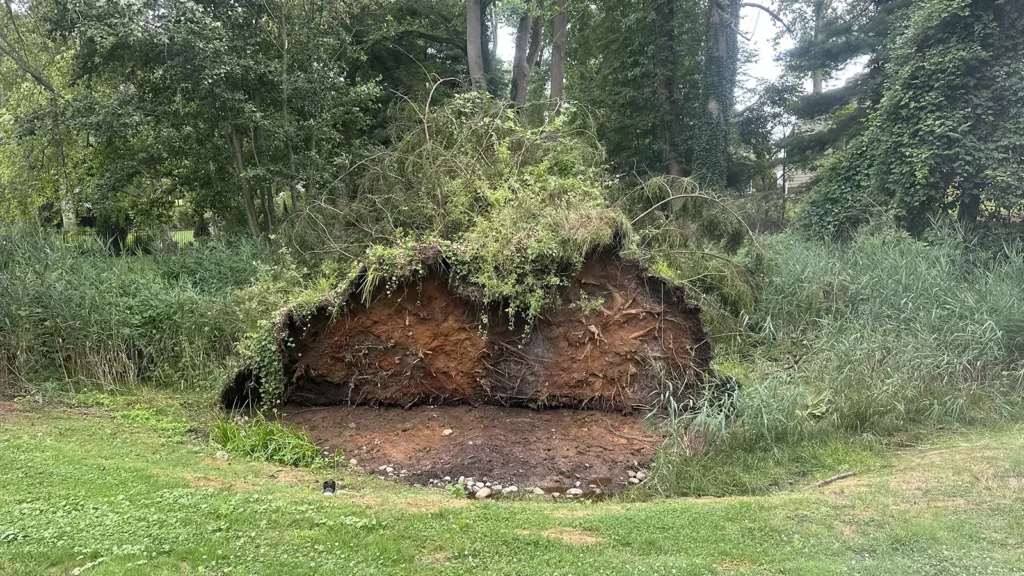
The dangerous assumption after a storm is that anything serious would already have fallen. In reality, a tree can survive the event and still be weaker afterward.
Internal decay is especially deceptive because leaves do not directly measure trunk strength. A mature tree may carry a normal looking crown with a hollow, decayed, or compromised section inside the stem.
Root stability also matters on sites where soils remain wet after storms or where landscape renovation has changed grade and drainage. The U.S. Forest Service tree risk guide identifies root injury, wet sites, soil compaction, and altered conditions as important contributors to risk.
A tree can fail on a clear day when weakened roots or decayed wood can no longer support ordinary loading. That is why we recommend a seasonal inspection for mature trees near important targets and an additional check after unusually severe weather.
For a property manager, this is where a prioritized report or verbal action list becomes valuable. The owner does not need every biological detail, but they do need to know which condition is urgent, what the recommended response is, and whether a tree can reasonably be preserved. Good risk management makes that decision chain clear.
Hidden Damage We Do Not Dismiss
- Fresh cracks or movement at large branch unions
- Cavities, seams, fungal growth, or decay near the trunk base
- New soil lifting, erosion, or root plate movement
- A tree that changed lean or canopy balance after storms
- Dead or thinning sections that developed rapidly during summer
Delayed damage is the reason a quiet week after a storm is not proof that every tree is stable. The tree may continue standing while the defect continues carrying load. That becomes especially important in Deal because mature trees often stand close to expensive structures and heavily used outdoor areas. The next step is to evaluate those targets and treat tree failure as a life safety issue, not just a landscaping inconvenience.
Luxury Properties Leave Little Room for a Large Tree to Fail
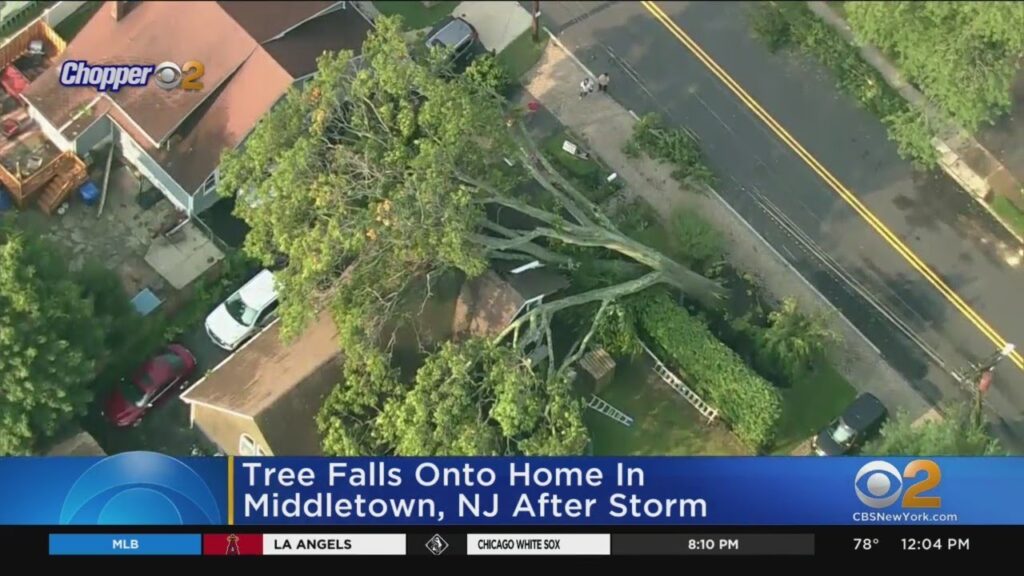
A mature limb does not distinguish between a roof, a parked vehicle, a pergola, or a person. When large trees are close to occupied areas, the consequence of failure rises quickly. Deal properties often combine homes, pools, terraces, driveways, decorative walls, garages, guest areas, and high value landscaping within a relatively compact footprint. That concentration makes proactive risk inspection worthwhile.
Property managers also have to think beyond the owner’s schedule. Staff, landscapers, pool companies, cleaners, contractors, delivery drivers, and guests may use the property throughout the week. A tree over a side gate or service entrance can expose people even if the owner rarely walks beneath it. Our inspections consider those real traffic patterns when we prioritize risk.
Leaning trees deserve professional interpretation. Some are naturally phototropic or wind shaped and have compensated structurally over time. Others begin leaning because roots have failed, soil has shifted, or structural support has declined. A new lean, increasing lean, or lean paired with basal defects is very different from a stable tree that has grown at an angle for decades.
Dead trees and large dead limbs near occupied space generally move higher on the list because their failure becomes less predictable as wood deteriorates. When risk cannot be reduced to an acceptable level, our tree removal service uses controlled rigging and equipment to protect the surrounding home and landscape.
This is also an appropriate place to use photographs or video of actual tree failures. The purpose is not to scare owners. It is to demonstrate scale. A tree that looks like part of the scenery can become a major structural load when it lands on a residence, vehicle, fence, pool enclosure, or occupied yard.
The Targets That Raise Urgency on a Deal Property
- Main residences, guest areas, garages, and occupied structures
- Pools, terraces, outdoor kitchens, walkways, and gathering spaces
- Driveways, parking areas, gates, and service entrances
- Neighboring homes and property line structures
- Utilities, lighting, cameras, walls, fencing, and valuable landscape features
Risk rises when a meaningful defect and a meaningful target exist together. That is why the same tree can deserve different management depending on where it stands. Once the serious hazards are separated from routine maintenance, late summer becomes a good time to restore order to the rest of the landscape. The work should be selective, especially on coastal trees that are already managing environmental stress.
End of Summer Maintenance Should Include Trees, Hedges, and Privacy Screens
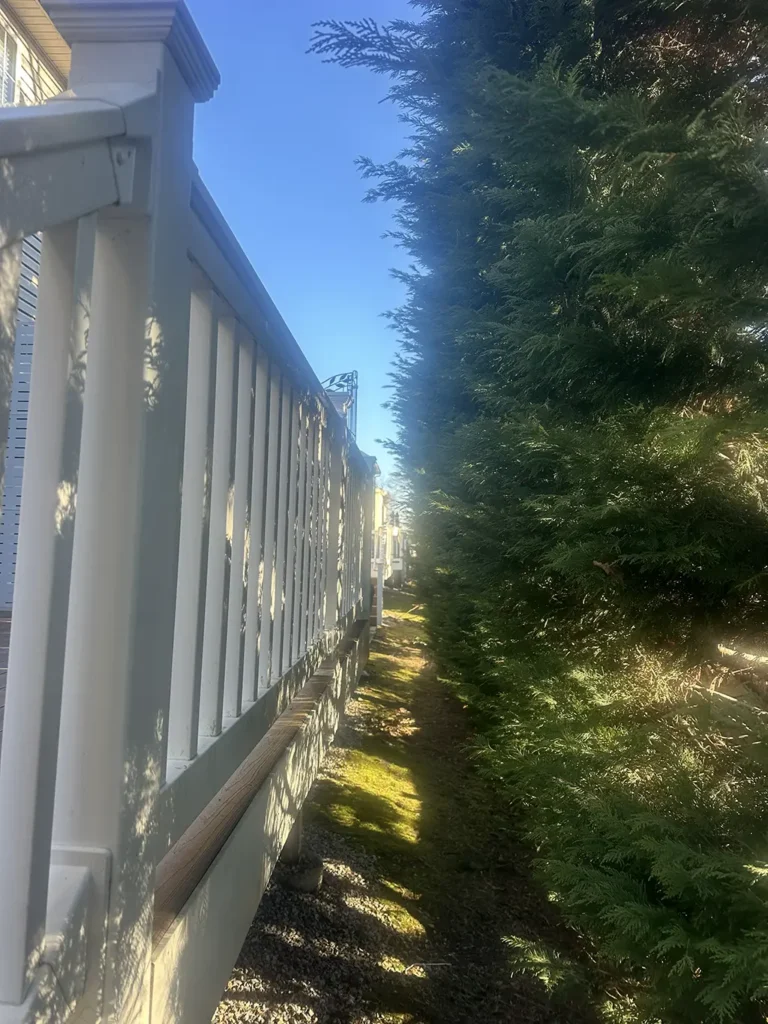
Deal landscapes often rely heavily on structure and privacy. Mature trees frame the property while hedges and evergreen screens define outdoor spaces, hide service areas, and separate neighboring homes.
Tree pruning should remain conservative and species appropriate. We may remove deadwood, damaged branches, or immediate clearance conflicts where timing allows. We do not recommend heavy indiscriminate canopy reduction simply because summer growth looks full. Our tree trimming and pruning service is intended to preserve natural form and long term health while correcting specific problems.
Timing is critical for certain species. Rutgers advises that New Jersey oaks should not be pruned during the growing season, recommending December through February for disease prevention. If an oak needs routine structural work, an August inspection can document the issue and put the work on the winter schedule. Immediate hazards are evaluated separately because safety still comes first.
Late summer can also be a planning period for selective removals and new planting. When a dead or declining tree no longer fits the property safely, removal may create an opportunity for a more suitable replacement. Coastal exposure should influence that selection, especially for wind and salt tolerance. Rutgers’ coastal guidance is useful when planning plants that must perform under seashore conditions.
For managed seasonal residences, this timing is practical. Work can be identified while the landscape is fully leafed, then scheduled around occupancy, events, closing dates, or fall vendor access. The manager gets a clear task list instead of discovering problems when the property is being prepared for winter.
Late Summer Maintenance Worth Prioritizing
- Deadwood and storm damaged branch removal where appropriate
- Clearance around roofs, drives, walks, lighting, cameras, and service areas
- Conservative shaping of suitable ornamental trees and privacy hedges
- Removal planning for dead or unacceptable risk trees
- Winter scheduling for oaks and other species that benefit from dormant season pruning
A well maintained property should look deliberate without sacrificing plant health for short term neatness. Selective late summer care can restore clearance, shape, and order while preserving the mature canopy that gives the property character. The person directing that work needs to understand the difference between horticultural appearance and arboricultural risk. That is where certified arborist oversight becomes particularly valuable.
Certified Arborist Care Is Different From Routine Landscape Cutting
A landscape crew can identify that a branch is in the way. A certified arborist is trained to ask whether removing that branch is appropriate for the species, the tree’s structure, its health, the season, and the long term objective. That distinction matters on a high value property where mature trees may be irreplaceable in practical terms.
Rutgers recommends using qualified tree care professionals for large tree work and cautions against improper practices such as topping. Tree decisions require knowledge of biology, pruning standards, defects, decay, roots, site conditions, and safety. Certification gives the owner or manager a stronger basis for trusting the recommendation before major work is approved.
Managers also benefit from having one arborist led contact who can distinguish emergency items from optional work. A dead limb over a terrace may require prompt attention.
Mike explains the difference this way: “On a property like this, I am not trying to make every tree smaller. I am trying to keep the good trees healthy, reduce the defects that matter, and tell the manager what actually needs to happen next.”
Hufnagel Tree Service has more than 275 five star reviews, but the reason we mention that only occasionally is that the decision in front of you is more specific. You need to know whether the tree over the house, pool, driveway, or neighboring property is acceptable, needs work, or needs to come down.
What Certified Arborist Oversight Provides
- Risk evaluation based on tree condition and real property targets
- Species appropriate pruning and seasonal timing
- Preservation options when valuable mature trees can be retained safely
- Clear priorities for owners, managers, staff, and landscape vendors
- Professional recommendations for trimming, health care, monitoring, or removal
The best tree service decision is often the one that avoids both extremes: neglecting a real hazard or cutting a healthy tree unnecessarily. Certification helps keep the recommendation in that middle ground where safety, tree biology, and property goals are considered together. For Deal properties, late summer is an ideal time to make those decisions while coastal stress and storm effects are still visible.
Schedule a Deal Tree Risk Inspection Before the Next Coastal Storm
If you own, manage, or maintain a property in Deal, call Hufnagel Tree Service at (732) 291-4444 for a tree risk evaluation. We can inspect mature trees and privacy plantings, identify storm related or structural concerns, and coordinate the appropriate mix of tree health care, selective pruning, hedgerow maintenance, storm preparation, or removal.
Schedule Service Now!
From precision pruning and safe removals to health assessments and preventative care, Hufnagel Tree Service delivers expert solutions backed by decades of experience. We offer certified insight, fair pricing, and a commitment to doing what’s best for your landscape.
Learn More About Our Services

Related Articles
Monmouth Beach Tree Risk Evaluation After Summer Storms
Ornamental Pruning in Sea Bright NJ: Salt, Wind, and Timing
Insurance Company Tree Trimming Notice: Call Hufnagel