Contents
Certified Tree Care for the Highlands, Atlantic Highlands, and Navesink River Triangle
The triangle between Highlands, Atlantic Highlands, and the Navesink River has a tree care profile unlike most of Monmouth County. Homes here may sit near steep grades, older stone walls, riverfront winds, narrow streets, salt air, mature shade trees, and dense privacy hedges that have been part of the property for decades. A tree that grows well in one protected yard may struggle a few blocks away where wind, drainage, and exposure are completely different.
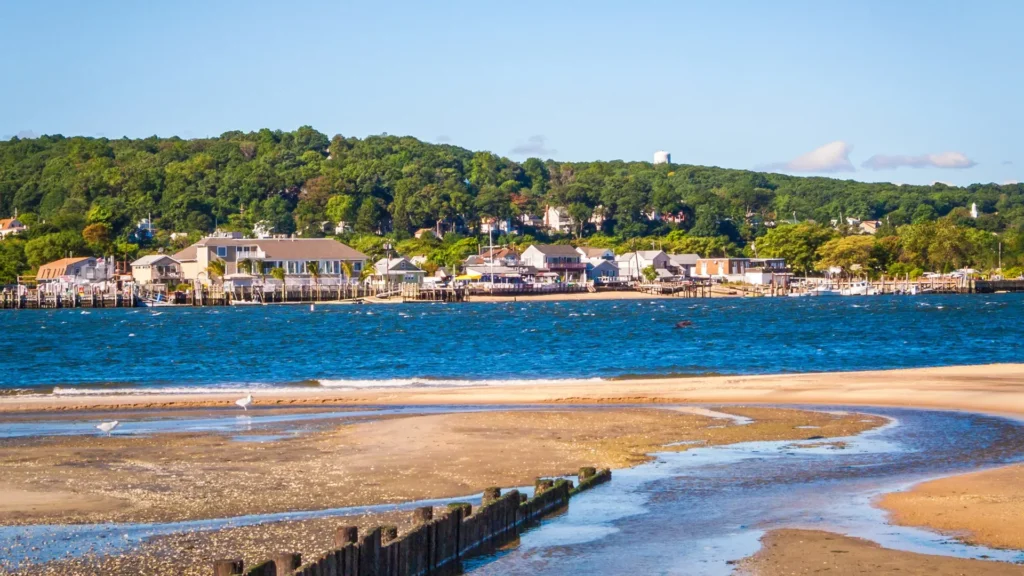
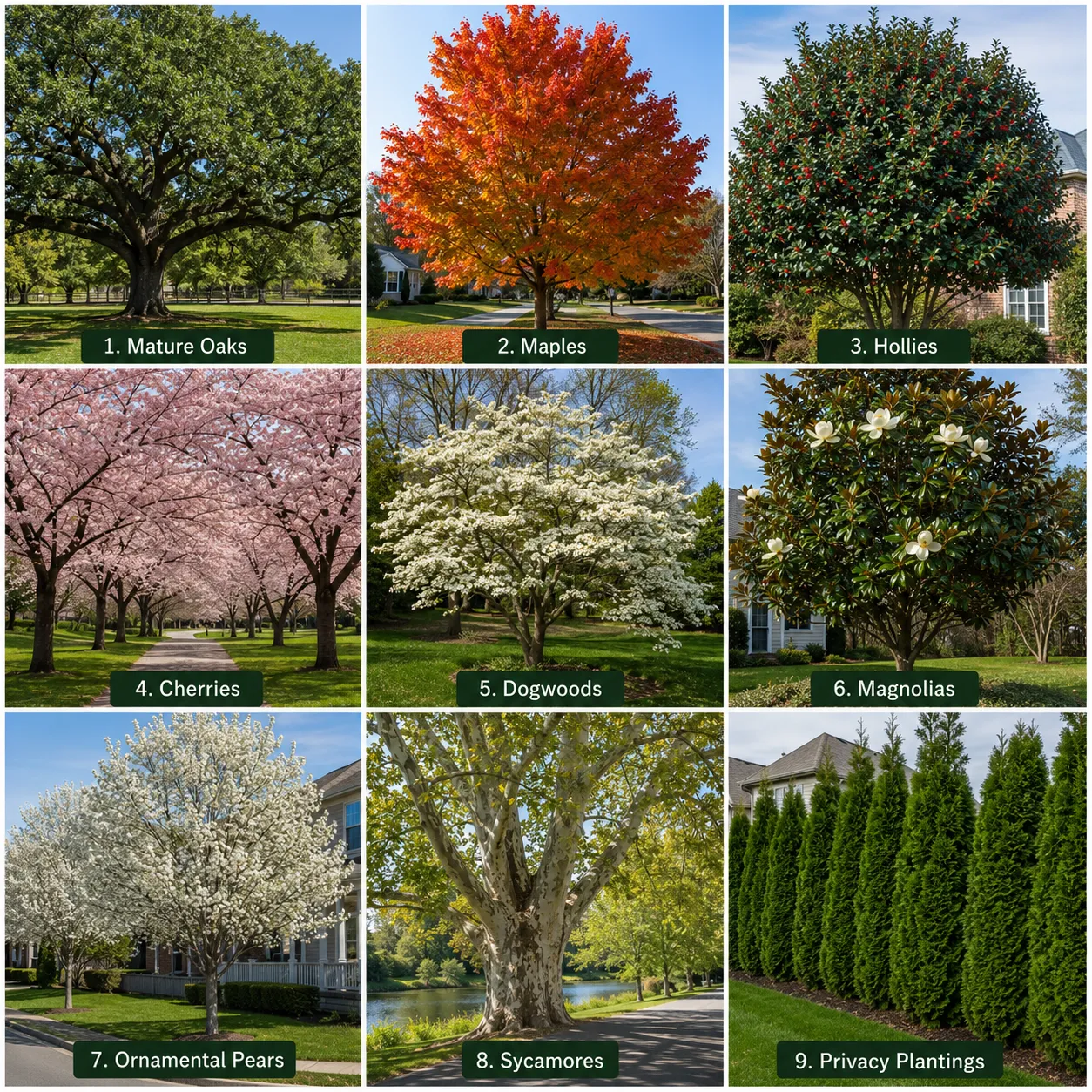
This small triangle of Monmouth County has a very specific tree care profile. Around East Highland Avenue, Navesink Avenue, Portland Road, Ocean Boulevard, and the hillside streets above the river, trees often grow in tight spaces between homes, driveways, retaining walls, rooflines, and utility areas. Specialty pruning and expert tree trimming matter here because one poorly placed cut can weaken a mature oak, maple, cherry, holly, dogwood, magnolia, sycamore, or ornamental pear that has been shaping the property for years.
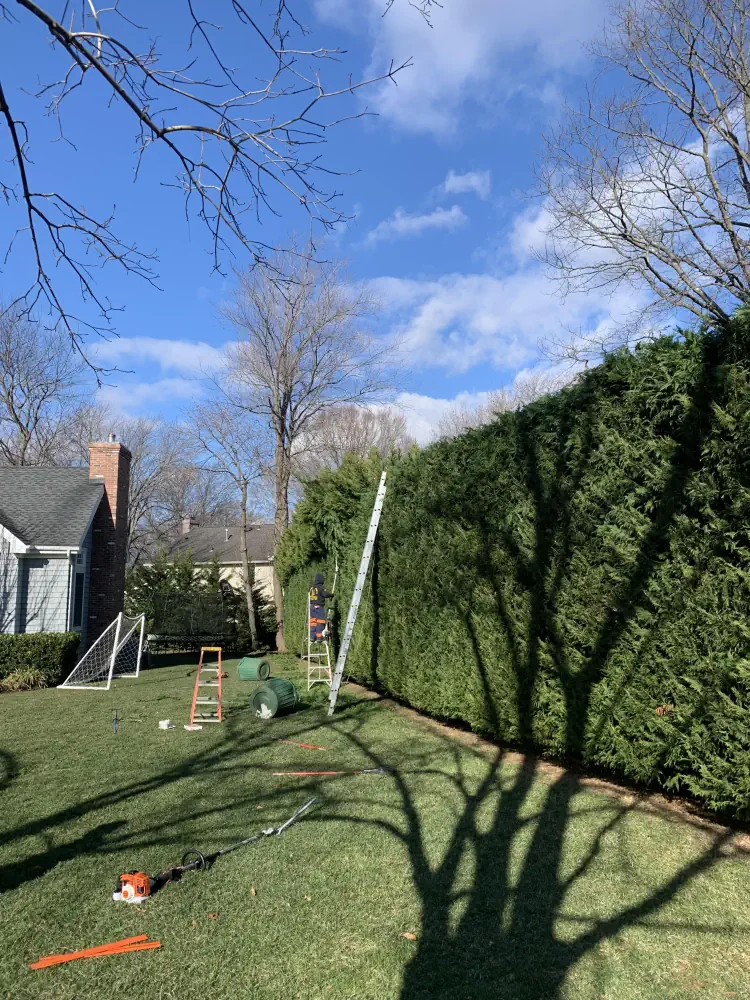
Hedgerow trimming and shaping are also a major part of maintaining properties in this area. Many homes near Atlantic Highlands, Highlands, and the Navesink River rely on privacy plantings, evergreen screens, hollies, arborvitae, laurels, yews, and mixed hedges to block wind, frame views, and create separation between close lots. When these hedgerows are trimmed too hard or shaped without understanding how the plant grows, they can thin out, brown at the edges, or lose the dense lower growth that gives the property privacy in the first place.
Tree risk assessment is especially important near the river, the bay, and the slopes that define this part of the Bayshore. Wind exposure, saturated soil, older root systems, storm stress, and heavy limbs over roofs or driveways can all turn a healthy looking tree into a serious concern. We look for cracks, decay, deadwood, leaning, raised soil, weak unions, and canopy weight before recommending pruning, trimming, emergency work, or removal.
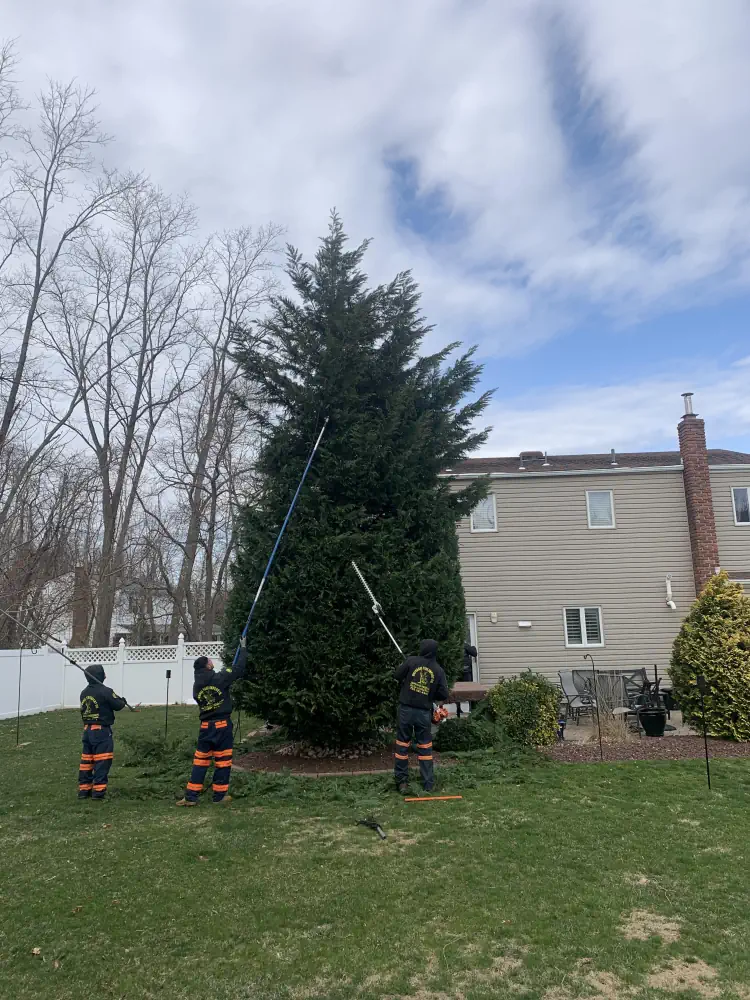
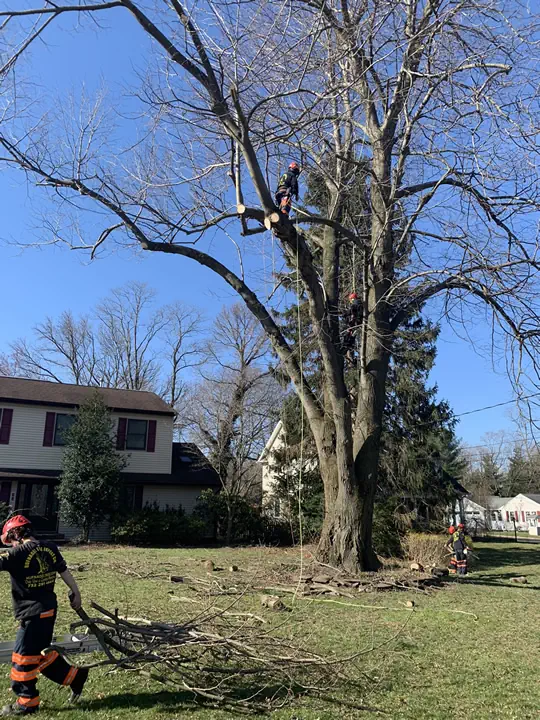
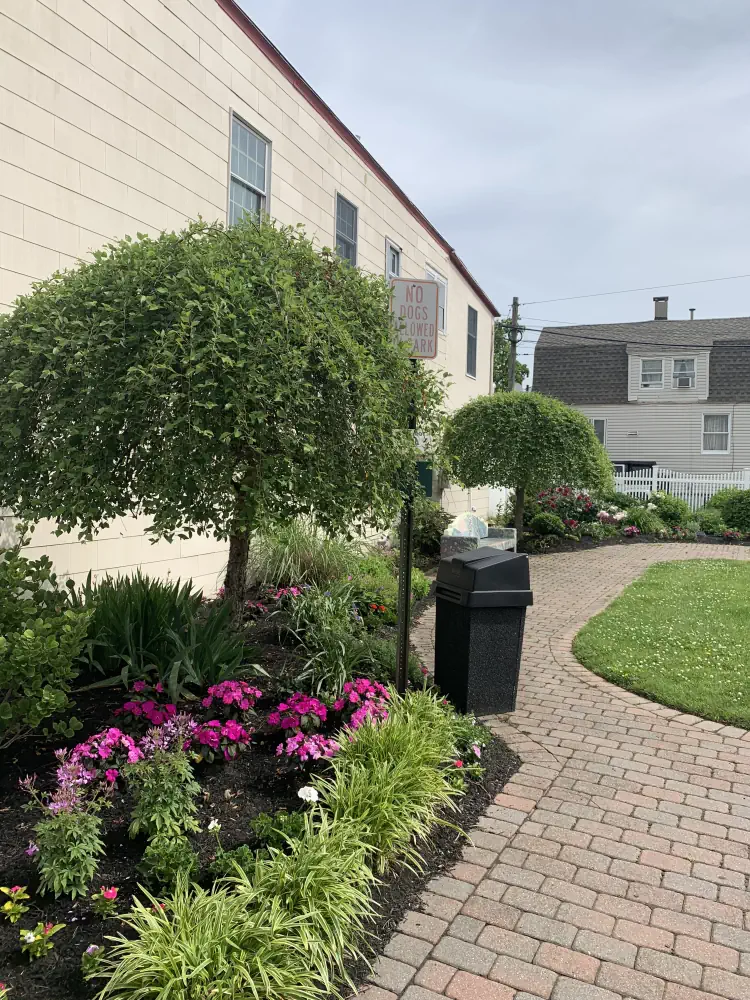
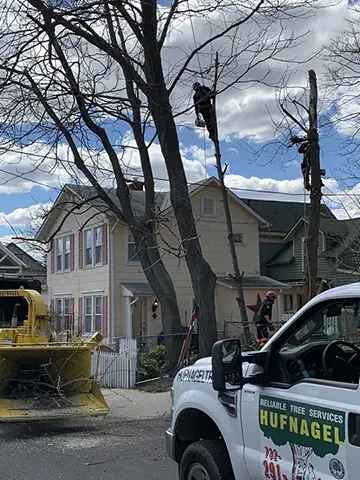
At Hufnagel Tree Service, we bring certified arborist care and more than 25 years of Monmouth County experience to this kind of work. We understand how trees behave near the Navesink River, along the Bayshore, around Atlantic Highlands, and up through the elevated neighborhoods near Highlands. Tree care here should never be treated like routine cutting. It requires judgment, restraint, safety planning, and local knowledge.
This article covers the services that matter most for properties in this area: specialty pruning, expert trimming, hedgerow trimming and shaping, 24/7 emergency service, and tree risk assessment. Each service helps protect your property, preserve the health of your trees, and reduce problems before they become expensive emergencies.
Specialty Pruning for Mature and Ornamental Trees
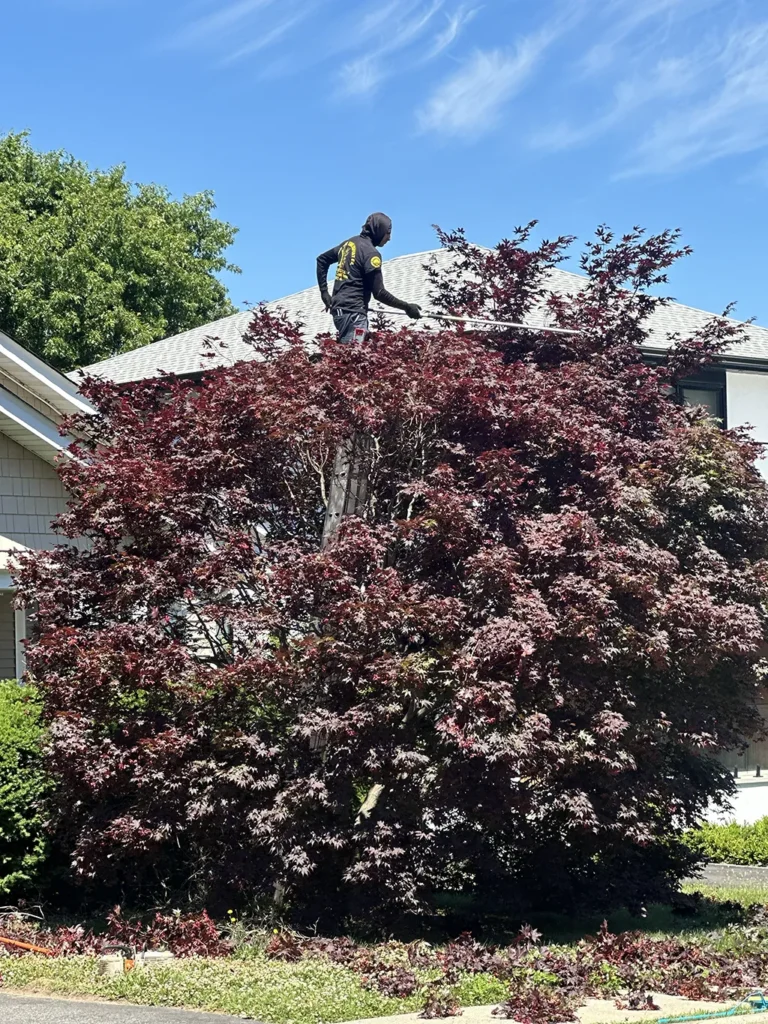
Specialty pruning is careful, selective pruning designed around the tree’s species, structure, health, location, and long term purpose on the property. In the Highlands, Atlantic Highlands, and Navesink River area, we often work on mature oaks, maples, hollies, cherries, dogwoods, magnolias, ornamental pears, sycamores, and privacy plantings that require more than a quick cutback.
The goal is to improve the tree without stripping away the natural form that gives the property character.
A certified arborist looks at how the tree is built before making cuts. We look for deadwood, crossing limbs, weak unions, included bark, overextended branches, canopy imbalance, and areas where past pruning may have created stress. Specialty pruning is not about removing as much material as possible. It is about removing the right material so the tree can remain stable, attractive, and healthier over time.
This matters in the Navesink River area because wind exposure can change quickly from one property to the next. A tree on a protected interior lot may need lighter shaping, while a tree facing open river or bay winds may need selective weight reduction and better airflow through the canopy. Poor pruning can make a tree more vulnerable by encouraging weak regrowth or leaving heavy limbs in the wrong places.
Specialty pruning is also useful for view management. Many homeowners in Atlantic Highlands and Highlands want to preserve views toward the river, Sandy Hook Bay, surrounding hills, or neighboring tree lines without damaging the trees that create shade and privacy. We often use selective thinning, crown elevation, and careful reduction to improve sightlines while keeping the tree healthy and natural.
The best specialty pruning should look clean, balanced, and intentional. It should not leave the tree looking hacked, hollowed out, or shocked. When done correctly, the tree remains a strong part of the landscape while giving the homeowner better clearance, better structure, improved light, and reduced risk.
What Specialty Pruning Solves on Local Properties
These are the issues we most often correct through careful pruning in this part of Monmouth County:
- Heavy limbs extending over roofs, decks, driveways, and walkways
- Ornamental trees that have outgrown their original shape
- River or bay facing trees carrying too much wind load
- Crowded canopies blocking light, air, and views
- Older trees weakened by past improper cuts
Specialty pruning is often the difference between preserving a valuable tree and watching it decline from poor maintenance. For homeowners in this local triangle, it is one of the smartest ways to protect both tree health and property value.
Expert Tree Trimming for Safety, Clearance, and Structure
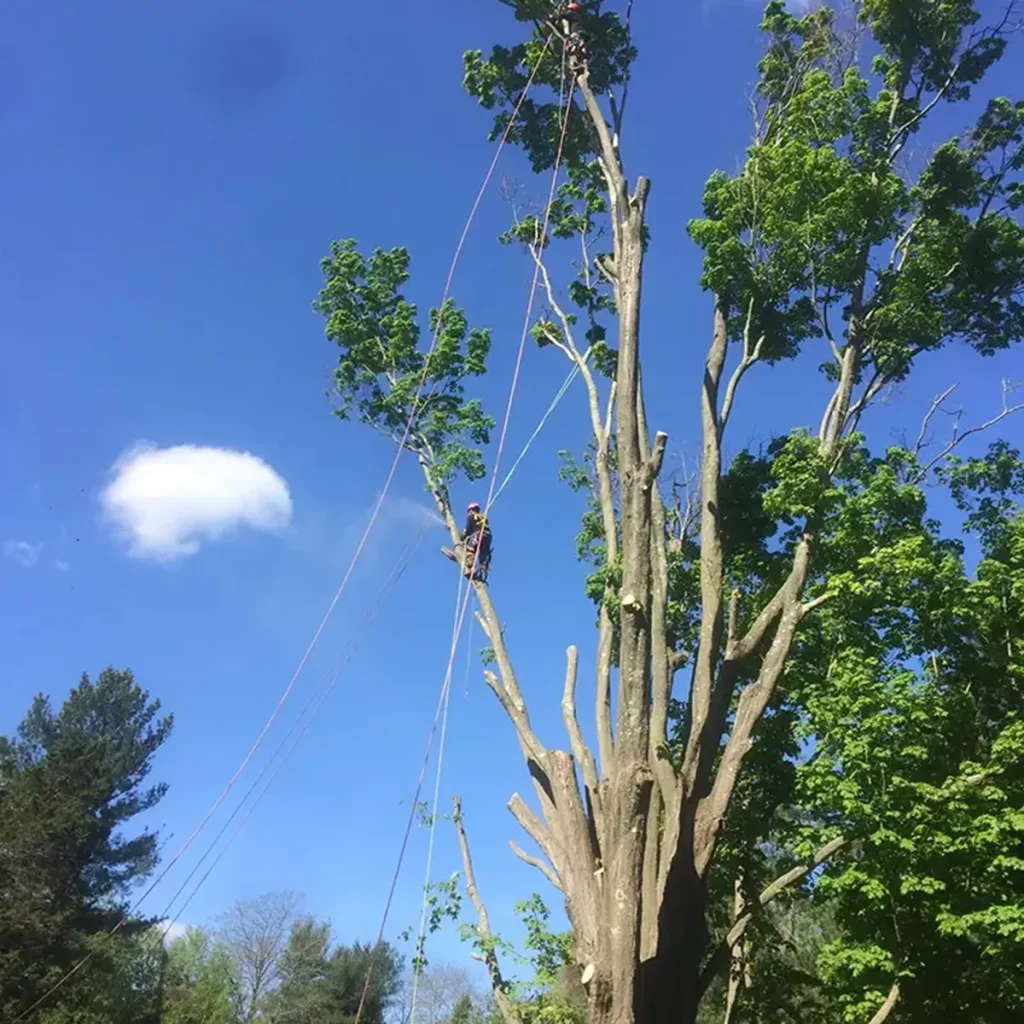
Expert tree trimming keeps trees controlled without weakening them. In neighborhoods around Highlands and Atlantic Highlands, many trees grow close to houses, garages, fences, retaining walls, patios, driveways, and neighboring properties. When limbs are allowed to become too long or too heavy, they can create safety concerns and increase the chance of storm damage.
We approach trimming by first reading the structure of the tree. A limb may look harmless from the ground while carrying too much weight at the end. Another branch may seem ugly but be structurally important. This is why trimming should not be based only on appearance. A clean looking cut is not automatically a good cut. The location, timing, and amount of pruning all matter.
Coastal Monmouth County adds another layer of concern. Trees near open wind corridors can react differently during storms than trees farther inland. Overextended limbs can twist, split, or fail when wind moves through the canopy. Proper trimming reduces unnecessary weight, removes dead or compromised branches, and improves airflow without leaving the tree overthinned.
Expert trimming also improves daily use of the property. Branches may need to be lifted away from a driveway, cleared from a roofline, opened above a walkway, or reduced near a utility area. On older properties with mature trees, clearance work must be done carefully so the tree does not lose balance or develop large wounds that lead to decay.
We never treat trimming as a one size fits all service. Some trees need light correction. Some need phased pruning over time. Some are under stress and should not be heavily trimmed at all. Our job is to recommend what the tree can tolerate and what the property requires.
Where Professional Trimming Makes the Biggest Difference
Expert trimming gives homeowners a safer, cleaner, and more usable property without sacrificing tree health.
- Removes dead, damaged, or poorly placed limbs
- Improves clearance over roofs, lawns, driveways, and patios
- Reduces excess branch weight before storm season
- Helps sunlight and airflow reach the landscape below
- Maintains a more natural shape than aggressive cutting
Good trimming should make a tree look better and function better. In this area, where wind, slope, and property layout can all affect tree behavior, careful trimming is a practical investment in safety.
Hedgerow Trimming and Shaping for Privacy and Curb Appeal
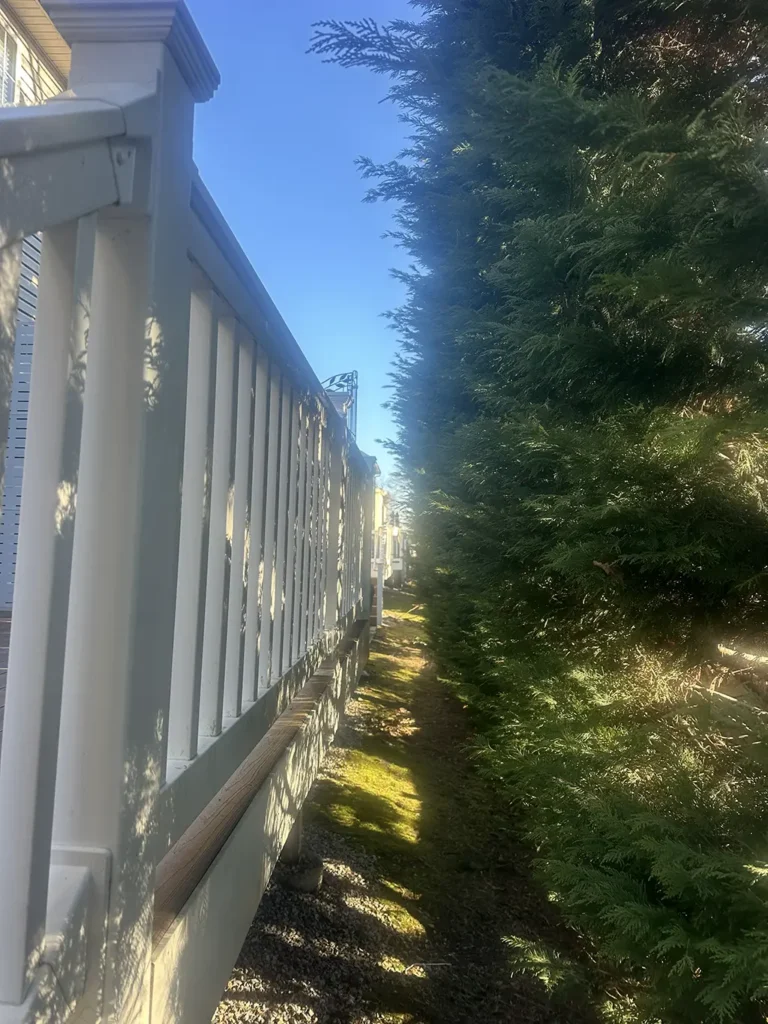
Hedgerows are a major feature of many properties near Highlands, Atlantic Highlands, and the Navesink River. They provide privacy, define property lines, soften fences, screen roads, buffer wind, and create outdoor rooms around patios, pools, and gardens. When they are maintained well, they make a property feel finished. When they are neglected or cut incorrectly, they quickly become thin, uneven, woody, or overgrown.
We trim and shape hedgerows with attention to the plant species and the purpose of the hedge. Privet, holly, arborvitae, laurel, yew, boxwood, and mixed evergreen screens all respond differently to pruning. Some can handle heavier shaping. Others should never be cut deeply into old interior growth. Knowing that difference helps prevent bare sections, browning, and long recovery periods.
The local climate also affects hedge care. Salt air, wind burn, winter drying, shaded lower growth, and poor drainage can all weaken hedges. A hedge may look full on the outside while thinning underneath or inside. Before trimming, we look at the density, color, light exposure, and growth habit so we can shape the hedge without pushing it beyond what it can recover from.
Proper shaping is especially important for long term density. Many hedges should be slightly wider at the bottom than at the top, allowing sunlight to reach lower branches. When hedges are shaped too flat or too top heavy, the lower sections often thin out. That creates the bare leggy look many homeowners want to avoid.
Hedgerow trimming is not just cosmetic. In this part of Monmouth County, hedges often serve as privacy walls, wind buffers, and visual screens between close properties. Our goal is to keep them sharp, healthy, and useful without cutting away the function they were planted to provide.
A Cleaner Shape Without Weakening the Hedge
Our hedgerow trimming focuses on lasting structure, not just a quick surface cut.
- Restores clean lines around driveways, walkways, patios, and fences
- Helps privacy hedges stay dense from top to bottom
- Reduces overgrowth without cutting too deep into bare wood
- Corrects uneven growth caused by shade, wind, or past trimming
- Improves curb appeal while protecting the plant’s health
A well shaped hedge can change the entire appearance of a property. Done correctly, it adds privacy, structure, and polish without sacrificing the plant’s ability to keep growing strong.
24/7 Emergency Tree Service for Storm Damage and Sudden Hazards
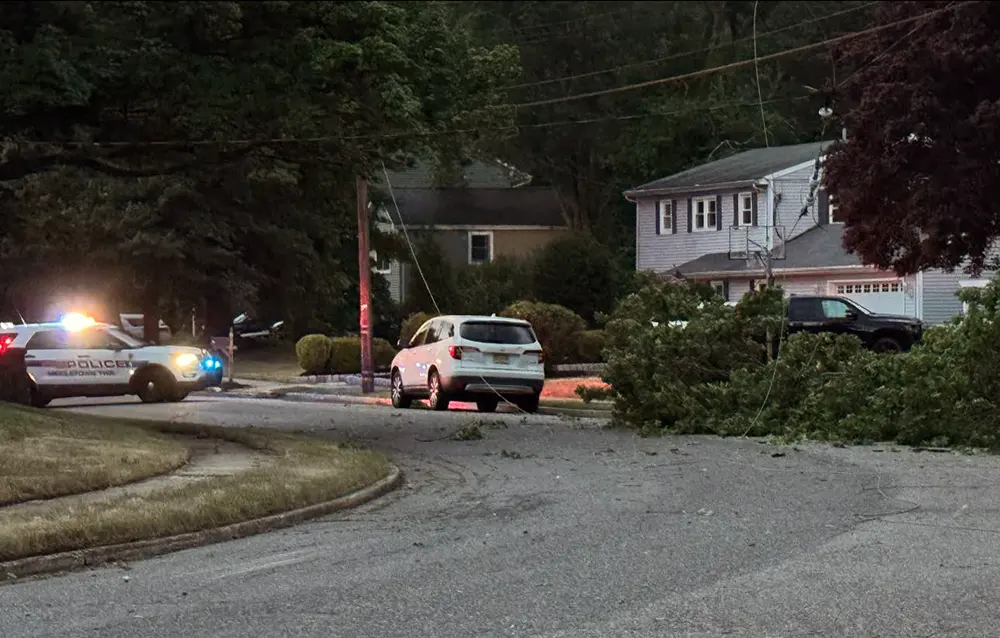
Storm damage can happen quickly in the Highlands, Atlantic Highlands, and Navesink River triangle. Strong winds, saturated soil, steep slopes, and older trees can create urgent problems with little warning. A limb can split over a roof, a tree can block a driveway, or a cracked trunk can become an immediate hazard during or after severe weather.
Our 24/7 emergency tree service is built for these situations. The first priority is safety. We assess hanging limbs, split trunks, unstable root plates, damaged canopies, pressure loaded branches, and nearby structures before work begins. Emergency tree work must be fast, but it cannot be careless. The wrong cut can shift weight suddenly and make the situation more dangerous.
Properties in this area often make emergency work more complex. Some homes have tight access, narrow roads, steep grades, retaining walls, fences, decks, parked vehicles, or neighboring structures close to the work area. These conditions require controlled cutting, proper rigging, and a crew that understands how to remove hazards without creating additional damage.
Not every storm damaged tree needs to be removed. In some cases, a tree can be pruned, stabilized, monitored, or restored after the immediate hazard is handled. In other cases, removal is clearly the safest option. We evaluate the tree’s condition, species, location, remaining structure, and risk level before recommending the next step.
A dependable emergency response gives homeowners clarity during a stressful moment. We explain what is dangerous, what needs to happen first, and what can be addressed after the immediate threat is controlled. That kind of judgment matters when a tree is leaning, cracked, hanging, or blocking access.
When a Tree Problem Cannot Wait
Emergency tree service is appropriate when a tree or limb creates an immediate threat to people, property, or access.
- A tree or large limb has fallen on a home, garage, fence, or vehicle
- A cracked trunk or split leader appears unstable
- A hanging limb is suspended over a high use area
- A tree is blocking a driveway, road, or entrance
- Storm damage has left the canopy unsafe
Emergency tree work is not the time to guess. If a tree has failed or appears ready to fail, professional assessment and controlled removal are the safest next steps.
Tree Risk Assessment: Why Every Homeowner Needs
Tree risk assessment helps homeowners understand which trees are safe, which need attention, and which may be creating avoidable danger. Many serious tree failures show warning signs before they happen. The challenge is that those warning signs are not always obvious to the untrained eye. A tree can have a full canopy and still have internal decay, root problems, weak branch unions, or storm related cracks.
When we assess a tree, we look at the entire system. That includes the trunk, canopy, root zone, soil conditions, lean, deadwood, fungal growth, cavities, cracks, old pruning wounds, included bark, and surrounding targets. A target is anything the tree could strike if it failed, including a home, garage, car, walkway, play area, road, deck, fence, or neighboring property.
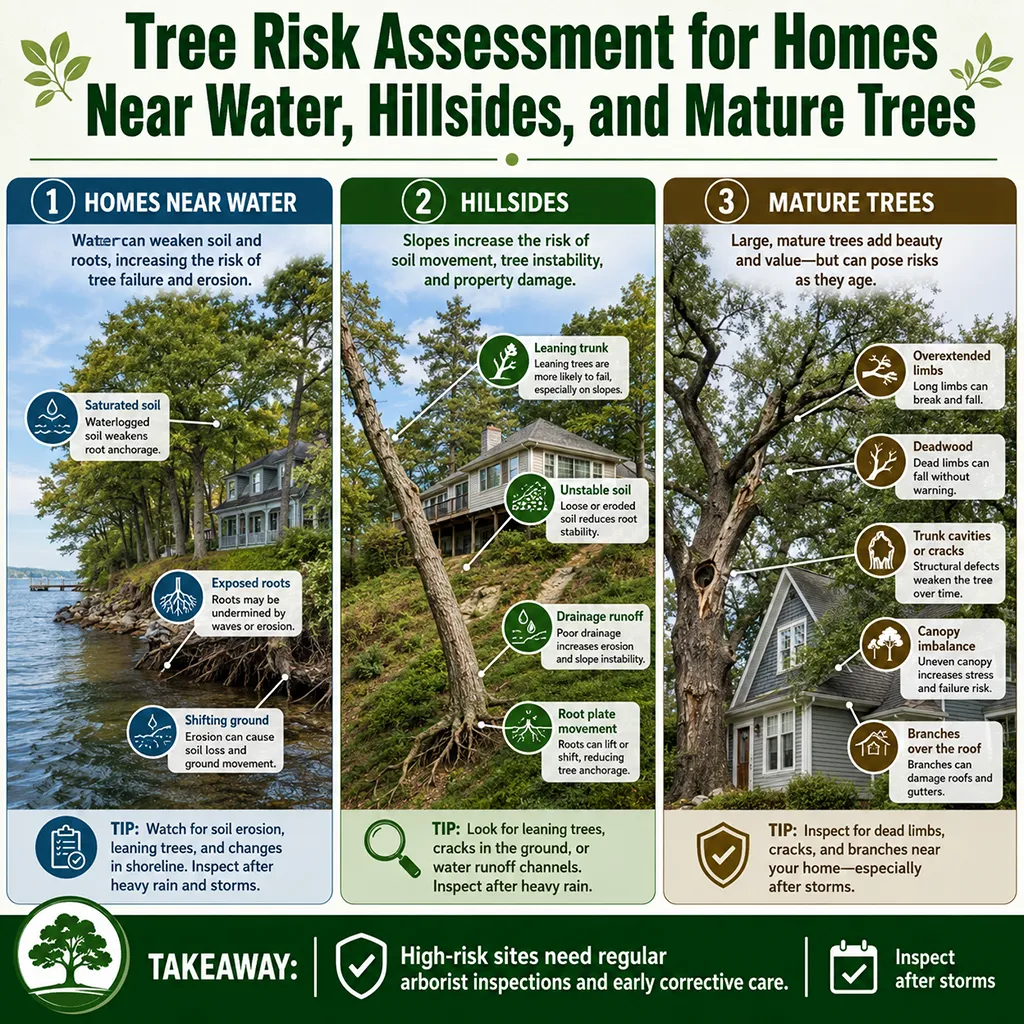
The area between Highlands, Atlantic Highlands, and the Navesink River has several conditions that make assessment especially important. Sloped properties can place stress on roots. River influenced soil can become saturated. Wind exposure can increase canopy movement. Older trees may have hidden decay from past storms or poor pruning. These factors do not automatically mean a tree is unsafe, but they do deserve professional attention.
A tree risk assessment can lead to several recommendations. The tree may need pruning, weight reduction, deadwood removal, monitoring, cabling, or removal. In some cases, no immediate work is needed, but the homeowner benefits from knowing what to watch. The value of assessment is that it replaces guesswork with a clear, practical plan.
We recommend tree risk assessment before storm season, after severe weather, before major property improvements, and whenever a homeowner notices changes. New leaning, soil lifting, mushrooms near the base, cracks, dead limbs, sudden thinning, or large branches over high use areas should never be ignored.
Warning Signs Worth Having Checked
A professional inspection is the best way to understand whether a tree is becoming a risk.
- New cracks in the trunk or major limbs
- Mushrooms or decay near the base of the tree
- Large dead limbs in the upper canopy
- Sudden lean or raised soil near the roots
- Heavy limbs hanging over roofs, driveways, or play areas
Risk assessment does not always mean removal. Many trees can be managed with the right care, but the decision should be based on structure, location, and professional judgment.
Why Local Arborist Experience Matters Here
Tree care in this triangle is not the same as tree care in a flat inland subdivision. The land rises and falls. Winds shift off the water. Older homes sit close to mature trees. Hedges are often used as privacy walls. Drainage can vary sharply from one property to another. These details affect how trees grow, how they fail, and how they should be maintained.
Local experience helps us make better recommendations. A tree facing open exposure near the bay may need a different pruning plan than a similar tree protected by surrounding homes. A hedge along a windy property line may need shaping that preserves density rather than aggressive reduction. A mature tree on a slope may need risk evaluation before any major cuts are made.
We also understand how valuable established trees are in this part of Monmouth County. They provide shade, privacy, character, and a sense of permanence. Many properties near the Navesink River and Atlantic Highlands would feel completely different without their mature tree canopy. Our goal is always to preserve good trees when it is safe and practical to do so.
At the same time, we do not ignore risk. A declining tree near a home, a cracked limb over a driveway, or a weak trunk on a slope can create serious problems. Good arborist care means balancing preservation with safety. We will not recommend unnecessary removal, but we will also be direct when a tree has become unsafe.
That balance is why homeowners call Hufnagel Tree Service. We bring certified arborist knowledge, experienced crews, proper equipment, and real familiarity with Monmouth County properties. Whether the work involves pruning, trimming, hedge shaping, emergency response, or risk assessment, we approach the job with care and precision.
The Difference a Certified Arborist Brings
Certified arborist care helps homeowners make better decisions before cutting begins.
- Tree health and safety are evaluated together
- Pruning recommendations are based on species and structure
- Property risks are identified before storms expose them
- Mature trees are preserved whenever practical
- Homeowners receive honest guidance instead of guesswork
In an area with river winds, steep terrain, older trees, and tight property layouts, experience matters. The right plan can protect both the landscape and the home.
Call Hufnagel Tree Service for Tree Care in the Highlands, Atlantic Highlands, and Navesink River Triangle
If your property is located between Highlands, Atlantic Highlands, and the Navesink River, your trees deserve more than basic cutting. Hufnagel Tree Service provides specialty pruning, expert trimming, hedgerow trimming and shaping, 24/7 emergency tree service, and tree risk assessment with the knowledge of a certified arborist and more than 25 years of local experience.
We are proud to serve Monmouth County homeowners with careful work, honest recommendations, and a strong reputation backed by over 270 five star Google reviews. For professional tree care in Highlands, Atlantic Highlands, or near the Navesink River, call Hufnagel Tree Service today at (732) 291-4444.
Schedule Service Now!
From precision pruning and safe removals to health assessments and preventative care, Hufnagel Tree Service delivers expert solutions backed by decades of experience. We offer certified insight, fair pricing, and a commitment to doing what’s best for your landscape.
Learn More About Our Services

Related Articles

Schedule A Tree Inspection Near Manalapan NJ
Late Summer Tree Service in Holmdel, NJ
Tree Risk Inspection and Health Assessment By Certified Pros