Contents
Tree Pruning in Spring Lake Heights Starts With a Small Borough Beside Wreck Pond
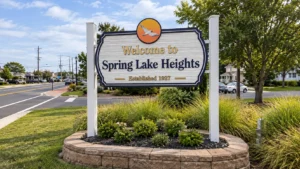
Tree pruning in Spring Lake Heights starts with the shape of the borough. Wikipedia says the borough was formed on March 19, 1927, from parts of Wall Township, that it sits at an elevation of 23 feet, and that it had 4,890 residents in the 2020 census. It shares borders with Lake Como, Sea Girt, Spring Lake, and Wall Township, and Wreck Pond, a 73 acre tidal pond with a watershed of about 12 square miles, lies where Spring Lake Heights meets those neighbors.
That setting changes how we think about pruning. Route 71 follows Seventh Avenue through the borough, County Route 524 crosses it as Allaire Road, and the trees along both roads share space with wires, signs, roofs, and driveways. Our tree trimming and pruning work is built around one rule, which is that every cut needs a reason the tree can live with.
After almost 30 years working throughout Monmouth County, we have seen how a quiet November shows what summer foliage hides. With the leaves dropping and the dormant season close, this is a practical time to plan which trees need work, which can wait, and which should be left alone.
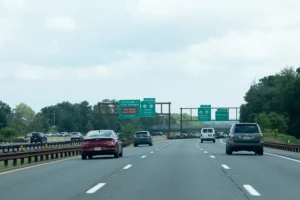
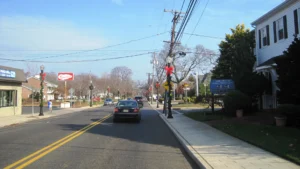
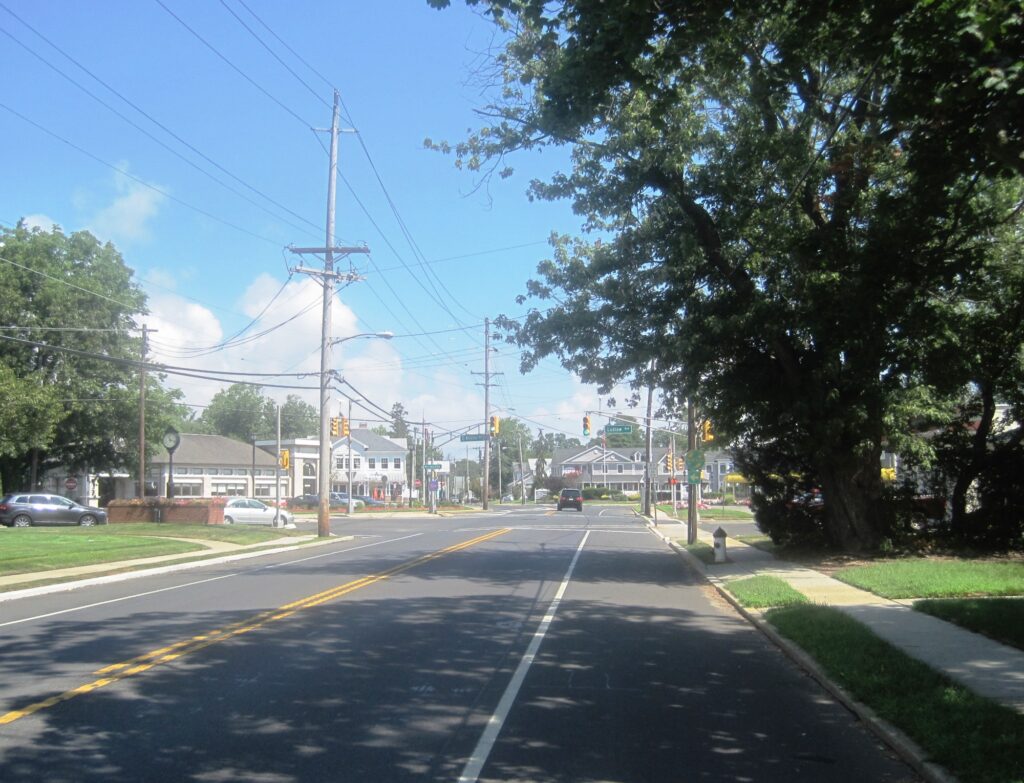
The photograph above shows Route 71 northbound as it approaches Allaire Road, taken in August 2016. A large shade tree stands over the right side of the road with its crown reaching toward the lane, while utility wires and signal poles run along the left and across the intersection ahead. A tree in a place like this has little room, and a branch that grows a few feet too far can end up over traffic, a wire, or a roof.
Exposure is the other part of the setting. The National Weather Service says nor’easters are most frequent and most violent between September and April, with gale force winds and the potential for disastrous coastal flooding. A crown that is well pruned lets wind pass through its structure without carrying extra end weight, and a crown that is badly pruned or neglected gives that wind something to work on.
Every Pruning Cut Needs a Reason the Tree Can Live With
The International Society of Arboriculture says in its pruning mature trees brochure that each cut can change the way a tree grows, so no branch should come off without a reason. It lists dead branches, improving form, reducing risk, and letting light and air into the crown as the common reasons. That list is short on purpose, and it is the standard we hold ourselves to when we walk a Spring Lake Heights property.
Pruning is not a free service to a tree. The same brochure explains that a tree makes the sugar it lives on in its leaves, so removing foliage can reduce growth and stored energy, and heavy pruning can be a real stress. It adds that routine thinning does not necessarily improve a tree’s health. For mature trees, it says no more than a quarter of the crown should come off at once, and less than that is often better.
Where a cut is made matters as much as why. The brochure says a correct cut removes the branch just outside the branch collar, the swelling where the branch meets the trunk, and that flush cuts can leave dead spots in the trunk tissue above and below. It also notes that research does not support wound dressings, which is why we do not paint cuts. Homeowners do not need to make these cuts, but they should know what good work looks like when they see it.
Pruning in Spring Lake Heights also has to account for the small lots and mixed species that a typical Monmouth County street holds. A Norway maple, a red oak, and a pin oak can stand on the same block and ask for different treatment, and each has its own habit of dropping limbs, forming tight unions, or sending up fast vertical shoots after a heavy cut. We read the species, the age, and the past work before we decide what to take off, and we leave the rest for another season.
Structure comes before shape. The Rutgers Master Gardeners of Hunterdon County, in their winter pruning guide, point to tight V shaped unions and codominant leaders, where pressure builds between two stems as they grow and one is likely to break. Our guide to codominant stems explains what that fork looks like and why we look for included bark inside it.
Reduction is the correct way to make a tree smaller when a tree must be made smaller. The ISA brochure says to cut back to a secondary branch that is at least one third the diameter of the cut stem, which keeps the tree’s form and structure. Topping, which cuts stems back to stubs, does the opposite. We name topping only to reject it, and when we meet a tree that was topped years ago, our tree restoration work focuses on slowly rebuilding a sound structure.
Mike Hufnagel puts our approach simply: “If I cannot explain what a cut does for the tree, the cut does not get made. A good pruning job looks like less work than it was, because the tree still looks like itself afterward.” That is why every pruning plan we write names the reason for each cut, whether it is deadwood, clearance, end weight, or a weak union.
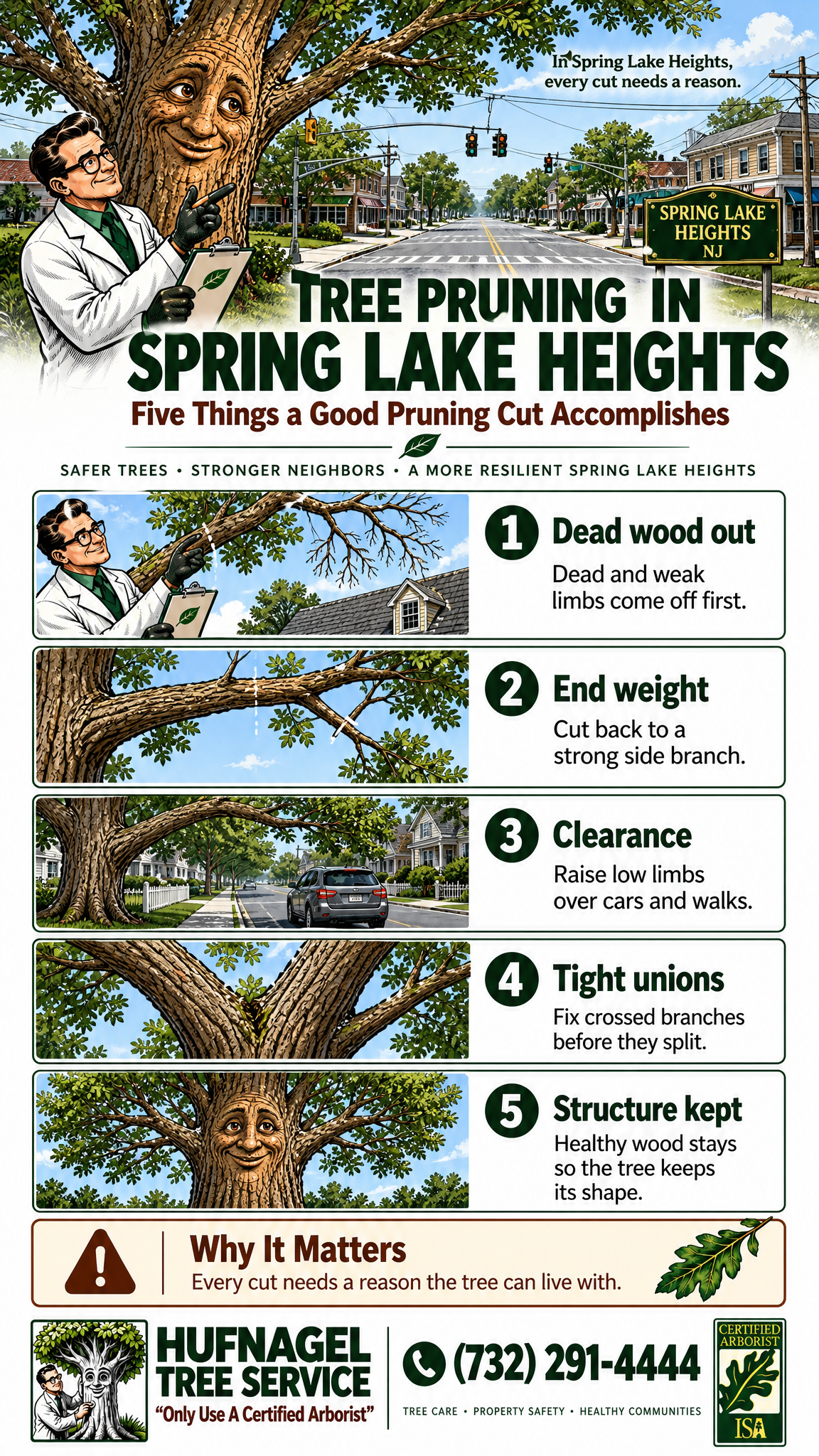
What Good Pruning Cuts Accomplish on a Spring Lake Heights Tree
- Remove dead, dying, and weakly attached branches over roofs, driveways, and walkways.
- Reduce end weight on long limbs by cutting back to a strong secondary branch.
- Raise the lower crown for clearance over vehicles, sidewalks, and mowers.
- Correct crossed branches and tight unions before they split under load.
- Leave healthy structure alone so the tree keeps its natural shape.
Each of these goals answers a specific problem, and none of them requires a tree to be cut back hard. The goal is not to make a tree smaller. The goal is to give each tree the work it actually needs and no more. Once the structure is sound, the next question is how much room the tree has around it, because wires, rooflines, and signs set limits on every pruning plan in the borough.
Route 71 Wires and Tight Lots Decide Where Pruning Starts
Route 71 is the only state highway through the borough, and Allaire Road meets it near the center of town, so many of the trees that people see every day stand along these two roads. Spring Lake Heights is also made of quieter streets, and Wikipedia lists Villa Park as an unincorporated community that lies partly within the borough. Whether a tree stands on a main road or a side street, the targets under it are close, and the pruning plan has to respect that.
Wires change the job completely. The ISA brochure says pruning that involves working above the ground or using power equipment should be done by a certified arborist with trained crews, safety equipment, and liability insurance, and it describes reduction as a method often used for utility line clearance. We agree with that without exception. A limb near a service wire is a call to make, not a project to attempt from a ladder.
Clearance has a legal side as well. The borough’s tree ordinance defines a hazard tree to include one that obstructs the view of traffic signs or the free passage of pedestrians or vehicles where pruning attempts have not been effective. That wording is a reminder that pruning for clearance is expected first, and it is a good reason to keep a record of what was done and when, because a tree that was pruned properly and still blocks a sight line is in a different category from one that was ignored.
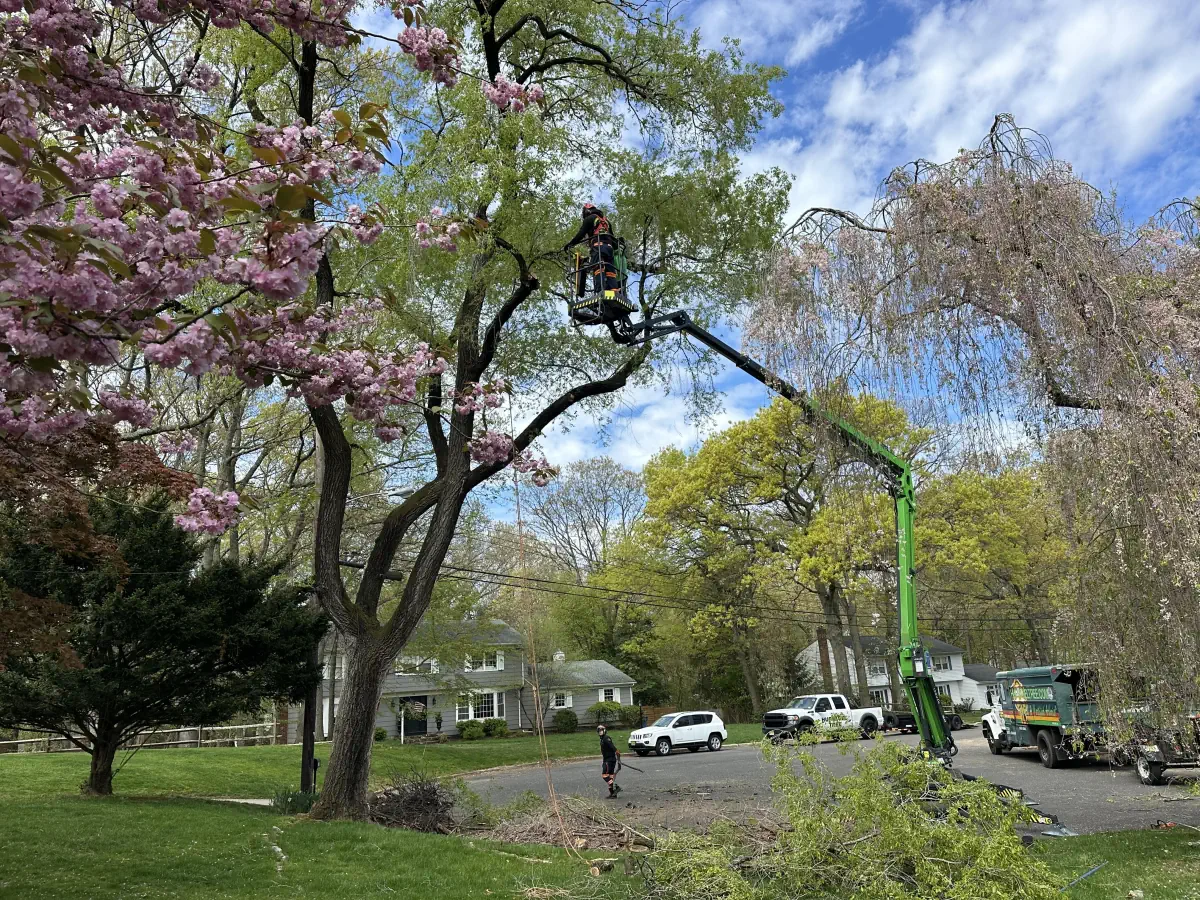
The photograph above shows a lift reaching over a backyard deck and fence into tall bare trees, with a crew member working in the bucket. A lift lets a crew reach the crown without leaning a ladder on a limb or putting a climber’s weight on weak wood, and it keeps cuts controlled over a pool, a deck, or a fence line. For a tight lot in Spring Lake Heights, that kind of access often decides how a job is done.
Close neighbors add a human question. A canopy often reaches over two properties, and a limb that fails can land on the neighbor’s side of the line. Written findings and dated photographs make that conversation easier. Our guide to storm season tree risk assessment explains what a homeowner can safely note from the ground, which means looking, photographing, staying clear, and calling.
Clearance is also not a job that stays done. Branches keep growing toward light and toward the road, so a tree that was cleared away from a wire a few years ago may be close to it again. We recommend looking at those trees on a regular schedule, with dated photographs to compare against, so a small correction never becomes a large one.
Wind finds the weak part of a crown. After a nor’easter, a limb that rubbed a wire, a gutter, or a neighboring branch all season may be the one that fails. We ask where each limb goes when the wind pushes it, and we prune so that the remaining branches have room to move without touching a wire or a roof. That is a different goal from thinning a tree out for wind, which we do not do as a blanket prescription.
Clearance and Wire Warning Signs Worth Noting From the Ground
- Branches growing toward or touching service wires along Route 71 or a side street.
- Limbs that reach over a roof, chimney, or garage within a few feet.
- Low branches that block sight lines at corners, driveways, or street signs.
- Dense growth that rubs on siding, gutters, or fences when the wind blows.
- Crowns that lean toward the street after a storm or a long wet spell.
None of these signs is a reason to climb a ladder. Homeowners look, photograph, stay clear, and call, and we handle the cutting. A defect that is low concern over an open lawn can matter much more over a roof or a roadway, and a close lot makes the second case common. With the clearance work understood, the next part of the plan is timing and the rules that apply to the tree.
Dormant Season Timing and Borough Rules Work Together
Timing is part of good pruning. The Rutgers Master Gardeners say late February to early March is the best time for pruning many landscape trees, because without leaves it is easier to see the shape of the tree and anything out of proportion or structurally unsound. They add that cuts on dormant trees do not stimulate new growth and that many disease organisms and pests are dormant too, so they are less likely to invade a cut.
Not every tree follows the same calendar. The same Rutgers guide says spring flowering trees are usually pruned right after bloom, that maples, birches, and beeches may bleed sap if pruned in late winter without harm to the tree, and that dead branches can come off at any time. It also says oaks and elms should be pruned only in winter to avoid oak wilt and Dutch elm disease. The ISA brochure agrees that a few diseases, including oak wilt, can spread through pruning wounds, so susceptible trees should not be cut during active transmission periods.
That timing leads to a practical split for November. Deadwood, broken limbs, and clear hazards can be handled now, since the ISA brochure says light routine pruning to remove weak, dead, or diseased limbs can be done at any time of year with little effect on the tree. Shaping and larger reductions wait for the dormant season, and heavy pruning of live tissue just after the spring growth flush is avoided, especially on weak trees. Our tree health management work helps decide which trees fall into which group.
The borough adds a legal layer. Spring Lake Heights Ordinance 2024-05 states its purpose as reducing soil erosion and pollutant runoff, promoting infiltration of rainwater into the soil, and protecting public health, safety, and welfare. That goal connects to the Wreck Pond watershed, and the borough lists the ordinance on its stormwater management page. The ordinance also defines tree removal to include excessive pruning, so a cut that leads to a tree’s decline can count as a removal.
The same definition says removal does not include responsible pruning and maintenance of a tree. That sentence is the reason we write down what each cut is for. The ordinance also protects the ground. It defines the critical root radius as the diameter at breast height multiplied by 1.5 feet, using a six inch tree as an example that gives nine feet, and it counts improper grading, over mulching, and soil compaction within that zone when they lead to decline. Crews, equipment, and piled brush all need to stay mindful of the roots.
The ordinance also sets size thresholds, which apply to street trees of 2.5 inches in diameter and other trees of 6 inches or more per acre when they are removed. It includes a hazard tree provision that a certified arborist or Licensed Tree Expert can support, and our guide to tree removal permits covers the general steps. When pruning is not enough, our tree removal work starts with plain written findings that a homeowner can bring to borough hall.
Questions to Settle Before Any Pruning Starts in the Borough
- Whether the tree stands on private land or in the street right of way.
- Which species it is and whether the season suits that species.
- What each cut is meant to fix, written down where the ordinance matters.
- How much of the live crown would come off in one visit.
- Where roots, grade, and mulch sit within the critical root radius.
Rules decide the paperwork and the tree decides the work. A good plan for pruning in Spring Lake Heights answers both, and it leaves room to adjust when the dormant season shows more of the structure. Starting in the fall gives a homeowner time to compare options, ask questions, and book work before the winter weather arrives. It also means the cuts that matter most for safety are not waiting for spring.
Call Hufnagel Tree Service About Tree Pruning in Spring Lake Heights
If you have mature trees near your Spring Lake Heights home, driveway, or the wires along your street, schedule an evaluation of the pruning your trees need before winter storms arrive. We provide tree risk evaluations, tree trimming and pruning, storm proofing, restoration, and removal when a tree cannot be managed safely. You can also read more local articles in our Spring Lake Heights category.
Hufnagel Tree Service is led by a certified arborist with almost 30 years of local experience and more than 280 five star Google Maps reviews. We inspect first, explain what we found in plain terms, and recommend only the work that changes the outcome for your trees and your property.
Call or text (732) 291-4444 to schedule tree pruning in Spring Lake Heights before the next coastal storm arrives.
Schedule Service Now!
From precision pruning and safe removals to health assessments and preventative care, Hufnagel Tree Service delivers expert solutions backed by decades of experience. We offer certified insight, fair pricing, and a commitment to doing what’s best for your landscape.
Learn More About Our Services
Related Articles
Aberdeen Fall Tree Inspection: Find Problems Before Winter
Old Bridge Fall Tree Inspection: Catch Hidden Hazards Early
Codominant Stems in Tinton Falls NJ: Check Weak Unions Before Winter