Contents
Tree Trimming and Pruning in the Tower Hill Farm Area
Tower Hill Farm area tree service in Locust and Middletown, NJ calls for a careful, estate minded approach. Around 40 Independence Road, Chapel Hill Road, Navesink River Road, Hartshorne Woods, and the wooded neighborhoods between Locust and Navesink, properties often carry a different kind of responsibility. Mature trees are not just background landscape. They frame long drives, shade older homes, protect privacy, soften stonework, and give the area its established character. At Hufnagel Tree Service, we approach this zone as certified arborists who understand both tree biology and the value of mature Monmouth County landscapes. We provide tree trimming, pruning, risk evaluation, restoration, storm protection, removal, stump solutions, hedge care, and vine management with the level of care these properties deserve.
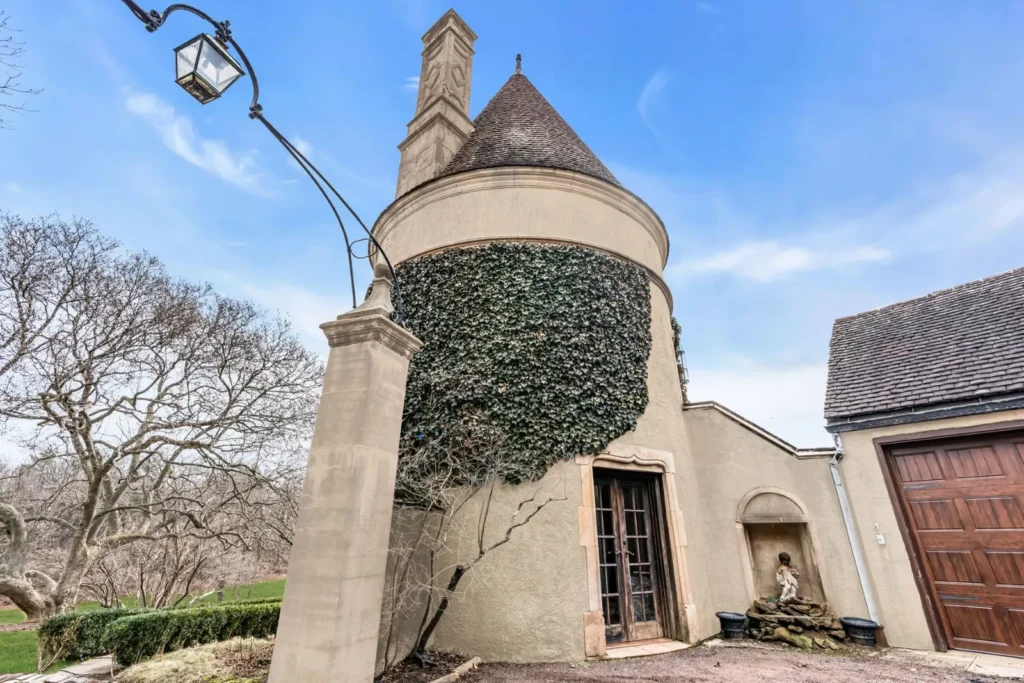
Tree trimming and pruning near Tower Hill Farm, Independence Road, and Chapel Hill Road should never be handled as routine cutting. This part of Middletown has large lots, older tree lines, wooded borders, stone features, sloped ground, and a mix of ornamental and native trees. Oaks, maples, beeches, tulip poplars, sycamores, hollies, cedars, dogwoods, magnolias, and ornamental cherries all appear in different combinations. Each tree has a different structure, age, exposure, and purpose in the landscape.
Our tree trimming and pruning work begins with a full visual assessment from the ground. We look at crown density, deadwood, branch attachment, clearance needs, past pruning wounds, vine pressure, storm damage, decay indicators, and the way the tree relates to homes, garages, courtyards, driveways, walls, and neighboring trees. The best pruning plan is not always the most aggressive one. It is the plan that reduces risk while preserving the tree’s natural strength.
For homeowners in this estate style corridor, proper pruning protects both safety and character. A mature oak over a driveway may need deadwood removal and end weight reduction. A maple near a roof may need clearance and selective thinning. A beech near a shaded lawn may need careful work because beeches do not appreciate rough treatment. An ornamental tree near an entry or garden may need light shaping to keep its form without removing too much canopy.
Local conditions make the work more precise. The Tower Hill Farm area sits close to wooded slopes, river influenced air, and older estate plantings. Wind can move through open lawns and tree lines, while shaded pockets may stay damp after storms. Michael explains it this way: “On an older property, the wrong cut can change the whole feel of the landscape. We prune to reduce stress, improve structure, and keep the tree looking like it belongs there.”
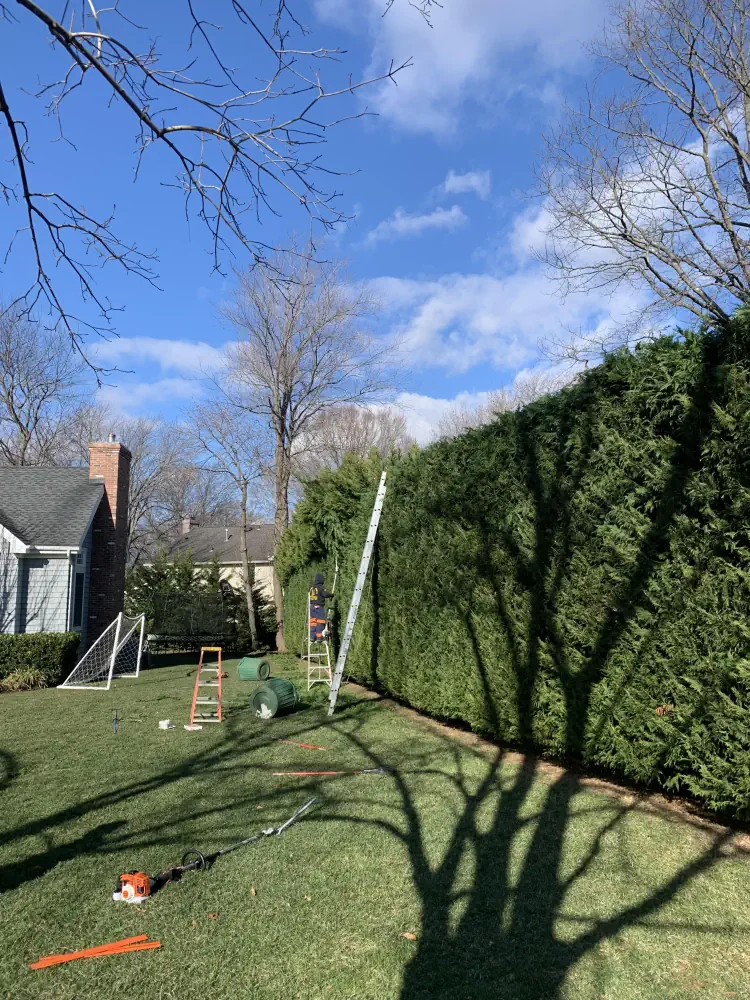
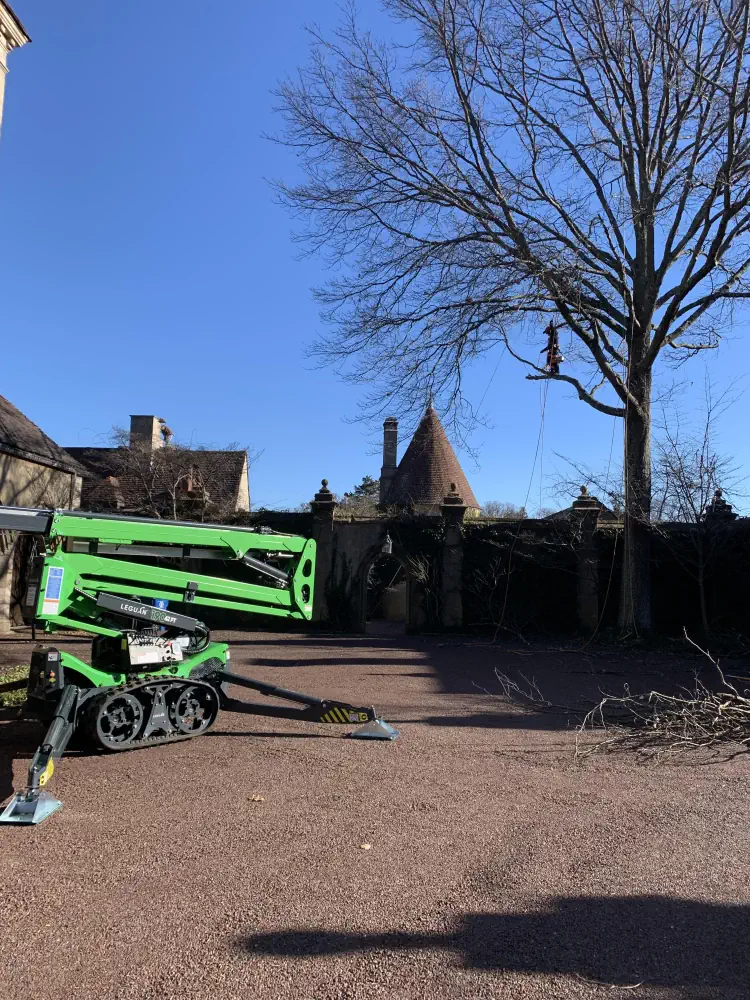
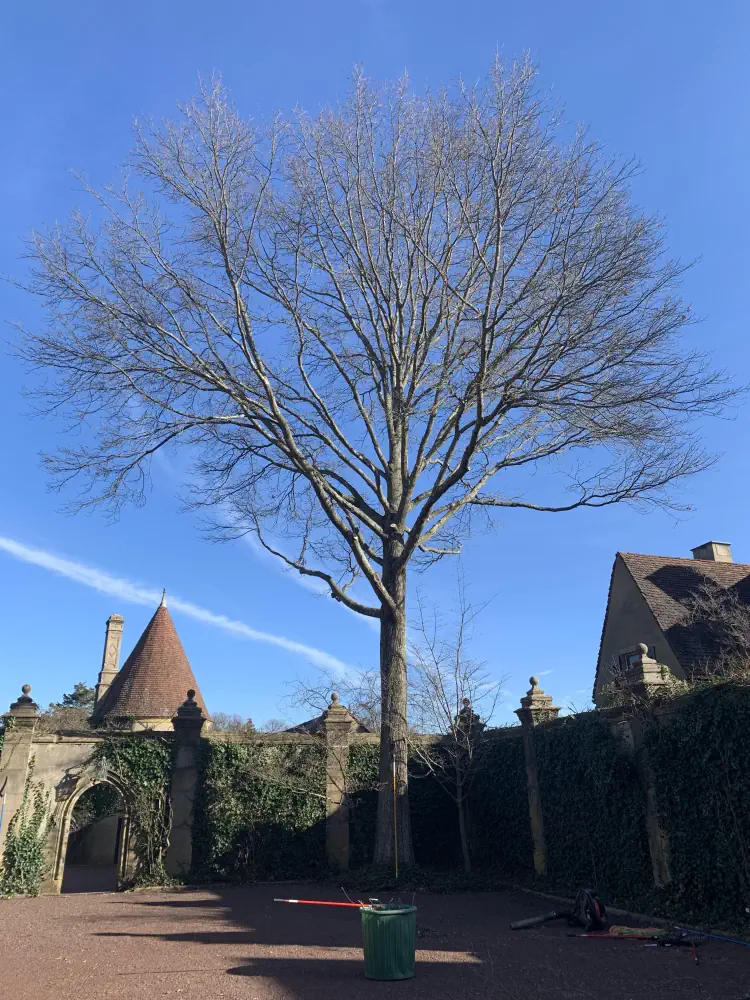
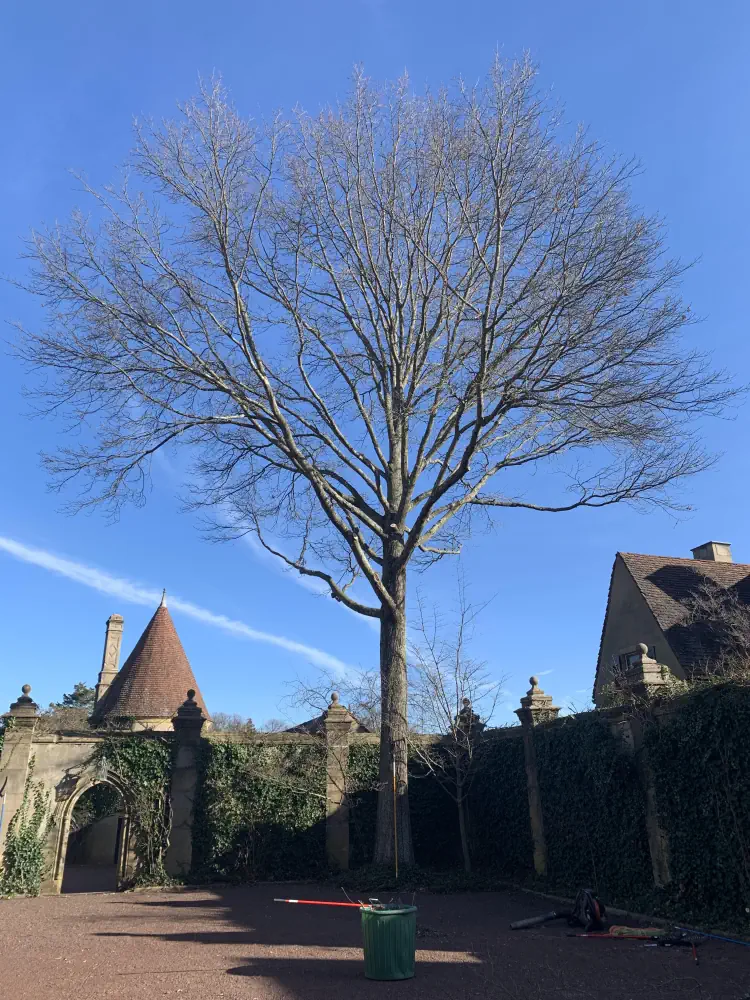
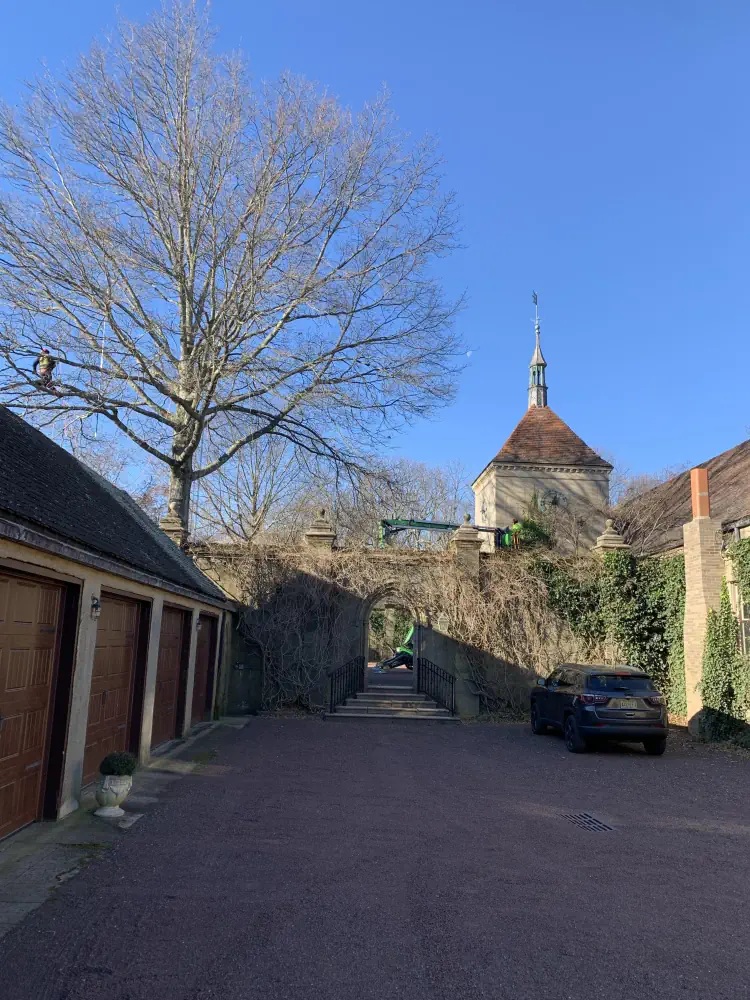
That approach is why we avoid topping, stripping, or unnecessary size reduction. We focus on clean cuts, healthy branch selection, strong structure, and the long term purpose of the tree. Once the pruning needs are understood, the next step is evaluating whether any mature trees present a risk to homes, drives, stonework, or people using the property.
Pruning Choices That Preserve Estate Character
- Remove deadwood and weak limbs without stripping the canopy.
- Improve clearance around roofs, drives, walls, courtyards, and walkways.
- Reduce heavy branch ends where storm movement is a concern.
- Shape ornamental trees with restraint so they keep their natural form.
- Match each cut to the species, age, location, and long term purpose of the tree.
Pruning is the first step in keeping Tower Hill area trees safe, attractive, and structurally sound. Because many of these trees are mature and grow near valuable property features, pruning should be followed by careful risk evaluation where defects or exposure are present.
Tree Risk Evaluation for Historic Estate and Large Lot Properties
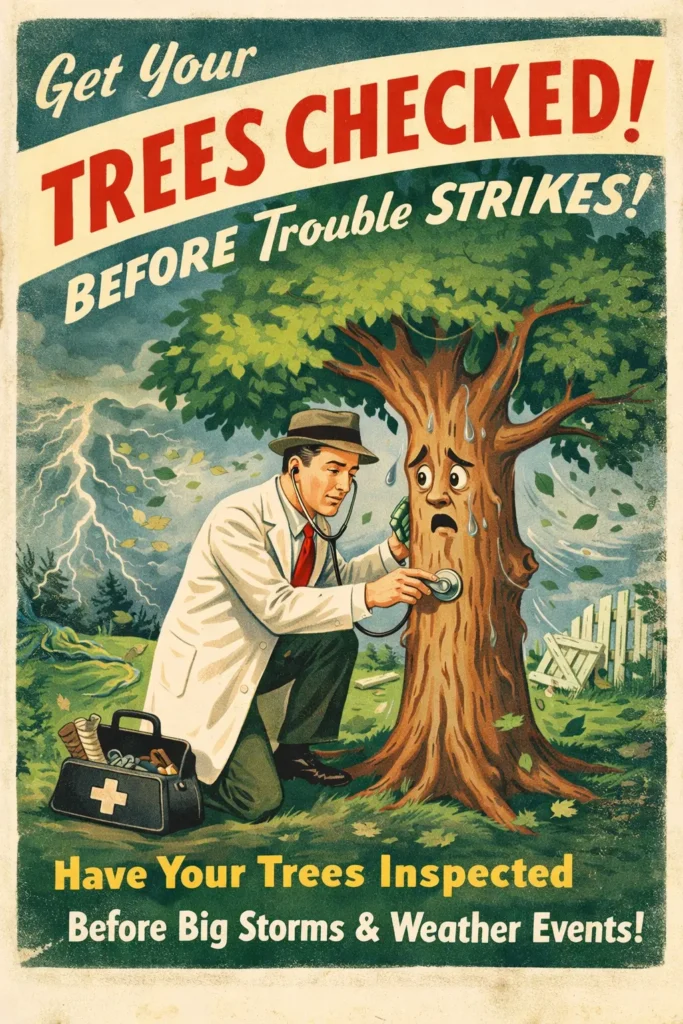
Tree risk evaluation is especially important around Independence Road, Chapel Hill Road, and the Locust side of Middletown because many trees have been growing for decades. A mature tree can look impressive and still hide defects. Cavities, decay, included bark, root flare problems, fungal activity, soil movement, weak unions, and old storm cracks may not be obvious until a certified arborist looks closely.
Our tree risk evaluation process considers both the tree and what surrounds it. On large lot and estate style properties, targets may include the main residence, guest structures, garages, stone walls, gates, fences, patios, pools, long driveways, parked vehicles, garden structures, and footpaths. A tree that would be acceptable in a back woodland may be unacceptable beside a busy driveway or near a roofline.
The benefit for property owners is clarity. We help separate urgent hazards from manageable concerns. A hanging limb over a drive may need immediate removal. A large tree with minor deadwood may only need pruning. A tree with root disturbance near a structure may need monitoring, soil protection, or health care. A tree with advanced decay near a home may need removal. Good evaluation prevents both panic and neglect.
The local setting adds risk factors that matter. Hartshorne Woods and the Navesink River area bring wooded pressure, storm exposure, and moisture variation. Older landscapes often have compacted soil near drives and structures. Vines can hide trunk defects. Dense tree lines can create competition that causes trees to lean toward available light. Michael’s advice is direct: “A mature tree should be respected, but it should still be inspected. Age gives a tree character, not immunity.”
When we find risk, we explain the options plainly. Some trees can be improved with structural pruning, tree storm proofing, deadwood removal, or restoration. Some need ongoing observation. Some are too compromised to keep safely. The right decision protects people, property, and the healthier trees nearby.
Estate Area Warning Signs Worth Checking
- Large dead limbs, hanging branches, or repeated branch drop.
- Open cavities, soft wood, mushrooms, or bark separation near the trunk.
- Leaning trees with soil lifting or exposed roots.
- Heavy limbs extending over roofs, drives, walls, patios, or parking areas.
- Vines that cover the trunk and prevent a clear inspection.
Risk evaluation gives homeowners a practical plan for the trees that matter most. When a tree can be preserved, we prefer preservation. When a tree cannot be made reasonably safe, removal should be handled with the same care as pruning.
Tree Removal and Stump Solutions When Preservation Is Not Safe
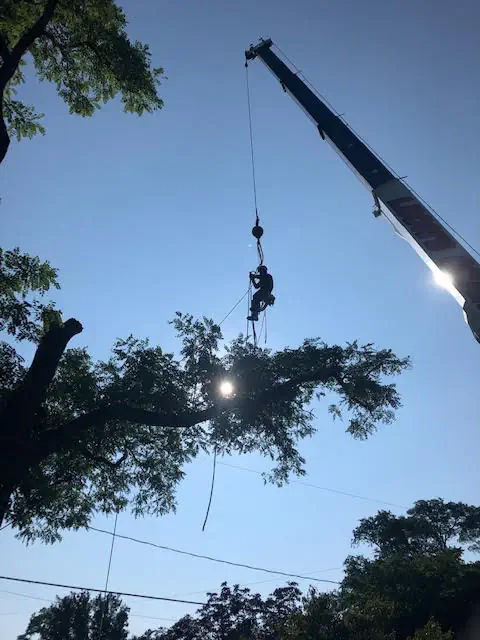
Tree removal in the Tower Hill Farm area should be planned, controlled, and respectful of the surrounding landscape. Large trees near homes, garages, courtyards, driveways, stone walls, and garden spaces cannot be dropped casually. The work requires experience, rigging judgment, equipment planning, and a crew that understands how to protect the property while removing the hazard.
Our tree removal process starts before the saw runs. We assess access, slope, drop zone limitations, overhead hazards, nearby plantings, surface protection, and cleanup needs. On older properties, we also consider features that cannot easily be replaced, such as stone borders, mature shrubs, formal hedges, specimen ornamentals, and lawn areas that frame the home.
For homeowners, professional removal reduces stress and prevents damage. A declining tree over a driveway, garage, or roof may create daily concern. A storm cracked tree near a courtyard or path may be unsafe for family and visitors. A tree leaning toward neighboring property may need prompt attention. Removal should solve the problem without creating new ones.
We are careful about recommending removal because mature trees give this area much of its beauty. Still, there are times when preservation is not responsible. Severe trunk decay, root failure, major storm damage, advanced decline, structural cracks, and dangerous placement can make removal the safest option. Michael says, “A good arborist does not remove a tree just because it is inconvenient. We remove it when the risk is real and the better answer is safety.”
After removal, the stump matters. A stump near a driveway, lawn, garden bed, or planned replanting area can interfere with future use and leave the job unfinished. Our tree stump removal service helps clear the area for turf, new plantings, landscape repairs, or a more appropriate replacement tree. Once a hazardous tree is removed, the rest of the property can be reviewed for restoration opportunities.
When Removal Is the Safer Estate Care Decision
- The tree has advanced decay or major trunk cracking.
- Roots are failing or soil has lifted around the base.
- Storm damage has left the remaining canopy unstable.
- The tree threatens a home, drive, wall, garden, or neighboring property.
- Restoration cannot make the tree reasonably safe.
Safe removal protects the property while preserving the landscape around the work zone. After the hazard is gone, many remaining trees can benefit from restoration, health management, and a more thoughtful long term maintenance plan.
Tree Restoration and Health Management for Mature Canopy Trees
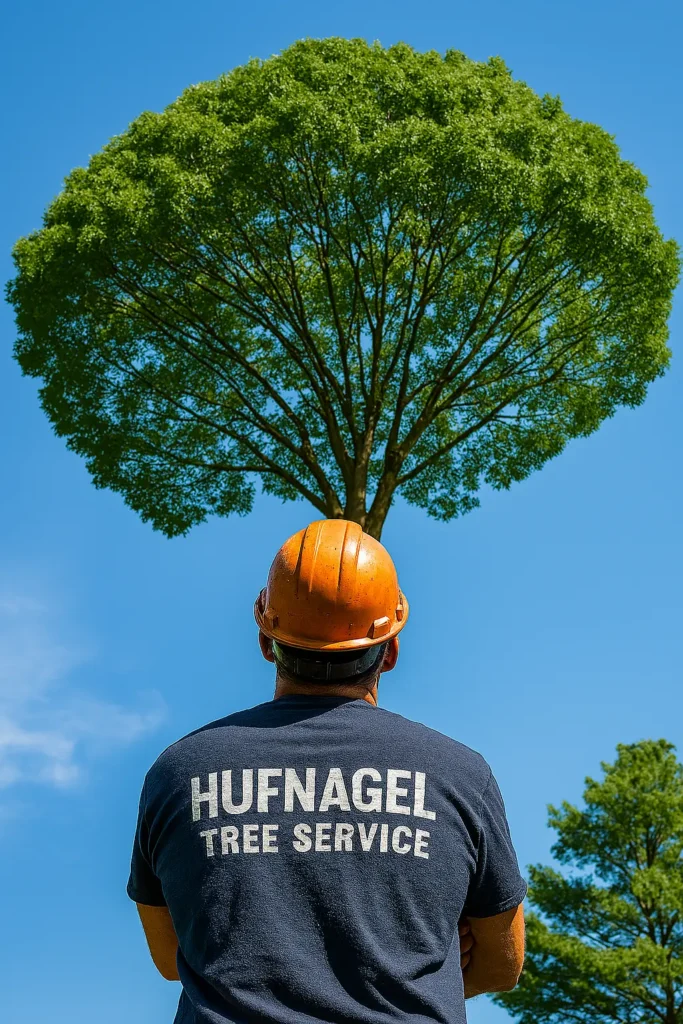
Tree restoration is one of the most important services for the Tower Hill Farm area because mature trees are often worth saving when they still have sound structure. A large oak, beech, maple, holly, or tulip poplar may have deadwood, storm scars, crowded branches, vine pressure, or soil stress without being beyond help. The difference is knowing what can be corrected and what cannot.
Our tree restoration approach is measured. We may remove deadwood, reduce overloaded limbs, improve canopy balance, clear competing vines, open airflow, and recommend root zone protection. Restoration is often done in stages so the tree can respond without shock. Older trees should not be forced into a dramatic change in one visit unless safety requires it.
For homeowners, restoration protects shade, privacy, beauty, and property value. Mature canopy trees cool the home, soften hardscape, frame views, and make a property feel established. They also take decades to replace. When restoration is realistic, it is often more valuable than removal followed by replanting with a small young tree.
Health management is closely connected to restoration. Compacted soil, buried root flares, mower injury, construction disturbance, drought stress, excess moisture, and past improper pruning all affect tree performance. Our tree health management recommendations are based on what we see in the field. We do not sell a generic treatment when the tree really needs better pruning, less competition, or root zone protection.
Michael often tells property owners, “The best mature trees are managed before they look desperate. Once decline is obvious from the driveway, the tree has usually been under stress for years.” That is why we prefer regular inspection, thoughtful pruning, and early correction. Once the canopy trees are healthier, hedges, vines, and ornamental plantings can be maintained with greater confidence beneath them.
How Restoration Protects Mature Tower Hill Area Trees
- Corrects deadwood, crowding, and overloaded limbs without unnecessary removal.
- Improves structure while preserving shade and landscape character.
- Reduces stress from vines, competition, and past poor pruning.
- Supports older trees through careful monitoring and phased work.
- Helps homeowners preserve the most valuable trees on the property.
Restoration keeps the mature canopy working for the property instead of becoming a liability. The same careful mindset should extend to hedges, vines, privacy screens, and ornamentals that define the ground level of estate style landscapes.
Hedgerow, Vine, and Ornamental Care Around Estate Style Landscapes
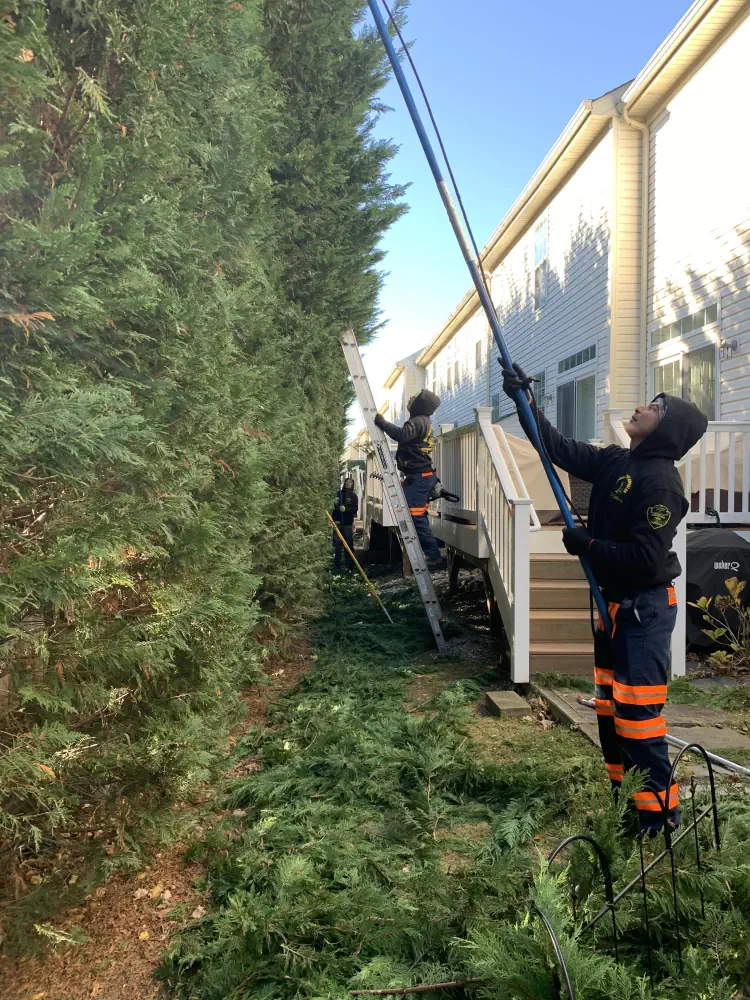
The Tower Hill Farm area is known for older landscape features, wooded edges, and properties where hedges, vines, and ornamentals contribute strongly to the overall setting. Around stone walls, garden entries, drives, courtyards, fences, and privacy screens, detail work matters. A hedge that is sheared too hard or a vine that is ignored too long can damage the appearance and health of the landscape.
Our hedgerow trimming service is built around plant response, not just appearance. Yew, boxwood, holly, privet, arborvitae, laurel, and mixed hedges each respond differently to pruning. Some tolerate reduction. Others need selective thinning and patience. We shape hedges so they remain dense, balanced, and healthy, with enough light reaching the lower growth to avoid bare bases.
Vines need the same level of control. Wisteria, ivy, climbing hydrangea, grapevine, honeysuckle, and volunteer vines can soften walls and structures when managed, but they can also hide decay, damage bark, pull on branches, and add weight in storms. We separate ornamental training from removal work so desirable vines are refined and destructive vines are controlled.
Ornamental trees also deserve species specific care. Japanese maples, dogwoods, cherries, magnolias, hollies, and smaller flowering trees should not be cut like brush. We prune for natural form, flower potential, clearance, airflow, and health. On estate style properties, small ornamental cuts often have a large visual impact because these trees frame entries, paths, patios, and garden views.
When hedges, vines, ornamentals, and canopy trees are managed together, the entire property feels more intentional. We can help set a maintenance rhythm that fits the site rather than reacting only when growth becomes overwhelming. That is the difference between rough landscape cutting and certified arborist care.
Ground Level Details That Complete the Tree Care Plan
- Shape hedges with attention to density, light, and long term health.
- Control vines before they enter tree canopies or hide structural defects.
- Prune ornamental trees according to species, form, and bloom cycle.
- Protect stonework, paths, drives, fences, and mature plantings during work.
- Connect hedge and ornamental care to the larger tree safety plan.
Estate style landscapes look their best when every layer is maintained with the same discipline, from the tallest oak to the smallest formal hedge. For the Tower Hill Farm area, that means choosing a tree service that understands both the science of arboriculture and the character of the place.
Schedule Tower Hill Farm Area Tree Service in Locust and Middletown, NJ
Hufnagel Tree Service provides certified arborist tree care for the Tower Hill Farm area, Locust, Chapel Hill, Navesink, Red Bank mailing areas, and greater Middletown Township. We bring precise pruning, careful removals, restoration first thinking, risk evaluation, hedge and vine expertise, and clean job site standards to properties where quality matters.
For Tower Hill Farm area tree service in Locust and Middletown, NJ, fill out our contact form or call (732) 291-4444. We will inspect your trees, explain your options clearly, and recommend the right plan for pruning, restoration, storm preparation, removal, or estate landscape maintenance.
Schedule Service Now!
From precision pruning and safe removals to health assessments and preventative care, Hufnagel Tree Service delivers expert solutions backed by decades of experience. We offer certified insight, fair pricing, and a commitment to doing what’s best for your landscape.
Learn More About Our Services
Related Articles
Late Summer Tree Service in Holmdel, NJ
Codominant Stems: When Multi Stem Trees Become Dangerous
Brielle Tree Risk Assessment for Storm Damage and Hazardous Trees