Snow Damage Prevention for Trees in Long Branch, NJ

Snow and ice can turn small tree defects into major failures in Long Branch. We help homeowners prevent winter breakage with pruning, structural correction, and practical arborist guidance built for shore conditions.
Share This Article

Contents

Why Certain Long Branch Trees Fail Under Snow Load

blizzard03

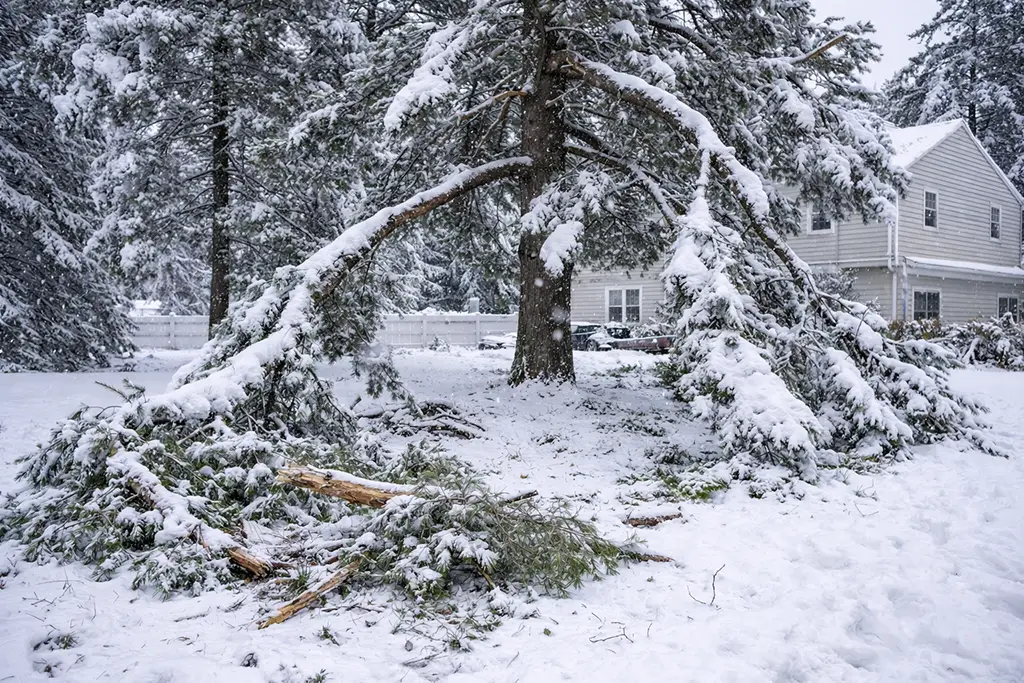
Long Branch homeowners deal with a winter pattern that is hard on trees, wet snow, salt air, coastal wind, and sudden temperature swings that load limbs fast. We have worked in neighborhoods from Elberon and West End to the streets around Ocean Boulevard and Seven Presidents Oceanfront Park for more than 25 years, and we know how quickly an overextended oak limb or codominant maple stem can become a roof, driveway, or sidewalk problem after one heavy storm. Snow damage prevention starts before the forecast turns ugly, because the trees that fail in January usually showed warning signs months earlier.

Snow damage is rarely random. Trees usually break where weight collects on weak branch unions, long horizontal limbs, dense evergreen screens, or crowns that were never thinned properly. In Long Branch, we often see pin oaks, red maples, ornamental pears, pines, and arborvitae respond very differently to the same storm because each species carries snow in its own way.

For the property owner, that matters because failure points are often hanging over the places people use every day. One cracked scaffold limb over a front walk on Norwood Avenue or a bent evergreen screen near a driveway in North Long Branch can turn a manageable pruning job into emergency cleanup, property damage, and insurance headaches.

The local environment adds another layer. Shore wind off the Atlantic dries foliage, pushes crowns off balance over time, and exposes trees to salt spray that weakens fine growth. Then a wet coastal snowfall sticks to every twig and needle. Trees growing in compacted soils near older homes or in tight lawn strips often have less root vigor, which makes them less resilient under winter stress.

From an arborist standpoint, the trees that worry us most are the ones with hidden structural defects. Included bark between competing stems, old topping wounds, overextended end weight, and lion-tailed branches can all look acceptable in summer foliage. Once the crown is loaded with snow, those defects show up fast.

That is why snow prevention begins with identifying the structure that cannot safely carry winter weight, not just reacting after a branch snaps.

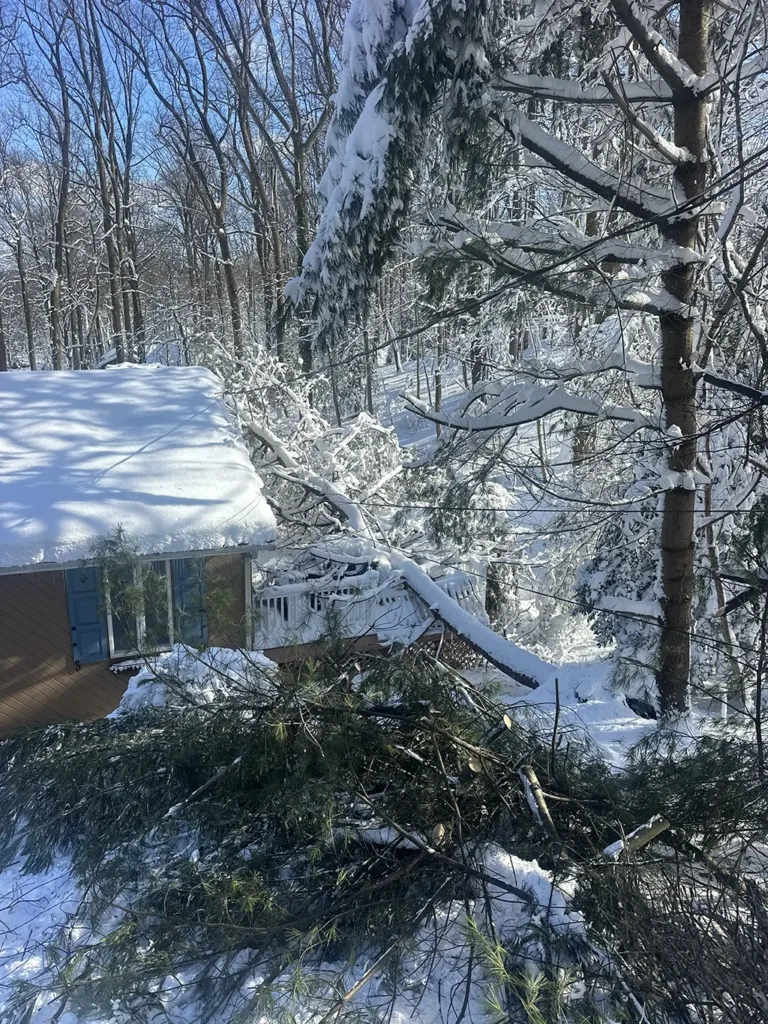
Damaged Tree

When we inspect for winter risk in Long Branch, these are the issues we expect to find:

  • Codominant stems in maples and pears that are likely to split under wet snow
  • Overgrown arborvitae and Leyland-type screens collecting heavy snow on the outer shell
  • Long oak limbs stretching toward streets, parking areas, and roofs
  • Pines with dead interior wood and poorly spaced limbs near the shore

Once we understand how the crown is carrying weight, we can reduce risk with targeted pruning and structural correction instead of broad, damaging cuts. That leads directly into the preventive work that gives trees the best chance of making it through a coastal winter intact.

Pruning Strategies That Reduce Winter Breakage

5 Reasons Infographic

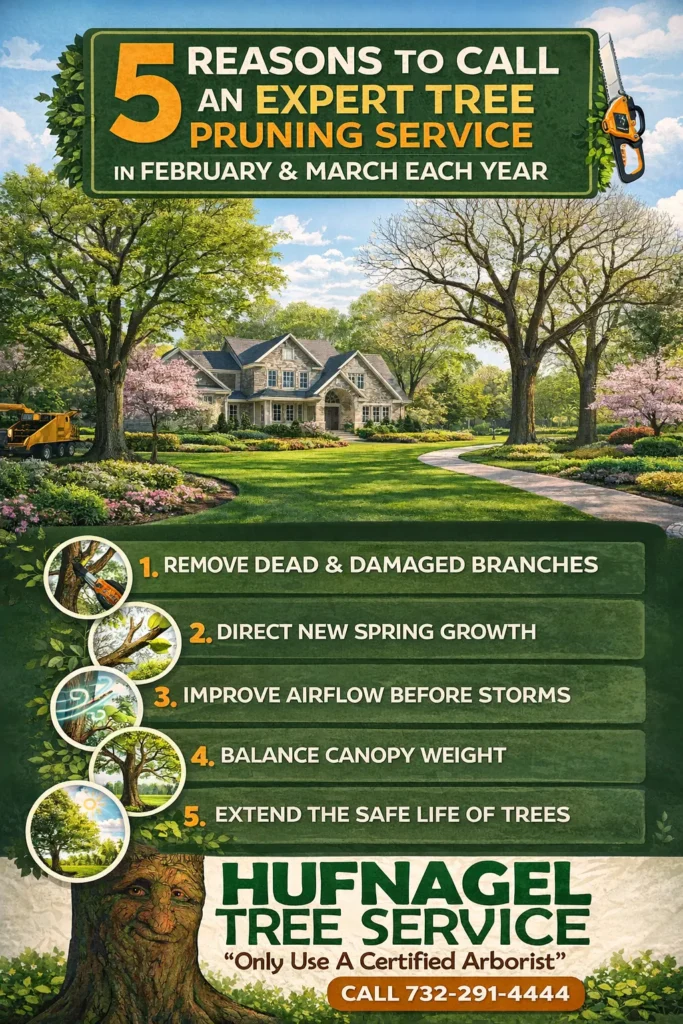
Proper pruning is the most effective snow damage prevention tool we have. The goal is not to strip the tree out. The goal is to reduce end weight, improve branch spacing, remove weak attachments, and let wind and snow move through the crown more evenly.

Homeowners benefit because strategic pruning lowers the chance of sudden limb loss while preserving shade, privacy, and curb appeal. A carefully reduced maple in the Elberon area or a properly thinned oak near Broadway can often be retained safely for years, while neglected trees tend to force expensive decisions after a storm.

Long Branch conditions make timing and technique important. Trees near the oceanfront often experience more persistent wind exposure, while inland pockets closer to Route 36 may have more sheltered crowns that hold snow longer. We adjust pruning to the site, the species, and the target below the tree, because a one-size-fits-all approach misses real risk.

We also look for previous bad cuts. Flush cuts, stub cuts, and old topping work create weak regrowth that snaps easily in winter. Corrective pruning can improve structure over time, but it has to be done with patience and a long view. The best winter preparation usually comes from consistent arborist pruning, not one aggressive visit.

When pruning is done correctly, the tree keeps its natural form while losing the specific leverage points most likely to fail during a snow or ice event.

Our winter-focused pruning recommendations usually include work like this:

  • Reducing overextended lateral limbs above roofs, walks, and driveways
  • Subordinating one stem in codominant trunks before the union splits
  • Removing dead, cracked, and rubbing branches that collect snow unevenly
  • Selective thinning in dense canopies so heavy snow does not sit in one part of the crown

Pruning solves a major part of the problem, but snow damage prevention is not only about branch structure. Trees also need the right support from the root zone and from the way the property is managed heading into winter.

Site Conditions and Pre-Storm Preparation Matter Too

Trees handle winter better when they enter the season with strong root function and balanced growth. A tree stressed by summer drought, trunk injury, root compaction, or repeated salt exposure is more likely to suffer winter breakage because it has less energy to compartmentalize damage and maintain flexible wood.

That matters on Long Branch properties where construction, tight lawn care patterns, and limited planting space are common. Trees squeezed between driveways, patios, and sidewalks often have compromised root zones. When those trees are also expected to block wind or provide privacy, the crown can outgrow what the root system can realistically support.

Local soil and weather patterns come into play here. Sandy coastal soils drain quickly, which can be helpful, but they also dry out fast and do not always provide the same steady moisture as heavier inland soils. Add road salt, ocean exposure, and freeze-thaw cycles, and you have a landscape where winter stress builds long before the first snow accumulation.

We often advise homeowners to think about prevention as a full property strategy. That may include mulching properly, avoiding late-season overfertilization, correcting drainage around root zones, and planning snow removal so piled snow and salt are not repeatedly forced into sensitive planting beds. These details make a real difference, especially for younger trees and evergreen screens.

If a tree is already structurally compromised or declining, pre-storm preparation may also include cabling, bracing, or removal, because some trees are simply beyond the point where pruning alone can make them reliable.

Before winter weather sets in, smart Long Branch tree care usually includes:

  • Inspecting crowns before the first major snow event, not after damage occurs
  • Protecting root zones with mulch instead of repeated mower and salt injury
  • Keeping piled snow and deicing runoff away from young and salt-sensitive trees
  • Making an honest decision about whether a declining tree should be restored or removed

Snow and ice will always be part of winter along the Jersey Shore, but major tree failure does not have to be. When the crown is pruned correctly, the site is managed well, and structural defects are addressed early, Long Branch homeowners can get through winter with far fewer surprises.

Long Branch's #1 Local Tree Doctors!

Michael Hufnagel

We are certified arborists with more than 25 years of hands-on experience caring for trees across Monmouth County, and our team has built a reputation on practical advice that protects people, property, and healthy trees. For expert help preventing snow damage in Long Branch, call (732) 291-4444. Only Use A Certified Arborist!

Schedule Service Now!

From precision pruning and safe removals to health assessments and preventative care, Hufnagel Tree Service delivers expert solutions backed by decades of experience. We offer certified insight, fair pricing, and a commitment to doing what’s best for your landscape.

Where Do You Need Service?
Please Enter Your Contact Information
Are You A New or Existing Customer?
How Can We Help You?

We Could Not Find A Direct Link To A Tree Removal Permit Application For The Town You Selected.

Please contact your local municipality to determine if a permit is required for your tree removal project. They will provide you with the most accurate and up-to-date information.