
Contents
Snow Damage Is Still Showing Up Across Middletown Neighborhoods
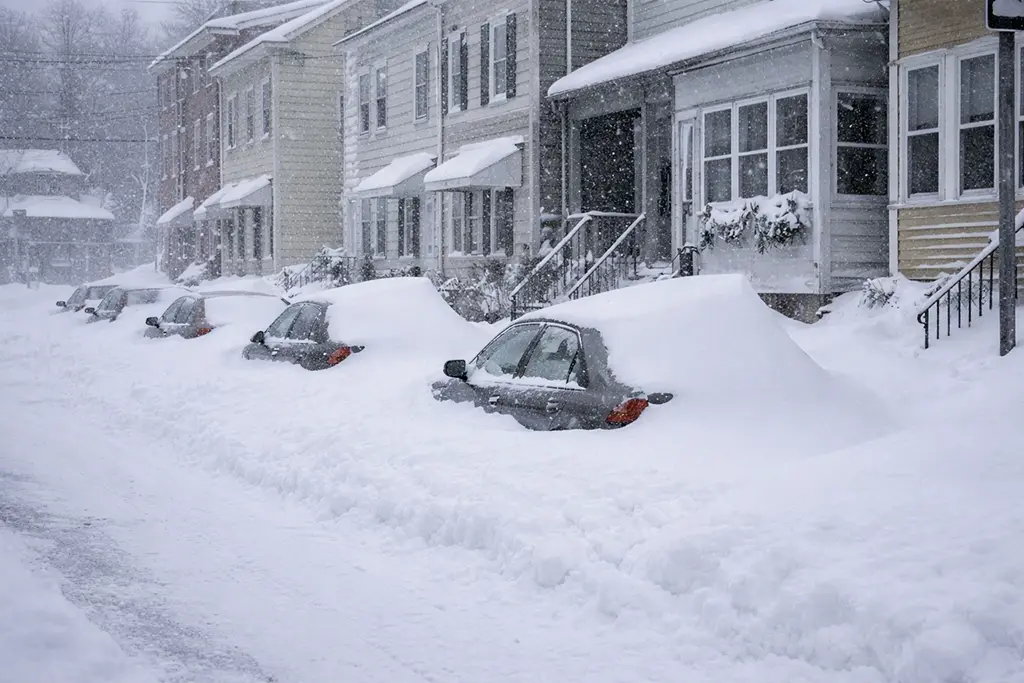
February’s blizzard dropped heavy wet snow across Middletown, from Lincroft and Chapel Hill to Belford, Leonardo, and the hills above Navesink River Road. At first many trees looked like they survived just fine. The snow melted and branches lifted back into place. Homeowners assumed everything was okay.
Now, a week or ten days later, the calls are coming in.
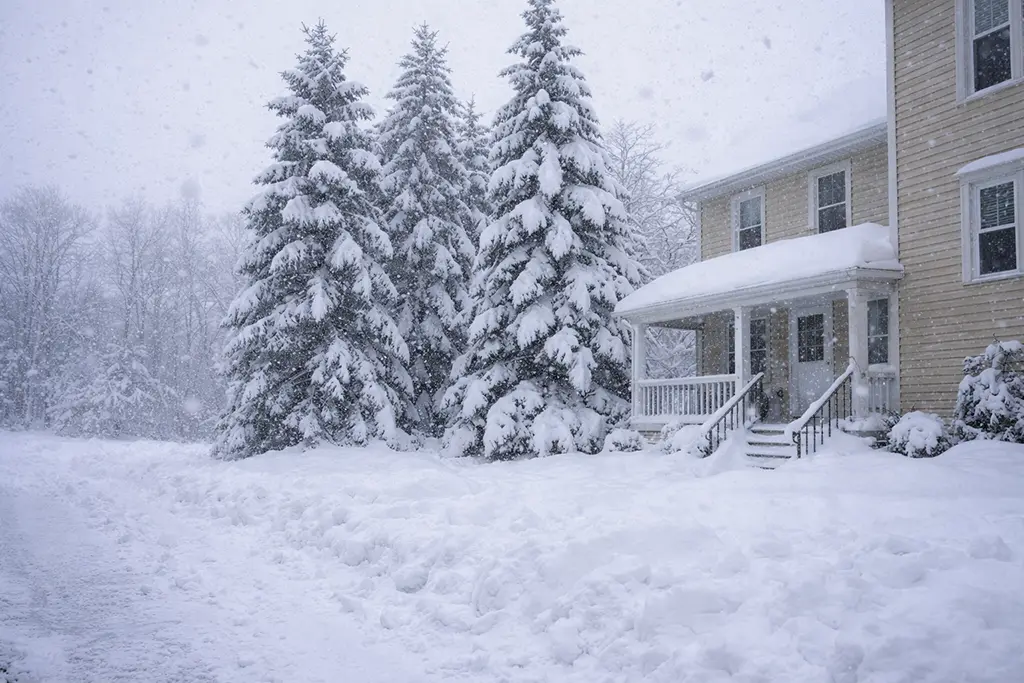
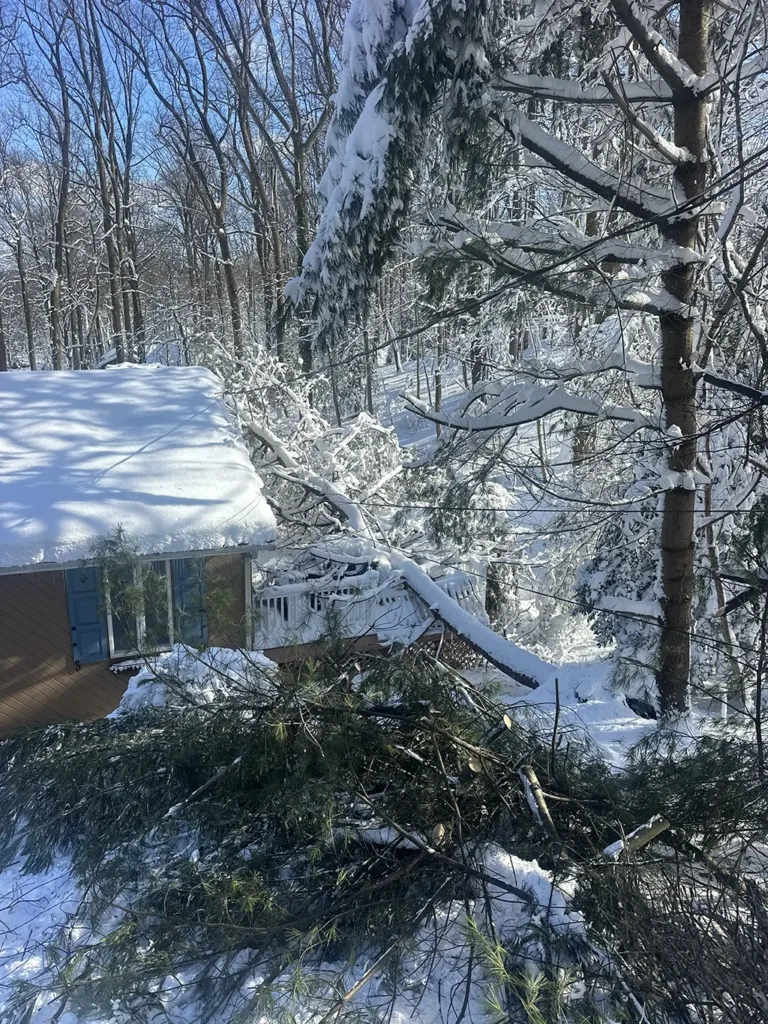
We are seeing bent arborvitae hedges, cracked pine limbs, and entire sections of spruce trees beginning to fail after the storm. This type of delayed damage is very common after heavy snow events in Monmouth County because the weight of the snow slowly weakens branches and splits trunks that may not break immediately.
Trees that looked normal right after the storm often start to lean, sag, or split days later as internal stress works its way through the wood fibers.
That is why this time of year is one of the busiest periods for certified arborist inspections in Middletown. Hidden damage can turn into a falling limb or tree failure weeks after the storm if it is not addressed.
If February’s snowstorm left you wondering about the condition of your trees, the safest move is to have them evaluated before the next windstorm tests their stability.
Signs your trees may have storm damage
- Branches hanging lower than they did before the storm
- Splits forming along major limbs or trunks
- Arborvitae or cypress hedges leaning outward
- Pine or spruce branches that look twisted or cracked
- Trees suddenly leaning or shifting in the soil
Snow damage often begins subtly and becomes obvious later, which is why so many Middletown homeowners are still discovering problems well after the storm passed.
Urgent: Have Your Trees Inspected By Certified Arborists Trained To Spot Hidden Dangers
Why Arborvitae and Leyland Cypress Take the Worst Snow Damage
One of the most common calls we have received since the storm involves arborvitae hedges and Leyland cypress trees.
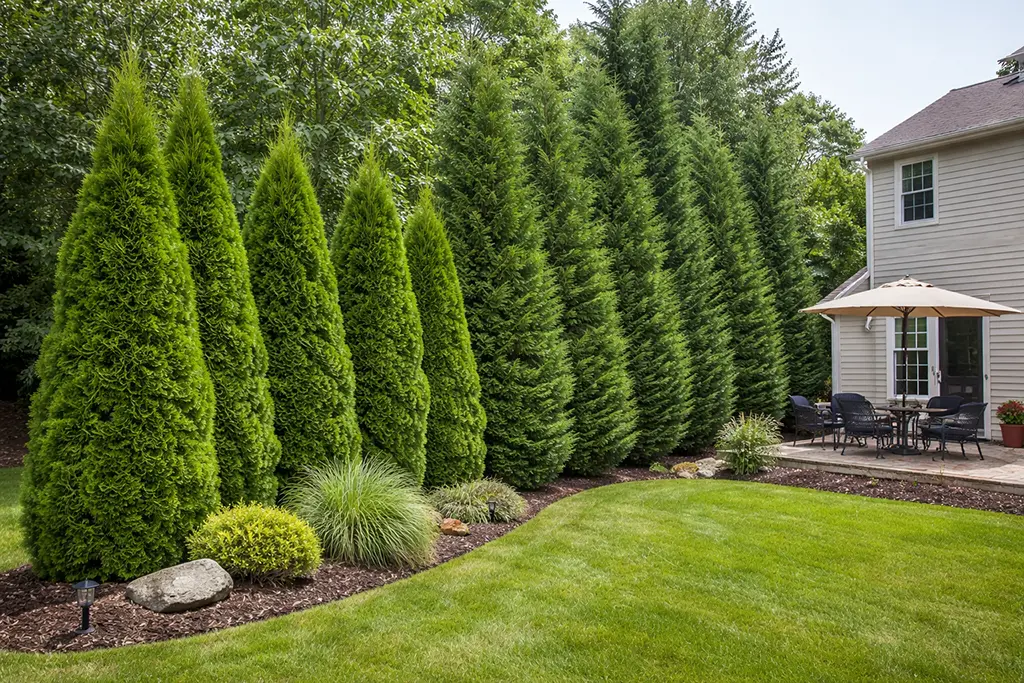
These popular evergreen privacy trees are planted throughout Middletown neighborhoods like Oak Hill, River Plaza, and the residential sections near Middletown High School South. They grow fast, create dense green walls, and provide year round screening between homes.
The problem is their structure.
Arborvitae and Leyland cypress grow in tall narrow forms with flexible stems and dense foliage. When heavy wet snow collects on that foliage it acts like hundreds of pounds of weight pressing outward on the branches.
Instead of shedding snow easily, these trees trap it.
As the weight builds, the stems spread apart and begin to split from the center of the tree. In many cases the trunks separate permanently or branches remain splayed outward long after the snow melts.
This is why homeowners often wake up days after a storm to find their arborvitae hedge looking like it has been pulled open.
In some cases we can repair and cable the tree to restore its shape. In other situations the structural damage is too severe and removal becomes the safest option.
Common arborvitae and cypress storm problems
- Hedge rows split open from the center
- Multiple trunks separating permanently
- Trees leaning or collapsing outward
- Branches permanently bent downward
- Root plates shifting from snow weight
These species are beautiful landscape trees, but they are among the most vulnerable when heavy wet snow hits Middletown.
Pine Trees and White Pine Limbs Often Break Days After the Storm
Another tree that suffered heavily in February’s storm was the pine tree.
White pine in particular grows quickly and produces long horizontal limbs. Those limbs can stretch 15 to 20 feet from the trunk, creating broad canopies over yards, homes, and driveways.
During a heavy snow event those long limbs act like giant shelves.
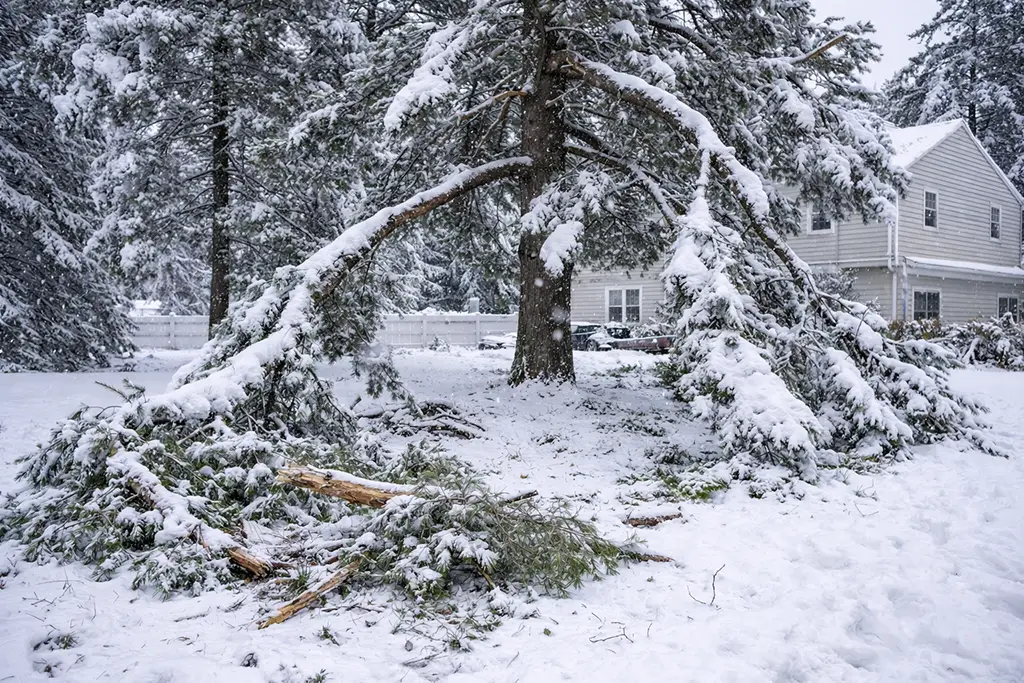
Snow piles onto them and the weight increases dramatically. At first the branches simply bend under the load, which is why homeowners sometimes believe the tree survived the storm without damage.
But what actually happens is that the wood fibers inside the branch begin to fracture.
Over the next several days the limb slowly weakens until it suddenly snaps. That delayed breakage is one of the reasons we receive calls long after the snow has melted.
In neighborhoods around Middletown’s wooded areas near Poricy Park or the hills above Route 35, mature white pines are especially vulnerable to this kind of failure.
If you have large pine trees near your house, driveway, or power lines, it is wise to have them inspected after a storm like the one we experienced this February.
Spruce and Fir Trees Can Hide Structural Damage
Spruce and fir trees often appear strong after winter storms. Their classic Christmas tree shape allows snow to slide off more easily than it does on arborvitae or pine.
However these trees have their own vulnerability.
Spruce and fir trees grow dense layers of branches stacked closely together. When heavy snow gets trapped in those layers it can force the internal limbs apart.
The outside of the tree may still look intact, but inside the canopy branches may be cracked or partially broken.
As the weather warms and winds return, those damaged limbs begin to fall.
This is why homeowners sometimes notice spruce branches dropping into their yard days after a storm even though the tree appeared fine at first.
Fir trees behave in a similar way. Their flexible branches may bend heavily during a snowstorm and then remain partially damaged once the weight is gone.
These trees often hide damage better than others, which makes a professional inspection especially important.
Hidden Tree Damage That Homeowners Often Miss
One of the biggest challenges after a snowstorm is identifying damage that is not immediately obvious.
Many homeowners walk their yard, look at their trees, and assume everything survived the storm without issues. In reality the damage may be inside the tree’s structure where it cannot be seen from the ground.
A certified arborist knows where to look.
We examine branch attachments, trunk stress points, and root stability to determine whether the tree was weakened during the storm. Small fractures or splits that look harmless today can become major failures during the next wind event.
This is particularly important in Middletown where many homes are surrounded by mature trees planted decades ago.
Large pines, spruce trees, and old ornamental evergreens can weigh several tons. If structural damage occurred during the storm, the risk increases significantly.
Why inspections matter after winter storms
- Small cracks can become major limb failures
- Hidden splits can cause trees to collapse later
- Leaning trees may have unstable root systems
- Damaged limbs can fall during the next windstorm
- Early intervention can often save the tree
The goal is not always removal. In many cases proper pruning or structural support can restore stability and keep a healthy tree growing for decades.
Free Certified Arborist Inspections in Middletown

If you live in Middletown and suspect your arborvitae, cypress, pine, spruce, or fir trees may have been damaged during February’s blizzard, the safest step is to have them evaluated by a certified arborist.
We have been caring for trees throughout Monmouth County for more than 25 years and have seen how winter storms can weaken trees in ways homeowners cannot easily detect.
Our inspections look at the entire structure of the tree including canopy balance, trunk integrity, and root stability.
In many cases the solution is simple pruning or structural correction that prevents a future failure.
Other times we identify serious hazards that should be addressed before the next storm or strong wind arrives.
Trees add tremendous beauty and value to Middletown properties, but after a major snow event they deserve a careful second look.
If you are unsure about the condition of your trees, call Hufnagel Tree Service at 732-291-4444 to schedule a free inspection with your local certified arborist. We are happy to take a look and help you determine whether your trees are healthy, damaged, or in need of attention before the next storm tests them again.
Schedule Service Now!
From precision pruning and safe removals to health assessments and preventative care, Hufnagel Tree Service delivers expert solutions backed by decades of experience. We offer certified insight, fair pricing, and a commitment to doing what’s best for your landscape.
Learn More About Our Services
Related Articles
Expert Tree Care in Brick Township Requires More Than Basic Trimming
Historic NJ Blizzard of 2026: Your Trees and Home are at Risk