Winter 2026: Preparing Trees for Heavy Snow in Monmouth County
With multiple snowstorms expected in Monmouth County, preparing trees ahead of time is critical. A certified arborist explains how pruning, inspections, and risk mitigation reduce snow related tree failures.
Share This Article
In This Article ...
WINTER WARNING
Why Snow Preparation Matters More Than Ever in Monmouth County
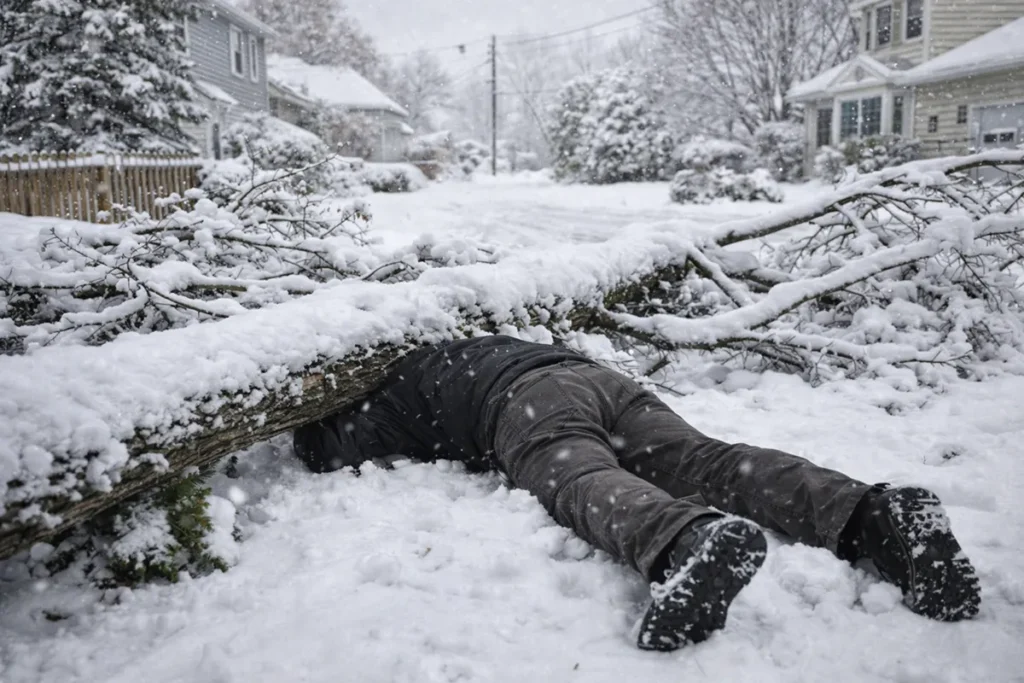
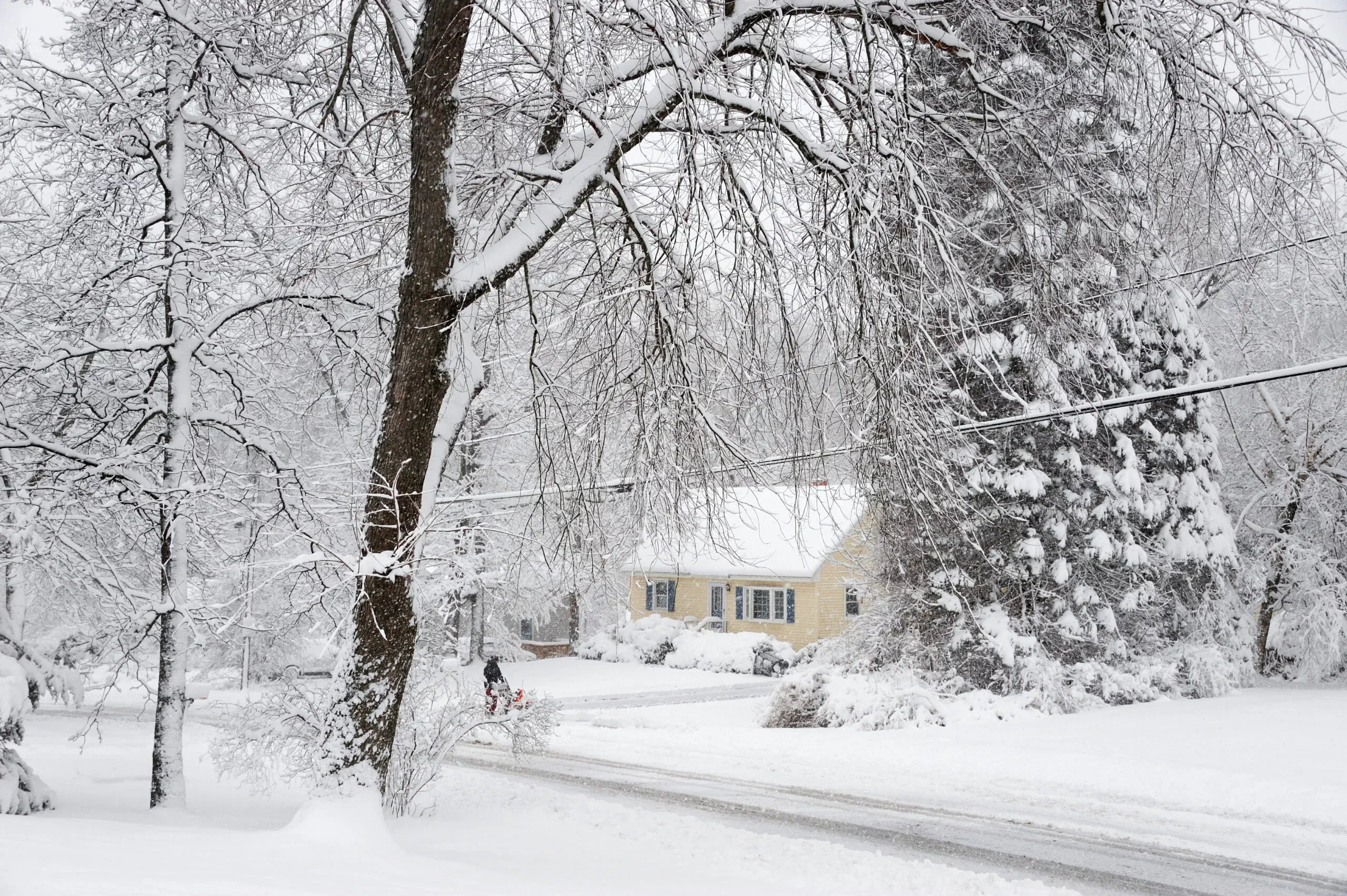
In Middletown, Long Branch, and West Long Branch, winter storms are no longer occasional inconveniences. Heavy snow events are becoming more frequent, and the damage they cause to trees, homes, and power lines is increasing every year. When snow accumulates on poorly structured trees, the added weight can turn minor defects into major failures.
As certified arborists serving Monmouth County for more than 25 years, we see the same pattern after every major snowstorm. Trees that were inspected, pruned, and maintained ahead of winter tend to survive with minimal damage. Trees that were ignored often lose large limbs or fail entirely.
Michael Hufnagel, owner and local certified arborist, often reminds homeowners that snow damage is rarely random. “Snow exposes problems that were already there. Weak structure, poor pruning history, and decay do not show themselves until the load shows up.”
Preparing trees for snow is not about reacting after the forecast. It is about understanding how trees carry weight and addressing risk before winter conditions arrive.
This article explains how snow damages trees, what arborists look for during winter inspections, and what steps homeowners in coastal Monmouth County can take to reduce risk before the next storm.
THE WEIGHT OF IT
How Snow Load Causes Tree Failures
Snow adds vertical weight, but the real danger comes from how that weight distributes across branches. Horizontal limbs, dense canopies, and narrow branch attachments are especially vulnerable when snow accumulates unevenly.
In towns like Long Branch and West Long Branch, coastal wind often combines with snow, shifting loads and increasing leverage on already stressed limbs. Even healthy looking trees can fail if their structure was never corrected.
We commonly see failures caused by co dominant stems, where two main leaders grow together without a strong attachment. Under snow load, these stems push apart and split, causing irreversible damage.
Michael explains it this way. “A tree can look fine for years, then one snowstorm reveals everything that was wrong beneath the surface.”
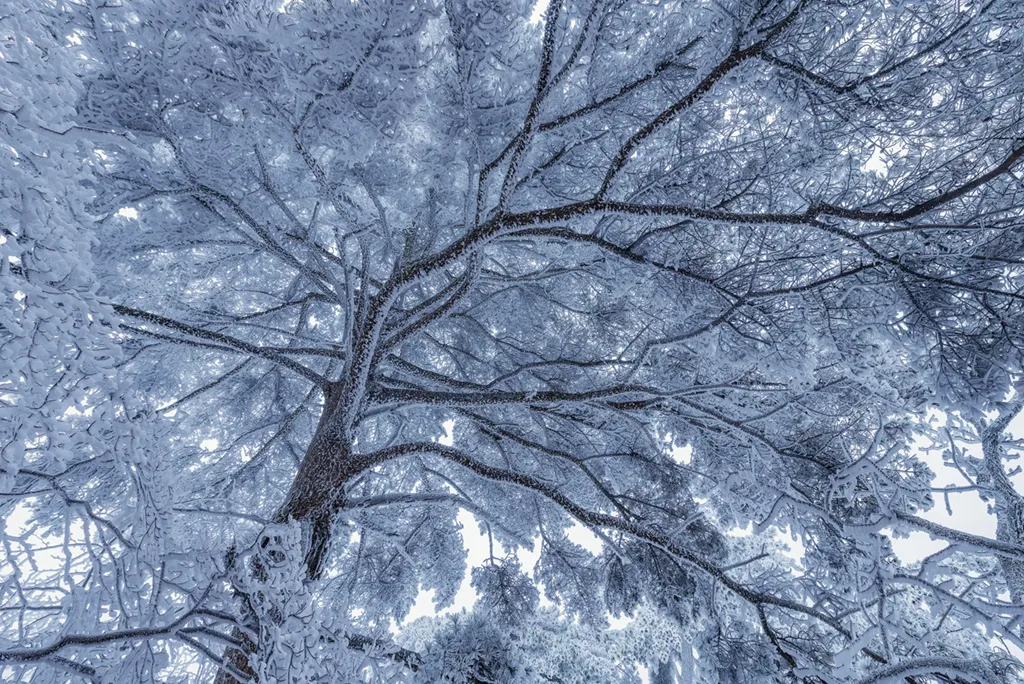
Snow damage is also more severe on trees with excessive interior growth. Dense branching traps snow, increasing load instead of shedding it.
Structural Issues That Increase Snow Damage Risk
During winter risk assessments, we look for specific structural weaknesses that snow tends to exploit.
These include:
Co dominant stems with included bark
Long horizontal branches with poor taper
Dense interior canopy growth
Old pruning wounds with internal decay
Previous storm damage that never healed properly
Identifying and correcting these issues before snowfall dramatically reduces the likelihood of failure.
Once homeowners understand how snow causes damage, the next step is learning how professional pruning reduces that risk.
HOW IT WORKS
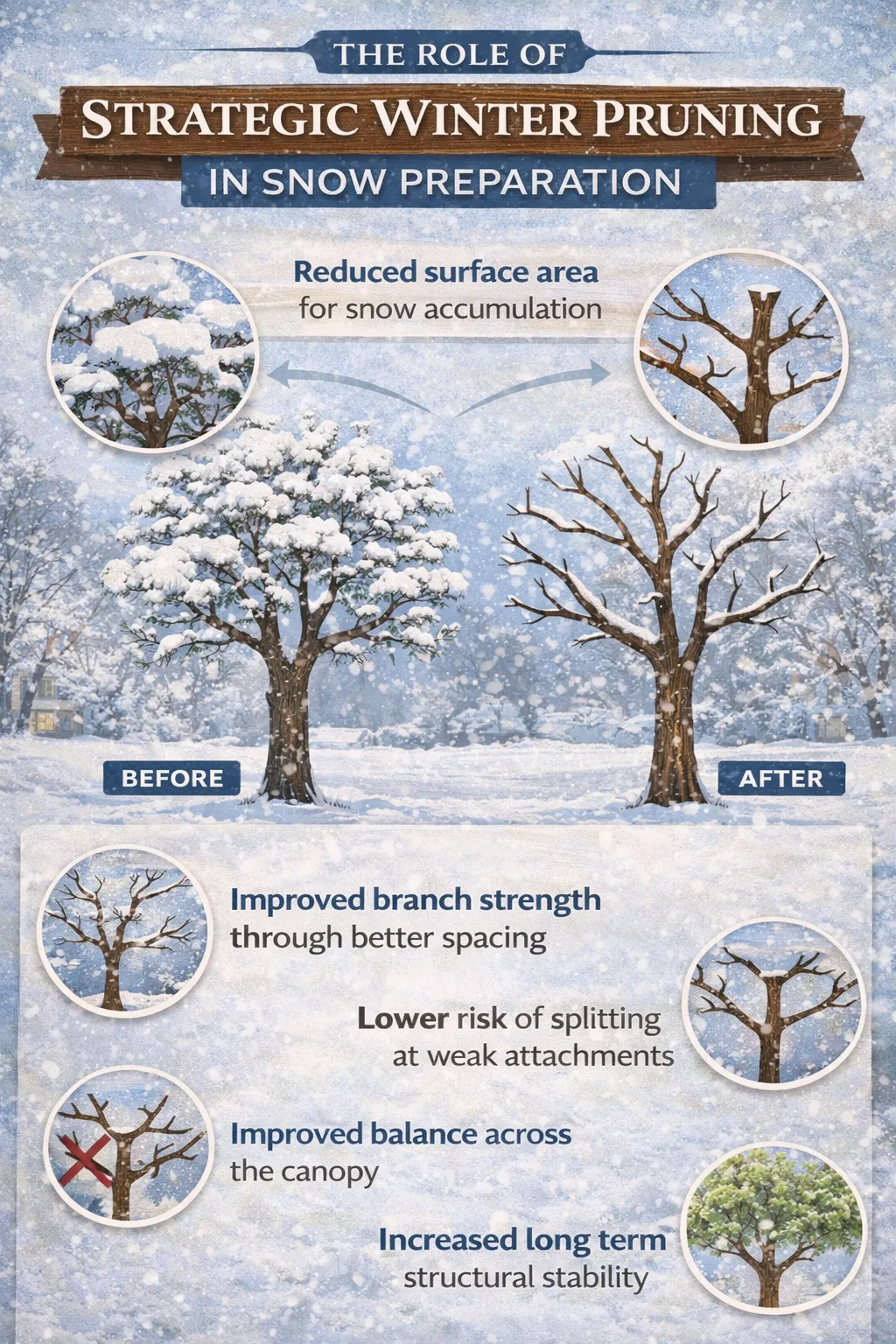
The Role of Strategic Winter Pruning in Snow Preparation
Winter pruning is one of the most effective tools we use to prepare trees for snow. Unlike emergency trimming after storms, proactive pruning reshapes how a tree carries weight.
By selectively reducing branch length and thinning dense areas, we help trees shed snow instead of holding it. Proper pruning also improves branch spacing, which reduces the chance of limbs colliding or levering against each other under load.
In Middletown neighborhoods with mature shade trees, we often focus on reducing end weight while preserving structural integrity. This is not aggressive cutting. It is controlled, purposeful pruning based on tree biology and physics.
Michael often emphasizes restraint. “Snow prep pruning is not about making a tree smaller. It’s about making it smarter.”
Winter pruning also allows us to address defects without triggering active growth. Cuts made during dormancy heal more predictably and do not create soft tissue that could fail later in winter.
What Snow Preparation Pruning Actually Accomplishes
When done correctly, winter pruning changes how trees respond to snow.
Key outcomes include:
Reduced surface area for snow accumulation
Improved branch strength through better spacing
Lower risk of splitting at weak attachments
Improved balance across the canopy
Increased long term structural stability
These changes may not be obvious immediately, but they become clear after the first major snowfall.
Pruning alone, however, is not enough. Inspection and risk assessment are equally important.
PREVENTING DISASTER
Why Tree Risk Assessments Are Critical Before Snowstorms
Not all risks can be solved with pruning. Some trees have internal decay, root issues, or past damage that pruning alone cannot correct. This is where professional risk assessment becomes essential.
During winter assessments, we examine trunk integrity, root flare condition, soil stability, and past failure points. Cold weather makes cracks, cavities, and structural defects easier to detect.
In coastal areas, salt exposure and saturated soils further increase risk. Trees that appear stable in summer may lose anchorage during winter storms.
Michael is candid about this reality. “Some trees are not dangerous until weather pushes them past their limits. Our job is to identify that threshold before it is crossed.”
Risk assessments allow homeowners to make informed decisions, whether that means pruning, cabling, or removal when restoration is no longer viable.
Conditions That Signal Elevated Snow Risk
Certain signs indicate that a tree may not handle heavy snow well.
We pay close attention to:
Leaning trunks with soil movement at the base
Mushrooms or fungal growth near roots
Large cavities or hollow sounding trunks
Past limb failures that changed balance
Trees growing in compacted or waterlogged soil
Ignoring these warning signs often leads to emergency calls after storms, when damage is already done.
Once risks are identified, homeowners can act calmly instead of urgently.
COMMON PROBLEMS
Common Snow Preparation Mistakes Homeowners Make
One of the most common mistakes we see is waiting until snow is in the forecast. At that point, options are limited and conditions may be unsafe for work.
Another mistake is indiscriminate cutting. Removing random branches without understanding load distribution can actually increase failure risk by unbalancing the tree.
We also see homeowners focus only on visible branches while ignoring root and trunk health. Snow failures often begin below ground.
Michael addresses this directly. “Quick fixes before a storm usually create bigger problems later.”
Professional preparation requires timing, planning, and an understanding of how trees respond to stress over time.
Actions That Often Backfire Before Snowstorms
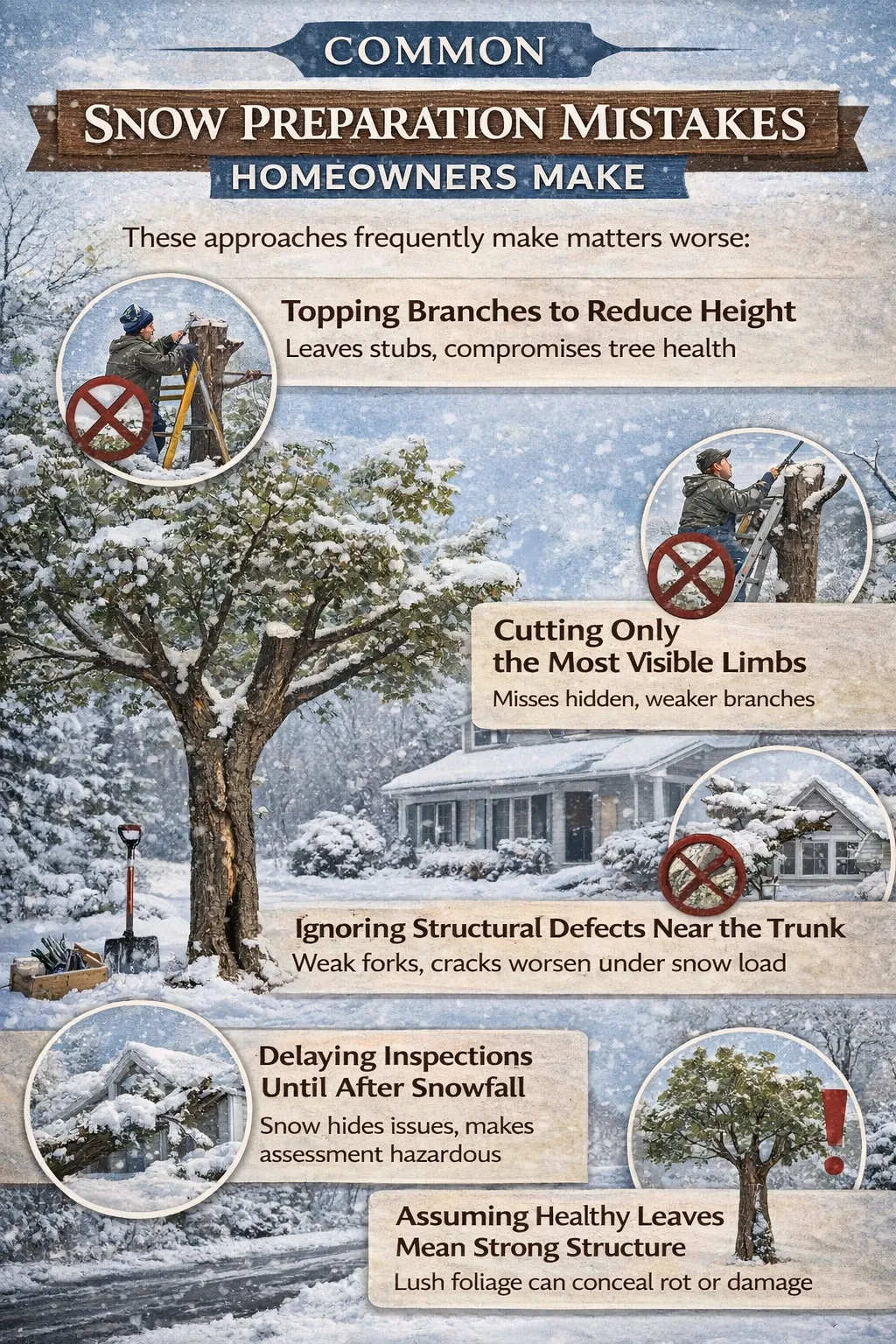
These approaches frequently make matters worse:
Topping branches to reduce height
Cutting only the most visible limbs
Ignoring structural defects near the trunk
Delaying inspections until after snowfall
Assuming healthy leaves mean strong structure
Avoiding these mistakes is as important as taking the right steps.
That brings us to what homeowners should do now, before the next snow event.
LOCAL EXPERTS
Scheduling Winter Tree Preparation With Hufnagel Tree Service
Snowstorms are predictable, but tree failures do not have to be. In Middletown, Long Branch, and West Long Branch, winter preparation gives homeowners control over how their trees handle severe weather.
As certified arborists, we focus on prevention, not reaction. Our winter services combine inspection, pruning, and risk mitigation tailored to each property and tree species.
Michael summarizes our approach simply. “The best emergency call is the one that never has to happen.”
If you are concerned about how your trees will handle heavy snow this winter, now is the right time to schedule an evaluation. Contact Hufnagel Tree Service to arrange a winter tree risk assessment and proactive pruning plan before the next storm arrives.
Call (732) 291-4444 to schedule winter service. We are here to protect your trees and your home with reliable expert care.
Schedule Service Now!
From precision pruning and safe removals to health assessments and preventative care, Hufnagel Tree Service delivers expert solutions backed by decades of experience. We offer certified insight, fair pricing, and a commitment to doing what’s best for your landscape.
We Could Not Find A Direct Link To A Tree Removal Permit Application For The Town You Selected.
Please contact your local municipality to determine if a permit is required for your tree removal project. They will provide you with the most accurate and up-to-date information.