


Contents
A Historic Blizzard and a Warning to New Jersey Homeowners
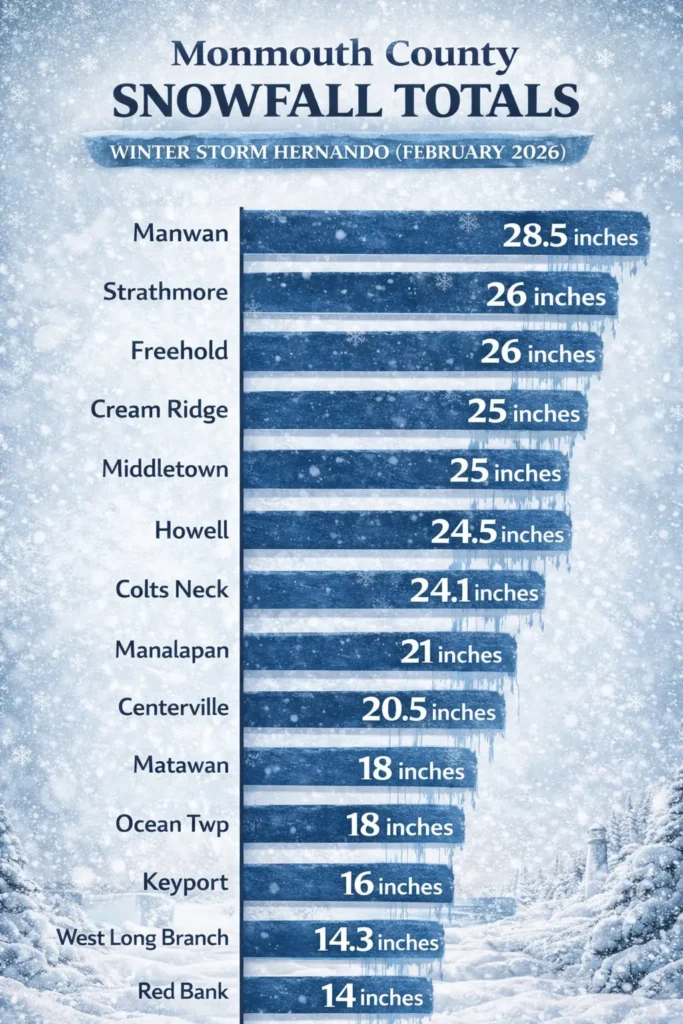
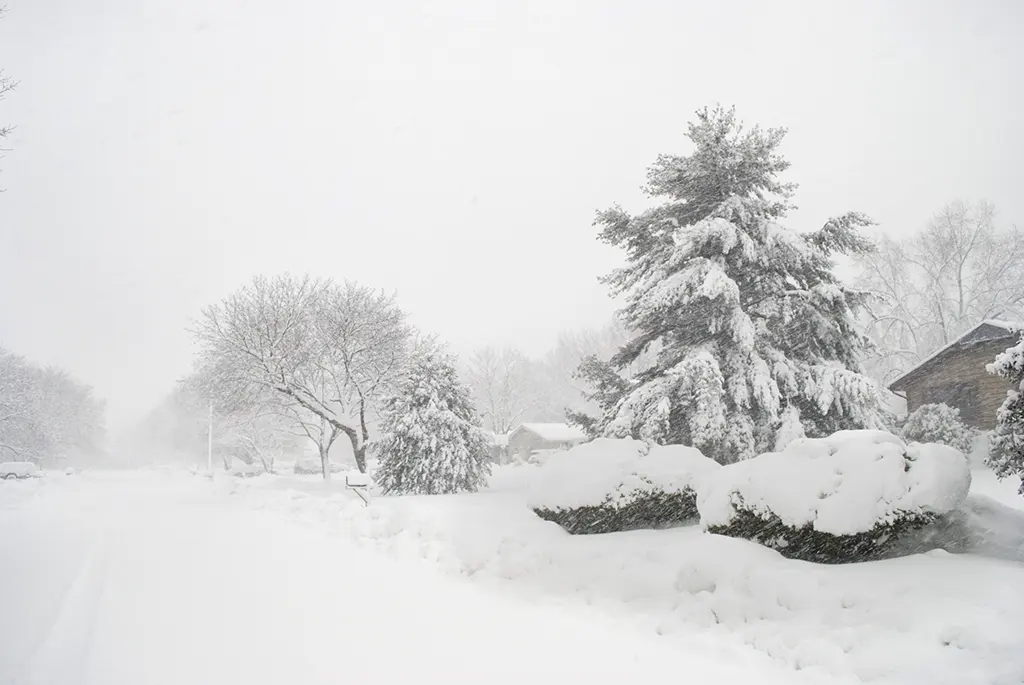
Winter Storm Hernando was not an ordinary snow event. From February 22 through February 24, 2026, New Jersey experienced record snowfall, wind gusts over 60 miles per hour, and widespread power outages affecting more than 100,000 customers at the peak. In Bergen County, Lyndhurst and Carlstadt recorded over 30 inches of snow. Newark Airport measured 27.1 inches. Even coastal communities like Point Pleasant Beach saw over 11 inches. A state of emergency was declared. This was described as historic and crippling, and in the field, we saw exactly why.
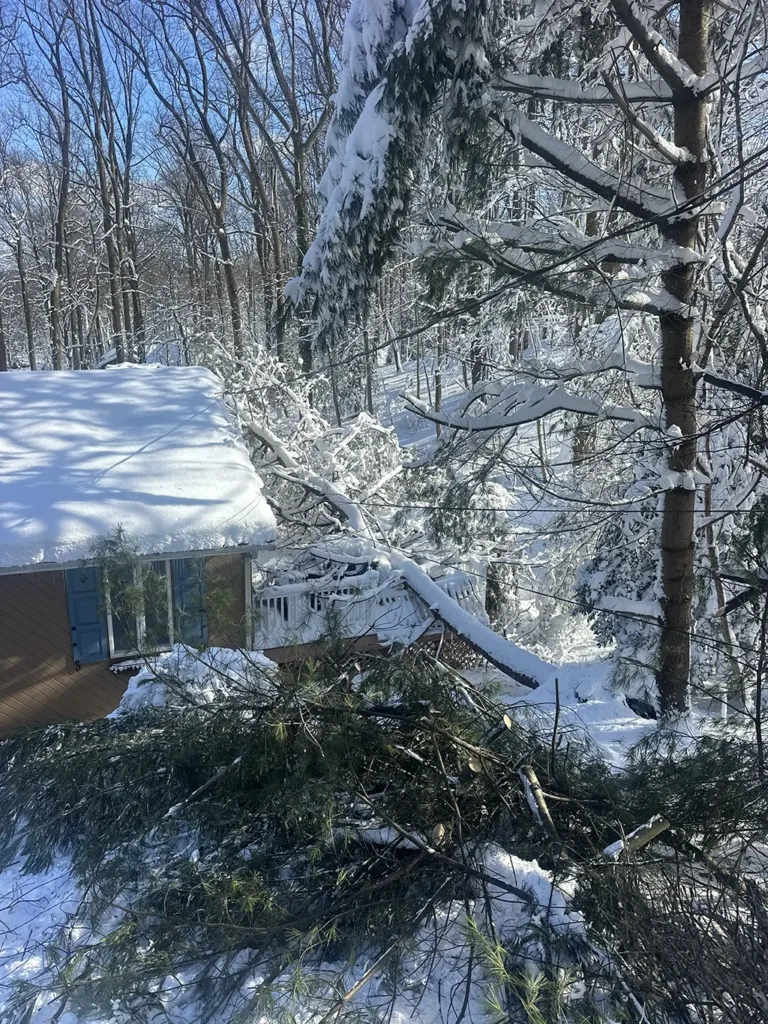
As a Certified Arborist working across Monmouth County and surrounding areas, I was out during and immediately after the storm. What I saw was not isolated branch breakage. I saw structural failures. I saw mature trees splitting under the weight of wet snow. I saw trunks twisting under wind load. I saw root plates lifting where the soil had become unstable.
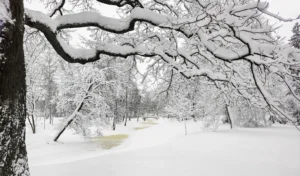
Heavy snow does not simply sit on branches. It accumulates. It absorbs moisture. It compacts. A single branch that may weigh a few dozen pounds in summer can suddenly carry several hundred pounds of snow and ice. Add wind to that equation and you create torque that many trees, especially older or previously stressed trees, cannot withstand.
Snow Load, Extreme Cold, and Wind: A Perfect Storm for Tree Failure
rees are engineered by nature to bend, not to snap. However, every tree has limits. When snow accumulation exceeds what the branch architecture can handle, failure becomes inevitable.
During this storm, we saw wet, heavy snow. This is not light powder. Wet snow adheres to limbs, especially on evergreens and trees that still retain dense canopies. The added weight increases bending stress along branch unions. Weak attachments, internal decay pockets, and previous storm damage become critical failure points.
Extreme cold compounds the problem. When temperatures drop sharply, wood fibers lose flexibility. Frozen tissue becomes more brittle. Under load, instead of flexing and rebounding, limbs can shear clean off. I inspected multiple properties where branches failed at angles that clearly indicated brittleness from cold stress.
Wind gusts exceeding 60 miles per hour added lateral pressure. Snow loaded limbs act like sails. Wind pushes against them, multiplying stress at the trunk and root system. Even trees that survived the initial snowfall were compromised by subsequent wind events.
This is why tree risk evaluation right now is not optional. It is essential.
The Hidden Danger: Melting Snow and Saturated Soil
Many homeowners assume that once the snow melts, the danger has passed. In reality, this is when the second wave of failures begins.
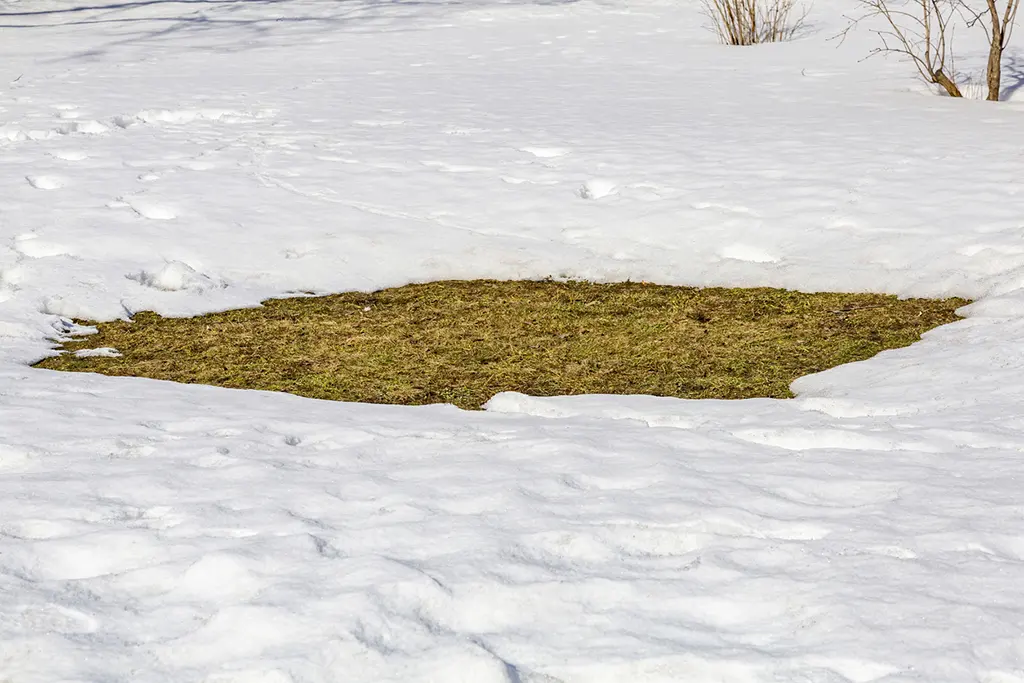
As temperatures rise, snow melts rapidly and saturates the soil. Waterlogged ground loses structural integrity. Roots rely on friction and soil density to anchor a tree. When soil becomes saturated, that anchoring strength is dramatically reduced.
We have already seen mature trees leaning more noticeably after melt. Some that stood firm for decades are now unstable because their root systems are sitting in mud instead of firm soil. Older trees, trees with shallow root systems, and trees planted in compacted or clay soil are particularly vulnerable.
In Monmouth County neighborhoods with mature maples, oaks, and pines, we are finding root plates that have shifted subtly. That subtle shift is often the only warning before a full uprooting event.
If you wait until the tree falls, you are dealing with emergency tree removal services, roof damage, vehicle damage, and potentially personal injury. A proactive general health assessment and structural evaluation can prevent that outcome.
When Trees Come Through the Roof: A Hightstown Wake Up Call
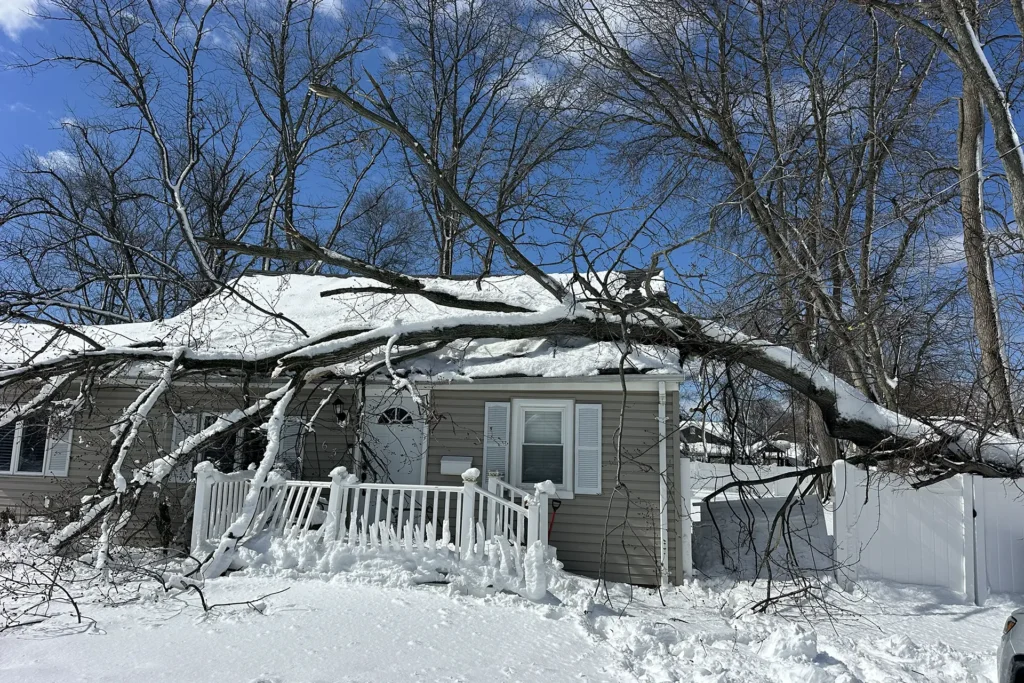
During the blizzard, a tree snapped in half and crashed through a home in Hightstown, New Jersey. Chris and Diane Pinelli were asleep in their bedroom when they heard a loud bang. It was the sound of a tree in their backyard cracking under wind and snow load.
Branches pierced the roof in multiple places. One of those points of impact was directly over their bed. The couple reported that the tree came through the exact spot where they had been sleeping. It missed them by inches.
I watched the footage. I have inspected similar damage over the years. What stands out is how suddenly these failures occur. There is no slow warning. No gradual collapse. It is instantaneous.
A tree that may have looked stable the day before can fail in seconds under the right combination of snow load, wind pressure, and compromised structure. In many of the homes we have serviced this week, the owners said the same thing. They did not think the tree was that bad.
Tree risk mitigation exists for this exact reason. We assess branch unions, look for decay columns, evaluate canopy density, and examine root stability. These inspections are not cosmetic. They are life safety evaluations.
The Elderly Are Scared and They Have Reason to Be
In the past week, we have received a significant number of calls from elderly homeowners. Many of them live in homes surrounded by large, mature trees planted decades ago. They are frightened. They hear cracking sounds at night. They see limbs hanging over roofs. They worry about power lines.
That fear is not irrational.
Older trees often contain internal decay that is not visible from the outside. Cavities, fungal infections, and past storm wounds weaken structural integrity. When a record breaking blizzard strikes, those hidden weaknesses are exposed.
We performed several certified arborist consultations this week for homeowners who simply wanted peace of mind. In some cases, we recommended selective pruning and canopy reduction to reduce weight and wind resistance. In others, we recommended tree risk mitigation strategies such as cabling or bracing. In more severe cases, emergency tree removal services were necessary to eliminate immediate hazards.
The cost of proactive evaluation is small compared to the cost of a roof replacement, insurance dispute, or medical emergency.
Emergency Tree Removal Is Surging for a Reason
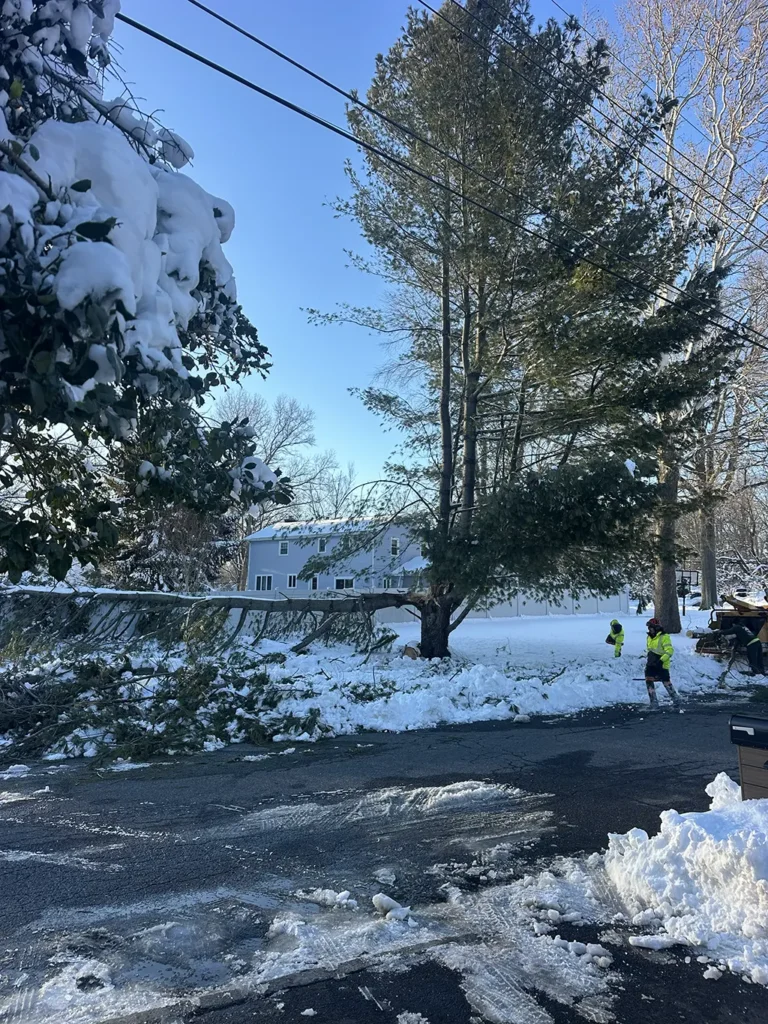
We have removed trees that fell onto homes. We have cleared trees that crushed vehicles. We have handled damaged in place trees where trunks split but remained partially upright, posing imminent risk of secondary collapse.
Emergency tree removal services are not routine removals. They require careful planning, controlled dismantling, and attention to surrounding structures. When a tree has already compromised a roof or is leaning dangerously, time matters.
Waiting even a few days in saturated conditions can allow further root movement. A leaning tree today can become a full collapse tomorrow.
If you see any of the following, you need immediate evaluation:
A tree that has shifted or is leaning more than before
Soil heaving or cracking near the base of a trunk
Large limbs hanging but not fully detached
Visible trunk splits or long vertical cracks
Trees contacting power lines
These are not cosmetic issues. They are structural failures in progress.
Tree Risk Evaluation: What We Look For After a Storm
A proper tree risk evaluation after a major snow and wind event involves more than a visual glance.
We examine canopy structure for overloaded limbs and weak branch attachments. We inspect trunks for fresh cracks, especially long vertical splits that indicate internal stress. We evaluate root zones for soil displacement and saturation.
We also assess species specific vulnerabilities. Certain trees handle snow load better than others. Some are prone to brittle fracture in extreme cold. Others are more susceptible to root instability in wet soil.
As a Certified Arborist, I rely on years of field observation combined with formal training. Each tree is an individual organism. Age, prior pruning practices, soil conditions, and exposure all influence risk.
A general health assessment provides a roadmap. It identifies trees that can be preserved with corrective pruning, those that need structural support, and those that represent unacceptable risk.
This Is Not the Last Snowfall
Forecasters have already indicated that this may not be the last significant snowfall of the season. March activity remains possible.
That means compromised trees could face additional load. A branch already stressed by the February blizzard may not survive another event. A root system loosened by melt may fail under renewed saturation.
Proactive tree risk mitigation now reduces exposure later. Strategic pruning to reduce canopy weight, removal of structurally unsound trees, and reinforcement of vulnerable specimens all improve resilience.
Storm preparation is not something done only in fall. After a historic winter event, it becomes an urgent necessity.
The Imminent Danger of Doing Nothing
The most dangerous assumption a homeowner can make right now is that because their tree did not fall during the blizzard, it is safe.
Structural compromise is often delayed in its consequences. Micro fractures expand. Saturated soil erodes. Weakened branch unions fail under minor stress.
Every day we are seeing trees that survived the initial storm but collapsed during the thaw.
When a tree falls on a home, the damage extends beyond wood and shingles. It affects insurance claims, temporary housing, family safety, and emotional well being. In the Hightstown case, inches determined the difference between property damage and tragedy.
This is why we emphasize certified arborist consultations and thorough evaluations. Not every tree needs to be removed. But every questionable tree needs to be assessed.
Evaluate Today To Be Prapared For Tomorrow.
From swift removals to future storm proffing, Hufnagel Tree Service delivers expert solutions backed by decades of experience. We offer certified insight, fair pricing, and a commitment to doing what’s best for your trees.
Protect Your Property Before the Next Failure

If you have large trees near your home, garage, vehicles, or power lines, now is the time for action.
Tree risk evaluation can identify hazards before they become emergencies. Tree risk mitigation can reduce canopy load and wind resistance. Emergency tree removal services are available for trees that have already failed or are at imminent risk of collapse.
We also provide comprehensive general health assessments to determine long term stability and vitality. Healthy trees are resilient. Compromised trees are liabilities.
Winter Storm Hernando exposed weaknesses across New Jersey. The combination of heavy snow, extreme cold, high winds, and saturated soil has created a volatile environment for trees.
Do not wait for a loud bang in the middle of the night to tell you something was wrong. Have your trees inspected. Address risks now. Protect your home and your family before the next weather event tests what is already weakened.
Call 732-291-4444 to schedule service today!
Learn More About Our Services
Related Articles
Tree Pruning in Marlboro: Tree Service for Mature Trees
Why Late Winter Beats Spring for Tree Service