Contents
a humid summer afternoon can turn into a dangerous thunderstorm with very little warning.
The July 3, 2026 line of storms left Monmouth County among New Jersey’s hardest hit areas for outages, and Middletown was listed among the affected communities. Local follow up reporting and regional storm coverage described downed trees and broken utility poles. A July 22 National Weather Service briefing again warned that frequent cloud to ground lightning and damaging winds could produce tree damage and power outages.
For property owners from Lincroft and Oak Hill to Navesink, Locust, Belford, Leonardo, Port Monmouth, and North Middletown, that storm pattern raises an important question: what happens when lightning strikes a tree? The answer is not always obvious. Some trees lose bark or split immediately. Others remain green for days while serious injuries continue inside the trunk, roots, or crown.
At Hufnagel Tree Service, we bring more than 25 years of Monmouth County experience to lightning damage inspections, tree risk evaluations, restoration pruning, and removal decisions. Our certified arborist looks beyond the scar to determine whether the tree can recover safely. This guide explains why summer lightning reaches certain Middletown trees, what damage to watch for, and when professional tree service should not wait.
Why Summer Lightning Puts Middletown Trees at Risk
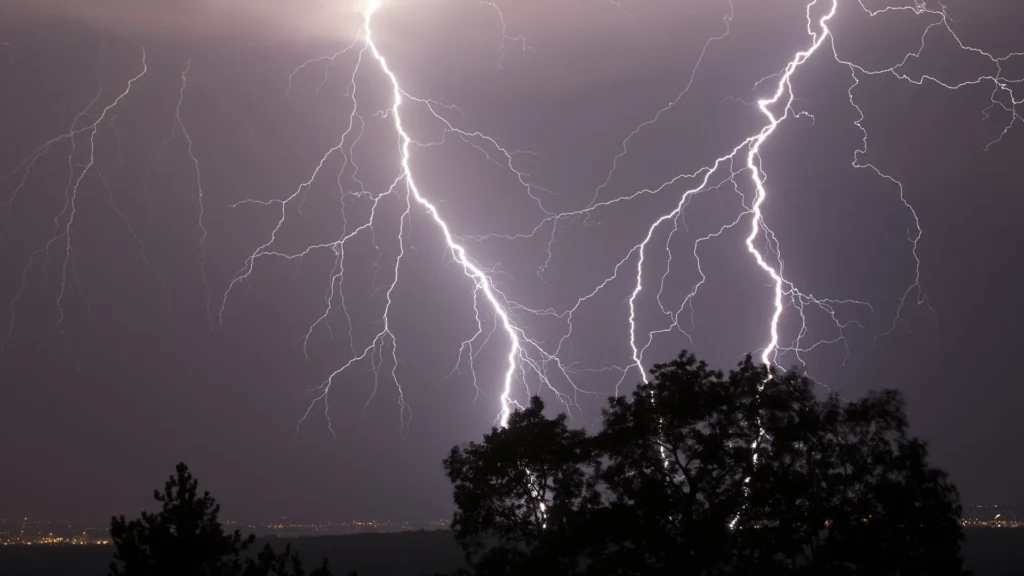
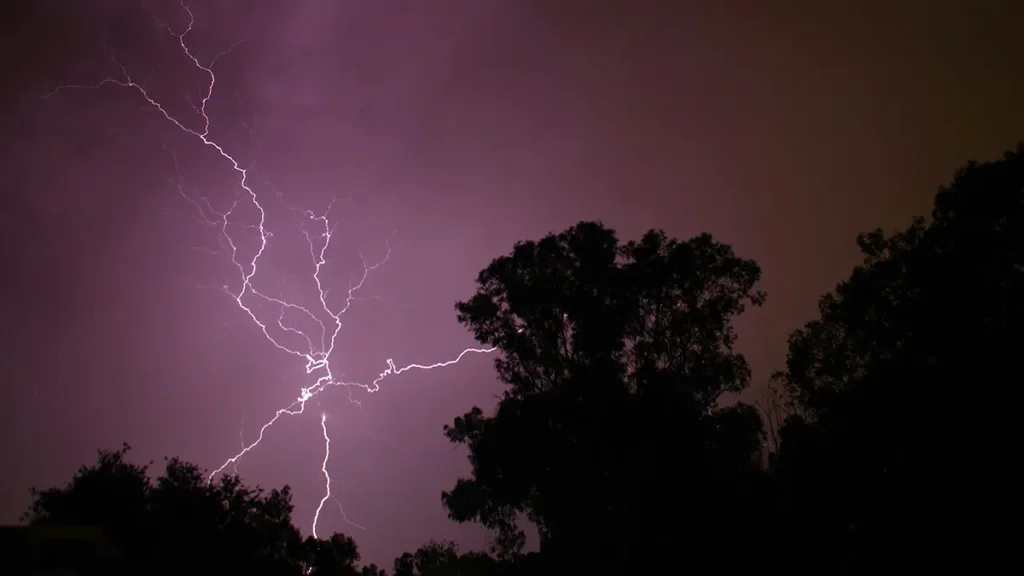
Lightning does not choose a tree because of species alone. A thunderstorm develops powerful differences in electrical charge, and cloud to ground lightning completes a path between the storm and the earth. Taller, exposed objects are more likely to become part of that path, which is why a mature tree standing above nearby roofs or surrounding canopies deserves attention during summer weather.
Middletown has many sites where exposure is increased. Hartshorne Woods rises above the Navesink River near some of the highest coastal elevations in the region, while Huber Woods, shore facing neighborhoods, and open lawns place mature crowns above their surroundings. Trees on ridges, slopes, waterfront lots, and broad corner properties often receive more wind and stand more prominently than protected understory trees.
Our local canopy includes many tall oaks, tulip poplars, maples, pines, hickories, and beeches. Rutgers notes that the northern red oak, New Jersey’s state tree, commonly grows into a substantial mature tree. Species alone does not predict a strike, but height, crown spread, nearby structures, terrain, and the tree’s position all affect the consequence if a strike occurs.
Trees already stressed by compacted soil, buried root flares, drought, decay, or prior storm damage have less reserve for recovery. Summer heat increases water demand at the same time thunderstorms can injure the tissue that moves water through the tree. A strike can therefore turn a manageable health problem into a structural and physiological emergency.
Michael Hufnagel puts it this way: “The tallest tree gets the attention, but height is only part of the risk. We also look at what is under the crown, how the roots are holding, and whether the tree was already under stress before the storm.” That wider view is essential before judging the damage.
Local conditions that can raise lightning exposure
- A mature tree standing alone above an open lawn
- A tall crown on a ridge, slope, or shore facing property
- A tree close to a home, pool, driveway, utility line, or busy play area
- An older specimen with prior decay, root stress, weak unions, or storm damage
Knowing where a strike is most likely helps with prevention and monitoring. The next step is understanding what the electrical energy can do once it enters living wood.
What Lightning Damage Does Inside a Tree
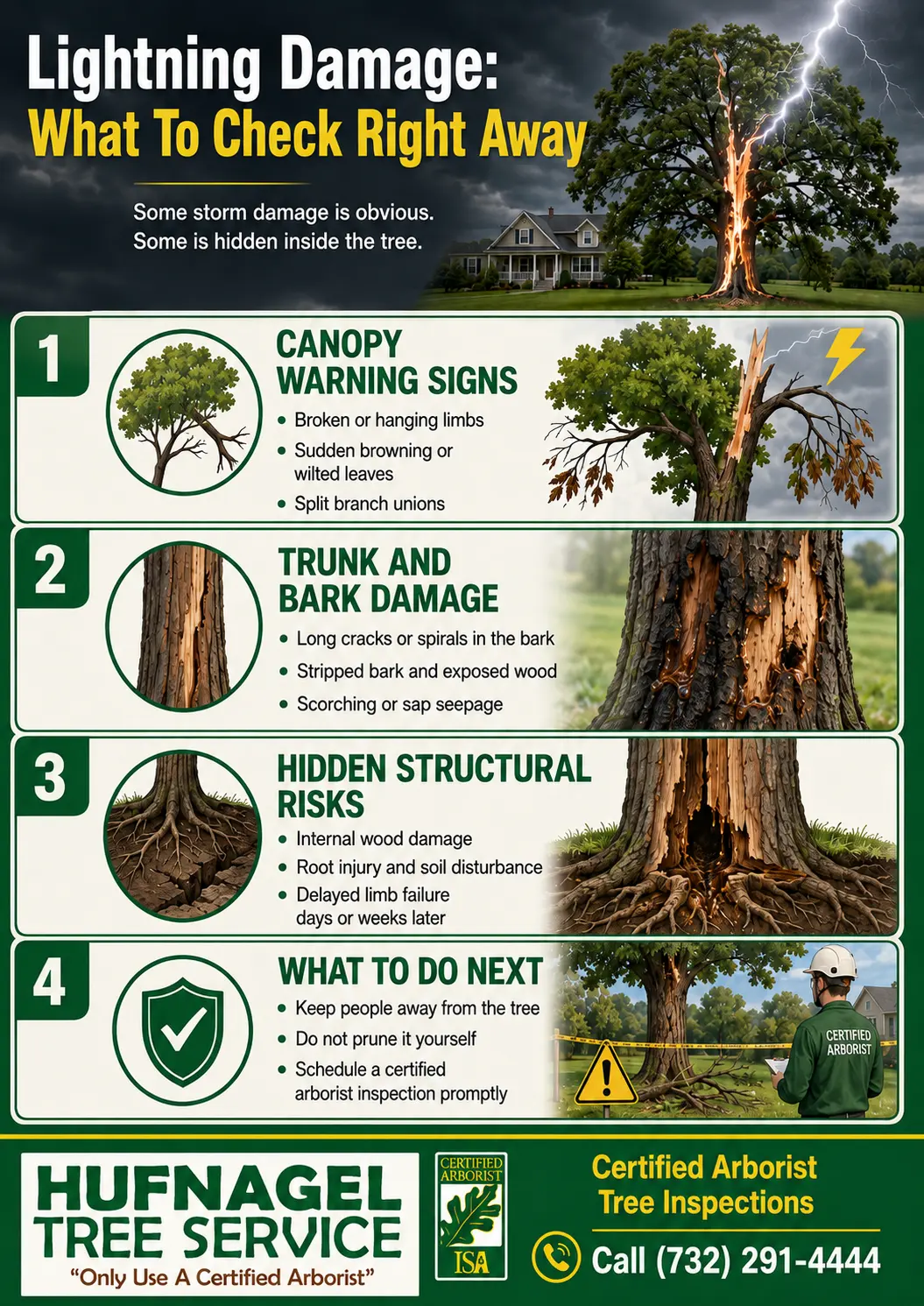
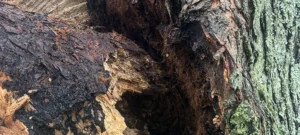
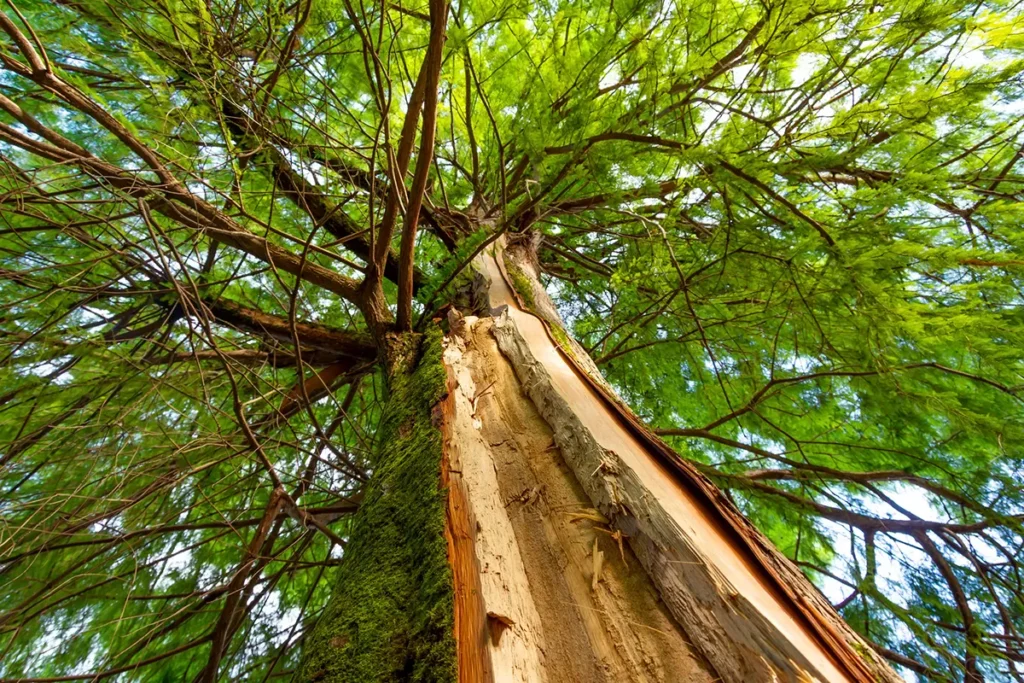
Lightning moves fast, but the injury it creates can be extensive. NOAA explains that a lightning channel heats the surrounding air to extreme temperatures. Inside a tree, the rapid heating of water in sapwood and other tissues can create expanding steam. That pressure may split wood, throw bark away from the trunk, shatter a leader, or open a long vertical wound.
A dramatic bark strip is only one pattern. Some Middletown trees show a narrow line of discolored tissue, a spiral scar, a cracked branch union, or a blown out section near the base. Others show very little at first because the electrical path moved through internal moisture, roots, or damp soil without producing a large external wound.
The most important living layer sits just beneath the bark. When that tissue is damaged around a significant part of the trunk, the tree may lose its ability to move water and nutrients or seal off infection. A crown can remain green temporarily because leaves still contain moisture, even while the tree’s circulation and defenses have been badly reduced.
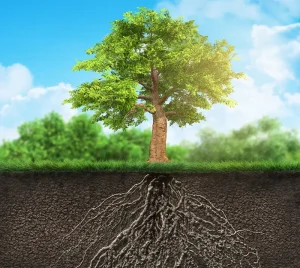
Root injury is especially easy to miss. A strike can travel down the trunk and spread through the root system or surrounding ground. Heavy summer rain may then soften the soil, and strong wind may test a root plate that no longer has full strength. This combination can increase failure risk even when the canopy looks mostly intact.
Michael Hufnagel says, “A lightning strike is not just a bark injury. The energy can travel through the trunk and into the root system before a homeowner sees the full problem.” That is why our post storm inspection follows the path from the highest damaged branch to the trunk flare and the target area around the tree.
Damage patterns our arborist connects during an inspection
- Fresh bark loss, scorching, or a long vertical crack
- A shattered leader, broken branch union, or hanging limb
- Soil heaving, root flare injury, or a new lean
- Crown sections that wilt, thin, discolor, or stop growing
- Seepage, loose bark, fungal growth, or insect activity near the wound
The visible scar starts the investigation, but weather and biology determine what happens next. Homeowners should also watch for delayed changes after the sky clears.
Signs a Lightning Struck Tree Needs Fast Attention
The first concern after a nearby strike is safety. Do not walk beneath hanging limbs, touch a damaged tree near wires, or begin cleanup while thunder is still present. The CDC, Ready.gov, and the National Weather Service direct people to move into a substantial building or hard topped vehicle when thunder is heard. If lines are down, keep away and contact emergency services. New Jersey households can also use NJDEP Weather Ready resources to follow state preparedness guidance.
Once conditions are safe, look from a distance. Photograph the trunk, crown, root flare, surrounding soil, and any debris on the ground. Note when the strike or loud crack occurred. Restrict access to patios, parking spaces, play areas, and walkways beneath the tree until a professional has evaluated broken wood and the remaining structure.
Some warning signs appear over the next several days or weeks. Leaves may wilt on one side, branch tips may die back, or a section of crown may turn color early. New cracks can open as wood dries. Bark may loosen. Pines may produce heavy resin. Stressed trees can also become more vulnerable to insects, decay organisms, and additional summer heat.
Do not coat the wound with paint, fill a crack, or remove large limbs without a plan. Poor cuts add stress and can erase evidence needed for diagnosis. A damaged tree may need selective pruning, water management, soil care, support, monitoring, or removal. The right response depends on how much living and structural tissue remains functional.
As Michael Hufnagel explains, “The loud crack gets attention, but the quiet damage that appears two weeks later is what people often miss.” We recommend prompt inspection after an obvious strike, followed by monitoring when the tree is retained. Summer growth can reveal whether the crown is recovering or losing capacity.
Conditions that should move an inspection to the top of the list
- A trunk split, new lean, or major root movement
- Broken wood suspended over a home, roadway, pool, or play space
- Damage touching utility lines or service wires
- Bark loss that extends around a large portion of the trunk
- Sudden leaf wilt, crown thinning, or branch death after the storm
Early inspection protects people and gives a retainable tree the best chance to recover. The final decision must balance preservation, structural safety, and the targets beneath the canopy.
Tree Service Decisions After a Lightning Strike
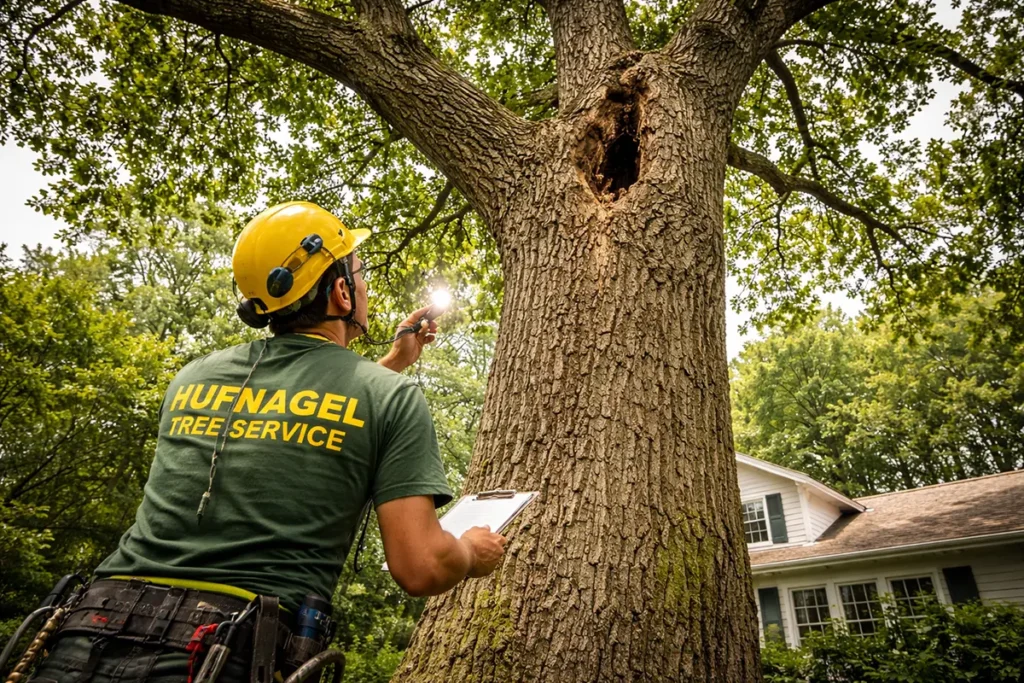
A qualified tree service in Middletown NJ should not decide from one scar or one photograph. We evaluate species, age, crown condition, trunk damage, root stability, existing decay, lean, branch architecture, and the area the tree could strike. We also consider whether the tree has enough healthy tissue and structural capacity to remain safely in place.
When preservation is reasonable, our work may include removing shattered or hanging branches, reducing specific damaged limbs, improving clearance, and correcting hazards without stripping the crown. We avoid unnecessary pruning because foliage helps the tree produce energy for recovery. Proper watering and a modest mulch ring can support roots, provided mulch stays away from the trunk and root flare.
Restored trees need a monitoring schedule. We may recheck crown density, wound response, branch stability, and soil conditions after the remaining summer growth and during the next growing season. A support system may be appropriate for a separate structural issue, but hardware does not repair dead tissue. Every recommendation must address the actual defect rather than create a false sense of security.
Removal becomes the responsible choice when lightning has caused catastrophic trunk separation, severe root plate damage, extensive crown loss, or a defect that gives the tree an unacceptable chance of failure. A tree beside a bedroom, driveway, school route, pool, or utility corridor allows less tolerance for uncertainty than the same defect in an isolated woodland setting.
For an exceptional high value tree with strong structure and significant exposure, a professionally designed lightning protection system may be worth discussing before the next storm season. These systems are specialized and require proper installation and inspection. Michael Hufnagel says, “Our first goal is preservation when the tree can be retained safely. When it cannot, we explain why and remove the risk before the next storm.”
How we match the response to the actual level of risk
- Preserve when the trunk, roots, and main crown remain structurally reliable
- Prune only damaged or risk related wood that needs attention
- Support recovery with correct watering, mulch, and follow up inspections
- Remove a tree when damage creates an unacceptable threat to people or property
- Discuss lightning protection only for suitable, valuable, exposed specimens
A clear plan may involve restoration, scheduled monitoring, or removal. What matters is making that decision before another summer storm tests the same damaged tree.
Call Hufnagel Tree Service for Lightning Damaged Trees in Middletown NJ
If you heard a strike near your Middletown property, see fresh bark loss, or notice a canopy changing after this summer’s storms, do not wait for the next warning. Hufnagel Tree Service provides certified arborist inspections and practical recommendations throughout Lincroft, Navesink, Locust, Belford, Leonardo, Port Monmouth, North Middletown, New Monmouth, River Plaza, Chapel Hill, and Oak Hill.
We have served Monmouth County for more than 25 years and have earned more than 200 five star Google reviews by giving property owners direct answers. We look for every reasonable way to preserve a tree, and we recommend removal when the structure or location makes continued retention unsafe. Our local experience helps us recognize how summer heat, shore exposure, saturated soil, and repeated storms affect Middletown trees.
Call Hufnagel Tree Service at (732) 291-4444 now to schedule an inspection for a lightning damaged or storm damaged tree. When a mature tree stands near your home, wires, vehicles, or family gathering areas, only use a certified arborist to decide what comes next.
Schedule Service Now!
From precision pruning and safe removals to health assessments and preventative care, Hufnagel Tree Service delivers expert solutions backed by decades of experience. We offer certified insight, fair pricing, and a commitment to doing what’s best for your landscape.
Learn More About Our Services
Related Articles
Vines and Tree Health: Hidden Risks to Mature Trees
Codominant Stems: When Multi Stem Trees Become Dangerous