Contents
Ice and Wet Snow Expose Structural Weakness Fast
In West Long Branch, winter tree problems usually show up after a storm, but they begin long before snow or ice sticks to the canopy. We have worked around residential neighborhoods near Monmouth University, Larchwood Avenue, and Cedar Avenue for decades, and we see the same pattern every year, trees with weak unions, dense crowns, or stressed root systems take on a heavy coastal snow and suddenly fail where families park, walk, and live. Protecting trees from snow and ice here means understanding how local exposure, species choice, and past pruning all combine under winter load.
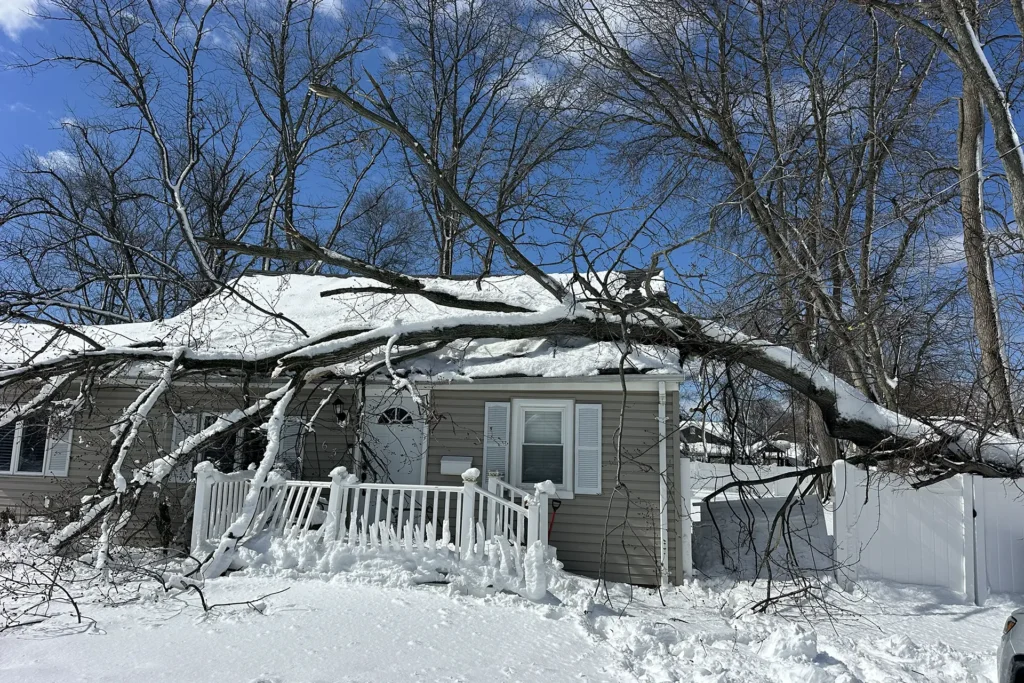
Snow by itself can be a problem, but ice makes every defect more serious. A thin glaze can turn flexible branches rigid, add concentrated weight, and magnify leverage on limbs that already have poor attachment. In West Long Branch, where winter storms can swing between sleet, rain, and wet snow, that combination is especially hard on broad canopies.
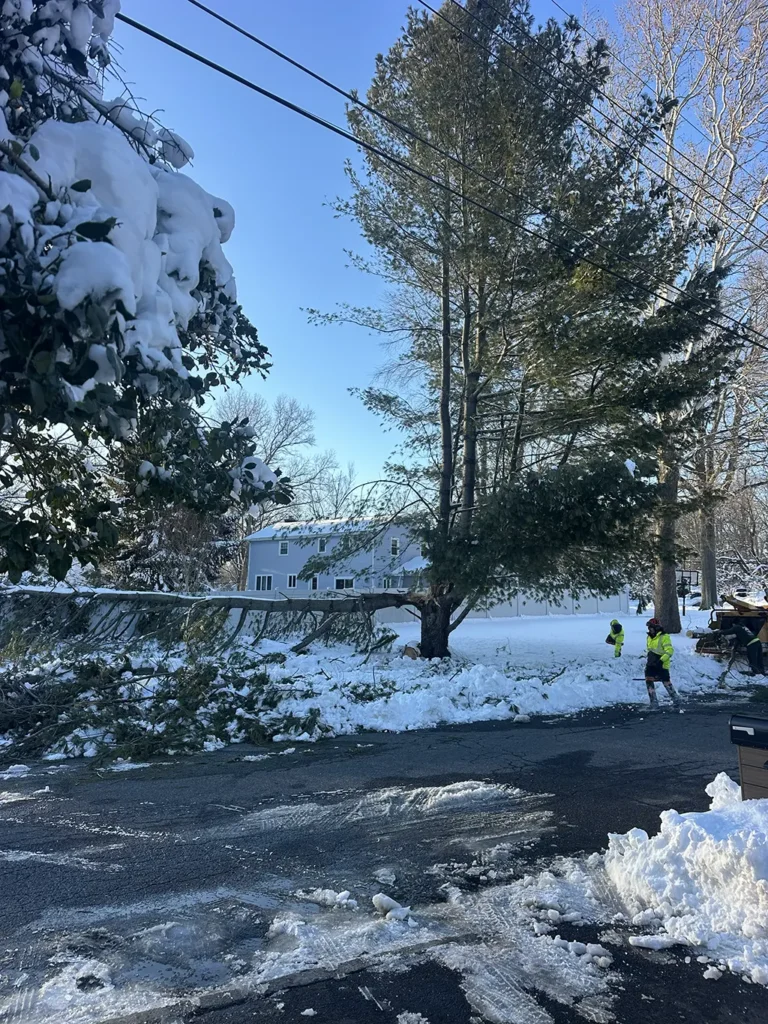
For homeowners, the risk is not just cosmetic. A split leader in a mature red maple near a front lawn or a failed evergreen branch over a driveway can interrupt access, damage vehicles, and create immediate safety hazards. Many of these failures occur in trees that looked fine to the untrained eye only days earlier.
Local conditions matter because West Long Branch sits in a transition zone. It still gets shore influence, but certain pockets hold snow differently than fully exposed beachfront areas. Open properties near athletic fields and campus edges often see stronger wind loading, while sheltered neighborhoods may hold heavier accumulation on dense crowns for longer periods.
We pay close attention to species behavior. Ornamental pears tend to split at narrow branch angles, mature pines can shed large sections under mixed precipitation, and overgrown arborvitae screens often peel open when ice binds the foliage together. Maples with included bark are another repeat concern in this area.
That is why the first step in winter protection is not guessing, it is identifying exactly where the tree is likely to fail when snow and ice start to build.
Our cold-season inspections in West Long Branch usually focus on these red flags:
- Narrow branch unions with visible included bark
- Dense evergreen screens carrying too much outer weight
- Limbs extending over garages, walkways, and campus-adjacent traffic areas
- Old storm damage or previous topping cuts creating weak regrowth
Once those defects are mapped out, the next job is reducing winter load intelligently so the tree keeps its shape without carrying unnecessary risk.
Targeted Pruning Does More Than Clean Up Appearance
Pruning for snow and ice protection is structural work. We are not simply making the tree look neater. We are redistributing weight, improving spacing, and reducing the long lever arms that turn a routine storm into a breakage event.
This helps property owners protect both the tree and the things around it. A well-pruned canopy can often spare a homeowner from emergency service, roof impact, fence damage, or the loss of a mature specimen that adds real value to the property. Preventive pruning is almost always more controlled and more cost-effective than post-storm removal.
In West Long Branch, pruning also has to respect site exposure and species response. Trees near open lawns or road corridors may need more attention to balance and sail reduction, while trees in tighter neighborhoods may benefit from selective thinning that keeps snow from settling unevenly in one part of the crown. The cuts have to fit the tree and the location.
We also look at age and history. Younger trees may need early structural pruning to prevent future codominant stems. Older trees may need end-weight reduction, deadwood removal, or crown restoration after years of improper work. Good arboriculture is cumulative, and winter resilience improves when pruning decisions are made with the tree’s next ten years in mind.
When pruning is done well, snow and ice have fewer weak points to exploit, and the tree can absorb winter conditions without sacrificing major limbs.
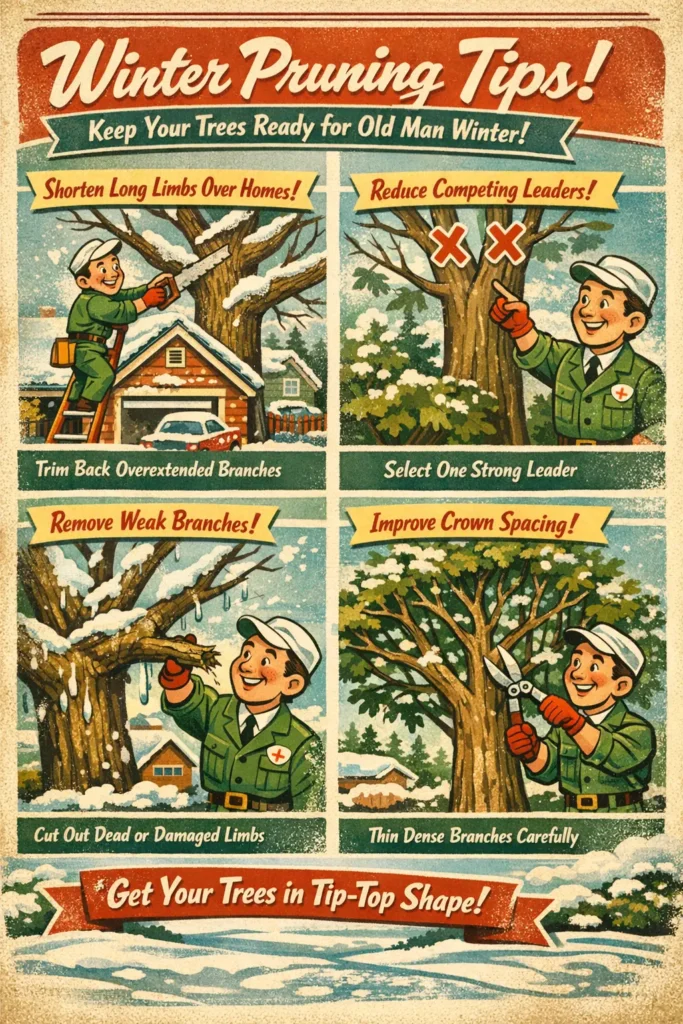
Practical winter pruning work often includes these steps:
- Shortening overextended limbs above driveways and homes
- Reducing one competing leader before the trunk union splits
- Removing cracked, dead, or rubbing branches that collect ice unevenly
- Improving crown spacing in dense maples, oaks, and ornamentals
Pruning is a major tool, but long-term snow and ice protection also depends on how healthy the tree is below the canopy and how the property is maintained through the season.
Healthy Trees Tolerate Winter Stress Better
A vigorous tree with a stable root zone has a better chance of absorbing winter stress without major decline. Trees that enter the cold season already weakened by drought, compaction, root injury, or salt exposure are less resilient and more likely to suffer breakage or fail to recover after a storm.
That matters on West Long Branch properties where lawn competition, driveway expansion, and repeated landscape traffic can quietly reduce root function over time. Homeowners often focus on what they can see in the canopy, but many winter problems start below grade where roots have been limited for years.
The local environment adds pressure. Freeze-thaw cycles, plowed snow, and deicing salts along neighborhood roads can all affect root health. Evergreens close to pavement are especially vulnerable because they already hold winter moisture in their foliage while their roots deal with salt and soil stress at the same time.
We often recommend a complete prevention approach, not just a pruning visit. Proper mulch rings, controlled salt use, pre-winter inspections, and realistic decisions about declining trees can all reduce the chance of sudden failure. In some cases, support systems such as cabling may be appropriate, but only when the tree structure and overall health justify it.
The better the tree enters winter, the more likely it is to come through snow and ice with minor cleanup instead of major loss.
For many West Long Branch properties, strong winter preparation includes:
- Scheduling arborist inspections before the first significant storm
- Mulching root zones to moderate moisture and temperature swings
- Keeping salt-heavy snow piles away from trunks and planting beds
- Removing or restoring hazardous trees before winter weather forces the issue
Protecting trees from snow and ice in West Long Branch is a matter of structure, health, and timing. With the right corrections made before the season peaks, homeowners can keep mature trees safer, stronger, and much less likely to become an emergency during the next storm cycle.

Long Branch's #1 Local Tree Doctors!

We are certified arborists with more than 25 years of hands-on experience caring for trees across Monmouth County, and our team has built a reputation on practical advice that protects people, property, and healthy trees. For expert help preventing snow damage in West Long Branch, call (732) 291-4444. Only Use A Certified Arborist!
Schedule Service Now!
From precision pruning and safe removals to health assessments and preventative care, Hufnagel Tree Service delivers expert solutions backed by decades of experience. We offer certified insight, fair pricing, and a commitment to doing what’s best for your landscape.
Learn More About Our Services
Related Articles
Tree Care in 55+ Communities: Safety, Liability, and Property Value
Snow Damage Prevention for Trees in Long Branch, NJ
Historic NJ Blizzard of 2026: Your Trees and Home are at Risk