Contents
Why Leyland Cypress Become Problems So Often
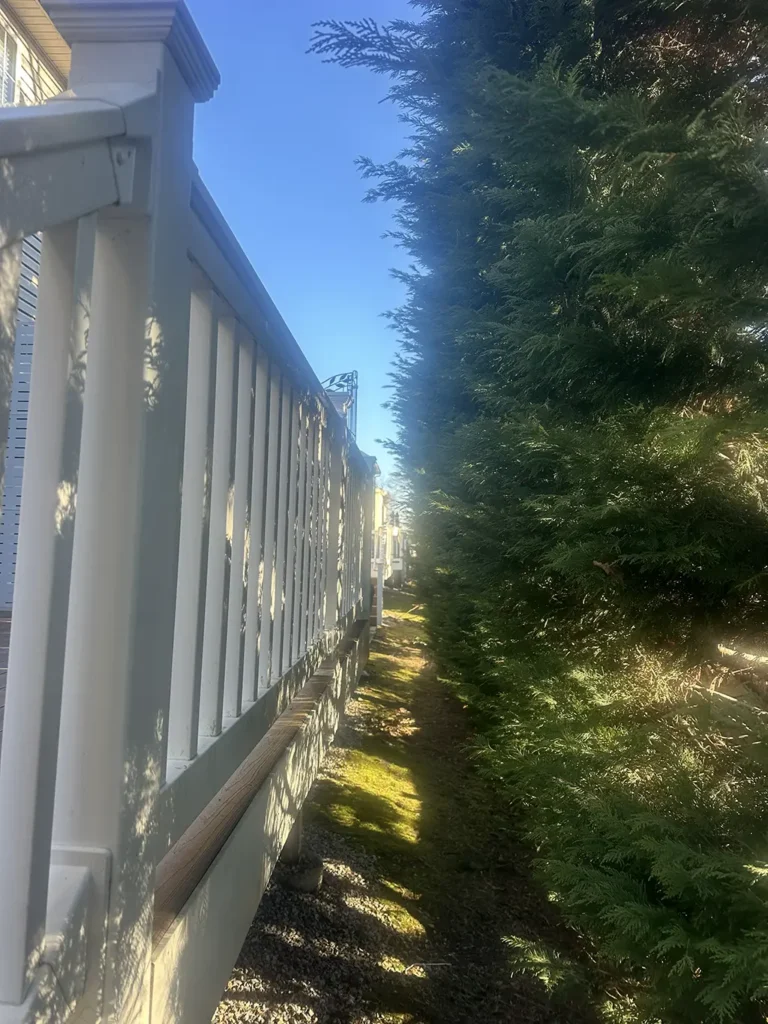
Leyland cypress grow fast, and that speed is exactly why they create trouble. Homeowners often install them too close together or too near fences, driveways, pools, and homes. Within a few years, the trees compete for light and air, the lower interior thins out, and the outer shell becomes a heavy, wind-catching wall of foliage.
For the property owner, that can turn a privacy screen into a maintenance burden. Oversized Leylands block access, crowd structures, drop out in sections, and become difficult to prune without leaving visible dead interior gaps. Once they reach a certain size, even basic maintenance becomes more expensive and more technically demanding.
New Jersey conditions add stress. Wet snow sticks heavily to dense evergreen foliage. Coastal wind pushes tall screens from one direction for years at a time. Inland freeze-thaw cycles and saturated soils can reduce stability. In Monmouth County especially, we also see salt exposure and summer drought weaken these trees before winter weather tests them.
From an arborist standpoint, Leyland cypress often fail because they were treated like a hedge instead of a tree. They are allowed to grow unchecked, they are topped badly when they get too tall, or they are sheared repeatedly in ways that trap weight on the outer canopy while leaving dead interior structure. That is not a sustainable long-term plan.
The earlier the growth pattern is corrected, the better the chance of keeping a Leyland screen functional without letting it become a hazard.
These are the most common Leyland cypress issues we see in New Jersey landscapes:
- Planting too close together, which creates overcrowding and poor airflow
- Rapid height growth that outpaces the space available on the property
- Heavy outer foliage that catches snow and wind like a sail
- Interior dieback that limits how much pruning can be done later
Once these trees begin to outgrow their design purpose, management has to shift from simple screening to active structural and health-based decision-making.
Pruning and Size Management Require a Real Strategy
Leyland cypress cannot be managed effectively with random cutting. Unlike many broadleaf trees, they do not recover well from aggressive reduction into dead interior wood. If cuts are made too deep, the tree may never fill back in, and the screen can end up looking patchy, burned out, or permanently misshapen.
That matters because homeowners usually plant Leylands for privacy, and once that dense exterior shell is compromised, the original value of the screen can disappear quickly. It is far better to start structural management early than to try rescuing a neglected row that is already too tall and too wide for the space.
Local site conditions influence what is realistic. A screen along an exposed property edge in coastal Monmouth County may need more width to remain stable, while a row planted between homes on a tighter inland lot may simply be in the wrong place if mature size was never considered. Drainage, prevailing wind, and distance from pavement all affect the long-term outcome.
We generally approach Leyland pruning with restraint. Selective reduction of competing tops, removal of dead sections, and gradual shaping can sometimes extend the useful life of the planting. But there is a point where repeated pruning becomes a holding action instead of a solution. At that stage, homeowners need a direct assessment of whether the screen is worth preserving.
Good Leyland management is about honest limits. These trees can sometimes be improved, but they cannot be forced into a scale or form they were never suited to hold.
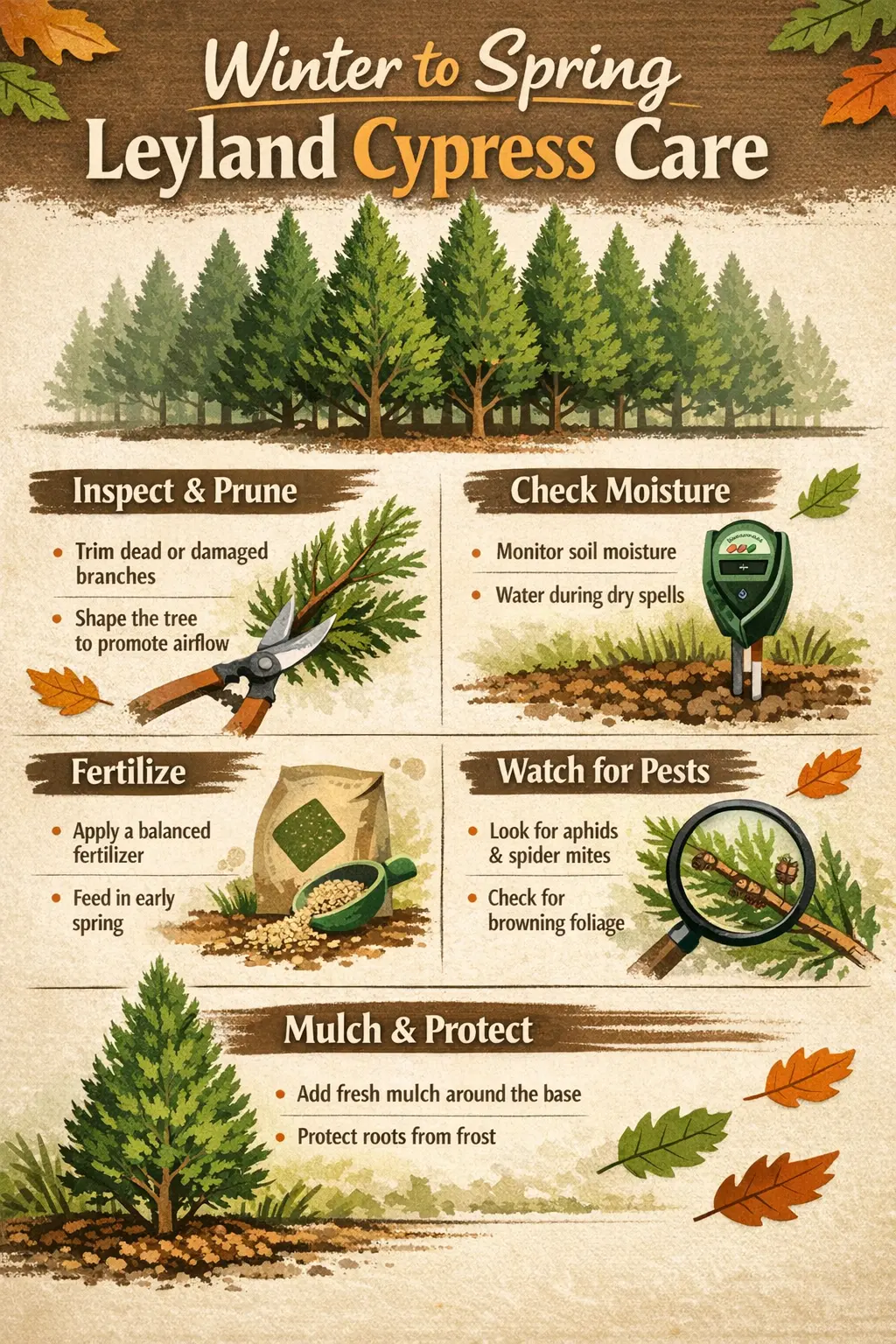
When a Leyland row is still manageable, the plan may include steps like:
- Selective size reduction before tops become unreasonably tall
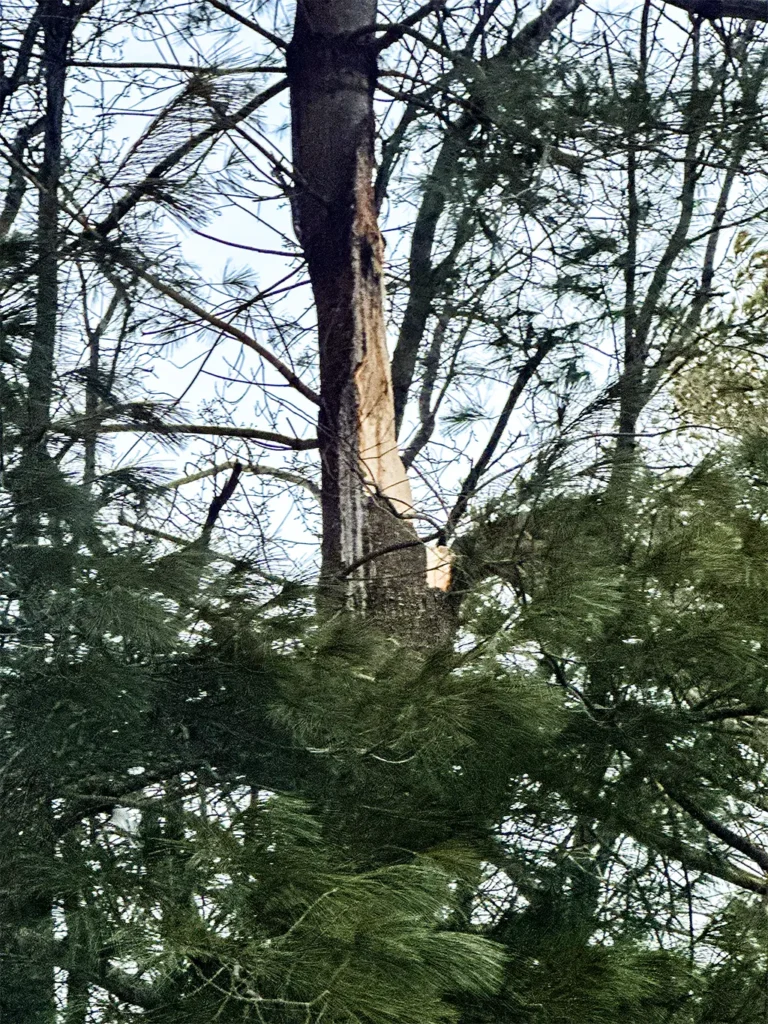
- Removal of dead, split, or storm-damaged leaders
- Improving airflow by addressing overcrowding between individual trees
- Phasing corrective work so the screen keeps as much function as possible
Pruning can buy time, but long-term success also depends on whether the trees remain healthy enough and structurally sound enough to justify continued maintenance.
Knowing When Restoration Stops Making Sense
Some Leyland cypress rows reach a stage where restoration is no longer practical. Root stress, widespread dieback, cankers, repeated storm breakage, and extreme overgrowth can leave the trees unstable and unattractive at the same time. In those cases, homeowners often spend money repeatedly without solving the underlying problem.
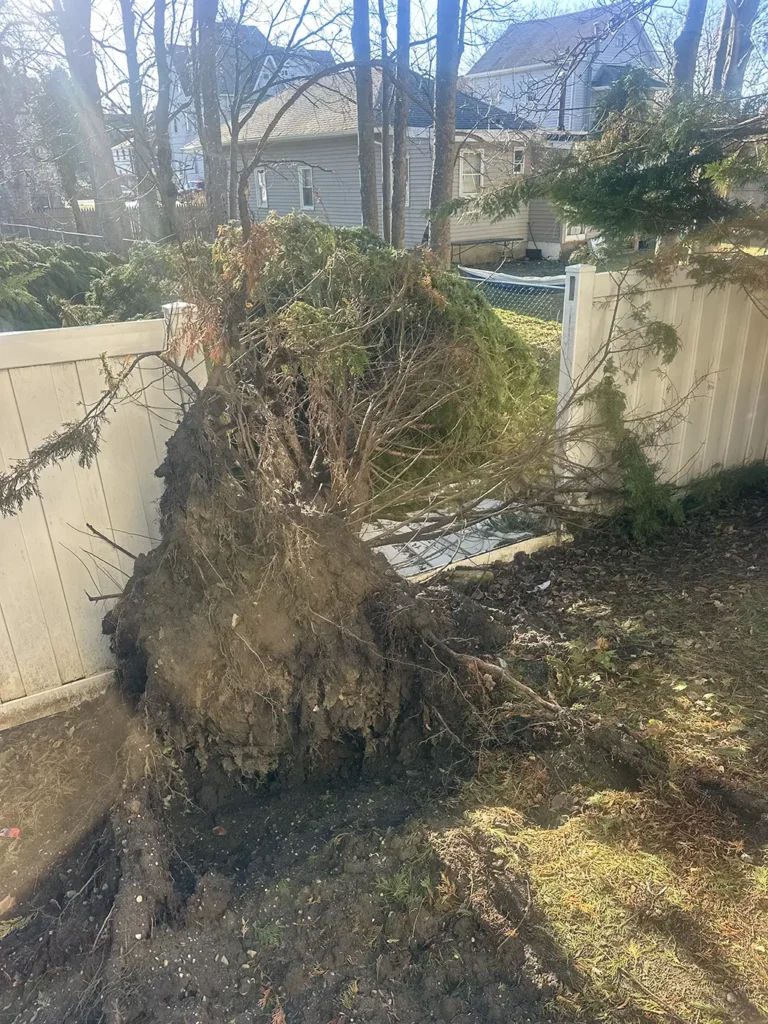
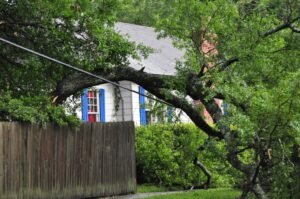
This matters because large Leylands can become serious liabilities. When they lean, split, or uproot, they often hit fences, sheds, power lines, and neighboring property. Their dense canopy and shallow root tendencies can make failure sudden once the structure is compromised. Waiting for visible collapse is rarely the right strategy.
Across New Jersey, and especially in shore-influenced parts of Monmouth County, we see Leylands decline after sequences of wet weather, drought, salt stress, and winter loading. Homeowners are often surprised that a tree which grew so aggressively can deteriorate so quickly, but fast growth does not always equal long-term durability.
We help property owners compare the real options. Sometimes selective removal within a screen can stabilize the rest temporarily. Sometimes replacement planning is smarter than continued pruning. In many cases, a mixed-species privacy planting offers a much better long-term result than trying to force an aging Leyland row to keep performing indefinitely.
The best decision is usually the one that balances privacy, cost, safety, and the realistic future of the planting, not just the look of the trees this season.
Signs that a Leyland cypress screen may be nearing the end of its useful life include:
- Large dead interior sections and thinning that will not recover
- Repeated limb or top failures after snow, wind, or saturated soil
- Cankers, disease symptoms, or stress decline across multiple trees
- Height and width that can no longer be managed without severe cutting
Leyland cypress can still have a role in New Jersey landscapes, but only when they are placed correctly and managed with realistic expectations. Once they become oversized, stressed, or structurally unsound, decisive arborist guidance is the difference between a functional screen and an expensive problem that keeps getting worse.

Next-Level Care For Your Leyland Cypress Trees Is One Call Away!

We are certified arborists with more than 25 years of experience helping Monmouth County homeowners make smart decisions about difficult trees and overgrown screens. If you need expert help managing Leyland cypress on your property, call (732) 291-4444. Only Use A Certified Arborist!
Schedule Service Now!
From precision pruning and safe removals to health assessments and preventative care, Hufnagel Tree Service delivers expert solutions backed by decades of experience. We offer certified insight, fair pricing, and a commitment to doing what’s best for your landscape.
Learn More About Our Services
Related Articles
Protecting Trees from Snow and Ice in West Long Branch, NJ
Historic NJ Blizzard of 2026: Your Trees and Home are at Risk