Tree Service in Laurence Harbor & Cliffwood Beach NJ: Coastal Tree Care by a Certified Arborist
Laurence Harbor and Cliffwood Beach homeowners face unique coastal tree challenges caused by salt air, wind exposure, and frequent storms. Our certified arborists provide specialized pruning, risk mitigation, and preservation services designed specifically for shoreline and bay-adjacent properties in this part of Monmouth County.
Share This Article
In This Article ...
COASTAL LIVING
Coastal Tree Care for Laurence Harbor and Cliffwood Beach Homes
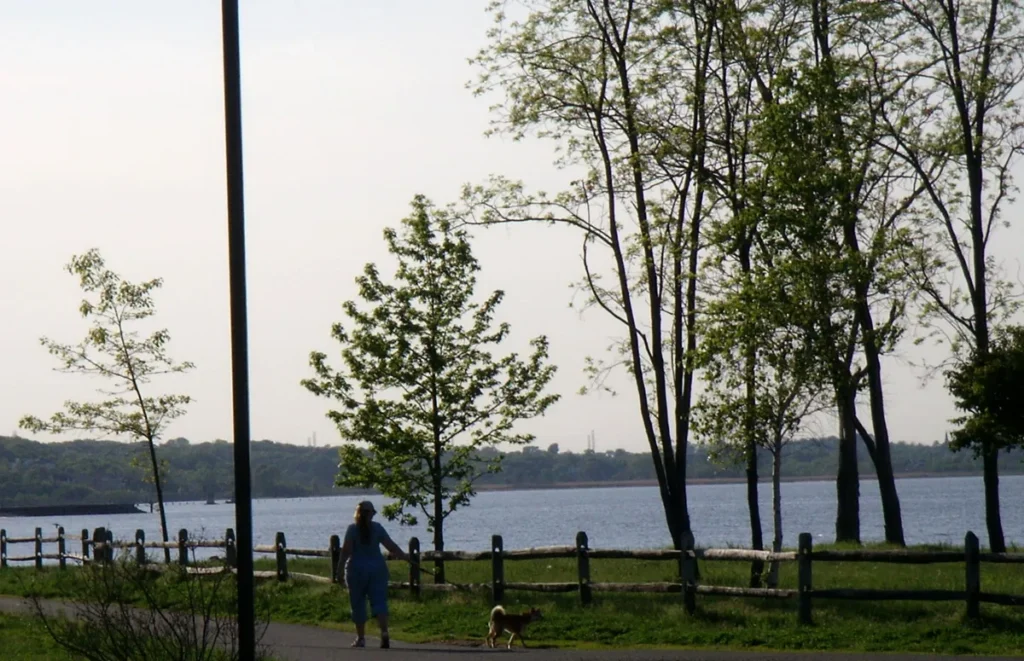
Laurence Harbor and Cliffwood Beach are defined by their proximity to the Raritan Bay, waterfront neighborhoods, and open exposure to coastal weather patterns. Trees in these areas experience daily environmental stress that is very different from inland Monmouth County towns. Salt carried on the wind, persistent breezes, and soils influenced by tidal moisture all shape how trees grow and decline over time.
We have cared for trees throughout Laurence Harbor and Cliffwood Beach for decades, and we see the same issues repeat year after year. Trees that look stable in calm weather may be slowly weakening beneath the surface. Coastal stress rarely causes sudden decline, but it steadily compromises structure, branch strength, and root systems.
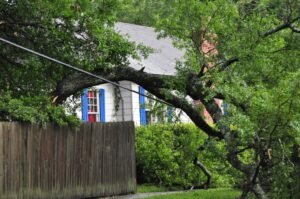
Homes in these neighborhoods are often built close to mature trees. Branches extend over roofs, driveways, decks, and waterfront structures. When trees are not managed properly, even minor failures can cause expensive damage. Certified arborist care is essential in shoreline communities where safety and preservation must be balanced carefully.
Our approach focuses on preventative care. We identify early warning signs, address structural concerns, and help homeowners maintain healthy trees that can withstand coastal conditions. This long-term mindset protects both property and the natural character of Laurence Harbor and Cliffwood Beach.
When evaluating coastal properties, we consistently focus on the following conditions:
Salt exposure affecting foliage and soil chemistry
Constant wind shaping canopy growth
Soil saturation and root stability near the bay
Tree proximity to homes and outdoor living spaces
Once these factors are understood, we can address the most common source of decline in coastal trees, salt and wind stress.
TREE STRESSORS
Salt Air and Wind Stress on Shoreline Trees
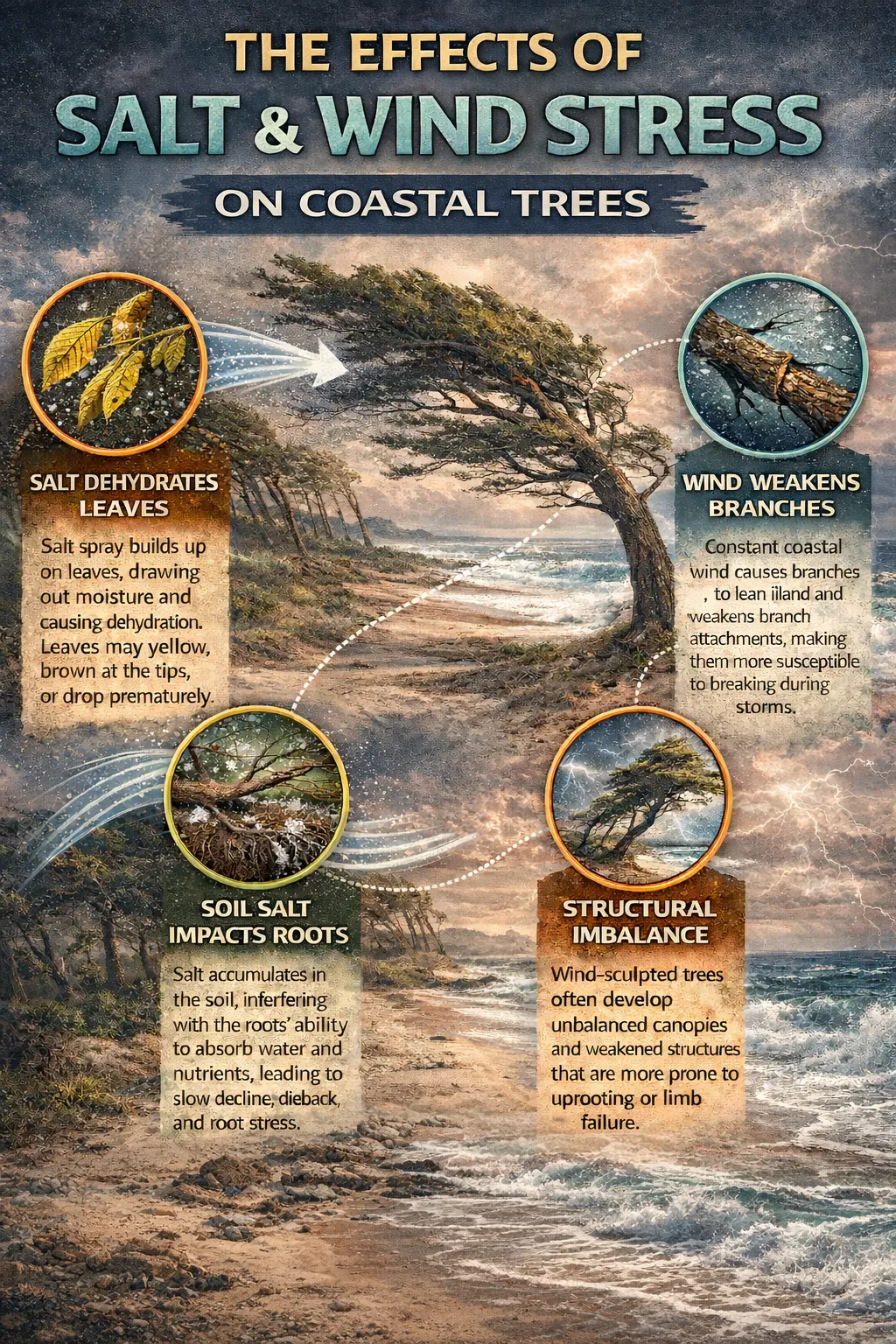
Salt exposure is one of the most damaging and least understood factors affecting coastal trees. Salt particles settle on leaves and soil, drawing moisture out of plant tissue and disrupting nutrient uptake. Over time, trees respond with thinning canopies, dieback, and reduced vigor, even when watering and fertilization appear adequate.
Wind compounds this stress. Trees in Laurence Harbor and Cliffwood Beach experience steady directional wind that influences how branches develop. This often leads to unbalanced canopies and weak branch attachments that fail during storms. These problems develop slowly and are often missed during casual inspections.
Structural pruning plays a critical role in correcting wind-related stress. By reducing canopy weight and improving branch distribution, we help trees adapt to their environment instead of fighting against it. This type of pruning requires precision and restraint, especially near homes and waterfront properties.
Ignoring salt and wind stress allows decline to accelerate each season. Early intervention preserves tree health and prevents costly failures later.
Our arborist-led pruning addresses the following coastal issues:
Excess canopy weight that increases wind load
Weak branch unions caused by uneven growth
Salt-damaged foliage and dieback
Long-term structural imbalance
Reducing environmental stress strengthens trees, but storms remain the most immediate threat to shoreline properties.
PREVENT DISASTER
Storm Damage Prevention and Structural Pruning
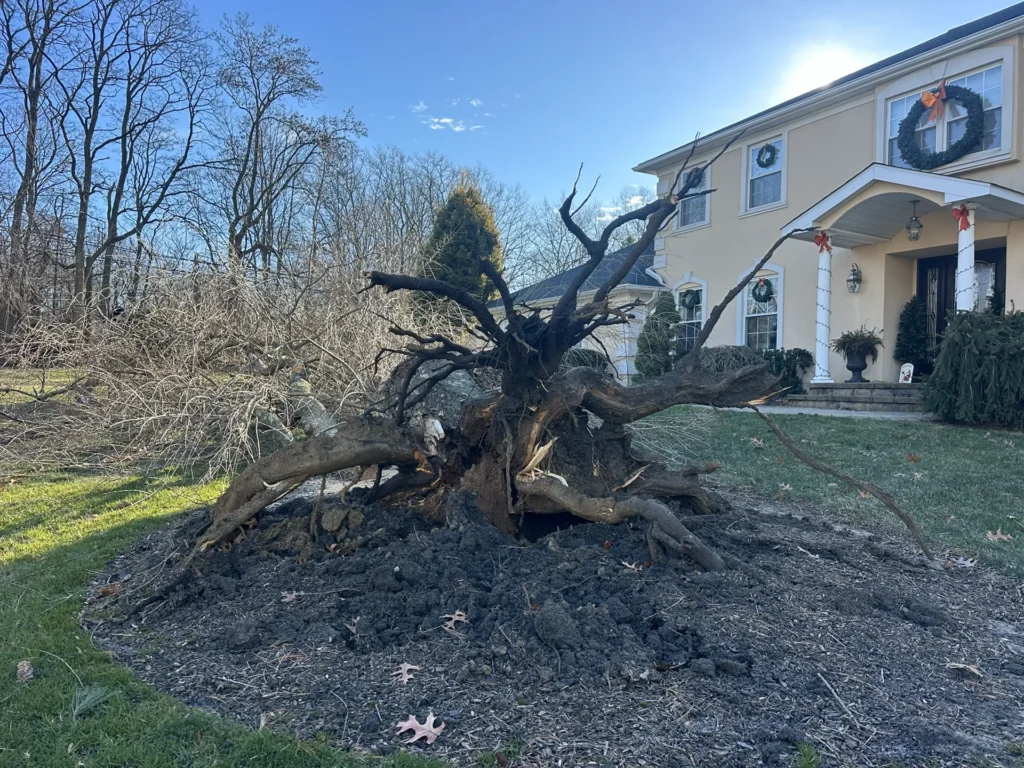
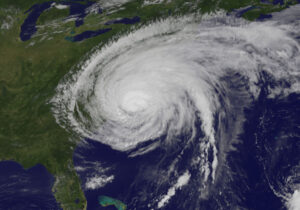
Coastal storms bring a combination of high winds, heavy rain, and saturated soil that creates ideal conditions for tree failure. In Laurence Harbor and Cliffwood Beach, storm damage often results from long-standing structural issues that were never addressed.
Storm damage prevention begins with proper structural pruning. Removing dead, weakened, or overextended limbs reduces the likelihood of failure during severe weather. Canopy thinning also decreases wind resistance, allowing air to move through the tree instead of pushing against it.
We also evaluate how soil conditions affect root stability. Trees near the bay often experience fluctuating moisture levels that weaken anchoring roots. When wind and wet soil combine, even healthy trees can fail if they are not properly managed.
Preventative care is always less disruptive than emergency response. Homeowners who invest in storm preparation avoid dangerous situations and costly cleanups.
Storm preparedness focuses on:
Reducing limb failure risk
Improving canopy airflow
Identifying hidden structural weaknesses
Protecting homes and nearby structures
Once storm risks are reduced, we turn our attention to formal tree risk mitigation.
ARE YOUR TREES SAFE?
Tree Risk Mitigation Near Homes and Waterfront Structures
Tree risk mitigation evaluates both the likelihood of failure and the potential consequences if failure occurs. In coastal neighborhoods, this analysis is critical because trees are often close to homes, docks, fences, and outdoor spaces.
Our certified arborists assess tree condition, growth patterns, decay indicators, and surrounding targets. This allows us to prioritize actions that improve safety without unnecessary removal. Many risks can be managed through targeted pruning and monitoring.
We avoid fear-based recommendations. Instead, we provide clear explanations so homeowners can make informed decisions. When a tree can be preserved safely, that is always our preference.
Effective risk mitigation includes:
Evaluating limb weight over structures
Monitoring trees with previous storm damage
Managing trees with compromised root systems
Recommending removal only when necessary
Preserving trees whenever possible leads naturally into selective removal practices when safety demands it.
SAVE VS. REMOVE
Preservation and Selective Tree Removal in Coastal Settings
Trees provide critical wind buffering and privacy in shoreline communities. Removing trees without careful planning can increase exposure and negatively affect surrounding vegetation. That is why selective removal is essential.
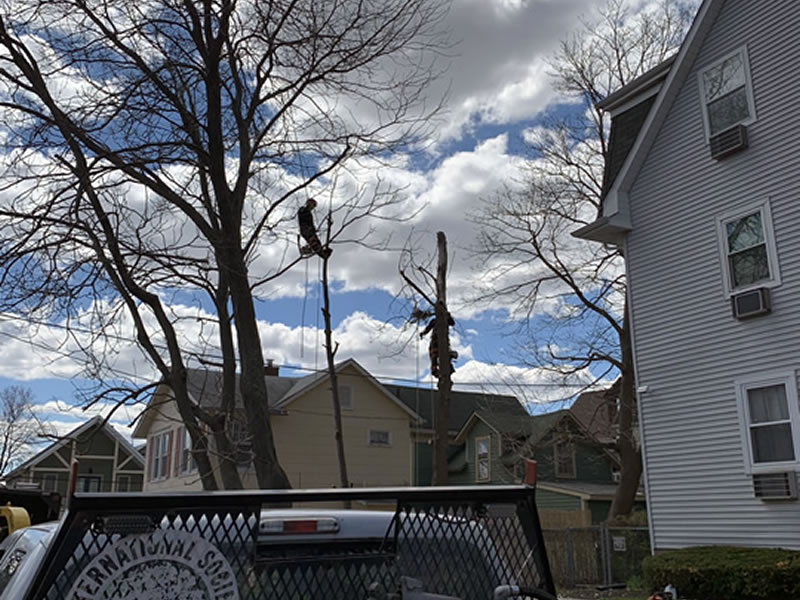
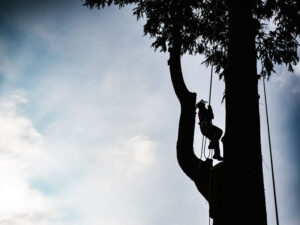
We recommend removal only when a tree poses an unavoidable risk or is in irreversible decline. When removal is necessary, we plan carefully to protect nearby trees, structures, and soil conditions. Coastal properties often require specialized rigging and controlled removal techniques.
Our goal is to preserve the integrity of the landscape while ensuring safety. Homeowners benefit from thoughtful decisions that maintain the character of Laurence Harbor and Cliffwood Beach.
With over 25 years of experience and more than 200 five-star Google reviews, we are trusted throughout Monmouth County for coastal tree care. If your property is near the water and you want expert guidance, call (732) 291-4444 or use our email contact form to schedule a consultation.
Schedule Service Now!
From precision pruning and safe removals to health assessments and preventative care, Hufnagel Tree Service delivers expert solutions backed by decades of experience. We offer certified insight, fair pricing, and a commitment to doing what’s best for your landscape.
We Could Not Find A Direct Link To A Tree Removal Permit Application For The Town You Selected.
Please contact your local municipality to determine if a permit is required for your tree removal project. They will provide you with the most accurate and up-to-date information.